
The Artist and the Astronaut

An image of the space station with Earth below

By Nancy T.

Sun, May 5 | 2 – 4:15 pm
Miller Branch
For adults.
Register here.

Spend an unforgettable afternoon at the Maryland premiere of the award-winning film, The Artist & The Astronaut. This cinematic journey delves into the remarkable love story between artist Pat Musick, a civil rights activist, and Apollo astronaut Jerry Carr.

Witness their captivating tale unfold against the backdrop of some of humanity’s most historic moments. Filled with never-before-seen footage of early space exploration and featuring interviews with key figures from that era, this film chronicles the vastly different paths of Pat and Jerry as they navigate uncertain times, ultimately coming together to render some of America’s most enduring art. The Artist & the Astronaut is a testament to the power of curiosity, perseverance, and empathy as agents of change and love.

After the screening, delve deeper into the film’s creation through a Q&A session with the writer and director, Bill Muench. Explore the compelling backstory behind the documentary’s creation, catalyzed by the encouragement of Bill’s wife. Her inspiration ignited his passion to embark on this remarkable endeavor.

Beginning from humble origins with no plan or budget, Bill Muench, a full-time teacher and basketball coach, undertook a six-year odyssey spanning nine states and two continents. His determination to share the untold story of a local Vermont couple led him to interview Apollo astronauts, their spouses, award-winning authors, artists, art historians, and even NASA directors of mission control.
With the collaboration of music legend Todd Hobin, they produced a story that might otherwise have remained untold. Join us as we uncover the extraordinary journey behind the lens, a testament to the power of determination, inspiration, and collaboration.

Interview with Director Bill Muench

How did you manage your time being a teacher and also filming?
Not very well… Ha ha. I never missed a day of school, even though I had to travel to many different states and even make a trip to England. I was really excited to share the process of documentary filmmaking with my students during my last six years of teaching high school.

What was your favorite part of filming/the whole process?
Getting to meet and interview amazing people who had lived fascinating lives—they inspired me to be a better filmmaker as I went on because they deserved to have their story captured in a professional way.

How did you come up with this idea? Did you have a connection with these people? What was your inspiration?
I went to Arkansas with my wife to celebrate Pat’s 90th birthday in 2016… I have been friends with Jerry, the astronaut, and Pat, the artist, since they moved to Manchester, VT in 2007… I knew many of their stories. When we got on the plane to come back to Vermont I said to my wife, “somebody should make a documentary about these two.” She said, “you should do it,” and that is how I got the inspiration to do the film.

Are you proud of how the documentary came out?
When I started working on the documentary, I did it for my own enjoyment—I never dreamed in a million years that it would win awards and I would be able to travel the country and screen the film. It is not about what I did but the stories that the film captures. This was the last interview for many of the participants of this film. I am especially proud of the musical score by Todd Hobin…83 different music drops — all of them original.

Nancy T. is an instructor and research specialist and the display coordinator at Miller Branch. When she’s not in the branch, you’ll find her in the swimming pool, sitting with her cat, or out walking in the fresh air.

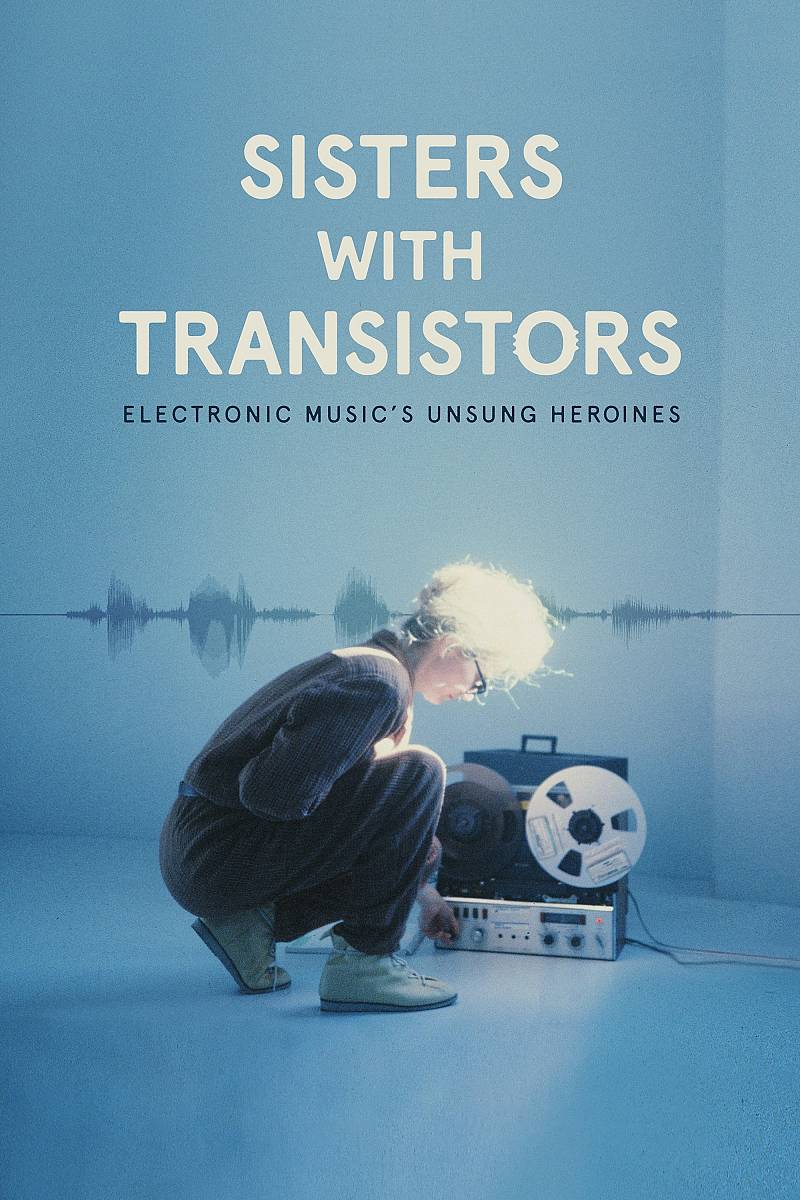
Sisters with Transistors

A woman squats in front of an old reel to reel recording device. Her hair appears white in a bright light and a sound wave rests behind her. The cover is a

by Robyn E.

“The history of women has been a story of silence, of breaking through the silence… with beautiful noise.” 

There was a time when a harmonious sequence of bleeps and bloops would not be considered music. Nowadays, the influence and techniques of electronic music are so ubiquitous, you can hear them in most songs found on the pop charts. A good number of my favorite music artists are influenced by this broad genre umbrella. The more sonically creative and mind-bending tracks I’ve enjoyed have made me wonder: Did they hear these magnificent sounds swirling in their heads first? Or did they just emerge from trial and error, through the persistent fiddling of knobs on machinery? 

Sisters With Transistors is a documentary film that puts the spotlight on the women who contributed to the birth of electronic music but who are often relegated to the background. They brought their experiences in math, science, and art along with a passion for experimentation to create sounds that, at the time, sounded like nothing that had existed on this planet before. Through archival footage and testimonies, we get to see each creator with their own equipment and hear about their creative processes, influences, and philosophies.

One important contributor was Delia Derbyshire, who arranged the electronic version of the opening theme to Doctor Who. She credited her love of abstract and meaningful sounds to the World War II air-raid sirens she heard as a child. The duo of Bebe Barron and her husband Louis Barron created sounds by overloading homemade circuits. Strange and unique sounds emerged from the resulting burnout which they then recorded, transformed, and edited. They are best known for creating the soundtrack to the movie Forbidden Planet, considered the first movie with an all-electronic score. There are many other stories like these to be found within the film. 

Some of the equipment that could be found in these pioneers’ studio-laboratories include homemade electronic circuits, tape recorders, electronic oscillators, and synthesizers. Each of the women featured harnessed new technologies for their creative liberation, in spite of fears that these same tools might instead be used for dehumanization. There was also, in a way, freedom for these women. Since they were not accepted through more mainstream outlets such as radio stations or record companies, they ultimately had more control over what they created. Adopting a DIY mentality was essential, not because they chose to, but because of the barriers they encountered.  

While watching this film, seeing the raw creativity and curiosity on display lit something in my own brain. I was taken back to a time in my younger years when I would experiment with tape recorders (did any other fellow 90s kids have a Talkboy tape recorder??), capturing snippets of sound effects, songs, and TV audio and assembling them into a sequence to create what I thought at the time were hilarious results. To be honest, I genuinely don’t think I could listen to those tapes now if I ever found them. Still, the liberating feeling of artistic experimentation and expression is an important one to keep alive. That same spark of creativity can be so difficult for me to capture these days, but I love to experience it vicariously through others. 

While certainly only a cross-section of the musicians who contributed to the genre, Sisters With Transistors offers a fascinating look at the women who helped lay the foundations for the evolution of electronic music that followed. Here’s to those who follow the call of the unknown and answer with unearthly and beautiful noise. 

Robyn is a Customer Service Specialist at the East Columbia Branch. She enjoys various media that paint a surreal or dark picture, animation, drawing, cats, and drinking coffee out of her Moomin mugs.