Normally I would ask, “Have you ever wanted to stay home from school for a few days and just sleep or read or play video games? To be able to do absolutely nothing, minding your own business in your home?” However, the world just went through that exact thing. Some of us had to work, some of us did not. Some of us sat and read books that whole time and some of us played outside and celebrated.
Remember being stuck in the house, unable to go to the store, unable to get groceries. Now go one step further and imagine you could not open your windows to see the outdoors; you could not listen to music, the radio, or TV. Imagine you could not go anywhere, see anyone, or entertain yourself at all. You could only sit and hide, reading or quietly playing cards, until your family came home, and even then, you still had to hide away from them while you ate.
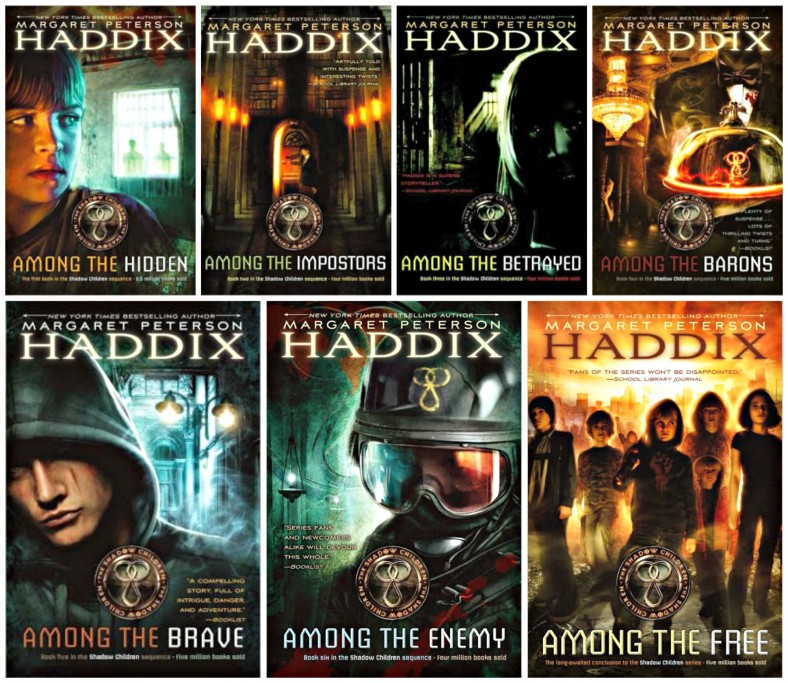
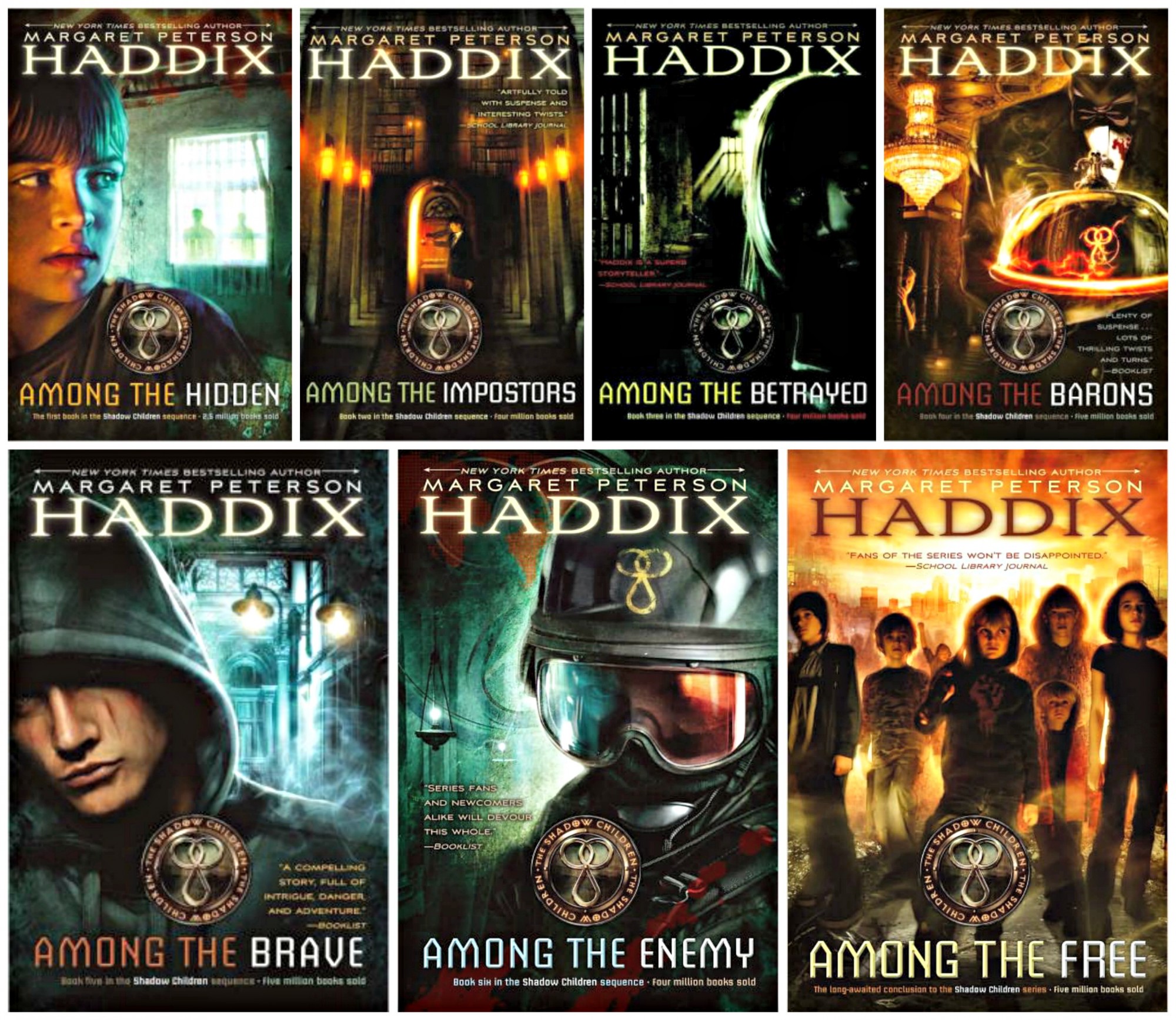
The Shadow Children series by Margaret Peterson Haddix has an entirely new feeling and meaning now that we have experienced something similar. There is not a global pandemic or plague, but instead, the government has made it illegal for folks to have more than two children. Our main character, Luke, is on a journey to change that. He has spent 13 years as an illegal third child.
Luke’s mother, his father, his two brothers, and their farm are all he has ever known. He could run and play at the farm without anyone seeing him, with the forest surrounding his house so he could feel the breeze on his face, watch the leave change colors in the fall, feel the rain falling as it watered the crops. His farm was soon taken away. With nowhere to hide and nothing to shelter him from view, he was forced back inside, into the attic, into the dark. This was the last straw for Luke and he couldn’t bear it anymore. He needed a friend.
We follow his feelings as a third child, the relationships he develops, and the danger he flees after close encounters with the population police. Read to find out if he succeeds in making all third children free. Can a third child survive in the world when all they had was a poor family’s farm and a book that explained nothing of the world outside the attic?
Don’t believe anyone who tells you that comics are just for kids. That’s never been true, and now more than ever, graphic novels are gaining popularity for the creative ways authors can use the format to tell moving, complex, diverse stories for adults.
These five stories are just a few of the titles that HCLS offers for readers interested in expanding their Black History Month reading list. If you’re not a regular reader of comics or graphic novels, you may find yourself surprised at the storytelling power of words and pictures when they work together.
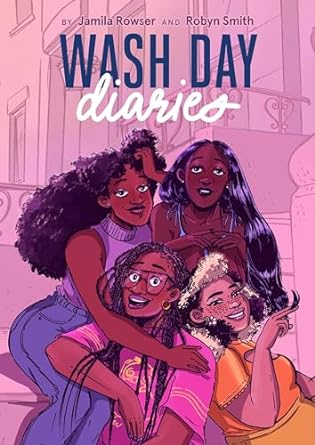
So says one of the protagonists of Jamila Rowser and Robyn Smith’s Wash Day Diaries. It’s a ritual that any black girl with natural hair knows well. When it comes time to wash, deep condition, and ‘whatever else’ your hair, it’s prudent to dedicate an entire day to the endeavor. Washing, deep conditioning, detangling, styling—it’s a complex, time-consuming process. In this graphic novel, the only things more complex are the lives of our four heroines: Kim, Davene, Nisha, and Cookie.
Wash Day Diaries makes a point of accurately and lovingly depicting natural hair and all the ways it can be styled, and that’s part of what makes it stand out. It’s a well-told story that centers the importance of self-care and community, and it makes for a pleasant, uplifting afternoon read.
(If you’re looking for another graphic novel that delves into the cultural weight of hair in the African American community, check out Hot Comb, a collection of pen-and-ink comics by Ebony Flowers.)
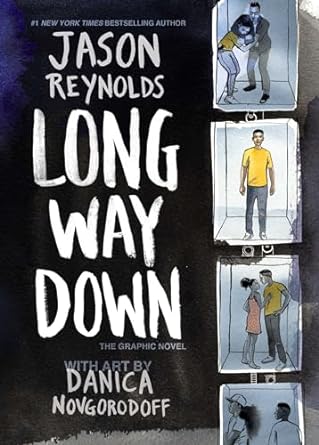
Jason Reynolds’ poetic and immensely moving young adult novel Long Way Down revolves around a teenage boy grappling with the effects of gun violence. The story starts with the shooting death of protagonist Will’s beloved older brother. Lost in his overwhelming grief, Will is hell-bent on retaliation, but a visit from seven ghosts, all of whom have some connection to Will or his brother, forces him to make a hard decision about who he wants to be.
In the original book, Reynolds uses few words to say a lot, and the graphic novel version (also available as an e-book) of his story—told through watercolor illustrations—will leave you reeling just the same.
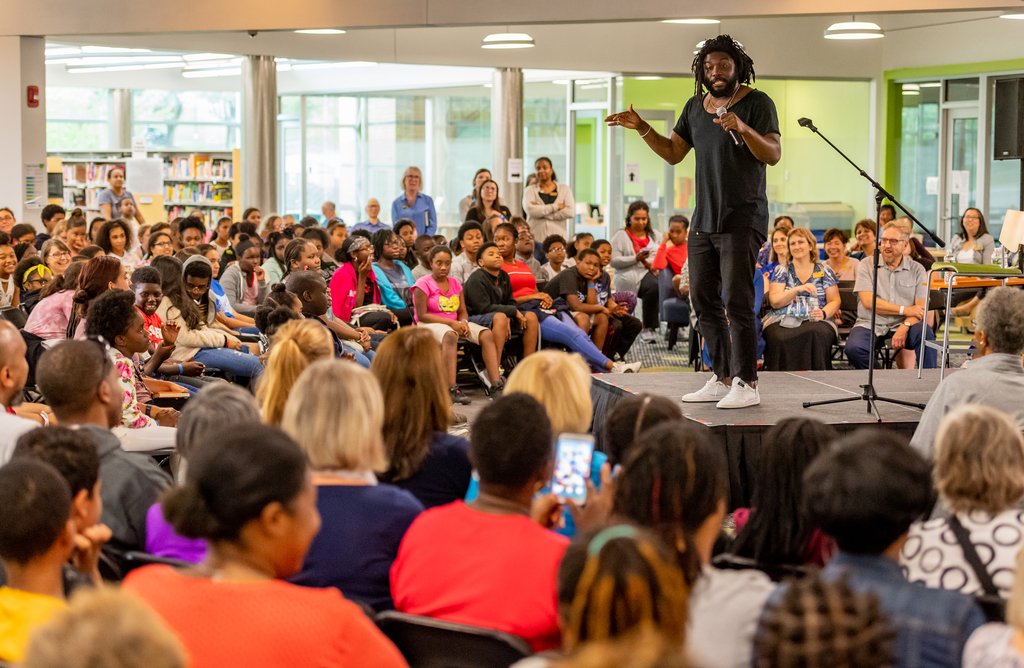
(Fun fact: Reynolds paid a visit to our East Columbia branch in 2018!)
Author Jason Reynolds speaks to an enthusiastic crowd at HCLS East Columbia Branch.
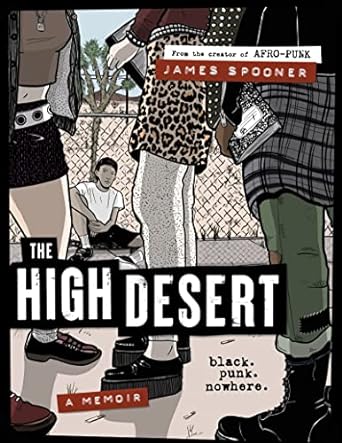
Being a biracial kid in the predominantly white town of Apple Valley, California—as well as a predominantly white punk music scene — isn’t easy. Written by James Spooner, founder of the Afro-Punk website, The High Desertchronicles Spooner’s coming-of-age experience and the birth of his love for punk/alternative music, a connection which blossomed even as Spooner struggled to find his place in a community that was oftentimes racist and even outright violent towards him. Spooner’s graphic memoir is perfect for anyone who’s ever felt like an outsider in the worlds that they love.
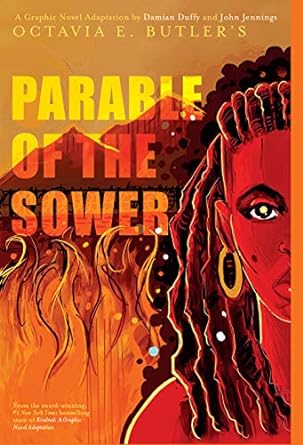
In another novel adaptation, artists Damien Duffy and John Jennings translate Octavia Butler’s (disturbingly timely) dystopian story into graphic novel form. Parable of the Sower isn’t an easy read, not by a long shot; in Butler’s 1993 novel, a series of simultaneously occurring catastrophes have transformed the country into a virtual hellscape.
Protagonist Lauren Olamina, a teenager at the start of the story, lives in an insular community where she and her neighbors continue to live life as normally as possible while struggling to avoid the widespread violence, exploitation, and corruption taking place outside. When Lauren, who is coming into her own mysterious powers, is forced to venture out into a collapsing society, what follows is a story of hope and new beginnings.
Be warned: part of what really makes this pick a disturbing one is that it’s set in the year 2024 and, at times, feels all too possible.
Fans of Octavia Butler should also check out the graphic novel adaptation of Kindred, one of her most beloved novels. It follows a black woman as she is thrown, repeatedly and terrifyingly, back into time — and into the antebellum era, when chattel slavery was the norm.
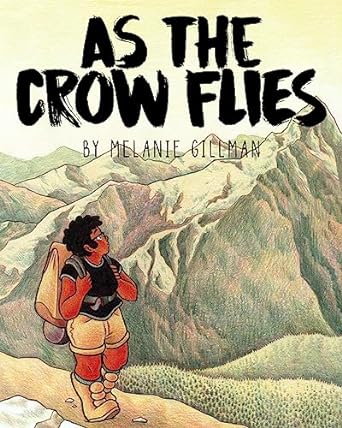
Melanie Gillman grapples with what it means to be black and queer in a Christian community—one in which non-white members are few and far between — in another coming-of-age graphic novel, As The Crow Flies.
During a week spent at Camp Three Peaks, a religious summer camp, our protagonist, 13-year-old Charlie Lamonte, finds herself questioning her faith and identity, all while embarking on a strenuous expedition up a (literal and figurative) mountain. As micro-aggressions abound, Charlie finds kinship and a reprieve from her loneliness in fellow outsider Sydney, a young trans girl who’s dealing with her own doubts. Soft, colored pencil illustrations depict luscious mountain scenery in this former webcomic turned graphic novel. This is one that fans of ‘found family’ stories will enjoy.
Sharon Pruitt-Young is an Instructor and Research Specialist at East Columbia Branch. Aside from books, she is passionate about writing, urban sketching, trees, and art of all kinds.
Scythe is the first installment in Neal Shusterman’s YA trilogy. The novel is set in a fictional near-future dystopian society where immortality is the default. An all-seeing and almost all-powerful AI system has everything figured out; there is no starvation, poverty, pain, or sickness. Of course, along with age-resetting tech, this means no death. However, in order to control the risk of overpopulation, the position of “Scythe” was created. With no AI interference permitted, “Scythes” are chosen individuals responsible for death-dealing, or “gleaning”. But is it truly in the interest of the greater good? After all, we’re all only human.
The novel follows Citra Terranova and Rowan Damisch, two teenage apprentices who find themselves grappling with being in the Scythedom, their position being one with the highest honor, and the highest burden. Within the system, politics, morality, and reasoning stand at odds. It’s not so simple as right or wrong, good or evil. Citra and Rowan may be protagonists, but are they heroes?
Admittedly, the novel’s macabre plot may be off-putting at first, but Shusterman boldly handles its darker themes with delicacy, and fills the story with endearing moments of humor and vulnerability. Readers are given the opportunity to bond with characters as they learn their strengths and faults, all while following the novel’s underlying question; what life is without death, and what gives us meaning.
Scythe is a fantastic novel with plenty to discuss. Never a dull moment, its real world parallels make it a great read for older YA readers and adults alike.
Rumaan Alam explores this and more in his astute and fascinating third novel, Leave The World Behind. It begins simply enough: A white Brooklyn family leave their hipster digs for an Airbnb week in the Hamptons. Like many Americans, Amanda, Clay, and their two teens view a beach vacation as an entitlement. It must be perfect – down to the SPF that won’t hinder your tanning goal.
En route, Amanda orders Clay to stop at a small grocery store where she buys staples for the week: sustainable napkins, sourced maple syrup, even, Alam slyly adds, that “politically virtuous ice-cream, Ben and Jerry’s.” They pull up to the modest beach cottage and are delighted with the view of the water, a hot tub – even a pool. They barbecue, break out a $12 bottle of wine, swim – Amanda and Clay even have vacation sex that night. Everyone falls into a blissful sleep as you, the reader, curl up with what feels like another mindlessly generic beach read.
Then: there’s the proverbial knock at the door. It wasn’t a good thing for Little Red Riding Hood or Hansel and Gretel, and it surely can’t be for Amanda and Clay. They know that the only good door knock anyone ever gets is from an Amazon delivery driver. Eventually, Clay peeks through the chained door and is greeted by an elderly African-American couple: G.H. and Ruth.
Calmly and politely, they explain that they are the owners of the Hampton vacation house that Amanda and Clay are enjoying. Amanda clutches her phone, Alam writes, like it’s a soft toy. She’s convinced they are scammers. Worse, this is a home invasion – especially when G.H. and Ruth cook up some lie that all of Manhattan (where they were staying) has succumbed to a total blackout.
Suddenly, that beach read you thought you were enjoying has become something entirely different – its focus now a witty and revealing spin on the social dynamics between black and white. And it is. Sort of.
Eventually, G.H. and Ruth (over G.H.’s private stash of very old whiskey) convince Amanda and Clay that some kind of crisis must be taking place. No internet, a consistently blue TV screen, as well as dead cell phone reception are worrisome though not alarming – until Amanda and G.H. spot a flock of pink flamingos in the pool and an unearthly sound, capable of chaos, brings them all to their knees.
Eloquent and urgent, especially as we come out of this last and devastating year, Leave the World Behind is the one book everyone must read.
Aimee Z. is part of the adult research staff at HCLS East Columbia Branch. She lives on a lake with her two labs, Dixie and Belle, who enthusiastically approved the content of this review in exchange for a peanut butter and jelly biscuit.



 CHAPTER CHATS