Agatha Christie in the English Countryside

by Sahana C.

Like any self-respecting book nerd, I can only go on vacation if I have at least five books ready and on hand at any time. This was trouble when I was younger, before e-books and e-audiobooks, with backpacks and suitcases full to the brim with tomes. My worst-case scenario was always that I would run out of things to read.  

I went on vacation around Britain recently, and, as is my wont, brought eight different novels with me in various formats. Sure, I brought a few too many physical books, and yes, maybe I bought a book or two on the trip to weigh down my backpack. I felt adequately prepared, as I was taking train rides through the English countryside and knew that I would want to embody the aesthetic of reading whatever I had in hand, only to look up at rolling fields dotted with sheep, old worn walls of stacked rocks dividing the endless green into pastures.  

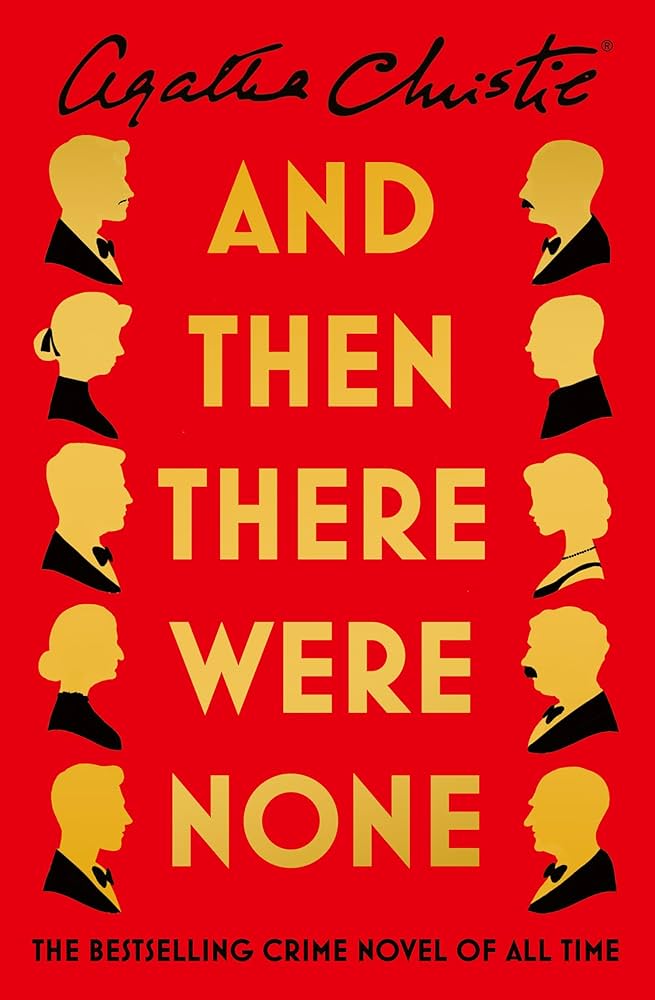
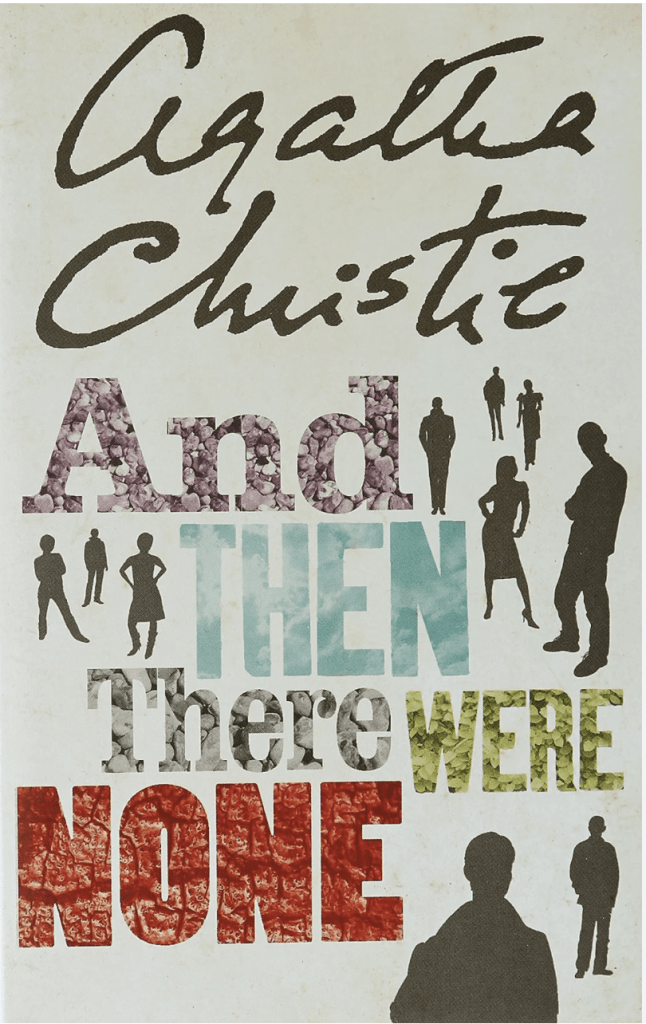
As always happens on vacation, though… I felt a craving. I was on a train. In England. Arguably there was only one author who could scratch the itch. I had read Murder on the Orient Express too recently and watched the movie even more recently, so I went onto Libby to see if anything was “Available Now” and found one of my all-time favorite Agatha Christie mysteries: And Then There Were None.  

I had read the book before, but not for years, and I was immediately immersed in the atmospheric gloom hanging over the description of the story’s central island. I arrived in Oxford, and while the day was gloriously sunny, the evening became overcast. As I curled into bed, I fell into the world of the ten main characters, each with something devious and criminal to hide, from Vera Claythorne to Phillip Lombard to Justice Wargrave. It took me two and a half hours to tear through the thriller, which gets the ball rolling early and never allows the momentum to stop.  

The original title of the book and the changes made to it have a history that has to be acknowledged as racist and problematic. There was no reason to include racism in the novel, especially such casual racism. The nursery rhyme that is the basis for the novel is a disappointing reflection of our history. But this book, plot-wise, is an impressive example of Christie’s talent, ability, and intellect. This is the locked room mystery to end all locked room mysteries, one that is nigh impossible for the reader to solve all the way through because of the masterclass in subjective narrators.  

It was a delight to read Christie as an American in England for the first time, to sit on a train as it trundled by coastlines that Christie took care to describe herself. I’d suggest, for others interested in what books to read as they travel: let the trip inform you. Give your surroundings a chance to suggest a good book or two. There’s nothing better than recognizing the view in front of you in the book you’re holding.  

And Then There Were None by Agatha Christie is available to borrow in print, e-book, e-audiobook and audio on CD. There are also two ways to watch adaptations, a recent TV series and a classic movie.

Sahana is the Communications Strategist at HCLS. They enjoy adding books to their “want to read” list despite having a mountain of books waiting for them already.

The Whalebone Theatre by Joanna Quinn

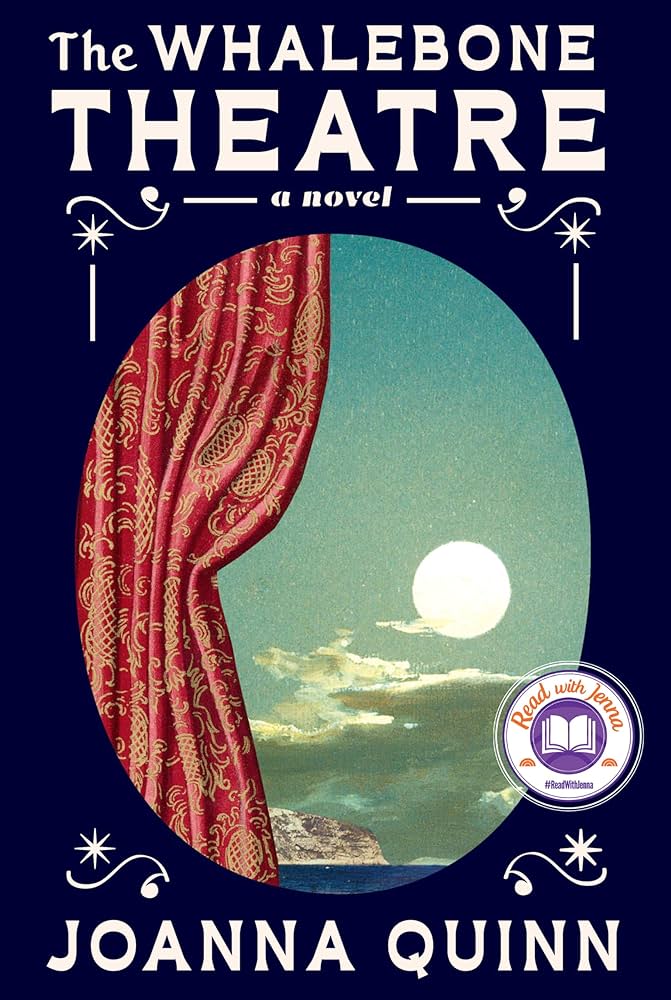
Within an oval frame, a red curtain pulls back to the left to show the cliffs of Dover beneath t

by Kristen B.

A friend suggested a good rule for reading: only one World War II-adjacent book each year. Well, I’ve already spent this year’s allowance, and it was a good one!

The Whalebone Theatre by Joanna Quinn begins during the interwar period, set at a grand country estate, Chilcombe, on the southern coast of England. Cristabel Seagrave is a lonely little girl with an immense imagination. Her mother died in childbirth, and the story gets underway with her father bringing home a new bride. England’s laws being what they are, the family needs a male heir to keep the estate. A set of minor tragedies and expected resolutions ensue, all of which lead up to the day that Cristabel discovers a dead whale on Chilcombe’s beach.

With this highly cinematic scene, set against a quiet sea and a rising sun, the book finally gets underway. Cristabel hauls herself up the side of the leviathan and plants her flag, literally, in its blubber as her two younger stepsiblings turn up to watch and cheer her on. It’s clear that the trio of Cristabel, Flossie, and Digby make a minor clan in and of themselves, running mostly feral as their adults are caught up in the bohemian lifestyle of the rich and entitled in the Roaring Twenties. Interestingly enough, her stake cannot stand because all sea-washed flotsam automatically belongs to the Crown. In the end, the Crown doesn’t want it and the poor whale spends the rest of the summer slowly rotting upon the shore, much to the entertainment of the children.

Also discovered upon the beach that day is Taras – an itinerant Russian painter living a risque, socially liberal life-style. His paramours are old friends with Flossie and Digby’s mother, and so ensues a longstanding relationship between both parents and children. Taras eventually has the grand idea of moving the whale’s ribs to build a theater within Chilcombe’s estate. Under Cristabel’s direction, the children, their adults, and other willing locals stage a variety of plays, including a retelling of the Iliad and Shakespeare’s The Tempest. One of the Bard’s final plays, The Tempest carries certain themes throughout the book – including shipwreck and exile, civilization and monstrosity, and power and integrity. The book glosses over the 1930s with a set of newspaper clippings detailing the annual summer performances at the theater.

When the story recommences, World War II is well underway. One of the adults who came and went from Chilcombe turns out to be a high-ranking member of the British intelligence ministry. He enlists first Digby, then Cristabel into becoming agents in occupied France. Meanwhile, Flossie maintains the home estate and becomes a Land Girl as the war rages on. The story careens through the final years of the conflict, with uncertainty and anxiety at every turn as our intrepid trio make their separate, but always inter-connected, ways in the world.

In the end, it all comes together back at Chilcombe. No one is quite the same in the aftermath of war – family, friends, servants, and locals. I greatly enjoyed the book with its gorgeous language, despite its quiet devastations that rang absolutely true to me. At the end of The Tempest, Prospero says, “Now my charms are all o’erthrown, And what strength I have’s mine own.” What strength remains belongs solely to the women of this story, home at last. I suspect this is a title I will linger over and think about at odd moments. Certainly, it resonated with other recent books adjacent to WWII where the smaller stories and sacrifices carry the story.

The Whalebone Theatre by Joanna Quinn is available in print, e-book, and e-audiobook.

Kristen B. is a devoted bookworm lucky enough to work as the graphic designer for HCLS. She likes to read, stitch, dance, and watch baseball (but not all at the same time).

The Loney by Andrew Michael Hurley

The book cover portrays the title from the bottom to the top, with the "y" at the end of "Loney" splitting into a dead tree branch with a foreboding house in the background, all in white against a black backdrop.

By Julie F.

I took everything that was offered that morning – the warm sunlight, the soft shadows on the fields, the spangle of a brook as it wound under some willows towards the sea – and managed to convince myself that nothing would harm us.

Such naivety makes me laugh now” (173).

Confession: passages like the one above give me shivers. I’ve never been a horror fan. My experience with horror films consists of a mediocre made-for-TV movie called Midnight Offerings at a high school party, featuring Melissa Sue Anderson of Little House on the Prairie fame, and a viewing of The Shining with fellow grad students back in 1992. That’s it. Books, even less. Stephen King? I adore his nonfiction, follow him on Twitter, and used to read his columns in Entertainment Weekly religiously. But I can’t bring myself to tackle Carrie or Salem’s Lot.

Splitting hairs when it comes to genre, though – most librarians do this with aplomb. My brain has always differentiated between horror and ghost stories, and I love a good ghost story. Starting with the Victorian favorites in the genre, the short stories of J.S. LeFanu and M.R. James, all the way to The Woman in Black by Susan Hill and The Little Stranger by Sarah Waters, the touch of the paranormal that wends its way into the life of unsuspecting mortals on this plane thrills and fascinates me. A more recent but equally compelling genre, folk horror, bridges the gap between ghostly folklore and fiction. As noted by editor Dawn Keetley in Revenant, the journal of the supernatural and the weird, “folk horror is rooted in the dark ‘folk tale’, in communal stories of monsters, ghosts, violence, and sacrifice that occupy the threshold between history and fiction.” There are some incredible writers forging creative new work in this genre, and Andrew Michael Hurley is one of the best.

The Loney opens with a group of modern, penitent pilgrims making an annual trip to the title locale, “a wild and useless length of English coastline” (3), where they spend a week at Easter, culminating with a visit to St. Anne’s shrine. It’s 1975, and we are seeing all this through the viewpoint of the teenage narrator, nicknamed “Tonto” by the young, wise-beyond-his-years priest who accompanies the group. Tonto knows that his situation is unusual; his brother Hanny has been mute his entire life, and his excessively devout mother (Mummer) is determined to pray her way to healing for him. For her, religion, and particularly the rituals enacted that comfort her year after year, are the only possibility for a cure.

While staying on the Loney in what could barely be described as a village, a number of disturbing acts take place: an effigy made of animal parts is hung in the woods, Father Bernard is warned to stay away from the pub, and a wooden statue of Jesus that hung in the local church is smashed to bits on Easter morning. Tonto experiences a sense of creeping unease when a gull with a broken wing suddenly takes off in flight. The locals don’t seem disturbed when a dead tree struck by lightning decades ago suddenly sprouts a new branch, or when their apple trees, usually ripe in autumn, are laden with spring fruit virtually overnight. There’s a healing power at work in this weird place that has nothing to do with Mummer’s fervent Catholicism, a power emanating from beliefs and practices that are much, much older than her faith. In the framing story, we learn that Tonto was shaken by everything he learned to the point that, decades later, he’s lost his faith: “Like Father Bernard said, there are only versions of the truth. And it’s the strong, the better strategists who manage them” (294).

The dark, brooding atmosphere permeates the novel, catapulting Hurley into fame as one of the foremost practitioners of folk horror and earning him praise from Stephen King (“An amazing piece of fiction”) and the Costa First Novel Award. He conveys a sense of otherworldly, uneasy time and place that can only result in the darkness of savage nature reclaiming itself: “I often thought there was too much time there. That the place was sick with it. Haunted by it. There was nowhere for it to go and no modernity to hurry it along. It collected as the black water did on the marshes and remained and stagnated in the same way” (31). If you’re in search of an eerie Halloween read that doesn’t spell everything out but stretches the imagination relentlessly – a book that also addresses real questions of faith and family from the eyes of a boy coming of age – then read The Loney.

Julie is an instructor and research specialist at HCLS Miller Branch who finds her work as co-editor of Chapter Chats very rewarding. She loves gardening, birds, crime fiction, all kinds of music, and the great outdoors.

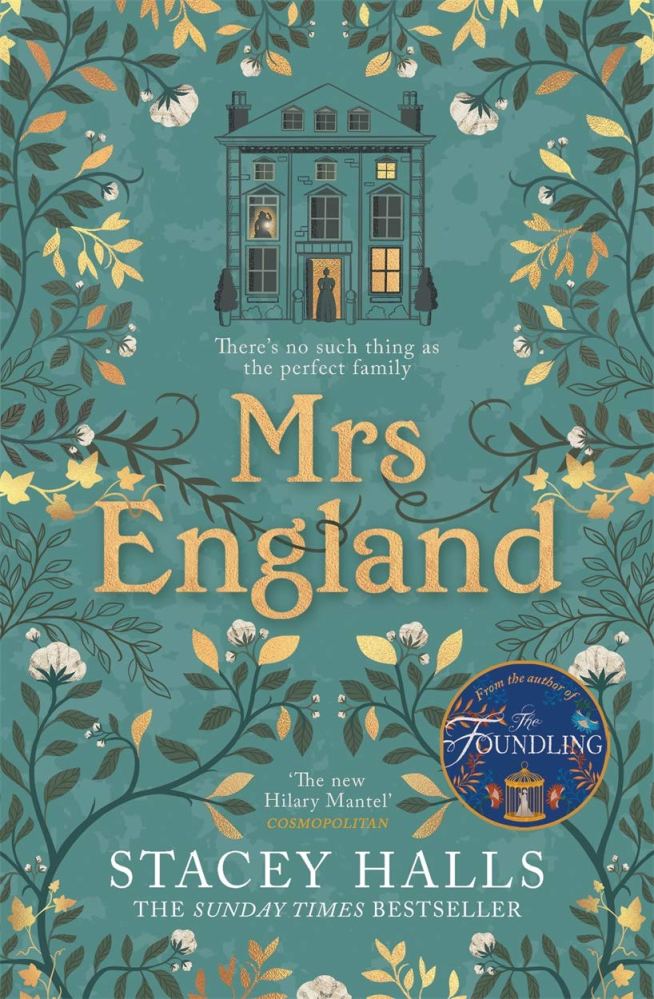
Mrs. England by Stacey Halls

A spruce green cover has botanical illustrations framing a manor house with a woman silhouetted in the doorway.

by Piyali C.

One of my favorite quotes about friendship is the famous one by C.S Lewis: “Friendship is born at that moment when one person says to another: ‘What? You too! I thought I was the only one.” My friendship began with my library colleague who introduced me to Stacey Halls in the same way. We bonded over Daphne Du Maurier, our mutual love for Jane Austen, historical fiction, and literary fiction. So, when she brought The Familiars by Stacey Halls to my desk and said, “Here read this. I know you will like it,” I knew I should drop everything and read it. I did not like it – I loved it.

The Familiars is a story of two women in early seventeenth century England, both fighting for survival. Mistress Fleetwood Shuttleworth is determined not to lose her fourth baby like the ones before and Alice Gray needs to prove she is not a witch during the infamous Pendle Hill witch trial of 1612. Alice is a skilled midwife with extensive knowledge of herbs, and Fleetwood needs her help to save her unborn baby as well as her own life. When Alice is accused of witchcraft and imprisoned, Fleetwood is ready to go to any lengths to prove her innocence. Not only is the story superbly written and well-paced, it shows tremendous character development of the protagonist. One may wonder if all the steps taken by Fleetwood in her quest to free Alice are plausible given the time period, but I embraced her actions wholeheartedly and willed her on to succeed. 

In Mrs. England, Norland Institute graduate Ruby May is looking for a fresh start after the family she worked for emigrates to United States. Although the Radlett family would dearly love their Nurse May to travel with them to America, she is unable to do so for a reason undisclosed at the beginning of the story. In 1904 women from the upper echelon in England are completely dependent on nurses for the care of their children, preferably from the prestigious Norland Institute. Nurse May gets her second assignment without much delay. However, she will have to travel to cold, foggy West Yorkshire to take charge of four children of a wealthy couple, the Englands of a mill dynasty. After reaching her destination, she is surprised to find that she is taking directions about the children’s routine from the friendly and easy-going Mr. England, while Mrs. Lilian England is aloof, cold, and withdrawn. While Ruby develops a nurturing and loving relationship with the children, she simply cannot figure out the mysterious couple for whom she works. When she feels the lives of the children are in danger, she must dig deep within her and ultimately face her fears. While caring for the England children and figuring out the power dynamic in the Edwardian marriage of the Englands, Ruby learns to make peace with her past and only then can she break free from the chains that hold her captive psychologically. 

Fans of Daphne Du Maurier will love this atmospheric, gothic tale and the shroud of mystery surrounding both Nurse May as well as Charles and Lilian England. Although Nurse May’s character is likeable, the readers know she is hiding a secret so a niggling doubt about her reliability as a narrator remains in the readers’ minds. When we get introduced to the England family, the readers have a challenging time believing the authenticity of Charles England’s affability. There is something inauthentic about his outward friendliness. Lilian England is easy to dislike due to her coldness towards her children. Yet there is a vulnerability in her which questions even our dislike for her. Readers vacillate between who to believe – the charming Mr. England or the aloof Mrs. England. And just when we think the mystery has been resolved, we read the last line – just one single line and get a jolt. All the twists and turns that captivated us and kept us turning pages, all that we believed was resolved gets thrown into question and as we finish the book, we start rethinking the whole mystery all over again. 

Mrs. England is available in print, in ebook and in eaudiobook. 

Piyali is an instructor and research specialist at the Miller Branch of HCLS, where she co-facilitates both Global Reads and Strictly Historical Fiction and keeps the hope alive that someday she will reach the bottom of her to-read list.

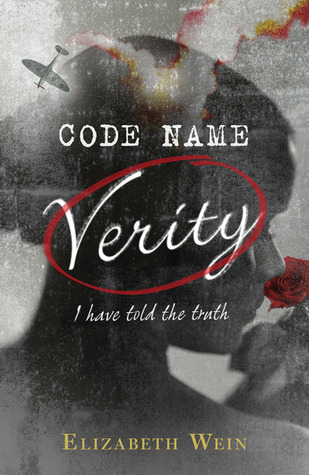
Women’s Stories from World War II

The cover is mostly in shades of grey, with a woman's face seen from behind turned to the side, smelling a rose. A plane, in a downward spiral, appears across the top. Spots of red in the smoke from the plane, the rose, and circling the name Verity provide a pop of color.

by Kristen B.

One of the current hot trends in publishing involves telling the previously overlooked stories of women during World War II, from code breakers at Bletchley Park and Arlington Hall to spies who worked with the Resistance. It seems they are everywhere right now. My all-time favorite, and one of the first in this sub-genre, is Code Name Verity by Elizabeth Wein (technically YA, but I have no idea why).

Two young British women become bosom friends and compatriots in supplying occupied France with intelligence. Maddie is an amateur mechanic and pilot, who works ferrying planes around the UK to various RAF bases and sometimes across the Channel. She loves flying with an undying passion. I learned more about early aircraft than I wanted, to be honest. Men were needed as combat pilots, so women flew most of the personnel and supply shuttles. Maddie has a heart of gold and a desire to make a difference despite her lack of social standing or eduction. She’s the perfect foil to Queenie (code name Verity), a member of the upper class with a wicked ability with languages and acting, who is recruited directly into intelligence work. Not to put too fine a point on it, our girl is a perfect spy. Her nom de guerre means truth, and the entire book hinges on figuring out which parts of her story are true.

The two become unlikely friends through their brief careers, including one scene where they end up lost on their bikes in the rain because all the road signs have been removed. When Queenie ends up captured behind enemy lines, everyone fears the worst. Verity is the main narrator for the book, and to say she’s unreliable doesn’t even begin to capture the reality. The plot is a breathless dash of misadventure and raw calculation, and you’re never quite sure what’s going to happen next. Sometimes friendship saves the day, and sometimes a book rips your heart from your chest and leaves you a wreck on the sofa. Maybe I’m saying too much … but really, just read it!

Code Name Verity is also available as an eBook from Libby/OverDrive and as an audiobook on CD.

All in shades of blue, the outline of a castle appears in the foggy background with a hedge in the foreground and a plane high overheard.

Equally fraught if less devastating, The Women in the Castle by Jessica Shattuck gives us an unusual and moving look at German women in the immediate aftermath of the war. Three women and their children find themselves living together in a derelict castle in Bavaria, doing their utmost simply to survive. The property belongs to Marianne von Lingenfels, member of the landed aristocracy and wife of one of Hitler’s detractors. When her husband and other conspirators in the 1944 assassination attempt on Hitler are summarily executed, she tries to fulfill her promise to save as many other wives and children as possible.

She manages to find two: Benita and Ania. Benita, a classic German beauty, flees her family’s impoverished life by marrying Marianne’s best friend from childhood. Ania and her two boys escape from the far eastern regions and trudge through much of the country, dodging Russian soldiers and American GIs, before reaching the safety of the castle. The three women and their six children band together in unlikely friendship to outlast the worst depredations and devastations. In one of the most moving scenes, everyone in the castle and the connected village attends an Advent service in the local ruined church, and the power of the sacred music and a clear, cold night brings a much-needed moment of hope.

As the book progresses, we learn each woman’s history and gain some understanding of how they come to be within the castle. Benita suffers all a beautiful woman at the mercy of an enemy can expect. Marianne, used to privilege and a life filled with intellectual rigor, maintains a moral viewpoint that allows for very few shades of grey – despite being in a time and space that demands them. And Ania, my favorite character by far, lives almost entirely within those grey spaces in the most practical manner possible. Her background of supporting the Nazi agenda until she could no longer ignore the atrocities portrays the “good German” conundrum all too well.

The book catalogs the necessary sacrifices and compromises, from the reality of marauding renegade soldiers to the plight of Displaced Persons. It’s a fascinating portrayal of how people move forward, trying to make it through today, tomorrow, this week, this month, this year. It made me think about how this is not a sexy, heroic story, nor is it a tragic tale of valiant derring-do and winning through at all costs. Shattuck gives us – gifts us – three fairly ordinary German women thrown together in dire circumstances who survive … because what else was there to do?

The Women in the Castle is also available as an eBook and an eAudiobook from Libby/OverDrive and as an audiobook on CD.

Kristen B. is a devoted bookworm lucky enough to work as the graphic designer for HCLS. She likes to read, stitch, and take walks in the park.

Once Upon a River by Diane Setterfield

The book depicts the next of a swan as a winding river, with flowers scattered alongside and the title, "Once Upon a River," superimposed.

By Piyali C.

There are many ancient inns on the bank of the river Thames, providing their patrons with more than just ale and cider. Patrons looking for music go to The Red Lion at Kelmscott; for deep contemplation, they go to the Green Dragon at Inglesham; the Stag at Eaton Hastings is the place for gambling. But if they are looking for stories, they go to The Swan at Radcot, the most ancient inn of them all and only a day’s walk from the source of the Thames. On a dark winter’s night, sometime in the mid-nineteenth century, a seriously injured man enters The Swan with the body of a four-year-old girl in his arms whom he found floating in the river. Before he can give any explanations, he collapses in the arms of the storytellers at the inn. The innkeeper’s son Jonathan catches the body of the girl before the man falls. The child, presumed dead, is kept in a separate room while everyone gets busy looking after the man, who is still breathing, but just barely. Rita Sunday, the resident nurse of the village, is summoned immediately. She first tends to the injuries of the man, who we learn later is a photographer named Daunt, and then goes to look at the little girl’s dead body. Rita checks her pulse and her breathing and, finding none, she holds the hands of the girl and sits with her awhile, lamenting the death of one so young in such mysterious circumstances. In her hand, however, Rita suddenly feels a flutter of life! The girl, who had no pulse, comes alive.

The thread of the story unspools at this point just like the surge of the Thames roaring outside the inn. Like tributaries that feed the powerful river, each of the characters in this tale veers off to run his or her own course, only to come together to enrich the main body of the story. The narrator takes us on the journey of life with each of her characters and explains how their actions and decisions converge to solve the mystery of the little girl. The river, with its myriad turns and crossings and innumerable tributaries, becomes a powerful character in itself within the plot, always present in the background propelling the story forward with its mighty surge. There are so many intriguing questions that the reader wants answered. Who is the mystery girl who came back from the dead? Is she the kidnapped daughter of the wealthy Vaughan family? Is she the granddaughter of the black farmer Robert Armstrong, whose wayward son Robin married a woman and then left her alone with their little daughter, Alice? Or is the four-year-old girl the sister of 44-year-old Mrs. Lily White, as she adamantly claims? How is that possible? Who does she belong to and why won’t she speak?

The storyteller of this tale, which is fortified with folklore, magic, science, and myth, is one of the best, sweeping readers in the turbulent current of her fast-paced, hypnotic plot and then delivering them safely back to their own worlds to attend to their own rivers. “And now, dear reader, the story is over. It is time for you to cross the bridge once more and return to the world you came from. This river, which is and is not the Thames, must continue flowing without you. You have haunted here long enough, and besides, you surely have rivers of your own to attend to?” (460) Before leaving us, though, she makes sure each tangle of the plot is smoothly and expertly untangled, each question satisfactorily answered. Once Upon a River is yet another testament to the power of stories and storytelling that has captivated and transformed lives through centuries. This title is also available as an ebook and eaudiobook from Howard County Library System. In my opinion, this novel is best enjoyed in your cozy reading spot on a cold winter’s night, snuggled in your favorite blanket with a cup of hot chocolate by your side.

Piyali is an instructor and research specialist at the Miller Branch of HCLS, where she co-facilitates both Global Reads and Strictly Historical Fiction.