Hooray! I Ate My Math Homework!

A bright striped cover features a white a circle with the title and author information in it.

by Jean B.

HCLS offers many resources for supporting students: skill building activities on our website, research materials and guidance, Brainfuse online tutoring, and free access to computers and printing, to name just a few. Explore a new place to look for homework help – the cookbook aisle!

Why not start the school year with a plan to do more family cooking that fosters math learning and fun? Cooking with kids builds a wide range of math skills — from counting, sorting, and measuring, to sequencing, fractions, ratios, and budgeting. Best of all, instead of a completed worksheet, cooking produces something delicious to eat and share!

Start early and involve even the youngest children in kitchen tasks and food conversations. Ask them to count the ingredients or compare the measuring cups to find the biggest or smallest. Talk about the steps in the recipe and let them name what goes first, second, third, last. Make a pattern with cookies on a pan or fruit on a plate.

To get some great ideas for things to make with the littlest cooks, check out Look and Cook Breakfast: A First Book of Recipes in Pictures by Valorie Fisher. With simple recipes presented visually, pre-readers can decipher what happens at each step, while the grown-up oversees the sharp tools and oven. You’ll soon be feasting on Tasty Toast, Choco Pillows, and Topsy-Turvy Eggs! Older chefs can tackle more involved tasks. Challenge them to double or halve the quantity of one ingredient or work out the fractions involved in dividing a pizza equally. Let them help with grocery shopping, evaluating the price of ingredients for value or the correct quantity for a recipe.

Inspire them with The How-to Cookbook for Young Foodies by Janna Saltz and the editors of Delish, which offers great information on cooking techniques as well as recipes the whole family can enjoy like Mexican Beef and Rice Skillet, Chicken Tacos, or Chocolate Pizza.

Even cleanup can be a math game – your student builds spatial reasoning skills by puzzling out the best way to fit dishes in the dishwasher.

Cookbooks + Kids + Math = a win for everyone! This fall, strengthen your student’s math skills, create new and interesting meals, get help in the kitchen, and inspire a young chef!

Jean is a Children’s Instructor and Research Specialist at HCLS Central Branch. She loves talking about books with people of all ages, but especially enjoys leading the Heavy Medals book club for fourth and fifth graders, exploring award-winning books of all genres. 

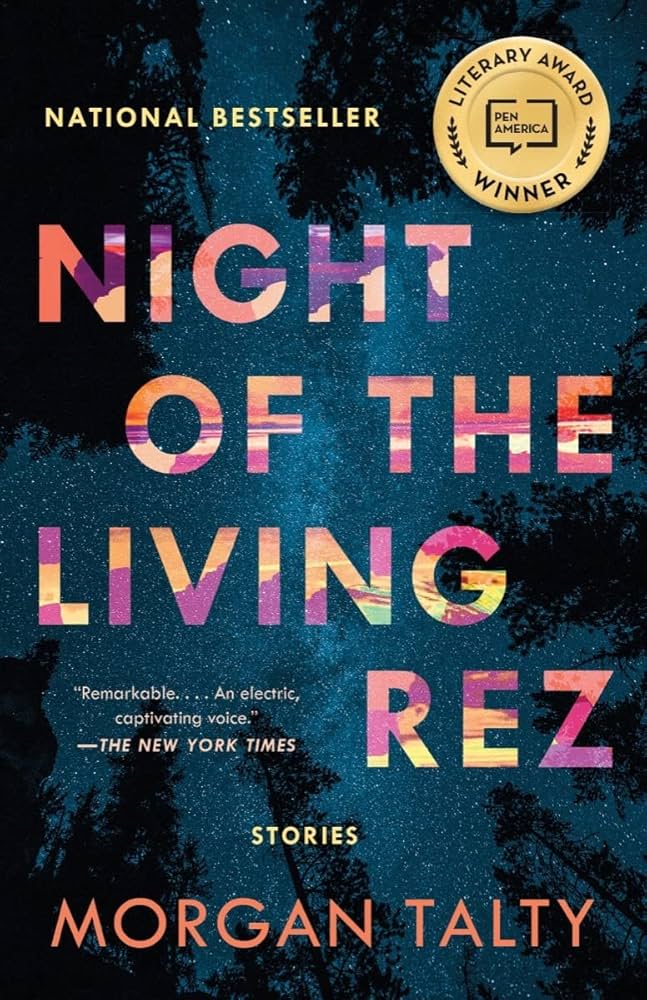
Night of the Living Rez by Morgan Talty

by Kristen B.

My book discussion group (Books on Tap) recently discussed Night of the Living Rez by Morgan Talty. I try to choose books that reflect the time of year, as well as to prioritize authentic voices. This book worked for November because Morgan Talty is a Native American author, and his book collects a series of inter-connected short stories about David and his family and friends on the Penobscot reservation in Maine.

In all honesty, the book is as bleak as any other work that deals with generational trauma and chronic poverty. However, it is laced with gorgeous prose, mostly in scenes describing the local woods and river. Talty has a sense of the poetic that shines through even the most difficult situations – including the description of a car crash that perfectly captures the halting, photo-flash moments of impact and aftermath. Surprisingly, along with the spare dismay of the stories, Talty also offers a pitch-black sense of humor. The sheer absurdity of teenage boys and their antics relieves the otherwise unrelenting sense of nowhere to go and nothing to do that permeates this book. Sometimes it’s true: you have to laugh instead of cry.

Eleven of the twelve chapters are tightly told from young David’s point of view – and his almost complete lack of understanding of what’s happening with the grownups in his life. His relationship to his grandmother is the foundational relationship of the book, as it was for his life. That special love grounds the stories and makes them real, in ways that the cigarettes, drugs, and drinking couldn’t. The love and the bad decisions weave so intimately that the inevitable heartbreak registers as simply, devastatingly true. The tight narrative focus is a fascinating authorial choice, but not until the last section do all the pieces truly come together in any sort of coherent way. It’s worth getting there with adult David, with compassion and forgiveness for the bone-headed youth that he was.

I’m not sure this review is going to convince you to pick up this book, but you should! I was heartened by reactions of the folks in my book club. They found value in the language, the author’s choices of what to share, in the universality of the stories, and in the need to laugh in the face of despair. Night of the Living Rez is a stellar beginning for a new author. I will eventually read Talty’s new novel, Fire Exit, but I need to continue to sit with this volume first.

Night of the Living Rez by Morgan Talty is available in print, e-book, and e-audiobook.

Kristen B. is a devoted bookworm lucky enough to work as the graphic designer for HCLS. She likes to read, stitch, dance, and watch baseball (but not all at the same time).

Hatchlings Classes for New Parents

The illustration depicts Mother Goose in a beige shirt and green spotted pants, with a yellow scarf and green shoes, riding on the back of a flying white goose while holding a yellow chick, hatched and sitting in a half-shell. in the crook of her arm.

Hatchlings classes help parents and caregivers learn how to support their child’s development through fun activities and songs. These activities help children practice early literacy skills like talking, singing, playing, reading, and sharing books. Through family bonding, families learn the importance of reading and child developmental milestones.

The first five years of life are crucial for brain development and learning. During this time, children develop their ability to think, speak, learn, and reason. Their language skills are important for later success in reading, writing, and spelling. If children miss these early language skills, they may struggle with literacy in school.

Hatchlings: Baby on the Way
Adults. Registration required, one person per household. Register here.
Get ready for baby! Expectant parents learn more about supporting your little one’s development, even before they are born, through songs and fun activities.
Free book, activities calendar, and song sheet for attendees. Space is limited to expectant parents and partners. Free dinner provided by the Howard County Health Department.
Wed, Nov 13      6 – 7 pm    HCLS Elkridge Branch

Hatchlings: New Baby and Me
Parents/Caregivers with baby, newborn – 6 months. Register here.
A three-week series for you and your baby, where you enjoy fun songs and activities together and learn how to support your baby’s development. Registration required, even if you can’t make it to all of the classes.
Wednesdays | Nov 6, 13, 20
10:30 – 11:30 am
HCLS Central Branch

The MGOL Hatchlings materials were developed for the Maryland State Library Agency with funds from the Maryland State Department of Education, Division of Early Childhood, as part of the PDG Birth-5 funds through Grant Number 90TP0032-01-00, from the Office of Child Care, Administration for Children and Families, U.S. Department of Health & Human Services.
Its contents are solely the responsibility of the authors and do not necessarily represent the official views of the Office of Child Care, the Administration for Children and Families, or the U.S. Department of Health and Human Services.

H3 Carnival: HiTech, How-to, Hands-on

Saturday, August 5 | 11 am – 3 pm
Miller Branch
For all ages. Rain or shine.

Play games, learn something new, make crafts, and experience a variety of activities at this free and fun-filled celebration. Features carnival games by HiTech students, hands-on activities by community organizations, music, and food trucks ($).

The H3 Carnival features games created by HiTech students and instructors. The summer classes combined technology, teaching tools, and subject experts to deliver a fun STEAM education experience that culminates in showing off at the annual event.
Coding
3D design and printing
Engineering
Physics
Chemistry
Biology
Music tech
Digital art
Ten-80 car racing
Robotics

Library staff will be on hand for some How-to stations that include coloring, composting, and talking to strangers. New this year: Experts and knowledgeable neighbors from across our community provide ways for you to get Hands-on, while learning something new, including:
The Many Ways to Use Henna 
High-Tech Salad  
Digital Security 
Meditating in Color 
Camping Tent Setups & Knot Tying 
Make Sugar Scrubs & Bath Fizzies
Agrownomics
How to Make Jamaican Jerk Spice Blend 
Fly Hi with Paper Airplanes 
Find the Phytonutrient in Plants 
Preschool STEAM Station
Intro to Scottish Gaelic 
Lego League Demo & Chopsticks Game
and more

A Little Love for Urban Lit

The book cover photographs show a woman in partial profile, leaning over her bare shoulder, above a cityscape at night, with twinkling lights and a hazy red sunset in the background.

by Angie E.

Also known as street lit or hood lit, urban fiction focuses on the gritty realities of life in the inner cities and the raw, unfiltered experiences that expose the highs and lows, the triumphs and tragedies of urban life. It emerged in the late twentieth century as a genre centered in urban communities, primarily among African American authors. While being vibrant and compelling, it often finds itself grappling with preconceived notions and stereotypes. Despite its popularity and cultural significance, it is often dismissed or misunderstood.

From street hustlers and drug dealers to determined mothers and aspiring entrepreneurs, these individuals often navigate morally ambiguous situations, creating a nuanced narrative. By examining the motivations and inner conflicts of its characters, urban fiction humanizes those who may be pigeon-holed, encouraging readers to challenge their preconceptions and recognize the complexity within individuals.

The genre has played an important role in amplifying underrepresented voices and providing a space for authors to share their lived experiences. Featuring protagonists from diverse backgrounds and communities, urban fiction offers a refreshing departure from other contemporary literature, which has historically been dominated by a narrow set of perspectives.

If you’re looking to get started with reading urban fiction, you can’t go wrong with Tracy Brown (whom, I was saddened to hear, recently passed away).

Her books, which are set in Staten Island and focus on women who triumph despite adversity, have been Essence magazine and USA Today bestsellers. Tracy Brown also started and ran a nonprofit organization known as We Are Ladies First, which serves to inform, inspire, and empower young women.

Set in the 80s and 90s, White Lines portrays authentic and multifaceted characters. Jada, the protagonist, is a beautifully flawed individual whose journey is heart-wrenching. Brown writes her with depth and vulnerability. As the narrative unfolds, we meet a diverse cast of characters, each with their unique stories and motivations. From Jada’s childhood friend Born, who walks a fine line between right and wrong, to the mysterious and captivating Cuban, whose connection to Jada sparks a whirlwind romance, these characters leave a lasting impression.

Beyond its compelling characters, White Lines delves into thought-provoking themes that confront societal issues head-on. The exploration of the drug epidemic, the impact on families, and the consequences of choices made under desperate circumstances are handled with a delicate balance of compassion and realism. Brown’s narrative serves as a powerful reminder of the human toll that addiction can exact on individuals and their communities.

While the story deals with heavy subject matter, Brown’s storytelling keeps the pacing engaging throughout. The plot twists and turns, keeping readers on their toes, and the emotional depth of the narrative never falters.

Angie is an Instructor & Research Specialist at Central Branch and is a co-facilitator for Reads of Acceptance, HCLS’ first LGBTQ-focused book club. Her ideal day is reading in her cozy armchair, with her cat Henry next to her.

Be part of HCLS’ Summer Reading Adventures.

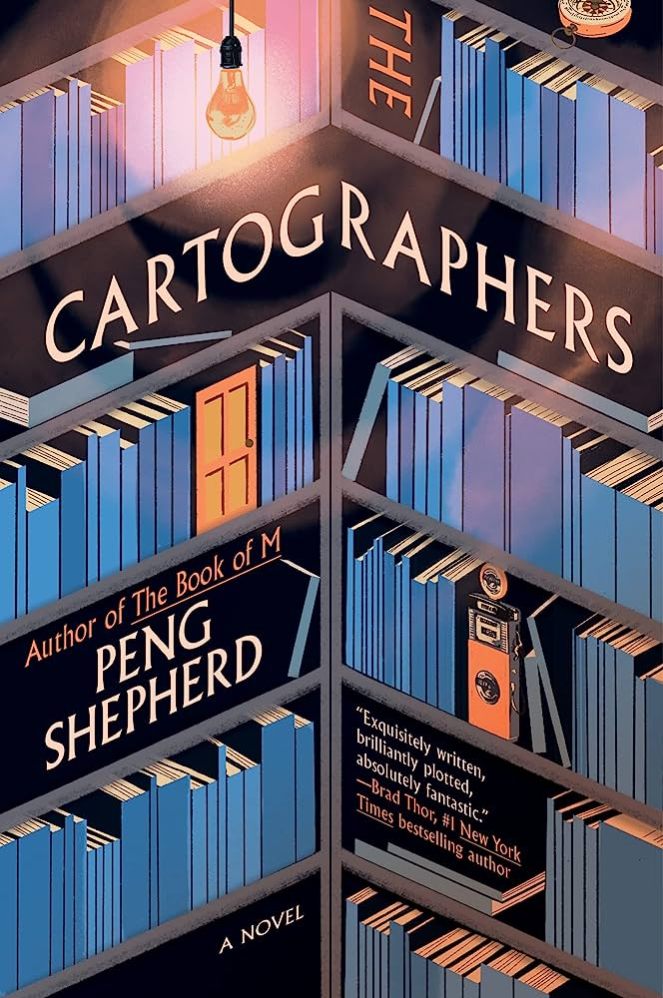
The Cartographers by Peng Shepherd

Image looks like a corner of two book cases. Shelves are lines with book books, an old fashioned camera, and a door. A bare lightbulb illuminated the title, which bends into the corner.

by Kristen B.

Maps fascinate me. I can lose time tracing routes and looking at where places are in relation to other places. Sometimes, it’s part of planning a vacation or maybe thinking through historical events. Other times, it’s just daydreaming. The Cartographers by Peng Shepherd hit me right in all of my map-loving feels. At heart, this novel is written directly for anyone who has ever pored over a map with a little wonder and wanderlust.

The book begins as Nell Young receives distressing news that her estranged father was found dead in his office at the New York Public Library’s maps division, in the main building on Fifth Avenue. The fast-moving plot intertwines current-day murders with Nell’s parents’ halcyon college days spent at the University of Wisconsin’s renowned cartography program, living the dream with a group of incredibly close friends. When Nell arrives at the library where she spent her childhood and always planned on working, she checks the secret compartment in her father’s desk. She finds an old gas station map of the state of New York, the very object that caused their years-long rift.

The combined mysteries of the cheap, old map and her father’s death propel Nell into a running, breathless search to figure out what happened to her dad, and, in turn, to her mom. As Nell researches the surprisingly valuable 1950s road map, her life becomes complicated by an old boyfriend, old family friends, and the need to stop anyone else from dying. In a related entanglement, the old boyfriend works for a cutting-edge tech company looking to create the “perfect map.”

About the time the gas station map was manufactured, various small cartography companies began adding copyright traps to their intellectual property to stop bigger corporations from stealing their work. It’s a fascinating bit of trivia that becomes pivotal to all the knotty problems, but I don’t want to spoil the fun of discovery. I’m not sure the author fully delivers on the set-up, but it’s a great premise. In the end, though, Shepherd wraps it all up and puts a bow on this story.

I really enjoyed how this book mapped the plot from past to present, where certain roads ran true and others were always traps for the unwary. On one level, it’s a cautionary tale about obsession and secrecy. As always, the solution is trust and transparency. Nell knows it, and she is strong enough to solve her own life.

Available as a print book , e-book, and an e-audiobook.

Kristen B. is a devoted bookworm lucky enough to work as the graphic designer for HCLS. She likes to read, stitch, dance, and watch baseball in season (but not all at the same time).

Next Year in Havana by Chanel Cleeton

A dark haired young woman sits in a coral colored party dress. Her skirts fade into the skyline of Havana's seaside.

by Kristen B.

“Next Year in Havana” is apparently a traditional toast for those of Cuban descent living in the US. It’s also the title of a thought-provoking historical novel that takes place in 1959 and the present.

I have to admit … I know almost nothing about Cuban politics and history beyond the obvious. The ongoing, repressive Castro regime brings communism to our back porch, cars are beautifully well-preserved old models, and Miami is home to exiles/immigrants. The revolution happened before I was born, and these are fleeting impressions left from public school and news programs.

Next Year in Havana added some details to that rough sketch. In the first timeline, Elisa Perez is the wealthy, privileged daughter of a sugar “king,” who supports Batista … or at least has every interest in maintaining the status quo. In the present day, her granddaughter Marisol returns to Havana after Elisa’s death to fulfill her final wishes. Beautiful descriptions of the island, the sea-walk, the old city, and the beaches complete this love story Cleeton has written to the country her family left.

As Castro’s forces are lobbing bombs, Elisa sneaks out one night with her older sisters to a party in a working class neighborhood where a friend of a friend of a boyfriend is throwing a get-together. Here she meets Pablo, a university student who is part of the 26th of July movement. Also, Elisa’s brother has been disowned for being part of the rebellion, but he works with a different faction. It all gets complicated, and it all goes wrong.

In the opening scene, the Perez family flees Havana for Coral Gables, Florida, where they rebuild their fortunes. As she and her sisters become the family matriarchs, Elisa essentially raises Marisol. And so we transition to the present, when Marisol makes arrangements to stay with her grandmother’s best friend and old neighbor, Ana, as she returns her grandmother’s ashes to Havana. Ana’s grandson, a professor of history and underground blogger, picks up Marisol from the airport, and their attraction is immediate and electric. Luis becomes her guide to Cuba, both physically and historically. The addition of a Perez scion in his life attracts the wrong sort of attention from the government, for both of them.

Everyone has to make hard choices entangled by expectations, family dynamics, and politics. Money and power have very little grace for young lovers, either 60 years ago or now. While the stories share certain parallels, the women carry these plots each in their own way. The supporting cast of sisters/aunts and extended family makes it all more believable. These characters truly behave like people grounded in their families, cultures, and belief systems.

This book, however, is not really a romance – despite the couples at the heart of both stories. The soft focus packaging is disingenuous marketing and does this excellent historical novel no favors. This book is a sucker punch of how real world choices can have devastating consequences. I enjoyed this book immensely. It may have helped that I read it during a weekend at the beach, with the sounds of the ocean in the background.

Next Year in Havana by Chanel Cleeton is available in print, as an eBook, and as an eAudiobook through OverDrive and CloudLibrary.