My Friends by Fredrik Backman

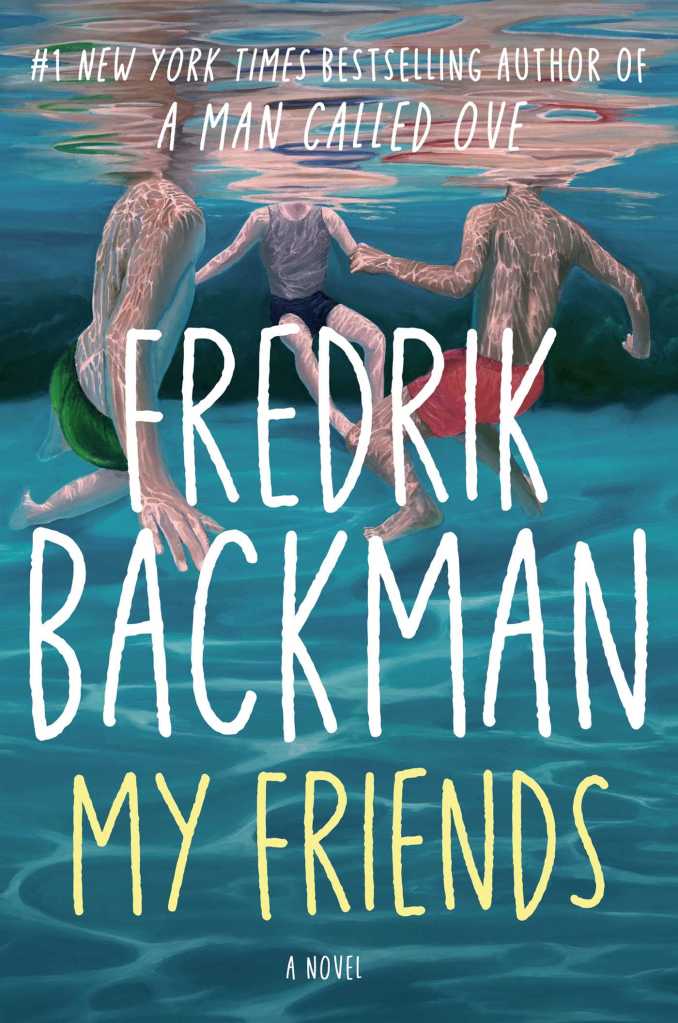
A sort of underwater shot, but illustrated, of three people in a swimming pool - three men in standard bathing trunks. Type treatment of title and author in the usual skinny handwriting style of Backman's books.

Our next chapter starts soon when the blog moves to the newly redesigned hclibrary.org. All the same great reviews and news, plus more library information!

by Kim J.

Once I read my first Fredrik Backman book, I couldn’t stop. I devoured each of his titles in quick succession and recommended them to anyone who would listen. Each of Backman’s books is a snapshot of humanity: character-driven stories that weave together timelines and perspectives with honesty and emotional depth. While reading his novels, I laugh, I cry, and sometimes I laugh until I cry. His characters feel so real that I become genuinely invested in their lives, making it bittersweet when their stories end. One of my favorite parts of reading Backman is his gift for language. His turns of phrase are fresh, ringing true and making me marvel at the mind that created them. 

Some favorites: 

  • “A lack of self-confidence is a devastating virus. There’s no cure.” – My Friends
  • “Boats that stay in the harbor are safe, sweetheart, but that’s not what boats were built for.”   – Anxious People
  • “Having a grandmother is like having an army. This is a grandchild’s ultimate privilege: knowing that someone is on your side, always, whatever the details.” – My Grandmother Asked Me to Tell You She’s Sorry

When I heard Backman had a new book out this year, I immediately added myself to the holds list. My Friends is the newest addition to Backman’s repertoire, and it did not disappoint. One of the main characters, Luisa, is a 17-year-old who has run away from her latest foster home. She loves art, and her favorite painting is about to go up for auction. She’s determined to see it in person at least once in her life. While she’s excellent at making plans, life has a way of surprising her. Her story is interlaced with the backstory of how her favorite painting came to be. What follows is an adventure filled with creativity, love, grief, friendship, found family, inside jokes, and storytelling. I highly recommend My Friends if you like humor, heartfelt depth, and a warm, bittersweet ending. However, it does need some content warnings: the story touches on several heavy topics including domestic violence, sexual assault, physical abuse, and bullying. In the end, it’s a story that stays with you long after you turn the last page. 

While you may have to wait for My Friends (available in print, large print, e-book, e-audiobook), you can explore other equally wonderful titles by Fredrik Backman: 

Anxious People 

Beartown Trilogy: Beartown, Us Against You, The Winners 

A Man Called Ove 

My Grandmother Asked Me to Tell You She’s Sorry 

Britt-Marie Was Here 

Kimberly J is an Instructor and Research Specialist at the HCLS Glenwood Branch. She enjoys reading, photography, creating, crafting, and baking.
The Teller of Small Fortunes by Julie Leong

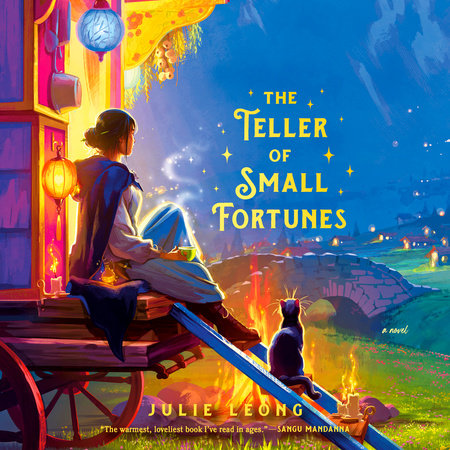
The colorful cover illustration shows a young woman sitting on the back of a caravan, with a cat at her feet, in front of a small campfire gazing out at a small town and a night sky.

by Kristen B.

Cozy fantasy is such a wonderful antidote to real life stress and chaos. The Teller of Small Fortunes brings all the good vibes. It’s a story full of found family and small stakes – but ones that become more important as the story progresses. Sometimes, one person making good decisions at the right inflection point can truly make a difference. I really need to believe that these days.

Tao travels in her custom-made wagon with her mule as her sole companion, setting up shop to tell regular people their small fortunes. Nothing too momentous, but important just the same. She brings a little happiness and diversion from mundane days. It’s a good life, if at times a little lonely. When she finds her road blocked by a tree, two new friends come into her life who also provide a little extra security – Mash and Silt, who used to campaign together and now are life-long friends. They are looking for Mash’s missing daughter and happen to be traveling in the same direction. Silt is a bit of a rogue, and Mash is one of the best friends anyone could wish for.

At their next stop, they meet Kina, the baker’s apprentice whose wares taste delicious but don’t always look particularly polished. She wants to see the world, or at least more than her seaside town that smells overwhelmingly of fish. Eventually, the group picks up a stray cat – who might be magical or might just be a cat. In one of my favorite episodes, Kina and Tao invent fortune cookies to sell in places where Tao’s magic might be less welcome.

As the travels continue, the small group forms tight friendships. It also becomes clear that there’s more to Tao than just small fortunes as their group is hounded by a representative from the kingdom’s official magicians. Tao doesn’t want to be involved in large scale politics, mostly because of bad childhood memories and her mother’s reaction to her magic. She just wants to be left alone to live her chosen life – but sometimes, friendship encourages us to overcome our fears and work for the greater good. For every problem introduced, a resolution comes along through a combination of good will, assuming the best, and being a good friend. If only it worked as well as that in real life.

The Teller of Small Fortunes by Julie Leong is available as a book, e-book, and e-audiobook.

Kristen B. is a devoted bookworm lucky enough to work as the graphic designer for HCLS. She likes to read, stitch, dance, and watch baseball (but not all at the same time).

Our next chapter starts soon when the blog moves to the newly redesigned hclibrary.org. All the same great reviews and news, plus more library information!

Author Works with Chimamanda Adichie

Sun, Nov 23 | 2 –3 pm
HCLS Miller Branch
For adults. Register at bit.ly/Author-Adichie

Chimamanda Adichie, the bestselling and award-winning author of Americanah and We Should All Be Feminists— converses about her new novel, Dream Count. In this highly anticipated new release, Adichie tells the story of four women and their loves, longings, and desires.

The story’s main character, Chiamaka, is a Nigerian travel writer living in America. Alone in the midst of the pandemic, she recalls her past lovers and grapples with her choices and regrets. Zikora, her best friend, is a lawyer who has been successful at everything until, broken-hearted, she must turn to the person she thought she needed least. Omelogor, Chiamaka’s bold, outspoken cousin who works as a financial powerhouse in Nigeria, begins to question how well she knows herself. And Kadiatou, Chiamaka’s housekeeper, proudly raising a daughter in America, faces unthinkable hardship that threatens all she has worked to achieve.

In Dream Count, Adichie trains her fierce eye on these women in a sparkling, transcendent novel about the very nature of love itself. A reflection on the choices we make and those made for us, on daughters and mothers, on our interconnected world, Dream Count pulses with emotional urgency in language that soars with beauty and power.

Chimamanda Ngozi Adichie was born in Enugu, Nigeria in 1977. She grew up on the campus of the University of Nigeria, Nsukka, where her father was a professor and her mother was the first female registrar. She studied medicine for a year at Nsukka then left for the US at the age of 19 to continue her education on a different path. She graduated summa cum laude from Eastern Connecticut State University with a degree in Communication and Political Science.

She has a Master’s Degree in Creative Writing from Johns Hopkins University and a Master of Arts degree in African History from Yale University. Her first novel, Purple Hibiscus, won the Commonwealth Writers’ Prize, and her second novel, Half of a Yellow Sun, won the Orange Prize. Her 2013 novel Americanah won the US National Book Critics Circle Award and was named one of The New York Times Top Ten Best Books of 2013. Her latest book, Dream Count, won the Women’s Prize for Fiction.

Our next chapter starts soon when the blog moves to the newly redesigned hclibrary.org. All the same great reviews and news, plus more library information!

The End of the World as We Know It

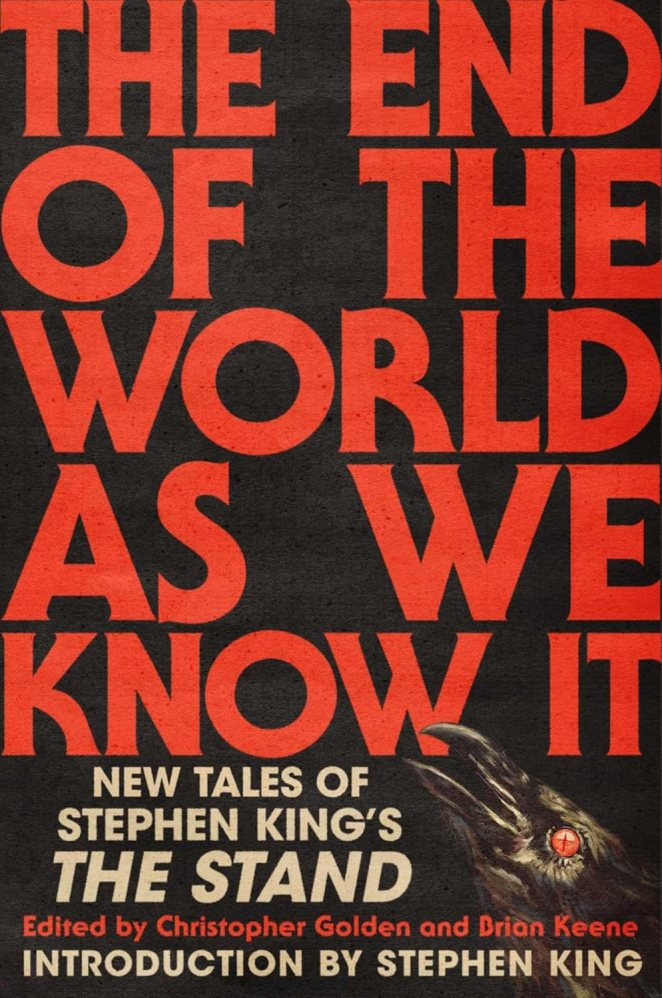
The book cover has a raven with a reddish-orange eye in the lower right corner, with its open beak extended up and looking directly at the viewer.

by Angie E.

In a year that feels like it’s testing every emotional fault line, some readers crave escape through lighthearted rom-coms or cozy mysteries. But for others, especially those feeling raw, anxious, or on edge, those stories can feel like a slap in the face. When the world feels broken, sometimes the only thing that makes sense is reading about the end of it. Two recent releases offer radically different but equally powerful takes on apocalypse: one fictional, one factual, both deeply human. 

For the first time ever, Stephen King has authorized other writers to expand the world of The Stand, his iconic 1978 novel about a pandemic that wipes out most of humanity and pits survivors in a battle between good and evil. Edited by Christopher Golden and Brian Keene, The End of the World as We Know It features 36 all-new stories from a dazzling lineup of authors: Wayne Brady, Caroline Kepnes, Tananarive Due, Paul Tremblay, Alma Katsu, and many more. 

The stories span the initial outbreak, the migrations to Boulder and Las Vegas, and even decades beyond the original novel’s timeline. They’re terrifying, philosophical, and sometimes heartbreakingly tender. For readers who feel like they’re living through their own version of The Stand, this anthology offers catharsis, community, and a reminder that even in collapse, there’s room for hope. 

The book cover shows a shooting star seemingly exploding above a cityscape in shades of blue and yellow, against the backdrop of a night sky and many stars.

If The End of the World As We Know It is a fictional dive into the apocalypse, Everything Must Go by Dorian Lynskey is its nonfiction counterpart, a sweeping, witty, and surprisingly comforting cultural history of how we’ve imagined the end across centuries. Lynskey explores everything from religious prophecies to pandemic fiction, climate collapse, rogue AI, and nuclear dread. He name-checks everything from The Road to Children of Men, The Twilight Zone to The Purple Cloud, weaving together pop culture, science, and philosophy into a rich tapestry of our collective anxieties. 

What makes this book so compelling is its insight: apocalyptic stories aren’t just about destruction, they’re about transformation. They reflect our fears, but also our longing for clarity, justice, and rebirth. For readers struggling in 2025, these books offer more than just entertainment. They offer validation and say: You’re not alone in feeling like the world is ending. And they do it without sugarcoating or false cheer. Instead of asking you to pretend everything’s fine, they invite you to sit with the chaos—and maybe even find meaning in it. 

Angie is an Instructor & Research Specialist at Central Branch and is a co-facilitator for Reads of Acceptance, HCLS’ first LGBTQ-focused book club. Her ideal day is reading in her cozy armchair, with her cat Henry next to her.

Our next chapter starts soon when the blog moves to the newly redesigned hclibrary.org. All the same great reviews and news, plus more library information!

Bauder Book Talk: Meet two of the authors of Blackout

A black illustrated cover where two people standing holding hands, backs to the viewer, with a sketched city in front of them and lots of small windows lit up.

by Carmen J.

What do you get when you have six talented young adult authors, a pandemic, and a beautiful excuse to celebrate many versions of black love and romance? You get Blackout written by Dhonielle Clayton, Tiffany D. Jackson, Nic Stone, Angie Thomas, Ashley Woodfolk, and Nicola Yoon. Even better, you’ll get to see two of the featured authors (Clayton and Woodfolk) at the third annual Bauder Book Talk event on November 6 from 4:30-6:30 pm at HCLS’s East Columbia Branch.

Written and inspired during the 2020 pandemic and set in New York City during a blackout, each author contributes connecting narratives — which can stand alone — about Black teens in the midst of their unique, complicated, joyful, sometimes simple, often spontaneous, intense, surprising romantic journeys. Whether it’s two young men catching feelings on a stalled subway, a couple who must talk through their past relationship over a long walk across town, two girls whose chance encounter ignites a spark in a nursing home, each interwoven story shines to a satisfying conclusion at a Brooklyn block party. 

In particular, Woodfolk’s “Made to Fit,” Clayton’s “All the Great Love Stories … and Dust,” and the closing story titled “Seymour and Grace” (written by Yoon) are stand-outs. Bonus points for Blackout’s inclusion of queer love and the acceptance of the adults in their lives (Made to Fit). The warmth and feel-good feelings of Blackout remain long after the lights are back on.

EVENT HAPPENING ON NOVEMBER 6: Register now!

Celebrate the voices of young Black girls in literature at this year’s Bauder Book Talk. Dhonielle Clayton and Ashley Woodfolk share how their stories center joy, magic, and truth while creating space for Black teens to see themselves on the page. 

Clayton is a New York Times bestselling author and former middle school librarian whose work celebrates Black joy, magic, and possibility. She is the author of The Belles series and the Conjureverse series.

Woodfolk is the critically acclaimed author of The Beauty That Remains and When You Were Everything. Her work explores love, loss, friendship, and the complexities of finding one’s voice. A former publishing professional, Woodfolk is celebrated for her lyrical prose and heartfelt storytelling that resonates deeply with teens. 

Carmen J. is a teen instructor at HCLS East Columbia Branch. Among her favorite things are great books, all things 80s, shamelessly watching The Bachelor, gardening, and drinking anything that tastes like coffee.

Read Babel in 2025 (while waiting for Katabasis)

An illustration that looks like a highly detailed, black and white print shows a tall, classic tower set against a stormy sky. The title and author's name appear in gold copperplate lettering.

By Julia M.

If you’re a fiction reader, you have probably heard buzz about R.F. Kuang’s latest book, Katabasis. While you’re waiting for your hold on Katabasis to be delivered, I’ll make my case for you to pick up Kuang’s 2022 hit, Babel: or the necessity of violence: an arcane history of the Oxford Translators’ revolution. If you’ve been yearning for the kind of book hangover that makes it impossible to pick up anything else because your mind is plagued with thoughts of the book you just finished — this is the book for you. (True story: I finished Babel over a month ago and haven’t stopped thinking about it since.) 

Babel is set in a historically re-imagined 1800s Oxford, England. We first meet the main character, Robin, as he’s dying of cholera in Canton, China. A professor from Oxford, Richard Lovell, comes to save his life with magic — but only after Robin’s mother passes away from the illness. From then on, Robin is raised as Professor Lovell’s ward, and spends the rest of his childhood being prepared for a higher education at Oxford University’s Royal Institute of Translation, also known as Babel. At Babel, Robin meets fellow year-mates Ramy, Victoire, and Letty, who become an inseparable band of friends throughout their education. He discovers a secret society that sparks the rumbles of revolution on campus — and whose connections run deeper than first meets the eye. 

If you’ve read The Poppy War or Yellowface, you’ve already become familiar with the pattern of R.F. Kuang’s books — she constructs a setup that is exciting, endearing, alluring, and which might be a book of its own in the hands of another writer. After she makes you fall in love with her characters, she does something that sets her apart: she swings the pendulum of reality in your face. You’re made to face brutalities that exist in our real-world society and shatter any delusions of a happily-ever-after for the characters you’ve grown to love.

R.F. Kuang writes with candor about colonialism, racism, language, academia, and power. To weave in elements of fantasy is an added bonus that makes the world rich and makes you wish you could stay in its happy places longer. For better or for worse, you’ll fall in love with the group of four hopeful students we meet at the onset of the story; I can’t say more about them without spoiling the story, so go ahead and read for yourself.

Babel by R. F. Kuang is available in print, e-book, and e-audiobook formats.

Julia is a Teen Instructor & Research Specialist at the Central Branch. They love reading YA books, playing the cello, practicing martial arts, trying new cookie recipes, and generally squeezing as many hobbies into a day as possible. 

Bauder Book Talks: Joy, Magic & Truth

Thu, Nov 6 | 4:30 – 6:30 pm t
HCLS East Columbia Branch
For ages 11- 18. Registration required at bit.ly/bauder2025

A black illustrated cover where two people standing holding hands, backs to the viewer, with a sketched city in front of them and lots of small yellow stars.

Celebrate the voices of young Black girls in literature at this year’s Bauder Book Talk. Ashley Woodfolk shares how the stories center joy, magic, and truth while creating space for Black teens to see themselves on the page.

Middle and high school students are invited to hear directly from the author and receive a free copy of Blackout.

Ashley Woodfolk is one of the many co-authors of Blackout, an acclaimed YA novel that follows thirteen teenagers in six interlinked stories. After a summer heatwave causes a citywide power outage in New York City, Black teens explore love, friendships, and hidden truths over the course of a single day.
Woodfolk is the critically acclaimed author of The Beauty That Remains and When You Were Everything. Her work explores love, loss, friendship, and the complexities of finding one’s voice. A former publishing professional, Woodfolk is celebrated for her lyrical prose and heartfelt storytelling that resonates deeply with teens.

Bauder Book Talks is made possible by a generous gift from Dr. Lillian Bauder, a community leader and Columbia resident. Howard County Library System presents this annual endowed author event, for under-served students in grades 6-8 attending public schools in Columbia with high percentages of African American and BIPOC (Black, Indigenous, People of Color) students. Authors and titles selected are high-interest and high-quality on topics of social issues, equity, and related matters. Student participants have the opportunity to hear from and engage the author and receive a copy of the author’s book. The event honors the memory of Don Bauder, late husband of Dr. Lillian Bauder and a champion of civil rights and social justice causes.

The Queen’s Thief series by Megan Whalen Turner

The covers of all six books of the Queen's Thief series.

by Kristen B.

A long time ago, when I first started working for the library, I was trading “have you reads” with another staff member. She asked if I – and my then elementary-aged children – had yet read The Thief. We had not but quickly rectified the situation, and I have spent the past two decades recommending that book and its sequels in turn. I re-read them this summer, one after the next as a complete series, and was blown away all over again. There are six books, and each one is excellent in its own way. They may have call numbers that place them in Children’s and YA fiction, but these books are for everyone. Honestly, I do not understand this marketing at all – these books tackle freedom, politics, religion, disability, war, espionage, being true to yourself, falling in love, friendship, loyalty, and so much more.

Part of the delight of these books comes from the fact that the author excels at turning the tables; things are often not quite what they appear. We learn in the first book not to trust the main character Eugenides, the Queen’s Thief of Eddis, any farther than you can throw him – but also, you can trust him with your life. The next five books continue to play with expectations and appearances. I don’t want to ruin the pleasure of discovery – so here’s a quick peek at each book in the series:

The Thief
We are introduced to a small peninsula of three countries, Attolia, Eddis, and Sounis, trying to survive in a world where large empires are greedily subsuming smaller states. Hamiathes’ Gift, a divine object, conveys the right to rule the mountain kingdom of Eddis, except it’s been lost for generations. A wise man, his apprentices, a guard captain, and a notorious thief removed from prison go on a quest to recover it.

The Queen of Attolia
What happens when the Thief gets caught? Eugenides suffers horrible personal consequences and must overcome them to advance his own interests and to keep the allied countries free from the Mede Empire. This book is not for the faint of heart, as it portrays dismemberment and consequent depression. However, it offers an amazing look at how people can suffer major setbacks and continue to achieve their dreams.

The King of Attolia
What happens when the Thief gets what he wants? This is my absolute favorite book of the series, mostly because it’s funny to read about Eugenides coming to terms with the life he has literally begged, bartered, and stolen for. This installment also expands the cast from the point of view of a new character, the soldier Costis, and it is better for it.

A Conspiracy of Kings
Once again, the narrative shifts to a new character – Sophos, the heir of Sounis. His coming-of-age story has larger ramifications for the little peninsula. The Medes continue to encroach, the local barons continue to scheme, and Sounis has to decide if he’s up to the task of being king. Eugenides still figures greatly, if not obviously.

Thick as Thieves
So … about those Medes. The fifth book seems like a side story, until you realize exactly how far Eugenides will go for some revenge. After all, why have only one reason to do something when you can have many? The story follows Kamet, who had a minor role previously, as he escapes his enslavement with the help of our favorite Attolian guard. Only, Kamet has no plans to leave his powerful position until he thinks he has no choice.

The Return of the Thief
Not many series get an ending as excellent as this one – and it’s just about perfect! All of the threads and themes from the previous five books come together in this stunning conclusion. War comes at a price, and that price is paid in many ways by many people.

Eugenides and the rulers are the common elements across the series, but mostly it’s about the titular Thief. It’s a fascinating look at how someone raised and trained to work outside of the conventional hierarchy behaves once he becomes synonymous with said power structures. On the other hand, these books contain some of the best stories written in the past decades, filled with humor, adventure, and a rip-roaring good time. You should read them!

Kristen B. is a devoted bookworm lucky enough to work as the graphic designer for HCLS. She likes to read, stitch, dance, and watch baseball (but not all at the same time).

The Stars Too Fondly by Emily Hamilton

The Book Cover depicts two young people, one wearing blue and one wearing brown and gold, reaching out for each other while moving through space in front of a bright heavenly body., with distant stars in the background.

by Eliana H.

What makes someone a person? What is needed to fall in love? How might society grapple with a significant and mystifying setback in their efforts to secure a safe new home for humanity? What might another dimension be like? What are the moral ramifications of destroying a sentient species we can’t begin to comprehend if it means saving humanity? Readers of The Stars Too Fondly by Emily Hamilton may find themselves pondering these and other questions, while also laughing, crying, and maybe falling a little bit in love themselves.

Twenty years ago, humanity’s hope suffered a huge blow. The Providence I, a spacecraft powered by a dark matter engine, was supposed to take its crew of more than 200 people to a planet orbiting Proxima Centauri, where they would establish the first human colony on an exoplanet. Instead, the entire crew vanished at the moment of launch, leaving the empty ship and a very confused populace behind. Cleo McQueary and her best friends were children when the Providence I crew was preparing to launch and then disappeared, and they have grown up under the shadow of the mystery, wondering what happened. 

Due to a troubled relationship with her father, Cleo spends most of her time with those best friends who have become her chosen family, Abe, Kaleisha, and Ros. Each of them was profoundly influenced by the anticipation of the Providence I launch and the disaster of the crew’s disappearance. Now adults, they have spent the past two decades frustrated by Earth’s abandonment of space exploration after being unable to determine what happened to the Providence I crew. And of course, the situation on Earth has continued to deteriorate since then as well. 

Cleo’s insatiable curiosity has led the four friends to devise a “space heist,” where they will break into the abandoned facility owned by now-defunct Erebus Industries and explore the Providence I for themselves. The friends are able to reach the ship surprisingly easily, but things do not go according to plan from there. The dark matter engine activates at Cleo’s touch, and they find themselves heading toward Proxima Centauri B. None of them are trained astronauts, and they haven’t even said goodbye to their families. Thankfully, their topics of expertise are fairly relevant. They also have unexpected help from a holographic version of the original mission’s captain, Wilhelmina Lucas. Captain Lucas looks just the same as they remember, but she’s 20 years behind on what has been happening. And, of course, she’s a computer construction of the real Captain Lucas’s consciousness. 

This particular computer has a lot more personality than readers may be used to, and the book invites readers to consider what constitutes consciousness and sentience – is this version of Billie, as Captain Lucas invites her unexpected passengers to call her, a person? Cleo and her friends certainly come to see her as one, even without ever being able to physically interact with her. The relationships they develop with her certainly push the boundaries of what one would imagine might develop between a human and a hologram. As the group tries to solve the problem of returning home to Earth, they also work to unravel the mystery of exactly what happened on the Providence I all those years ago. Will they be able to find the missing crew? Will they make it home themselves? What else will they discover on their travels? To learn the answers, check out The Stars Too Fondly, a debut described by the publisher as “part space odyssey, part sapphic rom-com.”

Eliana is a Children’s Instructor and Research Specialist at the Elkridge Branch and co-chair of the HCLS Equity Committee. She loves reading, even if she’s slow at it, and especially enjoys helping people find books that make them light up. She also loves being outside and spending time with friends and family (when it’s safe).

The Possession of Alba Díaz by Isabel Cañas 

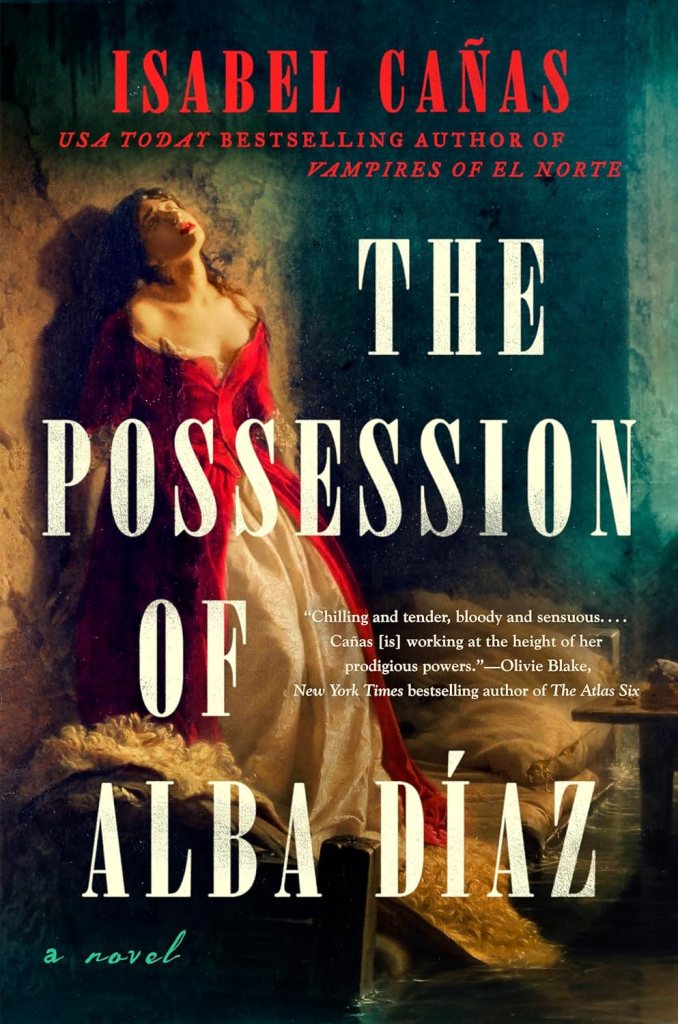
The book cover depicts a woman standing on a bed and leaning against a wall, with her eyes closed and face upturned towards the ceiling. Her lips are red and match her red dress, fastened over a white underskirt. Her long brown hair tumbles around her bare shoulders. The dress is in the style of the 1700's and the scene has a dark, Gothic feel, although she appears to be lit by natural light from a nearby window.

by Alex H.

If you’re anything like me, September 1 marks the start of Halloween season (yes, season). There’s no better way to celebrate the start of all things scary and ghoulish than by reading a horror novel, and that’s what I did when I picked up Isabel Cañas’ newest book, The Possession of Alba DĂ­az. If you like ghosts, Mexican history, and gothic romance, this is the story for you!

The Possession of Alba DĂ­az is set in Zacatecas, Mexico in 1765. When a plague descends on her city, a young woman named Alba and her family retreat into the mountains. They take refuge at a mine owned by Alba’s fiancĂ© and his family, but it is not the safe haven they were promised. Alba starts sleepwalking and hearing strange voices from deep in the mine, but most worrying of all is how she no longer feels alone in her own head. 

Meanwhile, ElĂ­as, the black sheep of her fiancĂ©’s family, has arrived in the New World hoping to quickly make his fortune and escape his greedy family. His plan falls apart when he meets Alba and the two are drawn to one another, despite her rather inconvenient engagement to his cousin and the demon lurking under her skin. Lucky for Alba, ElĂ­as knows a thing or two about demons… 

I raced through this book. Cañas does a wonderful job of blending history and the paranormal to create a rich, fully lived-in world. Her two narrators, Alba and ElĂ­as, have voices that are distinct and wholly compelling, which makes for an electric romance. As for the horror aspect, Alba’s possession takes up a large chunk of the novel and there are more than a few creepy scenes. I’d say they lean more towards unsettling than scary, but your mileage may vary. 

Come for the haunted mine and angry demon, stay for the gothic romance and a delightfully wicked ending that’ll have you desperate for more historical horror this Halloween season. 

The Possession of Alba DĂ­az is available in print from HCLS in English and Spanish, and as an e-book and an e-audiobook from Libby/OverDrive.

Alex is a Teen Instructor & Research Specialist at the Glenwood Branch. When she’s not at the library, she likes to crochet cute animals, read all the horror and romance books she can get her hands on, and write stories about things that go bump in the night.