The Very Secret Society of Irregular Witches by Sangu Mandanna

A blue cover shows a large white house on a hill. Accents in yellow include a sliver moon, a woman on broom, a car, and the shirt on a man holding a pile of books.

by JP Landolt

When I was four years old, I told my brother that I was a 5,000-year-old witch. For nearly every Halloween thereafter, I was a witch. My truest form. As a child, every book I chose was unusually supernatural. A little dark. A little different. A lot like me. Indeed, this little Guamanian girl’s house was strewn with interesting reading material. Little did I know my witchy fascination would stick with me well into adulthood. When I say I was delighted to find that “witchy” books were gaining popularity among my (now adult) peers, you understand I was beyond ecstatic!    

The Very Secret Society of Irregular Witches by Sangu Mandanna is cozy, sweet, and a lovely listen. Samara MacLaren’s voice perfectly conveys a romanticized, present-day UK filled with worldly, contemporary witches. We follow Mika Moon, an orphaned witch from India who was brought to the UK and raised by Primrose. Primrose is a strict (regional manager type) witch who believes witches must live by the rules or risk persecution, or worse still – death. The most important of these rules dictates, “Alone is how we survive.”  

Mika is the very embodiment of this forced loneliness. Cursed from birth (like all witches), she is motherless, untethered, and yearning for family. A loveless, rootless existence is complicated by the necessity to live with magic in the world without being discovered. Her story demonstrates how witches experience the same kind of childhood trauma, feelings of insecurity, and a need for belonging much like any mere mortal.

Mika seeks connection so desperately that she creates an alter-ego (and a humble online following) where she “pretends” to be a witch concocting magical teas in her cauldron for all to see and enjoy. A safe and clever way to hide in plain sight. She is soon sought out by a group of characters inhabiting Nowhere House seeking a real witch to care for three young witches. She finds herself at the doorstep of Nowhere House interviewing to be a live-in tutor and her life is turned upside-down yet again, but in the best way. Shenanigans ensue, as can only be expected with young girls and spellcraft. The staff at Nowhere House only add to the story’s magic.

This story is brimming with magic, love, and found family. There’s an honest vulnerability that weaves through Mika’s character. You can’t help but see the gilded glitter of magic swirling in the landscape and the witches. You can’t help but be mesmerized by the lure of magic and the desire to control what is sometimes uncontrollable. And you can’t help but to empathize with Mika’s unrealized grief or cheer on her personal growth. My goodness, also to wish the brooding librarian to give her a kiss! Heavens!  

If anything, this book proves that magic not only lives in everyday places, but the most powerful magic wants to be used just as much as each of us deserves and wants to be loved. Read this book and embrace all the good there is in life, love – and feel magic again.  

The Very Secret Society of Irregular Witches by Sangu Mandanna is available an e-book and e-audiobook. There’s a bit of a wait, but it’s worth it.

JP has worked for HCLS since 2006. She enjoys gallivanting, Jollibee, and all the halo-halo she can eat.
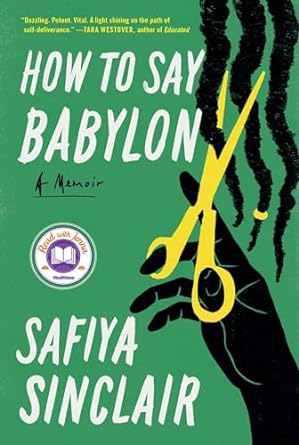

How to Say Babylon by Safiya Sinclair

The cover shows a hand holding a pair of yellow scissors and cutting three dreadlocks that are dangling from above; one has a yellow bead at the end.

by Piyali C.

Babylon, according to the strictest sect of Rastafari, is the corrupting influence of the Western world on Black people. Safiya Sinclair’s father, a follower of the religion’s most militant faction, was obsessed with the purity of his three daughters and determined to keep the immorality of Babylon from touching them. Howard Sinclair, who later took the name Djani to feel closer to his Rastafarian beliefs, was a staunch follower of Haile Selassie. He wanted to sing reggae songs, never touch his dreadlocks, and seek livity – the Rastafarian concept of righteous living. The precept meant he should raise his children in the Rastafarian tradition and live a life of harmony with his partner, Esther, the mother to his four children.

Djani was a musician with big dreams. After being rejected by his own mother for following the Rastafarian religion, after repeated failed attempts to make a name for himself in the music world, and finally, after having to relegate his music to being a source of entertainment for rich tourists (baldheads, as he called them, due to the lack of dreadlocks) visiting his homeland of Jamaica, Djani grew increasingly militant in his belief in the harmfulness of Western influences. Safiya, his oldest child, bore the brunt of his obsession with keeping the deceitful ways of Babylon out of his gate.  

Safiya’s childhood was spent near the sea and seemed almost idyllic. Her father left home every day to play his music at the hotels, and her mother nurtured her and her siblings with love and nourishment. Her parents met at the tender age of 18, found commonality in their Rastafarian beliefs, and never married but decided to make a life together. Esther became a demure Rastafarian woman who stayed home to nurture their children, cook Ital food, never disagree with her man, and do every household chore silently. Despite her quietude, she instilled a culture of hard work and a desire to achieve excellence in all of her children.

As a result, Safiya and her siblings excelled in school, scoring the highest grades in their exams. Djani continued to play music in hotels and even made a couple of trips to Japan to form a music band. He was the undisputed leader of his household just as his religion dictated. Safiya accepted this dynamic in her childhood, but Djani’s obsession about Safiya’s purity took a dangerous turn as she became an adolescent. Held captive by her father’s vicious efforts to keep her body and mind pure, Safiya turned to writing poetry to express her confusion, anger, and helplessness. The beautiful expression of her suffering through her art started resonating with the outside world, and Safiya won accolades and fame for her poetry. Gradually, Safiya grew into the woman that she wanted to become and not the woman her father envisioned her to be – another duty-bound and voiceless Rastafarian wife to a Rastafarian husband.

How to Say Babylon is a brutally honest portrayal of a life that initially felt nourishing and enriched with a lot of laughter, love, and filial admiration, but which soon turned into one of oppression and control. This is a story of a courageous woman’s endeavor to dictate the course of her life on her own terms, despite the shackles that threatened to hold her captive. While telling her own story in radiant, lyrical prose, Sinclair also paints a picture of the oppression of Black people by the Western world, the racial injustice, and the voices of women that are forcibly silenced by patriarchy. Yet those voices are still finding a way to ring free. Sinclair’s memoir recounts the history of Rastafarian religion– a religion that started as love and benevolence but which turned to fanaticism and radicalism on the part of some who wanted to use it to their own benefit and to control women. How to Say Babylon is also Safiya Sinclair’s love letter to her beloved Jamaica, her mother Esther, and her siblings Lij, Ife, and Shari.

As I read, I felt Sinclair wrote in order to set herself free and embark on a path to find forgiveness in her heart for the man who wronged her in a most cruel way. Writing a memoir is such a brave thing to do. Authors who write about their innermost pain, fear, and experiences allow themselves to be completely vulnerable. Such vulnerability is the first step towards healing, strengthening, and growing. In author Tara Westover’s words, How to Say Babylon is “Dazzling. Potent. Vital. A light shining on the path of self-deliverance.” I could not put this book down. 

How to Say Babylon by Safiya Sinclair is available in print, large print, e-book and e-audiobook formats. 

Piyali is an instructor and research specialist at HCLS Miller Branch, where she facilitates Light But Not Fluffy and co-facilitates Global Reads. She keeps the hope alive that someday she will reach the bottom of her to-read list.

HiJinx Podcast: Best Books of 2023

The photograph shows four book covers selected from the podcast list against a blue background.

By Jessica L.

“Tsundoku” is a whimsical Japanese term for collecting books in piles… to be read… eventually. You may have been practicing this without knowing there was a term for it! So, how did you do with your “To Be Read” pile this past year? Are you ready for more recommendations? Here you go!

Listen to our recent Hijinx podcast, Best Books of 2023, featuring voices from HCLS staff and community members. Past episodes can be found here.  

Favorite Books Read in 2023 from HCLS Staff & Customers 

The book cover depicts a figure standing at the top of a set of stairs in an alcove, hands behind back, looking at a large painting on a wall.

All the Beauty in the World: The Metropolitan Museum of Art and Me by Patrick Bringley

Beartown Trilogy (Beartown, Us Against You, The Winners) by Fredrik Backman 

Belle of the Ball by Mari Costa 

The book cover depicts a bird with something round like a berry in its mouth, sitting on a branch, in shades of orange and gold against a hazy green background.

Dinosaurs by Lydia Millet 

Hell Followed with Us by Andrew Joseph White 

The book cover depicts trees, branches, and undergrowth in the foreground and a lake and hills in the background, all in blue and white like a woodcut style that has been colorized.

Landmarks by Robert MacFarlane 

Leg by Greg Marshall 

Lone Women by Victor Lavalle 

The cover is in grey lettering against a black background, with a black snake winding in and out of the letters in the title.

Ninth House by Leigh Bardugo 

Remarkably Bright Creatures by Shelby Van Pelt 

Romantic Comedy by Curtis Sittenfeld 

The book cover depicts a woman with long hair and a bouquet of flowers in an off-shoulder white dress, sitting on a broomstick in front of a full moon in a dark sky.

Slewfoot: A Tale of Bewitchery by Brom

The book cover depicts snow falling on the roofs and chimneys of houses in a village or town. The snow is white and the buildings and background are emerald green.

Small Things Like These by Clarie Keegan 

The Sweetness of Water by Nathan Harris 

The Ten Thousand Doors of January by Alix E. Harrow 

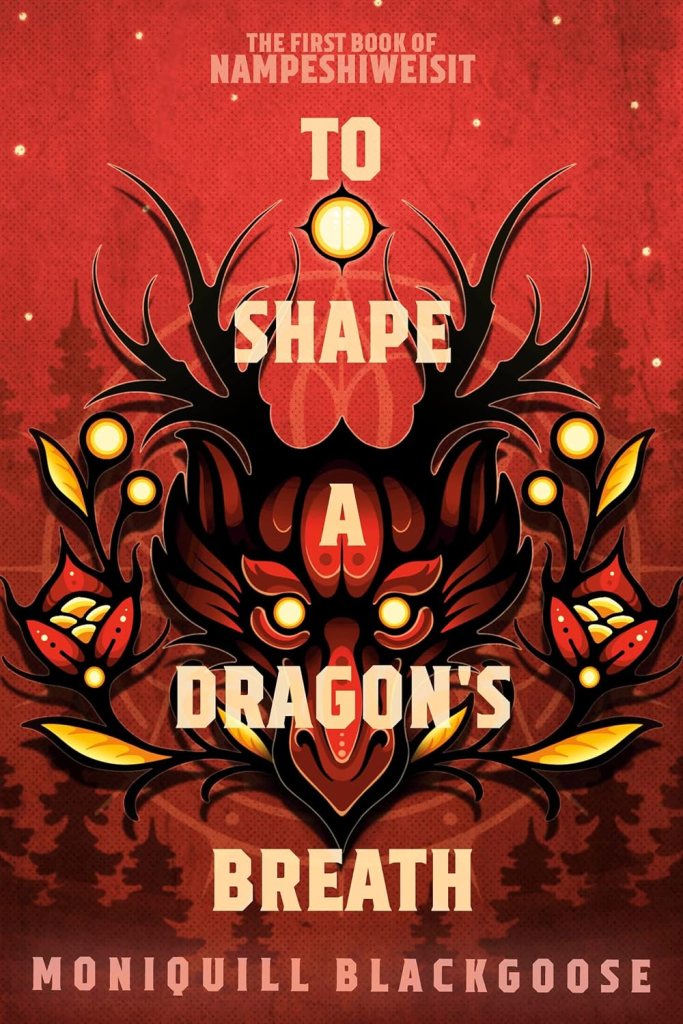
A illustration of a dragon like mask with horns. Pine trees are in the background.

To Shape a Dragon’s Breath by Moniquill Blackgoose 

Verity by Colleen Hoover (#1 Book requested and borrowed in 2023) 

The book cover depicts a cat, a pile of books, a coffee cup with a polar bear design, a white pillow with pink trim, and a leafy green plant in a terracotta pot, all framed by a black window frame against a blue sky and outdoor scene of other buildings and a tree with pink foliage.

What You Are Looking for Is in the Library by Michiko Aoyama 

JP has worked at HCLS since 2006. She is disappointed that the original Muppet Babies cartoon series is unavailable for streaming anywhere.  

Our 2023 Top 3 Lists

Readers responded enthusiastically all year long to the wonderful reviews our writers have shared. Since we know you enjoy reading about their book, movie, television, music, and video game recommendations, here are the top three favorites from our exceptionally knowledgeable and talented blog writers from the HCLS staff. Or, in some cases, perhaps a top four… it’s so hard to choose for these year-end retrospectives!

Cherise T., Central Branch

  • Barbie – Pitch-perfect, entertaining take on life as a woman, how it is, and how we wish it would be.
  • The Covenant of Water by Abraham Verghese – Multigenerational novel set in Karala, India, spanning over 70 years of a family cursed with deaths by water.
  • Tom Lake by Ann Patchett – Sharing endless hours together due to pandemic restrictions, two daughters learn more of their mother’s origin story in which Our Town plays a major role.
  • Wellness by Nathan Hill – What is the arc of a marriage when viewed through the lens of a photographer and a specialist in placebo psychology?

Piyali C., Miller Branch

Ash B., Central Branch

  • So Much (for) Stardust by Fall Out Boy – The boys are back with a triumphant return to guitar-based music, masterfully incorporating a range of influences while sounding utterly, uniquely Fall Out Boy
    Standout tracks include the hard-hitting opener “Love From The Other Side,” the sweepingly cinematic title track, and the disco-inspired “What a Time To Be Alive.”
  • Unreal Unearth by Hozier – The newest album from the beloved Irish singer-songwriter delivers much of what fans expect – poetic lyrics delivered in soulful baritone – wrapped up in crisp, new production. 
    Standout tracks include the irresistibly funky “De Selby (Part 2)” and the lead single “Eat Your Young” with its scathing social commentary and catchy hook.
  • Rush! by Måneskin – In their first record featuring mainly English-language songs, these Italian rockers showcase a keen pop sensibility along with plenty of guitar shredding and raw vocals. 
    Standout tracks include the mournful power ballad “THE LONELIEST” and the cheeky, energetic “MAMMAMIA.”

Sahana C., Savage Branch

  • Joan by Katherine J. Chen – Chen paints a really compelling picture of what Joan of Arc may have been: a strong girl, working within the confines of her environment to become the face of something so much greater than herself.
  • Haven by Emma Donoghue – A great contemplative read of ancient Irish history; a perspective that was new to me, and yet so familiar, with ties to the present.  
  • The Ballad of Songbirds and Snakes by Suzanne Collins – This was a re-read for me, and I liked it better this time around, as I accompanied it with a re-read and rewatch of the whole Hunger Games books/movies, thanks to the recent release of the Ballad movie!

Christie L., Administrative Branch

Kimberly J., Glenwood Branch

Peter N., Miller Branch

  • Wolfsong by TJ Klune – There was so much emotion, lycanthropy lore, and action at times that you’d almost think TJ Klune was a werewolf himself and had written this as an autobiography. I went on to the next book right after I finished Wolfsong!
  • Spider-Man: Across the Spider-Verse – The Spider-Verse movies have been so much fun! They’re funny, campy, and also dramatic in their own way. I cannot wait for part 2!
  • Star Trek Picard Season 3 – This was the send-off that the crew of the USS Enterprise deserved all along, an utter chef’s kiss and a true love letter to the fans. Action packed, emotional, and fun, this season is a fan favorite and worth every single re-watch.

Ian L., East Columbia Branch

  • One Piece (Anime, manga, and live action adaptation) – Pirates, Adventure, Freedom; if the endless dream guides your restless spirit, do yourself a favor and fall in love with One Piece.
  • Asteroid City – A star-studded cast, eccentrically written characters, and beautiful sets; a Wes Anderson medley on isolation in times of uncertainty.
  • Book of Hours (video game) – Restore a crumbling occult library as a Librarian whose work can literally define history.

Sarah C., Savage Branch

Brittany M., Miller Branch

  • Anne of Green Gables – I can’t keep count of how many times I’ve read about the escapades of literature’s favorite redhead. But every time I do, I’m delighted to reconnect with a “kindred spirit”.
  • The Empress (Netflix) – Based on the life of Empress Elisabeth of Austria, this binge-worthy historical drama is full of juicy plots and costume eye candy that will leave you anxiously awaiting the arrival of season two.
  • Barbie – Seeing my favorite childhood toy on the big screen tugged at my heartstrings and made me proud to discover that there is something deeper underneath her pretty perfection.

Julia M., Glenwood Branch

  • Yellowface by R. F. Kuang – Yellowface is the book I couldn’t stop thinking about this year, no matter how many months pass by after I finished reading it.
  • Tress of the Emerald Sea by Brandon Sanderson – Tress is a fantasy that hearkens after The Princess Bride and left me wanting to become a better, kinder person.
  • To Shape a Dragon’s Breath by Moniquill Blackgoose – Out of all the great dragon books that came out this year, this is the one whose sequel I’m most looking forward to!

Eric L., Elkridge Branch

  • Blue Rev by Alvvays – It came out in late 2022 and HCLS will have copies soon. This is the band’s third record, and they seem to have “broke” this year. You can borrow their previous two albums from HCLS. This record is more mature, lyrically and musically better.
  • Orwell’s Roses by Rebecca Solnit – The book deftly captures how his experiences and writings worked up to his magnum opus which he finished right before his death at 46 years of age. Solnit addresses his optimism and his love of nature, as well as his foibles.
  • The Grapes of Wrath by John Steinbeck (see my entire post here) is a great book, about America, greed, the impact of technology on humans, and the need for a social safety net. It is long, sad, and beautifully written; not a political book that aims to point fingers, but really a moral one.
  • Corruptible: Who Gets Power and How it Changes Us by Brian Klaas is probably related to both aforementioned books. Written in an entertaining journalistic style, it’s packed with interesting anecdotes and interviews, with examples of power wielded for the good of all as well as power that is abused. Klaas also suggests what we can do to improve the use of power in society.

Angie E., Central Branch

  • Holly by Stephen King – His best book in ages, but I will never see liver the same way again.
  • The Lunar Housewife by Caroline Woods – This pleased both my sci-fi and feminist sides.
  • The Survivalists by Kashana Cauley – This brilliant and funny novel stayed with me for a long time after I finished it.

Julie F., Miller Branch

  • Strange Flowers by Donal Ryan – Beautiful, haunting, brilliant. A look at two generations of a mixed-race Irish family and the loves and losses that bind them together and keep them moving forward.
  • A Thousand Ships by Natalie Haynes – Haynes gives voice to the voiceless women of the classic Greek plays and epics. She demonstrates how war never changes across the centuries, but it profoundly changes those it impacts, and never for the better.
  • Sweet Little Lies by Caz Frear – Great start to a crime fiction trilogy; for fans of Tana French and Susie Steiner. You’ll love Detective Constable Cat Kinsella, with her messy, complicated family life, sense of verve, and sarcastic, wisecracking humor.

Kristen B., Administrative Branch

  • The Very Secret Society of Irregular Witches by Sangu Mandanna (e-book and e-audiobook) – Feel-good found family and a ton of fun!
  • Braiding Sweetgrass by Robin Wall Kimmerer (as an audiobook on CD or an e-audiobook) – Changes your perspective on the world and our place in it. The author reads it, which makes it even better.
  • Witch King by Martha Wells – High fantasy, told upside down and backwards so you’re never quite sure what’s going on but wonderfully entertaining. She is the author of the highly popular Murderbot books, but this one is completely its own thing.

We hope you’ve enjoyed reading these writers as much as we’ve loved editing and sharing their terrific blog posts throughout 2023. Check out their favorites and let us know which you enjoy; visit any branch to get more suggestions and recommendations from our stellar team. Happy holidays and here’s to a 2024 full of great books and multimedia from the HCLS collection!

– Kristen B. and Julie F., Chapter Chats editors

The Once and Future Witches by Alix E. Harrow

A scrolling banner that reads The Once and Future Witches weaves among roses and greenery, along with a pair of silver scissors, a red snake, and a blackbird

by Kristen B.

Once upon a time, there were three sisters. I love a story about three sisters, probably because I am one. The Once and Future Witches grabbed my attention right away with Bella, Agnes, and James Juniper Eastwood. Bella is the bookish, rule following oldest (hello, yes, it’s me), followed by the fiercely independent Agnes who guards her heart, then the rebel, wild child June. They were separated from each other and their home in Crow County before the book opens but are unexpectedly reunited in New Salem as the story begins with a dramatic rally.

This wonderful, rich, layered novel closely weaves together many elements, including witching, suffrage, civil rights, and nursery rhymes. Witchcraft is forbidden, even if every woman knows a spell or two for domestic tasks and other “unimportant” business. It used to be more. Except women became too powerful (in whose eyes?), and the witch hunters burned down Old Salem. Since that time, the Way of Avalon, with its last Three witches, has been lost. Until all three Eastwood sisters were pulled into the town square by a strange spell that called the black tower of Avalon, briefly, into being above them.

This launches the Eastwoods into forming the Sisters of Avalon, a secret society of women who want to reclaim witching. By pooling knowledge and handed down stories, the sum becomes greater than its parts. They begin to piece together not just more power than any single woman had on her own, but what was lost when Old Salem burned. Each chapter begins with a small spell, mostly based on old nursery rhymes or superstitious sayings, along with the ingredients to make it work. Every spell needs the words, the way, and, most importantly, the WILL. None of the women in this book lack willpower, that’s for sure.

The sisters also have messy personal lives that compound the larger story. Agnes, who works in a mill, is unmarried and pregnant, and she chooses to raise the next generation of Eastwood women. Bella falls in love with a nosy newspaper-woman, who has keeps an interesting set of secrets within the Black community of New Cairo. This slow-burn romance lends an unexpected joyful note to the proceedings. And Juniper, well, she has her own murderous secrets and lonely heartaches.

Inevitably, the Eastwood sisters and the Sisters of Avalon cross the Powers That Be and all seems lost. But, not put too fine a point on it, where’s there’s a Will, there’s a Way. The end absolutely delivers on the promise of that first meeting in St. George’s Square. One of the things I appreciated about this novel was the villain, who is entirely, unapologetically villainous. Not many stories have such a defined antagonist these days, and it made the final showdown more meaningful.

I fell headlong into this story and was glad I picked it up over a long weekend where I didn’t feel guilty about losing an afternoon or two. It’s a long one, at 500+ pages, but I enjoyed spending the time with the Eastwood sisters, their friends, and their lovers. A brief review doesn’t really do the entirety of the story justice, but I don’t want to spoil the enjoyment of how the Eastwood Three – Maiden, Mother, and Crone – reclaim all that is rightfully theirs.

This title is available in print, e-book, and e-audiobook. You’ll have to wait for the electronic copies, but the physical book is ready to borrow.

Maame by Jessica George

A bold flower pattern in red, pink, and green along side a geometric pattern in the same colors sits behind the bold white type.

By Piyali C.

Maddie Wright is a 25-year-old British woman of Ghanaian descent who feels like her life is somewhat stagnant. She works as a personal assistant in a theater company where her boss suffers from depression. She is tired of being the only Black person at work and keeping a low profile so as not to attract attention. After exhausting days at work, she comes home to take care of her father, who suffers from advanced Parkinson’s disease. Maddie’s mother lives mostly in Ghana and her older brother James hardly chips in to help, leaving Maddie as the primary caregiver of her ailing father. When Maddie’s mother finally agrees to return home to London for a year to take over her husband’s care, Maddie jumps at the opportunity to move out and live life as an adult. She finds a flat to share, goes out for drinks after work with flatmates, tries to make her voice heard at work, and experiments with internet dating. However, when tragedy strikes, Maddie realizes that her family, rooted in Ghanaian traditions, is different and has its own unique needs and expectations. Maddie must come to terms with her identity as a Ghanaian British woman who struggles to straddle two cultures and make it work.

For me, the book was interesting for many reasons. First, it was amusing to read how Maddie, this young woman, navigates through some tough life questions by asking Google. Secondly, the significance of the book’s title made me think of my own Bengali culture and the practice of giving pet names (daak nam) to babies. Maddie is affectionately called Maame by her close family members, which means woman in Twi. And Maddie feels that she has had to be the caring, responsible, compliant, non-complaining person who took up the burden of her family’s responsibilities on her shoulders from childhood, because women are expected to do just that. At times, as a young adult left to care for her father or pay bills for family expenses, Maddie detested the name because it came with expectations. Gradually, with some help, she realizes not just responsibilities and expectations, but her name ‘woman’ is also emblematic of immense strength. Through self-introspection, help from her friends, and a candid conversation with her mother, Maddie comes to recognize the power of her name and understand the richness of her parents’ culture. And for the first time, she also understands that her mother is more than just her mother. She is a mother, a career woman, a wife, and most importantly a woman.  

In Bengali society, a common pet name for girl babies is different connotations of the Bengali word ma which means mother. Often, baby girls are named Mam, Mamon or Mamoni. This book made me wonder about the significance of those pet names and if there are expectations of motherhood associated with those names, but that debate is for another day. 

Maame, Jessica George’s debut novel, is a smart and funny exploration of the poignant themes of our times – relationships, loneliness, racism, adulthood, filial duty. I really enjoyed the growth in Maame’s character and found it to be a privilege to watch Maame figure out the significance of her name, grow comfortable in her skin, and ask for recognition in her work and society. 

Maame is available in print, e-book, and e-audiobook formats.

Piyali is an instructor and research specialist at HCLS Miller Branch, where she facilitates Light But Not Fluffy and co-facilitates Global Reads. She keeps the hope alive that someday she will reach the bottom of her to-read list.

Night Film by Marisha Pessl

A red toned cover with a fine circular pattern overlaid on a woman's profile, with the collar of her jacket turned up to frame a square jaw.

by Emily B.

I first read Night Film earlier this year over the course of a long weekend. Though the temperature was hot and the humidity almost unbearable, author Marisha Pessl transported me to a chilly October night in New York City with ease. Night Film is a perfect November book and is best enjoyed as the temperatures cool and the nights grow longer.  

The book opens with the mysterious death of Ashley Cordova, piano prodigy and daughter of infamous horror director Stanislas Cordova. Stanislas, who has a huge cult following, hasn’t been seen outside of his huge upstate New York estate in 30 years. 

Investigative journalist Scott McGrath has long been obsessed with Cordova and the mystique surrounding him and his films. He teams up with two unlikely sidekicks – a drifter and a wannabe actress – to uncover the truth behind Ashley’s death. Along the way, the three encounter a fair share of kooky and offbeat characters who offer insight into the case. 

Pessl peppers newspaper clippings, online forum posts, and other documents throughout the book, making you feel immersed in the investigation. This immersion is taken a step further with the bonus content available on Pessl’s Night Film Decoder website, which includes even more mixed media sources, like video and audio recordings.  

On top of all this, it’s clear that Pessl took her time devising Stanislas Cordova’s filmography. The details included about some of the fictional films are so illustrative and specific – down to the blocking or costumes in his most iconic movies’ scenes. All the descriptiveness surrounding the fictional films culminates in a jaw-dropping sequence about two-thirds through the novel. A sequence that I still find myself thinking about, nearly five months after reading the book.

Night Film is an engrossing, unputdownable read perfect for fans of horror and mystery. It’s a book whose atmosphere and characters stay with you for a long time. 

You can request a physical copy here or check out the e-book and e-audiobook versions on Libby/Overdrive.  

Emily is an Instructor & Research Specialist at the Central Branch. She enjoys puzzling, reading, listening to music, and re-watching old seasons of Survivor. 

To Shape a Dragon’s Breath by Moniquill Blackgoose

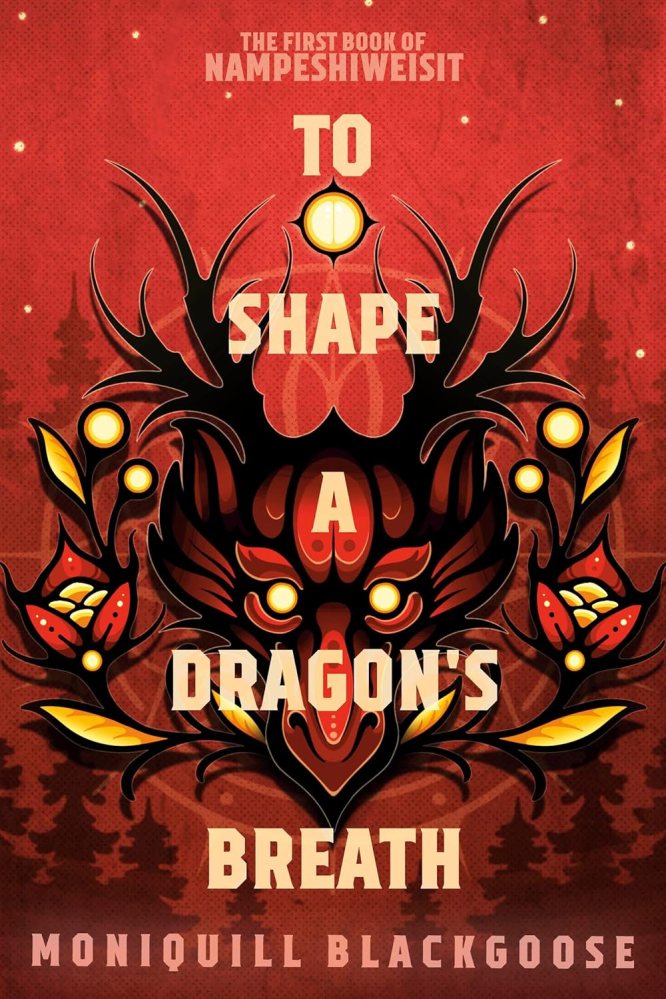
A illustration of a dragon like mask with horns. Pine trees

By Julia M.

When I’m looking for a new book to read, any book with a dragon on the cover immediately calls my name. To Shape a Dragon’s Breath caught me at the title, and with a gorgeous red-and-black illustration of a fierce dragon on the cover, I was sold! 

To Shape a Dragon’s Breath is the debut novel from author Moniquill Blackgoose. It’s a queer, Native American dragon rider story, full of originality and anti-colonial power. The magical worldbuilding is strong, and the cultural commentary is not subtle but refreshingly straightforward. We get dragons, Indigenous and LGBTQ+ representation, magical academia adventures, political intrigue, and more in this first book of the Nampeshiweisit series.  

Blackgoose cites Peter Beagle’s The Last Unicorn and Terry Pratchett’s Discworld as her favorites of the fantasy genre, and hers is an important and timely addition to the fantasy literature canon. I was instantly struck by Blackgoose’s clear, cutting prose, the rich alternate-history Victorian universe, and the strength of the characters. It’s easy to claim “strong female protagonist” as a checklist item, but it’s harder to make good on that claim, and Blackgoose achieves it thoroughly. Anequs is a protagonist who refuses to let her will be shaped by others, and though our main character knows herself from the start of the book, we watch her discover who she will become in a world that seeks to make her into something else—a world that is inhabited by humans that are crueler than the dragons they try to control. 

Like any good dragon book, there are dragons on every page. They are controlled by the alternate-universe Vikings, known as the Anglish, who colonized the land they live in, and claim ownership of land, people, and dragons whom Anequs is aware cannot be owned by anyone. Due to the colonizers’ control over the dragons, the book’s main character is the first among the indigenous people to be chosen as the partner of a dragon hatchling in many generations, and the story follows Anequs as she travels to the Anglish-run Kuiper’s Academy of Natural Philosophy to train in all aspects of raising and keeping a dragon.  

Although it’s set in an alternate history, the social and political events that occur in Anequs’s life mirror those of the real world, and it’s a story that deals frankly with the harms of colonization and racial injustice. The book delves into societal issues of prejudice and deep-rooted worldview differences between Anequs and the colonizers who run the dragon academy. We see through Anequs’s eyes as she confronts the depths of racism, colonialism, sexism, and homophobia that are ingrained in the colonizer society. Her strength in the face of their bigotry is refreshing and powerful, and presents a complex examination of tokenism, while questioning the white colonial savior complex and reminding readers that Anequs and her Indigenous people never needed saving or advancement.  

Blackgoose’s version of the dragon-rider archetype is unlike anything I’ve read before, but readers who enjoyed books like Eragon or Fourth Wing will love this refreshingly original dragon story, told in Anequs’s direct, clear voice. I hope you’ll join me in eagerly awaiting the sequel! 

To Shape a Dragon’s Breath by Moniquill Blackgoose is available in print and e-book.

Julia is a Teen Instructor & Research Specialist at the Glenwood Branch + Makerspace. She loves reading YA books, playing the cello, practicing martial arts, trying new cookie recipes, and generally trying to squeeze as many hobbies into a day as possible.

Celebrate American Education Week

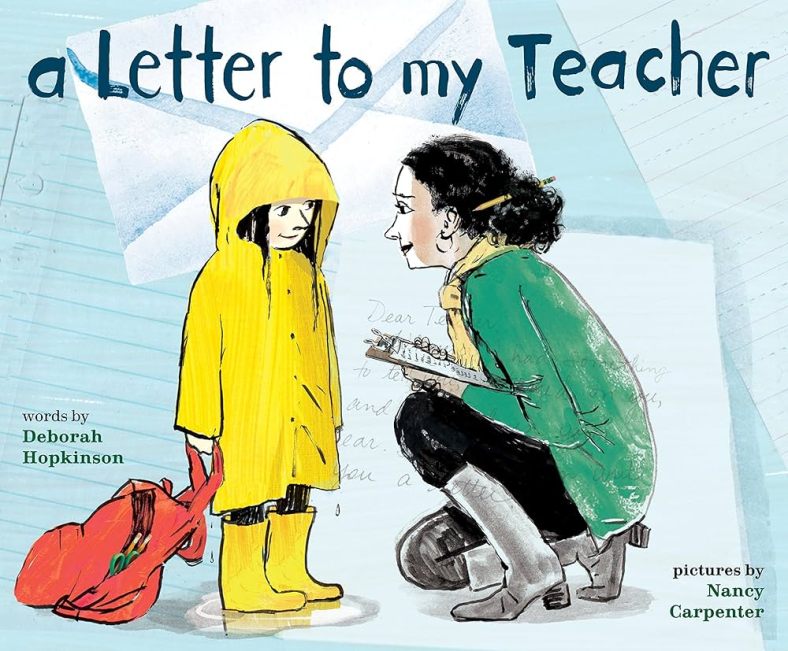
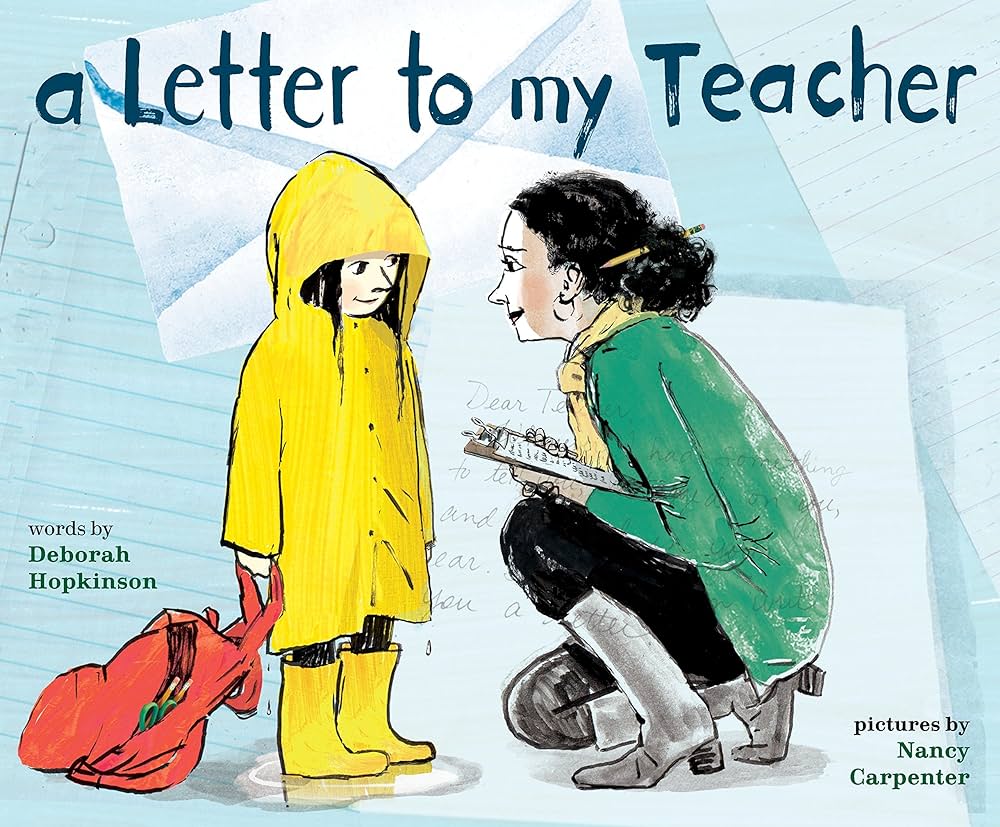
A light blue background is patterned with looseleaf pages. A child in a bright yellow slicker and rainboots holds a red backpack, while her teacher kneels crouches in front of her with a clipboard and a pencil in her hair.

by Jean B.

A thousand hours. That’s roughly how much time children spend in school each year. But how many people, from the bus drivers, to the teachers and staff, to the cafeteria workers, and the crossing guards, touch their lives and make education possible throughout those 1,000+ hours? American Education Week, November 13-17, celebrates our nation’s commitment to free, public education for every child and recognizes the myriad individuals who bring that commitment to life with their skill, dedication, and kindness.

It takes a unified effort involving educators, students, families, and communities to deliver on the promise of high quality education. Join in!

American Education Week often includes opportunities to visit your students’ classrooms, one step in becoming engaged. Check with your neighborhood schools to find out what they have planned in 2023. The library offers another pathway of connection to public education. We’re a link in the education community, connecting students, parents, and teachers with resources they need to succeed, especially through the A+ Partnership.

Did you know that teachers can receive special borrowing privileges with an Educator card? And that every HCPSS student has a virtual HCLS account to access our books, databases, online research tools, and resources from home, 24/7? Did you know that in the hours your child’s teacher is not available for help, you can access Brainfuse live online tutors through the HCLS website for support in math, English, science, writing, and more.

Even if you don’t go through the door of a school this year during American Education Week, you can always open a window into that world with a book from the library. Inspiring stories of great learning abound: check out the picture book A Letter to My Teacher by Deborah Hopkinson; middle grade novel Because of Mr. Terupt by Rob Buyea, or adult fiction A Lesson Before Dying by Ernest J. Gaines, or find many other options at your local branch.

Jean B. is a Children’s Instructor and Research Specialist at the Central Branch who loves reading books for all ages when she isn’t enjoying the outdoors.

The Loney by Andrew Michael Hurley

The book cover portrays the title from the bottom to the top, with the "y" at the end of "Loney" splitting into a dead tree branch with a foreboding house in the background, all in white against a black backdrop.

By Julie F.

I took everything that was offered that morning – the warm sunlight, the soft shadows on the fields, the spangle of a brook as it wound under some willows towards the sea – and managed to convince myself that nothing would harm us.

Such naivety makes me laugh now” (173).

Confession: passages like the one above give me shivers. I’ve never been a horror fan. My experience with horror films consists of a mediocre made-for-TV movie called Midnight Offerings at a high school party, featuring Melissa Sue Anderson of Little House on the Prairie fame, and a viewing of The Shining with fellow grad students back in 1992. That’s it. Books, even less. Stephen King? I adore his nonfiction, follow him on Twitter, and used to read his columns in Entertainment Weekly religiously. But I can’t bring myself to tackle Carrie or Salem’s Lot.

Splitting hairs when it comes to genre, though – most librarians do this with aplomb. My brain has always differentiated between horror and ghost stories, and I love a good ghost story. Starting with the Victorian favorites in the genre, the short stories of J.S. LeFanu and M.R. James, all the way to The Woman in Black by Susan Hill and The Little Stranger by Sarah Waters, the touch of the paranormal that wends its way into the life of unsuspecting mortals on this plane thrills and fascinates me. A more recent but equally compelling genre, folk horror, bridges the gap between ghostly folklore and fiction. As noted by editor Dawn Keetley in Revenant, the journal of the supernatural and the weird, “folk horror is rooted in the dark ‘folk tale’, in communal stories of monsters, ghosts, violence, and sacrifice that occupy the threshold between history and fiction.” There are some incredible writers forging creative new work in this genre, and Andrew Michael Hurley is one of the best.

The Loney opens with a group of modern, penitent pilgrims making an annual trip to the title locale, “a wild and useless length of English coastline” (3), where they spend a week at Easter, culminating with a visit to St. Anne’s shrine. It’s 1975, and we are seeing all this through the viewpoint of the teenage narrator, nicknamed “Tonto” by the young, wise-beyond-his-years priest who accompanies the group. Tonto knows that his situation is unusual; his brother Hanny has been mute his entire life, and his excessively devout mother (Mummer) is determined to pray her way to healing for him. For her, religion, and particularly the rituals enacted that comfort her year after year, are the only possibility for a cure.

While staying on the Loney in what could barely be described as a village, a number of disturbing acts take place: an effigy made of animal parts is hung in the woods, Father Bernard is warned to stay away from the pub, and a wooden statue of Jesus that hung in the local church is smashed to bits on Easter morning. Tonto experiences a sense of creeping unease when a gull with a broken wing suddenly takes off in flight. The locals don’t seem disturbed when a dead tree struck by lightning decades ago suddenly sprouts a new branch, or when their apple trees, usually ripe in autumn, are laden with spring fruit virtually overnight. There’s a healing power at work in this weird place that has nothing to do with Mummer’s fervent Catholicism, a power emanating from beliefs and practices that are much, much older than her faith. In the framing story, we learn that Tonto was shaken by everything he learned to the point that, decades later, he’s lost his faith: “Like Father Bernard said, there are only versions of the truth. And it’s the strong, the better strategists who manage them” (294).

The dark, brooding atmosphere permeates the novel, catapulting Hurley into fame as one of the foremost practitioners of folk horror and earning him praise from Stephen King (“An amazing piece of fiction”) and the Costa First Novel Award. He conveys a sense of otherworldly, uneasy time and place that can only result in the darkness of savage nature reclaiming itself: “I often thought there was too much time there. That the place was sick with it. Haunted by it. There was nowhere for it to go and no modernity to hurry it along. It collected as the black water did on the marshes and remained and stagnated in the same way” (31). If you’re in search of an eerie Halloween read that doesn’t spell everything out but stretches the imagination relentlessly – a book that also addresses real questions of faith and family from the eyes of a boy coming of age – then read The Loney.

Julie is an instructor and research specialist at HCLS Miller Branch who finds her work as co-editor of Chapter Chats very rewarding. She loves gardening, birds, crime fiction, all kinds of music, and the great outdoors.