Mrs. England by Stacey Halls

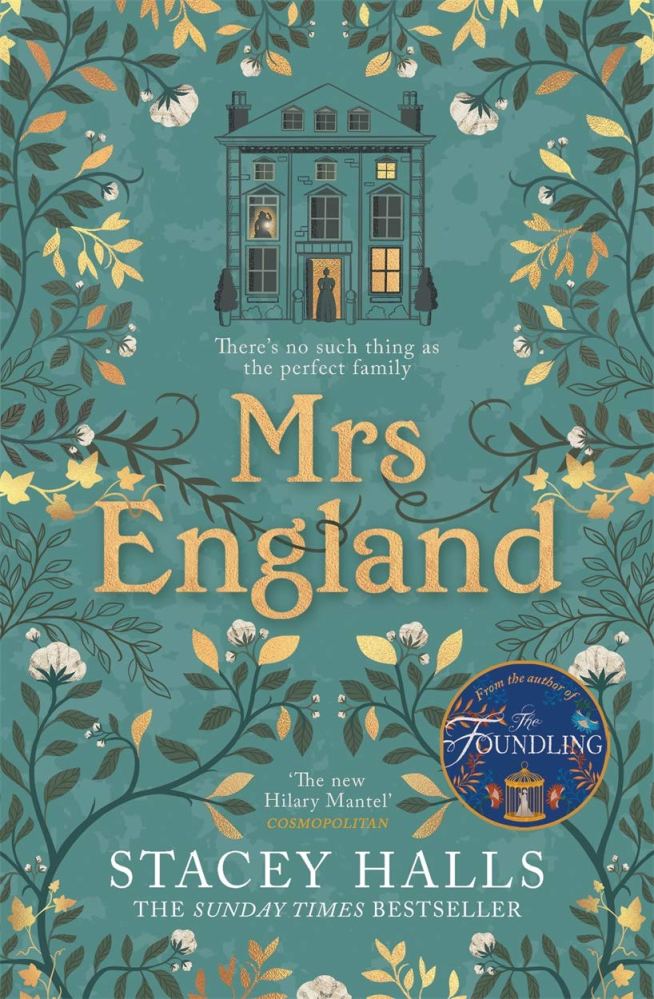
A spruce green cover has botanical illustrations framing a manor house with a woman silhouetted in the doorway.

by Piyali C.

One of my favorite quotes about friendship is the famous one by C.S Lewis: “Friendship is born at that moment when one person says to another: ‘What? You too! I thought I was the only one.” My friendship began with my library colleague who introduced me to Stacey Halls in the same way. We bonded over Daphne Du Maurier, our mutual love for Jane Austen, historical fiction, and literary fiction. So, when she brought The Familiars by Stacey Halls to my desk and said, “Here read this. I know you will like it,” I knew I should drop everything and read it. I did not like it – I loved it.

The Familiars is a story of two women in early seventeenth century England, both fighting for survival. Mistress Fleetwood Shuttleworth is determined not to lose her fourth baby like the ones before and Alice Gray needs to prove she is not a witch during the infamous Pendle Hill witch trial of 1612. Alice is a skilled midwife with extensive knowledge of herbs, and Fleetwood needs her help to save her unborn baby as well as her own life. When Alice is accused of witchcraft and imprisoned, Fleetwood is ready to go to any lengths to prove her innocence. Not only is the story superbly written and well-paced, it shows tremendous character development of the protagonist. One may wonder if all the steps taken by Fleetwood in her quest to free Alice are plausible given the time period, but I embraced her actions wholeheartedly and willed her on to succeed. 

In Mrs. England, Norland Institute graduate Ruby May is looking for a fresh start after the family she worked for emigrates to United States. Although the Radlett family would dearly love their Nurse May to travel with them to America, she is unable to do so for a reason undisclosed at the beginning of the story. In 1904 women from the upper echelon in England are completely dependent on nurses for the care of their children, preferably from the prestigious Norland Institute. Nurse May gets her second assignment without much delay. However, she will have to travel to cold, foggy West Yorkshire to take charge of four children of a wealthy couple, the Englands of a mill dynasty. After reaching her destination, she is surprised to find that she is taking directions about the children’s routine from the friendly and easy-going Mr. England, while Mrs. Lilian England is aloof, cold, and withdrawn. While Ruby develops a nurturing and loving relationship with the children, she simply cannot figure out the mysterious couple for whom she works. When she feels the lives of the children are in danger, she must dig deep within her and ultimately face her fears. While caring for the England children and figuring out the power dynamic in the Edwardian marriage of the Englands, Ruby learns to make peace with her past and only then can she break free from the chains that hold her captive psychologically. 

Fans of Daphne Du Maurier will love this atmospheric, gothic tale and the shroud of mystery surrounding both Nurse May as well as Charles and Lilian England. Although Nurse May’s character is likeable, the readers know she is hiding a secret so a niggling doubt about her reliability as a narrator remains in the readers’ minds. When we get introduced to the England family, the readers have a challenging time believing the authenticity of Charles England’s affability. There is something inauthentic about his outward friendliness. Lilian England is easy to dislike due to her coldness towards her children. Yet there is a vulnerability in her which questions even our dislike for her. Readers vacillate between who to believe – the charming Mr. England or the aloof Mrs. England. And just when we think the mystery has been resolved, we read the last line – just one single line and get a jolt. All the twists and turns that captivated us and kept us turning pages, all that we believed was resolved gets thrown into question and as we finish the book, we start rethinking the whole mystery all over again. 

Mrs. England is available in print, in ebook and in eaudiobook. 

Piyali is an instructor and research specialist at the Miller Branch of HCLS, where she co-facilitates both Global Reads and Strictly Historical Fiction and keeps the hope alive that someday she will reach the bottom of her to-read list.
The Reason That I Read: Mary Downing Hahn 

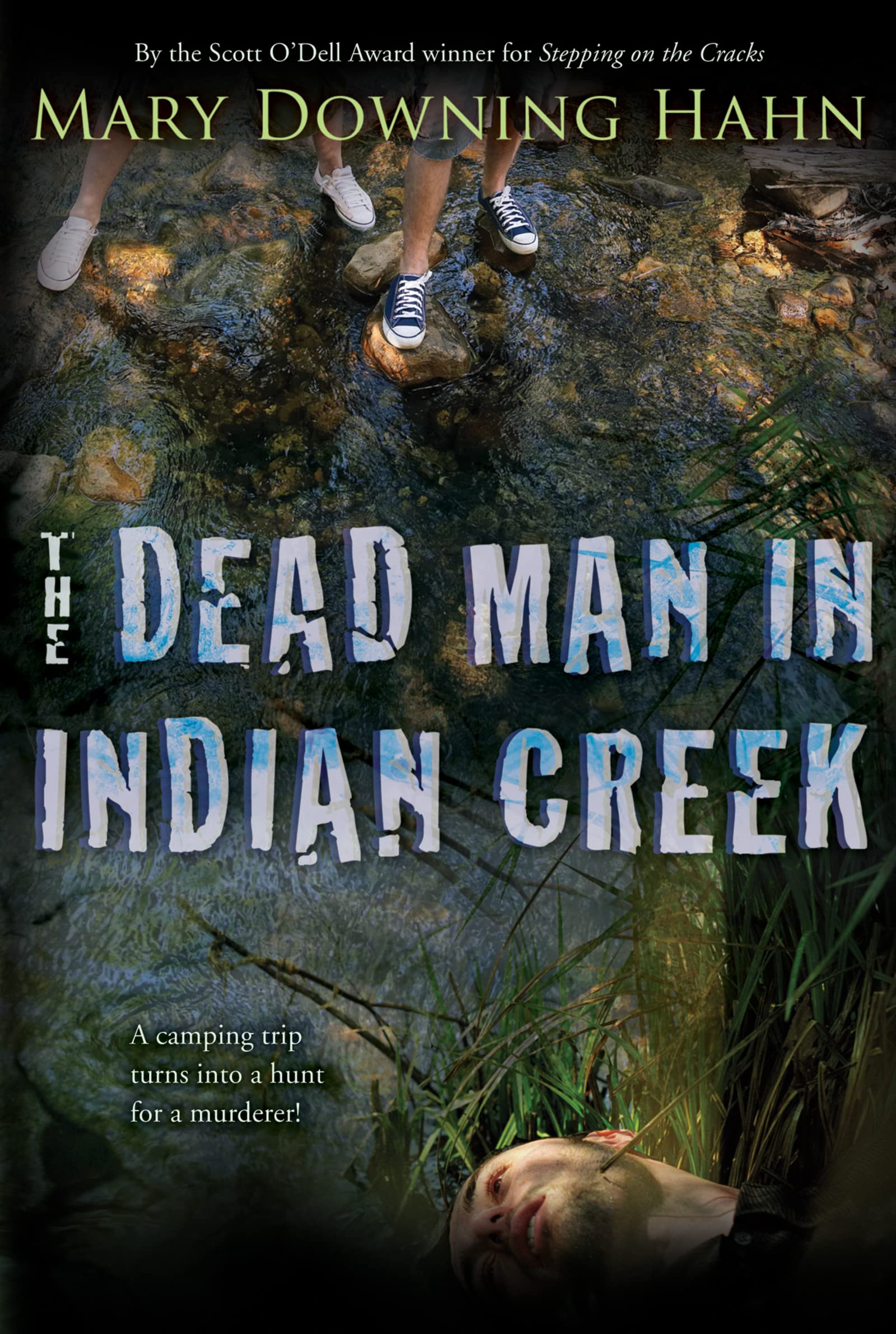
Top down view of feet in sneakers, a muddy creek, and a man's face in the lower right corner

by Julie N.

I am excited to be able to host my favorite author at Central Branch on Friday, August 19 at 3 pm and to have the opportunity to celebrate her extensive career. She is a fan favorite, a kid favorite, and my favorite! Over the years, many students have been captivated by the stories she creates, the worlds she builds, and the magic in her words. Mary Downing Hahn thoughtfully weaves ghosts, history, and local places into her books.

As an awkward, homeschooled seventh grader I would hardly have called myself a reader. Far from it, in fact! I enjoyed looking at books, but to be honest I can name only a few that ever stood out to me as a child. While visiting the old Miller Branch, I found a book called The Wind Blows Backward by Mary Downing Hahn. Many of you probably know Mary Downing Hahn for her incredibly popular ghost stories such as Wait Till Helen Comes, Deep and Dark and Dangerous, and Took (also in graphic format), but I first fell in love with her realistic fiction. I devoured her adventures like The Spanish Kidnapping Disaster and mysteries such as The Dead Man in Indian Creek.

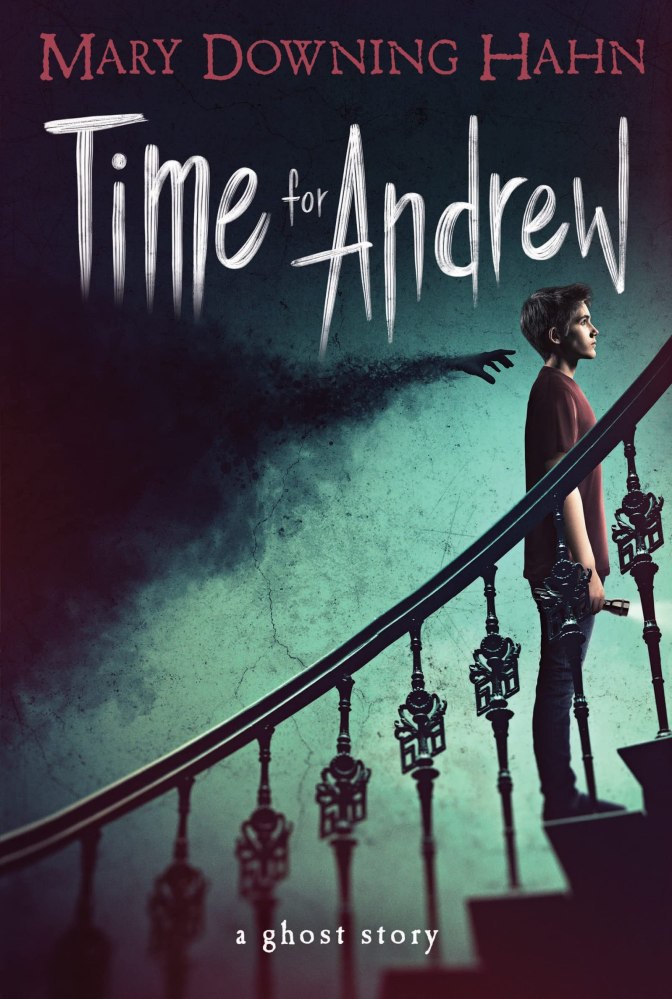
A boy with a flashlight stands on an open curving staircase, with a spooky hand reaching out of the shadows toward the back of his head. The

At some point, I tried one of Mary Downing Hahn ghost stories, Time for Andrew, and immediately bought my first bag of marbles. I quickly followed that with one of her most popular books, Wait Till Helen Comes, about a young girl at odds with her new step-siblings, a farmhouse complete with a backyard graveyard, and the ghost of a young girl named Helen. 

Mary began her career as an illustrator and a children’s librarian before, thankfully, directing her sights on writing children’s books. Her first book was published in 1979 and she has authored dozens of books since then. Most known for her ghost stories, she doesn’t shy away from writing genuinely scary books for children, and they love her for it! Notably, she has won more than 50 child-voted state awards for her work. 

I love reading her stories and recognizing the locations where they took place. Mary Downing Hahn is the author of the first book I loved and many more that followed. She is a valued author, a local favorite and she is, without a doubt, the reason that I read.

Julie is the teen instructor and research specialist at Central Branch.

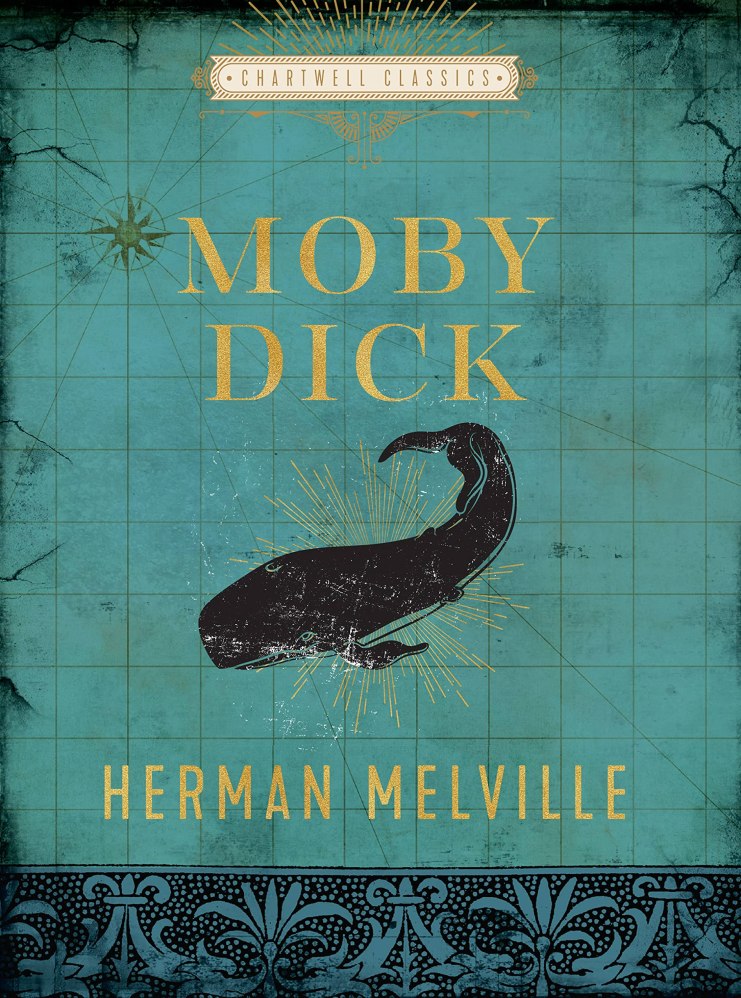
Moby Dick; or, The Whale

The stormy blue cover shows a small boat being capsized by a giant whale.

I thoroughly enjoyed it and would recommend it to absolutely no one.
– anonymous review of Moby Dick

by Ben H.

Moby Dick; or, The Whale, Herman Melville’s 1851 masterpiece, is a perfect summer read. It’s long – good for those endless summer days at the beach. It’s a great conversation starter – good for extra time spent with family. It’s the source of many pop culture references – great for the extra entertainment consumption that sometimes happens in the summer. Lastly, it’s a great book full of memorable lines.  

Ishamel, of “call me Ishmael” fame, is the insightful and piquant narrator of this tragic seafaring saga of revenge. He joins Ahab’s ship, the Pequod, because he’s hit the doldrums. He tells us, “Whenever I find myself growing grim about the mouth; whenever it is a damp, drizzly November in my soul; whenever I find myself involuntarily pausing before coffin warehouses, and bringing up the rear of every funeral I meet…I quietly take to the ship.” As one does when one feels down, Ishmael makes for Massachusetts and becomes a whaler.  

If he’s too interested in the semantics of whaling, I forgive him because he’s a fabulous companion, consistently thoughtful and funny. It’s through Ishmael that we meet the rest of the crew: Ahab, the peg-legged monomaniacal captain bent on revenge; Pip, the cabin-boy who loses himself in the vastness of the ocean; Starbuck, the weathered, faithful first mate; Stubb, the philosophizing, chain-smoking second mate; Flask; the steady, simple third mate; Fedallah, Ahab’s harpooner and “evil shadow;” Queequeg, Ishmael’s best friend, “wife,” and harpooner; Tashtego, Stubb’s harpooner and the one who falls into the squishy head of a dead whale; etc.  

Moby Dick has a great narrator, a wonderful crew of characters, and plenty of Shakespearean drama. Starbuck has a soliloquy worthy of Hamlet; Stubb and Flask have Dogberry-level banter about whales and Fedallah. Stubb also takes a turn as Mercutio when he has a Queen Mab moment. After Stubb describes his dream in detail, Flask responds with an appropriate, “I don’t know; it seems a sort of foolish to me, tho.'” Anyone who bores a friend, family member, or coworker with the details of a dream deserves the Flask treatment. 

Speaking of dreams, the giant squid sighting is a brief but memorable episode. Melville calls the squid the “Anak” of the cuttlefish tribe. His reference to a race of giants is one of many biblical references. With one word, Melville describes the squid and sets an ancient and mysterious tone.

Another perfectly haunting episode happens when Ahab works the crew into a fervor on the quarterdeck. He stabs a gold coin high into the mast, promises it to the one who first sights the white whale, and gives a demonic revenge speech. His speech, and the healthy amount of grog he sloshes around, sets off pandemonium and “infernal orgies.” Starbuck, too stoic to partake in such revelry, remarks, “heathen crew…the white whale is their demogorgon…” Try googling demogorgon without getting lost in an avalanche of Stranger Things fan sites. Starbuck, ever the ray of sunshine, adds, “Oh, life! ‘tis now that I do feel the latent horror in thee.” 

I’ve highlighted a few episodes to provide you, gentle reader, with trenchant examples of the mood of the novel; it is equal parts mystical, dark and humorous, and quotidian. 

The narrative falls into a pattern: look for a whale, find a whale, kill a whale (unsurprisingly, Moby Dick is not safe for animal lovers). The Pequod also encounters a surprising number of other whaling ships: Jereboam, Rachel, Jungfrau, Delight, Rose Bud, etc. The suspense builds as Ahab begins to hear of Moby Dick sightings from the other captains. Melville continues to up the tension by scattering prophecies and Julius Caesar-level augurs of doom throughout the text.  

As I mentioned in the introduction to this interminably long book review, Moby Dick casts a long shadow. For example, in the The X Files (the best show of all time), Scully’s dad’s nickname for her is Starbuck. Once you’ve read Moby Dick, you’ll make a fun connection between Mulder and Ahab. Is Scully the Starbuck to Mulder’s Ahab? Will Mulder’s quest doom them both? 

Another fun example: Jaws, Steven Spielberg’s landmark 1975 film about a giant bloodthirsty shark. At one point, the brave but foolish men hunting a giant shark in a tiny boat sing a little song – first sung by the crew of the Pequod:  

Farewell and adieu to you, Spanish ladies! / Farewell and adieu to you, ladies of Spain! 

One last reference is a little out there, but for those of you who play videogames, I feel that the entire catalog of Dark Souls games is rife with thematic references to Moby Dick. If the pop culture references aren’t enough to draw you in, there are tons of one-liners perfect for inspiring the armchair philosopher in all of us: 

  • “But clear truth is a thing for salamander giants only to encounter” 
  • “Never dream with thy hand on the helm!” 
  • “Away, and bring us napkins!” 
  • “Oh! My friends, but this is man-killing! Yet this is life…” 
  • “Where lies the final harbor, whence we unmoor no more?” 

My wife told me not to spoil the ending, so I won’t. If you want to know, set sail for your local branch and pick up a copy! If you’ve made it through this Chapter Chats review, you can make it through Moby Dick!

Ben Hamilton works at Project Literacy, Howard County Library’s adult basic education initiative, based at HCLS Central Branch. He loves reading, writing, walking, and talking (all the basics).

The Last True Poets of the Sea by Julia Drake

The cover shows line drawings of ocean vegetation floating against a background of blue water. The title is lettered in shades of pink, orange, and yellow.

by Ash B.

Not to be dramatic, but The Last True Poets of the Sea by Julia Drake is one of the most underrated novels I’ve read. It received positive reviews from Booklist, Kirkus, School Library Journal, and Publisher’s Weekly – and yet it still seems like not many people know about it. That’s why I eagerly recommend it whenever I can! 

Violet Larkin is a wild child – partying and doing all manner of things that a 16-year-old girl probably shouldn’t be in New York City. After her younger brother attempts suicide and her own reckless behavior worsens, her family sends her to stay with her uncle for the summer in the small coastal town of Lyric, Maine.  

Descended from a shipwreck survivor who supposedly founded Lyric, Violet is convinced that disaster runs in her blood. As she struggles with inner turmoil, she becomes determined to uncover the long-lost location of that shipwreck and the truth of her family history. With the help of new, unexpected friends, Violet discovers so much more – about herself, about love in all forms, and about surviving the emotional wrecks of life. 

After Violet starts working at the local aquarium in Lyric, the story seems like it might include a very “boy meets girl” romance with her coworker, but it delightfully diverges into something more refreshing. While there is a slow-burn teen romance with a bit of a “twist” love interest, that is far from the focal point of the book. I would say the core of the story is the complexity of mental health and the importance of allowing oneself to be (safely) emotionally vulnerable. The narrative balances the mending of relationships within Violet’s family, the importance of Violet building new friendships in Lyric, and the development of Violet’s relationship with herself. 

It is such a beautiful story of healing and connection. I really appreciated how Violet, an amazingly complex teen protagonist, opened my eyes to how mental illness and trauma can impact and manifest in such different ways depending on each person. For someone such as myself, anxiety typically causes retreating into oneself, isolating, and fearing the outside world. Social anxiety and generalized anxiety can really go hand-in-hand in this way, at least in my experience.  

However, for Violet, her anxiety – the storm she feels inside but doesn’t know how to healthily cope with – is sometimes the catalyst for her extroverted, often-risky behaviors such as partying, (underage) drinking in social settings, and flirting with much older men. Over the course of the novel, I grew to understand why someone like Violet might engage in those types of behavior (that would personally make my anxiety even worse) as a means of trying to avoid their inner struggles. 

This is a YA novel that I think can help so many people, teens and adults alike. It shows the importance of communication, self-love, healthy interpersonal relationships, and being kind to oneself while growing up. It challenges the idea that teens who “act out” are “bad” or “broken,” instead showing the nuanced reasons why unhealthy coping behaviors are used by young people who are struggling. Not to mention that it is beautifully written with crossover appeal for both YA and adult fiction readers. 

The characters of The Last True Poets of the Sea settled into my heart and have made a permanent home there. I read this book for the first time over a year ago and I still can’t stop thinking about it. When a book lingers with you long after you finish the final page, that tends to be a good sign. I loved it so much, I bought my own copy and I’m planning on re-reading it during my own trip to Maine this summer! If you’re interested in a contemporary coming-of-age story, I really hope you give this one a read.

Ash is an Instructor & Research Specialist at Central Branch and is a co-facilitator for Reads of Acceptance, HCLS’ first LGBTQ-focused book club. Their favorite place to read is spread out on a blanket under the shade of the tree. 

The Class Mom series by Laurie Gelman

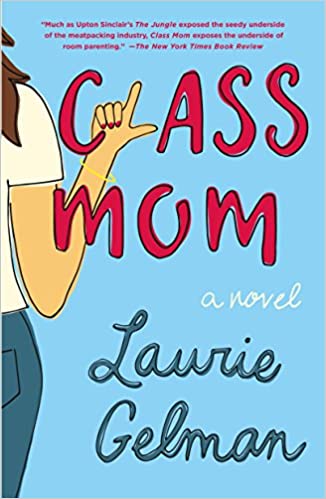
The image shows a mom with shoulder-length brunette hair, in a white t-shirt and blue jeans with her back to the viewer. Her right hand is raised and her index finger and thumb form the "l" in the book's title, Class Mom.

By Piyali C.

Most people at their workplaces dream of moving up in the chain. They aspire to be assistant managers, managers, or chiefs of staff, and hopefully rise to the top. I dream of starting new book clubs. I already co-facilitate two book clubs at the library – Global Reads and Strictly Historical Fiction. But if I am allowed and time permits, I dream of starting yet another one that I will name “Light but not Fluffy.’ And Laurie Gelman’s Class Mom along with its sequels will surely feature as some of the chosen titles.  

My love affair with Gelman’s writing started when I discovered Class Mom on the shelves while I was shelving a cart at the library. The jacket looked interesting, so I took it home and read it in two sittings. I met Jennifer Dixon in Class Mom for the first time and fell head over heels in love with her character. In Class Mom, Jennifer Dixon raised two daughters as a single parent before she met Ron, fell in love, married him, and had an adorable baby boy, Max. The story of Class Mom (as the name suggests) revolves around Jen assuming the role of class parent when Max enters kindergarten. Jen is a different kind of class mom than, most likely, you or I have encountered. Her emails to the parents are funny, irreverent, snarky, and raise some eyebrows. Although Jen’s best friend, the PTA president, thinks Jen is perfect for the job, there are many parents who disagree. As we read about Jen’s never-ending commitments to both her child’s school and her own personal life, we wonder how Jen will possibly get everything done. But she does, with an inordinate amount of humor, grace, and – yes – snark.

The cover shows a mom with shoulder-length brown hair, wearing a high-visibility vest and holding a "stop" sign that reads "A Class Mom Novel." She has her back to the viewer and appears to be working as a school crossing guard.

In the sequel, You’ve Been Volunteered, Max is in third grade and Jen has been roped into being the class parent again. But this time she must deal with not only the micromanaging PTA president, but also extremely difficult parents who are not charmed by Jennifer’s management of parental politics or the tone of her emails, which remain tongue in cheek, irreverent, and sassy. Apart from the drama in school, Jen’s personal life goes through some turbulence as well, as she deals with her overworked husband and helps her older daughters navigate adulthood. On top of all that, Jen’s elderly parents may also need some supervision. In this book, yet again, Jen juggles all her responsibilities with humor, empathy, sometimes failure, but mostly humor.

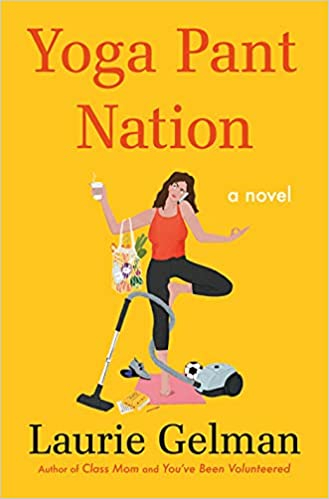
The cover shows a Mom in a yoga pose, with shoes, homework, and sports equipment cluttered around her foot. She holds a coffee cup in one hand, a cell phone to her ear, and a grocery bag strung over her arm, with the hose of a vacuum cleaner wrapped around her standing leg.

Yoga Pant Nation is the third hilarious book in this funny series. Max is in fifth grade, so this is Jen’s last year as a class parent in William Taft Elementary school. This year may be her most challenging one yet as she has been entrusted to raise 10,000 dollars to buy devices for fourth and fifth graders. Jen has no idea how she will raise such immense funds with her team of parent volunteers. She is also aspiring to be a spin instructor as well as caring for her two-year-old granddaughter Maud (yes, 53-year-old Jen is a grandmother now). On top of that, her dynamic parents Ray and Kay seem lethargic and forgetful. Jen wonders if it is time for them to move to an assisted living facility. Read this book to find out if Jen Dixon will finally admit defeat. 

Jennifer Dixon is sure to make you laugh as you read about her life. Laurie Gelman puts just the right blend of insanity, charm, love, and sarcasm in Jennifer Dixon to make her readers fall in love with this high-achieving, super snarky, well-meaning mom. If you were or are a class parent or an active member of the PTA, you will relate to Jen. If you have not participated in any of that, you will look at her life with awe and perhaps thank your lucky stars that you have never had to deal with her challenges. No matter which side you are on, one thing is certain: you will laugh. And we all could use some laughter in our lives.

Class Mom, You’ve Been Volunteered, and Yoga Pant Nation are all available in print, and a fourth book, Smells Like Tween Spirit, is due to be published in August.

Piyali is an instructor and research specialist at the Miller Branch of HCLS, where she co-facilitates both Global Reads and Strictly Historical Fiction and keeps the hope alive that someday she will reach the bottom of her to-read list.

Equity Resource Collection and New Brave Stories Exhibit

by Ash B. and Christie L.

Enrich your summer at the Equity Resource Center! Visit for the books, movies, music – and exhibits. The space upstairs at Central Branch purposefully has plenty of room for exhibits that focus on equity issues. If you missed our previous one, Undesign the Redline, you can still view a video tour on YouTube. Make time to see the new show and attend the related classes:

BRAVE STORIES EXHIBIT 

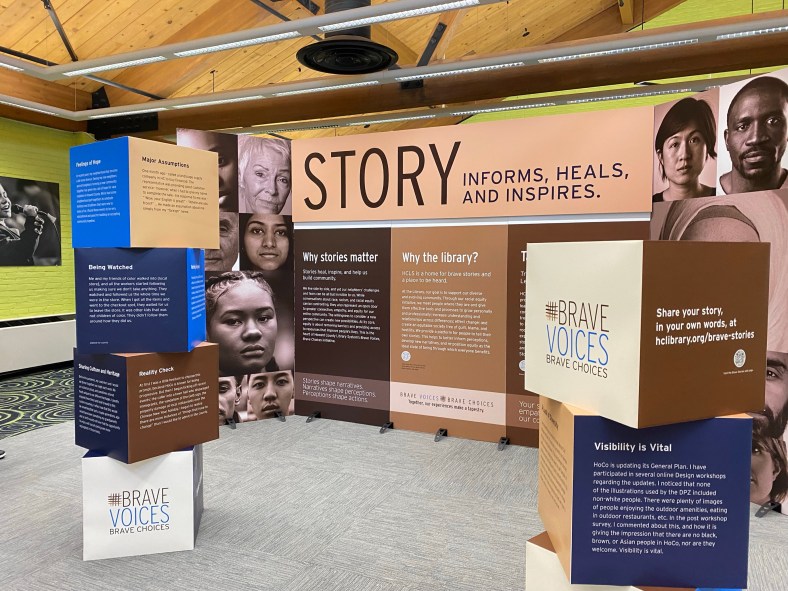
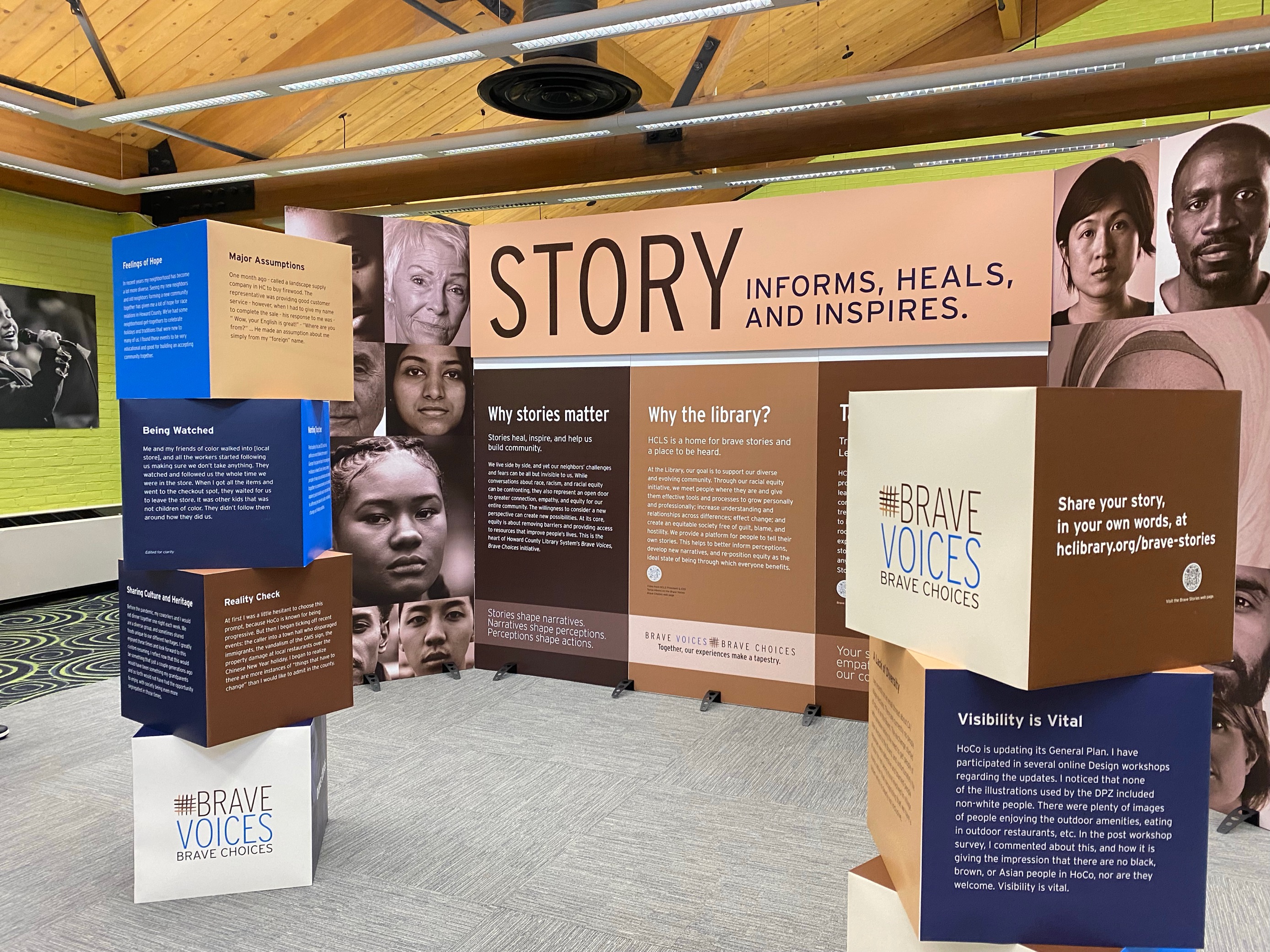
View of Brave Voices display at Central Branch, header read Story informs, heals, and ins

Stories shape narratives. Narratives shape perceptions. Perceptions shape actions. 

Whether they are told around a campfire, around a kitchen table, or online, stories have the power to move people to tears of sadness or tears of joy and to action. At Howard County Library System, we are a home for brave stories and a place to be heard. We provide a platform for people to tell their stories. This helps to better inform perceptions, develop new narratives, and re-position equity as the ideal state of being from which everyone benefits.  

HCLS is a safe space for racial equity work, but real progress begins with you. You have the power to lead, share, and connect. As we move forward as a community in Howard County, we have the chance to extend equitable treatment to those around us. How are you helping to improve life in Howard County?  

Start by making room for new stories. Visit the new Brave Stories exhibit in the Equity Resource Center at the Central Branch. Read about your neighbors’ experiences. Take the time to listen to their Brave Stories—and share your own. 

We invite you to respond to the exhibit in a series of art workshops, each using a different material, with facilitators from Notre Dame of Maryland University’s Art Therapy Department. Attend one or both workshops: Tuesday, Jul 26 and Thursday, Aug 4.

We also invite you to share your own stories in a facilitated circle. Bring your experiences and insights, listening ears, and an open mind and heart to one or more sessions: Wednesday, Aug 3; Saturday, Aug 13, and Saturday, Aug 20.

EQUITY RESOURCE COLLECTION

If you haven’t already read it, you might want to check out my previous post about the Equity Resource Collection.

Adult Fiction 

A collage of adult novels found in the Equity Resource Collection.

The second floor at Central Branch houses the adult fiction of the Equity Resource Collection, along with its adult nonfiction, DVDs, and CDs. More than 900+ adult fiction titles span all genres, including classics, bestsellers, contemporary fiction, historical fiction, romance, mystery, fantasy, and science fiction. 

Like other areas of the Equity Resource Collection, some of these titles specifically center equity issues such as racism, whereas others feature diverse characters and authors. Whatever genre or style of novel you enjoy, there is a great read for you here. One of my favorites is Open Water by Caleb Azumah Nelson, which I actually reviewed in-depth in a previous blog post. If you like poetic and tender novels, this is a must-read. 

Adult Nonfiction 

Three race and gender titles found in the Equity Resource Collection: Anti-Racist Ally, Demystifying Disability, and Gender: Your Guide

As excited as I am about fiction, I’m even more interested in the nonfiction section – partially because of how many of these titles are exclusive to the Equity Resource Collection. While these items can be requested for pickup at any HCLS branch, browsing in person offers the opportunity to find an amazing book more by chance. 

When you head into the Equity Resource Center, the nonfiction collection rests to the right. You can find introductory guides to equity issues, history books, academic texts, memoirs and biographies, art books, cookbooks, and more.  

For folks who are beginning to explore these topics, I recommend: 

For readers who are ready to delve deeper, some terrific title: 

Audio-Visual 

A collage of movies found in the Equity Resource Collection.

Are you more of a film lover than a reader? Well, no worries. The ERC has you covered, too.

From indie films to big-budget productions, you have a variety of choices from multicultural movies and movies that center Black history. While most titles are for adults and teens, there are kid-friendly favorites such as Moana and Coco as well. 

If you’re interested in TV series or nonfiction DVDs, look for the shelving close to adult nonfiction. With titles from distributors such as HBO and PBS, including Stonewall Uprising and The Central Park Five, this section is worth checking out if you appreciate a good documentary. 

For the music lover, the ERC includes CDs, shelved next to the nonfiction DVDs, from artists past and present, across genres. For the pop fan, check out Sawayama by Rina Sawayama, a contemporary singer-songwriter who is Japanese-British and bisexual.

If you like rock, blues, soul, or gospel, a must-listen is Shout Sister Shout by Sister Rosetta Tharpe, “The Godmother of Rock’N’Roll,” who pioneered music in the 30s, 40s and 50s by combining electric guitar with spiritual lyrics – providing the foundations for subsequent artists like Chuck Berry and Elvis Presley. 

Whether you’re a fan of Latin music or someone in your family still can’t get enough of the Encanto soundtrack, check out Cumbiana by Carlos Vives, the beloved Colombian singer-songwriter whose song “Colombia, Mi Encanto” plays at the end of the 2021 Disney hit movie. 

Think our collection is missing an important title? Go to hclibrary.org/contact-us/ and “Make a purchase suggestion” – after you submit the online form, it will be reviewed by one of our materials selectors as a potential addition.  

Ash is an Instructor & Research Specialist at Central Branch and is a co-facilitator for Reads of Acceptance, HCLS’ first LGBTQ-focused book club. Their favorite place to read is spread out on a blanket under the shade of the tree. 

Christie is the Director of Communication and Partnerships for Howard County Library System. She loves walking through the network of pathways in Columbia, sitting on the beach, and cheering for the Baltimore Orioles and Texas Aggies football team.

The Golden Age of Crime and Josephine Tey

The book cover shows an unbuttoned coat with arms extended, floating in dark waves, with a rocky island in the background with a lit candle shining from the summit.

By Julie F.

Think for a moment about Agatha Christie: how many versions and adaptations of Poirot and Marple have you read or seen? How popular do her novels remain to this day? And a question asked of librarians worldwide: If you’ve read and loved all of Christie, and viewed everything produced by Acorn and Britbox, where do you turn for a puzzling new mystery?

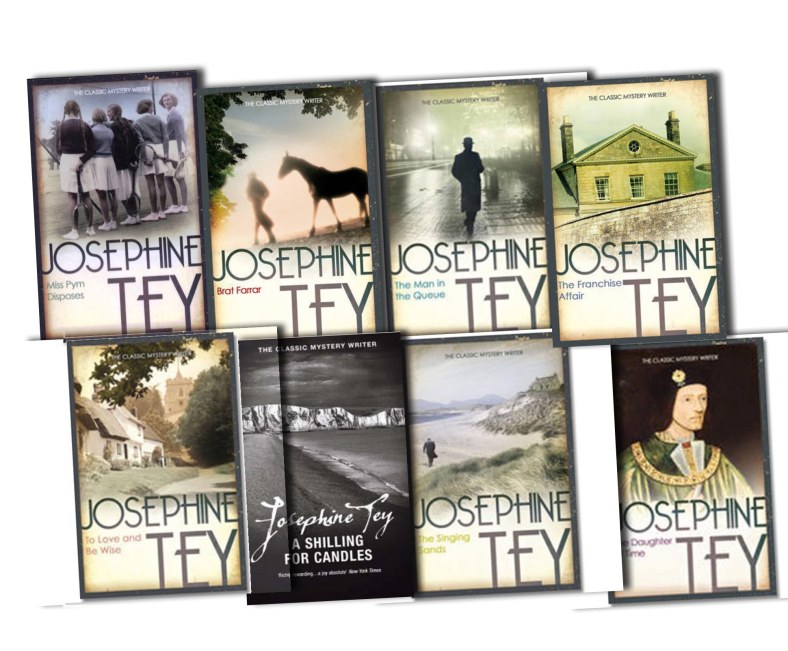
Faithful readers of Golden Age crime novels often read, and re-read, their favorite writers out of devotion to this inimitable era and style of crime fiction. Golden Age works were primarily written by British authors but also a few famous practitioners in the United States; these include Mary Roberts Rinehart, whose popularity in her heyday rivaled Agatha Christie’s. Rinehart’s novel The Door popularized the phrase “The butler did it!” even though those words appear nowhere in the book. In Great Britain, one of the best but most underappreciated writers in this style was Scottish author Josephine Tey. A versatile writer of plays, poetry, and short stories as well as mystery novels, Tey is most famous for the work declared “Greatest Crime Novel of All Time” by the British Crime Writers’ Association: The Daughter of Time (also available as an eaudiobook from Libby/OverDrive).

The book cover depicts a painted, framed portrait of a king, presumed to be Richard III of England, against a white background.

Tey’s series character, Inspector Alan Grant, is sidelined in a hospital bed with a broken leg and bored to tears with inactivity. A friend of Grant’s, actress Marta Hallard, suggests that he try his hand at solving a famous historical mystery, since he can’t actively investigate clues or hunt down a killer while confined to the sickroom and limited in his movements. While researching various figures, Grant discovers that Richard III looks kindlier than the way he is portrayed in the historical rogues’ gallery of villains. In fact, Grant wonders if the famous Tudor king was really responsible for all the tragedy and evil attributed to him, including the deaths of his young nephews Edward and Richard? Richard III was serving as regent for Edward V when the two boys were declared illegitimate, then disappeared from history. Now, Inspector Grant is on the case!

The novel becomes a thorough exploration of that important task of historians: to sift the facts from myth and legend, to figure out what version of an event is authoritative, to consider how one viewpoint’s retelling becomes prevalent while another fades into the mists of time. The reader learns about history as a construct while Grant learns more about his infamous subject. It becomes the mission – if not the obsession – of Grant and his eager young assistant, British Museum researcher Brent Carradine, to crack the case.

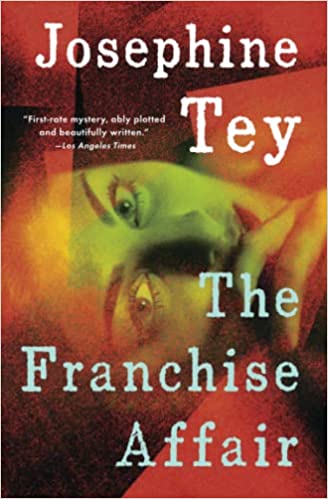
The book cover depicts the headshot of a woman, lying on her side and staring at the viewer, with her fingers to her mouth. Her eyes are wide with long lashes and carefully manicured brows.

Tey wrote one other mystery with a tinge of history, The Franchise Affair, based on a famous kidnapping case in the eighteenth century even though it is set in the 1940s. This book and six others are part of Tey’s series featuring Inspector Grant, although he appears in it only briefly. I recently read the second book, A Shilling for Candles, and I loved what her fellow Scot, crime writer Val McDermid, had to say about her in a CrimeReads article. McDermid postulates that Tey is actually a bridge between the Golden Age writers and modern crime novelists like Ruth Rendell (my all-time favorite) and Patricia Highsmith, with a more subtle, psychological, sexually ambiguous character study than authors like Christie and Ngaio Marsh. Her work is an uneasy, darker take on individual identity that is decidedly a forerunner to Rendell and Highsmith. A Shilling for Candles (also available in ebook format from Libby/OverDrive) is also a good story for film and theatre buffs (like many of Marsh’s Roderick and Troy Alleyn novels). Tey’s experience as a playwright gives her remarkable insight into the competitive, dramatic lives of actors and actresses on and off the stage and screen.

Read Josephine Tey’s Inspector Grant novels if you have a hankering for a “new “author who is just as deserving as Dame Agatha of acclaim and fame. For those interested in whether Richard III really murdered his nephews, Marylander Barbara Mertz, who also wrote fantastic romantic thrillers under the pseudonym Barbara Michaels, explored this historical puzzle further in her novel The Murders of Richard III (available from Libby/Overdrive as an ebook), written under her more famous pseudonym, Elizabeth Peters. And finally, Nicola Upson has a great historical mystery series of her own, featuring none other than Josephine Tey as her amateur sleuth.

Julie is an instructor and research specialist at HCLS Miller Branch who finds her work as co-editor of Chapter Chats very rewarding. She loves gardening, birds, crime fiction, all kinds of music, and the great outdoors.

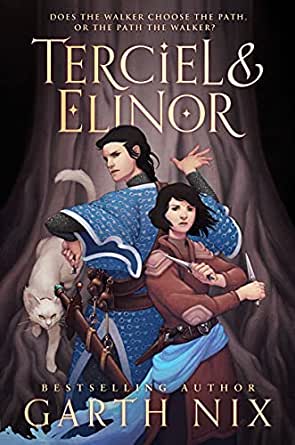
The Old Kingdom series by Garth Nix

The illustration shows a young man in blue holding a very small bell standing back-to-backwith a young wman in brown with knives drawn. A white cat sneaks along side them.

by Kristen B.

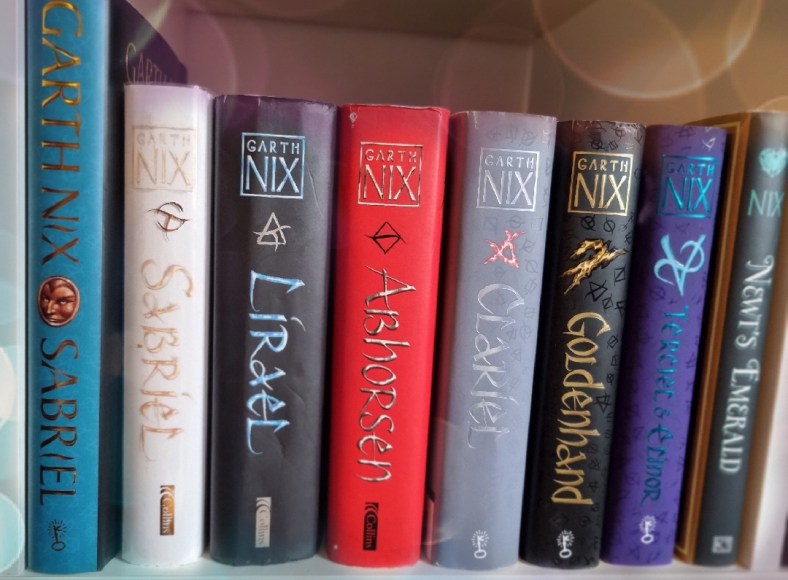
One of my favorite series debuted a long time ago with the publication of Sabriel in 1995, which introduced us to the Old Kingdom and Ancelstierre – a magical world and a vaguely Victorian British country joined by mysterious means across a Wall. Author Garth Nix has written in this world off and on for almost 30 years. It’s not a huge series with a new book available annually, but it includes the first trilogy, a variety of short stories, a sequel, a side story about a secondary character, and now the newest installment of Terciel and Elinor.

Title character Sabriel is a young woman finishing her rather unusual education at Wyverly College, a boarding school in Ancelstierre close to the Wall. Her father is a powerful mage from the Old Kingdom, the Abhorsen – an inherited position responsible for making sure the dead remain dead. Death is presented as a river with many precincts that sweeps souls along to their final rest beyond the Ninth Gate. Unfortunately, in the Old Kingdom, the dead don’t always stay that way and necromancers try to increase their power by manipulating Death. It’s all wonderfully gothic and atmospheric (but not particularly scary) with appeal for teens and adults alike. Abhorsens battle the necromancers and Greater Dead with their magical bells and sword, with each bell sounding a specific command – like walking or sleeping.

Back in Ancelstierre, Sabriel receives a bandolier of bells and a sword and realizes that something has gone very wrong with her father. She travels into the Old Kingdom to discover that Bad Things are afoot. With the help of a lost prince and a talking cat who is much more than he seems, Sabriel must conquer an old nemesis and restore the Kingdom. The next two books move forward a generation, but they continue with fraught necessity the quest to defeat the ultimate evil and save the world. Honestly, what more could you ask for?!

Nix published Terciel and Elinor in 2021, and it tells the story of Sabriel’s parents, of how they met and fell in love. It explains so much of the background for the original series, while still giving us new characters to root for. Elinor is a delight as a neglected but independent daughter with a passion for stagecraft and a willingness to meet whatever comes her way with knives drawn. Terciel matches the orphan vibe with a sketchy background of his own, as he reluctantly accepts his future role as the Abhorsen. A competent ranger and taciturn current Abhorsen provide good counterpoints to the young (rather callow) and energetic main characters. I think this sort of immediate prequel is immensely difficult to do well precisely because we know the ending of the story, nonetheless this was an enjoyable read with high enough stakes to keep me turning pages well into the night.

You can start reading either with the newest book, or read in original publication order beginning with Sabriel, Lirael, and Abhorsen. For a real treat, listen to the audiobooks narrated by actor Tim Curry, whose dark voice perfectly suits a series that features the river of Death.

Kristen B. is a devoted bookworm lucky enough to work as the graphic designer for HCLS. She likes to read, stitch, dance, and watch baseball (but not all at the same time).

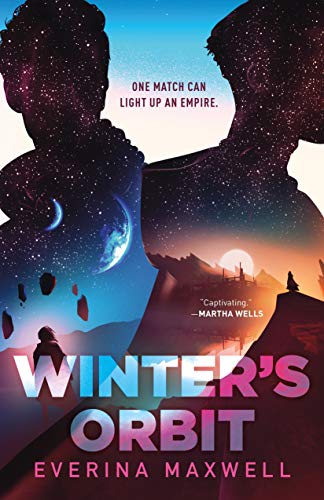
Winter’s Orbit

Two silhouettes contain stars and planetary scenes, one in cool tones and one in warm ones.

by Kristen B.

Sometimes, it’s fun to figure out why a book has its title. Often, there’s an a-ha moment while reading when I come across the phrase or the action where it all makes sense. Winter’s Orbit by Everina Maxwell has a lot of selling points, but the title may not be one of them. Okay, okay: The main characters maybe come to understand their feelings for one another while stranded in the snowy wilderness. I’m still not a fan of the title – too cold and distant.

However, I am a huge fan of the book with all its space opera and romance fun. It was exactly the escapist fiction I needed during a recent high-stress period. Prince Kiem is the disaster of a gadfly royal who spends his life with his charities and in the tabloids, but perhaps he has hidden depths that are just too much trouble to plumb. He is instructed by The Emperor, His Grandmother, that he is to make a dynastic marriage with his recently deceased cousin’s widower, Count Jainan. While politically necessary to hold an interstellar treaty together, Kiem finds the entire idea beyond intrusive based on what he figured was a “perfect marriage” that ended in tragedy. Kiem is pretty much a good egg who gets in his own way much too frequently. Jainan is another story altogether, but we’ll get there.

Those interstellar politics are vitally important and drive the science-fictional side of the story. Kiem and Jainan’s marriage solidifies the alliance between the Iskat Empire and its planet Thea. The Iskat Empire has similar arrangements with each of the seven planets that it holds, and it must maintain those relations to have continued access to the galaxy-spanning Resolution’s technology. And, it’s time to renew the 20-year treaty with the Resolution, meaning Kiem and Jainan’s marriage isn’t just a convenience. If the Empire falls apart, the separate planets become targets for larger, toothier fish in their medium-sized galactic pond.

Jainan’s world, Thea, is not entirely convinced that being part of the Empire has any immediate benefits. While he is part of an alliance marriage, Count Jainan also has commitments to his immediate family, his larger clan, and the planet. Part of the story hinges on discovering why this immensely intelligent human (space engineer by education and avocation) has withdrawn so completely from his duties. The pattern of Jainan’s reactions and assumptions leads to some fairly ugly realizations, as his new spouse Kiem discovers that maybe the first marriage wasn’t entirely what it seemed.

As in most romances that rely on wrongly held assumptions and misunderstandings, a good conversation or two would have gone a long way to soothing some of the worst conundrums. However, personalities and various crises allow our two lovable nincompoops to stumble around each other for far too long. They eventually recognize that it’s not only their relationship that needs some sleuthing – Cousin Taam’s death looks more and more like murder, the arranged marriage isn’t being accepted by the Resolution, and something hinky is going on at a mining station in Thean orbit.

It’s a whirlwind of a book filled with handsome men, entirely competent women, and all sorts of mysterious goings-on. The secondary characters fill out the margins and spaces between Kiem and Jainan in wonderful ways. I would really enjoy a book featuring Kiem’s personal assistant, Bel, who seems to have quite a piratical background. I also appreciate this book for its rather matter-of-fact portrayal of all sorts of gender identities and love interests. Yes, the primary romance is male/male, but it’s delightful that, in some rather refreshing ways, varied gender expression is commonplace and accepted. I’m looking forward to continued adventures in Maxwell’s universe (hopefully with more appealing titles).

Kristen B. is a devoted bookworm lucky enough to work as the graphic designer for HCLS. She likes to read, stitch, dance, and watch baseball (but not all at the same time).

Equity Resource Center – Children’s and Teen Collections 

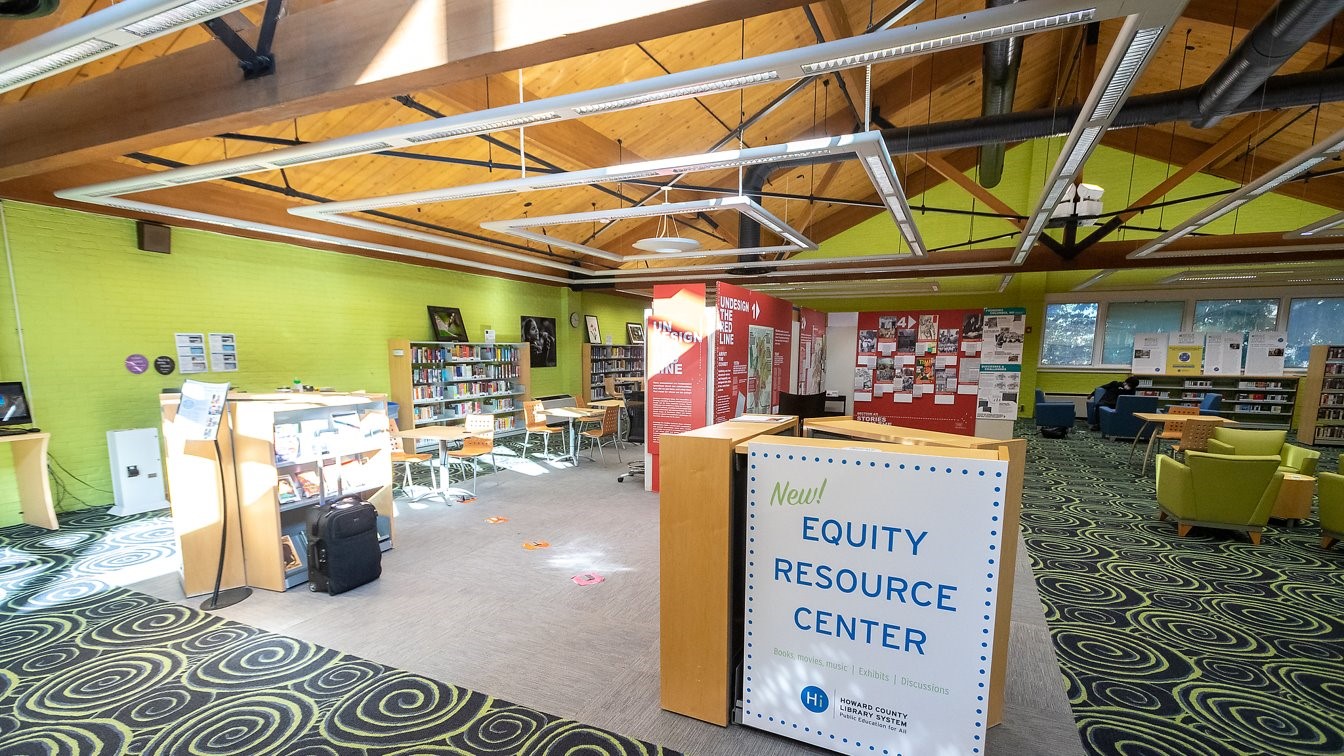
Wide view of the upstairs at Central Branch of Howard County Library System, where the Equity Resource Center is housed.

by Ash B.

Enrich your summer with entertainment and educational materials from the Equity Resource Collection!

The Equity Resource Collection (ERC) launched in October 2021 in response to growing community demand for materials related to racial equity, especially in the wake of George Floyd’s murder and the increase in mainstream attention to #BlackLivesMatter and systemic racism. 

The special collection was created along with the Equity Resource Center, a 700 square foot space located on the second floor of the Central Branch, directly behind the public access computers. An intentional space for learning, healing, and discussing issues, the Center also provides room for thoughtful exhibits (such as Undesign the Redline). This area houses thousands of new ERC materials, including movies, documentaries, and music CDs, as well as fiction and nonfiction books and audiobooks.  

While HCLS works hard to maintain a diverse, balanced general collection, the ERC is specifically focused on centering equity, diversity, and inclusive representation, including but not limited to race/ethnicity and racism, immigration, disability, gender, and sexual orientation. By concentrating these titles in a specific place, the ERC serves as a resource if you are interested in books on one of these topics but aren’t sure where to start. I find this particularly beneficial when browsing the children’s ERC and all the nonfiction ERC shelves.

Some titles in the ERC are duplicated in our general collection, particularly popular titles, whereas other titles exclusively belong to the Equity Resource Collection. However, all ERC titles can be requested for pickup at any HCLS branch – which we highly encourage!

If you visit the Central Branch, you might notice three “Equity Resource Center” areas, with materials located in the children’s and teen area in addition to the upstairs section. All ERC DVDs, however, are located in the main Equity Resource Center along with the adult materials, including family-friendly movies like Moana.

Children’s 

Located on the main floor behind and around the research desk, the children’s ERC contains chapter books, picture books, and nonfiction books for a variety of ages and interests.

The collection provides exceptional “mirrors, window, and sliding glass doors” for young readers – allowing youth to discover books about and by people who look like them, as well as to learn about people who may be different from them. Some of these titles are clearly informational in nature – defining terminology, explaining concepts, and narrating history. These range from textbook-like materials for tweens to picture books for the earliest of readers! 

A pastel background shows four young folx, with the two on either side holding plants that fountain with all sorts of flowers and artistry. One person is sitting in a wheelchair with a ukulele.

One example of the latter is It Feels Good to Be Yourself: A Book About Gender Identity, written by Theresa Thorn and illustrated by Noah Grigni. This gorgeously illustrated book shows examples of gender identity – boy, girl, both, neither – in a way that is nuanced but extremely clear for children (and adults!) to understand. It is simple without being oversimplified, which is an excellent achievement! If you’ve ever wondered “how do I explain gender to a child?” – or if you are new to learning about trans and nonbinary gender identities – then this book is for you! 

The Equity Resource Collection also includes children’s books that aren’t necessarily educational in the didactic sense but are still rich sources of learning, with stories about a wide variety of experiences, identities, and cultures. This is the window and doors part of what I was talking about earlier.

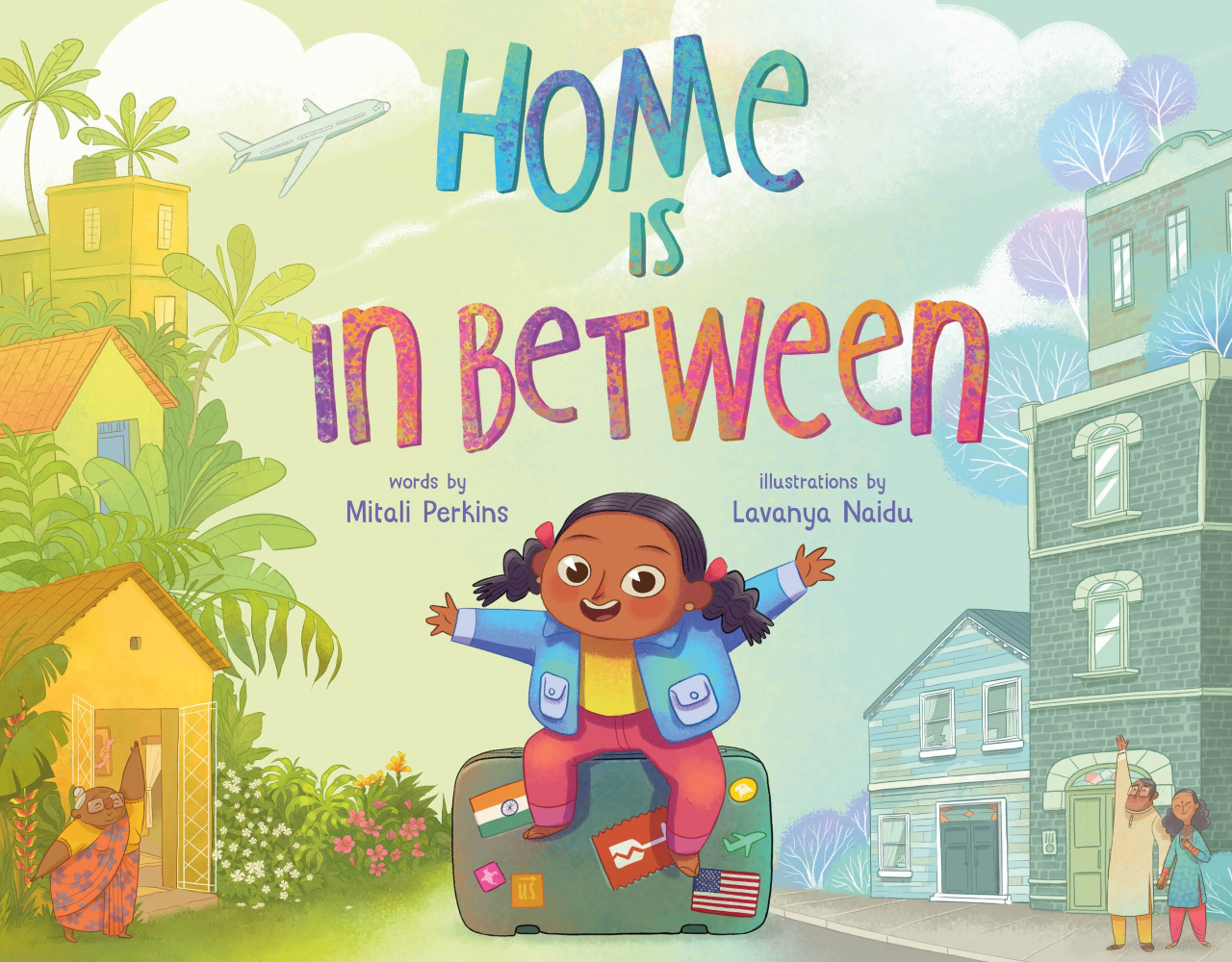
A young girl with dark hair and brown skin sits on a suitcase between a house in the a tropical seeting and an urban environment, with a plane overhead.

One of my favorite recent reads is Home Is In Between written by Mitali Perkins, illustrated by Lavanya Naidu. In this picture book, a young Indian girl moves to the U.S. with her parents, while their extended family remains in India. Vibrant and heart-warming, Home Is In Between tenderly depicts the immigrant experience by conveying the excitement of new things and the challenges of feeling ‘in between’ two cultures. The illustrations are gorgeous, too!

Teen 

Also located on the main floor, you will find the Teen ERC in the far right corner, with organization similar to the children’s area. Some teen and adult graphic novels reside on the top left shelf, followed by novels and short story anthologies, then fiction audiobooks, and finally, nonfiction. 

Compilation of: You Should See Me In a Crown that features a young Black girl with natural hair and a tiara drawn on top; Cemetery Boys with two young men standing back-to-back with a mysterious figure in front of a full moon; and We Are Not Free with sketched carachters sitting on a pile of luggage and boxes.

Some of these novels center the high school experience, such as the award-winning You Should See Me in a Crown by Leah Johnson, which follows a poor, queer, Midwestern Black girl’s pursuit of prom queen-dom, in the hope of earning a scholarship. The recipient of a Black-Eyed Susan award, Stonewall Book honor, and one of TIME’s best 100 YA books of all time, this title has earned high praise – it’s a sweet, joyous read that evokes the spirit of great teen movies. 

Other titles delve into cultural practices, such as Cemetery Boys by Aiden Thomas, which brings together traditions from various Latinx cultures in a supernatural, urban fantasy setting – along with a gay rom-com storyline for a trans male protagonist. With its humor, heart, mystery-adventure, and magic, this is one of my personal favorite books (also available as an eBook and an eAudiobook from Libby/OverDrive)!

Fantastic historical fiction novels also address legacies of injustice, such as the incarceration of Japanese-American citizens during World War II, as depicted in We Are Not Free by Traci Chee. The granddaughter of Japanese-Americans who were imprisoned as teenagers at that time, Chee felt personally invested in bringing attention to this oft-neglected history. With many moments inspired by the stories of her relatives, this is an incredibly powerful story about fear, hope and resilience. 

Compilation of: The Burning which features yellow flame motif and red lettering; The Stonewall Riots which features illustrated crowd and rainbow sky; A Disability History of the United States which features seven photographs of people with physical ailments; Trouble Maker for Justice features a young Bayard Rustin against a faded photo of a protest; Protest features Olympic Medalist Ibtihaj Muhammad in her fencing gear; Rolling Warrior features the illustration of a white woman in a wheelchair holding a sign that says Rights Now!

Of course, there are also excellent nonfiction titles to help you learn about history. Some delve into specific events, such as The Burning: Black Wall Street and the Tulsa Race Massacre of 1921 (Young Readers’ edition) by Tim Madigan and Stonewall Riots: Coming Out in the Streets by Gayle E. Pitman. Other titles use a broader lens to approach the history of marginalized people, such as A Disability History of the United States by Kim E. Nielsen. There’s also important history to be learned in biographies and memoirs of icons of the past and present, from the Civil Rights organizer Bayard Rustin, to Olympic medalist Ibtihaj Muhammad, to disability rights activist Judith Heumann. 

For aspiring activists, there are books that can serve as guides as well as stories of youth who are speaking out and affecting change today. Kids on the March by Michael G. Long talks about youth protests from the 1903 March of the Mill Children to the recent movements of Black Lives Matter, March for Our Lives, and the Climate Strike. 

There is so much to discover and learn within the Equity Resource Collection! We highly encourage you to come visit if you can… and stay tuned for Part 2 to learn about the other areas of the collection! 

Ash is an Instructor & Research Specialist at Central Branch and is a co-facilitator for Reads of Acceptance, HCLS’ first LGBTQ-focused book club. Their favorite place to read is spread out on a blanket under the shade of the tree.