The Girl with the Louding Voice by Abi Daré

An indigo blue cover features paper cutout art of red flowers with dictionary pages folded in and the portrait of a young Black woman in profile, wearing a multi patterned top.

by Holly L.

So good. It’s so good.” This was the recommendation from my discriminating and well-read colleague at Miller Branch. I had already gravitated toward this novel based on the cover art alone. The royal blue background offsets bold canary yellow text: The Girl with the Louding Voice by Abi Daré. The all caps letters hinting at what a “louding voice” might look like when spelled out. The artwork appears to be a collage, with red paper flowers adorned with petals cut from the pages of a book, what appears to be a dictionary. Trace the flowers down to their stems and they seem to be blooming from the silhouette of a young woman. We see little else but her elegant profile, pitch black but for some bursts of fuchsia and crimson highlighting her features and hair, her headband and clothing vivid strips resembling Ankara fabric. Her expression is unreadable. Studying this striking cover, I wondered what exactly this girl had to say.

Ready to listen, I donned my earbuds and became quickly engaged by the sonorous voice of the audiobook’s narrator Adjoa Andoh, a veteran of British stage and screen and narrator of many audiobooks. The prologue, an excerpt from the “The Book of Nigerian Facts,” highlights the persistence of widespread poverty in Nigeria despite being it the richest country in Africa due to being a major crude oil exporter. I continued to listen as the first chapter began and I was confronted with a different voice (though the same reader), that of the main character, Adunni. After her father beckons her to come close, the fourteen year-old reflects:

“I know he want to tell me something bad. I can see it inside his eyes; his eyesballs have the dull of a brown stone that been sitting inside hot sun for too long. He have the same eyes when he was telling me, three years ago, that I must stop my educations. That time, I was the most old of all in my class and all the childrens was always calling me “Aunty.” I tell you true, the day I stop school and the day my mama was dead is the worst day of my life.”

Adunni speaks not in the pidgin English that is common in the author’s native Nigeria, but a broken English borne from Daré’s imagination. I admit that it took me several minutes to get used to this dialect but once I acclimated to Adunni’s voice I found myself enthralled by this tenacious and resilient young woman. Rich in determination but poor by birth and circumstance, she lacks what she most passionately desires—an education. 

When the story begins young Adunni learns that her poor father has sold her into marriage with a prosperous and wretched old taxi driver named Morufu. After a few agonizing months as Morufu’s third wife, Adunni flees after a tragic event. She finds her way to bustling Lagos, where she is placed as a maid for a wealthy business owner named Big Madam, an imposing woman whose laugh, “sound like a rumble, a big rock rolling down a mountain.” While she labors around the clock as a domestic servant to Big Madam and her predatory deadbeat husband, Big Daddy, Adunni looks for opportunity wherever she can find it. With the help of Ms. Tia, a kind and well-connected woman, Adunni’s vision of a path toward independence becomes clearer. She begins to stake a place for her own future while paving a way for other young women and girls from small villages like her own. As her mother insisted before passing away in her forties, “your schooling is your voice.” Adunni took this advice to heart, forever insisting on her right to an education. 

I found so much to admire in the character of Adunni, with her seemingly bottomless reserves of strength and optimism despite the ongoing trials that threaten to break her. This is a young woman whose dream of a better life will not be denied, her “louding voice” lifting not only herself up, but anyone willing to share in her story.

I’m so glad I took the time to listen.  

Holly is an Instructor and Research Specialist at the Miller Branch. She enjoys knitting, preferably with a strong cup of tea and Downton Abbey in the queue. 
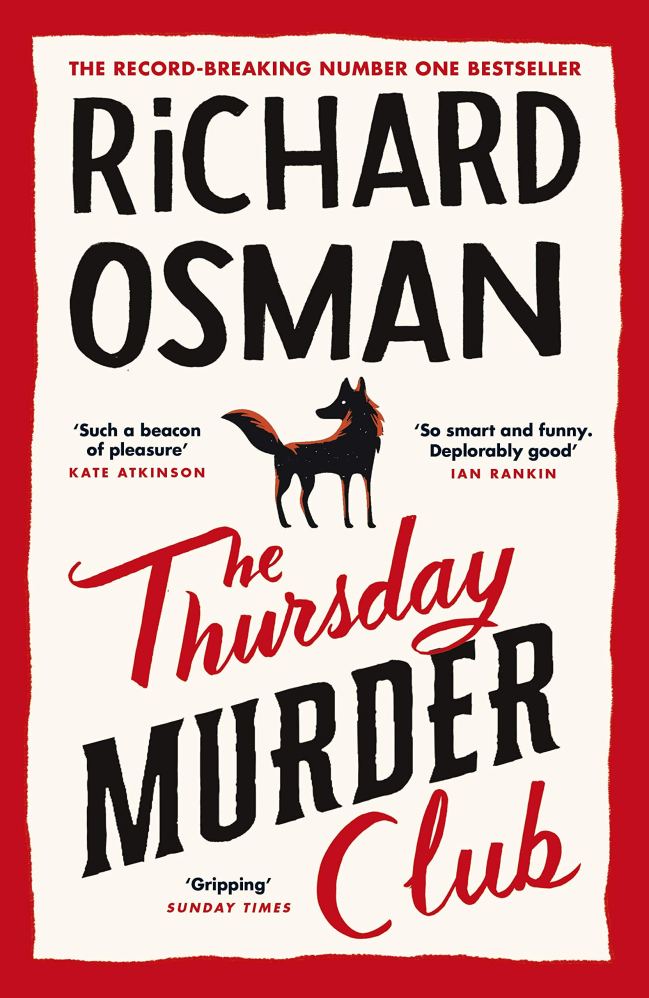
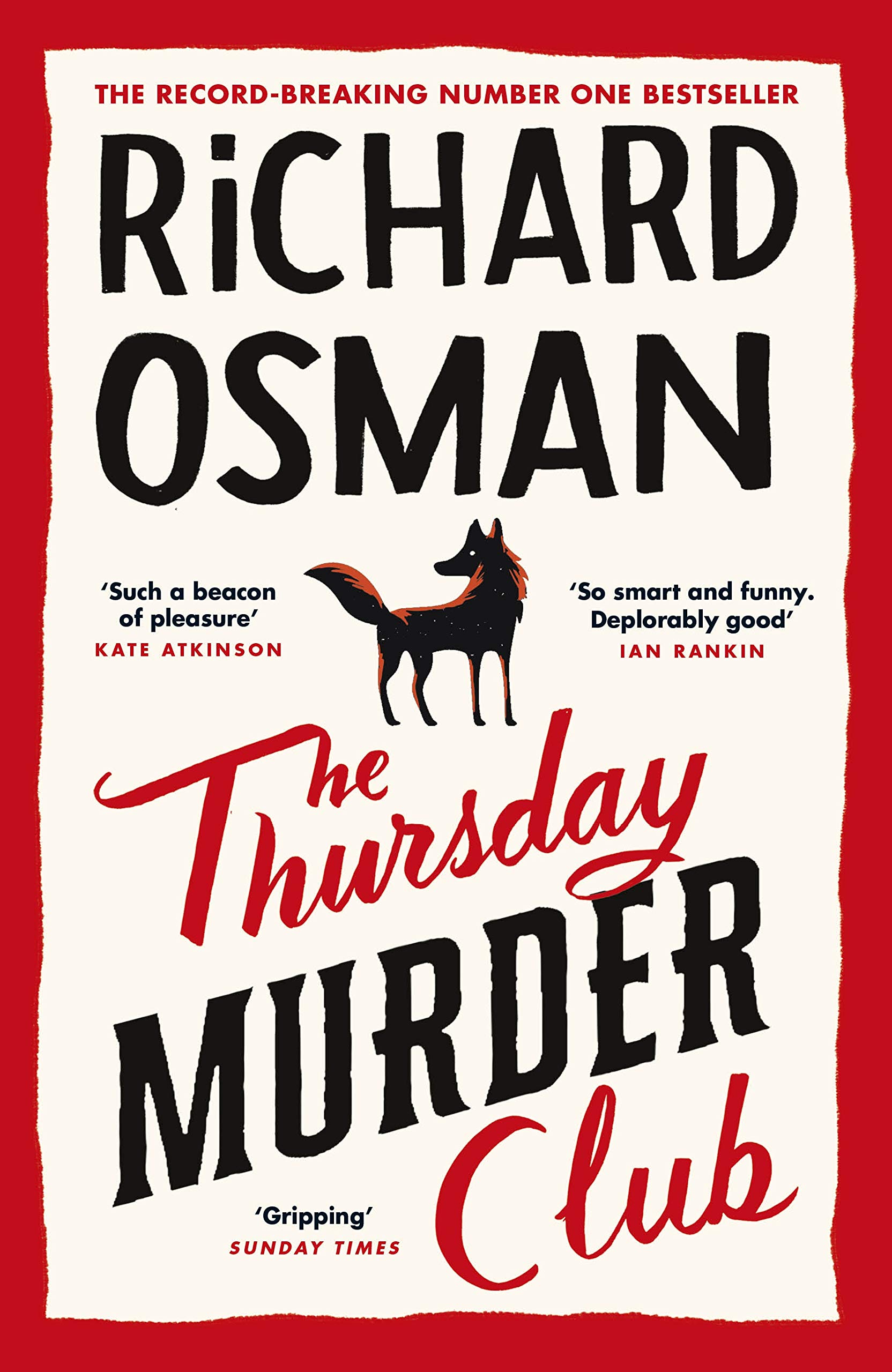
The Thursday Murder Club by Richard Osman

A fairly plain cover with a red edge and the title in script and the author's name hand lettered. A small wolf stands between author and title lines.

by Sahana C.

I read the introduction on Goodreads: “Four septuagenarians with a few tricks up their sleeves, a female cop with her first big case, a brutal murder. Welcome to…The Thursday Murder Club” and immediately placed a request for this book. Then I waited for a few weeks and was thrilled when I finally got the notification that the novel was ready for me. I finished it the day I started, because, first things first, the book is hilarious. I paged through, intent on the mystery and trying to pick up the clues scattered through the pages and thinking about the details of the case, then suddenly remembered that the characters are using and abusing the privileges of their old age. One of the main characters pretends to have her handbag stolen to talk to a police officer, while another pretends that his memory is going in order to get a detective to give him what he needs. All of them are ever-so-charming when they’re trying to get their way, and you suddenly remember that the point-of-view character is a seventy-something year old who is casually discussing (and excited about investigating!) murder.  

The novel happens in a retirement village, Cooper’s Chase, and centers on four friends who genuinely seem to have absolutely nothing in common and no real reason to like each other. (Except Joyce: “I think we all like Joyce,” says Ibrahim. Ron and Elizabeth nod their agreement again. “Thank you, I’m sure,” says Joyce, chasing peas around her plate. “Don’t you think someone should invent flat peas?” (p 13)). The four meet weekly (on Thursdays, to no one’s surprise) in the Jigsaw Room to solve cold cases, especially murders. There’s Ron, a loudmouthed, passionate rabblerouser whose biggest role in the group comes from his unwavering suspicion of any sort of authority. Ibrahim, a retired psychiatrist, serves as the group’s resident tech expert, who is wildly proud of his technological prowess while also organizing and keeping the data on all of the crimes the club discusses. Joyce, the first point of view readers are introduced to, is a former nurse and the newest member of the group, who is steadfast and practical, keeps her head down, and bakes a mean cake in almost every other scene. Finally, rounding out the four and one of the founding members of the Thursday Murder Club is Elizabeth, who remains infinitely mysterious, with a checkered past, who always manages, somehow, to get her way.  

Through trickery and subtle coercion, they involve themselves in the investigation of a murder that occurs adjacent to their retirement village, bringing two detectives into the fold: Donna, a young woman looking to prove herself, and Chris, a detective who feels a bit past his prime. The detectives quickly realize the importance of our Murder Club, never take them for granted, and come to realize that the Thursday Murder Club’s influence and investigative effort is absolutely necessary to solving the crime. Through it all, we get an actual well-constructed mystery, one that leaves bread crumbs and truly utilizes each of the ensemble cast of characters to the full extent of their humor and intelligence. It keeps the plot moving from beat to beat.  

No real moral judgements are made in the story. The retirement village is full of rich and accomplished people who are ready for some time out of the spotlight, but who have their own secrets and problems, which in turn allows them to confront the criminals without any real superiority. The only judgements are for the truly obnoxious characters (one in particular, who simply has no manners), and even comes across as more of a grandparent’s headshake of disapproval than any real condemnation. 

The Thursday Murder Club is a cozy mystery full of humor, vitality, and life, more than I anticipated for a book about murder and retirement villages. It is available in print, eBook, and eAudiobook

Sahana is an Instructor and Research Specialist at the Savage Branch. She enjoys adding books to her “want to read” list despite having a mountain of books waiting for her already.

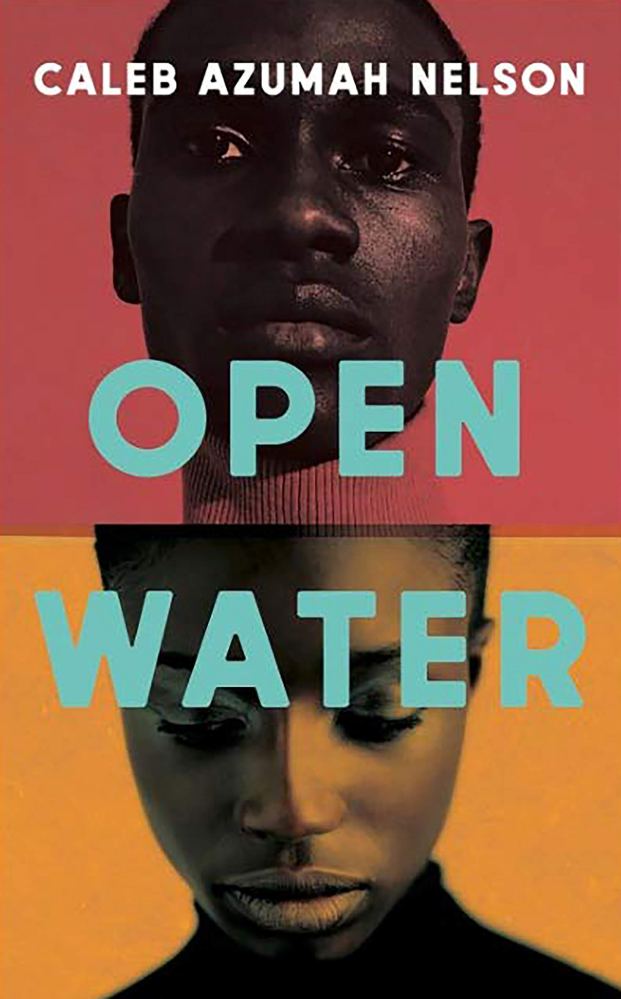
Open Water by Caleb Azumah Nelson

The image is of two photographs of young Black men, one above the other. The one on top is looking directly at the camera while the one underneath is looking towards the ground. The title is in light blue across both photographs, with a background of pale red and orange.

By Ash B.

Are you looking for a lyrical novel to savor slowly, perhaps while sipping tea (or your warm beverage of choice) on a quiet day? The type of novel that can break your heart and then put it back together, over and over again? 

Well then, reader, do I have the perfect suggestion for you. 

Open Water is the debut novel from Caleb Azumah Nelson, a 26-year-old British-Ghanaian writer and photographer living in south-east London, and wow, what a debut! Consider me truly impressed – in fact, if I had to recommend a single 2021 release for you to catch up on, it would be this one. (Yes, it is that good)!

A love story at its core, Open Water follows two young artists, one a photographer and the other a dancer, as they develop an intimate friendship that challenges the boundaries of platonic and romantic relationships. 

However, the connection between these two is complicated not only by the details of their initial meeting, but also by the realities of life as Black British young adults; experiences of falling in love are not mutually exclusive with experiences of racism. The desire and affection two people feel for each other can be healing, but it does not create an impermeable bubble from fear, pain, and violence. So, this is absolutely not “just” a love story. (Not that there’s anything wrong with those, either, but Open Water is a different vibe).

Nelson masterfully balances Black joy and creative expression – especially descriptions of music and the South East London cultural scene – with experiences of racial profiling and the policing of Black bodies. Life is so beautiful yet so painful, and Nelson captures this complexity with ease.  

He writes with insight into vulnerability and mental health in a style that is understated yet breathtakingly poignant. Also, the narrative is told in second-person, which might be off-putting to some readers, but I found it to be all the more engaging. You know that saying about walking a mile in someone else’s shoes? Nelson skillfully places the reader inside the inner world of his protagonist through this use of second-person perspective. It’s brilliant. 

Months have passed since I actually read this book, but I still can’t get over the flow of Nelson’s writing – it truly is like water, smooth at some times and turbulent at others. If you enjoyed On Earth We’re Briefly Gorgeous by Ocean Vuong with its poetic vignettes, but would appreciate a more hopeful tone or different subject matter, you will love Open Water. 

And even if this doesn’t sound like what you would typically read, I would still recommend this book to just about anyone. I’m nearly begging for more people to read it at this point, if I’m being honest. I’m so desperate for this book to get the attention it deserves! 

At under 200 pages, the slim size of the book isn’t intimidating, and despite this short length, there is so much to get out of this book. You might even want to keep a camera (or, you know, your smartphone) close by in order to take photos of all the beautiful quotes you don’t want to forget. That’s certainly what I did, as well as repeatedly putting the book down throughout to marvel at what I had just read. I got chills. I felt literal aching in my heart. I was reminded what an utterly tender, yearning type of human I am. I loved, loved, loved this book. I hope you will too! 

Open Water by Caleb Azumah Nelson can be requested here. It is included in both our regular Adult Fiction collection as well as our Equity Resource Center collection.

Ash is an Instructor & Research Specialist at Central Branch. This time of year, they are especially fond of reading while cuddling with their golden retriever and sipping hot cocoa or tea.

The Institute by Stephen King

The book cover shows a boy in sideways silhouette in the back of a train caboose; he is seated on a bed with pillows and there is a desk with a lamp and a chair next to him. The small room contains a window with a cloudy bright sky, surreal because it is facing forward towards the next train car. The caboose is on a train track and is surrounded by a darkened landscape and skyscape depicting either dawn or dusk.

By Gabriela P.

Until recently, if someone mentioned Stephen King around me, all I pictured were the usual horror staples: clowns, spiders, dark hallways, mysteriously red and sticky substances. Of course my familiarity with King’s work was about the same as the average media consumer – starting and ending with the Hollywood blockbusters like It and The Shining. As a reader who prefers historical fiction over horror, I never ventured into his dizzyingly enormous body of work.

It was not until my recent read of King’s 2019 novel The Institute that I realized I may have been missing out on his ever-developing literary skills. The Institute delivers on a terrifying antagonist, but rather than supernatural, the bad guys in this story are all-too human. In the “Institute,” inmates with telekinetic abilities are kidnapped, imprisoned, and tormented with unexplained experiments. The inmates are children. The story primarily revolves around Luke Ellis, a 12-year old with extraordinary genius, as he wakes up in the Institute and attempts to navigate the sadistic staff and build peculiar friendships. As he and his newfound friends and allies learn more about where they are, readers come to understand that those working for the Institute believe they serve a higher good, and that there exists a place for cruelty with a purpose. The staff members in charge of the children would show up to work, run their terrifying tests, stop for coffee in their breakrooms, chat and flirt, then head home each night. Even as Ellis and his fellow captives live their days bouncing between mysterious injections and surreally normal basketball games, the real horror is apparent in the quiet complacency towards child abuse as a necessary evil, and at its worse no more than daily routine.

How could children survive in a place designed to strip them of dignity and humanity? Could they even survive? The Institute weaves together a story of unimaginable scale with the most authentically human characters: policemen, innkeepers, custodians. And yes, there is a 12-year old genius and kids who can read minds, but their abilities are the least important things about them. Their moments of anger, sadness, courage, and joy are their characters’ truly grounding elements.

While definitely a tough read, it surprised me how much I enjoyed this novel. Ruthless and brutal, but at times captivatingly heart-warming. If you’re interested in making a foray into the Stephen King sphere, The Institute is a great book to pick up and get absorbed into.

The Institute is available from HCLS in a variety of formats: regular print, large print, as an audiobook on CD, and as an eBook and an eAudiobook from Libby/OverDrive.

Gabriela is a customer service specialist at the Miller Branch. She loves long walks, reading with her dog, and a good cup of coffee.

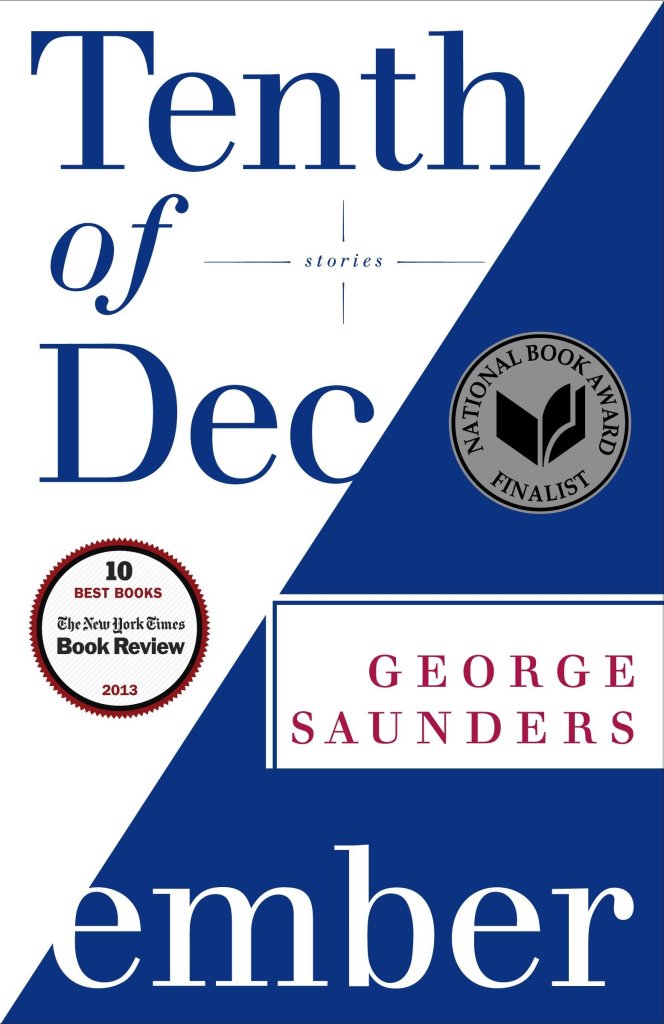
The Beauty and Art of the Short Story

The cover is split diagonally, with a white background in the upper left and a blue background in the lower right. The title is in blue against the white background and white against the blue background.

By Eric L.

I’ve been reading a lot of short stories lately. I’d contend the short story is really its own art form, of which I’m a big fan. In fact, in my book discussion group, Read. Think. Talk., we’ve spent the past quarter reading exclusively short story collections. It makes for a different sort of discussion, and in some ways the long form – a novel or novella – lends itself a bit better to a book discussion. Personally, I like to discuss the characters and situations that change throughout a novel. However, as a group we’ve done short stories plenty of times, and it’s a great opportunity to discuss which ones you like, which ones you didn’t like, and generally how the stories worked, or didn’t, in a short number of pages.

I’ve always enjoyed short stories for their brevity. They are especially well-suited for the time-challenged, modern world we live in. You can just jump into a story when you have a brief period of time, or perhaps need a short respite from whatever else you’re reading (e.g., maybe you’re a student reading textbooks and academic periodicals and would like some fiction in your life). I’ve read some great collections lately.

George Saunders, who mainly writes short stories, is remarkable in the field. His collection Tenth of December is by no means a feel-good read, but the stories are an abstract satirical take on modern-day America. They are collected from The New Yorker, where Saunders contributes stories regularly and where I read a great interview with the author to prepare for our book group discussion. Most of the stories concern disastrous situations and terrible characters that frankly scare you a bit, but somehow they don’t end catastrophically. I would even describe the stories as ending on an optimistic note, which seems like the opposite of how they’re presented on the surface. They’re definitely worth a read, or two.

The book cover shows a young girl riding on a motorbike, sketched in dark blue against a lighter blue background, with the title and the author's name superimposed over the sketch.

The Refugees by Viet Thanh Nguyen is a companion to his excellent book The Sympathizer. Although I’d recommend the latter over the former, I don’t want to denigrate the story collection; it’s just a tall order to compete with that great book about the Vietnamese immigrant experience in America after the Vietnam war. (Please read my review of The Sympathizer here.)

The stories are all colored by Nguyen’s personal experience of being a refugee as a child. Dedicated to “refugees everywhere,” I think the book speaks to the importance of expanding our understanding of what it means to be a refugee. In my mind’s eye, I see people walking with their few possessions without a land or place. While a physical journey of this sort sometimes happens, the next step deals with the ongoing psychological effects of living in a foreign land. Particularly, one that is politically and culturally controlled by people different than you. Nguyen deftly tells stories from the perspective of a man, a child, a younger woman, and an older woman. There is even an interesting commentary about how some refugees perceive others as having it better when one character laments the fact that they’re not Korean.

The book cover shows a formal long-sleeved jacket with an emblem on the front pocket, with long sleeves extending well beyond the hem of the jacket. The jacket is in an off-white color with the details sketched in black, and the background is a bright lawn green.

In February, the book group is considering Welcome to the Monkey House by Kurt Vonnegut, one of my favorite writers, and the library just procured some fresh copies. I’ve always loved his wit, humanism, and the cynical optimism that flavors his satire. Vonnegut began his career and was able to support himself and his family as a writer by selling stories. I learned this recently by watching the documentary Kurt Vonnegut: Unstuck in Time. The collection is worth checking out if only for the great tale “Harrison Bergeron.” I first read this in a freshman college English class (even a slacker like me was game for this short story). Vonnegut tells the story of a futuristic society that has attempted to forcibly make itself completely equitable via technology. For example, if you’re intelligent your brain is zapped when you start to think too much; if you’re physically gifted, you’re saddled with weights; if you’re attractive, you wear a mask, etc. It’s a complicated message that I think I get, or at least I have my own interpretation. However, I don’t want to influence yours. I enjoy art like this, though, and I’d describe it as open-ended and open to interpretation.

The book cover shows a figure in dark overcoat, hood, and gray scarf, against a gray background but facing forward, holding a flashlight that shines a triangular beam down to a circle on the ground in front.

Although I could go on about all the great short story collections I’ve read, I won’t. However, I’d like to mention one final great one. Stone Mattress: Nine Wicked Tales is by Margaret Atwood, another author I love for her wit and great social commentary. These tales are sort of “light horror” stories, which is how I would describe much of Atwood’s writing. I hope it’s not heresy to state here that I think the collection is better than The Testaments. The stories should be read in order, as some are connected. The overarching theme throughout is the experience of being a woman and aging, and they’re all wondrously done.

I have always marveled at those who do the short story well. To tell a story in just a few pages takes craft, specifically, to get people to invest in the plot, scene, and characters. Try it, sometime. It’s not easy.

Tenth of December is available in print from HCLS, as well as in large print and in eBook and eAudiobook format from Libby.

The Refugees is available in print, as an eBook from both CloudLibrary and Libby, and as an audiobook on CD.

Welcome to the Monkey House is available in print and also as an eAudiobook from Libby.

Stone Mattress is available in print, in large print, as both an eAudiobook and an eBook from CloudLibrary, and in eBook format from Libby.

Eric is a DIY Instructor and Research Specialist at the Elkridge branch. He enjoys reading, films, music, doing nearly anything outside, and people.

Wintry & Wonderful Picture Books

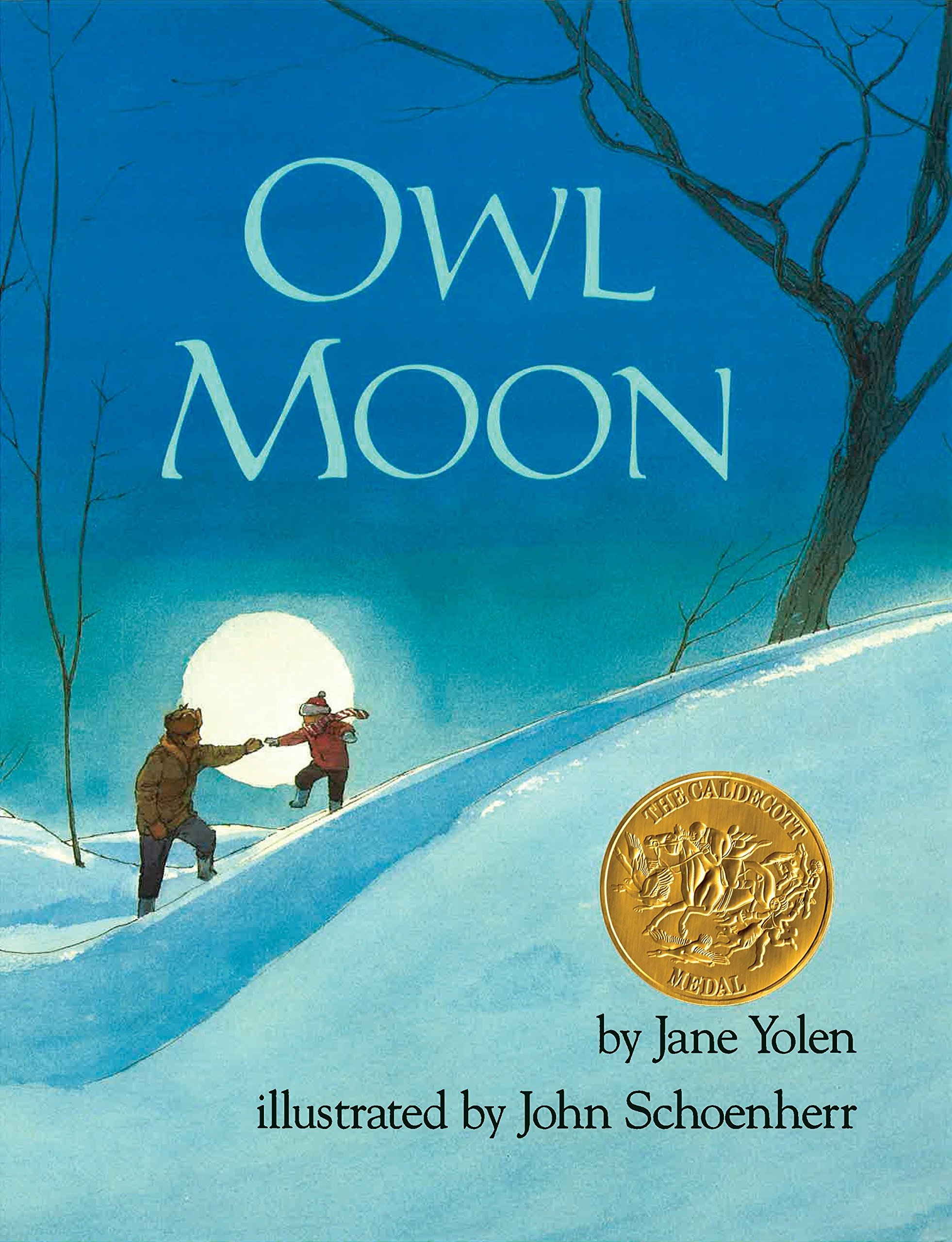
A simple illustration of a snowy hill with a bare tree, at the bottom a child and parent walk

by Eliana H.

I hope you have enjoyed our recent snow days and have stayed safe and warm. If there wasn’t enough snow for you, perhaps these titles will fill the gap. If you’d rather stay away from winter weather, curling up inside with a book is a great option for staying warm. Enjoy a sampling of some wintry and wonderful picture books to share with your family this season. If you’re looking for more options or hoping to find some cozy titles for more mature audiences, visit or call any of our branches and speak to a staff member. We will be happy to help you find the right title for you! 

Making a Friend by Tammi Sauer, illustrated by Alison Friend (ages 3-6) 

Despite his best efforts, Beaver has a hard time making friends. When the snow falls, it presents him with an opportunity to make a different kind of friend. Will Beaver be able to keep his friend when the snow melts? Use this story as a conversation starter with little ones about how to interact with peers and build friendships. 

Owl Moon by Jane Yolen, illustrated by John Schoenherr (ages 2-7) 

“When you go owling, you don’t need words.” In this strikingly illustrated, Caldecott-winning classic tale, a little girl goes out into a quiet, snowy night with her father to search for owls. The poetic story shows the bond between parent and child, and the special experiences that can strengthen it. It also demonstrates a connection to nature that deserves to be maintained.  

Rabbit’s Snow Dance by James & Joseph Bruchac, illustrated by Jeff Newman (ages 3-7) 

Expert storytelling father and son team James and Joseph Bruchac composed this retelling of a traditional Iroquois story, where readers meet a rabbit who looks different than what we are used to today. Young readers may be able to relate to Rabbit’s impatience, as he chants “I want it, I want it, I want it right now!” Although Rabbit gets what he wants, regardless of the needs of the other animals, the consequences help him learn to be more patient, and perhaps some readers will take the lesson to heart as well.  

Snow Much Fun!  by Nancy Siscoe, illustrated by Sabina Gibson (ages 4-7) 

Three friends are excited to enjoy a snow day! They each enjoy different activities, but they are willing to try something outside their comfort zone for their friends. The friends support each other in any struggles, and they find new joys as they explore. Photos of intricate textile and paper creations bring a whimsical, unique feel to this simple, rhyming tale. 

Thankful by Elaine Vickers, illustrated by Samantha Cotterill (ages 4-8) 

What are YOU thankful for? In this endearing book, a young child shares her family’s practice of making paper chains out of things they are thankful for. The narrator shares many things she is thankful for, throughout the year and in all different situations. As you enjoy the fun, detailed pictures of paper creations in the book, perhaps your family will be inspired to talk about where you find gratitude.  

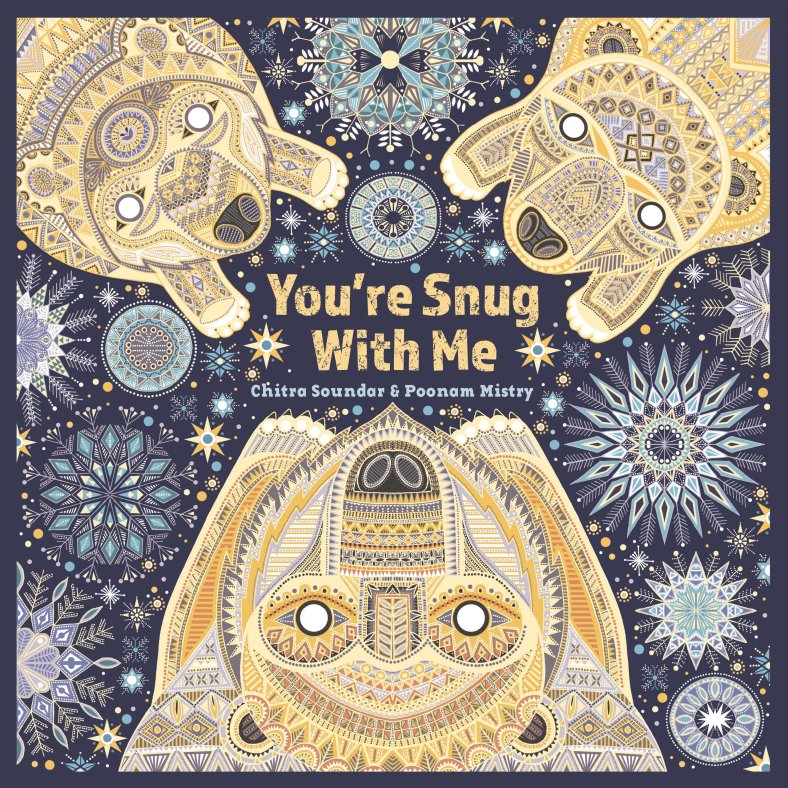
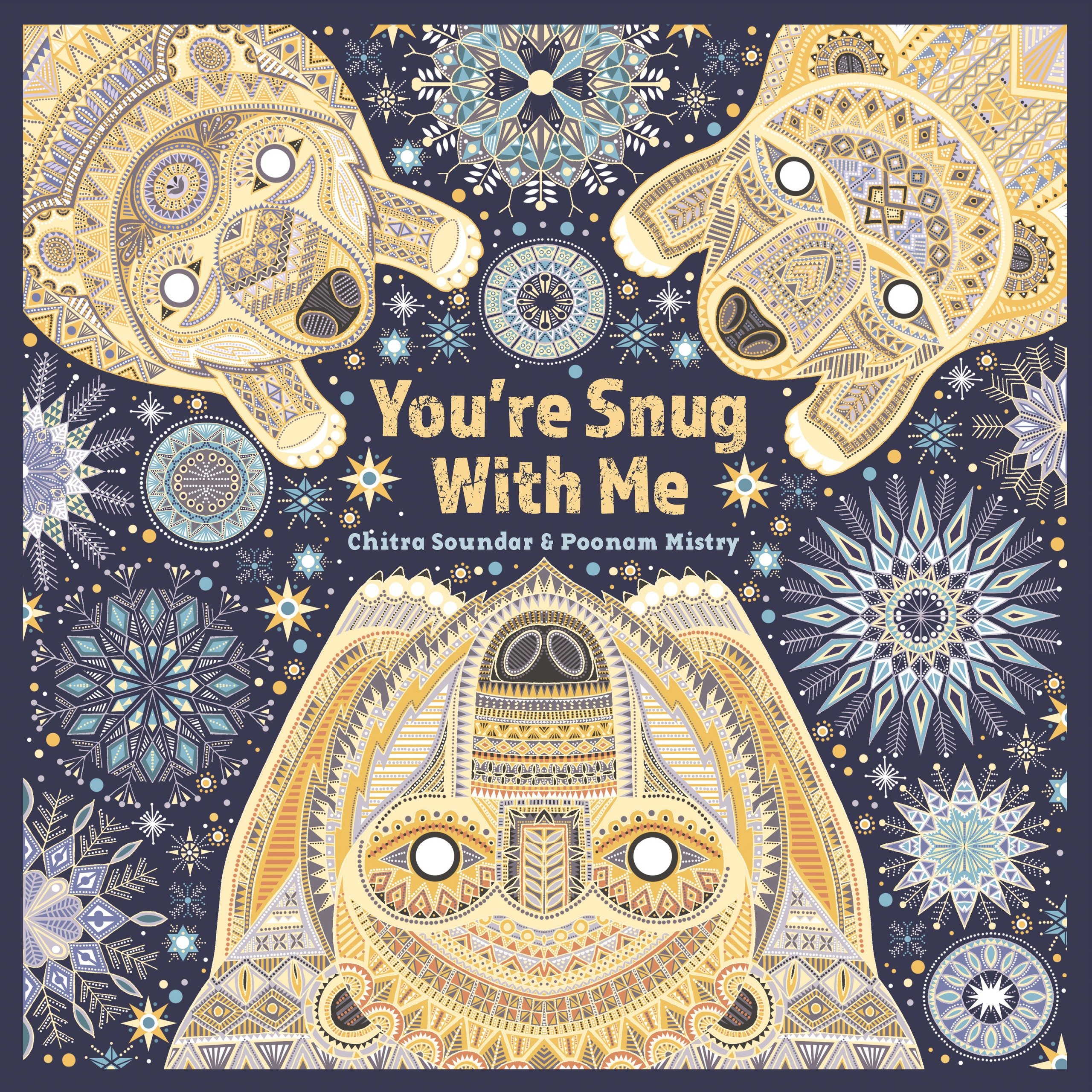
You’re Snug with Me by Chitra Soundar, illustrated by Poonam Mistry (ages 4-7) 

This book pairs ornately patterned illustrations with a mother polar bear’s reassurances to her two new cubs as they are born and begin to learn about the world around them. In the text, the author uses the mama bear to teach readers about the beauty and wonder of our polar lands. When her new cubs worry, she assures them each time, “You’re snug with me,” all the while gently encouraging readers to be good stewards of the earth. 

In shades of gold, blue and grey, snowflakes and bears composed of complicated patterns frame the title.

Eliana is a Children’s Research Specialist and Instructor at HCLS Elkridge Branch. She loves reading, even if she’s slow at it, and especially enjoys helping people find books that make them light up. She also loves being outside and spending time with friends and family (when it’s safe).

Foundation by Isaac Asimov

The black cover serves as a backdrop to delicate repeating patterns. A second white incomplete circular design on the bottom half draws your eye to a vanishing point.

By Ben H.

Foundation, the first book in Isaac Asimov’s Foundation series, is a sci-fi touchstone. I’m sure it’s been called a towering work of genius or a staggering work of brilliance. More importantly, it’s just been adapted for the small screen (I haven’t seen the show, but I’ve heard good things). The story’s three protagonists are a scientist, a politician, and a trader. Asimov explores big scientific, political, and economic ideas, and his protagonists give the reader a clue.

Asimov speculates that we will one day be able to predict the future using science. Psychohistory is born from the blending of (I bet you can guess) psychology and history. It’s used to predict the movements of large groups of people (the masses of humanity living their quietly desperate lives). We meet Hari Seldon, the most accomplished psychohistorian the galaxy has ever seen, on the planet of Trantor. Seldon tells Gaal Dornick, the scientist protagonist, that the current and seemingly stable galactic empire will fall and the galaxy will be plunged into thousands of years of chaos and barbarism. Seldon has a plan that, if executed properly, will save the galaxy thousands of years of chaos. Don’t get too attached to Gaal. Asimov moves through narrators pretty quickly. 

According to the plan, Seldon establishes the first Foundation on the remote planet Terminus. He tasks scientists and academics with compiling an encyclopedia of the galaxy’s vast knowledge. They attack their goal with fervor. Meanwhile, the rest of the galactic empire is resting on its laurels and starting to collapse. 

Fast forward a few decades and Salvador Hardin is the next narrator (the political narrator). Hardin is a very 60s sci-fi cool customer, space cowboy narrator. At this point Seldon reappears as a hologram (being dead) to provide hints or tips to keep the galaxy moving in the right direction, according to his plan. Hardin, the mayor of the planet Terminus, helps the planet through the first Seldon crisis, which is a time identified as a key turning point in the future of the galaxy. Each crisis must happen a certain way for the plan to be successful. 

The last narrator is Hober Mallow, a trader working for The Foundation. At this point, The Foundation produces technological marvels that they trade to the surrounding planets. Most traders spread the religion Hardin created and tied to The Foundation’s technology to new planets. The new planets buy the technology, sometimes accept the new religion, and become regular customers. The traders make money and the surrounding planets become dependent on The Foundation. 

Foundation is full of big ideas. Bloated bureaucracies, social elites, centralized governments, hyper-specialized professionals, cynical capitalists, zealous religious fanatics, and downtrodden regular folk populate the pages. It’s a thought-provoking story of the collapse of an empire.

Foundation is also available from HCLS in eBook and eAudiobook format from Libby.

Ben Hamilton works at Project Literacy, Howard County Library’s adult basic education initiative, based at HCLS Central Branch. He loves reading, writing, walking, and talking (all the basics).

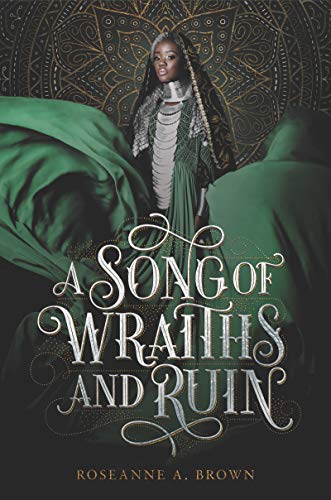
A Song of Wraiths and Ruin by Roseanne Brown

A regal young Black woman with long braids stands in front of a patterned wallwith swaths of green fabric swirling around her.

by Eliana, teen volunteer at HCLS Savage Branch

In true Eliana fashion, I started to blitz through this title as an audiobook. I had to ask my librarian friend, Sarah, “Is it just me or are these characters just the most emotionally stunted dolts I have ever not actually come across?” I love them so much, they make me want to tear my hair out.

Along with the engaging characters, Roseanne A. Brown does an excellent job incorporating African culture into this novel, described on the book jacket as, “The first in a gripping fantasy duology inspired by West African folklore in which a grieving crown princess and a desperate refugee find themselves on a collision course to murder each other despite their growing attraction.” The setting has quiet elements of West African culture, the furnishings, the clothes, the streets, even the characters’ hair.

My favorite part was the hair routine Karina’s maid does with her. Shea butter and the other oils along with twisting are, in fact, accurate to curly hair. It’s part of why I haven’t been braiding my hair so often. My curls look much lovelier when out of their braids. My family is Puerto Rican, and although Puerto Rico takes a fair amount of influence from African cultures, there are also Taino and Spanish influences there as well.

Back to the book: Karina has all the qualities of a good queen, she just needs time to heal and properly grieve her mother (the previous queen). Outside of the eyes of the courtiers, Karina is surrounded by the love of her family and friends, but she’s closed herself off from them. With the way Karina’s trajectory is headed, Karina may completely alienate everyone around her before something happens to shatter her worldview and push her into regaining allies. There is a notable difference between the Karina who does whatever she can to avoid hosting the Solstacia Festival and the Karina who fights tooth and nail to fulfill her duties as a new queen.

Karina is something of a tempest. For much of the novel, she is insecure, grieving, and constantly worried about whether she’s a good enough ruler. She *worries* about her fitness to lead and actively tries to remove the person she deems to be an unfit ruler (herself) from succession. Heck! The whole reason she even gets into reviving her deceased mother is that she believes her kingdom would be better with her mother’s leadership!

Her opposite in the story is Malik, a child who has seen the absolute worst humanity has to offer. His own family and village were horrible to him. The world sees him and his people as awful. And yet he cares. He cares *so much.* He worries about both of his sisters. He pays attention to the servants and even worries for Karina, a person who he is actively trying to kill, when he overhears how the court lambasts her for needing a day to recover from an attempt on her life.

I’m still listening to the book, so I wonder if there is a reason Malik’s people are oppressed like they are. I know that in the real world, oppression often has no tangible reason. In most fantasy media I have interacted with, the oppression is typically caused by some ancient bad-blood event. I appreciate the author’s sensitive and visceral depiction of anxiety and panic attacks, which didn’t trigger one of my own. I like that she included coping strategies. Somewhere out there, a reader will see Malik thinking of his lemon tree and adopt a similar strategy.

One last note to my friend Sarah: I feel like am a parent now. I want to wrap Malik and Karina up in my arms, tell them that everything is okay. I wanna whack them upside the head and ask them, “What were you thinking?!” (affectionately) Are you happy, Sarah? You have ruined me. Everyone should read this book.

Meet the author Roseanne Brown at HCLS Savage Branch (or attend online) on Tuesday, January 25 at 6 pm. Register here. Thirty attendees will be randomly selected to receive a free copy of A Song of Wraiths and Ruins. 

Fifteen Hundred Miles from the Sun by Jonny Garza Villa

The book cover shows a young man on the left, holding a soccer ball behind a net and looking at his cell phone, and a young man on the right in a maroon and white hoodie with his hands in his pockets. Between them is an isolated image of two hands clasping. There is a pink and peach-colored bright but cloudy sky in the background, and the title lettering is in teal green.

By Sahana C.

TW: Parental abuse & abandonment, homophobia & homophobic slurs, bullying 

In Fifteen Hundred Miles from the Sun, Julián Luna is determined to make the most of his senior year of high school. He has plans on how he’ll make that happen: spending as much time as possible with his best friends, playing soccer, graduating, getting into UCLA, and, oh – making sure no one finds out that he’s gay. Especially not his father. But despite this secret he’s keeping, he manages to make the most of things, spending time with his tight-knit friend group. Until, of course, one day, just scrolling through Twitter, he sees pictures of a boy. Immediately, there’s a connection, and when they start texting and speaking more, Julián finds himself falling for the boy, Mat. The issue, then? Well, other than the fact that Julián isn’t out, he’s also in Corpus Christi, Texas, and Mat lives in Los Angeles. Despite the distance, the two boys start learning about each other, falling for each other, and hoping for a future together. But time, distance, and unplanned coming-outs get in the way.  

Garza Villa is honest about hardship from the start of the book, even writing in the dedication ““To all the queer brown boys still waiting for their chance to bloom. Quisieron enterrarnos, pero no sabían que éramos semillas.” They want to bury us, but they don’t know that we are seeds. That thread flows through the novel, including candid conversations about machismo in Latinx culture, religion’s intersection with homophobia, and conversations about bullying. And yet, despite the list of trigger warnings at the top of this review, the novel is intentionally not centering trauma in Julián’s life. Every moment of pain is followed by immediate love, support, and care. Garza Villa takes pains to ensure that joy is the central theme around which the rest of the story is built; of course Julián faces hardship, but he is never truly alone in how he responds to those traumatic moments. The idea presented in the dedication, “we are seeds”, is exactly how Julián responds to all the hardships in his life. He was buried deep, and with careful nurture, love, and support from his family and friends, he manages to bloom into something beautiful and loving, breaking the cycle of abuse.  

This book was wonderfully illustrative. I lost myself in Julián’s friend group, found myself falling in love with Mat along with Julián, and waiting with bated breath for college acceptance letters. But most significantly, I was swept up in a celebration of culture, cuisine, friendship, and queer joy. There is real heart here; Garza Villa paints an honest picture of the ways falling in love and doing long distance just as easily as he manages to bring to life all of the different characters that make up Julián’s friend group, who each are so vivacious and full of life without becoming caricatures.  

This book is perfect for any teens looking to find themselves, or adults who know that the blooming never stops. That if we are seeds, we will continue to grow, season after season.

Sahana is an Instructor and Research Specialist at the Savage Branch. She enjoys adding books to her “want to read” list despite having a mountain of books waiting for her already.

American Dirt by Jeanine Cummins

The cover art evokes tiles painted with stylized blue birds, separated by barbed wire.

By Gabriela P.

American Dirt’s story begins with Lydia’s family joyously gathering to celebrate her niece’s quinceanera. The day quickly becomes the beginning of a nightmare when the party is suddenly interrupted by a group of men with no regard for human life launching a violent attack. Lydia and her son, Luca, make it out only through luck. She realizes the attack was planned in vengeance against her journalist husband, who had recently exposed the identity of an infamous drug cartel’s leader. She realizes the leader was a frequent patron of her bookstore, one that she had considered a kindred spirit and even a friend because of his love of books. It is then that Lydia realizes the race is on to save both of their lives. Without time to bury her relatives or even cry, they leave their home in Acapulco. With this begins a story of cat and mouse as Lydia and her son set off on a dangerous mission to find refuge in the United States, following in the footsteps of many Central American immigrants before them.

When mention of American Dirt came up in conversation, several of my colleagues asked me, being Latina, of my opinion of it after it was received with controversial reviews. I was hesitant to pick it up only because of my familiarity with the tragic history of Central American immigrants to the United States, and I knew how emotionally taxing the subject could be. Looking back, I am glad I decided to read it, if only to be able to speak on its shortcomings. I have to say that I feel that, while detailed and evocative, the story came up short in its representations of immigrants and was especially off the mark when it came to cartels. The cartel leader is romanticized, being painted as a man of poetry and philosophy, with a deeply rich life. In reality, cartels are dysfunctional and dehumanizing organizations full of fear. They certainly have no mysterious allure to them.

In regards to our protagonist, Lydia, her background as a highly educated woman of the middle class does not align with the decisions that she made in the story. The danger that she put her and her son in was unnecessary and a poor decision. She leads them along one of the dangerous paths to the United States border, one usually only followed by the most desperate and poor immigrants as a final resort. Unlike so many of the people who would have taken that path, Lydia had options. She was comfortably middle class, with a college education, connections, and resources available to her. As such, I have to say that her story is not very realistic. Instead, I would have liked to read more about her companions on the journey, who truly represent the people who would have had to adopt such dangerous measures. These people holding on to hope, fleeing for the safety of themselves and for the survival of their loved ones, truly represent bravery. The end of Lydia’s story, though conclusive, left me frustrated. Her complacent satisfaction with her new job in the United States left a bitter taste in my mouth, speaking as a Central American immigrant myself. 

If you choose to dive into American Dirt, I would take its legitimacy and credibility with a grain of salt. Let’s not forget it’s fiction. If you are interested in a nonfiction book that explores the topic with more nuance and depth, I highly recommend Enrique’s Journey by journalist Sonia Nazario, her account of a young Honduran boy’s perilous quest to reunite with his mother in the United States. Nazario based the book on her Los Angeles Times series of articles, also called Enrique’s Journey, which won the Pulitzer Prize for feature writing in 2003.

American Dirt is also available in eBook and eAudiobook format from Libby, and also as an eaudiobook from CloudLibrary. Enrique’s Journey is also available as an eBook from Libby, an eAudiobook in Spanish, also from Libby, and in a young reader’s edition for teens, which was chosen by Kirkus Reviews as one of four books on their Best Teen Nonfiction Book of the Year list for 2013.

Gabriela is a customer service specialist at the Miller Branch. She loves long walks, reading with her dog, and a good cup of coffee.