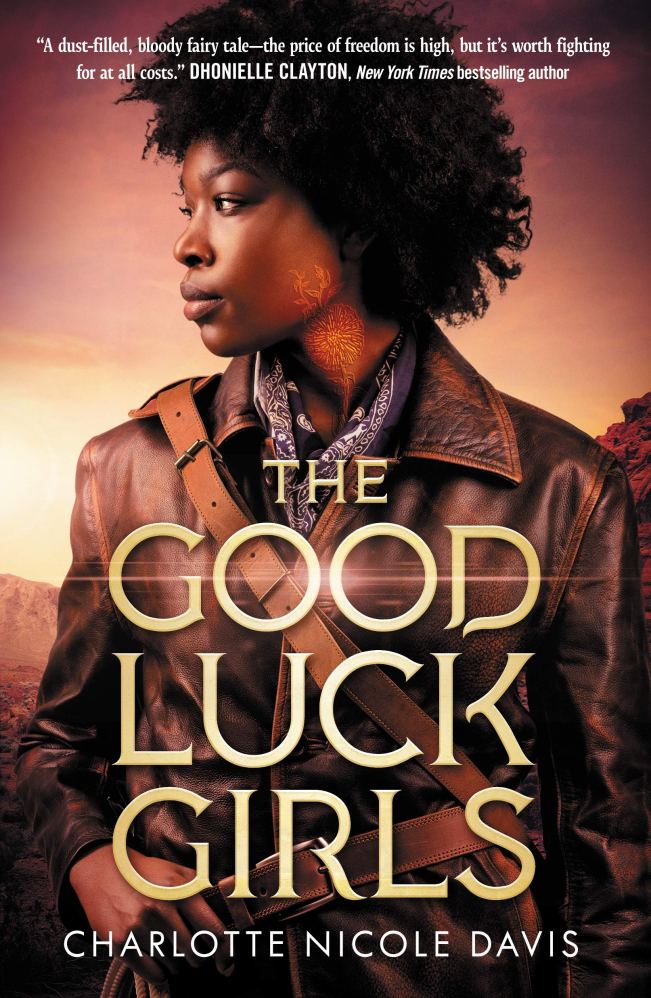
The Good Luck Girls is a flat-out running adventure of escape and escapade, complete with undead monsters, bank robberies, and a secret rebel base. In the country of Arketta, good luck girls are sold to “welcome houses” as children, basically into indentured servitude where they start as housemaids until they graduate to serving customers more personally. The male patrons of welcome houses are called “brags” by the women who work there. This book is filled with so many smart details that make it real.
Favors are the magical tattoos that mark the girls’ throats and match their names, which cannot be removed or covered without dire consequences. The girls in this story will do almost anything to remove those favors and be free of the welcome house. Meet the girls:
Aster, the protector, is the big sister and the one who has gumption to say, “time to go, girls.”
Violet, the favorite and the survivor who may have regrets, also has the secret information to get everyone to safety.
Tansy, the herbalist and medic, is the heart of the bunch who keeps everyone pointed in the same direction.
Mallow, the fighter, meets life with fists up but learns the hard way how to pick which fights are worth having.
Clementine, the catalyst and Aster’s younger sister, has a catastrophic Lucky Night and becomes the reason this group of girls flees into the wilderness. She wants so much more from life than a Welcome House can offer.
After Clementine’s debut ends with a very important brag dead in her bed, the girls figure out how make an escape, heading North to freedom. The girls follow clues from the story of Lady Ghost passed from good luck girl to good luck girl, but no one knows the truth – although Violet claims to have special knowledge. They discover a male guide to take them through rough country, who brings all the usual complications. He is also looking for redemption and a new life, and makes the difference for surviving in the deep wilderness. The group learns to rely on and (maybe even a little bit) love each other like family.
There are some solid themes underlying all the fun, including gender and race issues. These young women demonstrate their abilities to do what’s necessary to achieve their goals, despite physical and emotional trauma. As they reclaim their identities and their independence, questions arise about who the law protects and serves and when a little rebellion is a good thing. Honestly, I rooted for the girls during their first bank heist … even if it’s a crime.
I gulped this book down over one weekend. I can’t wait to see what these girls do next as I am pretty sure that each one of them is entirely capable of making her own good luck.
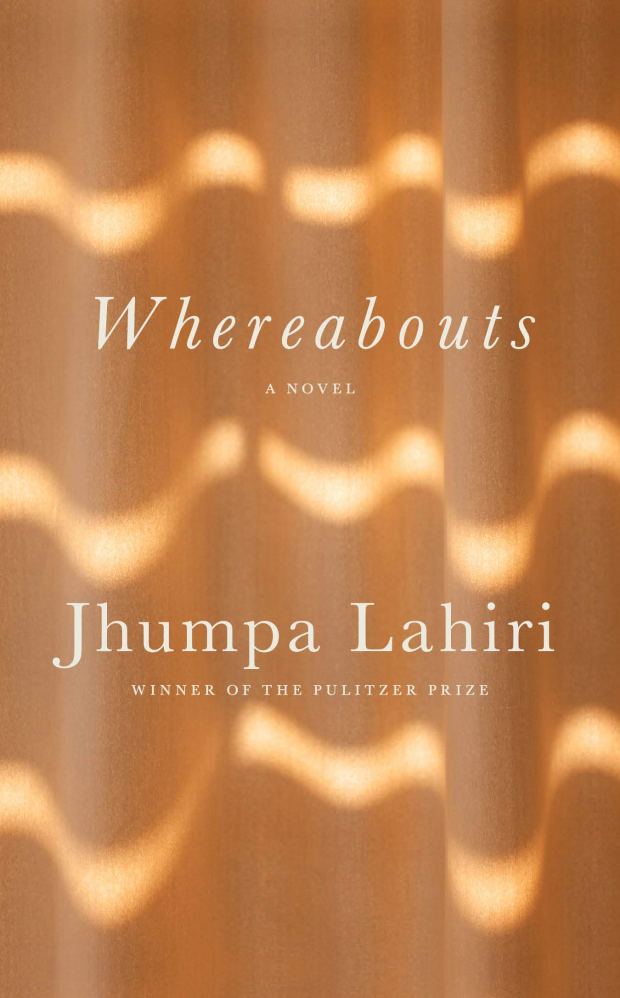
In the simple, succinct, and gorgeous prose that is her trademark, Jhumpa Lahiri, the Pulitzer Prize-winning author of The Namesake,Interpreter of Maladies: Stories, and other works, writes about the observations of a single, unnamed woman living alone in an unnamed city in Italy in Whereabouts. Each chapter in this book reads like a page from a beautifully crafted journal. They are chronicles of our protagonist’s day to day life – be it walking over a bridge where she occasionally comes across her ex-boyfriend, or her sojourn to her favorite sandwich store where she buys the same lunch every day, or her trip to the swimming pool where she meets women who share their stories with each other verbally, or even the stories they share through each hard-earned wrinkle on their faces or their swollen feet or the extra flesh in their midsection. The woman of our story quietly listens. Through her ruminations about her past we come to know about her parents, their eccentricities, her relationship with them, her mother’s financial dependence on her father, and her subsequent financial education to her daughter which influences the woman’s monetary decisions all her life (and not necessarily in a helpful way).
The narrator is lonely sometimes, and sometimes she cherishes her solitude. She is frustrated with the sameness of her life sometimes, and sometimes she is content simply sitting at the piazza in front of her apartment observing frenetic activities in her neighborhood. She falls asleep at night reassured by the noise of traffic and wakes up deep in the night, disconcerted at the silence around her when the sounds of automobiles have ceased. She could be any of us – a juxtaposition of contrasts – and perhaps this ‘everywoman’ trait of the protagonist makes the book and her so relatable. Her keen sense of observation is what many of us lack these days. It was such a joy to see the world – her world and for a short time our world, too – through her eyes. Even after the book ended, I seemed to linger by the side of the piazza eyeing the sandwich store and looking at the men and women living their lives in that unnamed city in Italy. This is a deeply contemplative novel made up of vignettes from a middle aged woman’s everyday life. There is no catastrophic event in this story, no climax or anti climax. It simply tells the tale of life and in doing so it becomes strangely captivating. At the end of the day, I agree with the description that the publisher provides for this short novel – “Whereabouts is an exquisitely nuanced portrait of urban solitude…”
I would like to share a snippet just to whet your appetite for this truly beautiful literary novel so you can borrow it from Howard County Library System for your next read. There is a passage where the woman comes face to face with the man she once loved in the middle of a bridge. Lahiri writes
“We stop in the middle and look at the wall that flanks the river, and the shadows of pedestrians cast on its surface. They look likeskittish ghosts advancing in a row, obedient souls passing from one realm to another. The bridge is flat and yet it’s as if the figures – vaporous shapes against the solid wall – are walking uphill, always climbing. They’re like inmates who proceed, silently, toward a dreadful end” (6-7).
This is simply one example of many where I felt Lahiri painted pictures for me with her words.
Whereabouts is also available in large print and in eBook and eAudiobook format via Overdrive/Libby. Whereabouts is Jhumpa Lahiri’s first novel written in Italian, as well as the first time she has self-translated a full-length work.
Piyali is an instructor and research specialist at the Miller Branch of HCLS, where she co-facilitates both Global Reads and Strictly Historical Fiction.
When a novel is set in the reader’s hometown, appreciation for the story and characters extends beyond the book’s contents. When a novel is set somewhere new to the reader, that place is no longer foreign and unknowable. Literature expands memories, builds connections, creates new journeys, and fosters empathy.
Books by veterans, about veterans, and regarding veterans’ friends and families offer diverse perspectives of consequential events and everyday perseverance. Veterans can, perhaps, find shared experiences. For non-veterans, there are bridges to understanding. Ben Fountain’s depiction of experiencing post-traumatic stress disorder in Billy Lynn’s Long Halftime Walk is unforgettable. To some, an NFL halftime show featuring Destiny’s Child would be entertaining but to this story’s young Iraq War Army soldiers, it’s terrifying.
In his debut novel, The Yellow Birds, Iraq War veteran Kevin Powers takes on the burdens veterans face when they return home. Private John Bartle struggles to understand his own behavior in Iraq, as well as his debts and responsibilities to superiors and fellow soldiers. Veterans may relate to Bartle’s emotional efforts to move forward with his life beyond the battlefield. Readers who have never been in the military become immersed in Bartle’s psychological conflicts. He feels surrounded by death as he fights to survive both in Iraq and back home in Virginia.
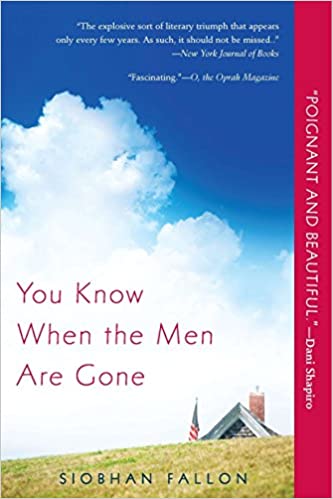
Short story collections offer multiple viewpoints of war in one volume. Siobhan Fallon’s You Know When the Men are Gonefocuses primarily on the family left behind, particularly military spouses in Fort Hood, Texas. The stress on these characters exceeds loneliness. Their attempts to cope with deployments are seen in actions as seemingly mundane as a shopping trip to the PX or as drastic as abandoning one’s spouse.
National Book Award winner Redeploymentby Marine veteran Phil Klay deftly presents the outlooks of men who entered the military from varied backgrounds. The stories are heavy but often humorous as Klay addresses the absurdities inherent in active duty as well as in the abrupt return to civilian life as a veteran. Often disturbing, the situations encompass violence and PTSD but also forgiveness and compassion.
Cherise Tasker is an Adult Instructor and Research Specialist at the Central Branch. When not immersed in literary fiction, Cherise can be found singing along tomusical theater soundtracks.
Adrift in a raft after a deadly ship explosion, nine people struggle for survival at sea. Three days pass. Short on water, food and hope, they spot a man floating in the waves. They pull him in.
“Thank the Lord we found you,” a passenger says.
“I am the Lord,” the man whispers.
So begins Mitch Albom’s most beguiling and inspiring novel yet.
New York Times bestselling author Mitch Albom has a genius for finding the sweet spot where the spiritual and the earthly collide in our lives. With such beloved books asTuesdays with Morrie,The Five People You Meet in Heaven, The Next Person You Meet in Heaven, and more, Mitch has captivated the world. Now, in his captivating and thought-provoking new novel, The Stranger in the Lifeboat, Albom explores the essence of God on earth through a riveting story that is equal parts mystery and parable.
An explosion on a billionaire’s yacht during a gathering of some of the world’s most influential and innovative movers and shakers leaves ten disparate souls struggling to survive in a life raft. One of them writes an account of the grueling ordeal to his beloved, and those pages are later found, washed up on an island shore on the opposite side of the Atlantic. It falls to a decidedly secular and cynical police inspector to investigate what actually happened on that raft, where it seems one man, pulled from the angry sea by the others three days after the disaster, claimed to be the Lord.
The beguiling narrative alternates between sea and land, between before and after, and between skepticism and belief. What really happened to cause the explosion? Is the mysterious man really who he claims to be?
Mitch Albom has repeatedly challenged our understanding of faith and the necessity of seeking answers where we least expect them. His books have sold more than 45 million copies worldwide. Tuesdays with Morrie is the best-selling memoir of all time, with over 17 million copies sold internationally, and was adapted for the stage and as a television movie which garnered four Emmy Awards. With The Stranger in the Lifeboat, this master storyteller offers a fresh take on themes that have defined his estimable work.
Albom has founded nine charities in the metropolitan Detroit area: SAY Detroit, an umbrella organization for charities dedicated to improving the lives of the neediest, including the SAY Detroit Family Health Clinic, Detroit Dream Scholars, andA Time To Help. In January 2015, Albom announced the launch of the SAY Detroit Play Center at Lipke Park, an innovative motivational learning program equipped with state-of-the-art athletic facilities, digital learning center and tutoring program. A Hole in the Roof Foundation helps faith groups of every denomination who care for the homeless repair the spaces in which they carry out their work.
Mitch Albom will discuss his new book and his writing on November 4 @ 7:30 pm. Per the publisher, this virtual event is ticketed and includesone copy of the book The Stranger in the Lifeboat by Mitch Albom, signed by the author.
TICKETED VIRTUAL EVENT. Tickets include one copy of the book The Stranger in the Lifeboat by Mitch Albom, signed by the author. Tickets range from $23.99 – $27.99, plus fees. Purchase tickets HERE.
What happens if the chosen one fails? What if the hero fails to defeat the dark lord?
Brandon Sanderson’s original Mistborn trilogy imagines what that could look like.
Full disclosure, I haven’t finished the trilogy yet, but I love the first two books so much (The Final Empire and The Well of Ascension) that I can’t resist writing a review. I’ll write a retraction if the third book is garbage (but it won’t be).
A thousand years ago, someone gained access to a source of power, defeated something called the Deepness, and… remade the world into a dull, cruel, lifeless, ash-strewn place. He is now the Lord Ruler and has ruled over the world for a thousand years in what he ominously calls the Final Empire.
The nobility live in finery in castles and vast manors, and the skaa are their hopeless and ragged servants. There is no middle class. Skaa are treated as subhuman.
Vin is our protagonist. She is a half-skaa street urchin, thief, and con-artist. A mysterious thief named Kelsier rounds up a thieving crew for one huge job. He collects those with magical abilities and Vin rounds out his team.
The magical systems are Allomancy, Feruchemy, and Hemalurgy. Allomancy is the most common and the most relevant for this review. Magic users ingest tiny amounts of metals (like copper, steel, or gold) and “burn” them in order to gain abilities. Some metals make you powerfully strong, some metals allow you to pull and push against other metals, basically giving you the ability to fly or hover, and some metals allow you to influence people’s emotions.
The books mostly take place in Luthadel, a city that feels like Dickensian London seen through an Orwellian lens. There are elements that feel steampunky to me (Yes, I do think steampunky is a totally acceptable adjective). The main thrust of the plot for The Final Empire is the preparation for Kelsier’s big heist. À la Ocean’s Eleven, we slowly get introduced to each character and each character’s ability.
Once the crew is assembled, Kelsier reveals that the scope of the heist is grand beyond imagining. Sanderson does a phenomenal job writing action sequences using his magic systems. They are a blast to read with real page-turning action.
If you read Mistborn, pay attention to the theme of disguise and appearance. I’d argue that clothing and dissimulation are major themes. Can the clothes you wear change how you feel? Change your personality? Change your characteristics? Are you a fraud if you look like something you don’t feel you are? What happens when you start to feel like the thing you’ve been pretending to be? Vin and company wrestle with a lot of these questions as the story unfolds.
Speaking of epic-fantasy (smooth segue and recommendation alert), Brandon Sanderson’s Stormlight Archive series is incredible (and set in the same extended universe as Mistborn).
He is also the man responsible for finishing Robert Jordan’s sprawling TheWheel of Timeseries. Sanderson wrote the last three books of the 14-book series, and he wrapped up the epic story beautifully. Although it took me about 10 years to finish, you might be able to finish the books before the series premieres on Amazon on November 19.
If you have the fantasy itch, try Sanderson’s Mistborn books. You won’t be disappointed. If you are, come talk to me at the Central Branch and I’ll try to convince you that you’re wrong.
Ben Hamilton works at Project Literacy, Howard County Library’s adult basic education initiative, based at HCLS Central Branch. He loves reading, writing, walking, and talking (all the basics).
[Content warning: sexual assault, PTSD, bullying, homophobia, and racism]
“If I don’t pull apart things I actually did wrong from things that weren’t my fault, I’ll never really be able to really apologize for anything. Deciding everything is your fault is, in the end, as meaningless as deciding nothing is[…] I need to apologize for what is my fault, for what I did wrong, but not for the wrong that was done to me.“
Ciela Cristales just might be my favorite protagonist of 2021.
The story begins with her dropping off an unconscious boy at the hospital on the night that changed her life – the night that she and this boy, whom she does not know, were both assaulted at the same summer party. She drops the boy off and intends to seal off the memories of the event as if they never happened.
However, this proves difficult when the trauma she experienced results in the loss of the magical gift she inherited from her grandmother: the ability to sense exactly what type of pastry someone wants before they even know it themselves. If this doesn’t sound like a big deal, then consider how this ability, “the most precious thing my bisabuela could ever have left me,” has passed down for generations and is part of the success of her family’s pastelería business. For Ciela, losing this magic is losing a part of herself – but it wasn’t just lost, it was taken through the cruelty of her peers.
I’ll be honest, I was a bit hesitant to read this one because of the intensity of the storyline’s subject matter. I personally tend not to read heavy books, as they can leave a significantly negative impact on my mental health. However, I knew from reading their social media that McLemore put a lot of care into this story, purposefully including hope and healing along with an emotionally accurate representation of trauma. (McLemore themself is a survivor.)
This information from the author, combined with my pre-existing love of their writing style, was enough to motivate me to give The Mirror Season a try… so I threw myself into reading it, and wow, did it devastate me in the best type of way. Honestly, few books have ever made me cry as much as this one did, and it provided me with some much-needed catharsis.
Ciela is gradually forced to confront the extent of her trauma – including specific details of the event that she represses through most of the book – due to the development of her relationship with Lock, the boy who was assaulted at the same time she was. They are able to form a unique friendship due to their shared experiences of sexual violence, connecting to each other in ways that other folks might not understand; for example, making jokes out of their trauma as a coping mechanism. McLemore crafts these characters, and their world, so well and with so much care. They truly felt like living, breathing people with real, raw, messy lives that are worth learning about and empathizing with.
Stylistically, McLemore combines elements of YA contemporary fiction with what they do best: magical realism written in lush, atmospheric prose. It’s the type of writing where the reader is left with some uncertainty regarding “is this all literally happening, or is this metaphorical?” during certain passages. For much of the book I questioned whether Ciela was perceiving some of these things as an expression of her trauma, or if real objects were legitimately turning to mirrored glass – and I believe that this uncertainty is well-suited for the representation of Ciela’s experience of reality after such a traumatic event. McLemore does not shy away from portraying the difficulties of PTSD, including nightmares and flashbacks, which can cause challenges in discerning between one’s past and present realities.
I haven’t been through anything anywhere near what these characters have been through, but reading this book honestly helped me process my own feelings of the sexual harassment I have experienced as a queer trans person: the shame, the anger, the visceral disgust when remembering the event, the internalized victim blaming, and the sense that other people are entitled to disrespect the bodies and the personhoods of Othered individuals. In the case of Ciela, her Latina and pansexual identities create intersections in the ways she is objectified and harassed by her white, straight, cisgender peers.
One aspect of this representation that I appreciate so much is that while this is a story about a queer person experiencing trauma, this is not a Queer Struggle story. Her struggle is not about being queer specifically. The classmates that assaulted her throw the word “lesbian” at her in a derogatory manner, but Ciela is not struggling with coming out or coming to terms with her sexuality. She is open about being pansexual (i.e., attracted to people regardless of gender) and her prior same-gender relationships, and she is accepted for it by herself, by her loved ones, and by Lock. Personally, I felt like the vibrant queer world around Ciela far outweighed the homophobia, so the overall tone of the book is queer pride, resistance, and joy. This, combined with the arc of Ciela of coming to terms with how to cope with her trauma in a healthy way, makes for an ultimately empowering story of growth and courage. I honestly could see this taking the place of Speak by Laurie Halse Anderson in future high school classrooms.
So yes, this is a very emotionally challenging book, and no doubt will be highly triggering for some readers, but it is very healing. I really encourage anyone interested in this book – teens and adults alike – to give it a try, while being mindful of what you need to care for yourself. Check in with your current mental health and support system as you find the space and time to process this story in whatever way you need. I truly hope this book reaches as many readers who will benefit from it as possible. Copies of The Mirror Season can be requested through HCLS here.
For resources regarding sexual violence, visit www.rainn.org. For local support, community engagement, and more, check out HopeWorks of Howard County (formerly the Domestic Violence Center of Howard County) by visiting hopeworksofhc.org.
Ash is an Instructor & Research Specialist at Central Branch and is a co-facilitator for Reads of Acceptance, HCLS’ first LGBTQ-focused book club. Ash is an eternal lover of coming-of-age stories, especially those that center queer and trans joy.
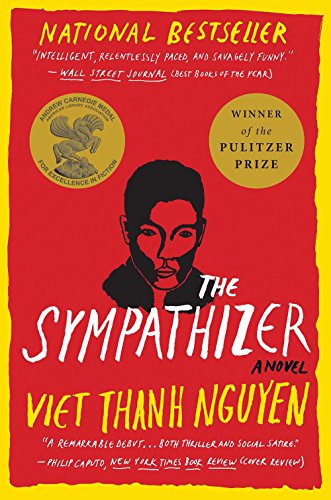
I may have opened another post like this, but if you’ve not read The Sympathizer by Viet Thanh Nguyen, do yourself a favor. It won the Pulitzer Prize in 2015, and awards aside, it’s a great book.
The Sympathizer is an “epistolary-like” novel, as the entire thing is written as a confession of a spy from the north who has deeply infiltrated the south, and the American support apparatus. He is an aide to a general, and really has a good feel for the elite as well as those of lower social stature.
Superficially, it is the story of the child of a Vietnamese teenager and a French priest, who does not fit in because of his parentage and is teased and taunted. In turn, this creates a protagonist of conflicted mind and spirit who artfully chronicles his experiences in Vietnam and America. He makes the profound comment that it is really the immigrants who should be the anthropologists of American society, as well as many other insightful observations throughout the book.
He chronicles the chaotic escape from Vietnam (you’ve probably seen the footage) when the United States withdrew in 1975. When one views this sort of thing, they’re horrified by the carnage and desperation, but I’d not considered the bureaucratic tasks such as making lists of who evacuates and the intermediary steps. Spoiler alert: the Vietnamese don’t just land in their suburban American homes on a direct flight from Saigon. Sadly, these events seem apropos right now irrespective of your feelings about American wars and intervention globally. I could not even imagine trying to escape my country for fear of political reprisal.
As someone of a certain generation, I grew up watching the fictional films about the Vietnam War and worried about the specter of the reinstatement of the draft. Perhaps, more broadly, the Vietnam War was the degradation of the cultural capital and hubris that the United States, as a country, carried until this loss. I always felt for the boys who were involuntarily ripped from their lives and sent across the world as soldiers in an ideological battle they likely only rudimentarily understood. It’s a logical reaction, since they were the protagonists of these films, if not the heroes at least sympathetic anti-heroes, and they were like me.
A Vietnamese character comments that this cold war has always felt hot to them. That said, it’s enlightening for me to read a work of art by a Vietnamese expatriate like Nguyen (by the way, it’s set to be an HBO miniseries). The details concerning the quotidian lives that many of his compatriots lead in the US (California to be specific), and how it’s difficult for former men of power to become relatively powerless in their new country, are very well done. One portion of the book even chronicles the protagonist’s experience working as consultant for a movie about Vietnam, loosely based on Apocalypse Now (if you have not seen this film, borrow it and watch it).
The Sympathizer (also available as an eBook) is a page turner, a spy novel, a thriller, and oddly humorous; however, I would not describe it as straight satire. In my opinion, what makes this debut novel great is that it is the work of a free thinker and an excellent writer. It may seem banal to say that there is a lot going on in this novel (it may even be worth a second read), but I’m not sure how else to phrase this. Nguyen’s writing is dense, but not difficult to read, and the story just flows. I intend to read his collection of short stories, The Refugees, and eventually the sequel, The Committed, which was published in 2021. Try them, you may like them.
If I Had Your Face drew me in at the beginning, lost me a little bit in the middle, and captivated me again towards the end. Through the eyes of four narrators, Ara, Kyuri, Miho, and Wonna, Frances Cha brings us not only the personal stories of these women but also the social tapestry of modern South Korea in terms of beauty standards, feminism, women in the work force, a challenging economy, sexuality, matrimony, and societal expectations.
Kyuri works as a room salon girl – an opportunity afforded to only the “prettiest 10 percent.” She accompanies and caters to the sexual needs of rich men, who in turn ply her with designer bags and expensive makeup. Kyuri has surgically altered her entire face to attain the flawless beauty that is vital to her job and, ultimately, her prosperity. (Interestingly, according to businessinsider.com, “with the highest rate of cosmetic surgeries in the world and nearly 1 million procedures a year, South Korea is often called the world’s plastic surgery capital.”) Although her life seems enviable, Kyuri is in heavy debt and emotionally wrecked. On top of everything, she makes one bad decision that threatens her entire livelihood.
Ara has lost her voice due to some violence in the past. The author piques our interest, hinting about the violence throughout Ara’s narrative and disclosing the incident towards the end. She is a hair stylist and a huge K-Pop enthusiast. Ara’s K-Pop fantasy is her escape to a dreamworld that is very different from the harsh reality of her life.
Miho is an orphan who won a scholarship to study art in New York City, who obsessively creates art influenced by her friendship with a girl named Ruby. Ruby dazzled Miho with her personality, wealth, influence, and charisma. She also introduced Miho to the upper echelon of South Korean society. Miho, however, can simply look into the lives of the rich from the periphery. She is not allowed in.
Wonna, who lives in the same building as the young women, is trapped in an uninspiring marriage. She is pregnant and terrified of losing her baby. She has to hide her pregnancy for as long as she can so she does not lose her job. Moreover, she does not know how she and her husband will raise the baby in South Korea’s brutal economy with their combined meager salaries.
Then there is Sujin who works at a nail salon and yearns for Kyuri’s surgically altered, perfect jawline because her goal is to emulate Kyuri and become a room salon girl herself. She is willing to go through painful jaw surgery and subsequent complications from it if she can attain the beauty that society dictates women ought to strive for. She is Ara’s roommate, and we know about her mostly from the narratives of her friends, Ara and Kyuri.
All our protagonists come from impoverished backgrounds. They are desperate to leave their past behind and move up in life despite the barriers that society constructs for them. But when their friendship is put to test in their quest for upward mobility, what do they do? Does societal pressure shatter their tentative friendship, or will their friendship ultimately save them?
The book tells the unique story of these women and their relationship with one another. While each individual story is interesting, the picture of South Korean society that emerges from the collective stories and through the perspectives of these unique individuals is what makes If I Had Your Face a captivating read. Frances Cha, a former travel and culture editor for CNN in Seoul, writes her vivid and realistic debut novel which Publishers Weekly hails as, “an insightful, powerful story from a promising new voice… Cha navigates the obstacles of her characters’ lives with ease and heartbreaking realism.”
Piyali is an instructor and research specialist at the Miller Branch of HCLS, where she co-facilitates both Global Reads and Strictly Historical Fiction.
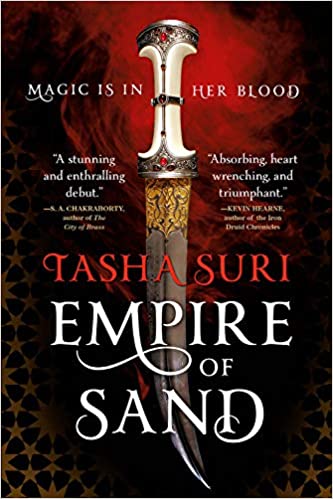
Empire of Sand opens with a young woman painting a window sill with her blood, looking to ward against the daiva spirits of the wild sands. In some ways, the rest of Tasha Suri’s duology revolves around these older spirits that have been subjugated by the Ambhan Empire – and by those who consider them monsters and those who count them as family. Suri’s books are set in a lush, vibrant world based on the Mughal Empire – complete with vast deserts and verdant oases. Here, the Emperor governs but the Maha rules. Here, the upper class consists solely of Ambhan people and the Amrithi are outcast because of their magic.
Mehr is the privileged child of the regional governor, acknowledged but nonetheless the daughter of an Amrithi courtesan. She possesses the full inheritance of her mother’s people, but is protected by her father’s influence. Mehr lives in an uneasy truce with her step-mother, who has adopted Mehr’s younger sister as her own daughter to be raised as an Ambhan noblewoman. Mehr has no ambition for a noble marriage, but when she is discovered practicing Amrithi magic, she is given little choice.
The Maha rules the Empire through the prayers of his mystics. When Mehr accidentally divulges her abilities, she is forcibly married to the powerful mystic Amun and taken away to live a sequestered life in a distant oasis. At the Maha’s Temple, Mehr learns that she and her husband are expected to perform the Rite of the Bound. This magical rite, a choreographed dance with particular poses and gestures, allows the magic of the desert daiva and older gods to flow through the Maha and into the Empire, extending its territory and influence. Through their practice and discipline, Mehr and Amun learn about each other and the tragedies that brought each to the Maha’s temple.
It is this romance of desperation and rebellion that powers the second half of the book. I read this novel in large gulps, needing to know what happened next. As much as I enjoyed the world building, I truly came to love both Mehr and Amun, rooting for them to find a way to be together and free of the Empire. The underlying themes of colonization and prejudice give Empire of Sand an unexpected sense of gravity. There is no doubt but that individual lives were used and abused for the supposed greater good. The consequences of generations of such cruelty cannot easily be constrained or controlled.
Book cover of Realm of Ash
The second book, Realm of Ash, deals with the unfolding repercussions from Mehr and Amun’s story, but from another perspective entirely. We encounter Mehr’s younger sister, Arwa, again as she makes her way to a distant convent for widowed noblewomen. Arwa was, indeed, raised as an Ambhan noblewoman and married a military officer with a bright future. When the garrison is massacred by daiva, Arwa is one of the few survivors and chooses to absent herself from high society. Not entirely surprisingly, the convent is a hotbed of Imperial politics and Arwa soon finds herself on the way to the capital city to serve in the retinue of a princess.
Where her sister has the magic of the Amrithi rites, Arwa discovers that she has a different ability that allows her to access the memories in her blood, remembrances of her ancestors, in the Realm of Ash. The princess’ illegitimate brother lives in nocturnal solitude, researching and experimenting for a way to restore the Ambhan Empire to its former safety and prestige. Arwa must learn to embrace her Amrithi heritage to help the prince and to accept her own worth. Again, a forbidden romance (Ambhan noblewomen may not remarry) lies at the heart of a rebellion against a court built on deception and corruption. And again, I found myself rooting for these two against all odds.
In some ways I preferred Realm of Ash because it shows more of the interconnected elements of the Ambhan Empire, the military and the regular people of Jah Ambha (the capital city), servants and spies. As Arwa and her prince flee into the desert and join a pilgrimage, the wide variety of life outside of palaces and temples make for a wonderful sense of place and history. The bigger picture at play in the second book is, perhaps, only made possible by the laser focus of the first novel.
The fantasy genre is chock-full of strong heroines, women who can outfight anyone and snark about it after … the term kick-ass is usually employed. Mehr and Arwa gave me a much more grounded reality, finding their courage in the face of terrifying odds. Neither young woman wants to be an agent of change or is a rebel at heart. Both have learned to keep their heads down and mouths shut so as not to attract attention or draw criticism. They do have, however, an unerring sense of fairness and a desire to be allowed to live their own lives, loving whom they choose. These sisters indelibly alter their entire world by being brave enough to take the chances presented to them, sometimes fearlessly and sometimes with only a hope and a prayer.
Kristen B. is a devoted bookworm lucky enough to work as the graphic designer for HCLS. She likes to read, stitch, and take walks in the park.
“Her name was Magda. Nobody will ever know who killed her. It wasn’t me. Here is her dead body”
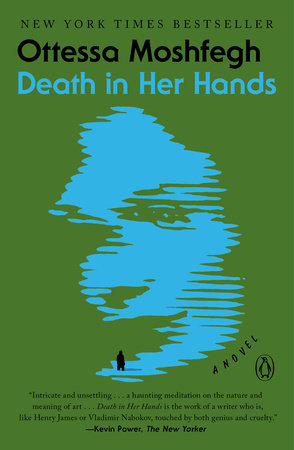
Vesta, the amazingly unstable 72-year-old narrator of Death in Her Hands, is my favorite of all of Ottessa Moshfegh’s growing roster of eccentric narrators. The main conceit of Death in Her Hands is that Vesta must solve a murder mystery. Before we know anything else about Vesta, we learn that she found a note in the woods (quoted above) and believes that she needs to solve the mystery (there is no body).
Based solely on that note, Vesta envisions a detailed backstory for Magda and the murderer. She imagines one plausible idea after another and adds details until she’s created a truth that is incredibly real to her. A wild journey, Death in Her Hands occurs mostly inside Vesta’s head. Moshfegh immerses the reader so far into Vesta’s isolated, almost solipsistic, world that it’s jarring when Vesta interacts with anyone other than her dog Charlie. She must interact with others because her investigation takes her all around her small Northeastern town. She visits the public library, picks up a hitchhiker, visits odd neighbors, runs from wild animals, and finds clues. As she finds clues about the murder, she drops clues about her own mysterious past.
The book is a murder mystery, and Moshfegh plays with that genre and those tropes, but it is also a psychological drama. Moshfegh is an accomplished writer who gives the reader enough information to know that Vesta is not trustworthy, but not enough information to completely dismiss the murder as a figment of her imagination. At times Death in Her Handsreads more like Woolf’s The Waves or Pynchon’s The Crying of Lot 49. Vesta’s thoughts carry us like waves; and her investigation doesn’t always make sense, but it always almost makes sense.
It’s easy to believe Vesta. She’s likable and very persuasive. You almost believe that she’s solved the mystery! …Then you realize that you aren’t sure that there ever was a note.
The book explores mental health, aging, abusive relationships, and isolation. Those don’t sound like cheery topics, but Vesta is a funny narrator, and she makes it an enjoyable ride: “My God, he could be crouched behind the kitchen door, and there you’d be, standing in your socked feet and bathrobe, agog at the knife glinting in the rack. Had you used it to chop onions? Had you forgotten that you’d wandered down for a midnight snack, left the knife out, et cetera? Were you still dreaming? Was I?”
Moshfegh is a master of cultivating a dreamlike quality (she nailed it in McGlueas well). When everything seems off, it’s hard to know if anything is real. If you like dark, brilliant, insightful, inventive writing, I think you’d enjoy Death in Her Hands.
P.S. This is ostensibly a review of Death in Her Hands, but it’s really a recommendation to go read ANY Ottessa Moshfegh (she’s incredible). If you’re looking to have a weird weekend, pick up a bunch of Moshfegh from your local library and get lost in her wild world. Also available as an eBook and an eAudiobook via Libby/OverDrive.
Ben Hamilton works at Project Literacy, Howard County Library’s adult basic education initiative, based at HCLS Central Branch. He loves reading, writing, walking, and talking (all the basics).









 CHAPTER CHATS