The Beautiful and Damned by F. Scott Fitzgerald

An illustrative cover shows people dressed in formal evening clothing looking over a harbor full of boats.

by Angie E.

As The Great Gatsby celebrates its 100th anniversary, I cannot help but think of how I much prefer Fitzgerald’s The Beautiful and Damned. Anthony Patch, a Harvard-educated layabout with vague literary aspirations, lives off his expected inheritance from his wealthy grandfather. He falls in love with Gloria Gilbert, a dazzling, self-absorbed socialite whose beauty is everything. They marry, expecting a life of ease, but as the years stretch on and Anthony’s grandfather withholds his fortune, their glittering existence falls apart. 

The relationship between Anthony and Gloria Patch is troubled, a slow, mutual unraveling. Their love, filled with glamour, indulgence, and lofty dreams, gradually turns toxic, dragging both of them into emotional and moral decay. The novel explores how two people, when consumed by vanity and selfishness, can end up feeding each other’s worst impulses rather than lifting each other up. They drift through parties, affairs, and petty resentments, their youth and charm wearing away alongside their bank account. Anthony descends into alcoholism and bitterness; Gloria clings to her fading looks. When Anthony finally wins his inheritance through a legal battle, he is a broken man, physically and spiritually ruined. 

Maybe I’m wrong, but I see The Beautiful and Damned as something messier and more personal than The Great Gatsby. At 27, I saw Anthony and Gloria as victims of love gone wrong. At 55, I see them as victims of something much less romantic and whimsical: the delusion that youth and beauty are infinite, that happiness is something you receive or deserve rather than create. When I first read The Beautiful and Damned in the late 90s, on a rainy cozy Sunday (I remember this vividly, somehow), I fixated on the tragedy of what I saw as dramatic love and loss. Despite my not liking either character, I somehow still felt sad. Now, though I still love the writing and the gripping tale itself, Anthony and Gloria, both bright, attractive, and full of possibility, strike me as people who wait for life to happen to them, assuming wealth and happiness are entitlements rather than pursuits. 

Revisiting this novel decades later, I realize Fitzgerald wasn’t just writing about the Jazz Age or the idle rich. He was writing about the human condition, about how easily we mistake privilege for purpose, charm for character, and time for something we can outrun.   

The Beautiful and Damned by F. Scott Fitzgerald is available in print and as an e-book and e-audiobook from Libby.

For more about The Great Gatsby, check out a previous blog post about the original and a variety of adaptations.

Angie is an Instructor & Research Specialist at Central Branch and is a co-facilitator for Reads of Acceptance, HCLS’ first LGBTQ-focused book club. Her ideal day is reading in her cozy armchair, with her cat Henry next to her.

Damascus Station by David McCloskey

Broad red banners with the title and author in black lettering appear acroos the image of a minaret.

by Kristen B.

It’s been awhile since I’ve read a really good stand alone spy thriller. Damascus Station kept me on the edge of my seat, wondering how it was all going to end. Sam Joseph is a CIA agent, with a specialty in recruiting assets and a penchant for high stakes gambling in Vegas. He’s managed not to become too cynical about his work. We meet him while he’s trying to get another CIA agent and a scientist out of Syria before the scientist is arrested. The operation goes bad, and it fuels the rest of the story.

Mariam Haddad is the privileged daughter of a Christian family who works in Assad’s government in Damascus, but not entirely happily. She’s aware enough to understand the deal with the devil her family has made for its own survival. When she is asked to coerce an opposition member to come back to Syria, mostly by threatening the woman’s family, Mariam begins to ask serious questions about what she’s doing with her life.

The book spends close to the first hundred pages setting all the pieces on the board, and there are a lot of them beyond our two main characters. Author McCloskey does a great job of making the secondary characters well drawn and interesting, from Mariam’s rebellious cousin to the CIA station chief. My favorites are the three BANDITOS brothers who help Sam run surveillance. The Syrian players are equally interesting, including rival factions within the regime’s security offices and a pair of Sunni rebels from Douma who carry out assassinations. Ali Hassan is a top level Syrian counter-intelligence operative, who is feuding with his brother Rustum, the man in charge of secret prisons and political interrogations. Ali is a good man caught in a bad situation, whereas Rustum is a monster planning to use sarin gas against his fellow Syrians.

The ever increasing stakes are ratcheted by questions of who has been “made” and who is safe. The emotional stakes are high, too, as Sam and Mariam have an immediate, mutual attraction. The rules forbid their entanglement, but their hearts know differently. The book moves quickly, from Syria to the US to France and Italy, then back again. As the plot moves from setting up the board through to the fast-paced, brutal end game, you have to race to keep up with all the characters and figure out what’s really happening. The payoff is worth it!

The author leavens the tension with enough humor and personality that I really invested in the story and the characters. Station Chief Artemis Proctor is a Class-A Character! She seems to be the recurring character in other books by McCloskey (Moscow X and The Seventh Floor), which are now at the top of my summer reading list. His background with the CIA informs his novel with detailed spycraft and knowledge of how things work, but doesn’t slow down the story too much. After all, the trade of espionage is part of what makes the genre so much fun to read.

Damascus Station by David McCloskey is available in print.

Kristen B. is a devoted bookworm lucky enough to work as the graphic designer for HCLS. She likes to read, stitch, dance, and watch baseball (but not all at the same time).

AAPI Month & Visual Storytelling

by Ian L-F

As we celebrate the library as a space of learning and community, and honor AAPI Month as a time to uplift Asian voices and stories, it is worth asking: what makes something literature? The shape of the story, the seriousness of its tone, its prestige? Or is it about seeing something deeper, something about the world or the human condition? Across corners of every continent, stories take shape in countless forms: in prose, poetry, images, screens, and panels.

Perhaps, literature isn’t defined by medium or legacy. It’s shaped by how we engage with a work. When we treat literariness as something a reader brings to the page, not something a story inherently owns, we begin to find meaning in places we’ve often overlooked, like one of those Japanese comic books you might find in the teen section.

Manga is Japanese graphic storytelling that pairs image and text across serialized chapters. It continues a long East Asian tradition of visual storytelling. Its reach, however, is global. Manga is a major literary and commercial force in France, a cultural touchstone across Latin America, and a stylistic influence on everything from fashion to hip-hop. Its narratives, aesthetics, and emotional tones have shaped how stories are told, and who gets to see themselves in them.

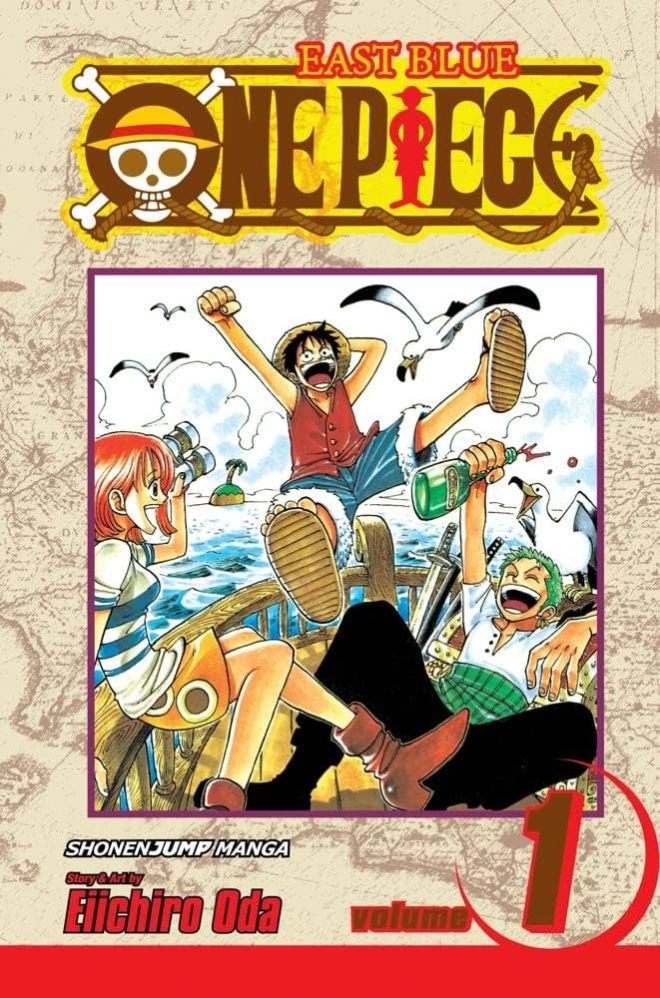
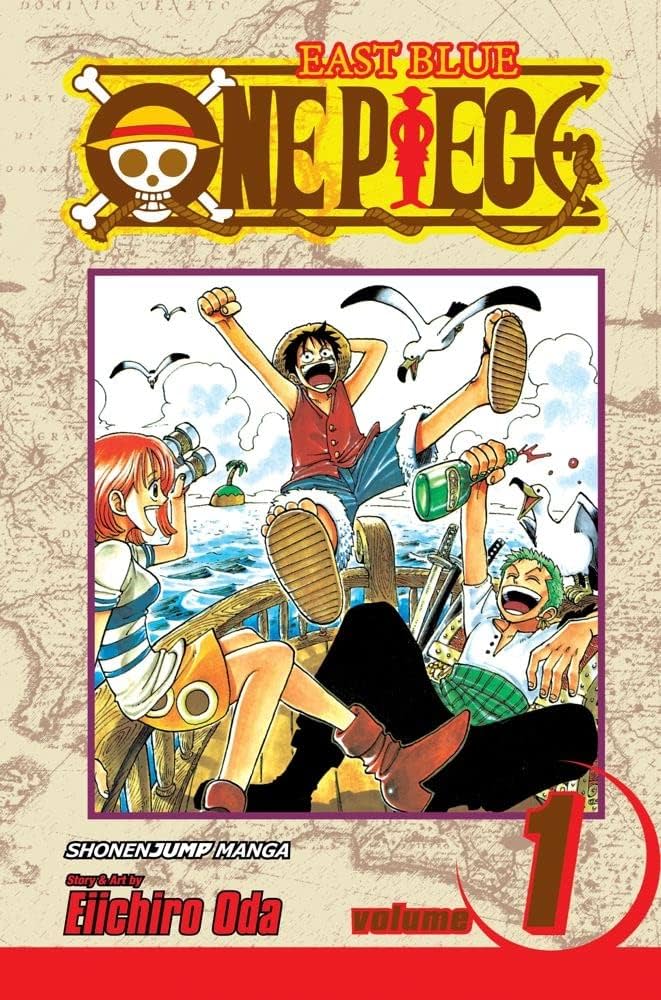
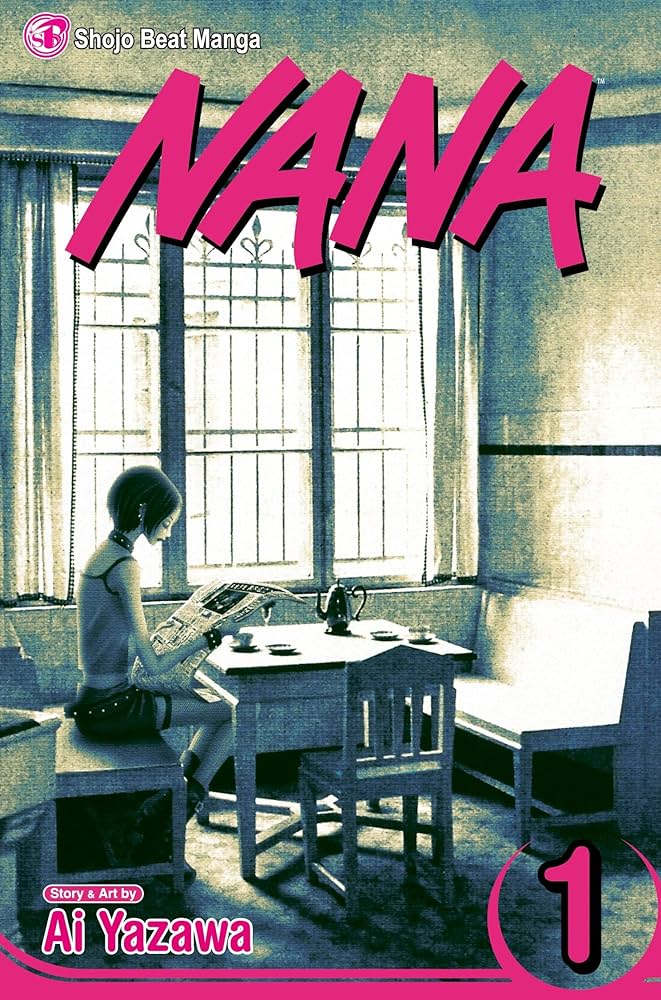
One vivid examples can be found in One Piece by Eiichiro Oda. What begins as a chaotic pirate adventure becomes a vast meditation on justice, memory, and history. The series offers a reminder that joy can be defiant, and freedom contagious. Manga’s depth doesn’t end with epics. Nana by Ai Yazawa offers a raw portrayal of friendship and identity, or Goodnight Punpun by Inio Asano, a surreal coming-of-age spiral, shows how the medium holds hope, loss, and emotional complexity with equal grace. These stories speak to something real and something human, but we need to be willing to listen.

You can find them all at the library — where stories of every kind wait side by side, ready to be read with curiosity, care, and imagination.

History of Comics in Asia
Tue, May 6 | 7:30 – 8:30 pm
HCLS Savage Branch
For adults.
Explore the world of comics new and old! East Asian comics have exploded in popularity and dominate today’s reading environment. Whether you’ve read them all or have never picked one up, learn about their history before getting a chance to draw your own.

Ian Lyness-Fernandez is not quite used to being Instructor at the East Columbia Branch. He hopes his passion for learning can somehow translate into a skill for teaching.

Meet the Author: Neon Yang

Meet Author Neon Yang
Wed, May 7 | 12:30 – 1:30 pm
Online. Register at bit.ly/Author-Yang to receive the link for the event.
For adults.

Neon Yang is a queer non-binary author based in the UK. They have been nominated for the Hugo, Nebula, World Fantasy, Lambda Literary, Ignyte, and Locus Awards, and their Tensorate series of novellas (The Black Tides of Heaven, The Red Threads of Fortune, The Descent of Monsters, and The Ascent to Godhood) was an Otherwise Award Honoree. In previous incarnations, Neon was a molecular biologist, a science communicator, a writer for animation, games and comic studios, and a journalist for one of Singapore’s major papers.

The Black Tides of Heaven & The Red Threads of Fortune

Review by Kristen B.

A person with long black hair and a determined scowl, dressed in black robes, sits cross-legged upon a cloud. The art is ornate and swirling like classic Asian paintings.

How do fate and free will coexist? Can they? Is a person’s fate preordained no matter their actions, or can they swim upstream against the current? The Black Tides of Heaven by Neon Yang examines this conundrum through a set of turning points in Sanao Akeha’s life. Born an unexpected twin, Akeha lives their life always in the shadow of their more famous sibling, Mokoya the prophet, who has visions of future events. This novella considers Akeha’s opposition to the roles and responsibilities of being a member of the ruling dynasty. In a series of vignettes from childhood through early adulthood, Akeha makes choices that affect himself and his relationships, his twin, his mother, and maybe the entire nation.

In these books, the magic system is based on elemental powers, such as air, water, and earth, that weave through the Slack. Magic users “tense” to employ the energies available. I really like the idea of tense/slack as a way of projecting power. In another interesting piece of world-building, children are genderless. Each person confirms their chosen gender as they approach adulthood. The twins’ mother, the Protector, rules as a complete authoritarian, with an iron fist in the form of Tensorate pugilists who train at the Great Monastery. Akeha discovers a rebellion of Machinists, who employ physics and chemistry to rival the Tensors. Yang does an excellent job building a rich world that seems both familiar and foreign.

The Red Threads of Fortune follows Mokoya, after the devastating and tragic events of the first book. She has moved on from her role as prophet and now hunts magical beasts in the desert. She’s following rumors of a particularly large and dangerous naga, a dragonish serpent from the Quarterlands where gravity is lighter so the monsters can fly. Rider, who comes from the Quarterlands astride a tamed naga, hunts the same creature, and they team up with Akeha and the Machinists rebellion after the naga attacks a small city. Moyoka eventually finds an answer to the unwanted prophecies that seem to ruin her life. I look forward to reading the next two installments in this complicated world.

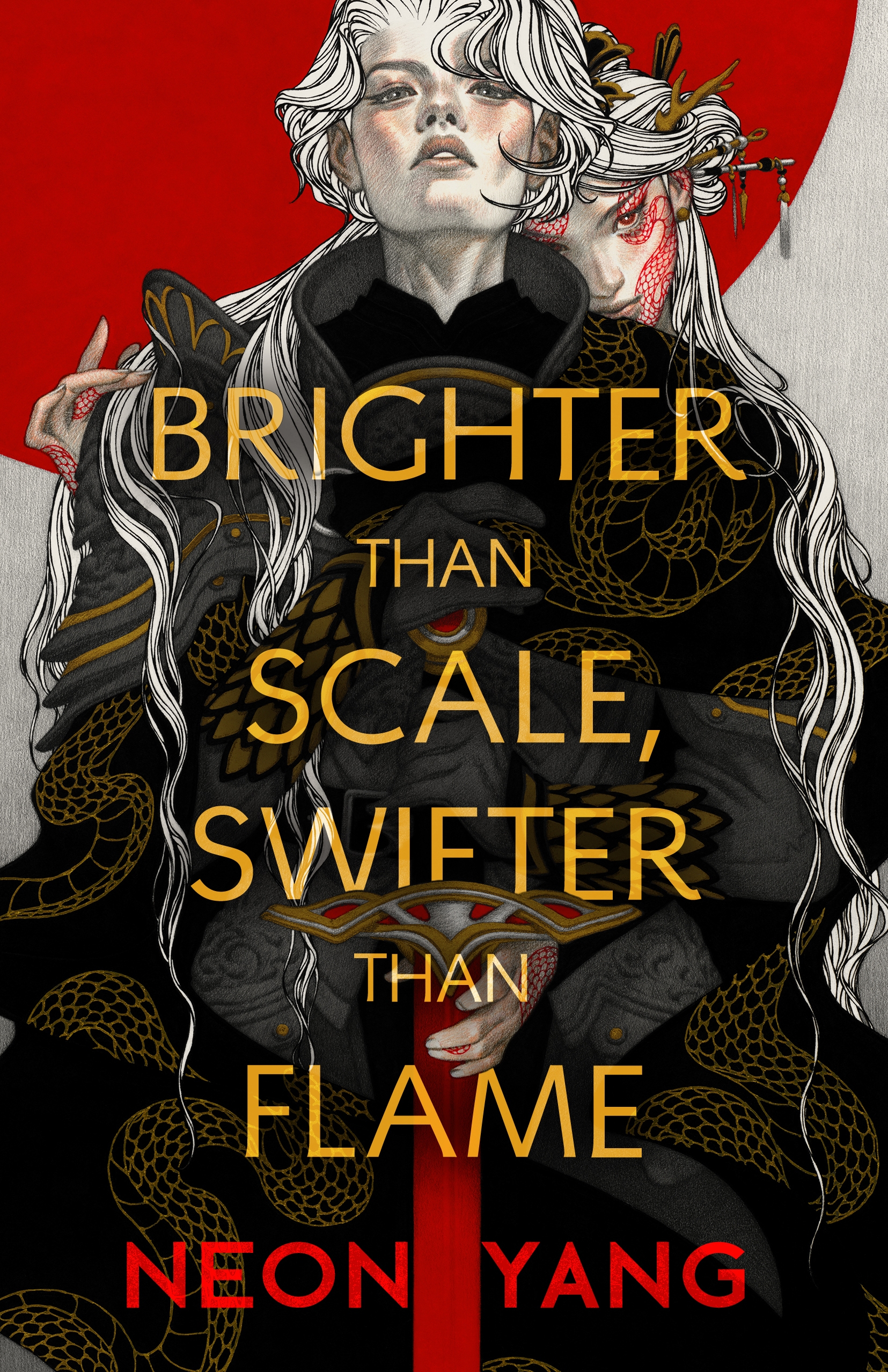
Their latest book, Brighter Than Scale, Swifter Than Flame, is a stunning queer novella about a dragon hunter finding home with a dragon queen. New York Times bestselling author Olivie Blake calls it, “A lovely, intricate gem of a fairy tale about finding yourself in another person and traveling distant lands to finally come home. I loved it.”

Kristen B. is a devoted bookworm lucky enough to work as the graphic designer for HCLS. She likes to read, stitch, dance, and watch baseball (but not all at the same time).

Lights Out by Navessa Allen

A blue skull and type appear ghostly against a black background. An X and a heart appear in the eye sockets.

by JP Landolt

“Mmm-kay?! Make it work!” I said in my best Tim Gunn voice, cackling and carrying on with my girlfriends. Missy and Rachel are crumpled against me on either side. We’re squished together on the bottom mattress of their dorm room’s bunkbed. Thelma’s hair spills over the top of the bunk framing her face in a dizzying array of red and black. She’s upside down and laughing hysterically. Jen is folded in half, bracing her side after falling on the floor. She’s silently laughing, red-faced, and breathless. Everyone was thoroughly amused by my overly dramatic storytelling, especially when describing a particularly racy scene in one of Jen’s romance paperbacks. Unfortunately, the dean lived directly below this room, and soon the stern knocking from below forced us to freeze. “Oh dear!” I remarked, as a sultry Tim Gunn, and another boisterous round of laughter ensued.  
 
That was me. A naive eighteen-year-old exploring the genre we shall refer to as “super spicy romance.” Embarrassing, exciting, and 100% for adult readers only.  

Now that my prefrontal cortex has fully matured (LIES) and I have more than 20 years of distance from blushing on the bottom of that bunkbed (OMG), I’ve explored nearly every genre of spicy, adult romance: Fae, gangsters, dragons, hockey players, fractured fairy tales, hackers, Hollywood, vampires, wolves, rockstars, gargoyles, cowboys, billionaires, and psychos. If you’re not familiar with this genre, let me assure you that the list is immense and overwhelming – and constantly growing. Seriously, romance can be anything from wholesome and cozy to downright sadistic. I literally just put down a book whose jacket described it as a cozy racoon-shifter polyamorous romance.  

Today, I submit Lights Out for your dark romance reading pleasure. Lights Out is spicy, with morally gray characters, and packed with trigger warnings. In fact, after reading these trigger warnings, some readers may consider another title. Not me! There was one trigger that hit squarely in the center of my morbid curiosity. Which one? Not telling. Let’s just say if you enjoy true crime or serial killer docuseries, this book could be a good fit. 

I opted to listen to this book because it’s written in duet and I’m a huge fan of Jacob Morgan (aka Zachary Webber). His voice just makes my heart purr. He voices our main male character, Josh, who has a complicated family history which makes his social media and masked proclivities even more telling. He had me giggling on the bottom bunk all over again thanks to a fast-paced story with a well-written sense of humor set against the silliness of those feelings that come from having crushes…and maybe stalking? I wouldn’t know.  

While our heroine, Aly, is a pragmatic yet bratty trauma nurse who should be more concerned about the unfolding events than she is. She’s got her own questionable tendencies. Not to mention, her suspicious familial relations that definitely slide from morally gray to jet-black. Finally, Josh and Aly’s chemistry is – chef’s kiss! 

Lights Out is the first book of the Into Darkness trilogy by Navessa Allen and book two, Caught Up, should be available in June. I simply cannot wait to find out where this relationship is going and what other crazy situations Josh and Aly get into with his high-tech hackery and her sheer audacity.   

Lights Out by Navessa Allen is available in print, e-book, and e-audiobook.

JP Landolt has worked for HCLS since 2006. You may find her gallivanting through Maryland’s parks on beautiful, breezy days.  

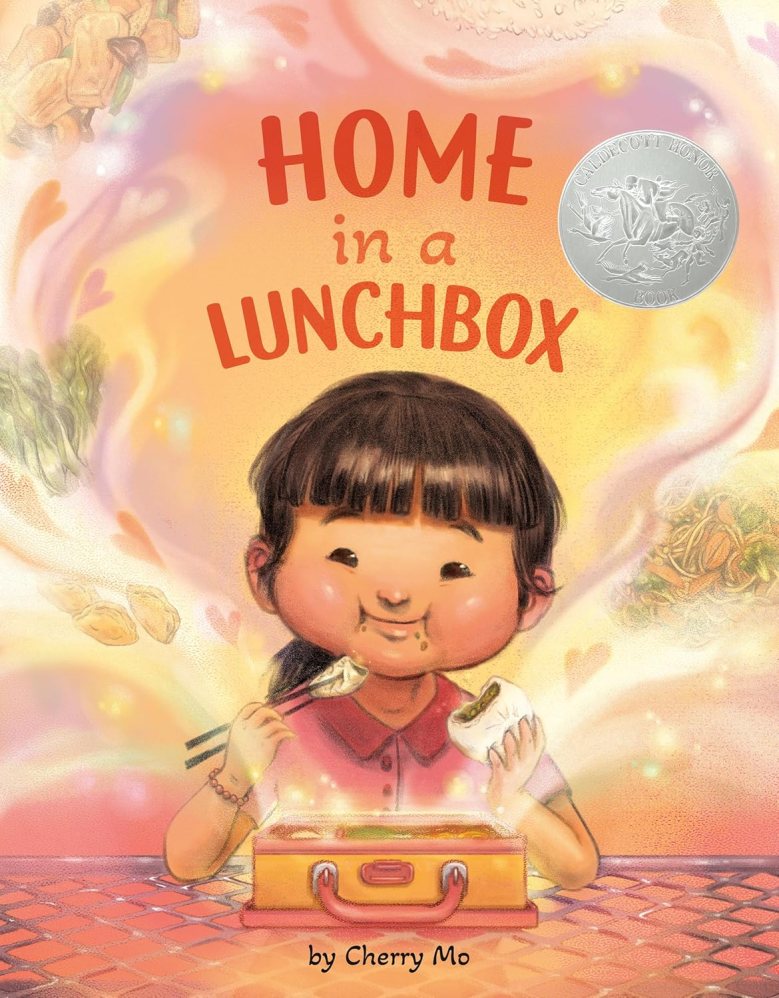
Home in a Lunchbox by Cherry Mo

A child surrounded by steam full of food items eats lunch with chopsticks in one hand and a bun in the other.

By Megan B.

Intrigued by the front cover, I picked up Home in a Lunchbox by Cherry Mo from the children’s “new books” shelf not expecting to fall in love with this story, to be recommending it to colleagues, and to feel the need to write a book review for Chapter Chats! But, here we are…

Inspired by her own experience of moving from China to the United States as a child, Mo narrates the journey of Jun beginning school in a new country. Through expressive illustrations, bold uses of color, and just a handful of text you are taken on an emotional roller coaster as you witness her first week.

I truly felt Jun’s excitement at the bus stop on her first day, and her disappointment, confusion, and frustration as she tries to navigate the school and the English language. Then, I loved the profound comfort, joy, and love she finds in her delicious homemade lunches, and finally, the acceptance, friendship, and belonging as the story concludes.

With universal themes about belonging, embracing differences, friendship, and the power of food, Home in a Lunchbox is a feel-good, must read for people of all ages.

Home in a Lunchbox, a 2025 Caldecott Honor Winner, is available from HCLS in print and as an e-book on Libby.

Megan B. is a Children’s Instructor and Research Specialist at HCLS Miller Branch. She is constantly curious and loves to learn new things.

To Marry and To Meddle

The book cover shows a Regency gentleman dressed in blue and a Regency lady dressed in gold, facing each other beneath a theatre curtain. Her arms are crossed and a handkerchief trails from her hand.

By Julie F.

Are you a historical romance fan who is waiting impatiently for the next season of Bridgerton? A reader of Loretta Chase or Sarah MacLean on the hunt for a new author? Look no further than Martha Waters and her Regency Vows novels.

There are five books in this loosely linked series. The first two, To Have and To Hoax and To Love and To Loathe, are delightful stories with witty conversation and clever turns of plot. To Marry and To Meddle, however, is my favorite so far. Not being a regular romance reader (I’m more of a British police procedural fan), I’ve been pleased to find them all so clever and enjoyable.

Lady Emily has always deferred to a very proper mother who is full of (unreasonable) expectations for her daughter; Lord Julian is a ne’er-do-well who owns a theatre and is practically disowned by his father for doing so. When the two acquaintances are thrown together at a country house party, a hasty marriage of convenience ensues. Julian helps her escape her domineering family, and Emily cloaks him in respectability – but will their relationship develop further, and will their families come to accept them as they are? Of course, the lovers are at cross-purposes for much of the novel; Julian, who initially views Emily’s interest in his business as her opportunity “to meddle,” may or may not come to accept and even value Emily’s innovative ideas and contributions to his theatre. Emily, in turn, hopes that her status as a young bride will give her time with her new husband and a chance to make a difference outside the traditional, accepted realms of ballroom and drawing room.

I liked the sharp wit and also the gentle playfulness of the story – including antics involving a stray kitten nicknamed Cecil Beelzebub Lucifer by his lordship. The main characters, who are winsome and intelligent, are exceptionally strong and well-rounded; even though they live in a very different time and place, the author is skilled at making them relatable, creating deft portraits of real people with both dilemmas and personal triumphs through dialogue and description.

Author Martha Waters does a great job of tying the series together through each set of lovers in a broader group of aristocratic English friends, and I’m already looking forward to the next one, To Swoon and To Spar – which will feature Viscount Penvale and his uncle’s ward, Jane Spencer – followed by To Woo and To Wed.

To Marry and To Meddle is available in print and as an e-book from Libby.

Julie is an instructor and research specialist at HCLS Miller Branch who finds her work as co-editor of Chapter Chats very rewarding. She loves gardening, birds, crime and espionage fiction, all kinds of music, and the great outdoors.

Meet the Author: Alka Joshi

The Henna Artist by Alka Joshi
Reviewed by Piyali C.
For generations in India and elsewhere, women have tried to loosen the shackles imposed by society for themselves, their daughters, and the women who followed them. Alka Joshi’s inspiration for The Henna Artist is her mother, Sudha. Although Sudha was denied the opportunity to live a life of her choosing, she remained tenacious and fierce so her daughter had the chance to flourish.

Joshi’s protagonist, Lakshmi Shastry, is trying to gain her independence by painting henna designs for the society ladies in Jaipur, the Pink City of newly liberated India in the 1950s. Lakshmi was married young to an abusive husband. Instead of accepting her fate, she escapes to Agra, then Jaipur in search of a new life. Her trade of drawing henna designs on the bodies of the women of powerful families in Jaipur gives her an insider’s view on the power struggles and social hierarchies. She uses this knowledge to further her career as a henna artist and a match maker.

Lakshmi’s goal is to build a home for herself with her own money. Her dream of owning a shelter also involves not being beholden to any men by accepting their help to fulfill her goal. Being an independent woman of means was not easy or common in India in 1950. With careful positioning, intuition, and a good understanding of power play, Lakshmi Shastry is well on her way to do just that. However, when her 13-year-old sister, Radha comes to Jaipur seeking her help after their parents’ death, Lakshmi’s plans for her future are tossed to the wind.

No matter what culture, women’s right to self-determination is important to Alka Joshi, and she centers her novel on this pivotal theme. The Henna Artist is fast paced, character driven, and beautifully written. The common consensus at my Global Reads book club was that this book evoked a sense of empowerment, resilience, and the will to never give up. Perhaps those are the qualities that Joshi’s mother instilled in her daughter, and that the daughter was able to bring forth those in her readers through her words, the characters she imagined, and the story she wrote.

The Henna Artist by Alka Joshi is available in print, e-book, audiobook on CD, and e-audiobook.

Meet the Author: Alka Joshi

Sat, Apr 19 | 2 – 3 pm
HCLS East Columbia Branch
For adults. Register at bit.ly/Alka-Joshi
Books available for purchase and signing.

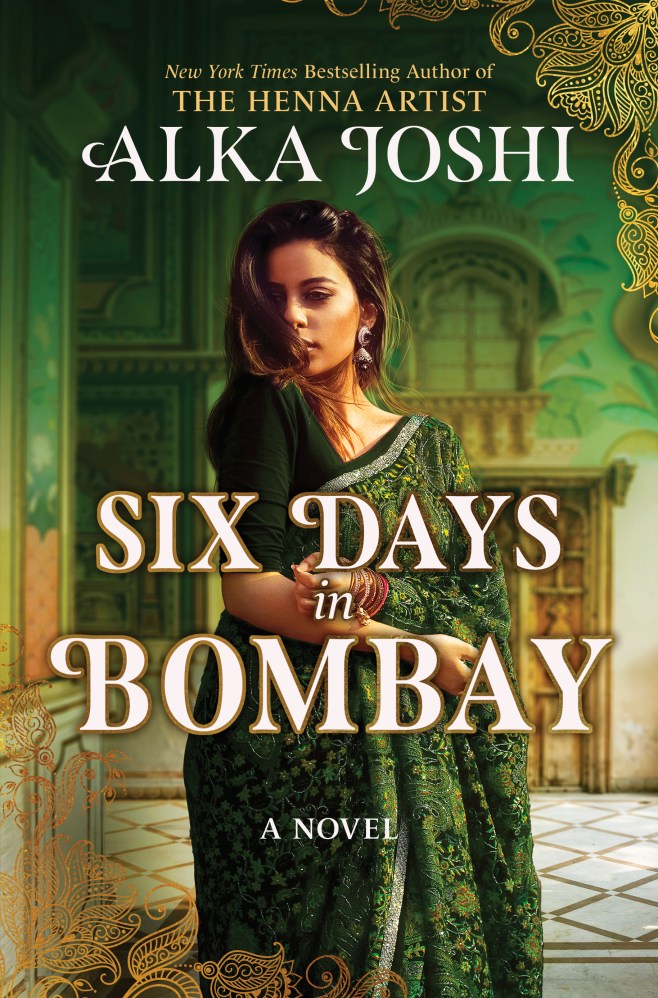
In a green toned cover, a woman with long dark hair stands posed in a green sari with a tiled room behind her.

Alka Joshi is the internationally bestselling author of the Jaipur Trilogy, which includes The Henna Artist, The Secret Keeper of Jaipur, and The Perfumist of Paris. Her fourth novel, Six Days in Bombay, comes out on April 15. In her first stand-alone novel since her bestselling debut, Alka Joshi uses the life of painter Amrita Sher-Gil, the “Frida Kahlo of India,” as inspiration for the story’s exploration of how far we’ll travel to find out where we truly belong.

The Henna Artist became an instant New York Times bestseller, a Reese Witherspoon Book Club Pick, an LA Times bestseller, a Toronto Star bestseller, an Indie Bookstores bestseller, a Cosmopolitan best audiobook, and an Amazon and Goodreads favorite. It was long-listed for the Center for Fiction First Novel Prize and has been translated into 29 languages. It is currently in development as an episodic series. In 2023, Alka Joshi was honored by Forbes as one of their 50 Over 50 women, recognized for shattering age and gender norms.

Alka was born in India and came to the United States with her family at the age of nine. She holds a BA from Stanford University and an MFA from California College of the Arts.


Meet the Author: Paterson Joseph

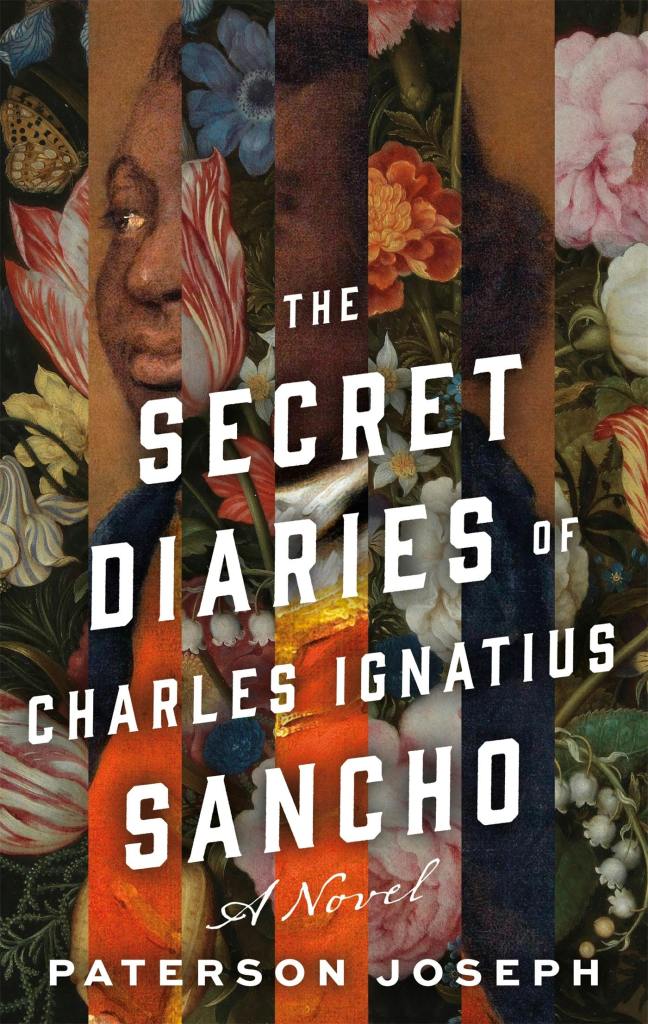
A colorful, busy cover inter-splices two oil paintings together, with a young Black man looking out from among flowers.

Paterson Joseph & The Secret Diaries of Charles Ignatius Sancho
Tue, Apr 15 | 7 – 8:30 pm
HCLS Miller Branch
For adults. Register at bit.ly/Paterson-Joseph

“[T]he rollicking fictionalized memoirs of a real-life Black British trailblazer … An entertaining portrait that also illuminates rare opportunities for Black people in 18th-century London.” ~ Kirkus Review

The Secret Diaries of Ignatius Sancho is Paterson Joseph’s debut novel and is a story that begins on a slave ship in the Atlantic and ends at the very center of London life. It is a lush and immersive tale of adventure, artistry, romance, and freedom set in 18th-century England and based on the true story of the first Black person to vote in Britain, who fought to end slavery. Joseph channels the writing style of the day and draws on the real-life Sancho’s diaries to give voice to his hero’s interior life.

Joseph is a beloved British actor and writer. Recently seen on Vigil, Noughts + Crosses, and Boat Story, he has also starred in The Leftovers and Law & Order UK. He also plays Arthur Slugworth in the Wonka movie. He has won the Royal Society of Literature’s Christopher Bland prize and the Historical Writers’ Association Debut Historical Crown 2023 award. Books available for purchase and signing.

More About the Era of Charles Ignatius Sancho
by Ian L-F
Often celebrated as the Age of Enlightenment, the 18th century is regarded as an era of immense scientific progress, with philosophy and reason expanding the boundaries of thought that, at times, challenged authority. However, the radiant optimism of this period must be understood alongside its darker tendencies, where ideals of liberty coexisted with systemic exploitation. England’s economic rise, framed as a triumph of innovation and industry, was fueled by the profits of slavery and European imperialism.

Following the War of Spanish Succession, Britain was granted by treaty the asiento de negros, a monopoly on the sale of enslaved people to Spain’s colonies, solidifying its position as the largest slave-trading nation by 1730. Despite slavery being nominally outlawed in England since the 12th century, Britain, like other European powers, externalized its reliance on slavery to their colonies. This policy enabled them to condemn the trade morally while still reaping its profits, in every cup of sugared coffee and nutmeg-spiced delicacy.

Amidst this sea of madness, Charles Ignatius Sancho emerged as a beacon of erudition and resilience. Born on a slave ship and sold into bondage in New Granada, Sancho overcame incredible odds to achieve freedom and defy the prejudices of his time. A self-educated man of letters, a composer, and a businessman, he became a celebrated voice in Britain’s abolition movement. Yet, opposition to slavery in Britain remained scarce until the late 18th century, and as W.E.B. DuBois later observed, abolitionist efforts often aligned with economic interests: “The moral force they represented would have met greater resistance had it not been working along lines favorable to English investment and colonial profit.”

The 18th-century era contended with forces not too dissimilar from our own. In echoes of history’s tribulations and the lives of remarkable individuals, we find lessons that challenge us to confront injustice, question power, and strive for a more equitable world. If your interest in history has been piqued, our online research tools, like Gale OneFile’s World History database, are a fantastic starting point for an educational journey.

Ian is an Instructor and Research Specialist at HCLS East Columbia Branch. He is a huge nerd with too many interests to list here. Currently, he is fixated on the interconnection between history and fiction. His favorite kind of stories are stories about stories.

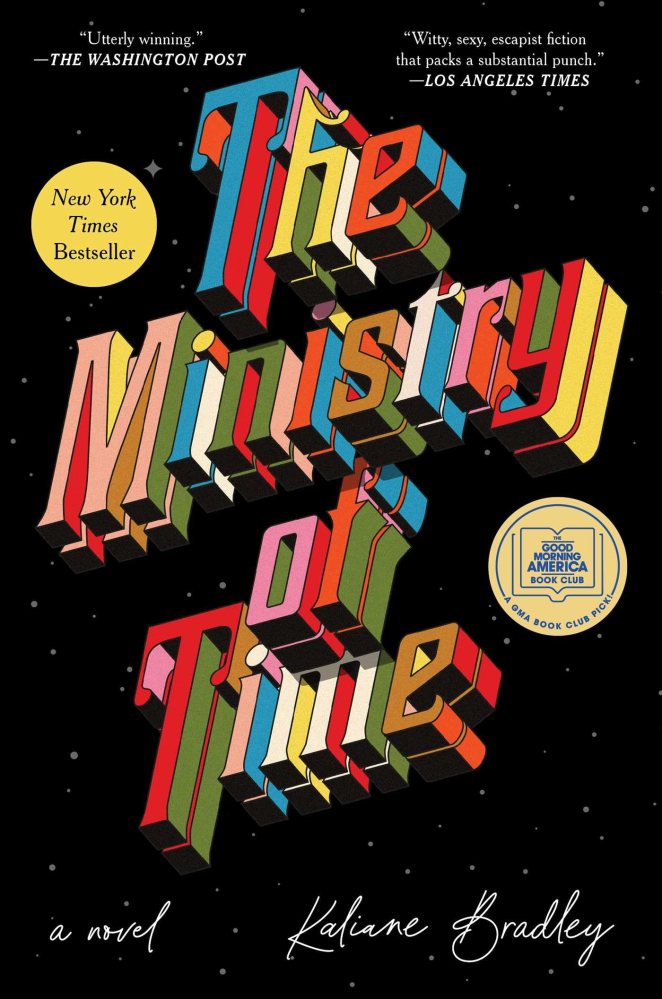
The Ministry of Time by Kaliane Bradley

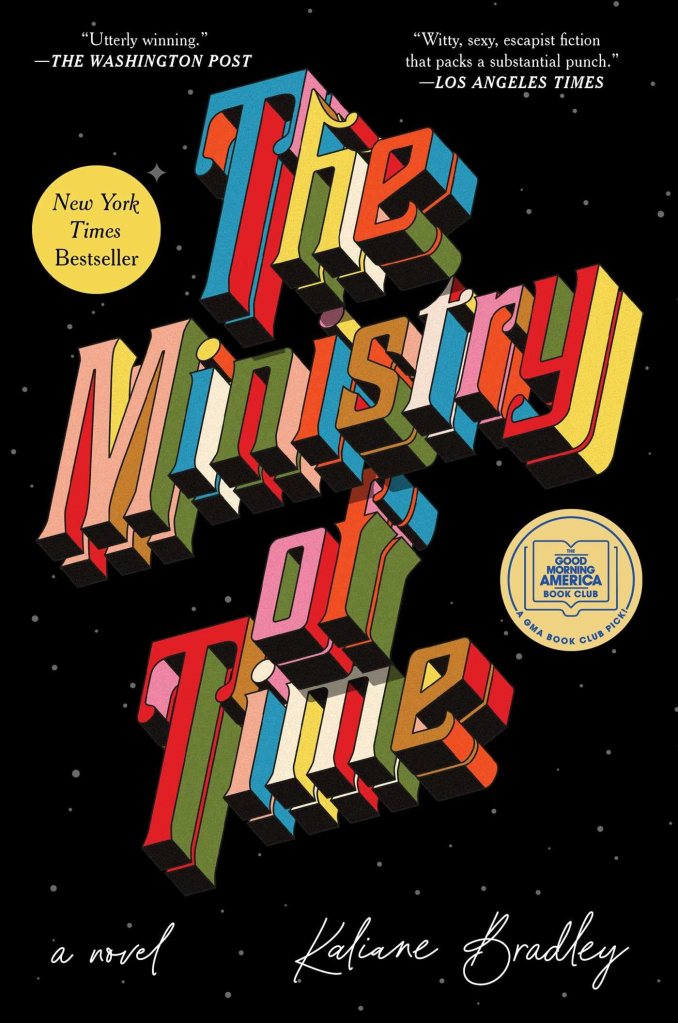
Brightly colored, large italicized lettering appears doubled on a black cover. Stickers added for New York Times best seller and the Good Morning America Book Club.

by Kristen B.

As the story begins, the main character is finishing a series of rather hush-hush job interviews. When she learns she got the new position, she hears the words, “We have time travel.” Welcome to The Ministry of Time by Kaliane Bradley, which plays with the notion that sometime in the future, we figure out how to travel in time.

It’s one of the biggest question about time travel: Can we improve the present – avert some disaster – by changing the past? This story seems a little different, more scientific at the start – wondering if it’s even possible for humans to exist outside of their own time. The Ministry devises an experiment where they “rescue” certain individuals known to have died in tragic or terrible ways: a doomed trip to discover the Northwest Passage, a plague house in the 1600s, the trenches of WWI, and other such horrible histories. Those individuals feel more like they’ve been kidnapped than rescued.

The book’s narrator, who gets that job with the Ministry (but never a name), is assigned to be a bridge between Graham Gore, officer of the Royal Navy in the early nineteenth century, and her time period in near future London. She insists on referring to him as being Victorian, but his time was actually just before Victoria’s reign began. The first third of the book delights in Gore’s observations of modern life and conveniences. But clearly, something is amiss in the Ministry. The main character just can’t quite figure it out but strange happenings keep occuring, like her handler being assassinated at a public event and certain time travelers being invisible to scanners. Other things don’t add up either, although it becomes clear there are warring factions within the Ministry. No one is quite sure who to trust.

Graham and our narrator spend almost all their time together: learning modern skills like riding a bike (which eventually improves to a motorcycle), touring museums, and going to pubs with other time traveler/bridge pairs. One session admiring a Turner exhibit at the Tate is particularly insightful. Graham becomes good friends with two other people out of time, one of whom is my favorite character. Maggie was left to die in a plague house, but she comes to embrace London’s club scene and dating apps where she can be openly gay. These friendships prove to be crucial not only to the characters’ well-being, but to the ultimate resolution of the story.

On top of the fascinating premise, the author has a gorgeous way with words. One character is described as, “Despite being out of uniform, he looked oddly formal, as if he was as the sole person in serif font.” I don’t want to spoil the surprise of this excellent debut. What ensues in the second half of the book is a complete mash-up of time travel, spy thriller, and romance into a beautifully written novel about the dangers of colonialism. Bradley really does tell you everything you need to know in the first chapter, only I didn’t realize it until I re-read it after the devastatingly bonkers ending. This is a book I’ll think about often and already have plans to re-read.

You can borrow the book in print or large print now, but there’s a bit of wait for the e-book and e-audiobook versions.

Kristen B. is a devoted bookworm lucky enough to work as the graphic designer for HCLS. She likes to read, stitch, dance, and watch baseball (but not all at the same time).