I admit this is a fairly niche set of titles, especially given my past with archaeology, but it is interesting to see how Central and Western Asia can fascinate far Eastern writers as much as it does the Western reader. These manga series all share a common thread of being set in real or fantasy versions of places like Turkmenistan or the various Persian dynasties. The stories may be different, but they all have a cultural or at least aesthetic backdrop of a mythical Silk Road-esque past.
The Bride’s Story by Kaoru Mori No, not the cult classic movie, but rather a brilliant manga series set in mid 19th century central Asia (think modern day –Stans). The detail that Mori puts into her work is staggering, and she placed specific emphasis on the rich textile traditions of the area. Bold patterns and intricate needlework serve not only as part of the plot revolving around a nontraditional marriage, but as a luxurious backdrop for rather complex characters. Colonialism and foreign power threaten to upend traditional life constantly, and Mori places her characters firmly between the Russian and British factions, during the time period of The Great Game of shadow diplomacy and proxy wars during the 1850s. This series does not stick to one genre, with elements of slice-of-life, coming of age tales, romance, history, and ethnography. No matter the topic or conflict, The Bride’s Story is gorgeously illustrated and historically sound.
Heroic Legend of Arslan byHiromu Arakawa From the mangaka of Fullmetal Alchemist, this series takes place in a mythical and magical version of ancient Persia. This series utilizes a lot of place names and proper names that are real aspects of several eras of the Persian Empire. Places like Ecbatana and Fars, and people named Daryun and Andragoras, transport the reader into a different, ancient world. Following a young prince who is navigating the trials and tribulations of sudden leadership, the reader watches his coming of age as a compassionate leader in a land accustomed to war. FMA readers will find this series visually familiar, but with enough change to keep it interesting.
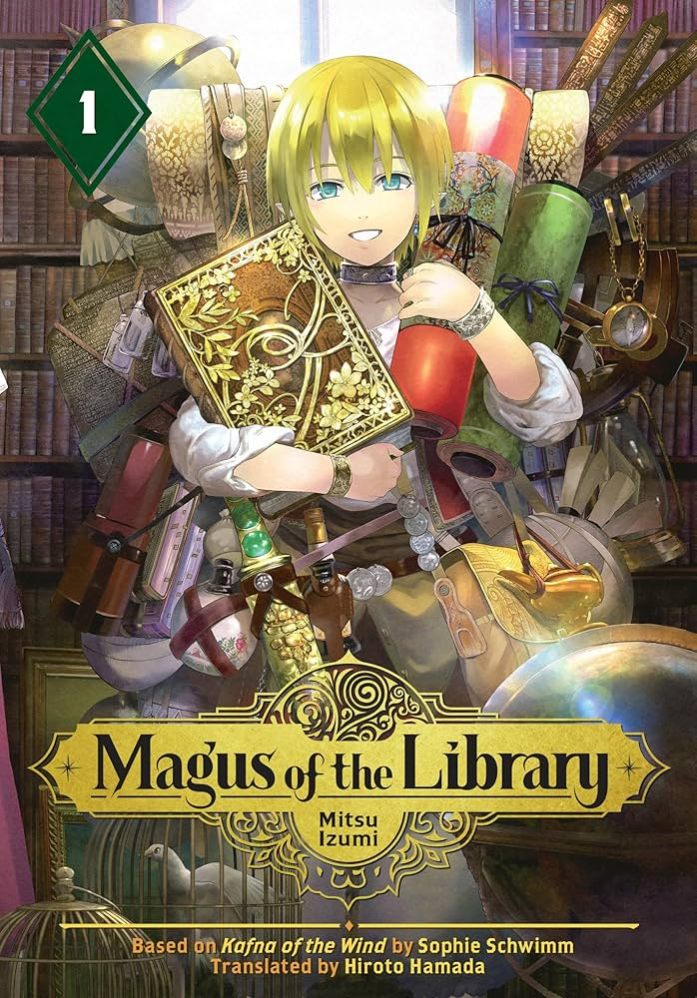
Magus of the Library by Mitsu Izumi Another story rich in detail and set in an alternative Western Asia, this manga leans less on history and more on magic. This was a bit of an indulgent read as a librarian, as most of the characters simply gush about their love of books and passions for various aspects of librarianship and reading. It also does not hurt that the fantasy society in question treats their magical librarians like super-humans. The series revels in diversity of characters, both real and fantasy, drawing from multiple historic inspirations for the factions complete with rivalry and culture shock.
Tony is an Instructor and Research Specialist at HCLS Miller Branch. He has a degree in history and a renewed interest in science fiction and fantasy.
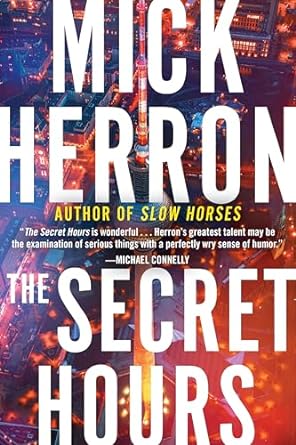
The Secret Hours opens with a thrilling pursuit: Max, a retired academic living in remote Devon, experiences a home invasion. The reader is privy to Max’s thinking in this first scene; he’s calm and collected enough to evade capture, at least immediately, and it’s clear that he has some background with the intelligence services. Max is now on the run, and the reader’s task is to figure out how his story matches up with the other tale author Mick Herron is telling – a look into what, at first, seems like ancient history.
In 1994, a newly-minted MI5 agent, Alison, is sent to cold war Berlin by David Cartwright to oversee and report back on the work of a somewhat abrasive, difficult agent named Miles. Cartwright is second-in-command in the Service and Alison isn’t sure why he distrusts Miles. In the present day, decades later, Alison is telling the civil servants on the nearly-defunct, investigative Monochrome commission the story of her sojourn in Berlin – how agents died and how the situation was rife with betrayals. The reader gradually comes to realize that her story might have something to do with Max and his pursuers. Of course, all the threads come together at the end and we get a glimpse of the manipulators behind the curtain who pull them for their own benefit. Herron’s unpredictability is one of his strong suits; the good guys don’t always come out on top, so it’s interesting to learn whether those maneuvering behind the scenes will get their comeuppance.
Mick Herron is a master – of character development, of mood and theme, and of plotting above all. I’ve loved the Slough House books in varying degrees, but this book – which is really Slough House-adjacent, involving none of Jackson Lamb’s present-day agents but clarifying many important questions from prior books – is utterly fantastic. If the acclaimed Apple TV series tackles this novel, it will be fascinating to see how they handle the flashbacks and resolve them in the modern storyline that features Lamb and his motley crew.
The tagline from Lee Child on the book cover says it better than I could: “Great Britain has a long, rich history of how-it-really-works espionage fiction, and Mick Herron – stealthy as a secret agent – has written himself to the very top of the list.” I’ve reread Slow Horses already, but as I’ve worked my way through the series, I’ve become convinced that there are so many little details and asides that are easily missed yet turn out to be consequential later on. I rarely re-read series (just because there is so much new fiction out there to discover), but this is one that is worth a second go – not just The Secret Hours, but all nine of the Slough House novels to date, as well as the excellent collection, Standing by the Wall: The Collected Slough House Novellas.
My favorite quote, from Miles to Alison: “You want to serve your country, right? What did you think that involved, dressing up and playing parts? This job is about betrayal. About persuading people to betray other people. Their countries, their friends, those they work for. And in return, we betray them too in the end” (295). It’s worth noting that, despite what he says about playing parts, the narrator tells us at the end that “for a moment they were back in their old lives, the ones that had turned out to belong to other people, or at any rate, to no longer belong to them” (349). Everyone has a hidden identity or motive; everyone is playing a part.
If you’re already a Slough House aficionado, good news: the wait will be up next year. Soho Crime currently plans to publish Clown Town, the tenth book, on September 2, 2025. And if you need something between now and then and have run through the entire series, Herron wrote two standalone novels that, like The Secret Hours, are set in the world of MI5 and MI6 concurrent to the adventures of Jackson Lamb’s Slough House crew: Reconstruction and Nobody Walks.
Julie is an instructor and research specialist at HCLS Miller Branch who finds her work as co-editor of Chapter Chats very rewarding. She loves gardening, birds, crime and espionage fiction, all kinds of music, and the great outdoors.
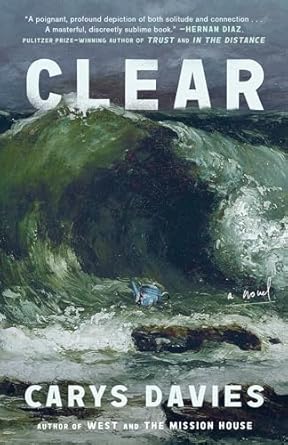
The more I read the more I realize how little I know. I was confused about the title of this exquisitely written novel, Clear, that talks about human connections. Why “clear?” I learned the significance in the Author’s Note, where I read about how 474 ministers broke away from the Scottish Church in the year 1843 to rebel against the system of patronage and form the new Free Church. I also learned about the controversial Clearances.
In the novel, John Ferguson is an impoverished priest of the New Church forced to participate in a significant social upheaval in Scotland at the time: the Clearances that began in the Lowlands, spanning from the mid-eighteenth century to the mid-nineteenth century. Farmers were forcibly removed from their lands by the landowners to use those fields for crops, cattle, and sheep. The farmers and their families were dispossessed of their livelihood and forced to move to concentrated lands where they could not produce enough food for sustenance, which resulted in mass exodus to industrialized cities. Many sold all their belongings to find passage on ships to the United States, Canada, or Australia to start anew.
John Ferguson takes up the job of evicting the lone tenant, named Ivar, of a remote island. Ivar has been living by himself for over a decade with his old horse, a blind cow, and a few hens and sheep. John’s wife, Mary, is opposed to this dangerous journey, but John is adamant about earning enough money to build his own church facility to practice the teachings of the New Church. Upon arrival, John falls off an island cliff, sustaining life threatening injuries. Ivar, the man whom John has come to evict, finds the unconscious John and nurses him back to health. Despite their language barrier, the two men find a connection, while John faces a dilemma about having to disclose to Ivar, his savior and friend, his real reason for the journey. Mary, in the meantime, has had no communication from John; she sells everything to buy passage to travel to the island herself to find out what has happened to him. The story takes an interesting turn when the three main characters come together.
Clear is not only a story of immense beauty; it is also a big-hearted story of hope, ambition, and most of all, the interconnectedness of human hearts. The paucity of words in the book somehow intensifies the beauty and the depth of the characters, the plot, and the setting. Through the magic of Carys Davies’ beautiful writing, the readers can hear the waves crashing against the rugged rocks of the island, feel the heat of the fire that Ivar builds to stay warm, and taste the slightly burnt milk mixed with cornmeal that Ivar feeds John to sustain his broken body. The book touches all our senses as we read the story. The words transport us onto the island, and we live John and Ivar’s life and feel their connection along with them. We understand Mary’s concern as she frets at the lack of communication from her husband and marvel at the ending, when all three characters converge on the island. What will happen to them next?
Clear by Carys Davies is available in print and e-book formats.
Piyali is an instructor and research specialist at HCLS Miller Branch, where she facilitates two book discussion groups: Light But Not Fluffy and Global Reads. She keeps the hope alive that someday she will reach the bottom of her to-read list.
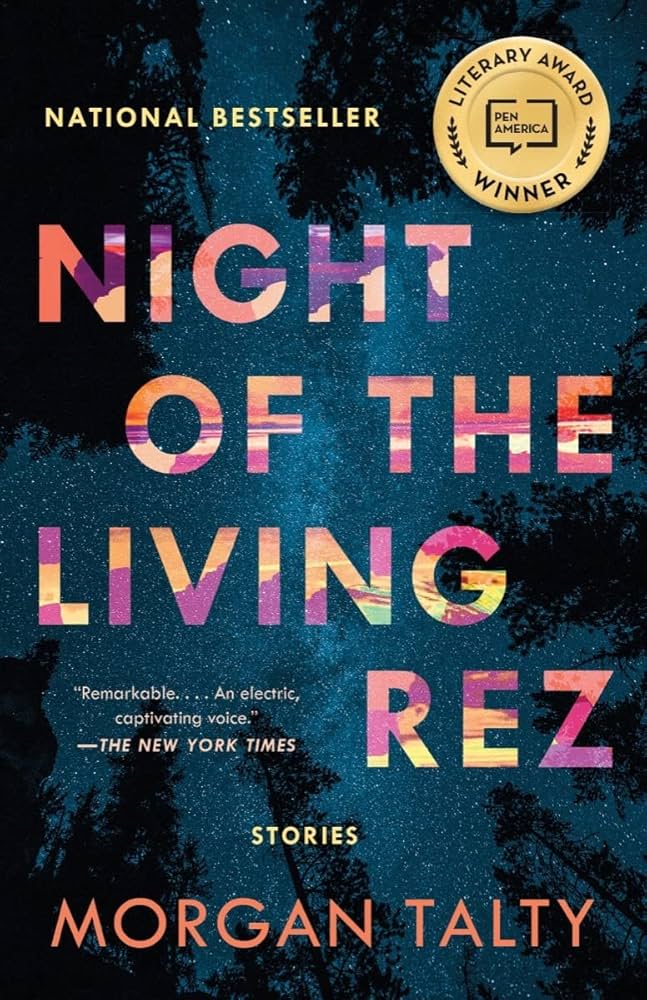
My book discussion group (Books on Tap) recently discussed Night of the Living Rez by Morgan Talty. I try to choose books that reflect the time of year, as well as to prioritize authentic voices. This book worked for November because Morgan Talty is a Native American author, and his book collects a series of inter-connected short stories about David and his family and friends on the Penobscot reservation in Maine.
In all honesty, the book is as bleak as any other work that deals with generational trauma and chronic poverty. However, it is laced with gorgeous prose, mostly in scenes describing the local woods and river. Talty has a sense of the poetic that shines through even the most difficult situations – including the description of a car crash that perfectly captures the halting, photo-flash moments of impact and aftermath. Surprisingly, along with the spare dismay of the stories, Talty also offers a pitch-black sense of humor. The sheer absurdity of teenage boys and their antics relieves the otherwise unrelenting sense of nowhere to go and nothing to do that permeates this book. Sometimes it’s true: you have to laugh instead of cry.
Eleven of the twelve chapters are tightly told from young David’s point of view – and his almost complete lack of understanding of what’s happening with the grownups in his life. His relationship to his grandmother is the foundational relationship of the book, as it was for his life. That special love grounds the stories and makes them real, in ways that the cigarettes, drugs, and drinking couldn’t. The love and the bad decisions weave so intimately that the inevitable heartbreak registers as simply, devastatingly true. The tight narrative focus is a fascinating authorial choice, but not until the last section do all the pieces truly come together in any sort of coherent way. It’s worth getting there with adult David, with compassion and forgiveness for the bone-headed youth that he was.
I’m not sure this review is going to convince you to pick up this book, but you should! I was heartened by reactions of the folks in my book club. They found value in the language, the author’s choices of what to share, in the universality of the stories, and in the need to laugh in the face of despair. Night of the Living Rez is a stellar beginning for a new author. I will eventually read Talty’s new novel, Fire Exit, but I need to continue to sit with this volume first.
Kristen B. is a devoted bookworm lucky enough to work as the graphic designer for HCLS. She likes to read, stitch, dance, and watch baseball (but not all at the same time).
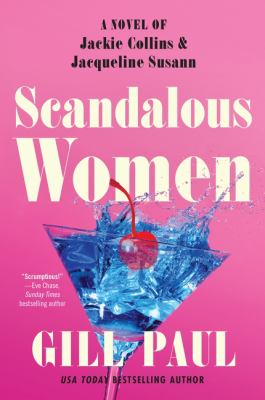
In the late 80s, when I first discovered the novels of Jacqueline Susann and Jackie Collins, I used to place paper bag covers over them to hide the title information and, I suppose, my shame in reading them. Nowadays, in the age of e-books, where no one has to know or can see what you’re reading, I am not at all shy about sharing my love of these two authors.
Scandalous Womenbrings to life the dynamic and groundbreaking careers of both iconic ladies. Set in the 1960s, the story follows these trailblazing and vibrant women as they navigate the male-dominated world of publishing, facing rampant sexism and societal backlash for their bold, provocative works.
Nancy White, a young editorial assistant becomes the unlikely link between these two literary powerhouses. As Jackie and Jacqueline strive to top the bestseller charts, they form an unexpected friendship, sharing their struggles and triumphs in a world that often seeks to silence them. Though there is no real world evidence to suggest they were friends in real life, Gill Paul has said that she loves to imagine that they could have been.
Paul weaves together the personal and professional lives of these women, highlighting their resilience, ambition, and the price they pay for their success. Scandalous Women is written in the style and spirit of both authors and is a fun, yet ultimately serious look at writing as a woman in the 1960s. The way she captures their spirit, especially Susann’s, is pitch-perfect and is one of the reasons the book stays with you long after you finish. The good news is, if you like Gill Paul, she has written several other novels, just as compelling and enjoyable to read.
To see Jaqueline Susann discuss literature (and that meshes well with what Scandalous is trying to say) click here:
Angie is an Instructor & Research Specialist at Central Branch and is a co-facilitator for Reads of Acceptance, HCLS’ first LGBTQ-focused book club. Her ideal day is reading in her cozy armchair, with her cat Henry next to her.
Those of us who work in libraries know that books contain a special kind of magic. Even the most ordinary books can hold the key to something extraordinary for the right reader. This past summer, I read a story about a book with a different kind of magic.
The Book of Doors introduces us to Cassie Andrews. She lives in New York City with her roommate and best friend, Izzy, and works at a bookstore that she loves. Although she lost the grandfather who raised her as a teenager and traveled abroad before settling in the city, no one would call Cassie’s life particularly exceptional.
All that changes, though, when one of her favorite customers dies in front of her at the bookstore and Cassie finds a worn-looking old book that he seems to have left behind for her. When she opens it, Cassie discovers The Book of Doors, which contains confusing drawings and strange writing. It also promises that any door is every door. Soon, Cassie learns exactly what this means. She and Izzy explore the limits of the book, and before long, they draw the notice of a mysterious man. His name is Drummond Fox, and as he explains once he approaches them, the Book of Doors is one of a set of unique books. He is the caretaker of the Fox Library, and he watches over those volumes that he’s managed to gather and protects them from nefarious collectors who seek to use the books to do harm. Cassie has to decide if she can trust Fox and where her responsibility lies in all of this.
Soon, Cassie finds herself caught up in an adventure she never imagined, learning about the books and their history as well as her own, while trying to prevent unimaginable disaster.
To warn sensitive readers: there are some quite difficult and gruesome scenes, but the story is creative and compelling. I thoroughly enjoyed it, and I hope to read more from this debut author soon!
The Book of Doors is available from HCLS in print and as an e-book and e-audiobook from Libby.
Eliana is a Children’s Instructor and Research Specialist at the Elkridge Branch and co-chair of the HCLS Equity Committee.She loves reading, even if she’s slow at it, and especially enjoys helping people find books that make them light up. She also loves being outside and spending time with friends and family (when it’s safe).
Every year, instructors from HCLS Central Branch put together the Books for Discussion list and promote titles from it at our annual Book Club Revue. (If you missed it, you can watch this year’s Book Club Revue on YouTube.) Titles are selected from both established and debut authors across all genres, with consideration of whether the book is ‘discussable.’ Books that yield great discussions often have compelling characters and thought-provoking themes, leading to conversations not only about the story itself but also current events and readers’ own experiences. (For more book club tips, check out our Community Book Clubs page.)
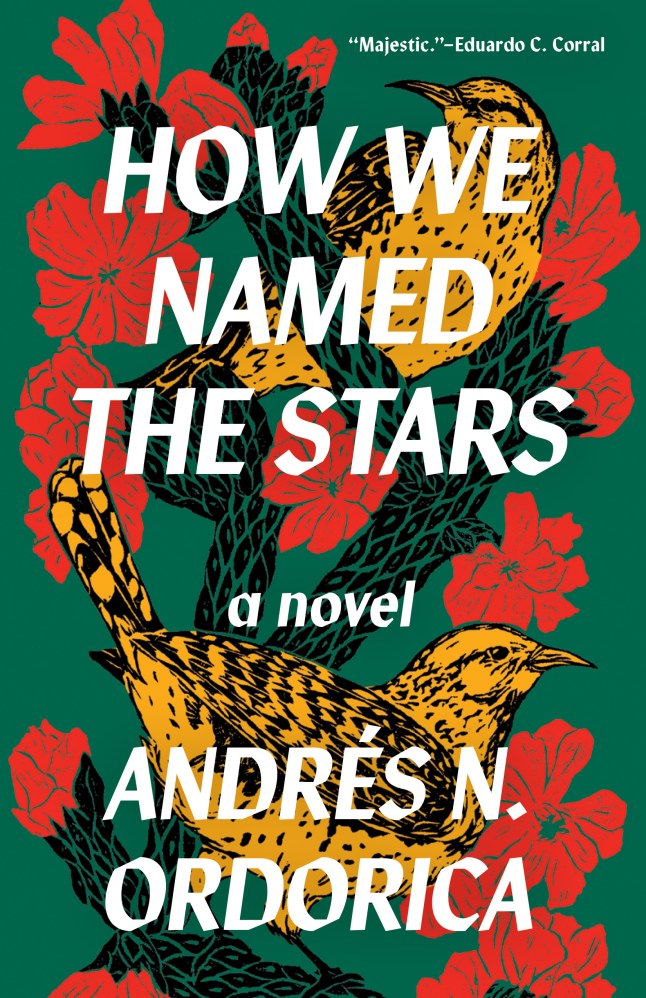
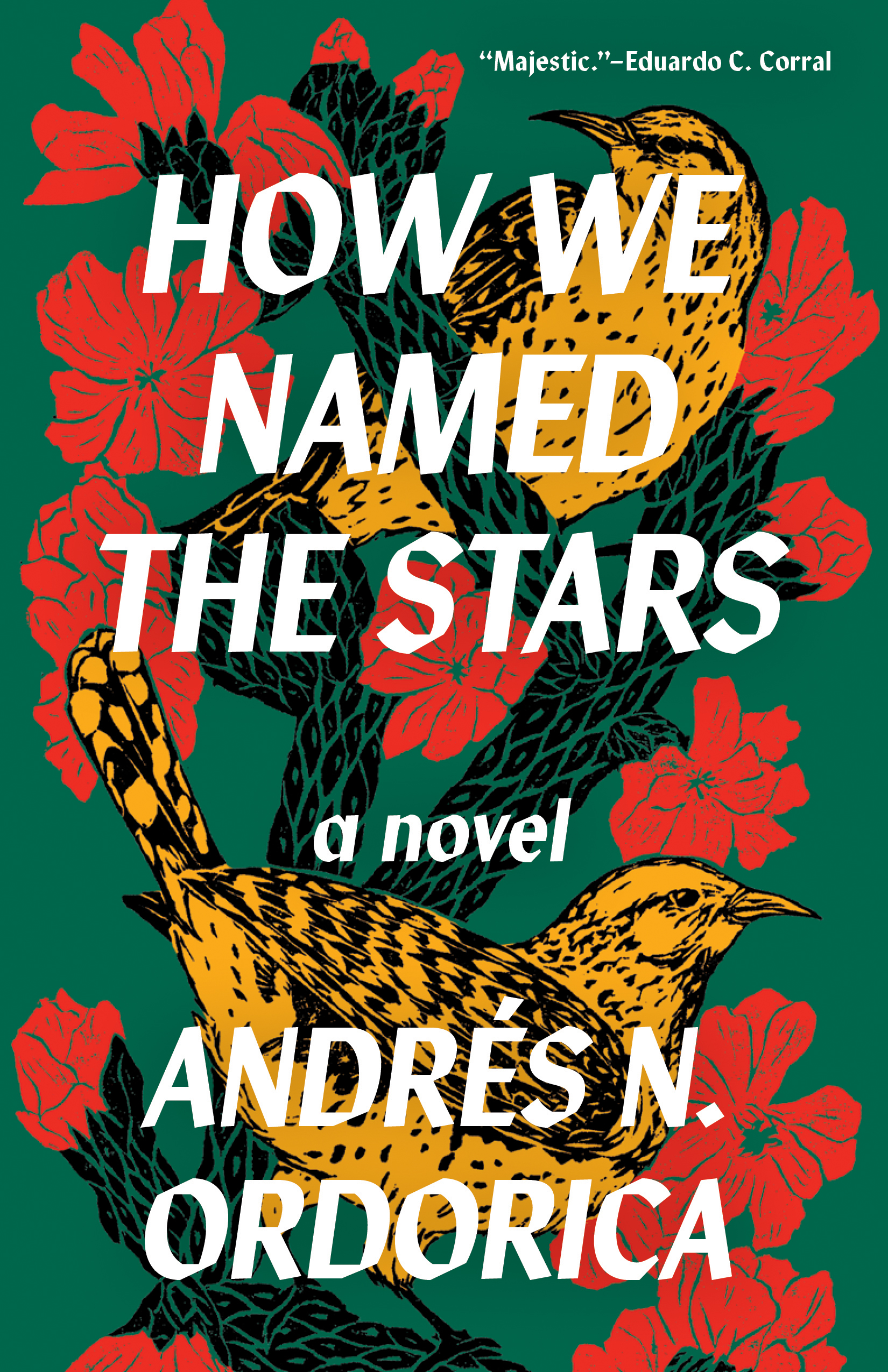
Out of a hundred titles on the list, the one I’m championing most often is How We Named the Stars by Andrés N. Ondorica. If there is one novel I want you to read before year’s end, it is this one! Ordorica has waltzed into my heart as one of my new favorite authors with this debut, and the characters he created will have a special place in my heart for years to come. Set in his first year of college, the protagonist Daniel is a first-generation Mexican-American creative writing student who develops an unexpected closeness with his roommate Sam. Over the course of the novel, Daniel navigates insecurities, queer desire, grief, and self-discovery.
Ordorica writes the type of atmospheric prose that I want to crawl into, curl up, and live inside forever. While this book is deeply tragic, it is thoughtfully so, and it defies the tropes you might expect of queer or Latino characters (which was very welcome and refreshing). Despite immense heartbreak, Daniel’s story is ultimately so hopeful and healing. It reminds me of my long-time favorite YA novel, Aristotle and Dante Discover the Secrets of the Universe by Benjamin Alire Sáenz. While their plots are quite different, they are both tender, lyrical coming-of-age stories that include friends-to-lovers romance and nuanced family dynamics. They also explore the particular challenges and joys of being both gay and Mexican-American, influenced by the lived experiences of their respective authors.
Aristotle and Dante is set in 1980s Texas – a notably difficult time and place to come out as gay – with the boys approaching the end of high school. How We Named the Stars is more contemporary – while never specified, it is likely set in the 2010s – and it begins at an East Coast university, where there is a queer community for Daniel to explore. Whereas Aristotle must come to terms with being gay over the course of an entire novel, and in isolation, Ordorica’s Daniel more-or-less understands he is gay from the outset. His story shows a journey towards outwardly claiming and living that label, first in community with other queer people, secondly in relation to an intimate partner, and finally, as an out gay man to his Mexican family. Both novels are valuable contributions to the growing canon of queer Mexican American literature, and I recommend both wholeheartedly.
Aristotle and Dante was one of the first LGBTQ books I read as a teenager, and it helped me inch towards realizing that I was part of that community. Fast forward to 2024: reading How We Named the Stars in my late twenties helped validate the struggles I faced in early adulthood. If I could go back in time and give my college-aged-self one book to read to help me get through life’s challenges, it would be this one. If you want a book that fills up your heart, shatters it into pieces, and then puts it back together again, How We Named the Starsis a perfect book for you.
Ash is an Instructor and Research Specialist at the Central Branch with a passion for information literacy and community engagement. They love music, gardening, hiking, and cuddling with their golden retriever.
October is the season of frights and jump-scares. If you are anything like my friends and I, it means setting aside time to indulge in the shivers, chills, and heart palpitations that come with quality horror.
Over the years, my relationship with horror has evolved in surprising ways. As a child, the game Animal Crossing scared me so badly with a cheeky Easter egg that I ripped the disc from my GameCube and banished it to the farthest corner of my basement closet. Yes, the quaint, whimsical game about quirky animal neighbors and paying off a mortgage once sent me into a panic. As an adult, however, I’ve grown to love horror.
To celebrate the season, I wanted to share a brief list of media that use horror in fascinating and effective ways (as opposed to cliché or tired tropes). This selection of my favorites showcases how horror can transcend traditional scares, confronting us not just with fear but with deeper questions about meaning, control, and survival. Whether it’s through surreal absurdity, cosmic dread, or psychological unraveling, each of these works leaves a mark that lingers long after the story ends. Happy Halloween!
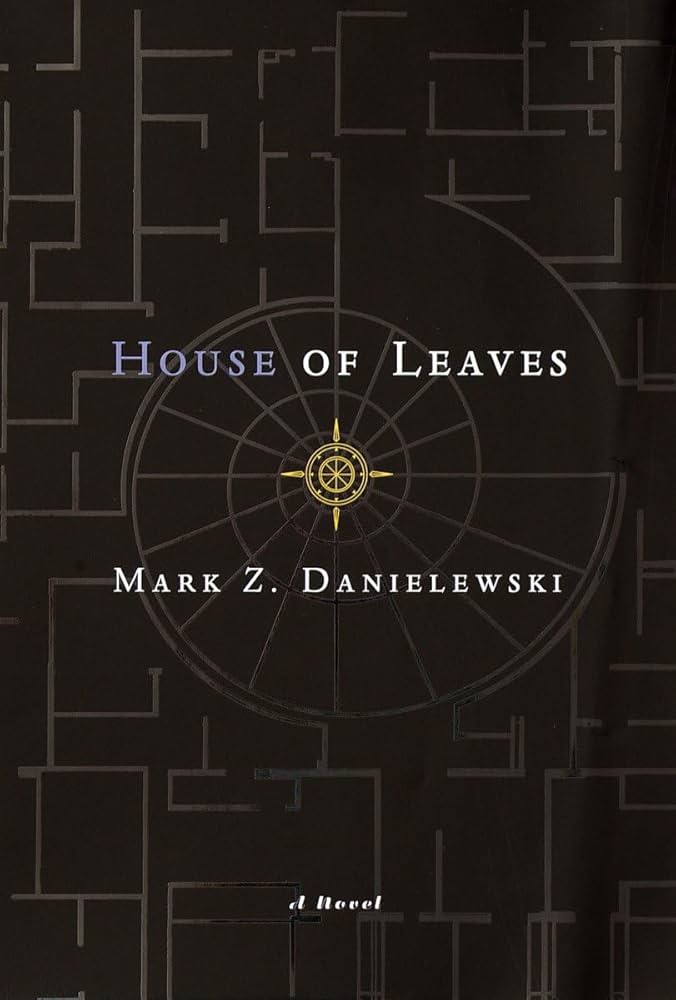
House of Leaves is one of the best pieces of fiction I have ever read – a wild, shifting text as concerned with the construction of meaning through language and signs as it is with the emotional turbulence of love, security, and existential dread. At its most succinct, House of Leaves is a book about an essay about a movie about a house that does not exist – and that house is also the book itself.
The story begins with Johnny Truant, a troubled, erratic young man living recklessly, burning the candle at both ends. One day, Johnny is invited into the apartment of his recently deceased neighbor, Zampanò. In the disheveled, eerie apartment, he discovers Zampanò’s final work: an academic treatise on a film called The Navidson Record. The catch? Zampanò had been blind for years, and The Navidson Record – a documentary by renowned photographer Will Navidson chronicling his family’s search for peace in a new home – does not seem to exist.
The house on Ash Tree Lane, as depicted in documentary, reveals itself to be bigger on the inside than the outside. As Will and a growing team investigate, the house grows endless, until the gravity of this impossibility threatens to undo everything. As you read, Johnny Turant does too – editing Zampanò’s fragmented manuscript while unraveling under his own troubles, which may all stem from the manuscript itself. Is the house real? Is it a curse? These questions spiral outward, pulling the reader into a labyrinth where certainty slips away leaving behind nothing at all —and perhaps the absence of anything is the most terrifying thing of all.
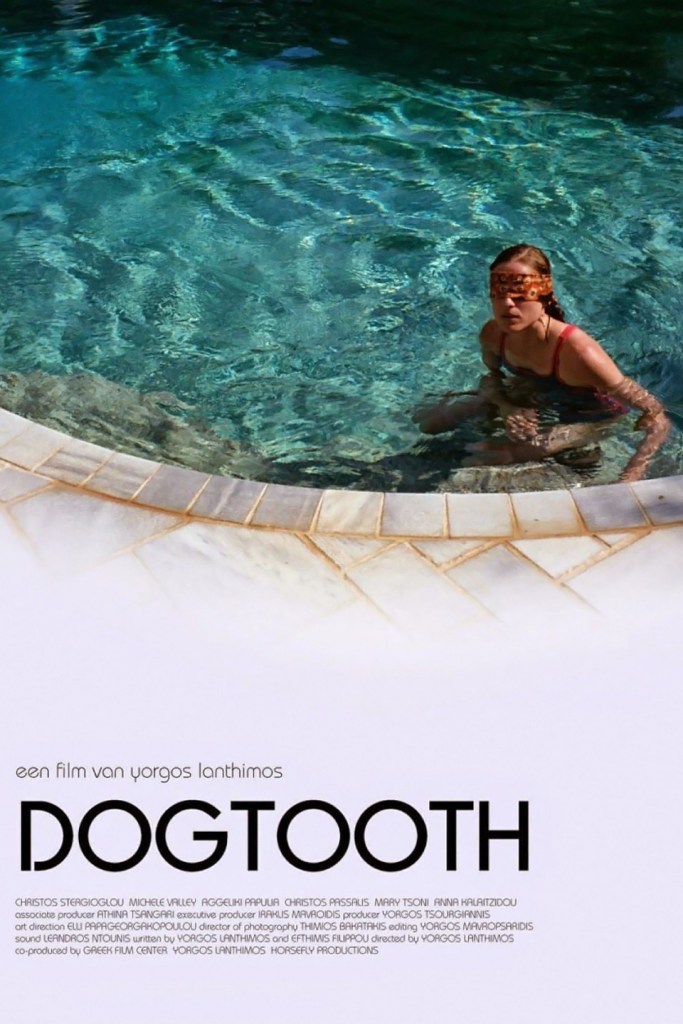
Greek filmmaker Yorgos Lanthimos has enjoyed international acclaim with films such as The Lobster, The Killing of a Sacred Deer, and Poor Things. Lanthimos excels at the strange and unsettling, crafting horror from the surreal and the absurd.
Case in point: Dogtooth centers on a family—a husband, wife, and their adult children—who live in complete isolation within a barricaded compound. The children have never left the confines of their home. They are raised on a manipulative regime of misinformation and control, where their parents deliberately distort language, knowledge, and their reality. Words are redefined to remove meaning. A ‘zombie’ is a small yellow flower. Cats are the most dangerous predator known to man. An adult is someone who has lost their dogtooth and is ready to leave the house. Fear of the outside is instilled with brutal efficiency to maintain compliance.
The result is a deeply unsettling exploration of control, isolation, and the fragility of identity. As the children struggle to conform to this artificial reality, cracks begin to form—revealing the horror that lies in the breakdown of personal autonomy. Dogtooth offers a stark, absurdist look at the consequences of power unchecked, leaving viewers disturbed not by monsters or supernatural forces, but by the cruelty of manipulation and the terrifying plasticity of human perception.
Junji Ito masterfully exposes the stark horror lurking within the mundane. Uzumaki follows the residents of a small Japanese town cursed by spirals—patterns that begin to consume not just the environment, but the minds and bodies of the people.
The father of the protagonist’s boyfriend becomes obsessed with spirals, collecting spiral-shaped objects, bathing in whirlpools, and only eating spiral-shaped noodles. He stares into spiral patterns for hours until even his eyes twist in opposite directions. Eventually, he dies attempting to twist his own body into a spiral. At his funeral, the crematory smoke spirals upward—only to shift and coalesce into a grotesque, grinning image of the man’s face, spiraling downward as if to envelop the town.
And from that moment, everything begins to unravel.
Junji Ito, a master mangaka, explores his work episodically in a sort of slice-of-fear narrative. Each chapter plays with the themes of the work, as it also delivers high quality and terrifying artwork. Uzumaki’s exploration delves into the erupting terror of grappling with forces beyond one’s control or comprehension. The horror of Uzumaki is mindless and indifferent, transforming even ordinary things—snails, ears, and babies—into sources of visceral dread. In Ito’s hands, the spiral becomes the embodiment of an absurd, indifferent universe where nothing is safe from corruption.
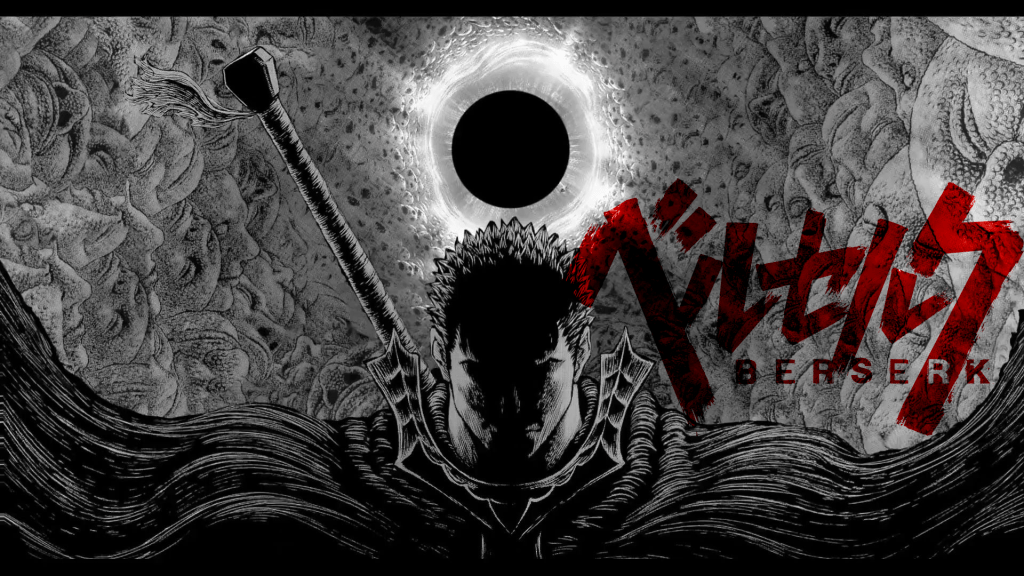
Berserk is a masterpiece: an amazing, serious, and beautiful piece of art.
Miura blends dark fantasy, psychological horror, and cosmic dread into one stunning and harrowing tale. Berserk follows Guts, the Black Swordsman and lone mercenary, as he battles through a relentless horde of monsters and demons. What begins as a journey of survival transforms into a profound meditation on trauma, betrayal, and the price of ambition.
The horror of Berserk lies partly in its grotesque monsters and their monstrous actions, but these monsters are rarely fully inhuman. This tension between humanity and power is central to the narrative, exemplified in “The Eclipse”—the most grueling, nightmarish scene in the story. This sequence rivals the most terrifying moments in any medium, where betrayal, loss, and monstrous transformation collide, leaving an unforgettable mark on both the characters and the audience. I do not say this lightly.
Berserk’s resonance and impact go beyond its grotesque (and frankly beautiful) artwork or the epic battles between Guts and the demon apostles. Its characters are written with profound psychological depth. Guts may present as a stoic, muscle-bound warrior, dismissing his problems with grim resolve, but that could not be further from the truth. His struggle is both external—hunted by the evil Godhand and their legion of apostles—and internal, as he wrestles daily with despair and rage. These emotions stem from what he and his comrades endured at the hands of someone they once trusted as their leader.
Berserk is not just horror for the sake of horror—it is tragic, beautiful, and unforgettable. It reminds us that even in the face of overwhelming darkness, the struggle to endure can be its own kind of victory.
Berserk contains highly intense themes and disturbing scenes that may be difficult for many readers. If you’re considering reading it, I strongly recommend looking into its content beforehand to ensure you’re comfortable with the material. Berserk offers incredible depth and artistry, but it is not a story to approach lightly—you should know what you’re getting into.
Ian Lyness Fernandez is an instructor and research specialist at East Columbia Branch. Although he first engaged with most of these works in high school, he wants to emphasize that these recommendations are intended for adults—adults who want to be horrified, to boot. Dead dove: do not eat, and so on.
Once a year, whether I need it or not, I’ll look for something to read in October that gives me all the spine-tingly creepy feelings that go perfectly with a chilly (possibly ghostly) breeze, a lit candle (maybe the breeze will blow it out in a scary way), and a mug of hot tea (bonus points if the book is so good, the tea gets cold). Here are three of my favorite YA reads from past Octobers to keep you on the edge of your seat, and leave you feeling just a little haunted!
Alice Prosperpine has lived her life constantly on the run from bad luck—literally. She’s 17 years old and has moved dozens of times due to strange occurrences that seem to chase after Alice and her mother, Ella. They’ve lived in the shadow of Alice’s grandmother, the fabled storyteller Althea Prosperpine, whose crowning work was a book of fairy tales called the Hinterland. After Althea’s death, Alice’s mother is suddenly kidnapped by someone who claims the stories from the Hinterland are true—and that he’s from one of them. It’s up to Alice and her classmate, fairy tale fanatic Ellery Finch, to discover what the Hinterland really is, and save her mother—and Alice—before it’s too late.
With a haunted house that may just have a mind of its own, a family that claims you but whom you’ve never met, and a mysterious warning not to go out after dark, Gallant tells the tale of Olivia, a 16-year-old girl who was raised under strict tutelage at an all-girls orphanage after her mother disappeared. One day, when she is soon to reach adulthood and be free, she receives a letter from an uncle she’s never met, inviting her to come live with her family—whom she’s never heard of—at their estate. When she arrives, things are not exactly as promised, and Olivia will need all her cunning to save her family from a doom that began long before her birth.
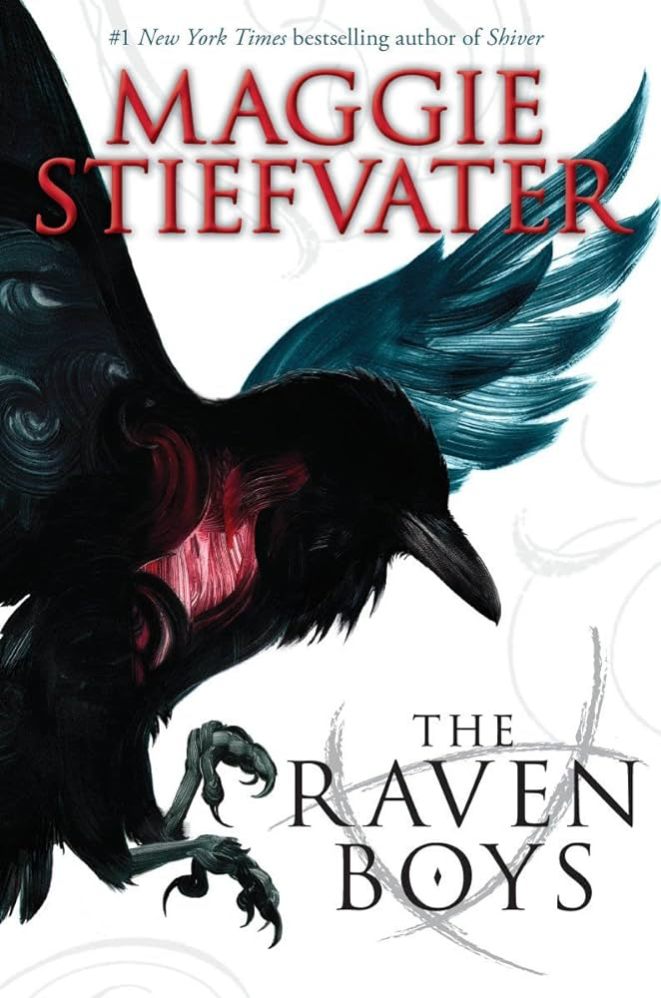
Every year, Blue Sargent, her mother, and her aunts have a chance to see the spirits of those who will die in the next year. When Blue sees the spirit of a boy from the wealthy private school, whom she despises, she wants nothing to do with him—until he and his three friends show up at her family’s door, looking for magical ley lines that will help connect them with the grave of a long-dead king. Blue feels drawn into their quest, and reluctantly begins helping the boys sift through knowledge long left undisturbed in an effort to find the tomb. When they discover old bones in the haunted woods, things turn sinister as they realize they’re not the only ones in search of the king’s tomb…and time is running out before the fated death that set Blue on her own quest.
Julia is a Teen Instructor & Research Specialist at the Glenwood Branch + Makerspace. She loves reading YA books, playing the cello, practicing martial arts, trying new cookie recipes, and generally trying to squeeze as many hobbies into a day as possible.
Louise Candlish is known for her domestic suspense and intricately woven stories. With a keen eye for detail and a talent for exploring the complexities of human relationships, she immerses readers in suspenseful tales that often blur the lines between right and wrong. Her ability to create relatable characters facing moral dilemmas resonates deeply with audiences, drawing them into a world where secrets and betrayals lurk just beneath the surface. Candlish’s skillful storytelling and gift for plot twists have earned her a devoted following, making her a standout voice in contemporary fiction.
Our House, which won the 2019 Crime & Thriller of the Year award at the British Book Awards, blends psychological tension with a fresh narrative construction. Fiona Lawson returns home one day to find strangers moving into her South London house. The shock of discovering that her estranged husband, Bram, has sold their family home without her knowledge sets off a chain of events that spirals into a nightmare.
Candlish stands out in creating a claustrophobic atmosphere, making readers feel the protagonist’s growing sense of helplessness and desperation. The novel delves deep into themes of trust, betrayal, and the fragility of relationships. Fiona’s journey is not just about reclaiming her home but also about uncovering the layers of deceit within her marriage. Our House’s exploration of the concept of “bird’s nest custody,” where parents rotate living in the family home to provide stability for their children, is both innovative and thought-provoking. This arrangement, meant to protect the family, ironically becomes the catalyst for the unraveling of their lives.
While the novel is undeniably suspenseful, it also offers moments of introspection and empathy. Fiona’s character is complex and flawed, making her empathetic and human. Her journey from a seemingly perfect wife and mother to a woman fighting to reclaim her life is both heart-wrenching and empowering. The pacing is perfect, balancing moments of quiet reflection with heart-pounding revelations that leave you gasping. Just when you think you’ve pieced together the truth, the narrative flips, leaving you questioning your own assumptions. Candlish’s ability to weave in social commentary—particularly regarding the implications of social media and the concept of ‘home’—adds an extra layer of depth, prompting readers to consider how well they truly know the people closest to them.
Our House by Louise Candlish is available in print and e-audiobook.
Angie is an Instructor & Research Specialist at Central Branch and is a co-facilitator for Reads of Acceptance, HCLS’ first LGBTQ-focused book club. Her ideal day is reading in her cozy armchair, with her cat Henry next to her.











 CHAPTER CHATS