Maybe you’ve heard? Romantasy is IT! Nevermind that it’s really a newly coined termed for something that has existed for a long time (romance in your fantasy or fantasy in your romance). If you like to read on trend, you should take a peek at The Wren in the Holly Library by K. A. Linde, published by the same group that brought you the Fourth Wing series.
The idea that the world is full of monsters is not new, whether in real life or urban fantasy. In New York, sometime in the near future, the Monster Wars have ended and the vampires, goblins, wraiths, and werewolves have signed peace accords with humanity. Basically, it’s a pact of non-interference even though everyone is in each other’s business anyway, but life has begun to return to some semblance of normality – complete with tourists in Times Square. As always, there’s more than meets the eye. I have to say that the idea of troll toll-takers in the subway made me smile.
Kierse, master-thief and child of the streets, is clearly a New Yorker, one who loves the neighborhoods and byways of her city. She’s involved in a heist to steal a huge diamond that would provide financial security for herself and two best friends. As she sneaks into a wealthy brownstone in the Upper West Side, she can’t believe there’s seemingly so little security at the mysterious Holly Library. The unthinkable happens when, despite all her preparation and all her skill, Kierse gets caught. Graves owns the Holly Library, and he is the beast in the shadows with an agenda all his own.
This Beauty and the Beast tale, complete with library and helpful staff, takes off from there. It not only follows the classic story’s desire to rehabilitate the monster, it also contains a wild mashup of another, bigger heist, training sessions, a house party, sexy times, meaningful friendships, and ancient Irish legends. For the most part, the author manages to combine it all seamlessly into the bigger picture. I could wish for fewer side stories that distract from the main action, but it’s a fun book.
Kierse and Graves are the heart of the story – beautiful and beastly each in their own way. Trust is an issue, as is loyalty. Can you have the second without the first? Tragic personal histories haunt both main characters, but in the end you can’t help but be in their corner. The ending leaves the story wide open for at least one more installment, and I’m already looking forward to it.
Kristen B. is a devoted bookworm lucky enough to work as the graphic designer for HCLS. She likes to read, stitch, dance, and watch baseball (but not all at the same time).
Comparatively Lit Tuesdays, Aug 6 & 20 7 – 8:30 pm Meets online. Register to receive a link.
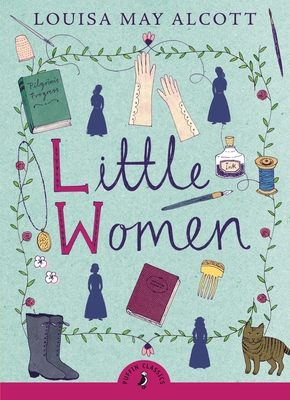
Comparatively Lit, a virtual book club hosted by HCLS East Columbia Branch, compares literary classics and newer works they have inspired. We focus first on Little Women by Louisa May Alcott and March by Geraldine Brooks, a modern companion novel focusing on the March patriarch as he serves as a Union chaplain in the Civil War.
When I was first brainstorming this class, I knew I wanted to cover “great works of literature” – whatever that means. Literature is a fraught term, one that often coveys snobbery and presumed superior merit. This ivory-tower elitism has always bugged me. If there was a meritocracy to writing and literature, at the very least it would be a more open field than many have historically treated it.
This is where Little Women enters our discussion. Truthfully, I had not read Little Women before setting up this class. It had always existed in the periphery of my literary journey. Perhaps because many of my professors had a bias for British literature, Little Women did not receive the same focus as the works of Jane Austen or the Brontë sisters. Yet, despite its century and a half of constant publication and adaptations to screen and stage, Little Women was likewise shunned by American academics for many decades. Its potential meaningfulness and impact were at best misunderstood, if not deliberately ignored.
Today, there is no real argument against considering Little Women a classic of American literature. The novel carries the weight of a pivotal period of our national history, as the horror of the Civil War looms around it. The flourishing and evolving philosophies of Transcendentalism and First-Wave Feminism define this work. The struggles the March sisters endure mirror the struggles our nation faced (and continues to face). None of this overshadows that Little Women is also a wholesome and cozy story that people have returned to for inspiration and insight for more than a century. Its popularity and impact persist into the present day.
Among the myriad adaptations of Little Women, we examine March by Geraldine Brooks. In the original tale, Mr. March is serving as a chaplain within the Union Army, remaining absent for most of the novel. March refocuses the story from his point of view as he struggles with the brutality of war. He wants to shield his family from this reality, but his shaken conscious threatens to unravel him. Brooks’ story has an exceptionally different tone, less cozy to be certain.
Comparatively Lit looks explore how narratives interact and how these works reflect our worlds. When we examine stories with common foundations, what can we learn? Do the respective time periods of their authorship inform differences in their themes? Despite the time difference, are there messages that echo between them? What does each say about America or being American?
This new book group meets online for two sessions. Tuesday, August 6 features our discussion of Little Women, which expands to include March on August 20. Please register to receive the link.
Ian Lyness-Fernandez is not quite used to being Instructor at the East Columbia Branch. He hopes his passion for learning can somehow translate into a skill for teaching.
The perfect alchemy of romance, humor and quirky originality.” —Sophie Cousens,New York Times bestselling author
Sarah Adler was folding laundry. A decidedly boring task. To distract herself, Sarah Adler told herself a joke, which then transformed itself into a clever romance novel with a honest and funny con-woman, a chatty ghost, and a hazel-eyed farmer. Now that is some fascinating alchemy!
I am curious about this mundane-to-magical process of writing and plan to ask some serious questions when Sarah Adler visits the library on July 27. Sarah plans to offer a candid behind-the-curtain look at writing and publishing genre fiction, as well as a discuss the book itself. She will focus on different writing precepts for creating compelling stories and specifically analyze high concept romance and premise vs. plot.
To meet with Sarah Adler, visit HCLS Miller Branch on Saturday July 27 at 3 pm and REGISTER to save your spot.
More about Happy Medium:
A clever con woman must convince a skeptical, sexy farmer of his property’s resident real-life ghost if she’s to save them all from a fate worse than death. Fake spirit medium Gretchen Acorn is happy to help when her best (read: wealthiest) client hires her to investigate the unexplained phenomena preventing the sale of her bridge partner’s struggling goat farm. Gretchen is happy to help a nice old man finally retire and put some much-needed cash in her pockets at the same time.
Of course, it turns out said bridge partner isn’t the kindly AARP member Gretchen imagined—Charlie Waybill is young, hot as hell, and extremely unconvinced that Gretchen can communicate with the dead. (Which, fair.) Except, to her surprise, Gretchen finds herself face-to-face with Everett: the very real, very chatty ghost that’s been wreaking havoc during every open house. And he wants her to help ensure Charlie avoids the same family curse that’s had Everett haunting Gilded Creek since the 1920s.
Sarah Adler is a USA Today bestselling author of romantic comedies about lovable weirdos finding their happily ever afters. Her debut novel, Mrs. Nash’s Ashes, was a New York Public Library Best Book of 2023. Her second, Happy Medium, is a USA Today bestseller. She received both her BA in History and American Studies and MA in History from American University in Washington, DC, where she focused on 19th and early 20th century U.S. culture.
She lives in Maryland with her husband, daughter, and very mischievous cat.
F. Scott Fitzgerald’s masterpiece, The Great Gatsby, has always struck me as a story about selfish people doing terrible things, in the service of nothing much at all. It’s one of the books that most of us first encounter as assigned reading in high school or college. However, I find myself returning to it and continuing to be fascinated, as well as a bit repulsed. The slim novel packs of a lot of punch and has proven itself worth revisiting and even re-imagining.
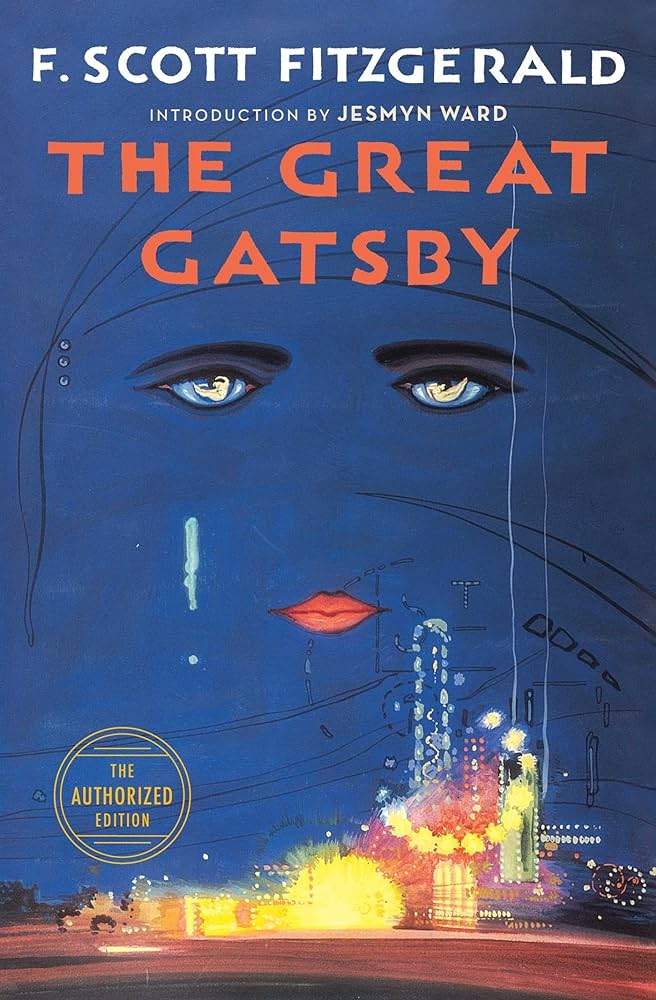
In high school, we were given the dark blue cover with a lit-up city-scape and disembodied eyes looming above it all (see above). It haunts me. The jazz age fable recounts a tale of obsession and excess, capturing the essence of the 1920s. It also plays with some quintessential idea of the American Dream, but one that’s gone a little seedy and unappealing at the edges. After all, everyone seemingly aspires to the life of the rich and famous, spending summers in East or West Egg, driving fast cars, and attending Gatsby’s extravagant parties along with the up and coming, dreadfully naive Nick Carraway. But (again, but), there’s a cost.
The story takes place during one hot summer in New York, fitting for seasonal reading. The pivotal scene happens when the exhausting weather drives the main characters, Gatsby and Nick, Daisy and Tom Buchanan, and Daisy’s friend Jordan Baker into the city, hoping for respite and entertainment at The Plaza. From there, all the carefully maintained charades and illusions come apart, leading to unresolved tragedy. The book ends with a deep yearning for what might have been, if only other choices had been possible.
What brought me back to Gatsby recently was The Chosen and the Beautiful by Nghi Vo. She is one of my current favorite authors (see The Singing Hills novellas), who turned this well-known story on its axis. The retelling stars professional golfer Jordan Baker and her lifelong friendship with Daisy, as opposed to newly-minted businessman Nick Carraway and his bewilderment with Jay Gatsby. Plus, the subtle (and not-so) metaphors of Fitzgerald’s text became all too real with the inclusion of magical realism. They really do float about in white linen in the opening scenes. Tom Buchanan continues to provide the White, patriarchal establishment’s status quo against which all their boats beat back so fruitlessly, but he is even less appealing through the female gaze. While everyone is still privileged to the point of carelessness, the feminine emphasis makes the book slightly more sympathetic and tragic.
It’s still a good idea to have the original under your belt before enjoying the other variations. I recently (finally) watched the 2013 movie, starring Tobey Maguire and Leonardo DiCaprio in a Baz Luhrmann production. It certainly does the story justice, and in some ways conveys the outrageous excesses better than the book with all the lush visuals and big scenes. The text and the film complement each other well. As is true for most Luhrmann movies, the soundtrack was amazing.
If you’re looking to refresh your memory of the story, without perhaps reading the original, consider the graphic novel adaptation by K. Woodman-Maynard. It does a good job of mixing the bare bones of the story with some of Fitzgerald’s more luscious prose. The illustrations and the placement of the words within the images makes some of the more subtle, interpersonal nuances more obvious.
The Great Gatsby, the ultimate tale of reinvention and breath-taking chutzpah in the name of love and ambition, is one of the cultural touchstones of the American literary canon. It’s worth retelling, to reconsider what else it can convey to audiences almost a century after it was published. If you aren’t familiar with it, summer is a great time to devote some time to those books that you have always meant to read.
Kristen B. is a devoted bookworm lucky enough to work as the graphic designer for HCLS. She likes to read, stitch, dance, and watch baseball (but not all at the same time).
In January, I resolved to try and check Goodreads at least once a day and to write something about most of the books I read. The pandemic was detrimental to my reading habits, and I needed to give my once-voracious appetite for reading a jolt. As far as new year’s resolutions go, this year has been the most successful by far. When I started my resolution by re-reading a novel I enjoyed in high school, I unintentionally kick-started a year of reading nostalgia. This was either literature that I was forced into by the English curriculum or put into my hands by family and librarians. Reading these fondly remembered books reinforced not only that re-reading books is perfectly fine, but also that it can lead to new understandings.
My last book of 2023, Fourth Wing by Rebecca Yarros, was a peer-pressure read, and throughout the story I kept thinking, “Wow, these dragon types really remind me of Naomi Novik’s Temeraire series.” I realized I hadn’t read them since high school, so I listened to the firstTemeraire novel, His Majesty’s Dragon. (Side note: Simon Vance is an incredible narrator!) I remember being impressed as a teen by the military and historical aspects of introducing a dragon air corps to the Napoleonic wars, but as an adult I have a significantly more nuanced appreciation of the social, political, and ultimately societal ramifications of adding aviators to the early 19th century. The entire series is an adventure spanning multiple continents and countries, seeing the world through both human and dragon eyes. While it can devolve into a bit of Carmen Sandiego world-hopping, the installments always come back to the big picture and are a joy to experience.
The other series I have revisited from my teenage years was the Riftwar Saga by Raymond E. Feist. Starting with Magician: Apprenticeand Magician: Master, these first works of Feist’s are paragons of sword-and-sorcery high fantasy. Inspired by his own Dungeons and Dragons campaigns in college, Feist writes fast action while maintaining vivid storytelling and comprehensive worldbuilding. It is easy to see how many other fantasy authors point to Feist’s work as early inspiration, because the Riftwar Saga titles are hard to put down. These were some of my favorite books as a teen, though as an adult I can spot the D&D influence and sword & sorcery archetypes much more readily. D&D-inspired content is in the limelight, and I can’t recommend these fun classics enough.
Re-reading these series as an adult was a reflective experience and made me think about how much of our literary experience is informed by our lived experience. I encourage you to re-read a book from your not-so-recent past and see what new nuances you can find. I am looking forward to continuing this trend, possibly either with Barbara Kingsolver’s The Poisonwood Bible, which was assigned reading in high school, or Tad Williams’ The Dragonbone Chair for more epic fantasy.
Tony is an Instructor and Research Specialist at HCLS Miller Branch. He has a degree in history and a renewed interest in science fiction and fantasy.
Each year, HCLS and HCPSS work together to compile suggested reading lists for all ages. This year’s high school reading list is brimming with exciting titles published within the past few years, in dozens of different genres ranging from nonfiction memoirs by immigrant teens to adorable love stories centered on baked goods. Two of my favorite standout reads from this year’s list happen to share a common theme: both feature references to King Arthur that any Arthurian-legend-loving reader will happily devour.
Legendborn by Tracy Deonn has become beloved by many YA fantasy readers since its publication in 2020. The story follows Bree, a 16-year-old who enters a pre-college program at UNC with hopes of escaping from her hometown for the summer following her mother’s tragic death. Her world is upended when she is thrust into the secret world of people who call themselves Legendborn—the descendants of King Arthur, preparing for war against the demonic forces that oppose them. This book is for lovers of complex magic systems, emotionally driven romantic subplots, and a solid dose of high-action fight scenes. Readers who enjoyed the deep-rooted Arthurian references in The Lost Years (of Merlin) or the magical aura of The Raven Boyswill love Legendborn. (Longer review also available.)
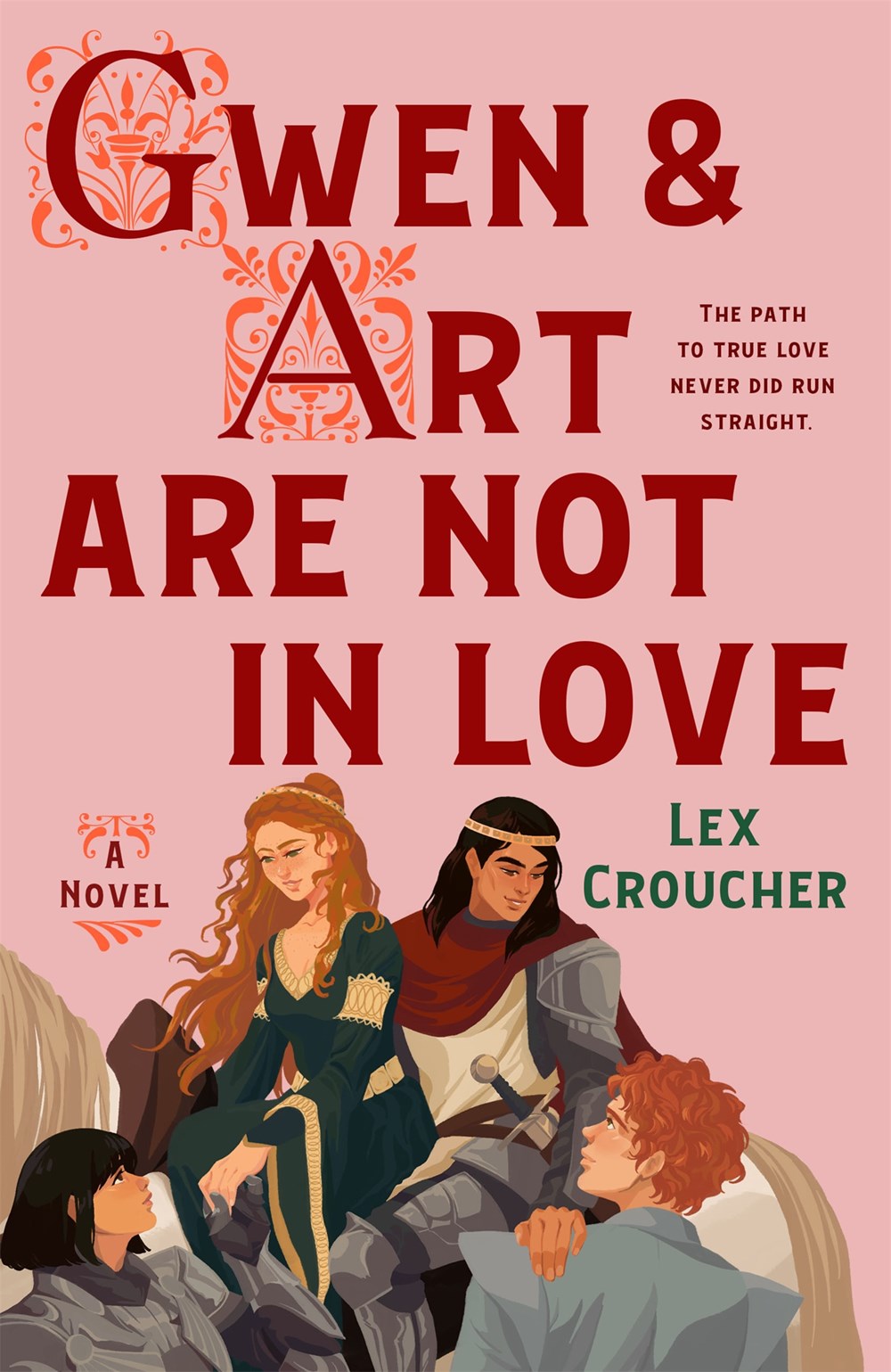
Gwen and Art are Not in Love by Lex Croucher is a new addition to the YA Arthurian-legend-canon. This book is rife with references to the legends, but with a lighthearted twist. Gwen and Art follows the title characters through an alternate-timeline historical rom-com that takes place several generations after the death of King Arthur. The two main characters are forced into an arranged betrothal but have zero interest in each other. Through a series of mishaps and a little forbidden-diary-reading, Gwen and Art realize that they are a perfectly unsuited match. They make a pact to cover up for one another as Gwen pines after a lady knight and Art kisses every boy he fancies. Readers will be drawn in by the bubbly humor, fast-paced tournament scenes, and the sweet found family that develops. If you love the joyful queer romance in Heartstopperor the feminist twists of the Song of the Lioness quartet, check out Gwen and Art are Not in Love.
Julia is a Teen Instructor & Research Specialist at the Glenwood Branch + Makerspace. She loves reading YA books, playing the cello, practicing martial arts, trying new cookie recipes, and generally trying to squeeze as many hobbies into a day as possible.
Machado’s narratives delve into the emotional and physical vulnerabilities of characters, challenging traditional notions of strength and weakness. Her stories often blur the lines between reality and fantasy, creating a space where vulnerability is not a flaw, but a powerful force in its own right.
“Especially Heinous: 272 Views of Law & Order SVU” is a novella written by Carmen Maria Machado in 2013. It unfolds through 272 synopses, each encapsulating a distinct perspective from the initial 12 seasons of the police procedural series of the same name. Originally published in The American Reader in May 2013, “Especially Heinous” features parallel universe versions of Elliot Stabler and Olivia Benson and is included in Machado’s 2017 short story compilation, Her Body and Other Parties.
Carmen Maria Machado’s Her Body and Other Parties dissects power imbalances in various forms. Through a series of surreal and haunting tales, Machado explores the ways in which power is wielded, misused, and resisted, often using the female body as a focal point for her narratives. The stories challenge societal norms, inviting readers to reconsider their understanding of power and its implications. Despite the unusual nature of “Especially Heinous” (and how it deviates from the actual SVU), the story fits perfectly within the anthology. Law and Order: SVU itself and Her Body and Other Parties may exist in different realms of storytelling, but their thematic resonance is undeniable.
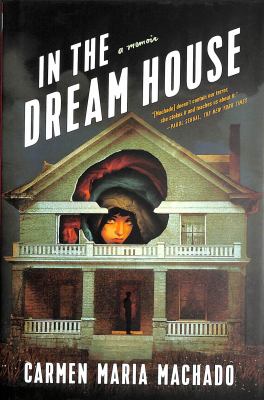
Moving from short story collection to memoir, Machado has also written In The Dream House, which takes readers on an intimate journey through the author’s experiences. She opens up about her past relationship with an abusive partner, exploring the complexities of domestic abuse within the LGBTQ+ community. Structured as a series of interconnected essays, In The Dream House defies traditional memoir conventions. Machado employs various literary forms, from folklore to lesbian pulp fiction, to recount her harrowing experiences. The result is a poignant and powerful narrative that sheds light on the often-overlooked issue of abuse within queer relationships.
Machado’s exposed and raw honesty are palpable in every page, inviting readers to confront the uncomfortable realities of abuse. In The Dream House not only serves as a personal catharsis for Machado, but also as a vital contribution to the ongoing conversation about abuse within the marginalized.
Angie is an Instructor & Research Specialist at Central Branch and is a co-facilitator for Reads of Acceptance, HCLS’ first LGBTQ-focused book club. Her ideal day is reading in her cozy armchair, with her cat Henry next to her.
Opinions on the best summer reading selections abound. Some readers look forward to extended spans of time to sink into those longer books. Anticipating many hours reading epic novels or multi-volumed biographies, they embrace the joy of following multiple characters or complex historical chronologies uninterrupted. On the opposite side of the spectrum are readers who want their vacation books to be as light as warm-weather clothing or as intoxicating as a margarita. Nothing too serious, please; they want stress-free romance, memoir, and mystery.
The HCLS year-round Adult Reading Challenge journal speaks to everyone. Any time of year, every genre, you can pick a challenge category to enjoy. There are book recommendations, but selections from your “to-be-read” pile are perfect too. All genres are welcome, creating the ideal opportunity to try something new, be it poetry, self-help, science fiction, fantasy, graphic novel, or thriller, to names a few.
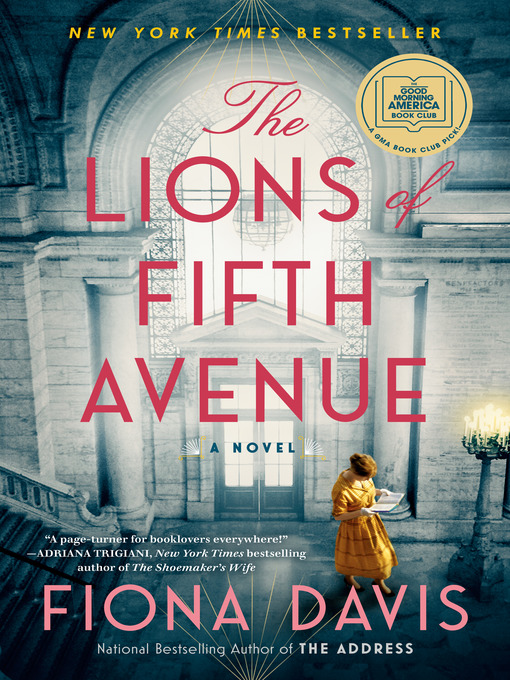
This summer, explore the new 2024-2025 challenges and journal prompts. For example, if Read a Book Set in a Library appeals, check out the historical fiction of The Lions of Fifth Avenue by Fiona Davis (which I reviewed). Parallel stories unspool of a New York public librarian in 1993 and her grandmother, the wife of the NYPL superintendent, in 1913, as both women aspire to grow professionally and personally. As a delightful added twist, the 1913 family lives in the library.
If magical fiction sounds just right, The Midnight Library by Matt Haig imagines a library where every book offers the protagonist a different life. Would she have been more fulfilled as a sports star, a musician, or a parent? For a nonfiction page-turner, pick up Susan Orlean’s The Library Book about the devastating 1986 Los Angeles Central Library fire. The arson investigation reads like a good mystery, and librarian interviews delve into the current role of libraries in society.
To participate in the Adult Summer Reading Adventure, complete any three of the challenges or read three books by August 31, 2024. Topics include Explore the American West; Visit a Galaxy Far, Far Away; Get Lost in a Translation; and Reimagined Reading. Finishers receive a completion prize and entry into grand prize drawings.
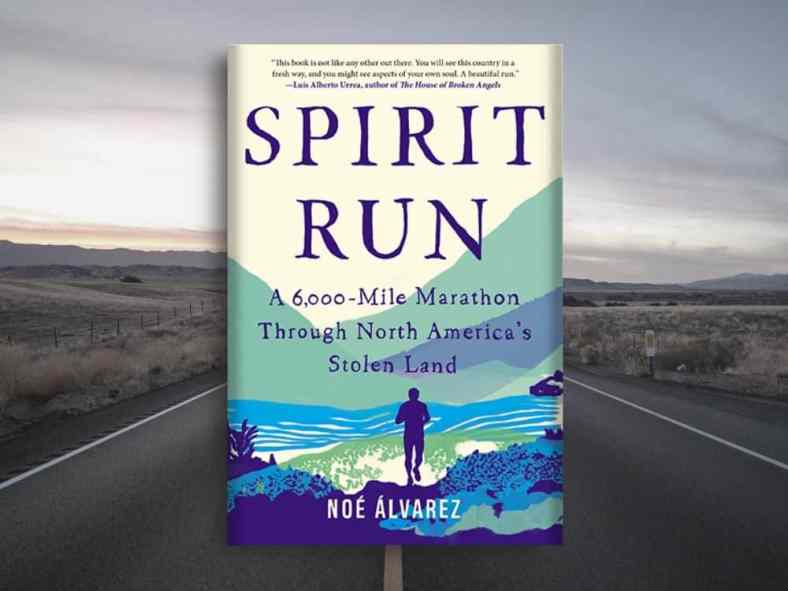
World Adventures Summer Book Discussions: Spirit Run by Noé Álvarez Adults. Register. This summer, read and discuss books that celebrate journeys of discovery around the world. In June, we discuss Spirit Run: A 6000-Mile Marathon Through North America’s Stolen Land by Noé Álvarez. Mon, Jun 17; 7 – 8 pm | Elkridge Branch
“This is some kind of a plot, right?” Slothrop sucking from a velvet pipe.
“Everything is some kind of plot, man,” Bodine laughing
“And yes but, the arrows are pointing all different ways,” Solange illustrating with a dance of hands, red-pointed fingervectors. Which is Slothrop’s first news, out loud, that the Zone can sustain many other plots besides those polarized upon himself . . . that these are the els and busses of an enormous transit system here in the Raketenstadt, more tangled even than Boston’s – and that by riding each branch the proper distance, knowing when to transfer, keeping some state of minimum grace though it might often look like he is headed in the wrong way, this network of all plots may yet carry him to freedom. He understands that he should not be so paranoid of either Bodine or Solange, but ride instead their kind underground awhile, see where it takes him. . . .
By Ian L.
I fear, dear reader, that in even attempting to describe the manifold plots contained within Gravity’s Rainbow, the constraints by which I am bound have already caused me to fail in my endeavor. Which is to say, this book is a challenge to read but even more so to describe. This novel challenges your understanding of what a novel should be.
Gravity’s Rainbow, described as the least-read must-read of the English literary canon, is perhaps the post-war post-modern novel. Anthony Burgess, of A Clockwork Orange fame, described the novel as, “the war novel to end all others.” It is often spoken about alongside James Joyce’s Ulysses, another book notorious for being considered either a great work of literature or completely incomprehensible. I am sympathetic to the former, but I understand how people believe the latter. The narrative and prose are confusing from the launch. Gravity’s Rainbow plays with its narrative distance in much the same way that our brains do while we are dreaming. A scene might open on one character and follow them for a beat; then, the focus flies into the head of another and digs deep into their individual psychology, history, or worldview.
While we are following these various and sundry characters, many of whom are not our “main” character (which itself is a harder question to answer than you might expect), the narrative is also running along a track parallel to our real history. Pynchon’s prose is impeccably diverse, in both its form and subject. The story is interspersed with poems and songs sung by and about the people who populate this novel. Several of the “chapters” could easily be independent short stories. The narrative meanders and diverges into reveries on myriad topics: historical events, artistic movements, psychology, chemistry, physics, genocide, philosophy, and even esoteric “sciences.” Pynchon’s words manage to be witty and evocative, beautiful, and hilarious, as well as harrowing and even vulgar. Truly so. I do not have the digital real estate to expand on that point, let alone most aspects of this novel.
Ostensibly, Pynchon’s novel is set during the final stages of World War II. The German military has been rapidly manufacturing and deploying the V-2 rocket, the first ever long-range guided ballistic missile. It screams across the sky so fast you only hear it if you survive. An initial ensemble of secret intelligence operatives catches word of a strangely serialized rocket and an unknown device included in its schematics. The 00000 Rocket and the mysterious Schwartzgerät form the central gravity well around which this novel’s narrative revolves. It is an awesome medley of carefully researched facts mixed with Pynchon’s creative labyrinth of fiction. The novel is initially disorienting, by design, aimed at confusing the reader’s understanding of what is “actually happening” within the narrative. The characters experience this feeling, too.
One recurrent theme throughout the novel is the ever-mounting presence of paranoia. The characters struggle under overarching and competing plots. They buckle under the questioning of whether anything they have ever done has helped anyone. The War has consumed them, and only too late do they realize the War Machine does not exist on both sides. It is a superposition that collapses all sides into itself. This maddening descent is humanized by Pynchon through his characters, who are irrevocably altered by their situation. Each undergoes a derangement of the self, a severing and mutilation of their minds and bodies, or for some, their souls.
If there was a word we could use as a through line for the vast wasteland that is Gravity’s Rainbow, it might be “Preterite.” Grammarians probably recognize this word as a fancy term for the simple past tense. I imagine most people are not thinking about Christian Eschatology in their day to day. To put it simply, the Preterite, according to Calvinist doctrine, are those who are not predestined for salvation. The characters we follow are among the Preterite, the passed-over and forgotten who are used by the Elite and the Elect. Those who must live in the wake of what war wrought. It would seem trite to state something so simple as “War is Bad.” Gravity’s Rainbow is full of themes that can seem stupidly obvious when stated outright. It is not these answers that earn Pynchon his accolades, but how he moves toward his answers. That is something that must be experienced, not explained.
Much like the end of the novel, I want to close this out with an abrupt pivot toward the mystical. Within many mystical traditions, whether hermetic or religious, lies the belief that profound truths cannot be readily grasped by the uninitiated or faithless. To expose these truths too hastily is to rob them of their power. To put it another way, for a revelation to be of any consequence, its content must first be hidden.
Knowledge is like light; the ten-tons of rocket-powered symbolism and the concentric layers of narrative are a prism which refracts and disperses the light into a visible rainbow. Without the prism the light is visible but unfiltered. The diverse cast of characters, the disparate circumstances they find themselves in, even the story of Byron (the sentient immortal light bulb), are all pieces of the prism. Pynchon expertly constructed this obfuscating puzzle to reveal something prescient about the world we inherited. Despite being published 50 years ago, I would wager its relevance has never been less in question. More than ever, we live under the shadow of Gravity’s Rainbow.
Gravity’s Rainbow is available in print, as well as an e-audiobook and an audiobook on CD. The audiobook, skillfully narrated by George Guidall, brings Pynchon’s words into great relief and were an indispensable aid in completing the book.
Ian is an Instructor and Research Specialist at East Columbia Branch. After finally finishing Gravity’s Rainbow, he is not sure what to do with himself. Infinite Jest stares at him dauntingly from his shelf. If anyone asks, he – never – did the “Kenosha,” kid.
In 1984, during eighth grade, I readThe Standby Stephen King for the first time. Like many other readers of that doorstop novel, I found myself deeply affected. I very well might have read it at too young an age, but don’t horror and middle school often go hand in hand?
The Stand began my fascination with apocalyptic fiction. The genre is like a magnet for our minds, pulling us into worlds where everything we know crumbles. Whether it’s the adrenaline rush of survival, the hope of a new beginning, or the fascination with our own resilience, apocalyptic tales keep us hooked.
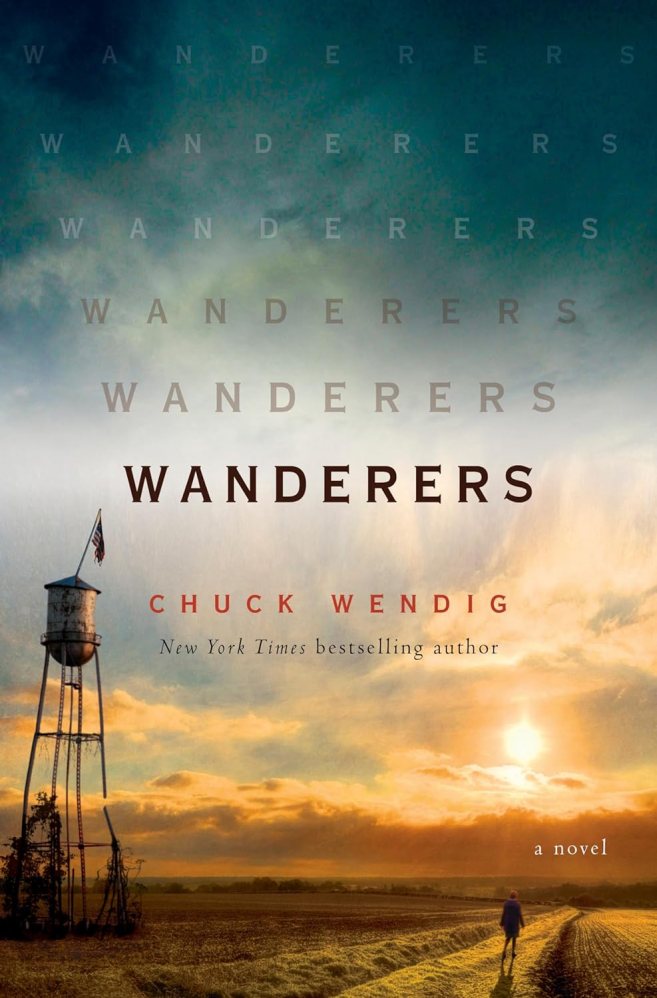
Wanderers by Chuck Wendig is a worthy contender in the genre, being a gripping science fiction novel that weaves together mystery, suspense, and a touch of dark humor. The tale begins with Shana, who wakes up one morning to discover her little sister afflicted by a strange condition, sleepwalking, unable to communicate, and inexorably drawn toward an unknown destination. Soon, Shana realizes that her sister is not alone; other sleepwalkers from across America join the mysterious journey. These sleepwalkers are accompanied by “shepherds” who protect their loved ones during this perilous passage. As the sleepwalking phenomenon spreads, terror and violence grip America.
The real danger isn’t the epidemic itself, but the fear it instills. Society collapses, and a brutal militia threatens the sleepwalkers. Wanderers introduces a game-changing shock halfway through the book, and Wendig’s smooth prose and dark humor keep the narrative engaging, even as it explores the end of the world. His storytelling keeps readers hooked from start to finish, making him a worthy contemporary of the master himself, Stephen King.
Angie is an Instructor & Research Specialist at Central Branch and is a co-facilitator for Reads of Acceptance, HCLS’ first LGBTQ-focused book club. Her ideal day is reading in her cozy armchair, with her cat Henry next to her.












 CHAPTER CHATS