The ooky, spooky Addams Family has charmed America for almost a hundred years in countless forms and adaptations, from Charles Addams’s original New Yorker comics to Tim Burton’s new TV series on Wednesday Addams. The 1991 film, though, has always struck me as the adaptation that captured the demented energy of the original comics the best. It’s the kind of delightful culmination of talent and influences that is truly lightning in a bottle.
The film is the directorial debut of Barry Sonnenfeld, but you’d never be able to tell from its bold camerawork, blocking, and mise-en-scène. (It must have helped that he was director of photography for the Coen Brothers’ first three films.) Before I saw the film, I assumed it must have come from the dynamic duo of director Tim Burton and Danny Elfman, but Sonnenfeld both channels their era-defining aesthetic influences and adds a faster pace and kookiness that are all his own. Every set in the film is so full of detail that the Addams mansion becomes its own character. The impossible layouts and mountains of cobweb and clutter allow it to feel like a live-action cartoon.
Gomez’s brother, Fester, returns to the Addams Family after having suddenly disappeared decades earlier in the Bermuda Triangle. But Fester is not Fester: the reunion is a scheme cooked up by Addams’s lawyer as a way to repay loan shark Abigail Craven. Craven’s adopted son Gordon resembles Fester remarkably, so he’s sent into the mansion during a séance to access the eccentric family’s vast riches. The bulk of the action follows Fester as Gomez wants to reminisce about growing up together, while Fester tries his hardest to keep up with the Addams’ odd and morbid customs.
Those customs are perfectly presented in the spirit of Charles Addams’s one-panel comics. The Addams Family lives a macabre mirror image of the traditional American household, captured in this earnest and glorious interpretation. The film has aged perfectly, thanks to the simplicity of the characters and costuming, the labyrinthine sets, and the practical effects for, for example, the disembodied hand, Thing. The cast is also a once-in-a-lifetime assemblage. The late Raul Julia leads as Gomez Addams, and his chemistry with Morticia (Anjelica Hudson) is indelible. The momentum of the film is carried by the glee the pair shares in the perverse and morbid, and Julia in particular thrills with expressive and kinetic energy. Christopher Lloyd is cast against body type as Fester Addams, and though his role is peripheral, the seven-foot-tall Carel Struycken plays a perfect Lurch.
The influence Charles Addams’s characters have had on American culture is monumental; it’s arguable that he created goth culture. Accordingly, every generation has had several adaptations competing to be their favorite. For me, though, Sonnenfeld’s celebration of these characters is the one that defines them and transcends its era.
The Addams Family is available on DVD and for streaming through Kanopy.
Alex Pyryt is a DIY Instructor & Research Specialist at HCLS Elkridge Branch.
I’ve always been drawn to crime films, from Fritz Lang’s “M” to classic film noir to Martin Scorsese’s extensive gangster film output, with their allure of hidden underworlds of organized crime and the handsome rewards it brings at the risk of it all falling apart at any moment. Whether you identify with the criminal masterminds or with the police detectives hot on their trails, it’s a strain of cinema that’s had appeal since the inception of film itself and 1903’s The Great Train Robbery.
One sub-genre of crime that’s stuck with me is the heist film. There’s something exquisitely thrilling about watching a heist carried out from the planning stage to the execution where it all goes so right or so wrong; think Baby Driverand The Bad Guys for popular recent examples.
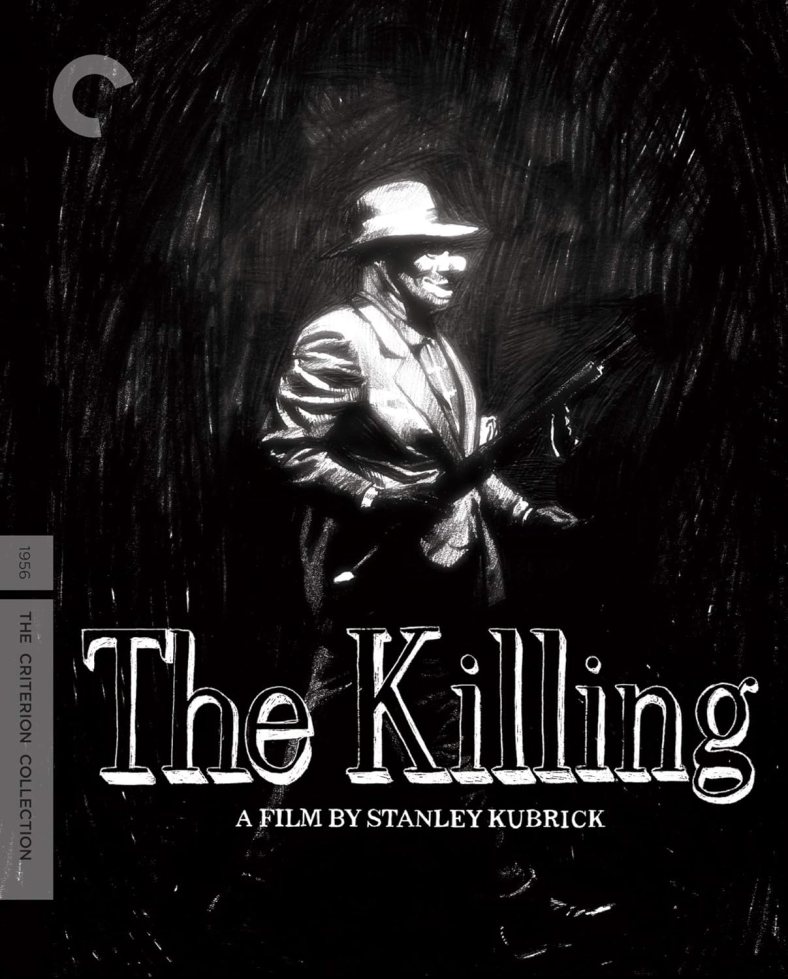
Director Stanley Kubrick’s shadow still looms large over the art of film, but some people may not know one of his earlier films, The Killing, a 1956 heist noir that gave Kubrick his first critical success. Many know the 1968 ensemble comedy Dr. Strangelove, his last black and white film before the monolithic 2001: A Space Odyssey. Fewer know of Lolita (yes, that Lolita), Spartacus, or Paths of Glory, but I suspect the most obscure are his first three films. Fear and Desire and Killer’s Kiss are independent, exploratory films where Kubrick was finding his footing; these were followed by The Killing, starring the elusive Sterling Hayden, which was a real home run.
The Asphalt Jungle was a foundational heist films, and it seems clear that Kubrick wanted to emulate it a few years later with The Killing. Kubrick plucks Sterling Hayden from The Asphalt Jungle’s all-star cast to play Johnny Clay, the mastermind behind a heist at a horse-racing track. Clay remains a mysterious and dominating figure, and much of the story is dedicated to the setup of the heist and the ensemble of his hired co-conspirators. More of the tension comes from a psycho-sexual rift between George, the racetrack cashier, and his wife Sherry, who overhears the plot and schemes to take George’s money and run. This sub-plot strikes me as The Killing’s weakest aspect, as it is far too maudlin and the sets are cheap, complete with a fake parrot. The rest of the cast, though, comprise a thrilling ensemble of characters, each of whom plays a perfectly compartmentalized part.
Johnny Clay, as played by Hayden, is a complete enigma. Just out of prison, he immediately starts moving on the heist. He conducts himself with an affect so cool and calculating that it strikes the viewer as sociopathic. My favorite participant in his heist is Maurice, played by Georgian wrestler Kola Kwariani. He’s a highly intelligent, thoughtful, soft-spoken man who works in a chess club, and it is tragic to watch Clay pay him to get drunk and start a fight, reducing a smart and sensitive man to hired muscle. Every participant is meticulously positioned to play a separate part in his scheme while remaining unable to implicate him if they fail. It’s so well-planned, and the execution is mesmerizing and unforgettable, but so are the inevitable snags along the way.
When comparing The Killing to The Asphalt Jungle, I’ve found that the inherent moral ambiguity makes Kubrick’s heist film memorable, as the start of a theme that continued throughout his career. In The Asphalt Jungle, the charming and likeable criminals are served their just desserts, complete with a speech by the police to an eager press pool that feels straight out of a public service announcement. While in The Killing, the brief but poetic comeuppance that comes to the Clay at the film’s end comes instead from a cruel and simple twist of fate. Instead of seeking answers from the morals and standards and the laws of his era, Kubrick looked to bad luck and the randomness of the universe.
Like many overlooked greats, The Killing can be found on Kanopy using your library card. Though I mostly use it for hidden gems that can’t seem to find their home in more commercial environments (take, for example, The Hudsucker Proxy), it still has recent blockbuster hits, as well as classic documentaries and more.
Alex Pyryt is a DIY Instructor & Research Specialist at Howard County Library System Elkridge Branch.
I went to the theaters the other day to see Francis Ford Coppola’s Megalopolis, a kaleidoscopic, stylish mess of a film, which is polarizing and exciting moviegoers and critics and making very, very little money. This latter fact is a constant reminder as I look back at my favorite films; most of them were bold statements, so bold that the cold logic of the marketplace left their makers in the red. Megalopolis also prominently features the Chrysler Building and 40s art deco, as well as 40s Hollywood (old cars, suspenders, city hall meetings, scaffolding) as one of the central visual themes. This left me remembering one of the most stylish box office bombs in cinema history: The Hudsucker Proxy by Joel and Ethan Coen (who, immediately after this film, went on to make Fargo, The Big Lebowski, and O Brother, Where Art Thou?, in that order!)
The Hudsucker Proxy is a bold love letter to the art deco, brutalism, and bauhaus styles that dominated the New York skyline and business suites of the 30s and 40s, the Cary Grant screwball comedies of the era (think Bringing Up Baby), as well as the sentimental Jimmy Stewart blockbusters like It’s A Wonderful Life. It stars Tim Robbins as a clueless, well-meaning businessman from Muncie, Indiana, Jennifer Jason Leigh as a fast-talking newspaper reporter (giving a very Katharine Hepburn performance), and a cranky Paul Newman as a high-ranking executive of Hudsucker Industries.
After the untimely demise of Hudsucker’s founder and CEO, Newman concocts a scheme to elevate the clueless Robbins from the company’s mailroom (featuring one of the coolest sets I’ve ever seen, replete with steam, pneumatic tubes and a constant confetti of mail) to CEO; he aims to recruit the dumbest person he can find to the position in order to lower the company’s stock to the point where he can buy a majority stake and take it over himself. As is the case with the best of the Coen brothers’ films, there are endless twists and turns and a brilliant supporting cast. Bill Cobbs plays the omnipotent caretaker of the Hudsucker Industries clocktower, Jim True (“Prez” from The Wire) plays an overactive elevator operator, and Steve Buscemi plays a beatnik bartender.
It’s also a rare feel-good film from the Coens. Right after making the endlessly nihilistic Miller’s Crossing and Barton Fink, this film has a sentimental tone truly reminiscent of Frank Capra’s best films. A lot of the action takes place on Christmas, and some of the most memorable shots of the film feature a stylized miniature set of the New York City skyline awash in snow, truly bringing back memories of It’s a Wonderful Life.
The amount of style on display gives the appearance, action and direction of the film the feel of a live-action cartoon; while always keeping a grounded feel, there’s a speed to it and a constant stream of gags and emphatic camera movements that deliver class and hilarity. The Hudsucker Proxy is such a gem in the Coens’ catalog; they were given their largest amount of money to work with to date and comes at just the right time in their career for them to utilize the budget in order to execute a wild, unique vision replete with symbolism, gags, and profundity.
One of the most puzzling but profound aspects of the film is the constant motif of the circle (yes, the shape): A large aspect of the plot comes from the dramatic irony of Tim Robbins’s character hedging his career on Hudsucker Industries by introducing the hula hoop to the market, an invention that his handlers deem as doomed to failure, but is instantly recognizable to us as an icon of 50s consumerism. He also veers into contemplating the concept of karma, specifically samsara and the wheel of existence. The circle imagery is constantly present but never seems to resolve, but it impresses nonetheless. The film was a marketing failure, not an artistic one.
After hearing the story of the film and its position as a rare dud in a huge stream of heavy hitters in the Coen brothers’ filmography, I was determined to find a copy, only to come up empty handed until I found it on Kanopy using my HCLS library card. Kanopy is a great resource for finding everything from box office hits to independent films, but I’ve found that it’s a great resource for films that don’t seem to fit in among the rest. If you’ve never tried Kanopy, you might be surprised to find the weird little films you’ve been searching far and wide for staring you right in the face.
October is the season of frights and jump-scares. If you are anything like my friends and I, it means setting aside time to indulge in the shivers, chills, and heart palpitations that come with quality horror.
Over the years, my relationship with horror has evolved in surprising ways. As a child, the game Animal Crossing scared me so badly with a cheeky Easter egg that I ripped the disc from my GameCube and banished it to the farthest corner of my basement closet. Yes, the quaint, whimsical game about quirky animal neighbors and paying off a mortgage once sent me into a panic. As an adult, however, I’ve grown to love horror.
To celebrate the season, I wanted to share a brief list of media that use horror in fascinating and effective ways (as opposed to cliché or tired tropes). This selection of my favorites showcases how horror can transcend traditional scares, confronting us not just with fear but with deeper questions about meaning, control, and survival. Whether it’s through surreal absurdity, cosmic dread, or psychological unraveling, each of these works leaves a mark that lingers long after the story ends. Happy Halloween!
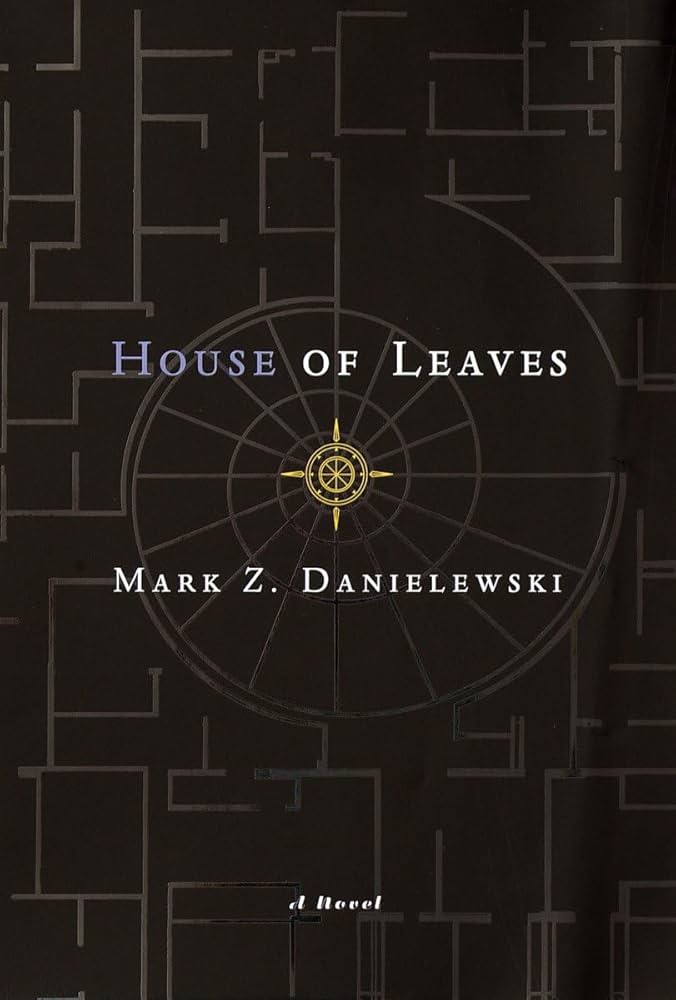
House of Leaves is one of the best pieces of fiction I have ever read – a wild, shifting text as concerned with the construction of meaning through language and signs as it is with the emotional turbulence of love, security, and existential dread. At its most succinct, House of Leaves is a book about an essay about a movie about a house that does not exist – and that house is also the book itself.
The story begins with Johnny Truant, a troubled, erratic young man living recklessly, burning the candle at both ends. One day, Johnny is invited into the apartment of his recently deceased neighbor, Zampanò. In the disheveled, eerie apartment, he discovers Zampanò’s final work: an academic treatise on a film called The Navidson Record. The catch? Zampanò had been blind for years, and The Navidson Record – a documentary by renowned photographer Will Navidson chronicling his family’s search for peace in a new home – does not seem to exist.
The house on Ash Tree Lane, as depicted in documentary, reveals itself to be bigger on the inside than the outside. As Will and a growing team investigate, the house grows endless, until the gravity of this impossibility threatens to undo everything. As you read, Johnny Turant does too – editing Zampanò’s fragmented manuscript while unraveling under his own troubles, which may all stem from the manuscript itself. Is the house real? Is it a curse? These questions spiral outward, pulling the reader into a labyrinth where certainty slips away leaving behind nothing at all —and perhaps the absence of anything is the most terrifying thing of all.
Greek filmmaker Yorgos Lanthimos has enjoyed international acclaim with films such as The Lobster, The Killing of a Sacred Deer, and Poor Things. Lanthimos excels at the strange and unsettling, crafting horror from the surreal and the absurd.
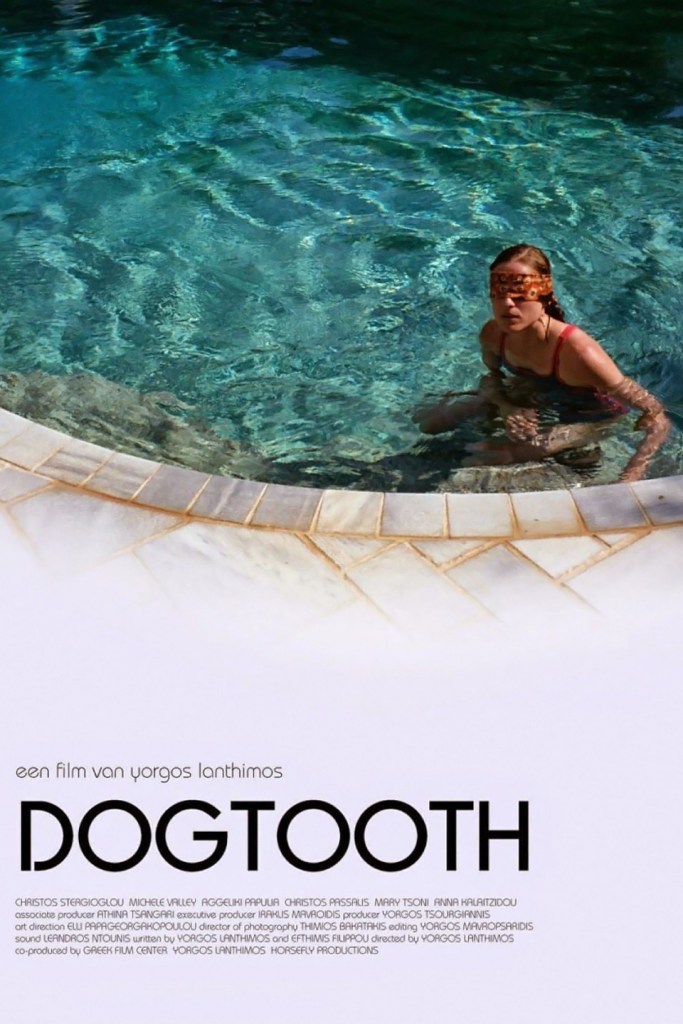
Case in point: Dogtooth centers on a family—a husband, wife, and their adult children—who live in complete isolation within a barricaded compound. The children have never left the confines of their home. They are raised on a manipulative regime of misinformation and control, where their parents deliberately distort language, knowledge, and their reality. Words are redefined to remove meaning. A ‘zombie’ is a small yellow flower. Cats are the most dangerous predator known to man. An adult is someone who has lost their dogtooth and is ready to leave the house. Fear of the outside is instilled with brutal efficiency to maintain compliance.
The result is a deeply unsettling exploration of control, isolation, and the fragility of identity. As the children struggle to conform to this artificial reality, cracks begin to form—revealing the horror that lies in the breakdown of personal autonomy. Dogtooth offers a stark, absurdist look at the consequences of power unchecked, leaving viewers disturbed not by monsters or supernatural forces, but by the cruelty of manipulation and the terrifying plasticity of human perception.
Junji Ito masterfully exposes the stark horror lurking within the mundane. Uzumaki follows the residents of a small Japanese town cursed by spirals—patterns that begin to consume not just the environment, but the minds and bodies of the people.
The father of the protagonist’s boyfriend becomes obsessed with spirals, collecting spiral-shaped objects, bathing in whirlpools, and only eating spiral-shaped noodles. He stares into spiral patterns for hours until even his eyes twist in opposite directions. Eventually, he dies attempting to twist his own body into a spiral. At his funeral, the crematory smoke spirals upward—only to shift and coalesce into a grotesque, grinning image of the man’s face, spiraling downward as if to envelop the town.
And from that moment, everything begins to unravel.
Junji Ito, a master mangaka, explores his work episodically in a sort of slice-of-fear narrative. Each chapter plays with the themes of the work, as it also delivers high quality and terrifying artwork. Uzumaki’s exploration delves into the erupting terror of grappling with forces beyond one’s control or comprehension. The horror of Uzumaki is mindless and indifferent, transforming even ordinary things—snails, ears, and babies—into sources of visceral dread. In Ito’s hands, the spiral becomes the embodiment of an absurd, indifferent universe where nothing is safe from corruption.
Berserk is a masterpiece: an amazing, serious, and beautiful piece of art.
Miura blends dark fantasy, psychological horror, and cosmic dread into one stunning and harrowing tale. Berserk follows Guts, the Black Swordsman and lone mercenary, as he battles through a relentless horde of monsters and demons. What begins as a journey of survival transforms into a profound meditation on trauma, betrayal, and the price of ambition.
The horror of Berserk lies partly in its grotesque monsters and their monstrous actions, but these monsters are rarely fully inhuman. This tension between humanity and power is central to the narrative, exemplified in “The Eclipse”—the most grueling, nightmarish scene in the story. This sequence rivals the most terrifying moments in any medium, where betrayal, loss, and monstrous transformation collide, leaving an unforgettable mark on both the characters and the audience. I do not say this lightly.
Berserk’s resonance and impact go beyond its grotesque (and frankly beautiful) artwork or the epic battles between Guts and the demon apostles. Its characters are written with profound psychological depth. Guts may present as a stoic, muscle-bound warrior, dismissing his problems with grim resolve, but that could not be further from the truth. His struggle is both external—hunted by the evil Godhand and their legion of apostles—and internal, as he wrestles daily with despair and rage. These emotions stem from what he and his comrades endured at the hands of someone they once trusted as their leader.
Berserk is not just horror for the sake of horror—it is tragic, beautiful, and unforgettable. It reminds us that even in the face of overwhelming darkness, the struggle to endure can be its own kind of victory.
Berserk contains highly intense themes and disturbing scenes that may be difficult for many readers. If you’re considering reading it, I strongly recommend looking into its content beforehand to ensure you’re comfortable with the material. Berserk offers incredible depth and artistry, but it is not a story to approach lightly—you should know what you’re getting into.
Ian Lyness Fernandez is an instructor and research specialist at East Columbia Branch. Although he first engaged with most of these works in high school, he wants to emphasize that these recommendations are intended for adults—adults who want to be horrified, to boot. Dead dove: do not eat, and so on.
Sun, May 5 | 2 – 4:15 pm Miller Branch For adults. Register here.
Spend an unforgettable afternoon at the Maryland premiere of the award-winning film, The Artist & The Astronaut. This cinematic journey delves into the remarkable love story between artist Pat Musick, a civil rights activist, and Apollo astronaut Jerry Carr.
Witness their captivating tale unfold against the backdrop of some of humanity’s most historic moments. Filled with never-before-seen footage of early space exploration and featuring interviews with key figures from that era, this film chronicles the vastly different paths of Pat and Jerry as they navigate uncertain times, ultimately coming together to render some of America’s most enduring art. The Artist & the Astronaut is a testament to the power of curiosity, perseverance, and empathy as agents of change and love.
After the screening, delve deeper into the film’s creation through a Q&A session with the writer and director, Bill Muench. Explore the compelling backstory behind the documentary’s creation, catalyzed by the encouragement of Bill’s wife. Her inspiration ignited his passion to embark on this remarkable endeavor.
Beginning from humble origins with no plan or budget, Bill Muench, a full-time teacher and basketball coach, undertook a six-year odyssey spanning nine states and two continents. His determination to share the untold story of a local Vermont couple led him to interview Apollo astronauts, their spouses, award-winning authors, artists, art historians, and even NASA directors of mission control. With the collaboration of music legend Todd Hobin, they produced a story that might otherwise have remained untold. Join us as we uncover the extraordinary journey behind the lens, a testament to the power of determination, inspiration, and collaboration.
Interview with Director Bill Muench
How did you manage your time being a teacher and also filming? Not very well… Ha ha. I never missed a day of school, even though I had to travel to many different states and even make a trip to England. I was really excited to share the process of documentary filmmaking with my students during my last six years of teaching high school.
What was your favorite part of filming/the whole process? Getting to meet and interview amazing people who had lived fascinating lives—they inspired me to be a better filmmaker as I went on because they deserved to have their story captured in a professional way.
How did you come up with this idea? Did you have a connection with these people? What was your inspiration? I went to Arkansas with my wife to celebrate Pat’s 90th birthday in 2016… I have been friends with Jerry, the astronaut, and Pat, the artist, since they moved to Manchester, VT in 2007… I knew many of their stories. When we got on the plane to come back to Vermont I said to my wife, “somebody should make a documentary about these two.” She said, “you should do it,” and that is how I got the inspiration to do the film.
Are you proud of how the documentary came out? When I started working on the documentary, I did it for my own enjoyment—I never dreamed in a million years that it would win awards and I would be able to travel the country and screen the film. It is not about what I did but the stories that the film captures. This was the last interview for many of the participants of this film. I am especially proud of the musical score by Todd Hobin…83 different music drops — all of them original.
Nancy T. is an instructor and research specialist and the display coordinator at Miller Branch. When she’s not in the branch, you’ll find her in the swimming pool, sitting with her cat, or out walking in the fresh air.
“The history of women has been a story of silence, of breaking through the silence… with beautiful noise.”
There was a time when a harmonious sequence of bleeps and bloops would not be considered music. Nowadays, the influence and techniques of electronic music are so ubiquitous, you can hear them in most songs found on the pop charts. A good number of my favorite music artists are influenced by this broad genre umbrella. The more sonically creative and mind-bending tracks I’ve enjoyed have made me wonder: Did they hear these magnificent sounds swirling in their heads first? Or did they just emerge from trial and error, through the persistent fiddling of knobs on machinery?
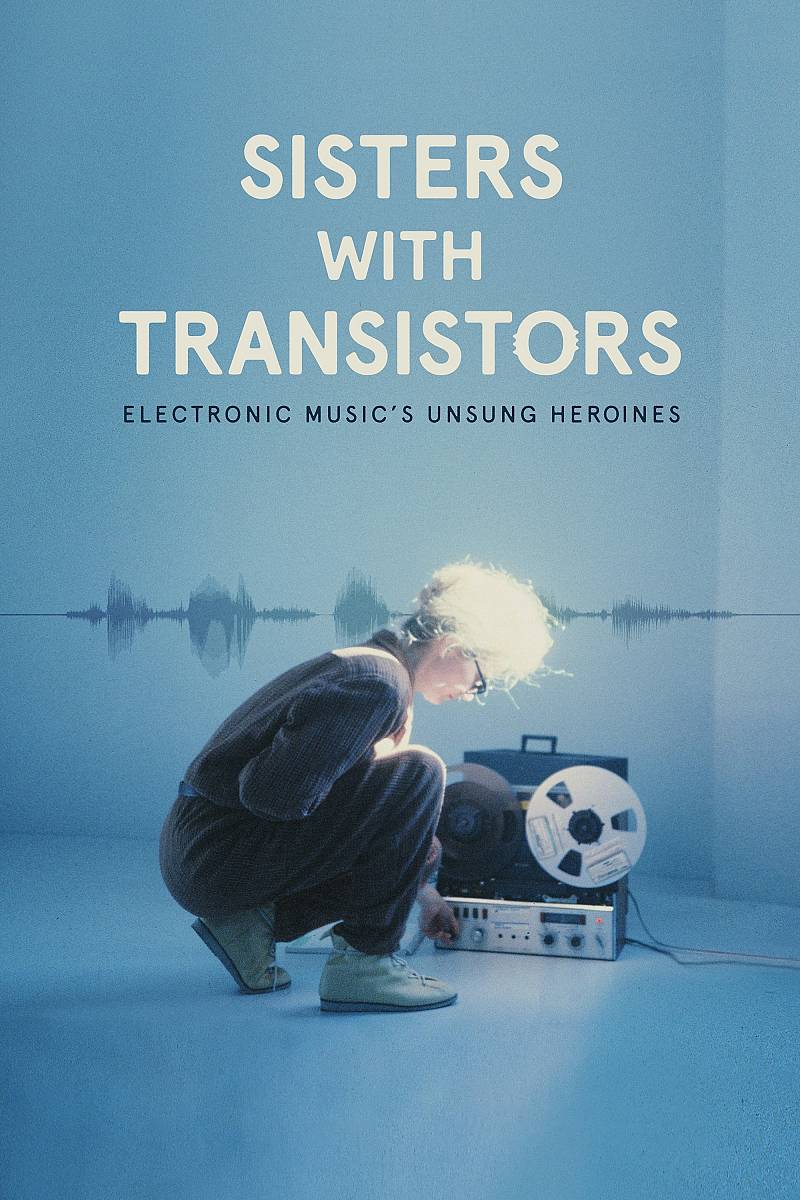
Sisters With Transistors is a documentary film that puts the spotlight on the women who contributed to the birth of electronic music but who are often relegated to the background. They brought their experiences in math, science, and art along with a passion for experimentation to create sounds that, at the time, sounded like nothing that had existed on this planet before. Through archival footage and testimonies, we get to see each creator with their own equipment and hear about their creative processes, influences, and philosophies.
One important contributor was Delia Derbyshire, who arranged the electronic version of the opening theme to Doctor Who. She credited her love of abstract and meaningful sounds to the World War II air-raid sirens she heard as a child. The duo of Bebe Barron and her husband Louis Barron created sounds by overloading homemade circuits. Strange and unique sounds emerged from the resulting burnout which they then recorded, transformed, and edited. They are best known for creating the soundtrack to the movie Forbidden Planet, considered the first movie with an all-electronic score. There are many other stories like these to be found within the film.
Some of the equipment that could be found in these pioneers’ studio-laboratories include homemade electronic circuits, tape recorders, electronic oscillators, and synthesizers. Each of the women featured harnessed new technologies for their creative liberation, in spite of fears that these same tools might instead be used for dehumanization. There was also, in a way, freedom for these women. Since they were not accepted through more mainstream outlets such as radio stations or record companies, they ultimately had more control over what they created. Adopting a DIY mentality was essential, not because they chose to, but because of the barriers they encountered.
While watching this film, seeing the raw creativity and curiosity on display lit something in my own brain. I was taken back to a time in my younger years when I would experiment with tape recorders (did any other fellow 90s kids have a Talkboy tape recorder??), capturing snippets of sound effects, songs, and TV audio and assembling them into a sequence to create what I thought at the time were hilarious results. To be honest, I genuinely don’t think I could listen to those tapes now if I ever found them. Still, the liberating feeling of artistic experimentation and expression is an important one to keep alive. That same spark of creativity can be so difficult for me to capture these days, but I love to experience it vicariously through others.
While certainly only a cross-section of the musicians who contributed to the genre, Sisters With Transistors offers a fascinating look at the women who helped lay the foundations for the evolution of electronic music that followed. Here’s to those who follow the call of the unknown and answer with unearthly and beautiful noise.
Robyn is a Customer Service Specialist at the East Columbia Branch. She enjoys various media that paint a surreal or dark picture, animation, drawing, cats, and drinking coffee out of her Moomin mugs.
It’s August, it’s hot, you need to complete a few more adventures for Summer Reading 2023. Cue the music and jump into Mission: Impossible. Not only can you see the world, but you can watch Tom Cruise do all his own stunts over 25 years of true movie star magic.
At this point in film history, Tom Cruise embodies Ethan Hunt, heroic Impossible Missions Force (IMF) agent. The seventh installment, Dead Reckoning, is in theaters currently (with part 2 arriving in 2024), and its trailer with Ethan/Tom jumping off a cliff while riding a motorbike is simply heartstopping. Saving the world is assured as long as tech genius Luther, played by Ving Rhames, is by Ethan’s side. Beginning in the third installment, the team is perfected with the addition of field agent Benji, played by Simon Pegg (see also Shaun of the Dead for London electronics salesman battling a zombie apocalypse while maintaining his sense of humor). These three, bolstered by a rotating cast of glamorous spies, defeat the savviest of international criminals.
Brian De Palma, the great suspense director, kicked off the Mission: Impossibleseries in 1996. Not-to-be-missed scenes include the exploding fish tank and Ethan suspended upside down by a cable while attempting to infiltrate an impenetrable CIA vault. Cruise later explained he put coins in his shoes to help him balance.
Mission: Impossible IIfinds Ethan saving us all from the release of a deadly virus. The rock climbing sequence is incredible. Ethan is pulled out of retirement for Mission: Impossible III which transports viewers to Rome, Shanghai, and Berlin. Directed by J.J. Abrams (Cruise is an Aliasfan), the movie includes an explosive scene on the Chesapeake Bay Bridge-Tunnel.
Ghost Protocol, the fourth in the series, finds Ethan accused of bombing the Kremlin and fighting for his life. Brad Bird bravely ventures beyond his acclaimed animation repertoire, includingThe Incredibles and Ratatouille, to direct this one. The travelogue encompasses Bangalore, Mumbai, Budapest, Dubai, and Moscow, and Cruise again engages in some impressive climbing, scaling a 1700-foot building. For those prone to hypertension, beware the action sequence in the parking structure.
The Syndicate is a group of spies gone rogue, and they have nerve gas. Hence, Rogue Nation, get it? Ethan goes to the opera, visits Oxford, hangs suspended from an Airbus, and dives underwater in a long take that has been reported as lasting anywhere from three to six minutes. Cruise trained with a diving instructor to assure he could act as well under the sea as he does on land and in the sky.
2018 brought the release of Fallout, the sixth installment. The Syndicate has morphed into the Apostles, and Ethan must race to Paris, London, and the Himalayas to retrieve some plutonium. Ethan jumps from a plane, requiring Cruise to do multiple takes skydiving from an aircraft traveling 165 miles per hour at an altitude of 25,000 feet. At one point, production was suspended to allow Cruise to recover from a broken ankle that he suffered performing one of his “easy” stunts jumping between buildings.
Your mission, if you choose to accept it, is to watch all six. There’s no boredom allowed when you have an HCLS library card.
Cherise Tasker is an Adult Instructor and Research Specialist at the Central Branch. When not immersed in literary fiction, Cherise can be found singing along to musical theater soundtracks.
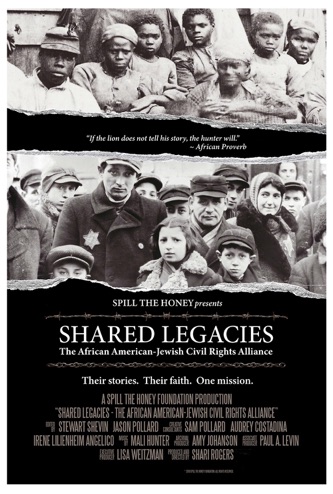
Shared Legacies depicts inspirational African American and Jewish collaboration in the 60s Civil Rights era, shows that connection changing, and calls for it to be renewed in light of “divisive seeds of hate taking root anew in the American landscape.”
After viewing, participants and panelists from the African American and Jewish communities ask:
Can the legacy continue? How can our communities move forward with a shared agenda to promote racial equity in Howard County, as well as fight for an inclusive economy, education, and healthcare for all, and the equitable dispensation of justice?
Is there a joint role in the era of mass-incarceration and the post-January 6th America?
Can we move from friction (like that surrounding Ye and Kyrie Irving) to relationship and shared action?
Films for Change is a series of documentaries about racial equity, each followed by panels featuring local leaders and organizations. Sponsored by the Horizon Foundation.
In partnership with the African American Community Roundtable, the Jewish Community Relations Council of Howard County, The Martin Luther King Jr. Holiday Commission, and the Howard County NAACP.
Inequity Within Report
Over the last two years, Howard County Library System engaged more than 600 people in racial equity training. Using national data about disparities across education, health, housing, and legal systems, the trainers found that racial inequity looks the same across systems, socioeconomic difference does not explain racial inequity, and systems contribute significantly to disparities. Howard County Library System’s new Inequities Within: Issue of Inequity Across Communities report examines the racial equity landscape in Howard County and across the state of Maryland. The data show disparities across education, healthcare, housing, economic, and legal systems for every racial group.
In Howard County, for example:
Black residents are three times more likely to be denied a home loan than non-Hispanic white residents.
Hispanic students are 5.4 times more likely than white students to skip school because they felt unsafe.
Asian residents in the county are 1.8 times more likely to face poverty than non-Hispanic white residents.
As one of the wealthiest, healthiest, and most diverse communities in the state and the US, the belief that racial inequity does not exist here can be a hindrance to addressing those disparities.
We invite you to read the report, educate yourself, and join with us and others in this work.
For opportunities to learn more and discuss with community members, check here for classes and events.
Funded by a grant from the Institute of Museum and Library Services and administered by the Maryland State Library Agency
An American ballet student discovers that sinister things are afoot at a prestigious German dance academy. The film is regarded as one of the most influential horror films, with its striking visuals and haunting soundtrack.
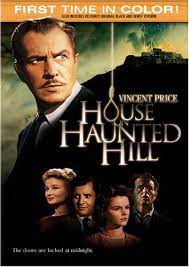
An eccentric millionaire invites five strangers to a party at a haunted house, offering $10,000 to whomever survives the night. Partially inspired by Shirley Jackson’s The Haunting of Hill House, this film has solidified itself as a campy horror classic.
A man and his daughter attempt to survive a rapidly-spreading zombie infection that breaks out while they are on the train. This record-breaking Korean film will soon undergo an American remake.
A woman accompanies her boyfriend and his friends on a trip to Sweden for a midsummer festival and chaos ensues. Don’t let the beautiful setting and cheery color palate of the film deceive you – Midsommar is one of the most disturbing horror films I’ve ever seen.
A woman, in the midst of divorce negotiations, moves to a run-down apartment with her young daughter. A mysterious ceiling leak and ghostly appearances ensue. In 2005, an American remake of this Japanese film starring Jennifer Connelly was released.
The Nineties: A Book by Chuck Klosterman is written in an extremely entertaining, journalistic style, a look back at the decade that has become so “in,” it’s “out.” Although, like Klosterman, I am almost a “caricature” of a “Gen X” caricature, so this book is a bit of an easy sell to someone like me. This is one of those time periods when something culturally progressive was happening, and to some extent, I’m a product of that. The art I experienced played a part, but perhaps I had a predilection for this sort of thing.
However, this book is not just for aging hipsters like me. Klosterman successfully argues that what we remember from the decade, the stereotypes, may be quite different from the reality. He alludes to the fact that we always misremember things, or rely on the stereotypes of decades to classify them easily in our minds.
Klosterman does an excellent job of highlighting all the things that I personally remember as positive for society, but the anecdotes and examples made me realize we have similar taste and beliefs. The films and the music were a considerable influence on my taste and my social awareness. He also mentions that art about the lives of Black people was consumed by white audiences like never before. The independent films and music were different than most things I had experienced before. Klosterman makes the remarkably interesting argument that the local video rental store, and later the chains, gave birth to the working-class auteur. In short, they could browse and watch films (e.g. Citizen Kane, Chinatown) multiple times which may have been only previously shown at an art house theatre.
That said, Klosterman points out thatTitanic was the biggest movie of the decade, and this hardly qualifies as progressive art. Moreover, Tupac sold more records than Nirvana, and Garth Brooks sold more than both put together (and really birthed new country). So why is it that balding guys with cowboy hats and tight jeans are not proffered as 1990’s stereotypes?
The extremely high approval rating for a “liberal” President who was a serial philanderer and predator does not jibe with the ethos of 2020. Klosterman even asks the question many now ask: if the Democratic Party is worse off because of the Clintons. I was particularly interested in the discussion of the most successful third-party candidate in a century. The fact that Ross Perot received 19 percent of the vote almost seems unfathomable now. How the United States kind of “meddled” in the 1996 Russian democratic election is also an interesting sidebar.
There are too many interesting sidebars to mention, but many are things we may have forgotten. For example, Michael Jordan, the most successful basketball player ever, decided to play minor league baseball, primarily because he was bored and tired. It came as a shock to America that baseball players and cyclists were using performance enhancing drugs to put on superhuman performances.
These things may seem like minutiae to some, but I feel as though these events help us understand current America just a little bit better.
One of the most important chapters is “CTRL + ALT + DELETE” – extremely interesting in that it describes the way people, mostly tech people or insiders, viewed the internet in the 1990s. It reads like people selling a dream that became a nightmare, sadly. Academic careers are, and will be, built on how computers and the internet altered society, as we have only begun to appreciate the changes in our behavior. One of the most salient points Klosterman makes in the book is to consider the differences in America from 1960 to 1990, and then consider the differences in America from 1990 until 2020. Imagine disembarking from a time machine in 2020 from the year 1990. He discusses how some of us recall how the world worked before widespread computer and internet use and I’m obviously among these folks. To be sure, I appreciate all the things that have improved in my life, but I do long for the good ol’ days, too!
As a ‘90’s hipster, I do feel that the idea of physical place is something that is particularly important to a stable democratic society. And I want to let you know we offer this at the library. A young lady borrowing numerous films said “hey” to me as if she knew me, and I’d forgotten that we had a brief discussion about films. She is likely Gen Z, but had a very ‘90’s look. She was borrowing a stack again, including some Wes Anderson, and I said, “Have you ever seen his first film, Bottle Rocket?” She had not. I said, “I think it’s his best, or my favorite, we have it over there.” Borrow it. I had never seen another film like it in 1995.















 CHAPTER CHATS