Sunday, October 5 2 – 4 pm HCLS Miller Branch Registration encouraged, as space may be limited.
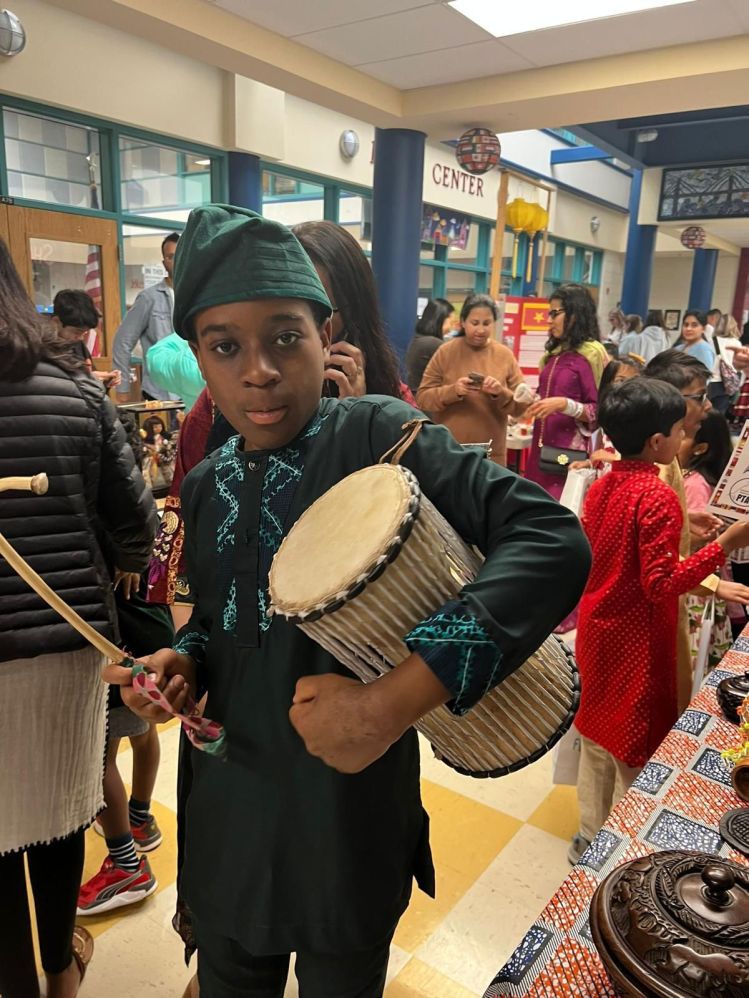
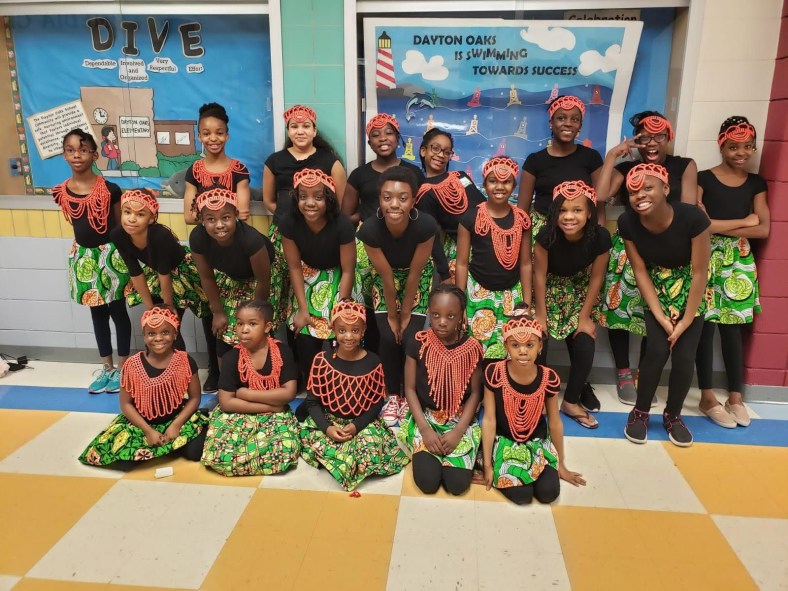
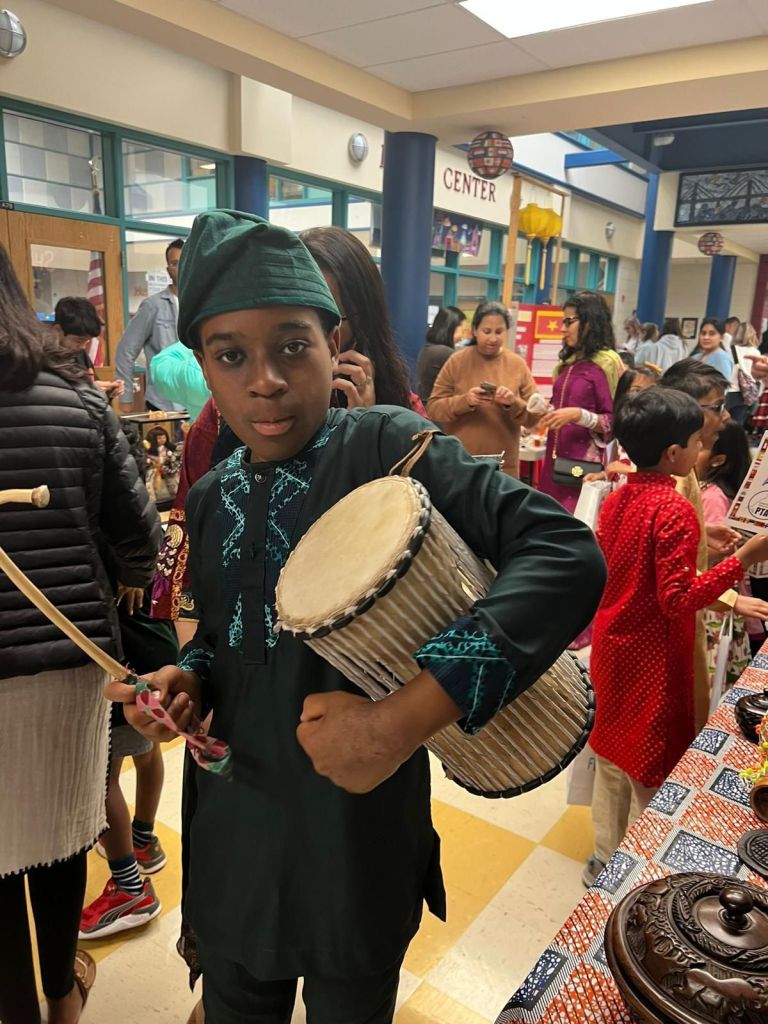
The Global Neighbors team invites you to join in a heartfelt celebration of the traditions, stories, and values that bind us together across generations at our upcoming Global Neighbors Africa: Experience the Continent event on Sunday, October 5 from 2 – 4 pm at HCLS Miller Branch! This special program invites our community to celebrate the vibrancy and diversity of Africa through storytelling, music, dance, and food. Connect with your neighbors to share in the wisdom of the past and the promise of the future.
An interactive and personal experience, Global Neighbors Africa showcases performances and demonstrations that highlight the continent’s regional richness. The event features art displays and offers additional layers of connection and inspiration. Intentionally inter-generational, this is about feeling, remembering, and being part of something bigger. It’s a reminder that the best lessons in life are often shared through the moments we create together.
Guests can enjoy the opportunity to sample regional African food (as long as supplies last) and take home a door prize (also as long as supplies last). Celebrate connection, joy, and cultural discovery. Everyone is welcome – bring your family, friends, and curiosity as we travel the continent together, right here at the library.
Piyali is an instructor and research specialist at HCLS Miller Branch, where she facilitates two book discussion groups: Light But Not Fluffy and Global Reads. She keeps the hope alive that someday she will reach the bottom of her to-read list.
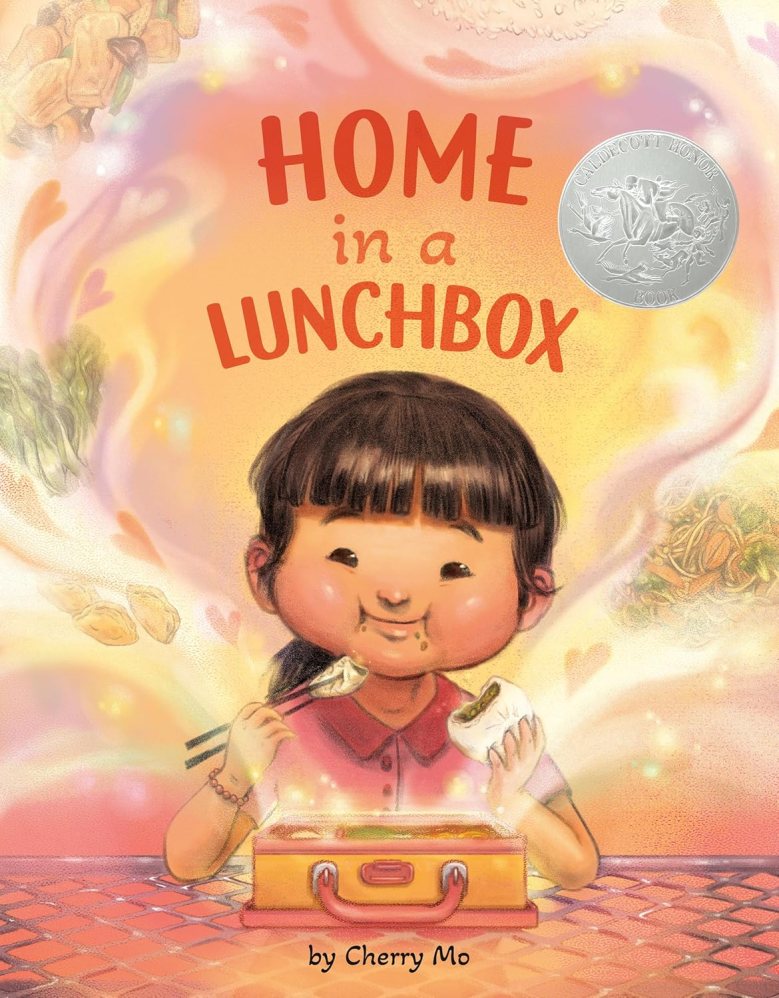
Intrigued by the front cover, I picked up Home in a Lunchbox by Cherry Mo from the children’s “new books” shelf not expecting to fall in love with this story, to be recommending it to colleagues, and to feel the need to write a book review for Chapter Chats! But, here we are…
Inspired by her own experience of moving from China to the United States as a child, Mo narrates the journey of Jun beginning school in a new country. Through expressive illustrations, bold uses of color, and just a handful of text you are taken on an emotional roller coaster as you witness her first week.
I truly felt Jun’s excitement at the bus stop on her first day, and her disappointment, confusion, and frustration as she tries to navigate the school and the English language. Then, I loved the profound comfort, joy, and love she finds in her delicious homemade lunches, and finally, the acceptance, friendship, and belonging as the story concludes.
With universal themes about belonging, embracing differences, friendship, and the power of food, Home in a Lunchbox is a feel-good, must read for people of all ages.
Home in a Lunchbox, a 2025 Caldecott Honor Winner, is available from HCLS in print and as an e-book on Libby.
Megan B. is a Children’s Instructor and Research Specialist at HCLS Miller Branch. She is constantly curious and loves to learn new things.
Teen Live! at the Elkridge Branch of HCLS in 2024.
by Deborah B.
You work at the Elkridge Library?” asked a woman attending her child’s soccer game. “I must tell you, my son loved, absolutely loved, that Teen Live event you did last month. He hasn’t stopped talking about it! Will there be more?”
“Can you do more Teen Lives? Please,” begged a girl at Mayfield Woods Middle School. “Can you do one here?” asked a nearby teacher.
No, we cannot do one at a school but can and are doing Teen Live at the branches again this spring. It’s no wonder Howard County teens loved Teen Live – it’s the ultimate after-school escape, where fun, food, and friends come together for an unforgettable experience!
Designed by teens for teens, Teens Live is a smorgasbord of excitement, offering everything from free pizza to anime, arcade games, and larger-than-life activities. Whether you’re a gamer, an artist, a music lover, or just someone looking for a cool place to hang out, Teen Live has something for you.
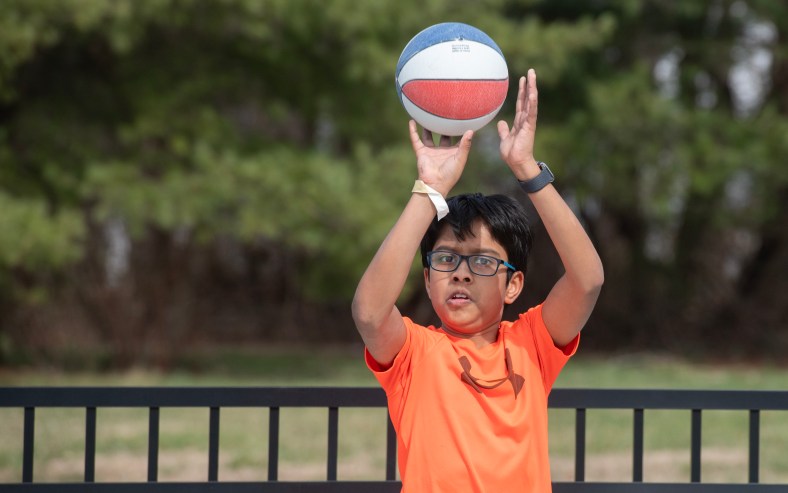
Shoot hoops, compete in Nintendo Switch and PS5 game tournaments, or unleash your creativity at arts and crafts stations. Anime fans can bond over their favorite shows, discover new series, and join themed activities. Every branch session is packed with energy, laughter, and new opportunities to connect with like-minded peers in a welcoming space.
But that’s not all — Teen Live 2025 amps up the awesome with branch specific feature events from music and interactive performances to live demonstrations of technology and creative challenges. See and sample the shiny new contraptions, gadgets, and equipment Teen Live events are introducing. It’s the perfect place to relax, have fun, and explore new interests, all while enjoying free pizza.
No need to bring anything—just show up, bring your friends, and get ready for an epic time at the library! Join one or more of these sessions:
Sat, Mar 8 | 2 – 4 pm at HCLS Savage Branch Sat, Apr 5 | 3 – 5 pm at HCLS Central Branch Tue, Apr 15 | 2 – 4 pm at HCLS Elkridge Branch Mon, Apr 21 | 3 – 5 pm at HCLS Miller Branch Wed, May 7 | 12:30 – 3:30 pm at HCLS Glenwood Branch Wed, Jun 11 | 4 – 6 pm at HCLS East Columbia Branch
Deborah B. is a Teen Instructor and Research Specialist at the Elkridge Branch. Reading is her cardio.
Recipe Exchange: Dumplings Around Asia! Saturday, May 25 | 1 – 2 pm HCLS Savage Branch Register
Hands down, my favorite way to learn about new cultures is through food. And food tells so much about a place – whether wheat or rice or corn are the most prominent starch, how people chose to work the land, how people divided labor, how different climates react to different weather, whether people use utensils or their hands. We reflect all sorts of nuances about ourselves in the ways we eat. Growing up in Howard County exposed me to cuisines from all over the world, and there’s nothing better to me than trying something new, loving it, and immediately knowing that I need to try to make it myself. Gathering new recipes with other people is such a rewarding, communal pastime, and it’s lovely to be able to talk through cooking with other foodies!
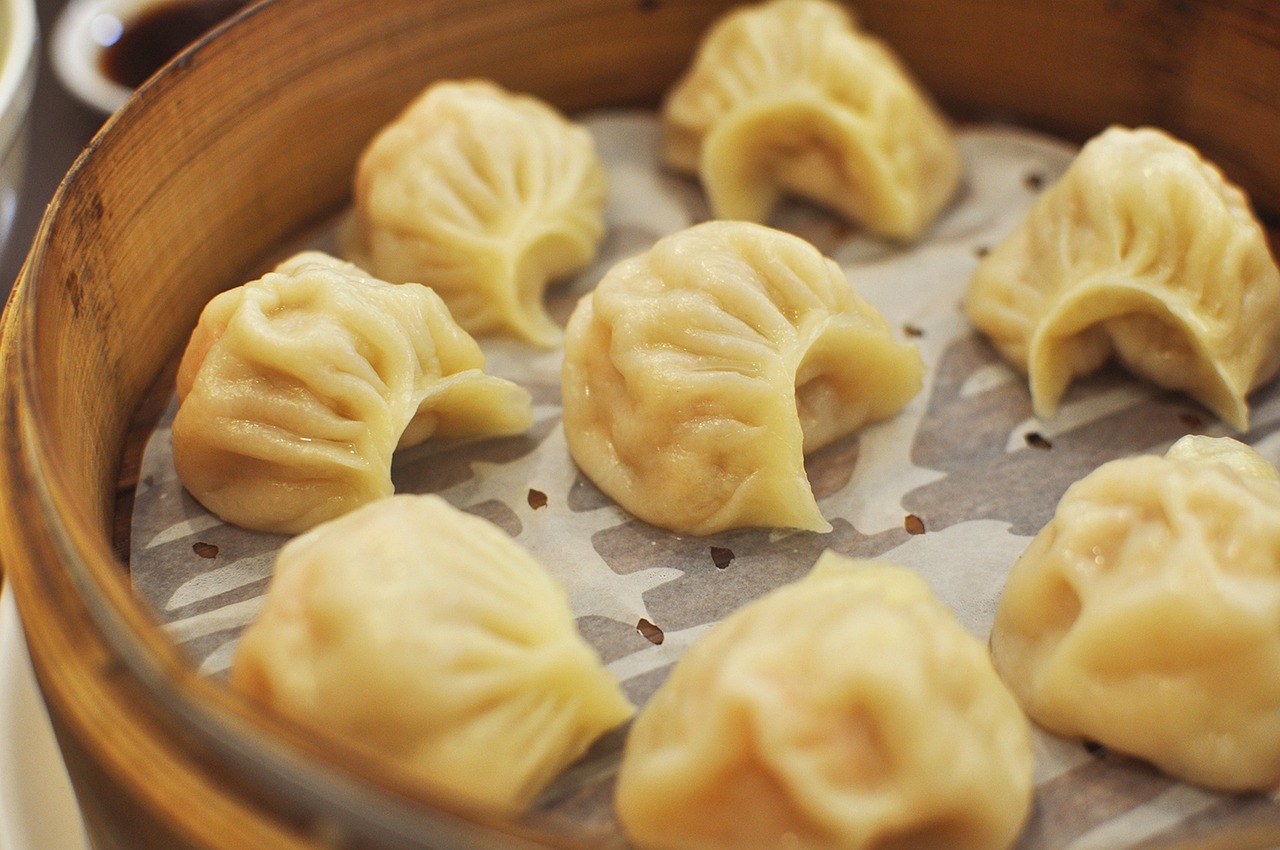
For our Recipe Exchange class during AAPI Month, I wanted to honor one of humanity’s strongest, truest impulses: to take a protein, or a hearty base, cover it in dough of some kind, then fry, steam, or bake it to perfection, resulting in a bite sized bundle of delight. That’s why we’ll be discussing Dumplings Around Asia, as well as sampling some varieties.
I graduated from college during the early days of the pandemic. When I was sent home, my university sent me a senior gift that included a dumpling making kit. I’m not sure if they knew what they were doing with that gift but I’ll tell you what the result was: homemade gyoza once a week. Tortellini made from scratch that took me six hours. Handmade samosas that I air fried instead of deep-frying. Dumplings of all sorts from all around the world, handmade in my kitchen. Dumplings are a passion of mine, and I can’t wait to discuss all the best ways to prepare such a simple but delectable food.
Bring your own dumpling recipe – or favorite dumplings!– and we’ll have a great conversation about the ways we can speed-run making dumplings, the history of the perfect crimp, and of course, share some of the best recipes for different dumpling styles found across the Asia. While it might not be a comprehensive list of every style of dumpling to ever exist, it’s going to be a great introduction to less popular dumpling styles, and a great chance to grab a snack at the library.
Register here to get emails and updates about class.
Sahana is an Instructor and Research Specialist at HCLS Savage Branch. They enjoy adding books to their “want to read” list despite having a mountain of books waiting for them already.
Come talk food with us! Wednesday, May 24 at 7 pm | Savage Branch Register here.
In Asian American households, food is a love language. Sliced fruit, set gently next to a workspace, is an invitation to take a break, or an apology. Homecomings are ushered in by welcome feasts, and almost every restaurant occasion ends with a polite battle over the bill. Food is affection, and especially in immigrant households, it is a connection to family, to a far-away home, and it is a consistent way of showing (but not telling) love.
Growing up with my Bengali mother, rainy days off meant khichdi (a mix of rice, lentils, and vegetables) and aloo bhaja (thinly sliced fried potatoes) for lunch. My brother and I would scrap over the last few aloo bhaja in the bowl, before our mother would smile indulgently and take a few from her plate to split between us. I’d sit in the kitchen as my mother cooked big, elaborate, multi-course meals, watch her season and spice, and wait for the oil to sputter specifically, never once consulting a recipe. She would have one of her aunts on speakerphone, talking about family back home and interjecting with quick questions on what to substitute to make our American ingredients taste as close as possible to the Indian ones.
I grew to appreciate food, to understand cooking, and to have a standard repertoire of recipes after learning from my mother. It was a common language we shared, this mutual culinary interest. And it’s only grown. I cook with and for friends, I follow cooking blogs and sites and social media accounts, I favorite every restaurant I pass by with an interesting-looking menu, and most of all, I like to talk about food with people. On desk at the library, I’ll see someone flipping through a cookbook I’ve read, and I’ll want to stop and talk. I’ll notice someone looking at a book written by one of my favorite food personalities, and I can’t help but smile at it. And most of all, I love when people share their recipes with me, when I can hear about the food, the stories, and the cuisines that influence them.
It’s important, also, to know about innovators. To know about the people who are pushing the cuisine, who are changing it, who are going back to the roots of a tradition or practice to better understand it. There are so many Asian American chefs who are pushing the envelope on what elevated Asian American cuisine looks like, and there are just as many Asian American chefs who are looking to create the most traditional experience they can with their food. All of that is what makes the cuisine not just Asian, but Asian American. It’s the blend of respect for culture and tradition, and the simultaneous push to the modern that makes Asian American food so unique.
To celebrate all of the above, we’re having a Recipe Exchange on Wednesday, May 24, from 7-8 pm at the Savage Branch. It’s themed around Asian American chefs and Asian American cuisine, where we’ll look at a few highlighted chefs and some of their most popular recipes. I’d love for you to join us and bring a recipe of your own to share. We’ll discuss our favorite tips, tricks, and techniques in community, and do it all the way food was meant to be enjoyed – together.
Sahana is an Instructor and Research Specialist at the Savage Branch. They enjoy adding books to their “want to read” list despite having a mountain of books waiting for them already.
End of summer blues? Turn to the colorful fruits and vegetables of autumn for a mood lift. Filled with nutrients, seasonal produce offers a culinary treat.
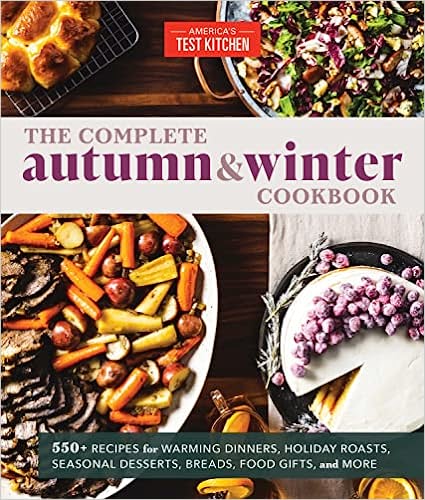
The Complete Autumn and Winter Cookbook by America’s Test Kitchen includes side dishes, main courses, and desserts filled with the flavors of fall. An entire chapter is devoted to pumpkin, a low-calorie, vitamin-dense treat. The antioxidant beta-carotene in pumpkin lends it that beautiful orange color and blocks the free radicals that cause cells to age. The body converts beta-carotene to vitamin A which is essential for healthy eyes, skin, and bones. Try the slow-cooker creamy pumpkin-chai soup for a treat on a chilly day.
Winter squash, another rich source of beta-carotene, can be fun to prepare with the guidance of Cara Mangini’s The Vegetable Butcher. Squash is low in carbohydrates, for those monitoring sugar intake, and high in potassium, for those following a heart-healthy diet. Recipes include kale and spelt berry salad. Lutein gives kale its dark green color and helps protect the eye from developing cataracts and macular degeneration. Cranberries are high in vitamin C, which strengthens the immune system and helps shorten the duration of cold symptoms.
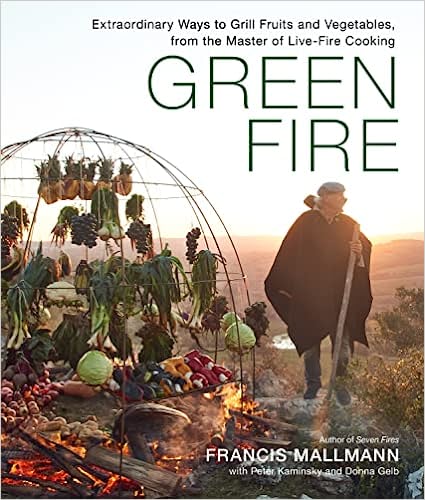
As temperatures drop, the grill is a wonderful way to prepare vegetables. In Green Fire: Extraordinary Ways to Grill Fruits and Vegetables from the Master of Live-Fire Cooking, Francis Mallman shares his unique Patagonian recipes. Prepare his salt-baked beets for a dish rich in fiber, vitamins, and minerals. Diets high in fiber have been associated with fewer digestive issues and lower colon cancer risk. Betalains, responsible for the purple-red color of beets, reduce inflammation and cell damage. Beets are also high in folate (vitamin B9), which has been linked to lowered risk of heart disease and stroke.
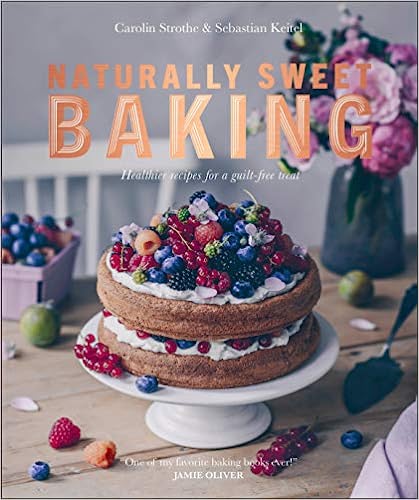
In Naturally Sweet Baking: Healthier Recipes for a Guilt-Free Treat, recipes include fall fruits such as pears as alternative sweeteners. High in fiber, pears have some sugar but do not have the high glycemic index that contributes to diabetes risk. The vitamin C, potassium, and antioxidants in pears add to their health benefits. Authors Carolin Strothe and Sebastian Keitel include a seasonal calendar as part of their guidance in baking without artificial coloring or processed sugar. Explore the baking collection at Elkridge’s DIY Education Center to find specialty cake pans available for checkout.
Cherise Tasker is an Adult Instructor and Research Specialist at the Central Branch. When not immersed in literary fiction, Cherise can be found singing along to musical theater soundtracks.
Please register to attend. Limited seats. Register at bit.ly/twittyhcls
In partnership with the Howard County Jewish Federation and Baltimore Jewish Council
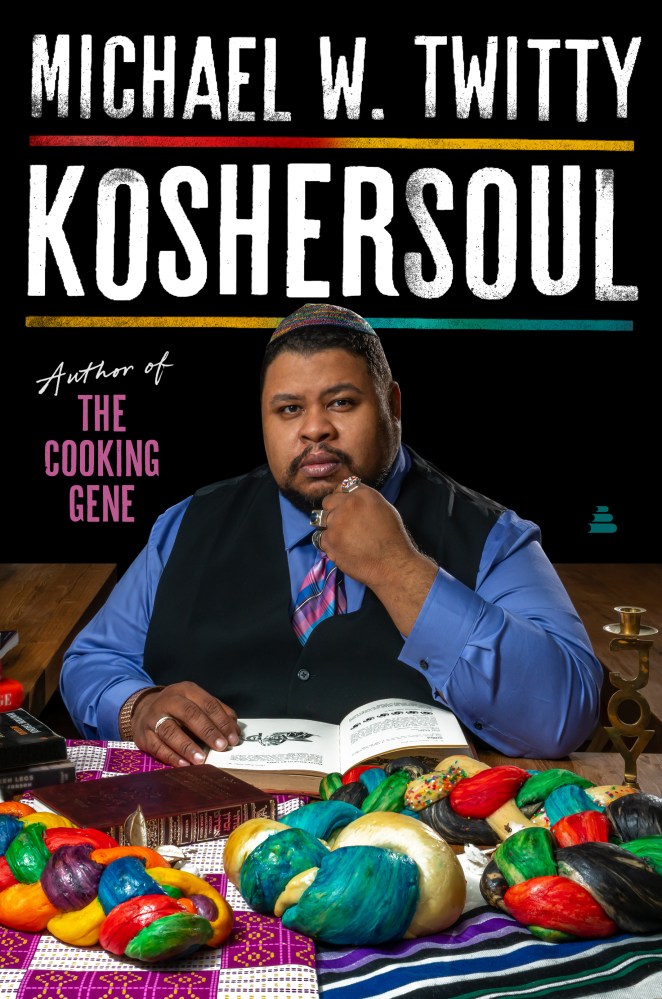
In his new book KosherSoul, Michael Twitty, author of the acclaimed The Cooking Gene (read a review), explores the cultural crossroads of Jewish and African diaspora cuisine and issues of memory, identity, and food.
Twitty examines the creation of African/Jewish global food as a conversation of migrations, a dialogue of diasporas, and the rich background for people who participate in it. At the same time, he shares recipes for Southern culinary touchstones like apple barbecue sauce, watermelon and feta salad, and collard green lasagna, while blending the traditions of his mixed identity into new creations such as Louisiana style latkes and kush. KosherSoul is more than a cookbook, it’s an exploration of selfhood when born at a crossroads of race.
The question is not just who makes the food and who it belongs to, but how food makes the people, reflects the journey, and validates the existence of these marginalized identities. Twitty aims to move beyond the idea of Jews of Color as outliers, but as significant and meaningful cultural creators in both Black and Jewish civilizations.
ABOUT THE AUTHOR
A highly sought-after speaker and consultant, Twitty has appeared on programs with Andrew Zimmern, Henry Louis Gates, Padma Lakshmi, and most recently on Michelle Obama’s Waffles and Mochi.
He is a TED Fellow and was just named as a National Geographic Emerging Explorer. His first MasterClass course, “Tracing Your Roots Through Food,” is now available. Over the past year he has partnered with Atlas Obscura to teach multiple online seminars and was the first guest on a new web series for their food division. Michael will also be a Consulting Producer on a new food competition program coming soon from OWN. He lives in Fredericksburg, Virginia.
I’d be remiss to write about Michelle Zauner’s Crying in H Martwithout mentioning Psychpomp, the 2016 Japanese Breakfast album that served as a preview for the memoir that debuted at No. 2 on The New York Times‘ best sellers List. Passages describing the creation of the album are brief, but lyrics are scattered throughout the memoir like Easter eggs.
Zauner recorded the album in Eugene in the months after her mother died. Zauner’s mother is on the album cover, reaching toward the camera. It’s a rad shoegaze album full of great lyrics, and it’s my 2-year-old daughter’s favorite album. Kiki’s been listening to it since she was born. She points to this album cover when she wants to bop:
Zauner, who was born in Seoul; raised in Eugene, Oregon; went to school in Philadelphia; and now lives in Brooklyn has a real Maryland vibe (whatever that means). Maybe it’s just me, but I felt close to Zauner after reading her book. It’s honest and intimate (I know that’s a book cover cliché and I still can’t help myself).
The memoir is incredible. Her mom was only 56 when she died, and Zauner had a complicated relationship with her. She illustrates their relationship by detailing a series of events from childhood conversations to her mom’s final word. The book is only around 250 pages, but Zauner uses anecdotes and conversations like a pointillist uses points to create a full portrait. Her mother is down-to-earth, glamorous, pragmatic, whimsical, frustrating, mysterious, and lovely.
Zauner writes about eating food, making food, storing food, watching videos of other people make food (Maangchi gets her own chapter), and it’s all great. The passage where she makes her first real batch of kimchi is one of my favorites. Food is the constant in her relationship with her parents: “What they lacked in high culture, they made up for by spending their hard-earned money on the finest of delicacies. My childhood was rich with flavor – blood sausage, fish intestines, caviar. They loved good food, to make it, to seek it, to share it, and I was an honorary guest at their table.”
After her mother’s cancer diagnosis, her mental fantasies to cure her mom are heartbreaking. We’ve all tried to barter with the universe or with God to get something, and in that vein, Zauner writes, “I spent an hour on the treadmill. In my head I played a game with the numbers. I thought to myself, if I run at eight for another minute, the chemo will work. If I hit five miles in half an hour she’ll be cured.”
The details of Zauner’s childhood in Eugene and her visits with family in Seoul are highlights, but I found myself returning to the intimate moments between Zauner and her mother. Crying in H Mart is officially going to be a movie; I can’t wait for the screen adaptation, but I think it’s going to be a tearjerker.
You can place the book on hold, as many other folks want to read it right now, but it’s worth the wait. Also available as an eBook and eAudiobook.
Ben Hamilton works at Project Literacy, Howard County Library’s adult basic education initiative, based at HCLS Central Branch. He loves reading, writing, walking, and talking (all the basics).
One of the great things about manga is the wide range of topics authors can focus on. Sure, there are still those popular power fantasy series, with heroes rising from lowly origins to take on a supreme evil. Dragon Ball Z or Kimetsu no Yaiba: Demon Slayer play a similar tune to Superman and Batman. Still, over the last few decades, comics in the West have stretched outside superheroes into new genres, like autobiography, travelogues, and other strange and unique styles of story. There’s no shortage of variety for a graphic novels reader in 2021.
But there’s one genre that the west hasn’t really explored, while manga has done so quite thoroughly: food. Yes, manga about baking, frying, cooking, and eating – they exist, and they’re quite popular, too!
More interestingly, as a genre, food manga isn’t strict about its features. In “shonen” manga, like Bleach or Naruto, there’s a specific path the hero follows, training to becoming better and overcoming new challenges to fulfill their dream. In romance manga, like Skip-Beat or Nana, our protagonist stumbles into young love, leaving us to wonder if those two crazy kids will or won’t finally kiss (until they finally do (at the very end)).
But in food manga, you can really mix any other genre – like documentary or fantasy or combat or history – with the presentation and description of some aspect of food and cooking. The results can be intensely different!
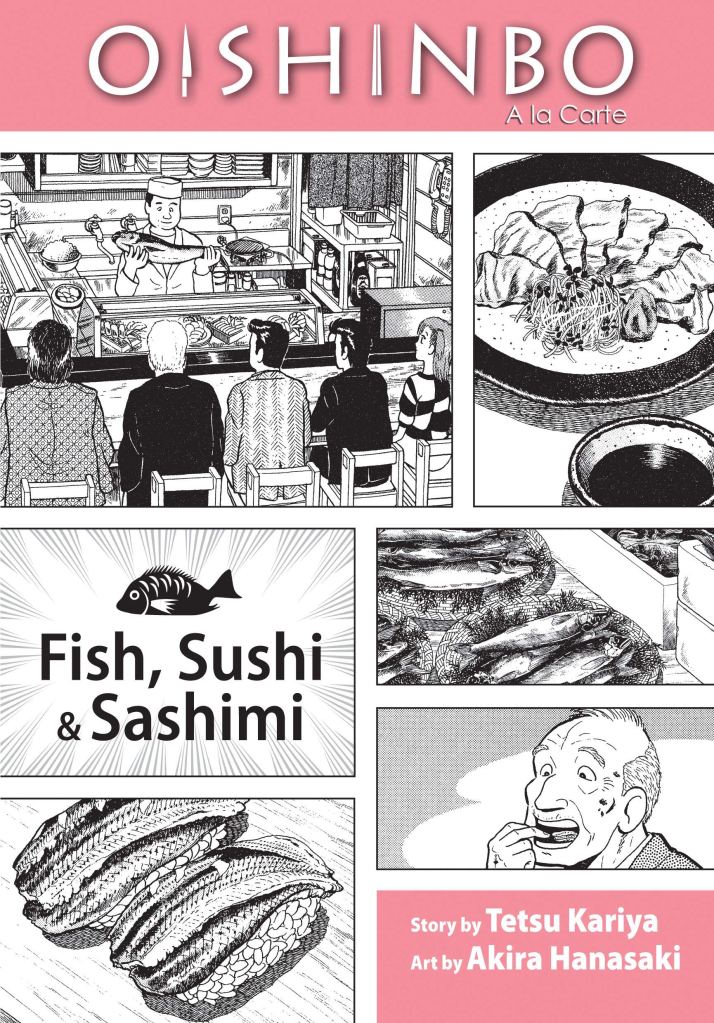
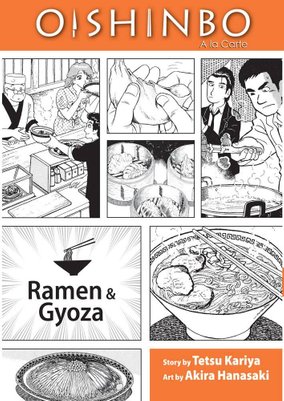
Oishinbo is a more direct sort of food manga. In each of its six volumes, its author, Tetsu Kariya, focuses on a different aspect of Japanese cuisine and food culture (helpfully described in each title). In one volume, we can learn about ramen and gyoza (fried dumplings), those two staples of Japanese street food, and in another, a deep dive into sushi and sashimi, two varieties of raw fish with rice. Of course, there are gorgeous drawings of the dishes, feeding the reader’s eyes in the same way Studio Ghibli films do. But along the way, we’re told more about the history and culture surrounding the food, in addition to the step-by-step process of making each.
But this isn’t a printed Instagram feed of cool food art – no, there is a plot! Or, at least, there are characters. Shiro Yamaoka is a journalist who has a troubled family history with cooking, but he still tries to develop the “Ultimate Menu” as a project, visiting restaurants and chefs across Japan. He is joined by Yuko Karita, his assistant, as they sample foods and consider the history of the dishes alongside their own experiences. Keep in mind: Oishinbo ran for over 30 years and 111 volumes, and these few volumes we have are an “A La Carte” compilation. As such, the overarching story has been compressed and mostly removed, resulting in these translated volumes feeling like episodes of documentary travelogue. And that’s alright by me!
Reflecting the time in which the manga started, the characters have a very 1980s aesthetic to their designs. For long-time readers of comics, the style can be nostalgic, but even for new readers, I think the clearer and less-cute style helps the manga’s focus come through much clearer. And that focus? Food is good. It’s a perfect mini-series for amateur chefs, readers new to manga, or for anyone who wants to know more about Japanese cuisine.
On the far end from the realism of Oishinbo is Delicious in Dungeon, by Ryoko Kui. Yes, that’s a silly title, but this is a very silly series – about fantasy food! One of the recent trends in anime/manga are stories featuring western-style fantasy, a la Lord of the Rings, Dungeons & Dragons roleplaying, and console roleplaying video games. Delicious in Dungeon is about a party of adventurers in such a fantasy world. You have Laios, the dimwitted human knight, Marcille, the squeamish elf mage, and Chilchuck, the halfling lockpick. They’re trying to get to the bottom of the dungeon to save Laios’ sister, but man, it’s a long way down…
During one of their hungrier moments, they meet Senshi, a dwarf, who shows them the craft of cooking beasts they find (and fight) in the dungeon. Which is, as you might imagine, a strange prospect for our adventurers, who aren’t sure if they want to eat boiled mandrakes or a wyvern egg scramble. But Senshi shows them the benefits and necessity of “eating off the land,” as they can delve deeper by cooking along the way.
So we have action and fighting, as the party battles various mythical monsters. But then we get Senshi cooking their conquest over a fire, using his shield as a wok. Kui draws the process of cooking and the final dish with the same care as Kariya did in Oishinbo, but instead of buckwheat noodles, it’s tentacles. Recipes are included with each fantastical dish, making the whole thing seem both real and absolutely ridiculous. Yet, you know, that roast dragon flank does look pretty good…
These are just two examples of food manga we have at HCLS! We have other series too:If you’re looking for another fantasy cooking series, Drifting Dragons has a visual style and tone similar to Delicious in Dungeon, but a large world and character designs reminiscent of Nausicaa of the Valley of the Wind.
If you’d rather have a more cozy experience, Otherworldly Izakaya Nobu is a slice of life story of fantasy characters (I told you it was a popular topic) magically transporting into an izakaya, a sort of pub in Japan.
If you’re looking for another fantasy cooking series, Drifting Dragons has a visual style and tone similar to Delicious in Dungeon, but a large world and character designs reminiscent of Nausicaa of the Valley of the Wind.
If you’d rather have a more cozy experience, Otherworldly Izakaya Nobu is a slice of life story of fantasy characters (I told you it was a popular topic) magically transporting into an izakaya, a sort of pub in Japan.
And if you’d rather have some competition with your food, Food Wars! is a fun shonen series, wherein chefs compete in cooking duels to see who’s the best.
Whether you’re new to comics or if you’re just hungry for something new (ha), food manga is a genre worth sampling.
Khaleel has worked at the Miller Branch since 2015, though he’s been back and forth between HCLS and high school, college, and graduate school since 2003.
It’s time to plan a visit to the Enchanted Garden at the Miller Branch! We are thrilled to invite visitors back to the garden beginning Saturday, May 8. Come and see what’s growing in our demonstration area, enjoy the blooms of the season, and feel the calming touch of nature.
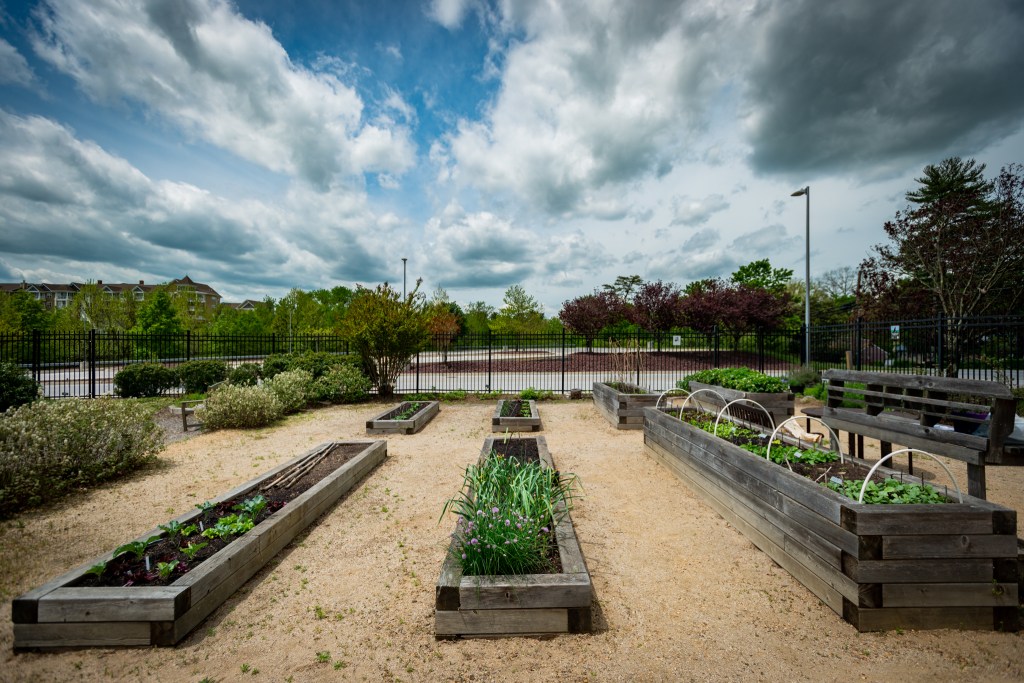
How much food can we grow in the Enchanted Garden? This year we plan to find out! Our raised beds will be devoted to growing food to donate to the Howard County Food Bank. You’ll find a variety of lettuce, radish, broccoli, and cauliflower happily growing while we thwart the efforts of a nibbling bunny. The strawberries are bursting with blooms, potato shoots are poking up through the soil, and the peas are reaching for their trellis. We have greens galore in an assortment of bib and leaf lettuce. Plus, we’re busy preparing more beds for summer crops like tomatoes, peppers, cucumbers, and squash.
A garden bed once devoted to summer annuals will be transformed into an edible landscape. We’re curious about ways to maximize our food yield, provide season-long blooms for the pollinators, and offer beauty to the beholder. Can you picture kale, chard, and basil side-by-side with zinnias, sunflowers, and marigolds? By combining annuals and vegetables in one patch, we hope to create a garden that challenges notions about what makes a garden and what is fitting for the front yard.
Look to the left of the front gate to see our newest garden bed. Thanks to the Howard County Garden Club, we have a new pollinator-themed garden filled with wildlife-friendly native plants and cultivars. Our new garden will support pollinators like bees, butterflies, and moths. We hope it will inspire visitors and budding youth gardeners to garden for wildlife.
Our Enchanted Garden is thriving with the help of many volunteers. We have more weeding and clean-up to do, but we think you’ll enjoy seeing what we’ve accomplished so far. There are new garden beds to behold and so many spring vegetables that you’ll work up an appetite. We look forward to seeing you in the garden soon!
The Enchanted Garden will open during library hours Monday – Saturday, 10 am – 6 pm; Thursday, 10 am – 8 pm. Masks are not required in the Enchanted Garden. Visitors are expected to maintain social distance.
Ann joined the Miller HCLS staff as the Enchanted Garden Coordinator and Instructor in 2012. When not gardening you’ll find her reading, cooking, and exploring trails in the Patapsco River Valley with her husband and dog.











 CHAPTER CHATS