Banned Books Week: Read for Your Rights

The banner reads, "Banned Books Week Oct. 5-11, 2025, Censorship is so 1984. Read for your Rights," with the word "censorship" crossed out in red.

by Sahana C.

This year’s Banned Books Week feels important. The weight of headlines, especially about libraries across the country facing cuts, having collections challenged, and seeing their communities divided, creates an opportunity to reflect on what we gain by taking our time with banned and challenged books.
The American Library Association’s 2025 theme is direct: “Censorship Is So 1984. Read for Your Rights.” It’s a bold reminder that the freedom to read is not just about what is on the shelves.

The reference to George Orwell’s 1984, an often-banned dystopian novel that depicts the role of censorship in rewriting history, speaks to the struggles that public libraries have faced recently. Our community values intellectual freedom, diversity of opinion, and freedom of expression, and the theme reminds us that speaking up is more urgent than ever. It’s said each year, but we’ve seen historic levels of book challenges, especially for books that center the voices of LGBTQ+ people, Black and Brown communities, and those navigating complex identities. Books are being pulled from shelves not because they’re harmful, but because they make some people uncomfortable. But that discomfort is often the beginning of growth – learning that “different” isn’t automatically “wrong.”

Public libraries were built on the radical idea that knowledge belongs to everyone. We’re not just warehouses of books; we’re places where curiosity is nurtured, differences are respected, and freedom is practiced daily. This Banned Books Week we invite you to stand with us. Borrow a banned book. Join a discussion. Ask questions. Speak up. Share your story. Remind your neighbors that free access to ideas is not a luxury – it’s the foundation of democracy.

In Orwell’s 1984, censorship is used to control truth and rewrite history. This Banned Books Week, we push back. We read boldly. We resist silence. We protect stories, especially the ones that are under threat of erasure.

Here’s a curated list of nonfiction titles that are frequently challenged.

Sahana is the Communications Strategist at HCLS. They enjoy adding books to their “want to read” list despite having a mountain of books waiting for them already.
A Message to Our Community from Howard County Library System on Recent Executive Orders 

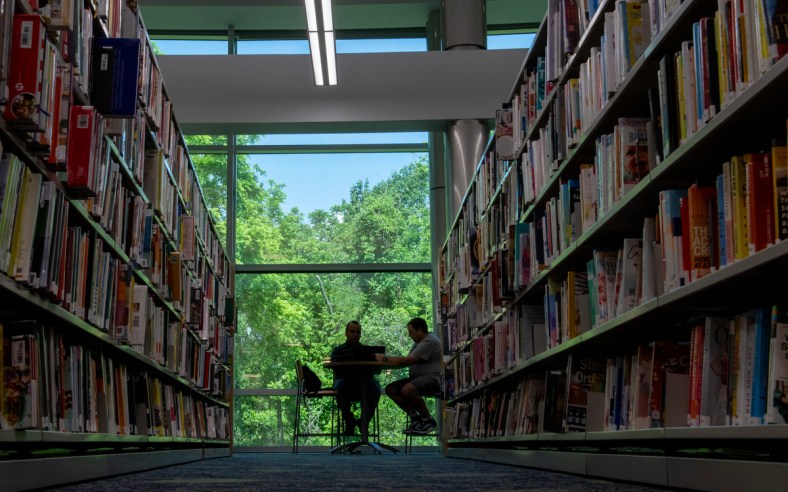
You see two figures at the end of a long aisle of book shelves, in front of a window looking out at a summer's day with green trees and a blue sky.
Two men at Howard County Library System. East Columbia Branch

by Tonya Aikens, President & CEO

At Howard County Library System (HCLS), we firmly believe in the dignity of all humans, regardless of their immigration status, gender, race, economic status, religious or cultural background, political ideology, or other identifier. Our libraries are open to all people, no questions asked. 

Following the Executive Orders issued since January 20, many people have asked how they impact libraries. At HCLS, our vision, mission, and values remain unchanged. We continue to pursue a vision of an empowered community where all people reach their potential, and our mission remains as your place to learn, grow, and connect. Our organizational values of community, equity, intellectual freedom, learning, and teamwork serve as our foundation. We steadfastly affirm our unwavering commitment to supporting our community and maintaining the core values that guide our work.   

Specifically, we wish to address three Executive Orders (EO) that impact libraries.  

The recission of EO 14084 (Promoting the Arts, the Humanities, and Museum and Library Services) will impact libraries and cultural institutions across the nation. In Howard County, we are fortunate to serve in a community that believes in and supports the educational and societal value libraries provide. While some library systems are almost exclusively federally funded, less than five percent of our budget is derived from the federal government.   

Importantly, Maryland’s passing of the Freedom to Read Act in 2024 was an intentional act to safeguard the autonomy of libraries that receive state funding by prohibiting the censorship of books based on the author’s background, origin, or viewpoints, as well as partisan disapproval. The bill also ensures protection for school and public library staff who adhere to the state library standards outlined in the bill, shielding library workers from retaliation.  

Regarding EO 13993 (Revision of Civil Immigration Enforcement Policies and Priorities), libraries are unwavering in our commitment to your privacy. We provide resources and services to everyone who walks through our doors without regard to immigration status. At HCLS, it has always been our policy and practice to safeguard community member information. We developed specific guidance for all members of our staff reaffirming that HCLS does not provide community member information to law enforcement or immigration officers unless the request for information is accompanied by a court order or warrant signed by a judge. HCLS does not collect or track community member immigration information and therefore has no information to share. Please note that areas open to the public in our facilities are open to all and immigration officers may enter without a warrant. ICE agents may enter places open to the public, question people in public places, and conduct inquiries according to their statutory powers under 8 U.S. Code § 1357

Regarding EO 13988 (Preventing and Combating Discrimination on the Basis of Gender Identity or Sexual Orientation), the Fairness for All Marylanders Act of 2014 prohibits discrimination based on gender identity in public accommodations. This is interpreted to give transgender people the right to use the bathroom that aligns with their gender identity.  

While Federal policies may continue to change, our priorities remain the same: 

  • Our individuality and our unique gifts and talents make us stronger. At HCLS, our staff and community are encouraged and supported in showing up as their full selves.  
  • Libraries remain vital spaces for learning, collaboration, and connection. We are committed to preserving the resources, programs, and support systems that enable their success.  
  • Our role in the community as a trusted partner and advocate for equitable access is more critical than ever.  
  • We will continue to prioritize programs and initiatives that address the needs and aspirations of those we serve.  

Thank you for helping to ensure HCLS continues to be the place where all people may learn, grow, and connect. 

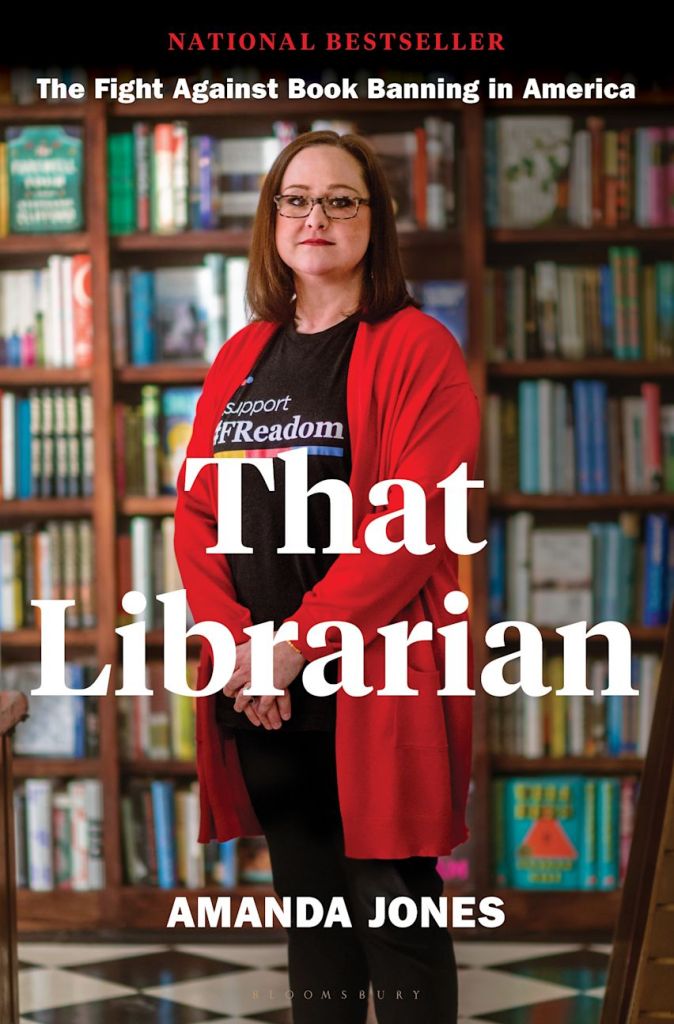
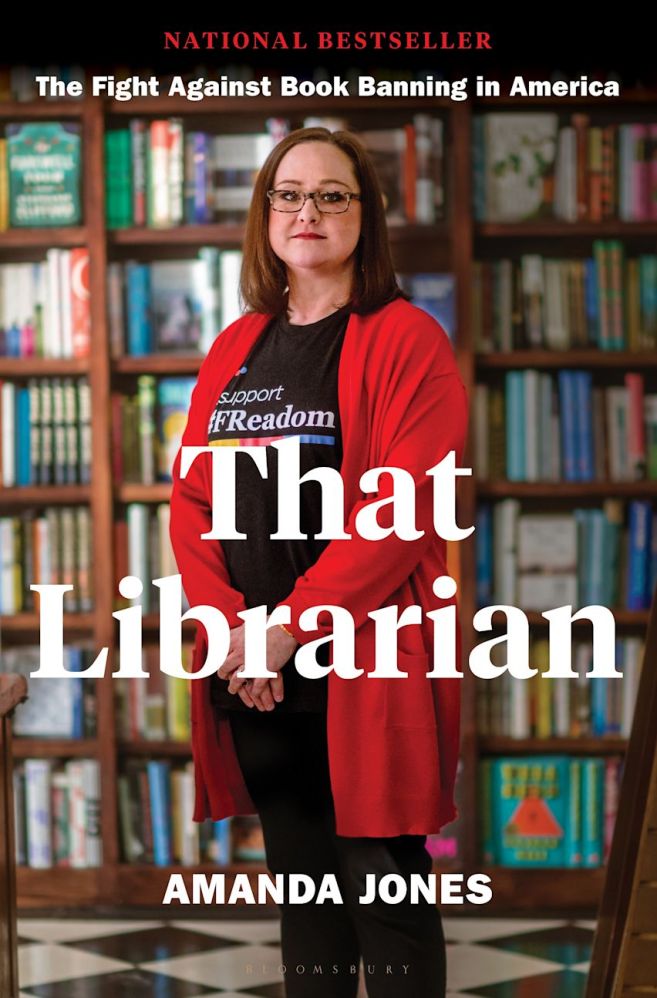
That Librarian: The Fight Against Book Banning in America by Amanda Jones

By Piyali C.

On July 19, 2022, educator and school librarian Amanda Jones spoke up against censorship at a Livingston Parish Library Board of Control meeting in Louisiana. Her speech focused on inclusivity, the freedom to read, and the importance of representation of diverse thoughts, beliefs, experiences, and community in a public library’s collection. Little did she know that her speech about her public library’s collection would result in a storm of bigotry, hatred, and vitriol against her, on a personal level. What followed can only be termed a nightmare. Members of nationalist, White Christian groups started bullying Amanda Jones mercilessly on social media, accusing her of grooming children and putting sexually graphic content in the hands of children.  

Jones writes about how she was affected: how the defamation took a toll on her health and her personal life, and how she found inner strength with the support and love of her family, friends, and wider community members locally and nationally. She rose above the fray of pettiness of the individuals who bullied her for her speech and her fight to preserve intellectual freedom. She fought her way through, stood up straight, and discovered her strengths and weaknesses in the process. She did not ask to be a hero, but she fought back, instead of backing down, when she was so wrongfully attacked by ultra-conservatives for defending everyone’s freedom to read. She made mistakes, but she eventually learned to respond with meticulous fact-gathering, background-checking and analyzing, and most importantly, with grace. All that she learned at library school about curating information came in handy in her campaign against ignorance and bigotry.

It was an excellent read, especially because I believe in everyone’s right to read whatever they want to with all my heart. Like Amanda Jones, I believe that representation matters. Kids, and everyone, deserve to see themselves in the materials they read. It is the responsibility of parents to monitor what their child is reading, not the library’s. There is a due process in place to ask a library to reconsider any material in the collection, and customers should avail themselves of that if they want to request libraries to remove materials – but one individual (or a group of them) who does not agree with the content should not take priority over the need for representation.

My only criticism of this book is not its message but that some ideas were repetitive. It seemed like some of the chapters were written as essays and the same idea was repeated, and the repetition took the edge off the author’s important message. I would rather have the message of intellectual freedom being reiterated than not. 

That Librarian: The Fight Against Book Banning in America by Amanda Jones is available from Howard County Library System in print, large print, and e-book formats.

Piyali is an instructor and research specialist at HCLS Miller Branch, where she facilitates two book discussion groups: Light But Not Fluffy and Global Reads. She keeps the hope alive that someday she will reach the bottom of her to-read list.

Your Freedom to Read

Multicolored big chrysanthemum fireworks against a black sky.

by Brandon B.

The Fourth of July holiday commemorates the signing of the Declaration of Independence, which proclaimed our intent to form a new nation. Life, Liberty, and the Pursuit of Happiness has always been the fabric of the American dream. Celebrate Independence Day with a parade, spend time with friends and family, enjoy a delicious hot dog or burger from the grill, and sip on an ice-cold snowball. Conclude the night with spectacular fireworks, with all the sparkling colors on display, all in celebration of the many freedoms of our country.

When we fought for and won our independence, our Founding Fathers enshrined important guarantees in the Constitution’s Bill of Rights. First among them, the freedom of press, speech, and assembly. On April 25, 2024, Governor Wes Moore signed the Maryland Freedom to Read Act into law. This new law requires all libraries to adopt a collection development policy that complies with State standards to qualify for funding. What does that mean? Libraries cannot exclude materials from their collection or remove them based on partisan or doctrinal disapproval, or because of the origin, background, or views of the person who created the material. The Act also protects library staff by prohibiting governing bodies from retaliating against employees who act in a manner consistent with the State standards, which will be developed by the State Library.

The Freedom to Read Act reaffirms the constitutional principle that library materials, services, and resources should be provided for the interest, information, and enlightenment of all persons the library serves. Why was this needed? According to the American Library Association, a record 4,240 unique book titles were targeted for censorship in 2023, a 65 percent increase over the 2,571 unique titles targeted in 2022 and a staggering 128 percent increase over 2021 numbers. In Maryland, 148 titles were challenged — making it one of 17 states to exceed 100. Forty-seven percent of the nationally-targeted books were titles representing the voices and lived experiences of LGBTQIA+ and BIPOC individuals.

No individual’s interests and beliefs should dictate what the community has access to. Libraries have always been and continue to be committed to the First Amendment and to providing collections and events that represent differing views. We welcome everyone as they explore their interests without judgment or fear of reprisal.

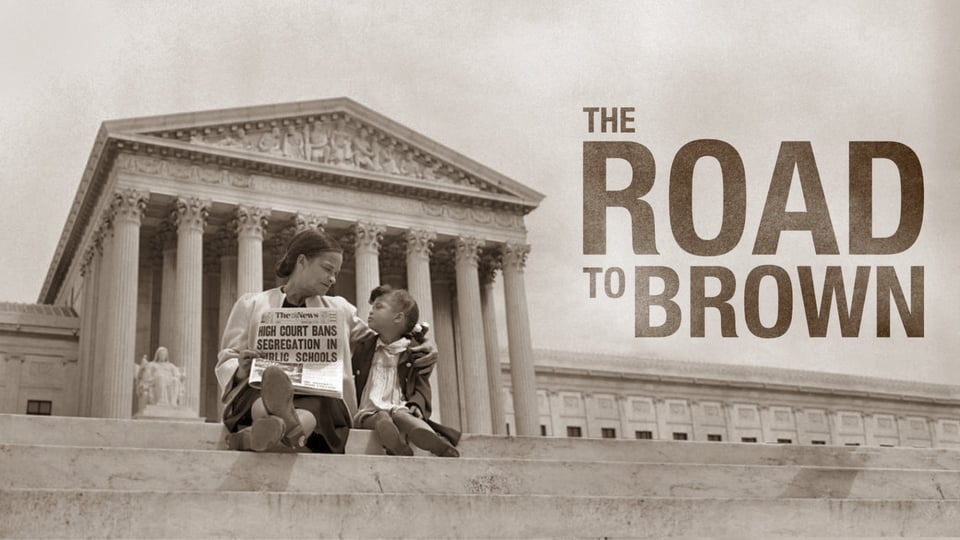
A sepia toned photograph of the Supreme Court building, with a Black woman and child sitting on the steps holding a newspaper, "High

As you celebrate Independence Day and reflect on our freedoms, explore these or other books and resources that continue the conversation about our country, its history, and future.

Happy 4th of July and happy reading!

Brandon is a Customer Service Specialist at HCLS Central Branch who loves reading, football, and taking nice long walks around his neighborhood.

Freedom to Read Roundtable: The Heaven & Earth Grocery Store with James McBride

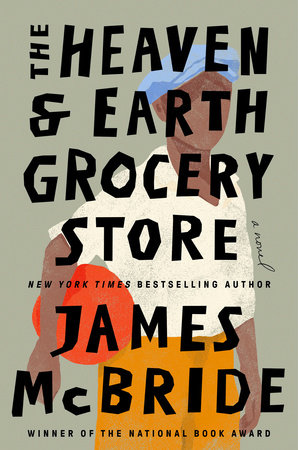
Rough lettering of the title overlays the image of a person with dark skin, a blue hate, and orange ball perched under their arm.

Freedom To Read Roundtable
Sunday, October 15
2:30 – 4 pm
In person at Miller Branch – register
online session – register

“Tikkun olam,” the Hebrew expression for “repairing the world,” is woven throughout the novel. Why? – asks Sydney Page of The Washington Post, as she interviews James McBride about his new novel The Heaven & Earth Grocery Store.*

I just love it; I love the innocence of it, I love the purity of it and I love that it works. “Heal the world” is a big phrase. How do you heal the world? You start right where you are. – says James McBride


*The Washington Post, September 23, 2023.

James McBride goes on to elaborate that our commonalities outweigh our differences and how we need to celebrate our common ground rather than fight over differences. Eschewing cynicism, he believes that we’re driven by kindness, and there’s a moral sense which underpins the American dream. McBride is, without question, one of America’s great storytellers and an essential voice in the literary landscape. This summer he returns with his signature hope, humor, and humanity in The Heaven & Earth Grocery Store, which begins in 1972 when workers in Pottstown, Pennsylvania find a skeleton at the bottom of a well. Long-held secrets emerge in Chicken Hill, a neighborhood where immigrant Jews and African Americans have lived side by side for decades.

You can borrow the title in print or large print, as an e-book, or as an audiobook on CD, or an e-audiobook.

Hear more from National Book Award-winning author, musician, and screenwriter James McBride at the Freedom To Read Roundtable happening on Sunday, October 15 from 2:30 – 4 pm. Join with librarians, publishers, poets, authors, and your community in supporting the essential right to read at the Freedom to Read Roundtable.

The Roundtable also features a distinguished panel of speakers:

  • Emily Drabinski is the current President of the American Library Association (ALA) and Associate Professor at the Queens College Graduate School of Library and Information Studies.
  • Alexandra Petri is a humorist and columnist for The Washington Post. She studied English and classics at Harvard and has received the National Press Club Angele Gingras Award for Humor Writing and the Shorty Award. She has been recognized in Forbes 30 Under 30 and in the Fifty Funniest People Right Now (Rolling Stone).

You may attend in-person or virtually. The in-person event happens at HCLS Miller Branch. Register HERE. To attend online, register HERE.

This event is presented in partnership by Howard County Library System (HCLS) and Howard County Poetry and Literature Society (HoCoPoLitSo).

Banned Books Week (Sep 26 – Oct 2)

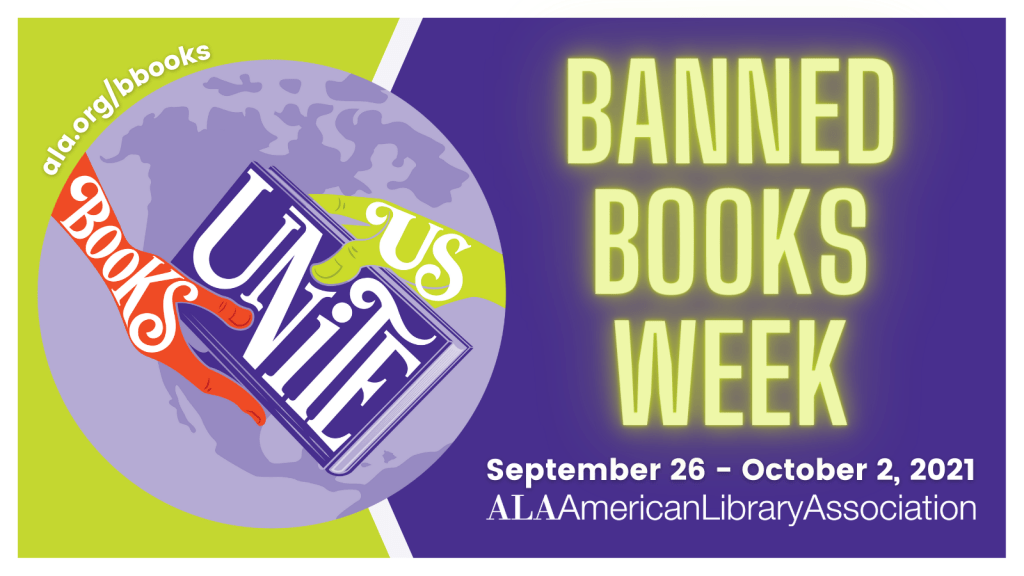
The illustration shows two hand clasping a book with the Earth the backdrop, with the text across the hands and book reading, "Books Unite Us." The rest of the text reads, "Banned Books Week. September 26-October 2, 2021. ALA American Library Association. The illustration is in shades of purple, lime green, and orange.

by Jean B.

 “Any time we eliminate or wall off certain narratives, we are not getting a whole picture of the world in which we live…we limit our vocabulary, which complicates how we communicate with one another.”  

– Jason Reynolds, the acclaimed Maryland author named Honorary Chair for Banned Books Week

A library may be held together with walls, but it’s the doors and windows that really matter — doors open for all people and windows that illuminate all perspectives. During Banned Books Week, we celebrate the freedom to read and the commitment by libraries, publishers, teachers, writers, and readers to promote access to materials that the ALA Freedom to Read Statement says, “enrich the quality and diversity of thought and expression.” Established in 1982, Banned Books Week responds to efforts across the country to challenge and censor books and focuses attention on how restricting access to information, ideas, and stories harms American cultural and political life.   

In a time when divisions cut across our nation like fault lines, the 2021 Banned Books Week theme reminds us that books can be a force for unity, even – or especially – when they convey a wide variety of views and experiences, including those that are marginal, unconventional, or unpopular. The freedom to read strengthens our ability to communicate with one another.

In a democracy, we trust individuals to learn and decide for themselves.  But to make informed choices, citizens require free access to all viewpoints and all kinds of ideas in the process of self-education. Where can people go for free access to ideas and information? Their public library! As essential institutions of democracy, public libraries implement intentional collection policies to ensure the breadth and inclusivity of materials available to their communities. For Howard County Library System, this translates into a collection that reflects a wide range of voices, including controversial and conflicting ideas.  

As the HCLS Board of Trustees affirms, while, “anyone is free to reject for [themselves] books or other materials of which [they] do not approve, [they] cannot exercise this right to restrict the freedom of others.” The freedom to read strengthens our citizenship. Each year, the American Library Association (ALA) publishes a list of the ten most frequently challenged or banned books across the nation. This snapshot reflects only a small percentage of the challenges that take place in schools and libraries.  The ALA estimates that 82 – 97 percent of requests to remove materials are unreported. As this list illustrates, the challenges come from all directions and perspectives. The freedom to read protects all points of view.

So this year, in honor of Banned Books Week, open the library door and explore our extensive collections.  Look through the windows of stories into all different kinds of lives, familiar and unfamiliar.  Explore HCLS’ Brave Voices, Brave Choices campaign to discover a wide range of experiences in our own community. It’s all free to you, and you are free to choose.

Jean B. is a Children’s Instructor and Research Specialist at the Central Branch and loves reading books for all ages when she isn’t enjoying the outdoors.