For everyone. Follow this link for more information. Saturday, January 25 from 1 to 4 pm at HCLS Miller Branch.
What can gardeners do in the cold of winter when the ground is frozen? Dig into sustainable gardening and help stock our community Seed Library! Learn, share, and take part in free demonstrations and workshops. Activities include:
Backyard composting demonstration
Winter seed sowing demonstration
Ask a Master Gardener
Bay-Wise sustainable gardening information
You do not have to bring any seeds to participate in the Seed Drive. You can take part in the Seed Library by visiting Miller Branch on select dates. While the Seed Library does not open on January 25, you are welcome to visit it on one of the other open dates. Find the full schedule here.
All ages and experience levels welcome, from those who have never gardened but would like to learn, to those who have grown flowers and veggies for years. Families welcome (children must be accompanied). Both seeds harvested from your garden and seed packets are welcome. New to seed harvesting? Find advice here.
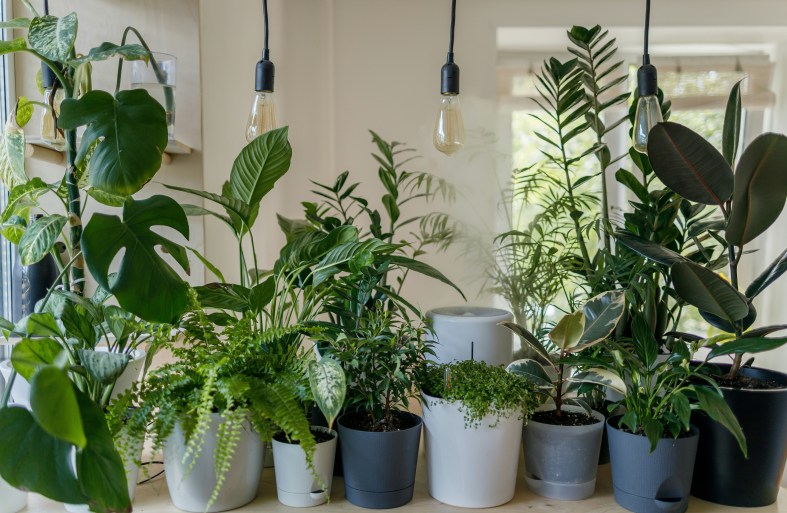
Calling all plant lovers and the plant-curious! Join us for our (free!) first plant swap at HCLS Miller Branch on Saturday, July 13 from 2-4 pm. In addition to spaces to give, take, and trade live plants, we’ll also have informational stations about how to propagate common houseplants, how to set your plants up for success, and more! The Community Plant Swap is a great opportunity to meet, chat with, and learn from other community members who propagate and grow plants in their households, and it’s also an eco-friendly way to minimize plant waste.
Have an abundance of healthy seedlings, cuttings, bare-root or potted plants? Bring them to the Take-a-Plant area so they can find a new home. Attendees also have the option to bring suboptimal-looking plants to the Plant Rehab station.
Want to expand your plant collection without breaking the bank? Bring a box or other container(s) to gather and take home new plant friends.
Interested in negotiating a direct trade with fellow plant enthusiasts? Head to the Trade-a-Plant area for 1-on-1 plant swaps, perfect for rare plant collectors.
Interested in gardening tools? Weather permitting, the Enchanted Garden will have a “Tool Shed” station where attendees can give and take tools and other supplies, with a volunteer available to explain different purposes and techniques for using tools.
Items we WILL accept:
Potted plants
Bare root plants
Plant cuttings or “babies”
Mid-season – late-season seedlings/starts for vegetable gardens
Gardening tools
Pots, vases, and containers
Small, sealed bags of potting soil, coco coir, vermiculite, etc. (ex. 8 qt bag of all-purpose potting mix)
Plant food/fertilizer
Bulbs
Seeds to donate to our new Seed Library (coming soon)!
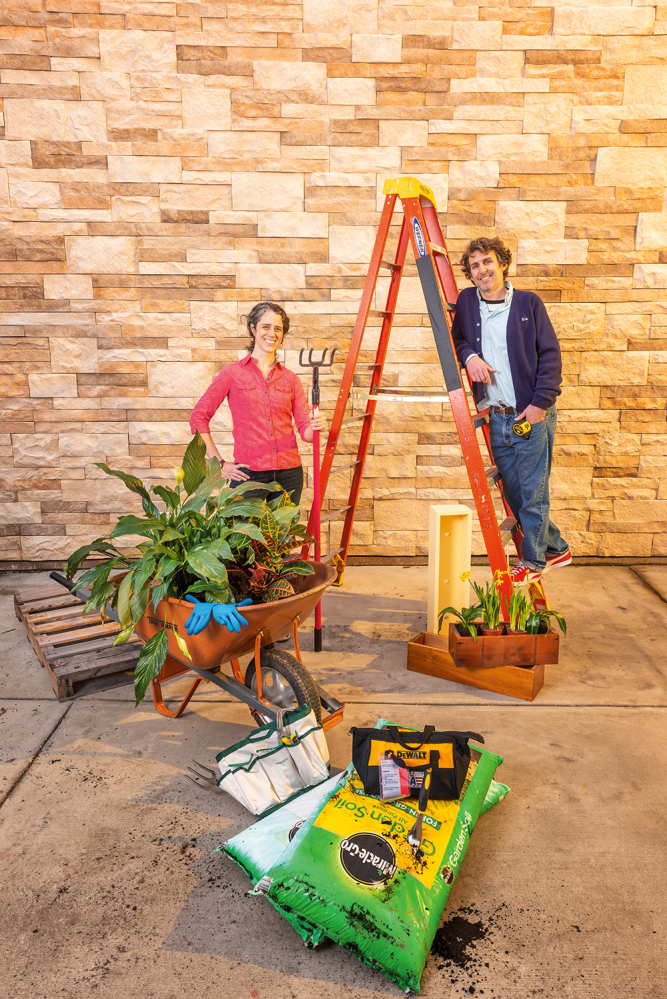
Spring is in the air, and I am eagerly getting ready for the growing season. I’ve been getting started by borrowing tools from the HCLS DIY Education Center, and it’s been a big help for all the times I just need that one specific tool to get the job done. So, let’s look at how the DIY Center can help you with that spring project list!
Looking to prepare a garden for planting? Use a broadfork to help with tilling and aerating the soil. It can also help with mixing in soil amendments such as compost, peat moss, and fertilizers while preserving soil structure.
Need to remove weeds? We’ve got you covered. Borrow our hand cultivator or try a digging knife for the tough weeds. Sometimes it’s more comfortable to weed from a standing position; for that, you might like the garden claw, which is also handy for cultivating the soil, or the standing weed puller, which is as simple as its name implies.
If you’re new to planting, you might appreciate the seed sowing template. This helpful guide lays out exactly where to plant each seed without a need to measure between rows.
Having the proper tool can make completing a task a joy, and gardening should be enjoyed. Stop on by the DIY Center to get yourself set for a great growing season.
12/9/23 – Library customers learn how to build a shelving unit during a class at Howard County Library System Elkridge Branch.
From Eric about wood-working:
Since we opened in 2018, the DIY Education Center at Elkridge Branch has lent more items each year. We have many new, exciting items in 2024. Lending power tools, baking pans, and sewing machines in a library is not a commonplace thing. I would imagine you might live locally, so if you’ve not yet taken advantage of this amazing resource, drop by soon.
We have just about every power tool you need for all your home improvement projects. The compound double bevel miter saw is one of most popular tools. This year we’ve added table saws that allow you to “rip cut,” or cut boards long ways. New this year, you can borrow a biscuit joiner that makes identical cuts in boards so you can join them side by side (in a biscuit). This tool comes in handy when making a tabletop, for example. The powered hand planer removes material from wood planks, allowing you to quickly “plane” them down. What’s more, we have clamps, corner clamps, and face clamps. These are super helpful for joining wood together for more intermediate carpentry projects.
You are always welcome to stop by and chat with a knowledgeable staff member about the tools necessary for a project. The classes we offer are really the next step to learning how-to and hands-on. Instructors demonstrate basic techniques, and students may try certain tools. Questions are always welcome throughout the class.
DIY Raised Garden Beds For adults. Register. Learn and participate in the construction of a raised garden bed. Learn the building techniques and materials needed (all available to borrow from the DIY Education Center at Elkridge Branch) and tips for starting your Spring planting! Sat, Mar 16 | 11 am – 12:30 pm Miller Branch
Seed Starting For ages 11+ & adults. Register. Starting vegetables and flowering plants in preparation for spring and summer gardens is fun and rewarding. In this hands-on workshop, start vegetable or flower seeds to take home. Learn from Master Gardeners how to select the right seeds and starting media and how to provide proper germination and growing conditions for seedlings. All materials provided. Sat, Mar 23 | 11 am – 12 pm Elkridge Branch
How to Make a DIY Cat Tree For adults. Register. Learn the basic carpentry techniques and design skills to build your own cat tree. We discuss the new and re-purposed materials that can be used. Learn through demonstration and participation about the tools you can borrow from the DIY Education Center. Sat, Apr 20 | 11 am – 1 pm Elkridge Branch
Kelly is a DIY Instructor & Research Specialist at HCLS Elkridge Branch. She likes to get her hands in the dirt, try new craft projects, and see how many books she can read at one time.
Eric is a DIY Instructor and Research Specialist at HCLS Elkridge Branch. He enjoys reading, films, music, doing nearly anything outside, and people.
Howard County Seed Share held at HCLS Miller Branch.
by Erica C.
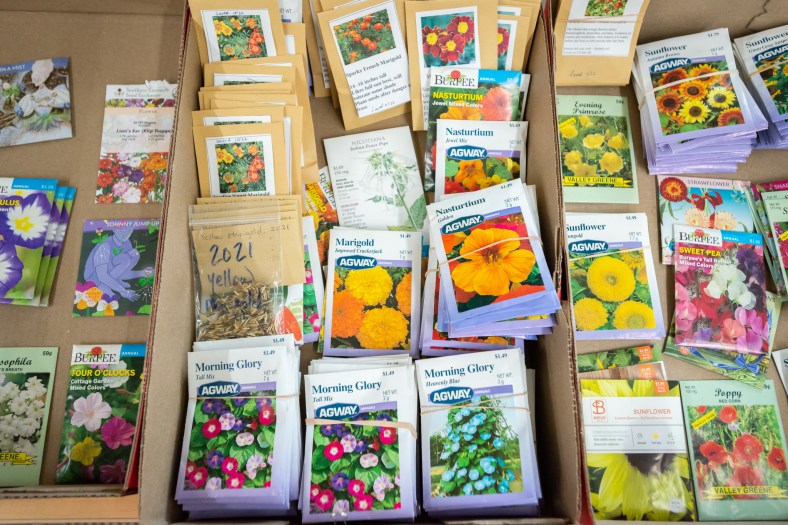
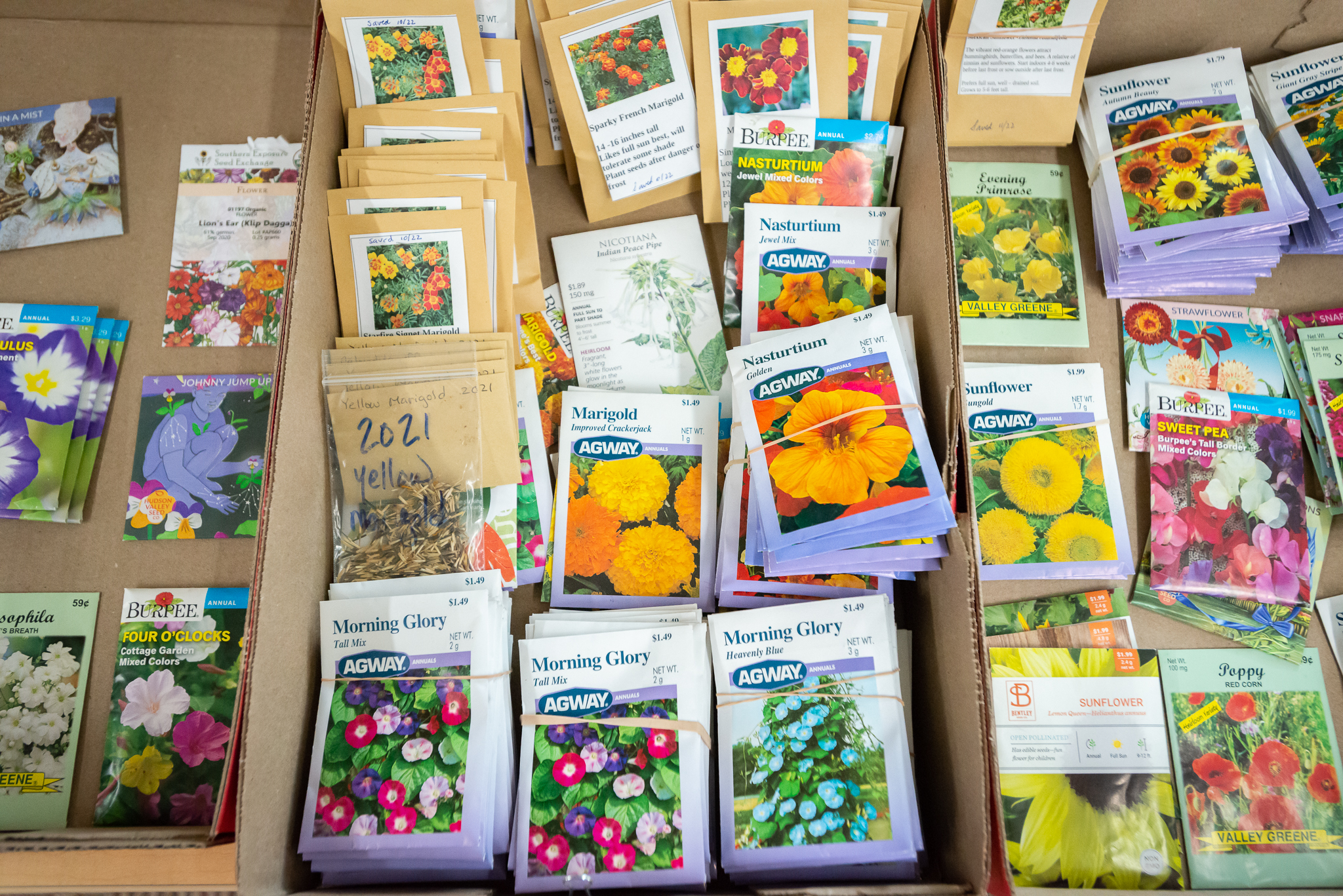
The outdoor temperature of a chilling 25 degrees Fahrenheit did not stop us from gathering at the Miller Branch on Saturday afternoon to plan, learn, and discuss all things gardening. We distributed thousands of free seed packets collected from local gardeners around the county and seeds donated from companies like Baker Creek, Southern Exposure, and Seed Savers Exchange. The offerings included vegetables (from asparagus to zucchini), herbs, perennials (with a focus on native varieties), and annuals.
There were demonstrations for participants to learn how to start flower and vegetable seeds in milk jugs or compost in their own backyards, and tables to learn more about local greening organizations. Over 300 attendees ranged from budding gardeners and novices to Master Gardeners who have been growing for over 20 years.
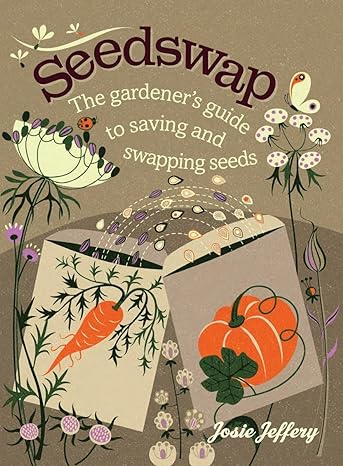
Seed sharing and seed starting are excellent activities for gardeners to work on during the cold winter months in Maryland. When snow is still on the ground and temperatures are icy, germinating seeds under a grow light is a fun, rewarding activity for adults and children alike. If you are interested in these topics, HCLS has a wide array of resources in our collection for you to choose from:
Thank you to the many partners, volunteers, and participants who made this event a huge success. We can’t wait to see you next year.
Erica C. is in her dream role as the Enchanted Garden Instructor at the Miller Library. When she’s not tending to the garden, you can find her cycling along the C & O Canal, experimenting with new recipes from around the world, or curled up with her coffee and a good read.
Monday, Dec 4 | 7 – 8:15 pm Elkridge For adults. Register here.
Authors Gary Pilarchik of @therustedgarden and Dr. Chiara D’Amore discuss their new collaborative book, Growing an Edible Landscape: How to Transform Your Outdoor Space into a Food Garden. Plan for the spring ahead and learn how you can convert your lawn and landscape areas into fruitful edible gardens with this practical guide overflowing with ideas, plans, designs, and know-how.
Gary Pilarchik has been gardening for most of his life. His grandfather taught him about vegetable gardening in first grade, and it ignited a passion that has been with him ever since. Gary started his YouTube channel, The Rusted Garden, in 2011 as a way to enjoy himself and teach others about gardening. He has since grown his following of dedicated subscribers, and he started a second channel, My First Vegetable Garden, a few years later to cater to first-time vegetable growers. His belief is that a garden wants to give, vegetables want to grow, and everyone can have a successful garden.
Chiara D’Amore is the Executive Director of the Community Ecology Institute, a non-profit organization working to cultivate communities in which people and nature thrive together. She holds a Ph.D. in Sustainability Education and a Masters in Environmental Science and Engineering and teaches courses related to climate change, civic ecology, experiential education, and research design.
Seeds from the 1st Annual Howard County Seed Share held at HCLS Miller Branch in January 2023.
Save the date: 2nd Annual Seed Share at HCLS Miller Branch, Saturday, January 20, 2024, 2-4 pm A seed exchange is a great opportunity to acquire new varieties, save money, and reduce seed waste, while learning and sharing with fellow gardeners and community volunteers. Free demonstrations and information will also be available. If you would like to share seeds, please drop them at one of three locations, from January 1 – 18:
HCLS Miller Branch | 9421 Frederick Rd, Ellicott City
HCLS Elkridge Branch | 6540 Washington Blvd, Elkridge
Community Ecology Institute | 8000 Harriet Tubman Ln, Columbia
Earth Day (April 22) challenges us to find new ways to protect and preserve our planet. No doubt you’ve heard the mantra “reduce, reuse, and recycle.” The 3 R’s are all important strategies but REDUCE comes first for a reason: waste prevention is the number one priority to protect the Earth. The less we consume, the fewer things that need to be reused or recycled. According to the Environmental Protection Agency, the average American produces almost five pounds of waste every day, and a family more than 18 pounds, adding up to almost a ton of garbage annually.
If you want to shrink your footprint and reduce waste, libraries can help. Clearly, by borrowing books instead of buying them, we reduce the number of books in garbage heaps or recycling bins. This Earth Day, lighten your load. Before you buy, TRY IT at the library!
Video games: Don’t gamble on buying a game that may not have staying power. Borrow games from the Library and take them for a test drive before you buy.
Toys: Have your children mastered all the puzzles at home, or outgrown the toys from their last birthday? Surprise them with free toys borrowed from the Library. Play with them for three weeks, then trade them for a whole new bunch!
DIY Tools: Don’t buy something you’ll only use for one project – come to our DIY Center. Whether you need an aerator for your lawn, a pressure washer for your deck, or a special Mickey Mouse cake pan for a birthday, you can borrow it the Elkridge Branch DIY Center.
Artwork: Spice up your home or office walls with artwork borrowed from our Central and Glenwood branches. You can trade it out every six weeks – a waste-free wonder of redecorating!
Building a Better Garden with Less Effort For adults. Register here. Establishing a vegetable garden can require a lot of time and money and yield minimal results. Learn how you can establish a productive vegetable plot with less effort than you are currently expending. Tue, Apr 25 | 7 – 8 pm Miller Branch
Gardening for the Budget–Minded Kitchen For adults. While some veggies are already affordable at the grocery store or farmer’s market and might not be worth the effort to grow (hello onions!), you can easily grow other kitchen staples at home to save money. Find out what they are and discover other money-saving cooking tips.
Jean B. is a Children’s Instructor and Research Specialist at the Central Branch who loves reading books for all ages when she isn’t enjoying the outdoors.
Though it is difficult to know if we’ve had our complete winter experience, signs of spring are beginning all around. If you’re ready to welcome spring, here is a selection of books for young children to get you started. As always, if you’re interested in more recommendations, visit your local branch. We will be happy to help!
“Spring is a season of spectacular beginnings.” In the book, Spectacular Spring by Bruce Gladstone, readers are introduced to facts about the season of spring, including answers to questions like, “How do umbrellas work?” and “How do baby birds hatch?” Following a preview to “Super Summer,” the book ends with instructions for six spring-themed activities, including seed jars, dirt for dessert, and mud painting. Striking photos with bright and bold text make this nonfiction book a great selection for elementary-aged children.
Join the brother and sister duo from Apple Picking Day!and Pumpkin Day! as they prepare their garden for spring along with their parents. From gathering tools to watering their plants, the family works together, having fun along the way. With large print, colorful illustrations, and simple, rhyming text, Garden Day! by Candice Ransom is a great choice for emerging readers.
Winter is melting away, and one little bee is ready to eat! In Christie Matheson’s adorable story, The Hidden Rainbow, the reader is invited to help the little bee find the colors of the rainbow hidden throughout the garden. Tickle tulip leaves, blow flower buds, and more, as this interactive picture book combines the concepts of colors, counting, and simple lessons about bees and flowers. Preschool readers can enjoy the watercolor illustrations, and everyone will learn something about the importance of bees and pollination.
It’s the most anticipated battle of the spring: Mr. McGreely versus three hungry bunnies! Mr. McGreely prepares the garden of his dreams, filled with lettuce, carrots, peas, and tomatoes. He is not, however, prepared for the obstacles he will face trying to protect his garden from the sneaky bunnies enjoying the yummy veggies. Determined to make his garden bunny proof, Mr. McGreely works to make his garden bigger and better. Will it be enough to stop those “pesky puff-tails”? Readers can enjoy cheering for the bunnies or Mr. McGreely in this silly and enjoyable story.
How do we know when spring is on its way? In this book, readers are introduced to some of the various signs of spring, from the drifting of ice and drooping of snowmen to the warming of flowers and singing of blackbirds. The back of the book provides informative descriptions about the subjects mentioned in the book, great for discussing with preschool and early elementary-aged children. With astounding photography and simple, rhyming text, young readers will enjoy learning how to search the world around them for signs of spring.
What can be better than learning about the wonders of springtime? Learning about the wonders of springtime through interactive poetry! The poems in this book are made to be read aloud by two voices, delineated through spacing on the page and colors of the text. Readers are introduced to a variety of information about the plant and insect worlds, including seed germination and pollination, in an enjoyable format with bright, beautiful illustrations.
Sylvia is a Children’s Instructor and Research Specialist at the Miller Branch. She enjoys crafting, listening to audiobooks, naps, and walks with her dogs in 75 degree-ish weather.
Does springtime make you dream of gardening? Whether you’re new to gardening or expanding a well-tended garden patch, your library can help you get your green thumb going.
Start with one of our many books on garden planning to get ideas on layout, environmentally-friendly growing techniques, and tips and tricks to help. Find inspiration at the Enchanted Garden at HCLS Miller Branch. Get advice on your plans in-person by attending one of our classes, where Howard County Master Gardeners share their knowledge and experience.
Then begin to prepare your space for planting. Healthy soil is the foundation of a good garden! Avoid tilling the ground, which breaks up valuable soil structure, by building a raised bed. Raised beds sit on top of the ground, with sidewalls built out of a range of materials such as wood board, hay bales, logs, and more. The bed is then filled with nutritious soil and compost to help your plants grow strong. If you have an in-ground garden bed already, it’s a good idea to get your soil tested to see what nutrients it may need. The DIY Center at HCLS Elkridge Branch has your tool needs covered, with saws, drills, shovels, and wheelbarrows available to borrow for free.
If you have limited space for growing, you can try growing flowers and vegetables in containers that can fit on a deck or balcony. Container gardening not only uses space efficiently, it also allows you to move your plants to catch the most sunlight in the spring and fall while avoiding too much sun in the summer. The raised height means you can garden without bending and kneeling, and gives protection from rabbits and groundhogs. Take a hands-on class on how to build a raised bed or container garden like salad table at the DIY Center, and then borrow the tools for free that you’ll need to construct one at home.
Now you’ll be ready to buy all the beautiful flowers or vegetable plants at your local gardening center! All these classes take place at HCLS Elkridge Branch.
Getting your Garden Ready for Spring For adults. Register here. Learn about sustainable gardening with Master Gardeners. Discover tips on spring-time gardening tasks for a range of garden types, including vegetable, perennial, and native plants. Sat, Mar 11 11 am – 12 pm
Learn to Build a Salad Table For adults. Register at bit.ly/3ZTyZBB Let’s chat about what a salad table is and why you should build one. As a group, we move from plan to table during the demonstration. Sat, Mar 18 11 am – 12:30 pm
Earth Day: How to Build a Planter For adults. Register at bit.ly/3jgRhfL Make a stylish patio planter for Earth Day. We introduce materials, building techniques, and the proper use of all the tools you need to complete the project and bring some nature into your space. Sat, Apr 22 11 am – 12:30 pm
Earth Day: How to Build a Bamboo Trellis For adults. Register at bit.ly/3DwR8eO Trellises can give plants the space to grow in a garden, and bamboo is an ideal, renewable material. Learn the techniques for building a trellis with bamboo poles and lashing twine. Sat, Apr 22 1 – 2 pm
Kelly is a DIY Instructor & Research Specialist at the Elkridge Branch. She likes to get her hands in the dirt, try new craft projects, and see how many books she can read at one time.
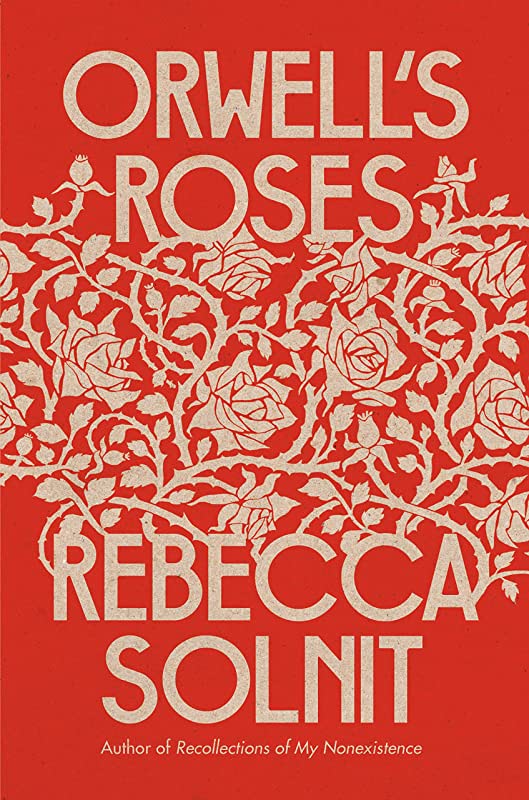
One of the pleasures of reading Orwell’s Roses is its unexpected turns from one subject to the next. – NPR
by Kristen B.
Do you enjoy tangential conversations? Where you’re not sure how you discussed so many things in one sitting? Have I got a book for you! Orwell’s Roses by Rebecca Solnit contains loosely connected essays that meander through several subjects. She recounts her global travels and wide-ranging interests, examining them all through the lens of George Orwell and his love of green and growing things. Every section starts with a variation of the sentence, “In 1936, a writer planted roses.”
Of course, the writer in question is Orwell himself, who planted a garden that contained roses at the rural cottage where he and his wife were living. The biographical bits about him include his family’s privileged background, its more recent impoverished status, his early life in India and Burma, and his latter life retreat to the remote, Scottish island of Jura. His dedication to socialist causes led him to volunteer in the Spanish Civil War, fighting against Franco. He was seriously injured, and the entire experience informed much of his early writing. Orwell suffered his entire life from weak lungs, complicated by his time in both sub-tropical countries and a period spent destitute in Spain. He eventually died of tuberculosis at the age of 46. He left a legacy of prescient writing, decrying the evils of totalitarianism, but he considered his gardens and roses equally important, as revealed in some of his journalism.
Solnit’s chapters move among these facts, linking them with socialism, coal mining, art in Mexico, Soviet politics, and the rose-growing industry in modern Colombia. She actually travels to Bogota and finagles a rare tour of a flower factory. Another chapter discusses British portraitist Joshua Reynolds and Orwell’s family pedigree, which connects to anti-colonial discourse about the Empire’s reliance on Caribbean sugar and its slave economy. Which, in turn, returns her to the notion of “genteel nature,” where the wealthy and titled classes had their fashions evolve from structured, manicured gardens to more relaxed, wild cottage gardens. At the same time, she considers how the ancient custom of holding land in common disappeared with the advent of enclosure laws and how that affected lower classes. This, in turn, returns her thoughts to Orwell and his roses.
The entire book reads in this sort of overlapping, interleaved, circular fashion: much, I suppose, in the manner of rose petals. It’s all interesting, and I enjoyed the interwoven ideas. But it does seem a little disjointed at times. While Orwell and roses act as the connective threads, the book serves more as a social and historical review of certain strains of thought. I am not a regular reader of nonfiction. The ever-changing discussion worked in my favor, as there was always something new just a few pages away. It also inspired me to put both Orwell and Solnit on my future reading lists.
Orwell’s Roses is available from HCLS in book format and also as an e-book and e-audiobook from Libby/OverDrive.
Kristen B. is a devoted bookworm lucky enough to work as the graphic designer for HCLS. She likes to read, stitch, dance, and watch baseball in season (but not all at the same time).
With the Library’s help, of course! The Enchanted Garden celebrates its 10th season this coming spring, during which the garden and the gardeners have grown! We’ve had challenges to learn from and victories to savor. Together they position us well for our best season yet.
While the garden rests under a blanket of snow, this gardener dreams! Spring conjures up visions of colorful blooms, warm sunshine, plentiful rain, and rich soil. New garden catalogs, books, and now webinars spark grand ideas and plans. I am eager to get my hands in the soil and nurture all the plants and wildlife (not bunnies!) that create our abundant garden.
Visitors to the Enchanted Garden can expect to be wowed by the tried and true as well as something new.
Here’s what you can look forward to: • An expanded Edible Landscape that combines flowers, herbs, and vegetables lovely enough for your front yard.
• A traditional Native American garden named The Three Sisters featuring corn, beans, and squash.
• Companion planting pairings to help plants get the nutrients they need, fend off pests, attract pollinators, and contribute to a healthy ecosystem.
• Container gardens showcasing vegetables, herbs, and flowers for small spaces.
• 500 pounds (fingers crossed!) of food raised for the Howard County Food Bank.
• A healthy environment that provides for people and pollinators without the use of harmful pesticides and herbicides.
Ambitious plans require many helping hands. We look forward to the return of volunteers, teens, tweens, and children to our Enchanted Garden. Stay tuned for classes and events to be offered all season long!
Ann is a Master Gardener and the Enchanted Garden Coordinator at the HCLS Miller Branch, where she has worked for many years. You can find her smiling in the garden and sharing her passion for plants, nature, and our community.













 CHAPTER CHATS