Drag Race fans: Bob the Drag Queen wrote a book. I wasn’t going to miss this one, especially since it asked the age-old question: what would the ones who came before us think about how we are today?
In Harriet Tubman: Live in Concert, Harriet Tubman, among other historical figures who everyone has heard of (though not Jesus, as Bob the Drag Queen makes sure to tell us), comes back from the dead. She picks a blacklisted, gay, music producer to help her achieve her next-greatest life work: making a hip hop album that will free people’s minds. It’s a cute premise, and the themes of freedom are present throughout. Harriet Tubman isn’t the only historical figure of note, just the lead singer of the band. She’s accompanied by her band, the Freedmen, who were all freed thanks to her leadership and who all have their own stories to share.
This is a debut and some points feel like it, but the overall story is charming, funny, and really imparts a love of history. It is quasi-historical fiction written by an author with immense love of the historical figure at the center, and that’s evident beyond anything else. I’d especially recommend the audiobook, since Bob the Drag Queen reads it with her signature charm and aplomb. Original songs are also included – fully produced numbers that add so much fun to the listening experience – performed by Bob the Drag Queen so it’s incredible.
Harriet Tubman: Live in Concert by Bob the Drag Queen is available in print, e-book, and e-audiobook.
Sahana is the Communications Strategist at HCLS. They enjoy adding books to their “want to read” list despite having a mountain of books waiting for them already.
Required Reading: Texts for Change is a new quarterly book club for readers who care about equity, community, and meaningful conversation. It’s for anyone who’s curious, committed to learning, and ready to grow—no matter where you’re starting from.
Each season, our group gathers around a thought-provoking book that invites us to see the world—and one another—a little differently. These are texts that challenge assumptions, offer fresh perspectives, and help us think more deeply about equity in our lives, our work, and the communities we live in. Howard County is a beautifully diverse place, home to people of many cultures, backgrounds, and experiences. And like many communities, we still face real challenges around access, opportunity, and belonging. Take advantage of the chance to slow down, reflect, and strengthen the ability to show up for one another with empathy and intention.
Read three nonfiction books throughout the year and one fiction title each summer—something lighter to make space for joy, imagination, and connection. Some of these books will stretch us. That’s the point. Growth happens when we’re willing to sit with complexity and listen deeply—to authors and to each other.
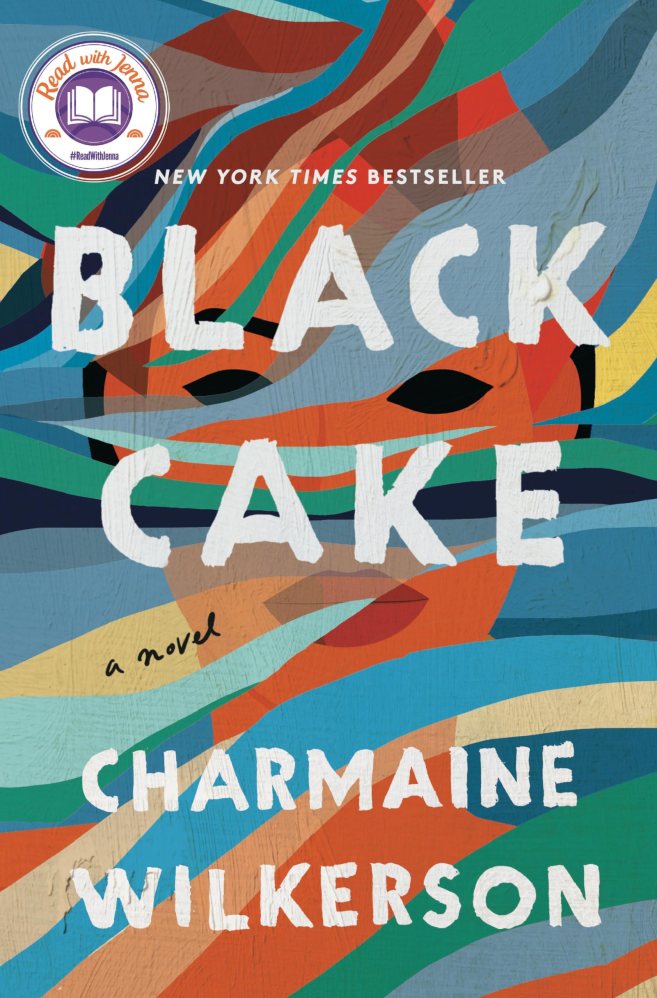
Our first title is Black Cakeby Charmaine Wilkerson, which is one of those books that subtly teaches you things about the world that you didn’t know – like the history of Chinese indentured servants in the Caribbean or that surfing isn’t the sole proprietary sport of blond dudes in California. Inspired by her own multi-ethnic Caribbean roots, author Charmaine Wilkerson manages to weave a history lesson seamlessly into a heart-tugging tale of family secrets.
Written in bite-sized chapters that move from past to present and back again, the story is woven together like grandma’s quilt. A little bit of love pinned here, a little bit of pain there. While the new ERCC book club will focus mostly on nonfiction titles, summers will be reserved for fictional getaways. Black Cake is the perfect inaugural book. Enough drama and intrigue to keep you hooked, while sharpening the mind and deepening the senses for of those committed to equity work in our own community.
Dr. Clark is the Chief Diversity, Equity, Inclusion & Belonging Officer at Howard County Library System.
The Henna Artist by Alka Joshi Reviewed by Piyali C. For generations in India and elsewhere, women have tried to loosen the shackles imposed by society for themselves, their daughters, and the women who followed them. Alka Joshi’s inspiration for The Henna Artistis her mother, Sudha. Although Sudha was denied the opportunity to live a life of her choosing, she remained tenacious and fierce so her daughter had the chance to flourish.
Joshi’s protagonist, Lakshmi Shastry, is trying to gain her independence by painting henna designs for the society ladies in Jaipur, the Pink City of newly liberated India in the 1950s. Lakshmi was married young to an abusive husband. Instead of accepting her fate, she escapes to Agra, then Jaipur in search of a new life. Her trade of drawing henna designs on the bodies of the women of powerful families in Jaipur gives her an insider’s view on the power struggles and social hierarchies. She uses this knowledge to further her career as a henna artist and a match maker.
Lakshmi’s goal is to build a home for herself with her own money. Her dream of owning a shelter also involves not being beholden to any men by accepting their help to fulfill her goal. Being an independent woman of means was not easy or common in India in 1950. With careful positioning, intuition, and a good understanding of power play, Lakshmi Shastry is well on her way to do just that. However, when her 13-year-old sister, Radha comes to Jaipur seeking her help after their parents’ death, Lakshmi’s plans for her future are tossed to the wind.
No matter what culture, women’s right to self-determination is important to Alka Joshi, and she centers her novel on this pivotal theme. The Henna Artist is fast paced, character driven, and beautifully written. The common consensus at my Global Reads book club was that this book evoked a sense of empowerment, resilience, and the will to never give up. Perhaps those are the qualities that Joshi’s mother instilled in her daughter, and that the daughter was able to bring forth those in her readers through her words, the characters she imagined, and the story she wrote.
Sat, Apr 19 | 2 – 3 pm HCLS East Columbia Branch For adults. Register at bit.ly/Alka-Joshi Books available for purchase and signing.
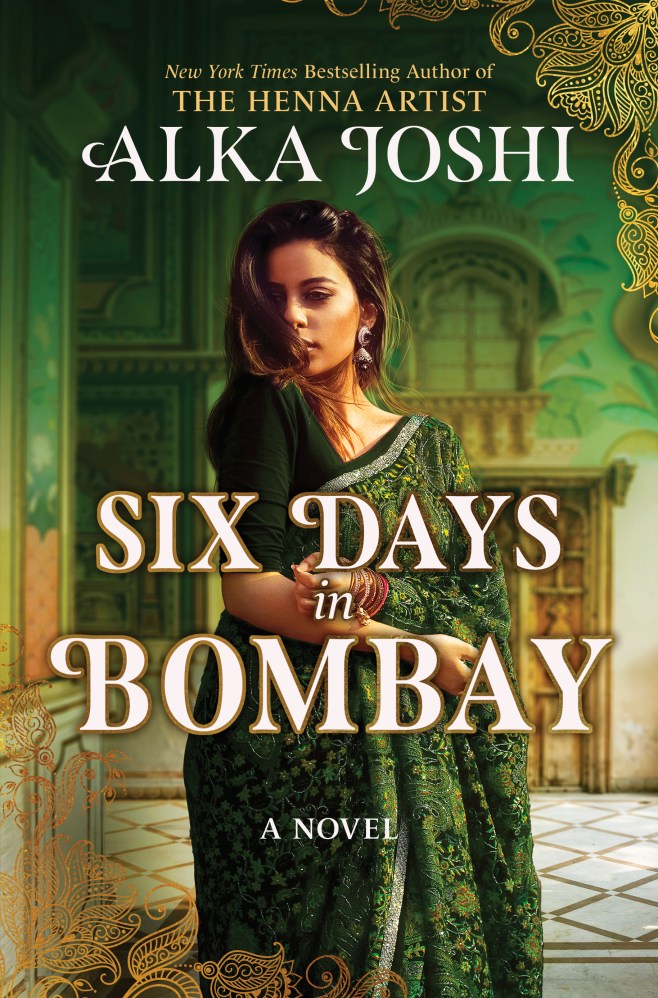
Alka Joshi is the internationally bestselling author of the Jaipur Trilogy, which includes The Henna Artist, The Secret Keeper of Jaipur, and The Perfumist of Paris. Her fourth novel, Six Days in Bombay, comes out on April 15. In her first stand-alone novel since her bestselling debut, Alka Joshi uses the life of painter Amrita Sher-Gil, the “Frida Kahlo of India,” as inspiration for the story’s exploration of how far we’ll travel to find out where we truly belong.
The Henna Artist became an instant New York Times bestseller, a Reese Witherspoon Book Club Pick, an LA Times bestseller, a Toronto Star bestseller, an Indie Bookstores bestseller, a Cosmopolitan best audiobook, and an Amazon and Goodreads favorite. It was long-listed for the Center for Fiction First Novel Prize and has been translated into 29 languages. It is currently in development as an episodic series. In 2023, Alka Joshi was honored by Forbes as one of their 50 Over 50 women, recognized for shattering age and gender norms.
Alka was born in India and came to the United States with her family at the age of nine. She holds a BA from Stanford University and an MFA from California College of the Arts.
Paterson Joseph & The Secret Diaries of Charles Ignatius Sancho Tue, Apr 15 | 7 – 8:30 pm HCLS Miller Branch For adults. Register at bit.ly/Paterson-Joseph
“[T]he rollicking fictionalized memoirs of a real-life Black British trailblazer … An entertaining portrait that also illuminates rare opportunities for Black people in 18th-century London.” ~ Kirkus Review
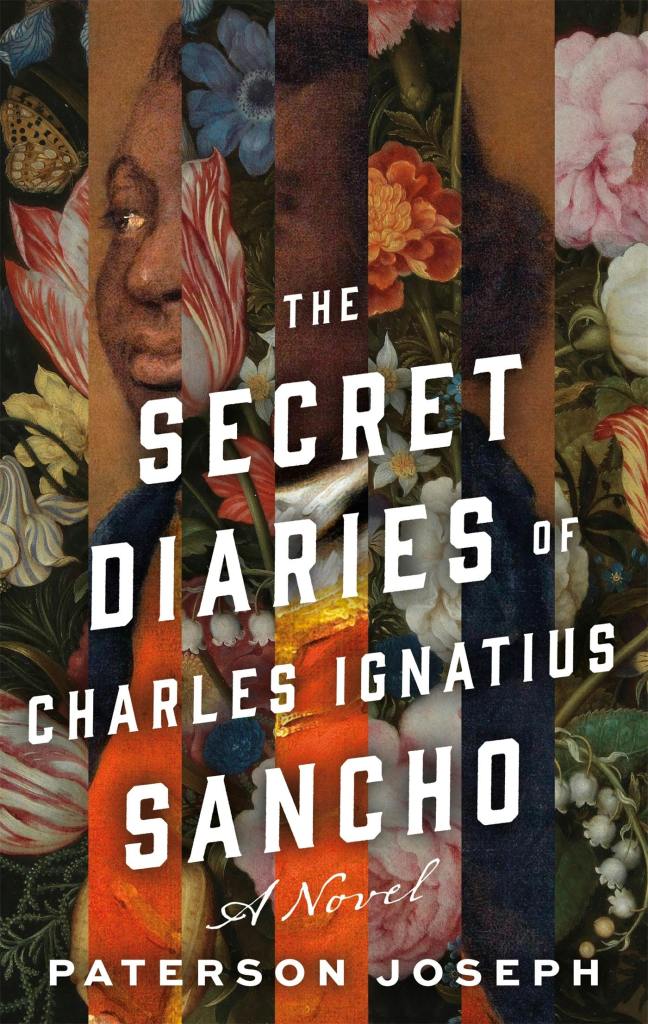
The Secret Diaries of Ignatius Sancho is Paterson Joseph’s debut novel and is a story that begins on a slave ship in the Atlantic and ends at the very center of London life. It is a lush and immersive tale of adventure, artistry, romance, and freedom set in 18th-century England and based on the true story of the first Black person to vote in Britain, who fought to end slavery. Joseph channels the writing style of the day and draws on the real-life Sancho’s diaries to give voice to his hero’s interior life.
Joseph is a beloved British actor and writer. Recently seen on Vigil, Noughts + Crosses, and Boat Story, he has also starred in The Leftovers and Law & Order UK. He also plays Arthur Slugworth in the Wonka movie. He has won the Royal Society of Literature’s Christopher Bland prize and the Historical Writers’ Association Debut Historical Crown 2023 award. Books available for purchase and signing.
More About the Era of Charles Ignatius Sancho by Ian L-F Often celebrated as the Age of Enlightenment, the 18th century is regarded as an era of immense scientific progress, with philosophy and reason expanding the boundaries of thought that, at times, challenged authority. However, the radiant optimism of this period must be understood alongside its darker tendencies, where ideals of liberty coexisted with systemic exploitation. England’s economic rise, framed as a triumph of innovation and industry, was fueled by the profits of slavery and European imperialism.
Following the War of Spanish Succession, Britain was granted by treaty the asiento de negros, a monopoly on the sale of enslaved people to Spain’s colonies, solidifying its position as the largest slave-trading nation by 1730. Despite slavery being nominally outlawed in England since the 12th century, Britain, like other European powers, externalized its reliance on slavery to their colonies. This policy enabled them to condemn the trade morally while still reaping its profits, in every cup of sugared coffee and nutmeg-spiced delicacy.
Amidst this sea of madness, Charles Ignatius Sancho emerged as a beacon of erudition and resilience. Born on a slave ship and sold into bondage in New Granada, Sancho overcame incredible odds to achieve freedom and defy the prejudices of his time. A self-educated man of letters, a composer, and a businessman, he became a celebrated voice in Britain’s abolition movement. Yet, opposition to slavery in Britain remained scarce until the late 18th century, and as W.E.B. DuBois later observed, abolitionist efforts often aligned with economic interests: “The moral force they represented would have met greater resistance had it not been working along lines favorable to English investment and colonial profit.”
The 18th-century era contended with forces not too dissimilar from our own. In echoes of history’s tribulations and the lives of remarkable individuals, we find lessons that challenge us to confront injustice, question power, and strive for a more equitable world. If your interest in history has been piqued, our online research tools, like Gale OneFile’s World History database, are a fantastic starting point for an educational journey.
Ian is an Instructor and Research Specialist at HCLS East Columbia Branch. He is a huge nerd with too many interests to list here. Currently, he is fixated on the interconnection between history and fiction. His favorite kind of stories are stories about stories.
Tue, Apr 8 | 7 – 8 pm online For ages 5-11. Register at bit.ly/2025-BoB
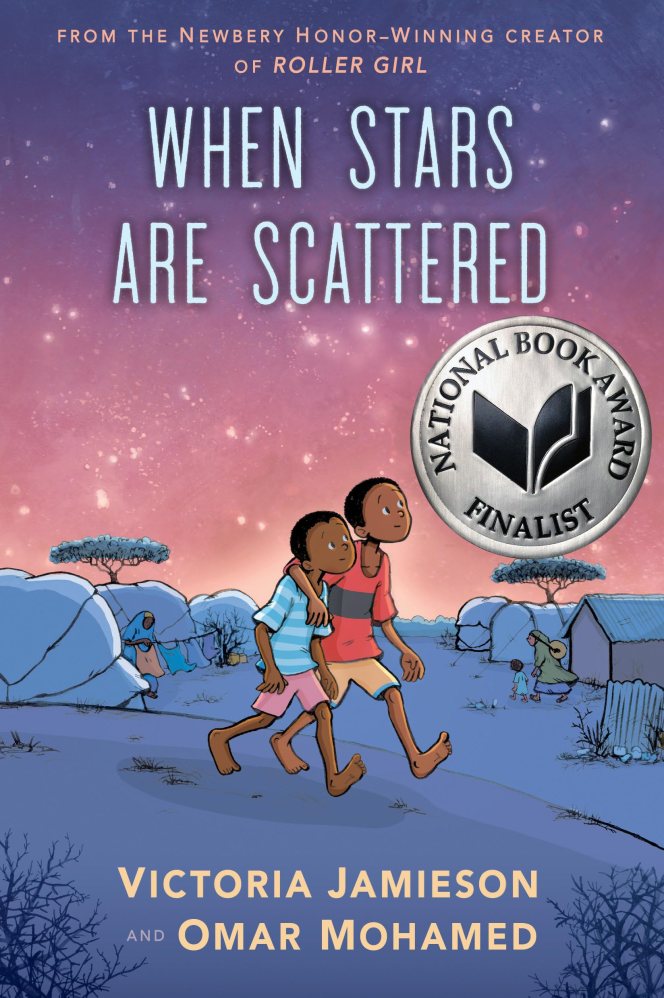
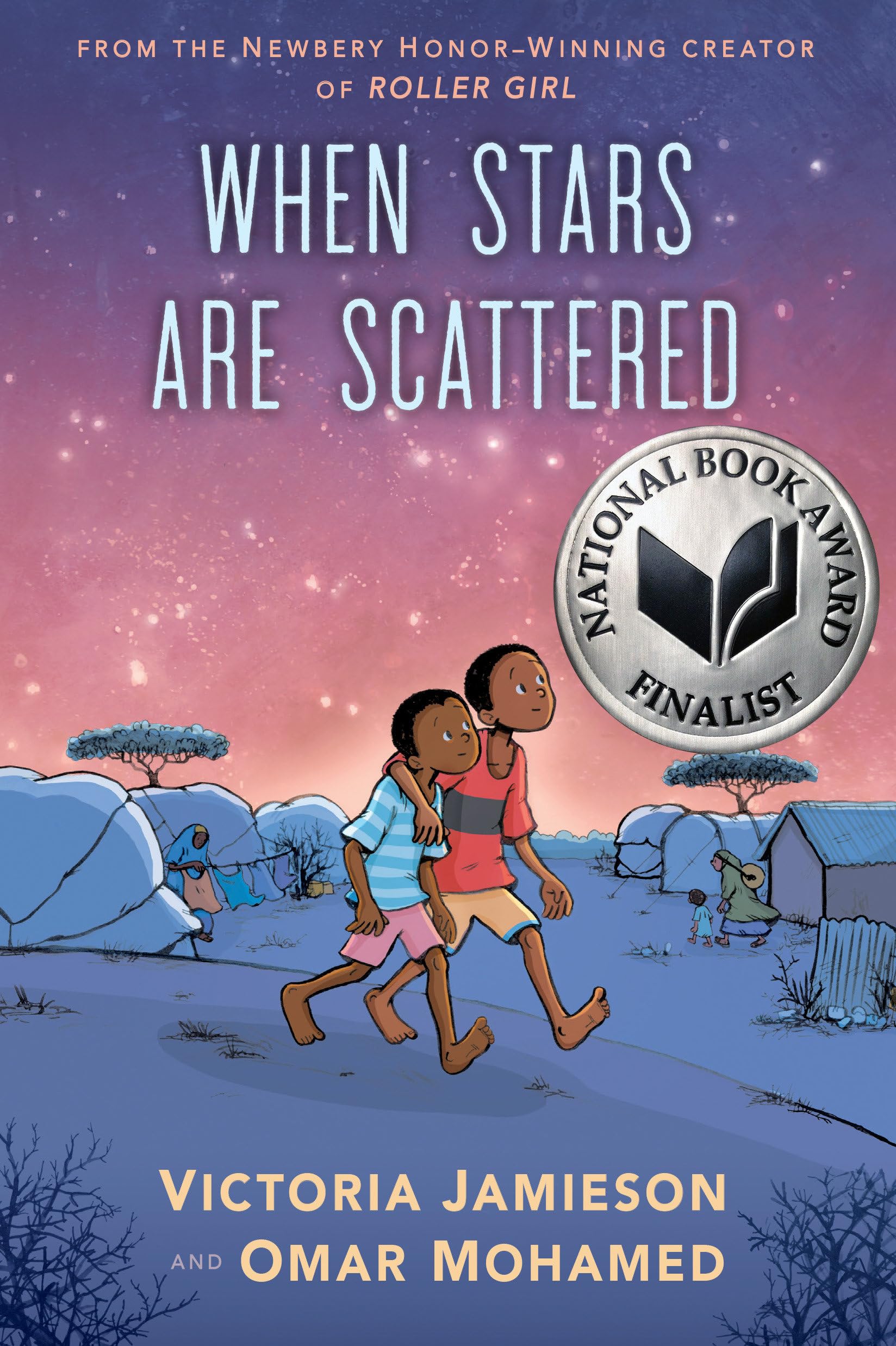
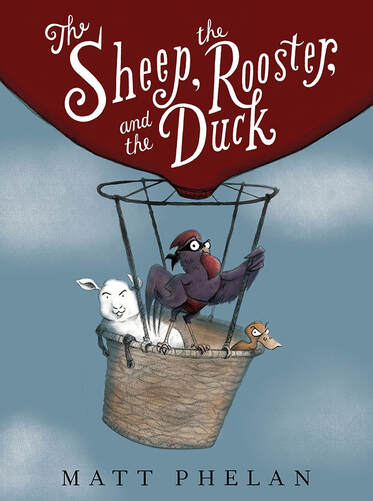
Battle of the Book featured authors Victoria Jamieson and Matt Phelan answer your questions about their books, When Stars Are Scattered and The Sheep, the Rooster, and the Duck. When you register, you have the opportunity to submit questions to them. The authors will answer selected questions during the virtual presentation. You receive an automated email confirmation containing the Zoom link when you register.
Victoria Jamieson When Stars Are Scattered by Victoria Jamieson and Omar Mohamed is a graphic novel based on co-author Omar Mohamed’s life growing up in a refugee camp in Kenya called Dadaab. It is told to New York Times bestselling author and artist Victoria Jamieson by Omar Mohamed, the Somali man who lived the story.
Victoria Jamieson is the creator of Newbery Honor Book Roller Girl. She received her BFA in illustration from the Rhode Island School of Design and worked as a children’s book designer before becoming a full-time illustrator. She now lives with her family in Pennsylvania.
Matt Phelan The Sheep, the Rooster, and the Duck is an adventure full of secrets, fun, and re-imagined historical events. Author Matt Phelan is an award-winning, New York Times bestselling author/illustrator of picture books, middle grade novels, and graphic novels for young readers. In 2014, Matt was awarded the Free Library of Philadelphia/Drexel University Children’s Literature Citation. Matt also teaches on the faculty for Vermont College of Fine Arts’ MFA program in Writing for Children and Young Adults.
John Irving’s In One Person is a moving and powerful exploration of identity, sexuality, and the quest for acceptance. At its heart is Billy Abbott, a bisexual man reflecting on his life. The novel chronicles Billy’s life from age 13 in the 1950s to his late 60s in 2010. Rather than following a strict chronological order, Irving skillfully weaves the narrative, shifting between pivotal moments in Billy’s journey to create a more authentic, lifelike portrayal.
From Miss Frost, the enigmatic librarian who plays a pivotal role in Billy’s awakening, to Richard Abbott, his stepfather and a source of guidance and support, each character is richly drawn and adds depth to the narrative. Irving’s portrayal of these relationships is nuanced, highlighting the importance of connection and the impact of those who accept and understand us.
Irving does not shy away from addressing the prejudices and challenges faced by the LGBTQ+ community. Through Billy’s eyes, readers witness the AIDS crisis, shifting attitudes towards sexuality, and the enduring struggles for acceptance. In One Person’s exploration of these themes is both heart-wrenching and hopeful, offering a candid look at the progress made and the work that remains.
Fans of John Irving will recognize his signature style: the blend of humor and tragedy, the richly detailed settings, and the intricate plotting. Irving’s ability to create a world that feels both specific and universal is on full display, making Billy’s journey relatable to readers from all walks of life.
When I first read In One Person I was incredibly drawn to how Billy goes to the library (thus meeting Miss Frost) seeking novels about “crushes on the wrong people.” She starts him out with Wuthering Heights and Jane Eyre, but expresses less confidence in giving him Henry Fielding’s Tom Jones, something I both love and laugh at at every time. Anyone who has ever had a crush on the “wrong person” will probably crush, even if just for a bit, on this too.
Angie is an Instructor & Research Specialist at Central Branch and is a co-facilitator for Reads of Acceptance, HCLS’ first LGBTQ-focused book club. Her ideal day is reading in her cozy armchair, with her cat Henry next to her.
I admit this is a fairly niche set of titles, especially given my past with archaeology, but it is interesting to see how Central and Western Asia can fascinate far Eastern writers as much as it does the Western reader. These manga series all share a common thread of being set in real or fantasy versions of places like Turkmenistan or the various Persian dynasties. The stories may be different, but they all have a cultural or at least aesthetic backdrop of a mythical Silk Road-esque past.
The Bride’s Story by Kaoru Mori No, not the cult classic movie, but rather a brilliant manga series set in mid 19th century central Asia (think modern day –Stans). The detail that Mori puts into her work is staggering, and she placed specific emphasis on the rich textile traditions of the area. Bold patterns and intricate needlework serve not only as part of the plot revolving around a nontraditional marriage, but as a luxurious backdrop for rather complex characters. Colonialism and foreign power threaten to upend traditional life constantly, and Mori places her characters firmly between the Russian and British factions, during the time period of The Great Game of shadow diplomacy and proxy wars during the 1850s. This series does not stick to one genre, with elements of slice-of-life, coming of age tales, romance, history, and ethnography. No matter the topic or conflict, The Bride’s Story is gorgeously illustrated and historically sound.
Heroic Legend of Arslan byHiromu Arakawa From the mangaka of Fullmetal Alchemist, this series takes place in a mythical and magical version of ancient Persia. This series utilizes a lot of place names and proper names that are real aspects of several eras of the Persian Empire. Places like Ecbatana and Fars, and people named Daryun and Andragoras, transport the reader into a different, ancient world. Following a young prince who is navigating the trials and tribulations of sudden leadership, the reader watches his coming of age as a compassionate leader in a land accustomed to war. FMA readers will find this series visually familiar, but with enough change to keep it interesting.
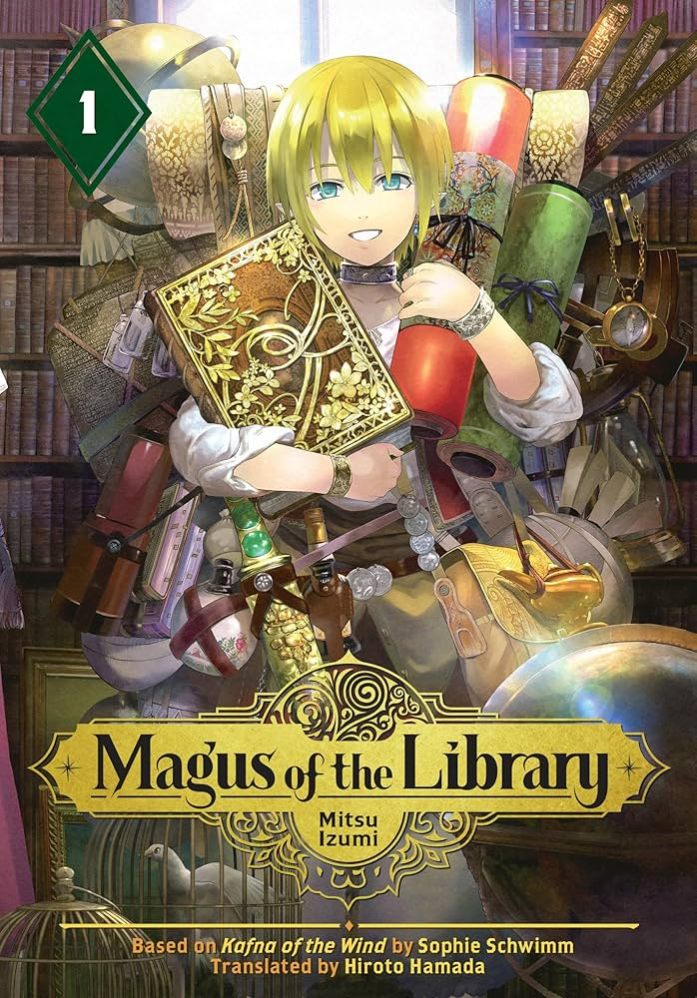
Magus of the Library by Mitsu Izumi Another story rich in detail and set in an alternative Western Asia, this manga leans less on history and more on magic. This was a bit of an indulgent read as a librarian, as most of the characters simply gush about their love of books and passions for various aspects of librarianship and reading. It also does not hurt that the fantasy society in question treats their magical librarians like super-humans. The series revels in diversity of characters, both real and fantasy, drawing from multiple historic inspirations for the factions complete with rivalry and culture shock.
Tony is an Instructor and Research Specialist at HCLS Miller Branch. He has a degree in history and a renewed interest in science fiction and fantasy.
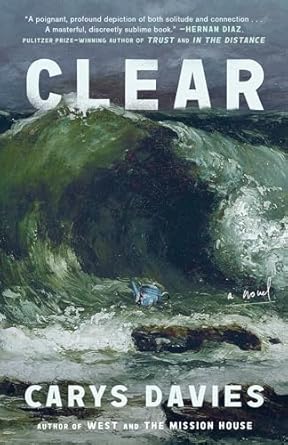
The more I read the more I realize how little I know. I was confused about the title of this exquisitely written novel, Clear, that talks about human connections. Why “clear?” I learned the significance in the Author’s Note, where I read about how 474 ministers broke away from the Scottish Church in the year 1843 to rebel against the system of patronage and form the new Free Church. I also learned about the controversial Clearances.
In the novel, John Ferguson is an impoverished priest of the New Church forced to participate in a significant social upheaval in Scotland at the time: the Clearances that began in the Lowlands, spanning from the mid-eighteenth century to the mid-nineteenth century. Farmers were forcibly removed from their lands by the landowners to use those fields for crops, cattle, and sheep. The farmers and their families were dispossessed of their livelihood and forced to move to concentrated lands where they could not produce enough food for sustenance, which resulted in mass exodus to industrialized cities. Many sold all their belongings to find passage on ships to the United States, Canada, or Australia to start anew.
John Ferguson takes up the job of evicting the lone tenant, named Ivar, of a remote island. Ivar has been living by himself for over a decade with his old horse, a blind cow, and a few hens and sheep. John’s wife, Mary, is opposed to this dangerous journey, but John is adamant about earning enough money to build his own church facility to practice the teachings of the New Church. Upon arrival, John falls off an island cliff, sustaining life threatening injuries. Ivar, the man whom John has come to evict, finds the unconscious John and nurses him back to health. Despite their language barrier, the two men find a connection, while John faces a dilemma about having to disclose to Ivar, his savior and friend, his real reason for the journey. Mary, in the meantime, has had no communication from John; she sells everything to buy passage to travel to the island herself to find out what has happened to him. The story takes an interesting turn when the three main characters come together.
Clear is not only a story of immense beauty; it is also a big-hearted story of hope, ambition, and most of all, the interconnectedness of human hearts. The paucity of words in the book somehow intensifies the beauty and the depth of the characters, the plot, and the setting. Through the magic of Carys Davies’ beautiful writing, the readers can hear the waves crashing against the rugged rocks of the island, feel the heat of the fire that Ivar builds to stay warm, and taste the slightly burnt milk mixed with cornmeal that Ivar feeds John to sustain his broken body. The book touches all our senses as we read the story. The words transport us onto the island, and we live John and Ivar’s life and feel their connection along with them. We understand Mary’s concern as she frets at the lack of communication from her husband and marvel at the ending, when all three characters converge on the island. What will happen to them next?
Clear by Carys Davies is available in print and e-book formats.
Piyali is an instructor and research specialist at HCLS Miller Branch, where she facilitates two book discussion groups: Light But Not Fluffy and Global Reads. She keeps the hope alive that someday she will reach the bottom of her to-read list.
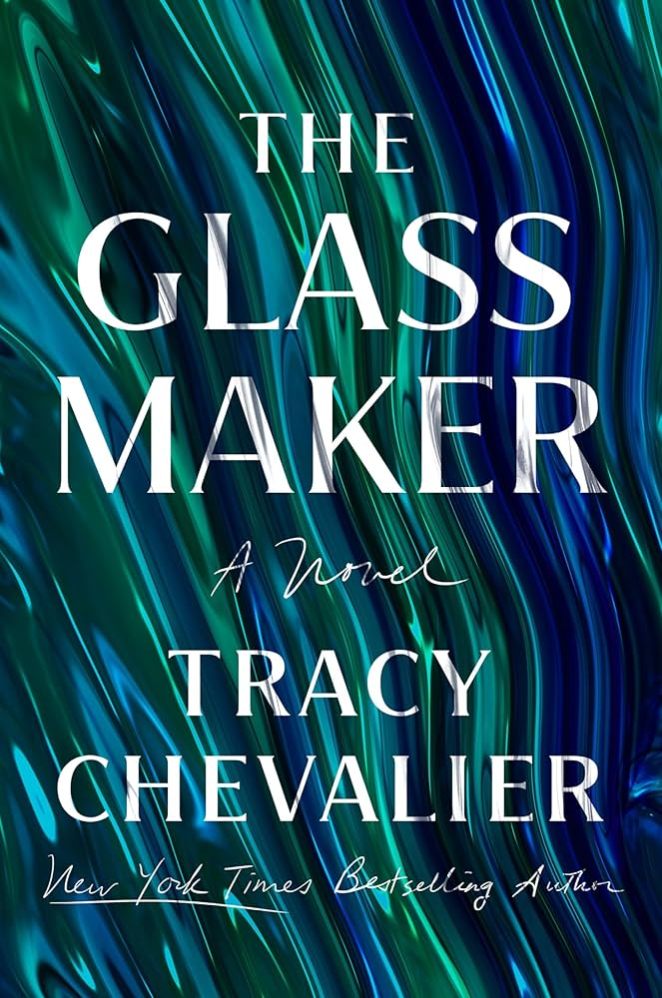
The story begins in 1486 on the island of Murano, where glass blowers create their masterpieces in relative quiet, separated from bustling and chaotic Venice by a body of water. Orsola Rosso is the eldest daughter in a family of esteemed glass blowers. Although she is interested in creating art with glass, she is relegated to household chores because women are not allowed to be in the maestros’ studios. The exception to this rule is Maria Barovier, a historical glass maker in Murano in the 15th century. Maria makes a brief appearance in Tracy Chevalier’s story as an inspiration to our young protagonist and as a woman who lends a hand to Orsola to help her fulfill her dream. With Maria’s encouragement, young Orsola learns to make glass beads from a woman in the Barovier family.
Except for her mother, Laura, Orsola must keep her skill a secret – particularly from her moody older brother Marco as he cannot tolerate Orsola’s ambition. The Glassmaker is a story about Orsola’s ascent as an established artist of glass beads, if not a maestro, during a time when women were expected to keep house, have and raise children, and support the men at work by sweeping up their broken glass. But Orsola and the other women in the Rosso family defy patriarchy in their own ways, like women have done through the centuries despite the shackles that men have tried to foist upon them.
This book displays Chevalier’s magical ability to conjure up Murano and Venice through her descriptions. She truly transports her readers to the chaos of Venice as it undergoes changes through the centuries and relatively tranquil Murano where glassmakers create their art far away from the traders and merchants of Venice. Orsola’s growth from a young girl to a strong woman with an acute sense of business is a pleasure to witness. The depth and fullness of the characters make them come alive in the readers’ minds. But all these we have come to expect from Chevalier, a maestra in her own craft. What fascinated me most was how Chevalier manipulates time to tell her story.
She urges the readers to skim a rock in the water that connects Murano to Venice. As the rock lightly touches the water and gets ready to skim to the next part, time advances fast, sometimes 70 to 100 years while Orsola’s age and those who matter to her advance only 4 or 5 or 7 years. As the rock touches the water again, Chevalier pauses to tell the story of Orsola and her family, and their lived in experience during that historical era. Then the rock skips again and we take off with it, fast forwarding several decades or even centuries.
This way, Chevalier makes her protagonist live through plague, wars, domination of Murano, heartbreak, creative triumphs and finally, in modern times, Covid. As we skim through centuries, we are mesmerized by Orsola’s growth, her strength and the strength of the women who surround her, pull her up, support her, and chart their own paths with sheer determination. As we fall in love with Orsola, we cannot help but fall in love with Murano as Chevalier gently glides us through the calles, lagoons, markets, and gondolas. We seek to return to its quiet lifestyle after a rambunctious rendezvous with Venice along with Orsola when she goes there to meet with merchants to sell her beads.
I did not wish for the book to end. But like all good things, this story also ended filling my heart with love and my head with images of Venice and Murano through centuries.
Piyali is an instructor and research specialist at HCLS Miller Branch, where she facilitates two book discussion groups: Light But Not Fluffy and Global Reads. She keeps the hope alive that someday she will reach the bottom of her to-read list.
Comparatively Lit Tuesdays, Aug 6 & 20 7 – 8:30 pm Meets online. Register to receive a link.
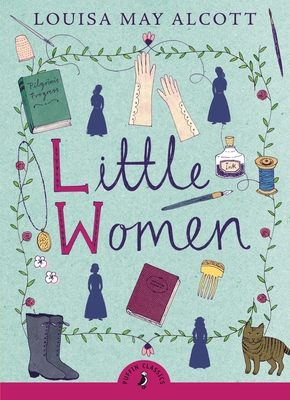
Comparatively Lit, a virtual book club hosted by HCLS East Columbia Branch, compares literary classics and newer works they have inspired. We focus first on Little Women by Louisa May Alcott and March by Geraldine Brooks, a modern companion novel focusing on the March patriarch as he serves as a Union chaplain in the Civil War.
When I was first brainstorming this class, I knew I wanted to cover “great works of literature” – whatever that means. Literature is a fraught term, one that often coveys snobbery and presumed superior merit. This ivory-tower elitism has always bugged me. If there was a meritocracy to writing and literature, at the very least it would be a more open field than many have historically treated it.
This is where Little Women enters our discussion. Truthfully, I had not read Little Women before setting up this class. It had always existed in the periphery of my literary journey. Perhaps because many of my professors had a bias for British literature, Little Women did not receive the same focus as the works of Jane Austen or the Brontë sisters. Yet, despite its century and a half of constant publication and adaptations to screen and stage, Little Women was likewise shunned by American academics for many decades. Its potential meaningfulness and impact were at best misunderstood, if not deliberately ignored.
Today, there is no real argument against considering Little Women a classic of American literature. The novel carries the weight of a pivotal period of our national history, as the horror of the Civil War looms around it. The flourishing and evolving philosophies of Transcendentalism and First-Wave Feminism define this work. The struggles the March sisters endure mirror the struggles our nation faced (and continues to face). None of this overshadows that Little Women is also a wholesome and cozy story that people have returned to for inspiration and insight for more than a century. Its popularity and impact persist into the present day.
Among the myriad adaptations of Little Women, we examine March by Geraldine Brooks. In the original tale, Mr. March is serving as a chaplain within the Union Army, remaining absent for most of the novel. March refocuses the story from his point of view as he struggles with the brutality of war. He wants to shield his family from this reality, but his shaken conscious threatens to unravel him. Brooks’ story has an exceptionally different tone, less cozy to be certain.
Comparatively Lit looks explore how narratives interact and how these works reflect our worlds. When we examine stories with common foundations, what can we learn? Do the respective time periods of their authorship inform differences in their themes? Despite the time difference, are there messages that echo between them? What does each say about America or being American?
This new book group meets online for two sessions. Tuesday, August 6 features our discussion of Little Women, which expands to include March on August 20. Please register to receive the link.
Ian Lyness-Fernandez is not quite used to being Instructor at the East Columbia Branch. He hopes his passion for learning can somehow translate into a skill for teaching.











 CHAPTER CHATS