Sun, Nov 9 | 2 – 3:30 pm HCLS Miller Branch For adults. Register here.
“Lucid and expansive, Richard Bell’s book presents vivid characters who reveal the global stage and stakes of a revolution that was American and much more.”—Alan Taylor, two-time Pulitzer Prize–winning author of American Revolutions: A Continental History
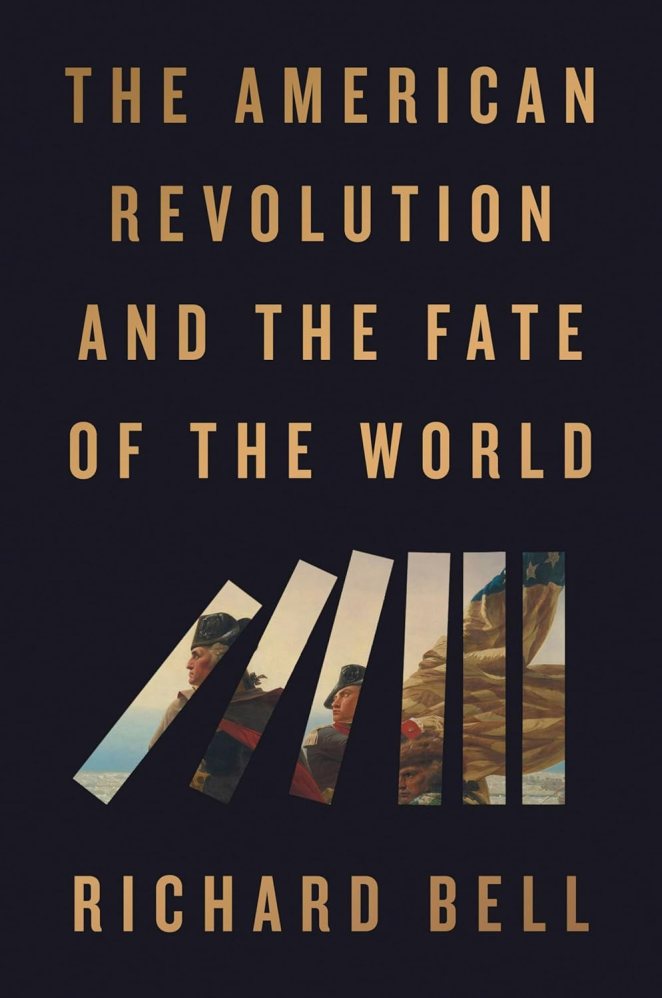
Dr. Richard Bell discusses his new book, The American Revolution and the Fate of the World, a fascinating and unfamiliar recasting of America’s war of independence as a transformative international event. The American Revolution was not only the colonies’ triumphant liberation from the rule of an overbearing England; it was also a cataclysm that pulled in participants from around the globe and threw the entire world order into chaos.
Repositioning the Revolution at the center of an international web, this narrative history ranges far afield. As our lens widens, the “War of Independence” manifests itself as a sprawling struggle that upended the lives of millions of people on every continent and fundamentally transformed the way the world works.
The American Revolution and the Fate of the World conveys the impact of these developments at home and abroad by grounding its narrative in the gripping stories of individuals. The result is an unforgettable new perspective on America’s founding fight that shifts everything we thought we knew about our creation story.
Dr. Richard Bell received a BA from the University of Cambridge and a Ph.D from Harvard University. He holds tenure as a full professor in the Department of History at the University of Maryland. He has published four books and more than a dozen articles and book chapters. His major research fellowships include Yale, Cambridge, and the Library of Congress. Dr. Bell is the recipient of the National Endowment of the Humanities Public Scholar award and the Andrew Carnegie Fellowship.
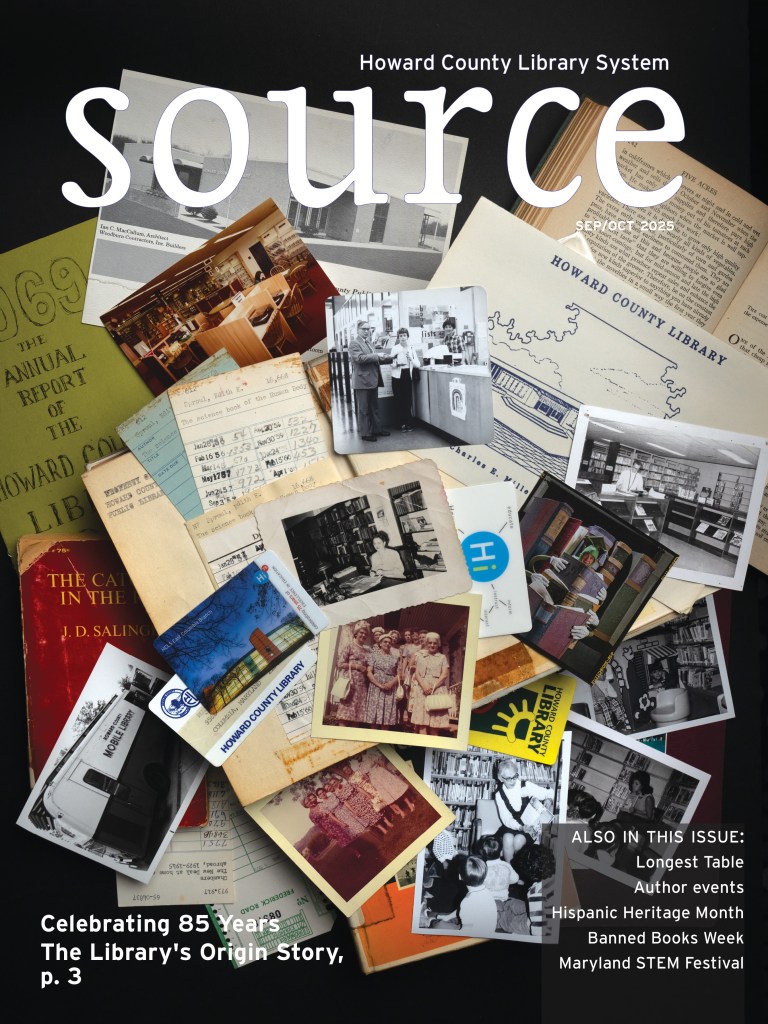
Celebrate 85 years of excellence with a journey back to where it all began.
This year marks a major milestone in the life of Howard County Library System: 85 years of history, community, and connection. As we look back, it’s not just the number that amazes us—it’s the journey, the people, and the purpose that have brought us to where we are today.
As part of our birthday celebration, we invite you to a very special class:
Howard County Library: The Origin Story – Honoring 85 Years of History, Community, and Connection
Discover how it all started — the visionaries who helped shape it and those who carried it forward — making Howard County Library System one of the top-rated libraries in the country. This program has been lovingly curated and will be presented by several of our dedicated library retirees. These individuals, who spent years serving the library and its customers, have poured their passion and time into uncovering the roots of our library system. They’ve scoured archives, tracked down milestones, and rediscovered library stories.
Their commitment has turned this event into more than just a presentation. It’s a heartfelt tribute to what we’ve built together.
From a small lending library in a Highland store run by Lillian and Ada Disney in the 1930s to the opening of the Central Library in Columbia in 1981 and beyond, our story is one of continuous growth and innovation. We’ve evolved from rented rooms and bookmobiles to vibrant branches offering world-class resources, classes, events, and services. We’ve embraced technology, expanded access, and reimagined what a library can be. But through every decade, one thing has remained constant: you—our community.
Learn more about the early days of the Library when it was a storefront on Main Street Ellicott City led by Lenna Baker Burgess. Hear how the library grew from one location to a system of six modern branches over the following decades, under the leadership of Marvin Thomas. Learn about the contributions of Norma Hill, how Valerie Gross built on past successes to become a nationally ranked library, and about Tonya Aikens’ strategic vision for the future.
Were you around before the Miller Branch was built? Do you remember the excitement of the Central Library’s grand opening in Columbia? Did you visit the storefront libraries in Long Reach or Lisbon? Did a librarian change your life, or did a story from our shelves shape your path? Did a book or program from the library help set your future in motion?
Join us to reminisce, reflect, and reconnect. Bring your memories, old library cards, photographs, or mementos, and share them with us as we fill in the story of the last 85 years from the community’s perspective. Let’s celebrate not only the institution, but the people—customers, staff, volunteers, and supporters—who made this journey possible.
Here’s to 85 years of learning, growing, and connecting—and to the many more stories yet to be written. Thank you for being part of our history. We can’t wait to celebrate with you.
Drag Race fans: Bob the Drag Queen wrote a book. I wasn’t going to miss this one, especially since it asked the age-old question: what would the ones who came before us think about how we are today?
In Harriet Tubman: Live in Concert, Harriet Tubman, among other historical figures who everyone has heard of (though not Jesus, as Bob the Drag Queen makes sure to tell us), comes back from the dead. She picks a blacklisted, gay, music producer to help her achieve her next-greatest life work: making a hip hop album that will free people’s minds. It’s a cute premise, and the themes of freedom are present throughout. Harriet Tubman isn’t the only historical figure of note, just the lead singer of the band. She’s accompanied by her band, the Freedmen, who were all freed thanks to her leadership and who all have their own stories to share.
This is a debut and some points feel like it, but the overall story is charming, funny, and really imparts a love of history. It is quasi-historical fiction written by an author with immense love of the historical figure at the center, and that’s evident beyond anything else. I’d especially recommend the audiobook, since Bob the Drag Queen reads it with her signature charm and aplomb. Original songs are also included – fully produced numbers that add so much fun to the listening experience – performed by Bob the Drag Queen so it’s incredible.
Harriet Tubman: Live in Concert by Bob the Drag Queen is available in print, e-book, and e-audiobook.
Sahana is the Communications Strategist at HCLS. They enjoy adding books to their “want to read” list despite having a mountain of books waiting for them already.
Though we do not wholly believe it yet, the interior life is a real life, and the intangible dreams of people have a tangible effect on the world.
James Baldwin
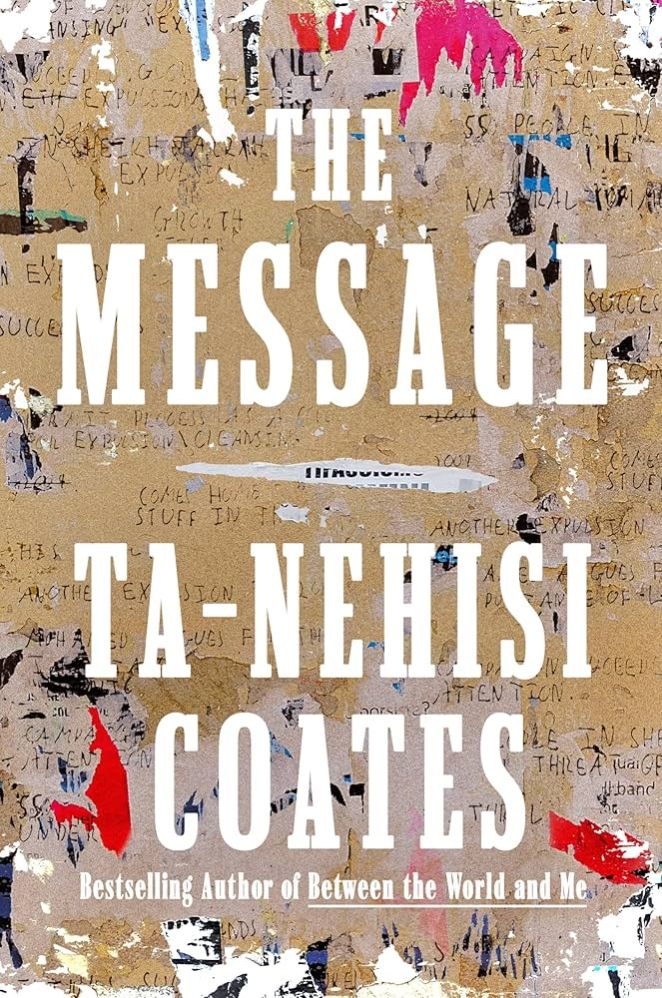
Ta-Nehisi Coates opens The Message with the above quote, and it’s a great frame for his book. Coates, the esteemed public intellectual from Baltimore and author of many excellent works such as Between the World and Me and We Were Eight Years in Power, explores three places in The Message: Senegal, South Carolina, and Palestine. Returning to the Baldwin quote for context enriched and expanded my understanding of the book.
Coates first takes us to Senegal, “I had indeed come home, and ghosts had come back with me.” He processes his own history, constantly referencing his parents, and the history of slavery and the slave trade. Coates intermingles the unbearably heavy and the humorous in the same way those things blur together in real life. He visits the “Door of No Return” and eats a delicious meal by the ocean. He stays at a luxurious hotel and thinks about, “blood in the bricks and ghosts in the attic.” He regrets the fancy hotel. The juxtaposition of heavy and humorous stretches back to his childhood and the “inheritance of the mass rape that shadows all those DNA jokes” he and his friends would make. Though we come from different backgrounds, I find Coates constantly relatable.
After Senegal, he moves us to South Carolina. He’s flying to South Carolina to support Mary Wood. Wood, a high school English teacher, assigned Between the World and Me to her class but was ordered to stop teaching the book. What is censorship and the uproar about Critical Race Theory other than an attempt to control the intangible inner life of people to keep it from having a tangible effect on the world? Coates writes, “the arts tell us what is possible and what is not, because, among other things, they tell us who is human and who is not.” As a librarian, this chapter dealing with representation in the arts, censorship, and education felt written for me.
After South Carolina, he visits East Jerusalem and the West Bank. Coates opens in Yad Vashem with the Book of Names. The Book of Names is a project to collect the names of all the Jews murdered in the Holocaust and display them. It’s overwhelming. Coates considers genocides and how the efforts to remember them, memorialize them, or recognize the horror of them can result in a second tragedy where the murdered men, women, and children are “reduced to a gruel of misery.” Coates is devastated by the holocaust memorial and crushed by the suffering of Palestinians.
Coates sees Palestinians living, at best, in a Jim Crow state. He can’t unsee this connection to his own country, life, and history. In the Jim Crow South, there was a privileged group with full rights and a disadvantaged group with partial rights. In East Jerusalem and the West Bank, he sees a privileged group with full rights and a disadvantaged group with partial rights. He drives on roads with his Israeli guides that he can’t drive on with his Palestinian guides. As he travels with Palestinians, he feels the “glare of racism,” and he sees soldiers with the “sun glinting off their shades like Georgia sheriffs.” His narrative is compelling; his argument is strong. I think his assessment of the situation is accurate.
What ties Coates’s journeys together? What connects Senegal and South Carolina and the West Bank? Let’s return to Baldwin’s quote and assume that Coates included it for a reason. All three situations reflect the tangible effect of the interior life of people. The interior lives of his mother and father had a tangible effect on him as a child and he expands on this in Senegal, constantly wondering what his father was thinking or how he thought about things. The high school in South Carolina wanted to ban his book for fear of the tangible effects that would result from the change in interior lives. The heartbreaking suffering and misery in Gaza is the horrendous tangible effect of generations of interior lives.
I appreciate Coates’ approach. He’s not a sophist. This isn’t an empty academic argument or intellectual exercise. He calls his books his children. He puts his whole self into his writing. His whole being is in his work. If you’ve seen his interviews or headlines about his book, but haven’t had time to read it, I think it’s worth the time.
Ben loves his job at HCLS Project Literacy. When he’s not at work, you might find him walking around Lake Kittamaqundi (on his break), playing pretend with his daughter Annika, reading, peeling garlic, weeding his tiny lawn (Canada Thistle, leave me be!), eating chocolate, or listening to baseball games on the radio.
To say that “men” in women’s sports is a hot-button issue would be an understatement.
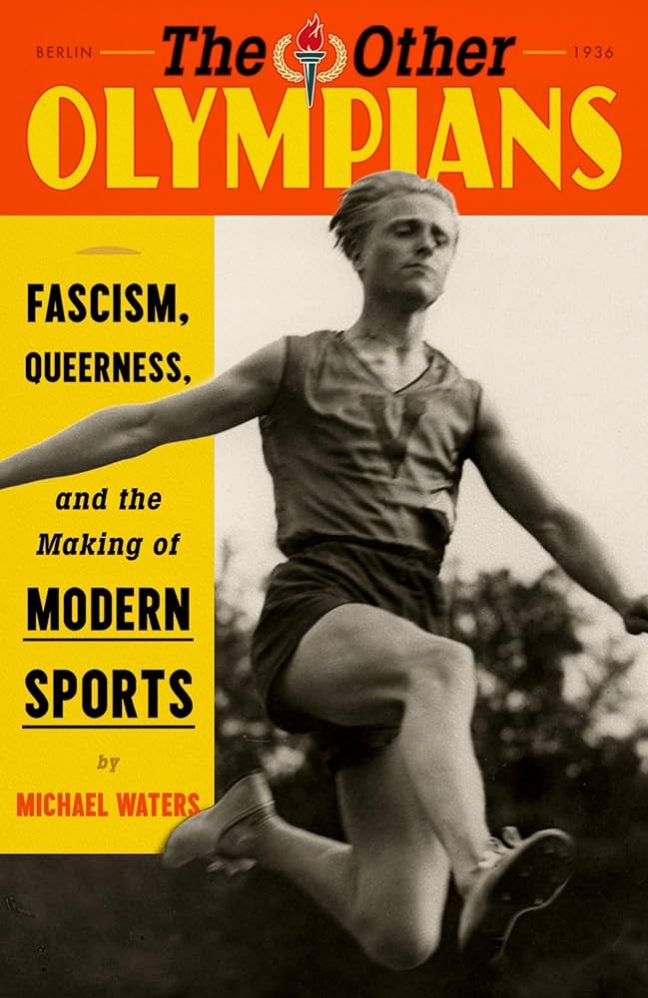
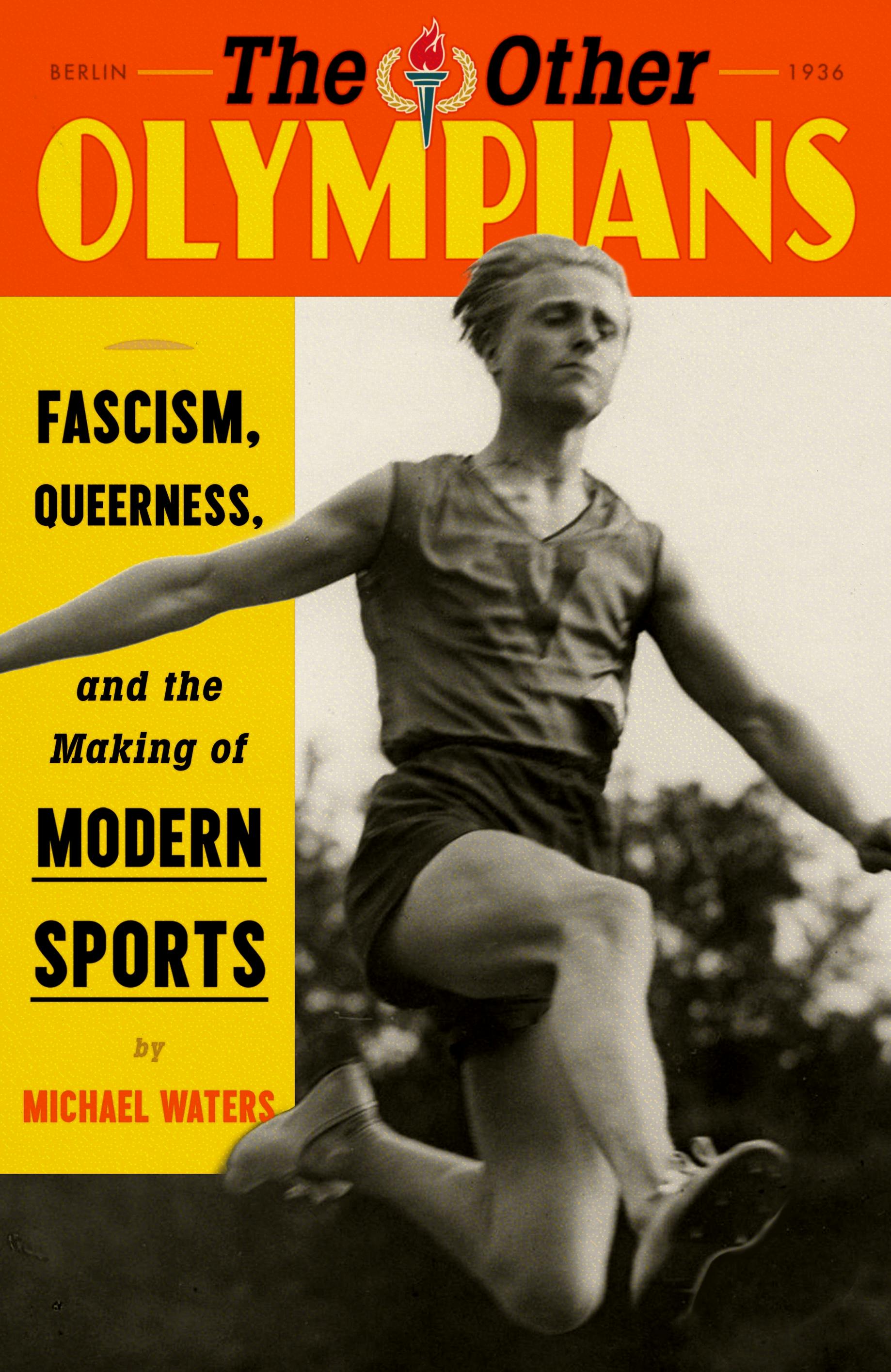
Many individuals have a knee-jerk emotional reaction to this topic; far fewer know the facts about transgender or intersex athletes. I’d bet even fewer know that gender anxieties in relation to sports are nothing new – in fact, they date back over a century. For example: mandatory medical exams, to ‘prove the womanhood’ of female athletes, were first popularized by a Nazi sports physician for the 1936 Olympics. Sex testing would become more prominent in the following decades, particularly in the context of the Cold War. Such is one bit of history unveiled in The Other Olympians: Fascism, Queerness, and the Making of Modern Sportsby Michael Waters.
As indicated by its title, this nonfiction book addresses political, social, cultural, and scientific developments in the early twentieth century. Waters digs deep into the history of professional, international athletics, exploring the forces that impacted where, and by whom, sports could be played – particularly at the 1936 Berlin Olympic Games in Nazi Germany. The idea of women playing sports, whether leisurely or professionally, was enough to cause public (primarily male) concern and outrage in this time period. The founder of the modern Olympics, Pierre de Coubertin, declared that female athletes did not, “constitute a sight to be recommended before the crowds I gather for an Olympiad.”
On a surface level, it’s not difficult to imagine why there’s a patriarchal bias regarding athletics – consider how current broadcasts of women’s sports get less viewership and the teams get fewer resources than their male counterparts. Dig a bit deeper, and you quickly run into norms about what a female body is ‘supposed’ to look like. Notice how women are ridiculed and called “manly” when they are seen as too muscular? Think about how many people now accuse female athletes with ‘masculine’ characteristics – a square jawline, a broad nose, wide shoulders, a small chest – of being male.
This is the cruel irony of the anti-trans “defending women’s sports” issue; it doesn’t just target trans people. It significantly harms cisgender women by policing their bodies and appearances, too, especially women of color and intersex women. This fixation on gender conformity in sports – specifically women being ‘feminine’ enough – can be traced back decades, to when women were discouraged from playing sports at all. Fear-mongering abounded regarding the ‘masculinizing’ effects that playing sports, especially sports that were accessible to working-class women. As Waters paraphrases the British paper The Daily Herald, “women who participated in ‘masculine’ sports like soccer or track and field risked creating a third category of sex.”
These cultural fears were elevated by news of Zdeněk Koubek and Mark Weston – each assigned female at birth and raised as girls – publicly transitioning to living as men, in 1935 and 1936 respectively. Because both Koubek and Weston had formerly won titles in the Women’s World Games, an international competition similar to the Olympics, their gender revelations had significant influence on discourse regarding women’s sports, including paranoia that male athletes could ‘pose’ as women to win professional competitions.
With an engrossing narrative approach, Waters traces the histories of Koubek and Weston along with the stories of key bureaucrats in the sports world, such as Alice Milliat, founder of the Women’s World Games, and Avery Brundage, an American sports administrator who climbed his way to Olympic leadership. Whether you’re interested in athletics, politics, or gender, you’re sure to glean knowledge from Waters’ depth of research. This is a great read for all history lovers who relish in learning little-known facts, woven together in personal and national narratives, as well as anyone who is concerned (or simply confused) about the culture wars around gender and women’s sports.
The Other Olympians is available in print and as an e-audiobook from Libby.
Interested in a brighter side of queer history? Learn about drag history and makeup on June 17, 7 – 8:30 pm at HCLS Central Branch for You Betta Werk!The Art & History of Drag. Free makeup will be given to attendees, while supplies last, on a first-come, first-served basis.
Ash is an Instructor and Research Specialist at HCLS Central Branch with a passion for information literacy and community engagement. They love music, gardening, hiking, and cuddling with their golden retriever.
“A bold and soaring work of history …whip-smart, deeply researched, and beautifully written.” ~ Jonathan Eig, Pulitzer Prize-winning author of King: A Life
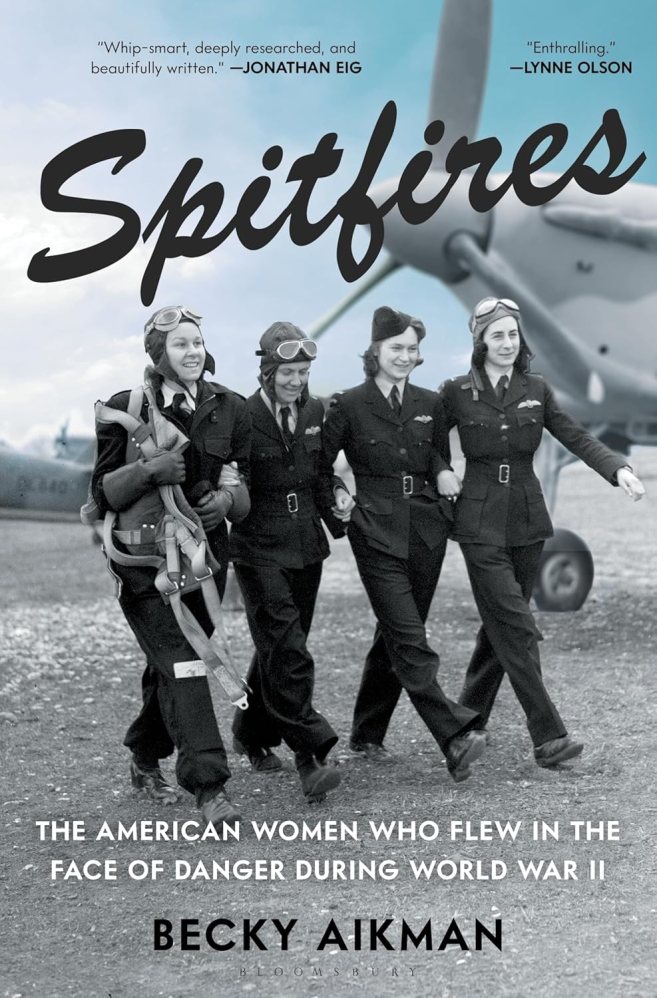
The heart-pounding true story of the daring American women who piloted the most dangerous aircraft of World War II through the treacherous skies of Britain. They were crop dusters and debutantes, college girls and performers in flying circuses–all of them trained as pilots. Because they were women, they were denied the opportunity to fly for their country when the United States entered the Second World War. But Great Britain, desperately fighting for survival, would let anyone serve in this capacity: even Americans, even women piloted warplanes. Thus, 25 daring young aviators bolted for England in 1942, becoming the first American women to command military aircraft.
In a faraway land, these “spitfires” lived like women decades ahead of their time. Risking their lives in one of the deadliest jobs of the war, they ferried new, barely tested fighters and bombers to air bases and returned shot-up wrecks for repair, never knowing what might go wrong until they were high in the sky. Many ferry pilots died in crashes or made spectacular saves. It was exciting, often terrifying work. The pilots broke new ground off duty as well, shocking their hosts with thoroughly modern behavior.
With cinematic sweep, Becky Aikman follows the stories of nine of the women who served, drawing on unpublished diaries, letters, and records, along with her own interviews, to bring these forgotten heroines fully to life. Spitfires is a vivid, richly detailed account of war, ambition, and a group of remarkable women whose lives were as unconventional as their dreams.
Becky Aikman is the author of two books of narrative nonfiction: her memoir, Saturday Night Widows (available as an e-book from CloudLibrary and an e-audiobook from Libby), and Off the Cliff: How the Making of Thelma & Louise Drove Hollywood to the Edge. A former journalist at Newsday, Aikman has written for The New York Times, The Los Angeles Times, and other publications. She lives in New York.
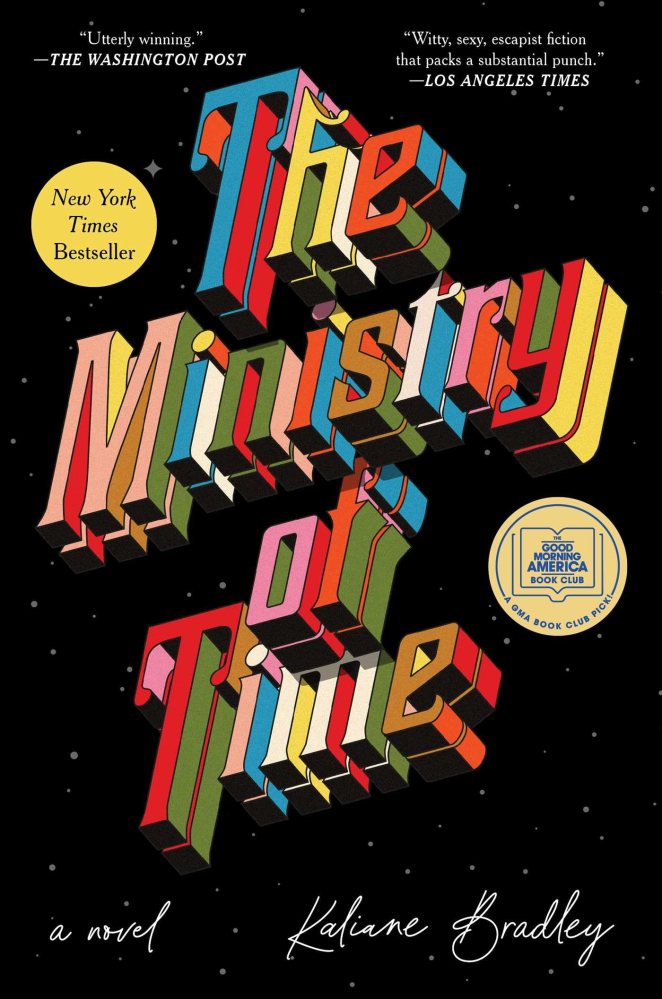
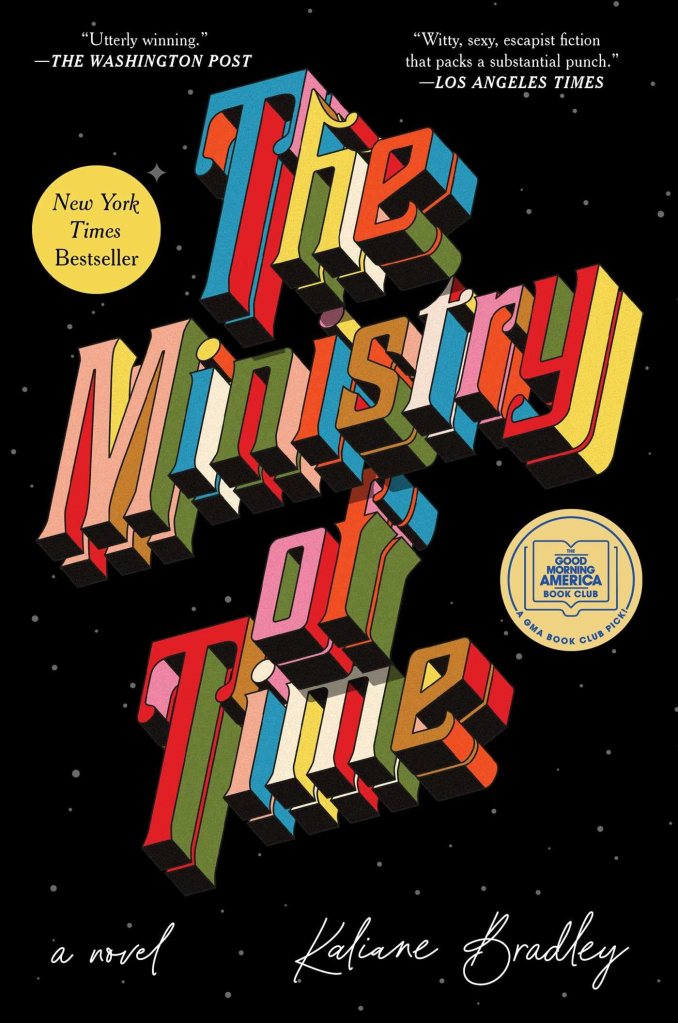
As the story begins, the main character is finishing a series of rather hush-hush job interviews. When she learns she got the new position, she hears the words, “We have time travel.” Welcome to The Ministry of Time by Kaliane Bradley, which plays with the notion that sometime in the future, we figure out how to travel in time.
It’s one of the biggest question about time travel: Can we improve the present – avert some disaster – by changing the past? This story seems a little different, more scientific at the start – wondering if it’s even possible for humans to exist outside of their own time. The Ministry devises an experiment where they “rescue” certain individuals known to have died in tragic or terrible ways: a doomed trip to discover the Northwest Passage, a plague house in the 1600s, the trenches of WWI, and other such horrible histories. Those individuals feel more like they’ve been kidnapped than rescued.
The book’s narrator, who gets that job with the Ministry (but never a name), is assigned to be a bridge between Graham Gore, officer of the Royal Navy in the early nineteenth century, and her time period in near future London. She insists on referring to him as being Victorian, but his time was actually just before Victoria’s reign began. The first third of the book delights in Gore’s observations of modern life and conveniences. But clearly, something is amiss in the Ministry. The main character just can’t quite figure it out but strange happenings keep occuring, like her handler being assassinated at a public event and certain time travelers being invisible to scanners. Other things don’t add up either, although it becomes clear there are warring factions within the Ministry. No one is quite sure who to trust.
Graham and our narrator spend almost all their time together: learning modern skills like riding a bike (which eventually improves to a motorcycle), touring museums, and going to pubs with other time traveler/bridge pairs. One session admiring a Turner exhibit at the Tate is particularly insightful. Graham becomes good friends with two other people out of time, one of whom is my favorite character. Maggie was left to die in a plague house, but she comes to embrace London’s club scene and dating apps where she can be openly gay. These friendships prove to be crucial not only to the characters’ well-being, but to the ultimate resolution of the story.
On top of the fascinating premise, the author has a gorgeous way with words. One character is described as, “Despite being out of uniform, he looked oddly formal, as if he was as the sole person in serif font.” I don’t want to spoil the surprise of this excellent debut. What ensues in the second half of the book is a complete mash-up of time travel, spy thriller, and romance into a beautifully written novel about the dangers of colonialism. Bradley really does tell you everything you need to know in the first chapter, only I didn’t realize it until I re-read it after the devastatingly bonkers ending. This is a book I’ll think about often and already have plans to re-read.
Kristen B. is a devoted bookworm lucky enough to work as the graphic designer for HCLS. She likes to read, stitch, dance, and watch baseball (but not all at the same time).
Beginning Saturday, we celebrate Women’s History Month throughout March. Established in 1981 as a memorial week, it grew to the entire month in 1987. It’s purpose is to commemorate and encourage the study, observance and celebration, “of the vital role of women in American history.” From Betsy Ross to Diana Ross, women have made a wide variety of contributions to our culture and society.
Join us for a few classes early in the month, and visit the library’s calendar often for more opportunities to celebrate. There’s an adage, sometimes attributed to Eleanor Roosevelt, that says, “Well behaved women seldom make history.” It certainly holds true for Zelda Fitzgerald, DC’s madams, and Dorothy Parker!
Zelda Fitzgerald’s Journey Sat, Mar 1 | 2 – 3 pm HCLS Miller Branch For adults. Register here.
Historian Jack Burkert gives glimpses into the fascinating life of Zelda Fitzgerald, the “First Flapper” of the Jazz Age. Born in comfortable circumstances in Montgomery, Alabama, the twenty-year-old Zelda Sayre married F. Scott Fitzgerald, beginning their tumultuous life together. Their adventures took them across America and through Europe, writing both short stories and novels, while Zelda sought artistic fulfillment. By 1930, early signs of her mental illness coupled with his alcoholism made their partnership of greatness a distant dream. Through twenty years of treatment, a maturing Zelda paints, dances, writes, and slowly recovers, creating a life story few could imagine.
Off the Mall, DC: Madams of DC Fri, Mar 7 | 12 – 1 pm online For adults. Register here.
Step into the lesser known history of Washington, D.C.’s red light district and learn about the lives of the women who shaped it. Washington, D.C. experienced an unprecedented rise in prostitution during and after the Civil War. During this period, Pennsylvania Avenue became D.C.’s most notorious red-light district, from the ramshackle “boarding houses” of Murder Bay to the glamorous pleasure houses of Marble Alley, all within sight of the Capitol. Also, a new profession for women was rising, that of the “female lobbyist.” This virtual tour introduces you to some of the most notorious women of mid-19th century DC.
Presented in partnership with Off the Mall D.C. founder and guide, Katie Kirkpatrick
Dorothy Parker: Unique American Writer Thu, Mar 13 | 7 – 8 pm HCLS Glenwood Branch For adults. Register here.
Writer, poet, screenwriter, playwright, and essayist Dorothy Parker was known as the wittiest woman in America in the mid-20th century. In an era when the printed word was powerful and readers voraciously consumed written comments, critiques, and opinions, her sharp writing appeared in the New Yorker, Vanity Fair, and other publications. Readers anxiously awaited her next words as her clever quotations became legendary, but her personal life was often troubling: alcohol, divorce, and suicide attempts continued through her life. Learn about the legacy of this unique contributor to the American literary tradition from historian Jack Burkert.
For adults. Tue, Feb 18 | 7 – 8 pm HCLS Elkridge Branch Register at bit.ly/Author_Murray Victoria Christopher Murray discusses her historical fiction novel Harlem Rhapsody, which transports readers into glittering 1920’s Harlem. Readers follow Jessie Redmon Fauset, the heartbeat of its literary revolution, as she discovers and nurtures icons like Langston Hughes, Countee Cullen, Nella Larsen, and Zora Neale Hurston.
In the 1920s, Harlem flourished as a place of Black pride. As the novel follows Fauset’s career, the reader is privy to both the brilliant creativity happening at this time while simultaneously understanding the experience of a Black woman who had to combat incredible sexism and racism to succeed. With almost three million books in print, NAACP Image Award-winning author Victoria Christopher Murray is one of the country’s top Black contemporary writers. As the co-author with Marie Benedict of the breakout hits and New York Times bestsellers The Personal Librarian and The First Ladies, she traced the lives of Belle de Costa Greene, J.P. Morgan’s personal librarian, and the Black civil rights activist Mary McLeod Bethune.
MORE ABOUT THE HARLEM RENAISSANCE by Emily B. Every February we celebrate Black History Month, but did you know that January is International Creativity Month? This intersection of Black history and creativity makes this time of year perfect to celebrate Black artists. One of the most important Black artists of the 20th century is Jacob Lawrence, best known for chronicling contemporary and historical African American life in the United States. Born in Atlantic City, New Jersey in 1917, Lawrence was a self-proclaimed, “child of the great migration.” His parents were two of six million Black Americans who fled the racist, Jim Crow south in search of freedom and opportunities in Northern cities.
Lawrence’s family relocated to Harlem when he was 13. Though young, he was able to experience firsthand the Harlem Renaissance, a period of great cultural revival for African Americans that lasted from the 1910s through the mid-1930s. Lawrence described his art style as “dynamic cubism.” His work stood out from more traditional cubist works through his use of angular forms and bold colors, which represented the strong and resilient spirit of the African American community. His use of vibrant colors continued in his later works, like 1977’s The Swearing In.*
His most notable work, The Migration Series, encompasses sixty panel paintings depicting The Great Migration. Influenced by his parents’ plight and the art scene in Harlem, Lawrence began the ambitious project at only 23 years old. He worked simultaneously on each panel to ensure the colors and style remained harmonious throughout the entire project. Thanks to funding from the Works Project Administration, a New Deal government agency, Lawrence was able to fully realize his artistic vision. Soon after completing the Migration Series panels, the Museum of Modern Art (MoMA) in New York and The Phillips Gallery in Washington, DC purchased the panels, making Lawrence the first Black artist to have his work purchased by MoMA. Today, the two museums continue their shared custody of The Migration Series.
*A framed art print of The Swearing In is available to borrow from the Art Education Collection at Central and Glenwood Branches.
National Gallery of Art: Black Art & Artists in the Collection For adults. Wed, Feb 12 | 3 – 4 pm Online Find more information at bit.ly/NGA-BlackArt Witness the enduring mark Black artists have made on American art — from 19th century painters Joshua Johnson and Robert Seldon Duncanson to modern and contemporary artists Faith Ringgold, Alma Thomas, and more. Presented by The National Gallery of Art. This class is a part of the Museum@TheLibrary series.
“It is important for all of us to see ourselves in books.” – Dr. Jerrie Cobb Scott, founder of the African American Read-In
Howard County Library System joins our community in honoring Black History Month, a month-long celebration of African American life, History, and culture, established by Dr. Carter G. Woodson in 1926 and founded and promoted by the Association for the Study of African American Life and History (ASALH). The ASALH states that Black History Month is a, “way to promote, research, preserve, interpret, and disseminate information about Black life, History, and culture to the global community.” February events at HCLS are for a variety of ages and include read-ins, stories, and crafts. Events planned with a teen audience as the focus include an AfroFuturism ArtLab and teen art exhibit, an author event with We Need Diverse Books founding member Lamar Giles, and an online discussion featuring curator Kevin Strait from the Smithsonian Institution’s National Museum of African American History and Culture.
The African American Read-In “was established in 1990 by the Black Caucus of the National Council of Teachers of English (NCTE) to make literacy a significant part of Black History Month.” The commitment for nationwide promotion extends from 1990 to the present. To date, the initiative has reached more than six million participants around the world.
According to the NCTE website, “During the month of February, schools, churches, libraries, bookstores, community and professional organizations, and interested citizens are urged to make literacy a significant part of Black History Month by hosting an African American Read-In. Hosting an event can be as simple as bringing together friends to share a book or as elaborate as arranging public readings and media presentations that feature professional African American writers.”
Tracey Williams, president of the Southern Howard County/Laurel Chapter of Continentals Society, Inc., says, “It is crucial for all children to hear the voices of African American authors, gain insight into their experiences, and explore our rich heritage.”
Howard County Library System celebrates African American authors and culture as a participant in the National African American Read-In.
Read-In Opportunities All ages; drop-in. Honor Black History Month by participating in the National African American Read-In. Community partners and library staff read aloud from books by African American authors. Light refreshments. Sat, Feb 8 at 12 – 2 pm HCLS East Columbia Branch Sat, Feb 8 at 1 – 3 pm HCLS Glenwood Branch
Meet at the children’s bubble wall to hear library staff read stories by African American authors. Listen for just one or stay for more! Thu, Feb 20 at 1 – 2 pm HCLS Elkridge Branch
Anansi Tales & Crafts Ages 3 – 11. Anansi is a classic African folktale character who is known for his trickster ways. Enjoy his woven web of cunning triumphs! Fri, Feb 28 at 10:30 – 11: 15 am HCLS Central Branch
In partnership with: Continental Societies, Inc., Southeastern Regional Howard County/Laurel Chapter; Columbia Chapter of Jack and Jill of America, Inc.; Grassroots Crisis Intervention Center; The Society Incorporated, Howard County, MD Chapter; Howard County Public School System; Alpha Kappa Alpha Sorority, Inc., Iota Lambda Omega Chapter Emerging Leaders; African American Community Roundtable of Howard County; and the Youth Leadership Program.
Afrofuturism for Teens
Afrofuturism ArtLab: Learn & Create! Ages 11 – 18. Register here. What is Afrofuturism? Explore this multimedia concept, then create your own related artwork. Your work may be chosen for HCLS Miller Branch’s Afrofuturism Student Art Exhibit for Black History Month. All materials supplied, but feel free to bring anything you would like. Sat, Feb 8 at 3 – 5 pm HCLS Miller Branch
Afrofuturism with NMAAHC Curator Kevin Strait All ages. Register here. Curator Kevin Strait from the Smithsonian Institution’s National Museum of African American History and Culture discusses his recent exhibit, Afrofuturism: A History of Black Futures. Strait shares the history of Afrofuturism, and how the exhibition explores and reveals Afrofuturism’s historic and poignant engagement with African American history and popular culture. Thu, Feb 20 at 6 – 7 pm online & HCLS Miller Branch
Author Event: Lamar Giles Ages 10 and up. Register here. A founding member of We Need Diverse Books, Lamar Giles discusses his novel, The Getaway, (currently in development for TV), and his journey as a writer, while engaging in a Q&A moderated by local teens. School Library Journal writes, “Nonstop action, increasingly dangerous risks, and themes of racism and classism will keep readers engaged and flying through this one—and rethinking that planned resort vacation.” Mon, Feb 24 at 6 – 8 pm HCLS Miller Branch








 CHAPTER CHATS