Everyone Give It Up for America’s Favorite Fighting Frenchman: Lafayette

by Angie Latham Kozlowski, Co-Chair, Franco-American Memorial Committee, Col. Thomas Dorsey Chapter, National Society Daughters of the American Revolution

Revered Revolutionary War figure Gilbert du Motier, the Marquis de Lafayette, left France at age nineteen to aid America’s battle for independence from the British Monarchy. He was determined to fight for the American cause against the wishes of his father-in-law and the prohibition of France’s King Louis XVI. On December 7, 1776, while in Paris, Lafayette received a commission of Major General in the Continental Army, which was approved by the Continental Congress on July 31, 1777. As Lafayette began making travel plans, he purchased a ship with an experienced crew, along with twelve handpicked fellow French officers, and absconded to Spain. The ship was called the “Victoire,” and it set sail for America on April 20, 1777.

Lafayette risked his life in notable battles such as Brandywine and Yorktown, earning admiration from Americans and fellow soldiers alike. His enlightened views on equality and zealous support for American independence endeared him to General George Washington, who reportedly came to treat Lafayette as a son. Lafayette’s steadfast commitment to the American cause and his ideals of liberty cemented his legacy as one of the Revolution’s most beloved figures.

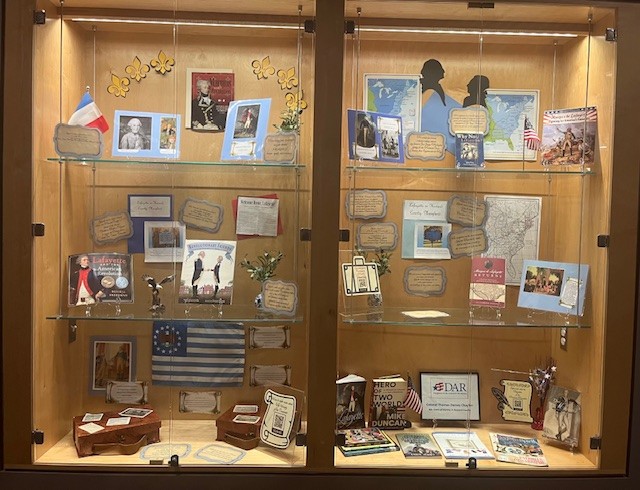
The photograph is of the display cases in the Miller Branch hallway, which contain documents, maps, photographs, books, and artifacts related to Lafayette and his visit to America.

Celebrating Lafayette’s Bicentennial as Guest of the Nation

In 1824, President James Monroe invited the 67-year-old Lafayette, the last surviving major general of the Continental Army, to return to America as the “Guest of the Nation.” His year-long Farewell Tour rekindled the nation’s gratitude and admiration. To commemorate the 200th anniversary of this historic visit, the Bicentennial of Lafayette’s Farewell Tour began in New York City on August 15, 2024. The tour retraces Lafayette’s original route and celebrates his profound impact on the young America.

Lafayette and his entourage visited Howard County with a stop in Lisbon on December 29, 1824, en route to Frederick. There is a commemorative Lafayette Tour marker, with an inscription that notes that an arch was erected by the community to welcome him.

The photograph is of the display cases in the Miller Branch hallway, which contain documents, maps, photographs, books, and artifacts related to Lafayette and his visit to America.

Explore Lafayette’s Legacy at the Miller Branch Library

The Bicentennial celebration recreates Lafayette’s tour as it unfolded in 1824 and 1825. The community can learn more about Lafayette and his return to America from the Colonel Thomas Dorsey Chapter of the Daughters of the American Revolution General Lafayette’s Farewell Tour Exhibit at HCLS Miller Branch this December.

Visit the exhibit to learn more about Lafayette’s extraordinary life, his role in America’s fight for independence, and the enduring significance of his Farewell Tour.
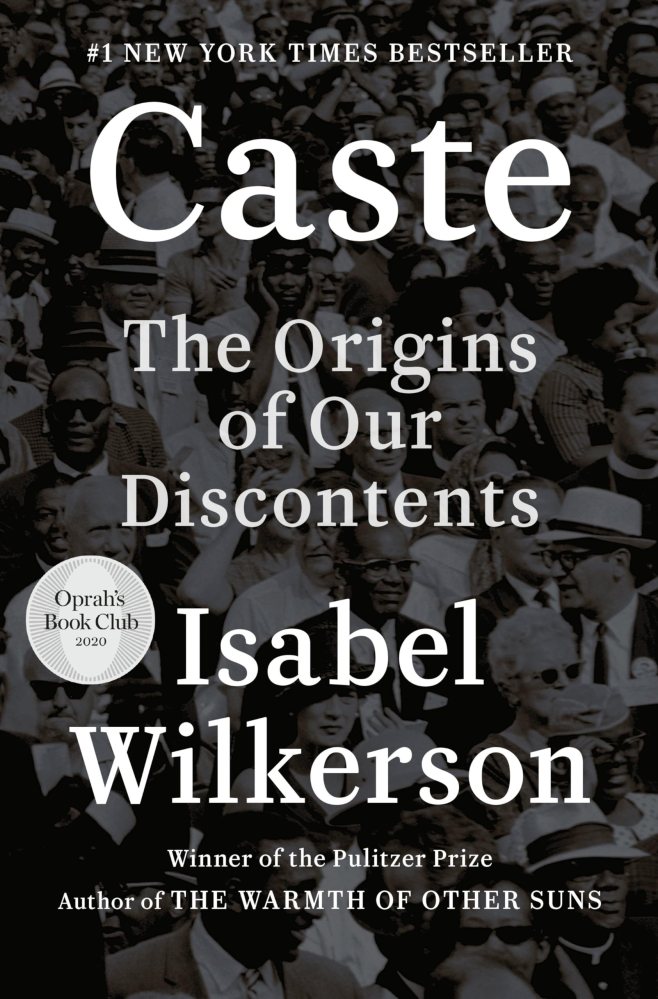
Caste and The Warmth of Other Suns by Isabel Wilkerson

Isabel Wilkerson’s indelible books The Warmth of Other Suns and Caste: The Origins of Our Discontent have, both of them, won awards and have been properly lauded; they don’t need to be touted by me but tout them I shall. They are meticulously researched, precisely written, and pack a devastating emotional punch.  

I have a long commute to work (shout out to my 795 and 695 buds), and I need to fill that time with something. I’m obdurately old school and prefer CDs and radio to podcasts. When NPR is too much (Esther Ciammachilli is never too much) and the Orioles aren’t playing, I check out nonfiction audiobooks from the library. I listened to The Warmth of Other Suns a few years ago and Caste this year; I learned so much from both. The sheer number of primary documents cited is overwhelming. The personal narratives are enlightening and heartbreaking.  

Side note: I’d listen to Robin Miles read a Comcast contract. She narrates both books and she’s a national treasure. I feel like she should win an Oscar or a Grammy – or something. 

The Warmth of Other Suns tells the story of the Great Migration, the movement of millions of African Americans from the South to more Northerly states, through the lives of three people who made the journey. It is intense. I’ve been known to cry in the car, and there were tears.  

Caste is an incredibly persuasive comparison of the caste systems in Nazi Germany, India, and the United States. Wilkerson’s central conceit is that the caste system in America is, in many ways, the most oppressive or violent system. She writes, “Jews in Nazi-controlled Europe, African-Americans in the antebellum and Jim Crow South, and Dalits in India were all at the mercy of people who had been fed a diet of contempt and hate for them” (151). The results of a diet of hate and contempt are unfortunately predictable. Wilkerson explores the grotesque, hateful, and banal violence of the caste system in depth. She writes, “African-Americans were mutilated and hanged from poplars and sycamores and burned at the courthouse square, a lynching ever three or four days in the first four decades of the twentieth century” (155). I won’t focus on the physical violence in this review, but it is all here, and it is terrible.  

Wilkerson includes illuminating episodes from her own life along with historical comparisons. While traveling for the book and for work (at the New York Times), Wilkerson is mistreated by academics, flight attendants, businessmen, and small-business owners, as well as being unjustly accosted by the DEA, all because of her position in America’s caste system. Based on her personal experience, she writes, “this was the thievery of caste, stealing the time and psychic resources of the marginalized, draining energy in an already uphill competition” (223). Outside of the obvious physical violence wrought by the caste system, Wilkerson highlights the daily mental and emotional violence, and that seems really important. 

I’ll end this review with a few more words from Wilkerson on the more subtle ways the caste system continues to do harm. She bluntly writes, “The friction of caste is killing people” and “Societal inequity is killing people” (304). This is not someone who writes for dramatic effect without evidence to support her claims. To back up her claims, she cites a study by a Harvard scientist, “’High levels of everyday discrimination contribute to narrowing the arteries over time,’ said the Harvard social scientist David R. Williams. ‘High levels of discrimination lead to higher levels of inflammation, a marker of heart disease” (306). This struck me. This internal manifestation of external discrimination is horrendous.

The American caste system is real and it is, overtly and insidiously, violent. The study goes on to find that, “People who face discrimination…often build up a layer of unhealthy fat, known as visceral fat, surrounding vital organs, as opposed to subcutaneous fat, just under the skin. It is this visceral fat that raises the risk of diabetes and cardiovascular disease and leads to premature death” (307). There are dozens of powerful and insightful passages I could have highlighted, but I wanted to highlight the above passages because they so powerfully illustrate how the American caste system continues to destroy black and brown bodies from without and within.

Caste: The Origins of Our Discontent by Isabel Wilkerson is available in print, large print, e-book, e-audiobook and audiobook on CD.

The Warmth of Other Suns: The Epic Story of America’s Great Migration by Isabel Wilkerson is available in print, e-book, audiobook on CD, and as a Playaway.

Ben works at Project Literacy, Howard County Library’s adult basic education initiative, based at HCLS Central Branch. He loves reading, writing, walking, and talking (all the basics).

Finding Community and Connection at the Library

An older woman in a striped shirt helps a younger woman start a crochet project with yellow yarn.
Participants gather at HCLS Central Branch for an ongoing class focusing on knitting and needlepoint.

by Emily B.

These days, it seems more difficult than ever to find your community and make genuine connections. Over the past four years, the pandemic has re-shaped our lives. The way that we live, communicate, and connect has changed. These rapid changes led U.S. Surgeon General Dr. Vivek Murthy to issue an advisory on the “epidemic of loneliness and isolation” in 2023.

Dr. Murthy remarked, “We’re seeing more forces that take us away from one another and fewer of the forces that used to bring us together.” Adjusting to this new social landscape is tough, especially for older Americans. It can be even more daunting without the built-in social opportunities found at work and school. Read the U.S. Surgeon General’s advisory on social connection at http://www.hhs.gov/surgeongeneral/priorities/connection.

Part of the framework to address the loneliness epidemic calls for a strengthening of social infrastructure, which includes public libraries and senior centers. These types of physical community spaces, known as “third places,” are any social space separate from your home (first place) or work (second place).

Howard County Library System’s classes and events are a great way to connect and find a community. Here’s a sampling of some of our ongoing offerings:

If you love to read, try The Unbook Reading Group. Meeting monthly at Backwater Books in Old Ellicott City, it offers an opportunity for readers to connect and chat without the pressure of assigned reading.

Get crafty with a range of creative classes for adults at various HCLS branches. Connect and make a new craft in a supportive, friendly environment with Craft Works. Pins and Needles meets every Thursday, alternating between HCLS Central and Miller Branches. Converse with other adults
as you work on your knitting, crochet, embroidery, or sewing project.

Give Mah Jongg a try at HCLS Miller Branch. Mah Jongg Meet Up occurs twice a month, welcoming players of all experience levels. Looking to stay active? Start your Mondays off on the right foot Walking with East Columbia Branch and 50+ Center.

You can find and register for even more classes and events for adults at hclibrary.org. Enter the class name into the search bar.

  • Craft Works @ Central Branch | Dates and times vary between one Tuesday evening and one Thursday afternoon every month.
  • Walking with East Columbia & 50+ Center | Mondays; 9:30 – 10:30 am
  • Pins & Needles | Every Thursday; 10 am – 12 pm with 1st and 3rd Thursdays @ Central and 2nd and 4th & 5th Thursdays @ Miller
  • UnBook Reading Group @ Backwater Books | Wednesdays, 6:30 – 7:30 pm May 15, Jun 12
  • Mah Jongg Meetup @ Miller | 2nd and last Tuesday evenings; 6:30 – 8 pm
  • Bingo Social | Thu May 16 2 – 4 pm at Glenwood & Thu Jun 27 2 – 4 pm East Columbia

The Sewing Girl’s Tale: A Story of Crime and Consequences in Revolutionary America by John Wood Sweet

A dark cover showing a young woman's profile and a braid draped over her shoulder. A set of award stickers runs down the left.
Version 1.0.0

By Piyali C.

My co-worker and I facilitate a class at HCLS Miller Branch called What’s On Your Shelf? Fiction and Non-Fiction Book Chat, which takes place on the second Thursday of each month at 2 pm. We gather to talk about our favorite books, either read that month or in the past. My co-facilitator and I share two or three of our favorite reads and then open the floor for participants to share what they have been reading. My partner makes a lovely PowerPoint presentation of our picks, and I take feverish notes about all the suggestions from participants. We then compile the list and send it out to the group. If someone does not have a book to share, they are welcome to listen.

I look forward to this class with joy and apprehension. Joy, because I get to hear about amazing books. Apprehension, because after each session my to-read list gets longer. But, as one of the participants in the class pointed out to me, the beauty of being a bibliophile is always having a robust to-read list and the resources (like a free public library) to access them. Anyway, all this goes to say that the book I am about to review, The Sewing Girl’s Tale, was suggested by one of the What’s On Your Shelf? participants. I hope you join us for our April session – register here.

In The Sewing Girl’s Tale, author John Wood Sweet brings to light a fascinating piece of history with his superb historical detective skills. In 1793, Lanah Sawyer, a seventeen-year-old seamstress in New York, is assaulted and raped by twenty-six-year-old Harry Bedlow, a member of the upper echelon of society. Often when such assaults occurred, the women were considered ruined and ostracized. Loss of virginity was synonymous with loss of status, prestige, and standing in society. For the most part, the men went on to marry and live successful lives while the victims vanished into obscurity and shame. Lanah decides to fight back with the support of her stepfather, John Callanan.

She brings a lawsuit against Harry Bedlow and the case is brought to trial. What follows is a fascinating legal drama where the key players are white men looking out for other white men, trying to keep them from the noose as the punishment for rape was hanging. Lanah has to testify in court, in front of a packed house, recounting and reliving the horror that was inflicted upon herself. At some point during this legal battle, New York’s top lawyers get involved, including Alexander Hamilton. 

The author does a fascinating job of bringing post-Revolutionary War New York to life, exposing the rampant sexual exploitation of women, class privilege, and sexual double standards. Interestingly, women of a certain class and color were considered victims, as their sexual innocence was considered a virtue. The city at least heard their cases of assault if they wished to file a report against their assailants. Black or poor women did not merit the same treatment. It was heartening to read, however, that when this case caught the attention of the people of New York, women took up pens. They wrote under pseudonyms and ignited an intense debate about holding men accountable for their deeds and considering the previously-mentioned sexual double standard. It could not have been easy for them, given the shackles placed on women at the time, but they spoke out to pave the way for younger generations. 

As I read the book, I kept thinking how some aspects of rape cases have remained the same, when women are not believed, men get off easily, and women must recount their most traumatic experience repeatedly in front of a large number of people to find justice. 

The Sewing Girl’s Tale: A Story of Crime and Consequences in Revolutionary America by John Wood Sweet is available in print format. 

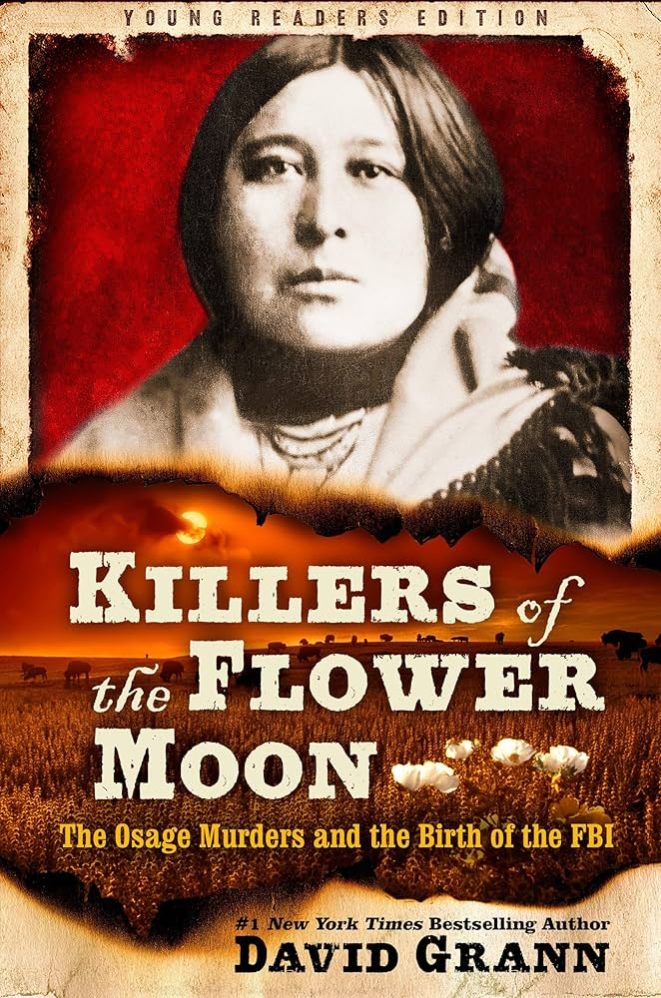
Killers of the Flower Moon by David Grann

Black and white photo of a Native woman in her traditional blanket sits above a landscape of prarie grasses with white flowers, all with red

by Eric L.

Although a graduate of a mostly white private high school, I was lucky to attend a good public college that furthered my historical education. Like many pieces of history, the “Osage Reign of Terror,” which took place roughly from the 1910s to the 1930s, was not addressed in my education. Someone suggested that the term is a misnomer because it sounds as though Osage caused the reign of terror; however, the opposite is true.

Killers of the Flower Moon is an entertaining and provocative read. Published in 2017, the book is on bestseller lists again because of the critically-acclaimed Martin Scorsese film, starring Lily Gladstone, Leonardo DiCaprio, and Robert DeNiro. Author David Grann is a thorough researcher, and he recounts the history of the Osage people and how they ended up in Oklahoma. They, like so many other Native tribes, were continually pushed West out of desirable land until they arrived on the least desirable part. A chief at the time suggested that they take the hilly land in Oklahoma because the white man would not want it, and perhaps would leave them be. He was wrong. Another chief decided that they would have to parcel it out like real estate – but the Osage owners retained all the mineral rights. A shrewd stratagem, as they realized oil had been discovered.

The reserved mineral rights could not be sold to a non-Osage person, but only inherited in a practice that became known as “head rights.” This seemed a genius move, but unfortunately, the chief was battling with a far more powerful entity. As more oil was found on Osage land, the income generated from the rights to drill became very valuable. All the major oil companies wanted to drill on this land, and were spending large amounts of money to do so. For a short time, the Osage had the most wealth per capita in the United States.

This situation was untenable to some white Americans. The Osage were prohibited from accessing their bank accounts and assigned guardians (through the Bureau of Indian Affairs) who controlled their money; in the movie, you hear Mollie Burkhart refer to herself as “incompetent” when talking to her banker. The need for a guardian was determined by how much native blood a particular Osage person had and thus the extent of their head rights. All this sets the backdrop to the Reign of Terror, when more than an average number of wealthy Osage folks died untimely deaths and others (mostly white men) inherited their wealth.

After a number of botched, failed, and bogus investigations, the nascent FBI, under the direction of a young J. Edgar Hoover, decided to get involved. After all, the murders occurred on federally managed land, which was technically the FBI’s jurisdiction. Grann’s book follows a particularly tragic example, where a WWI veteran, Ernest Burkhart, came to live with his uncle “King” Hale, a cattle rancher in the Osage country. Ernest marries Mollie, whose family died around her from natural and unnatural causes. It is Mollie who ventures to Washington, DC to ask the Bureau of Investigation to provide answers.

I won’t spoil the mystery and subsequent court case, but Grann successfully interweaves a story of the early FBI with the tragedy of Mollie’s family and the plot to inherit their rights. It’s terribly sad, but with an interesting cast of characters and a well-written murder mystery. The story is told largely from the FBI agent’s perspective, but Grann is very thorough in his research and interviews, and he uncovers more than the FBI found (or at least documented). The movie shifts the narrative from the FBI to Ernest Burkhart and King Hale, and to a lesser extent, Mollie.

I’m certain the film will attract some backlash for bringing up the ghosts of our past. It always seems strange to me that we don’t want to better appreciate our collective history. I loved that one wise Osage person wondered whether any of it was worth it, since they lost so much. I can’t pretend to have an answer for that, but it’s a sad and instructive story about American greed and racism. What I’ll take from it, which is well-developed in the book, is that there were some dedicated FBI agents and citizens who spent time investigating and solving some of these crimes despite nearly insurmountable odds. Read the book and see this film; it’s a story worth repeating and knowing.

Killers of the Flower Moon: The Osage Murders and the Birth of the FBI by David Grann is available in many formats:
print, large print, e-book via Libby/Overdrive, e-book via CloudLibrary,
audiobook on CD, e-audiobook via Libby/Overdrive, e-audiobook via CloudLibrary

You can also get on the waiting list for the DVD of the movie, which is set to be released at the end of February, 2024.

Kristen B. contributed to this review.

Eric is a DIY Instructor and Research Specialist at Elkridge Branch. He enjoys reading, films, music, doing nearly anything outside, and people.

September Author Events

The cover features a collage of historical photos that have been partially colorized, arranged around a central circle containing the title.

Wild Women of Maryland: Grit & Gumption in the Free State

Thursday, Sep 28 | 7 – 8:30 pm
Miller Branch
For adults. Register at bit.ly/wild_women_md

Author Lauren Silberman shares her tales of the Wild Women of Maryland. They may not always be role models, but they are always fascinating! Discover true stories behind the pretend-royal Sarah Wilson to the one-legged WWII spy Virginia Hall. From famous figures like Harriet Tubman to unsung heroines like “Lady Law” Violet Hill Whyte, discover Maryland’s most tenacious and adventurous women.

Silberman is the author of Wild Women of Maryland, Wicked Baltimore, and The Jewish Community of Baltimore.
In partnership with Howard County Historical Society

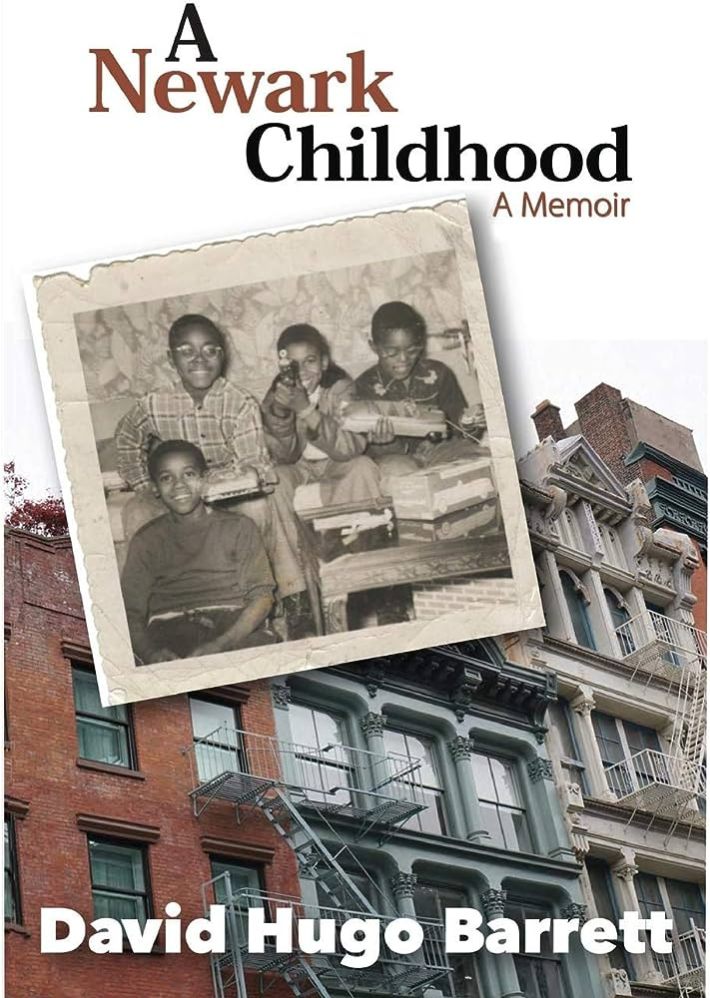
A black and white family photo showing four African American boys sits atop an image of fire escapes on row houses.

Author Works: David Hugo Barrett

Saturday, Sep 30 | 2 – 3 pm
Miller Branch
For adults. Register at bit.ly/newark_barrett

David Hugo Barrett discusses his memoir, A Newark Childhood. Weaving through African American music, folklore, and more, he recounts a coming-of-age story from kindergarten through high school graduation.

Barrett spent his formative years in Newark, New Jersey. He attended Newark’s public schools before earning his undergraduate degree in mathematics from Rutgers University and a Master’s degree in computer science from Howard University. His community service, here in Howard County, includes director of the board of the Alpha Foundation of Howard County, Inc. and the Howard County Poetry and Literature Society, past president of the Howard County Library System Board of Trustees, past chairman of The Alpha Foundation of Howard County, Inc., former director of the Horizon Foundation, and past president of the Kappa Phi Lambda Chapter of the Alpha Phi Alpha Fraternity, Inc.

Feeling Curious? Take the Curiosity Challenge!

A teen sits in the biography isles reading at the Miller Branch during a summer reading adventures teen after-hours event.

by Emily B.

Have you embarked on your Summer Reading Adventure yet? If not, head to any HCLS branch to begin your Summer Reading Adventure or participate online through ReadSquared. There are Summer Reading games and prizes for all ages. Visit hclibrary.org/summer/ for all the details on this year’s Summer Reading Adventures.

One of the fun challenges this year for all ages is the Curiosity Challenge. To partake in this challenge, simply read a book on any topic you’re curious about. No matter your interests, we can help you find a book to satisfy your curiosities!

Here are some books to spark your curiosity:

Science: With a wide range of science-related topics covered in these books, you’re sure to learn something new and you might even find additional topics to explore!

The Highlights Book of How: Discover the Science of How the World Works by Libby Romero (CHILDRENS 500R)

Science Superstars: 30 Brilliant Women Who Changed the World by Jennifer Calvert (509.2C)

The Science of Science Fiction by Matthew Brenden Wood (TEEN 500W)

What If? 2: Additional Scientific Answers to Absurd Hypothetical Questions by Randall Munroe (500M)

Entertainment: Learn more about the games, movies, and TV shows you love with behind-the-scenes photos and stories and retrospective analyses.

What is Nintendo? by Gina Shaw (CHILDRENS 338.761S)

Star Wars: The Mandalorian Handbook by Matt Jones (CHILDRENS 791.4572J)

Gamer Girls: 25 Women Who Built the Video Game Industry by Mary Kenney, illustrated by Salini Perera (TEEN 794.8092K)

Blood, Sweat, and Pixels: The Triumphant, Turbulent Stories Behind How Video Games Are Made by Jason Schreier (794.8S)

Best. Movie. Year. Ever.: How 1999 Blew Up the Big Screen by Brian Raftery (791.4309R)

History: Learn the incredible story of World War II Resistance leader Virginia Hall. A Maryland-native, Hall’s work with espionage, reconnaissance, and sabotage were instrumental in the eventual defeat of the Axis powers.

Agent Most Wanted: The Never-Before-Told Story of the Most Dangerous Spy of World War II by Sonia Purnell (CHILDRENS B GOILLOT P)

Code Name Badass: The True Story of Virginia Hall by Heather Demetrios (TEEN 940.5486D)

A Woman of No Importance: The Untold Story of the American Spy who Helped Win World War II by Sonia Purnell (940.5486P)

Be part of HCLS’ Summer Reading Adventures.

Emily is an Instructor & Research Specialist at the Central Branch. She enjoys puzzling, reading, listening to music, and re-watching old seasons of Survivor.

Reading + Adventure = Summer

The photograph shows children and a dog outdoors, silhouetted against a purple and red evening sunset.
Photo by Rene Bernal on Unsplash.

by Jean B.

It’s an equation for fun! Add an extra dimension to your summer days by connecting books from the library to a fun adventure in our region. Here are some ideas to get you started — each plan includes a picture book for everyone, a chapter book for family read alouds, and an outing within an hour’s drive.

Word Play

Meet Stegothesaurus (E HEO), the dinosaur with an incredible (inspiring, impressive) vocabulary and encounter an amazing array of words as well as a frightening, formidable, fearsome allosaurus…uh-oh, what’s another word for “trouble”?

Enter a magical library where the books aren’t just full of words, they’re actually alive! In The Lost Books: The Scroll of Kings (CHILDRENS PRI, print and digital audiobook), Alex must learn how to battle the ancient magic in these books and save himself, the library and the kingdom. It’s anything but a quiet day at the library!

Journey to Planet Word, an interactive museum in Washington, DC. You’ll find walls alive with words; a library with a secret door and hidden surprises; and rooms to sing, tell jokes and give a speech.

925 13th Street, NW Washington, DC 20005; Admission free, suggested $15 donation.

History Mysteries

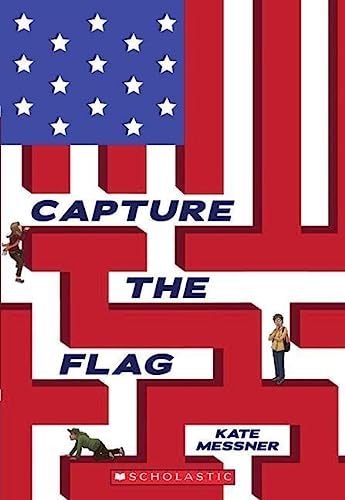
Time travel with Calvert the Raven in The Battle of Baltimore (CHILDRENS FUQ) for a bird’s-eye view of the battle that inspired our national anthem in 1814, right here in Baltimore. Fast forward into the present with the thrilling Capture the Flag (CHILDRENS MES) in which the original Star Spangled Banner has been stolen from the museum! It’s up to Anna, Henry, and Jose to muster all their courage and detective skills to get this historic national treasure back.

Visit the Fort McHenry National Monument, site of the famous battle, where you can explore the historic battlements, cannon, and walls, interact with living history guides, or just have a picnic and enjoy the spectacular view of the Baltimore Harbor.

2400 East Fort Avenue, Baltimore, MD 21230; open 7 days a week, kids 15 and under are free.

Explorers of the Wild

For an uncharted outdoor adventure, get inspired by Baltimorean Matthew Henson, whose determination led him to be one of the first to find the North Pole. I, Matthew Henson, Polar Explorer (CHILDRENS B HENSON W) offers a breath of cold, Arctic air this summer! Or share the adventure of friends Augie and Wyatt, as they build a fort then face the challenges of living in it with ingenuity, perseverance, and humor, in Fort (CHILDRENS DEF, print and e-audio).

Head to Cunningham Falls State Park, to hike to a waterfall, swim and canoe in a lake, camp, picnic, and fish.

14039 Catoctin Hollow Road, Thurmont, MD 21788; 8 am to sunset, April-October. See website for daily admission fees and campground/ cabin reservations.

Jean B. is a Children’s Instructor and Research Specialist at the Central Branch who loves reading books for all ages when she isn’t enjoying the outdoors.

Be part of HCLS’ Summer Reading Adventures.

Celebrating Juneteenth

Juneteenth: Freedom Day appears inside a yellow square atop swashes of color in red, black, green, and yellow.

by Brandon B.

What greater place to celebrate the Juneteenth holiday than with the library? Juneteenth (short for “June Nineteenth”) is the day on which federal troops traveled to Galveston, Texas in 1865 to free all enslaved people. Even though this happened two years after the Emancipation Proclamation was signed, we honor Juneteenth as the day that slavery officially ended everywhere in the U.S.

Since 2021, Juneteenth marks the federal holiday when we celebrate Black freedom and liberation. However, we still have a way to go toward true equity, with continued violence toward Black people by law enforcement, discrimination in job and housing opportunities, and the lingering consequences of slavery. In addition, many school districts have now decided to pull Black authors and titles from their curriculum due to fear of critical race theory. If you have an HCLS library card, you have the opportunity to acquire knowledge which can facilitate change.

At Central Branch, visit our Equity Resource Center which offers inspirational books, DVDs, and audio materials for all ages. One informative book to read is The Kaepernick Effect: Taking a Knee, Changing the World by Dave Zirin, which explains how former NFL quarterback Colin Kaepernick risked his career and became an activist for Black social justice. Another great read is the 1619 Project by Nikole Hannah-Jones, which provides an historical analysis of the first people of African descent who arrived in the U.S.

Juneteenth by R.J. Bailey gives children a great understanding of why Juneteenth is significant. Ways to Welcome by Linda Ashman is another wonderful children’s book, illustrating how creating a friendly and welcoming environment can have a lasting impact on a child’s life.

At the end of the day, Juneteenth is also an opportunity for the country to heal and reflect. Can America cure our racial divide? Or do we just continue to live our lives, business as usual? Please consider these ideas and thoughts as you enjoy and celebrate this Juneteenth holiday.

Brandon is a Customer Service Specialist at HCLS Central Branch who loves reading, football, and taking nice long walks around his neighborhood.

Books and Classes for Black History Month

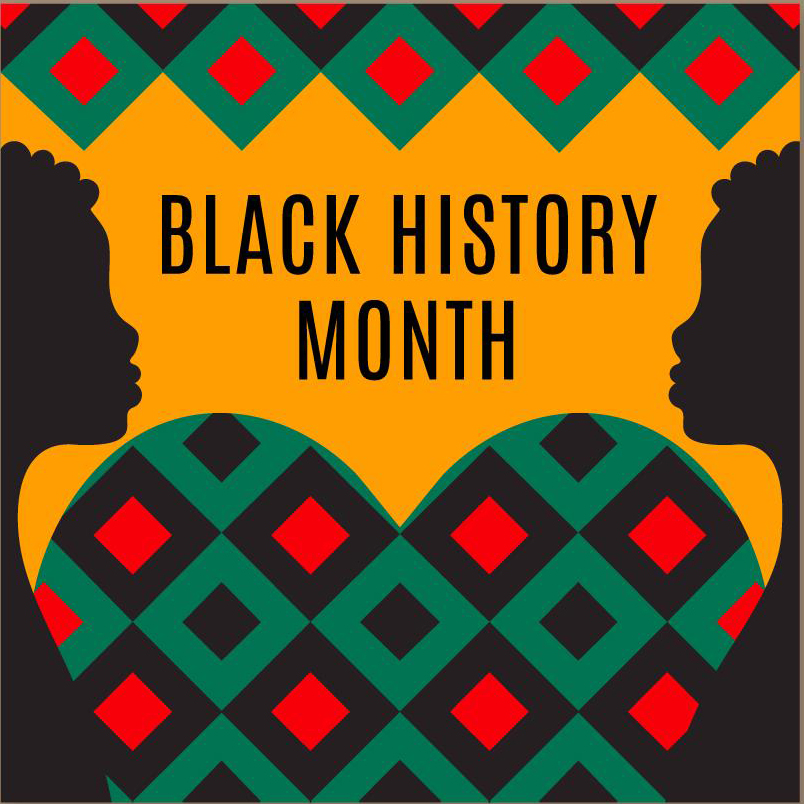
The illustration reads Black History Month, with two silhouetted figures to either side and a diamond patter in green, red, and black above and below. The lower pattern

by Brandon B.

February calls us, as a society, to reflect and honor the contributions of Black Americans who made our country. The late, great Carter G. Woodson is considered the father of Black History Month. Woodson is the second African American to earn a Ph.D., after Edward Alexander Bouchet earned one in physics from Yale in 1876. The fight for equality, justice, and humanity for African Americans has always been a topic of discussion.

In the past century, Blacks have had to overcome Jim Crow laws. The Voting Rights Act of 1965 and Supreme Court cases to desegregate schools helped to change American culture. Thurgood Marshall and a team of NAACP attorneys fought against the “separate but equal” doctrine in Brown vs Board of Education. Signed by Lyndon B. Johnson, the Voting Rights Act strengthened the right to vote that had been granted to Black men with the 15th Amendment. All women had to wait for the 19th Amendment to grant suffrage.

To celebrate Black History, consider a visit to the Equity Resource Center at HCLS Central Branch, which has a great selection of books, movies, and audio materials that showcase many groups. Some classic titles that celebrate Black culture and contributions include James Baldwin’s If Beale Street Could Talk and The Autobiography of Malcolm X. Consider watching films, such as Selma, that tell the story of Civil Rights leaders and a collective group of individuals, who fought for the right to vote.

Black History Month is a time of reflection, healing, and celebration. In February, take the opportunity to learn about Black culture and history through classes, books, and films.

Art Wars! Black History Month Edition 
Tue   Feb 7         6:30 – 8 pm  
HCLS Miller Branch
Ages 11-18. Registration required, drop-in if space permits.
Create artwork in 40 mins! Learn a little about prominent African American artists, then use that inspiration. Enter the Art War contest for a chance to win a prize, or just create and enjoy! Materials provided.  

Wiki Edit-a-Thon: A Celebration of Black Authors and Artists 
Thu   Feb 9    5:30 – 8:30 pm
Online
For adults. Register.
Edit Wikipedia pages of Black authors and artists whose works are found in our library collection. The evening is dedicated to collaborating on research, writing, and editing relevant Wikipedia pages. Participants check pages and cite sources as they work.

Black History of Howard County 
Sat Feb 11 1 – 2:30 pm
HCLS Savage Branch
Ages 14-18 and adults. Register.
Learn about the history of African Americans in Howard County and the town of Savage, as collected in History of Blacks in Howard County, Maryland: Oral History, Schooling, and Contemporary Issues. Hear about particular players in local history and learn why Howard County is the way it is today, with historical and personal perspective from Deborah Costley, local historian and genealogist. Share any experiences brought up as part of our Brave Voices, Brave Choices project.

African Experience Tour 
Wed Feb 15 4:30 – 5:30 pm & 7 – 8 pm 
HCLS Miller Branch
Ages 8-11. 60 min. Ticket required. Tickets available at the children’s desk 15 minutes before class. 
Learn about the diversity of African culture through hands-on exploration of artwork, videos, and discussion, facilitated by Doris Ligon, director and co-founder of the African Art Museum of Maryland.

Brandon is a Customer Service Specialist at HCLS Central Branch who loves reading, football, and taking nice long walks around his neighborhood.

Cover image by Freepik.