The Old Man by Sarah V. & Claude K. Dubois

A small children bundled up in a coat and hat looks at a homeless person wrapped seated and wrapped in a blanket.

by Brittany M.

I was halfway through The Old Man when the first tear fell. I cried a few more before the end. This sweet children’s picture book by Sarah V. & Claude K. Dubois teaches awareness, kindness, and compassion for the homeless – all things our world needs more of (me included). 

The cover art and title caught my eye while I was shelving books in the children’s section of the library. Even though I don’t have kids yet, I’m always on the lookout for books to share with them in the future, so I borrowed it. The story is simple but powerful, as the words, actions, and attitude of the characters who interact with the “The Old Man” act as a mirror for society, reflecting the stereotypes and prejudices a lot of us hold against the homeless. It resonates because I bet you have already come across someone who reminds you of “The Old Man” at least once. 

A lot of feelings stirred within me while reading this book. Shame regarding the indifference I sometimes display towards homelessness due to feeling awkward and guilty. I feel awkward making eye contact when I see someone holding a sign asking for money, and I feel guilty for having more and not remembering to keep spare change or bills. I want my kids to be better than me by always being ready to give to someone in need and to feel comfortable when doing it. While doing some self-reflection, I researched ways to help the homeless beyond money exchanging hands. 

One good idea I learned from a friend is to have a bag of essentials ready to give. You can make them for a low cost by shopping for items at the Dollar Tree or Five Below, including gloves, socks, non-perishable food items, toothpaste, toothbrush, wipes, deodorant, and even a blanket. If you want to add something extra, consider grocery store or coffee shop gift cards. You never know when was the last time someone had a hot meal to eat or a warm beverage to drink. 

Before the year is over, I invite you to do something good-hearted for those less fortunate. Maybe it’s someone you see regularly on your commute or maybe it’s a random act of kindness. No matter who you choose to give to or how you choose to give, make sure it’s without prejudice or judgment. 

Borrow a copy of The Old Man from any HCLS branch.

Brittany is a Customer Service Specialist at the Miller Branch who loves writing, reading, and all things stationery. Her other hobbies include playing video games, listening to music and spending quality time with her family.

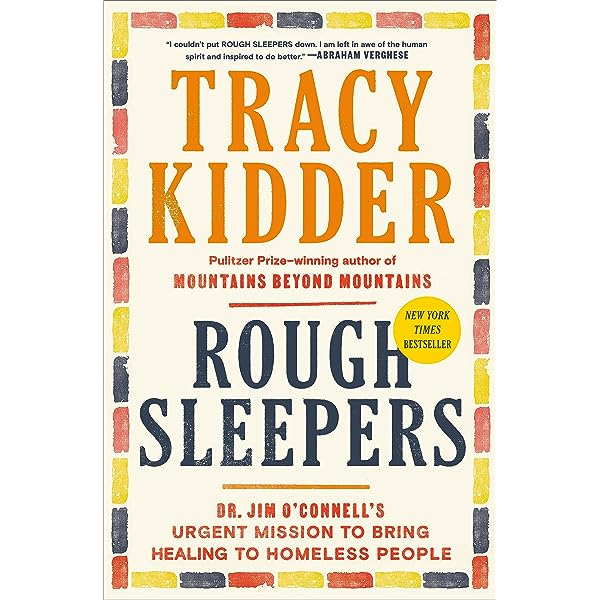
Rough Sleepers by Tracy Kidder 

A colorful border of blue, red, and yellow bricks surrounds the author and title.

by Piyali C.

After graduating from Harvard Medical school and towards the end of his residency, Dr. Jim O’Connell, a brilliant and gifted man, was approached by the Chief of Medicine of Massachusetts General Hospital to help in an organization to provide health care for the homeless population of Boston. “Rough sleepers” is a British term for someone who is homeless and sleeps without adequate shelter or protection. Dr. O’Connell decided to defer a prestigious fellowship at Memorial Sloan Kettering hospital for a year to devote his time to developing the Boston Health Care For The Homeless Program, which, at the time, was primarily run by nurses. He was not convinced this was his life’s calling but he could not refuse his superior’s plea for help.

The first day he walked into the clinic at Pine Street Inn Shelter, he had his stethoscope around his neck. A nurse at the shelter, Barbara McInnis, asked him to put his stethoscope away and instructed him to soak the feet of the patients. While Dr. O’Connell did not understand the significance of the instruction at the time, he did what he was told. As he soaked each individual’s feet for several days, they gradually started opening up to him. The homeless population had an ingrained mistrust of physicians because they had been treated disrespectfully for so long. Once he put away his stethoscope, people slowly started telling him about their other ailments. Dr. O’Connell listened and treated but only if they were willing to be treated. He respected their choice about their own health.  

Thus began Dr. Jim O’Connell’s lifelong journey of providing not only medical care but friendship and respect for the human dignity of the homeless people of Boston, whom he encountered in his long tenure of providing medical care. Pulitzer Prize winning author Tracy Kidder followed Dr. Jim for five years as he rode his Street Team van to seek out individuals who needed medical attention on the streets. If not medical help, he handed out blankets, warm socks, a sandwich, Dunkin Donut gift cards, or hot chocolate. He offered treatment or shelter for a chilly night but always left the choice to the individual whom he was trying to help. He emphasized a style of medicine where the patients came first. The providers and the patients created a ‘circle of friends’. Throughout his career Dr. O’Connell viewed his patients in their totality. He heard their stories. He came to know they were incredibly brave, they were difficult, they were charming, they could be obnoxious under the influence of alcohol or substance abuse, and when the effect wore off, they were kind, clever and funny.  

This is one of those books that changed the way I thought about the homeless population. Each person I see living on the streets has a story. I had stopped seeing them in the true sense of the word. I was desensitized to their presence, often getting annoyed by their panhandling. After reading the book, I was aware of my part in perpetuating the process of robbing a person of dignity by not “seeing” them. 

Rough Sleepers is inspiring, thought provoking, and a beautifully written documentation of the lives of some individuals who have truly hit the rock bottom in life and those who are trying their best to help them and give them the human dignity that everyone deserves. 

Rough Sleepers by Tracy Kidder is available in print, e-book and e-audiobook formats. 

Piyali is an instructor and research specialist at HCLS Miller Branch, where she facilitates Light But Not Fluffy and co-facilitates Global Reads. She keeps the hope alive that someday she will reach the bottom of her to-read list.

Maid: Hard Work, Low Pay, and a Mother’s Will to Survive by Stephanie Land

The book cover shows a pair of dirty yellow work gloves, lying one on top of the other.

By Kimberly J.

In this autobiography, journalist Stephanie Land details the hardships and trials she endured during her daughter’s first years. Driven into homelessness due in part to an abusive partner, an abusive father, and an absent mother, Land is truly on her own. Her family and friends have nothing to give, leaving her alone to survive. People from all walks of life will relate to her fighting spirit and resiliency.

This story is so compelling because it is so personal. This eye-opening tale gives us a glimpse into the everyday struggle of one woman fighting for a life for herself and her daughter. Reading from her point of view gave me insight into the scorn and derision felt by the working poor. The tension and anxiety Land experienced were palpable as she struggled to balance 15 types of assistance in order to simply survive.

It is a hard and heavy subject – Land works as a maid cleaning houses in order to make ends meet. The contrast of being surrounded by the trappings of the upper middle class while she is struggling to feed herself is heart-rending. This position of servitude leaves her feeling dehumanized and “othered” more often than not. When she encounters the rare client that treats her like a person, she is hungry for even the smallest acts of compassion – a note, a conversation, a smile.

This book raises important questions – How do we treat people who are performing manual labor? How do people experiencing homelessness and/or poverty fit into our society? What makes a home? How can you keep going even when hope feels impossible?

Maid is a New York Times bestseller and has been converted into a Netflix series. It is available in print, ebook, and eaudiobook from HCLS.

Kimberly J is an Instructor and Research Specialist at the HCLS Glenwood Branch. She enjoys reading, photography, creating, crafting, and baking.

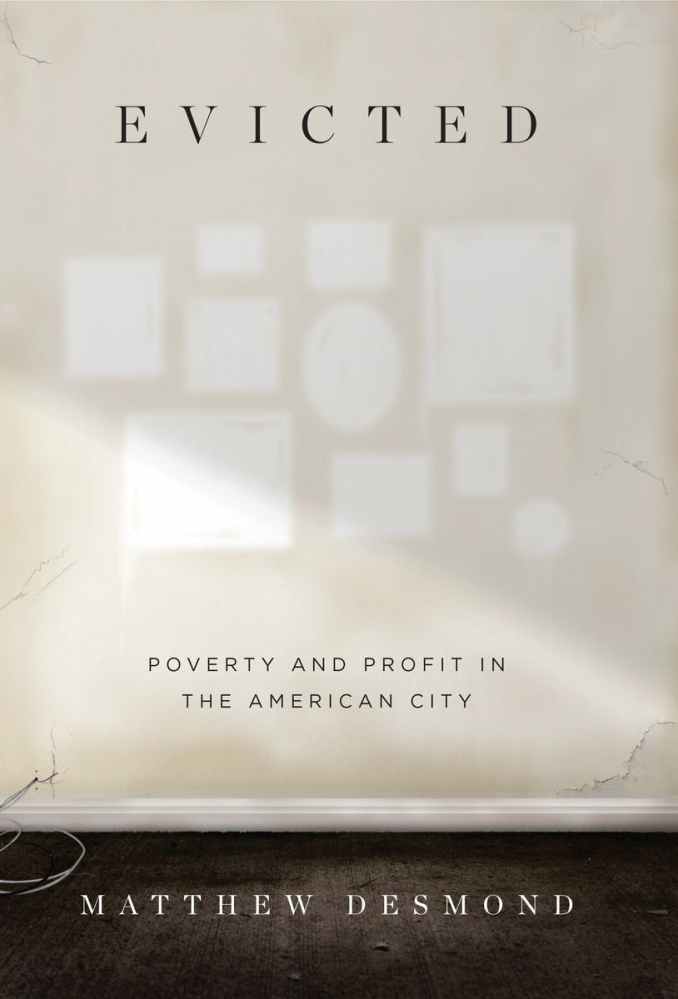
Evicted: Poverty and Profit in the American City by Matthew Desmond

A dirty white peeling wall with faded areas where there had been framed photos. An electrical cord is plugged into an outlet in what appears to be an otherwise empty room.

By Cherise T.

Awarded the Pulitzer Prize for general nonfiction in 2017, Evicted: Poverty and Profit in the American City tells the story of our national rental housing crisis through the lens of the Milwaukee area. Matthew Desmond focuses on two landlords renting the lowest quality properties to eight impoverished residents and families struggling against homelessness. Researching the 2007-2008 economic crisis, Desmond documents how even during the Depression finding affordable housing was nowhere near as difficult as it is today. Currently, paying for housing can cause a descent into poverty because, “the rent eats first.” Due to the limited options available to renters with low incomes, lack of enforced regulations of landlords, and limited local and federal resources to support struggling families, serial eviction has become commonplace.

When I studied the resources to present Undesign the Redline tours at HCLS, I learned about how where one lives and where one is allowed to live impacts a person’s access to good education, rewarding work, and leisure options with family and friends. Structural and systemic racism in the United States controls residential opportunities. Evicted delves into the connection between redlining and housing poverty. Landlords are legally allowed to offer substandard housing. Renters are subjected to a system that favors landlords and offers limited housing subsidies.

This narrative nonfiction title will appeal to readers interested in history and statistical sociological studies as well as those who prefer to follow personal stories. A sociologist, Desmond lived in low income housing as he met the characters who fill his book. Sherrena is a black landlord who gets to know her tenants, assisting them with groceries, for example, but she and her husband also need to make a profit. Doreen is a black single mom caring for three generations under the roofs of smaller and smaller properties even as her family grows. Scott is a white, drug-addicted, former LPN who cannot even afford a rental in a deteriorating trailer park. Arleen is a black single mom who has to apply almost 100 times before a landlord agrees to house someone with multiple children and a history of serial evictions.

“If incarceration had come to define the lives of men from impoverished black neighborhoods, eviction was shaping the lives of women. Poor black men were locked up. Poor black women were locked out.” Eviction tells its stories with sympathy and an abundance of well-researched urban housing realities. It offers insight, data and potential solutions to the problems it describes. There is also an excellent study guide provided by the publisher for use by students and book groups.

Cherise T. is an Adult Instructor and Research Specialist at the Central Branch. When not immersed in literary fiction, Cherise can be found singing along to musical theater soundtracks.