In a year that feels like it’s testing every emotional fault line, some readers crave escape through lighthearted rom-coms or cozy mysteries. But for others, especially those feeling raw, anxious, or on edge, those stories can feel like a slap in the face. When the world feels broken, sometimes the only thing that makes sense is reading about the end of it. Two recent releases offer radically different but equally powerful takes on apocalypse: one fictional, one factual, both deeply human.
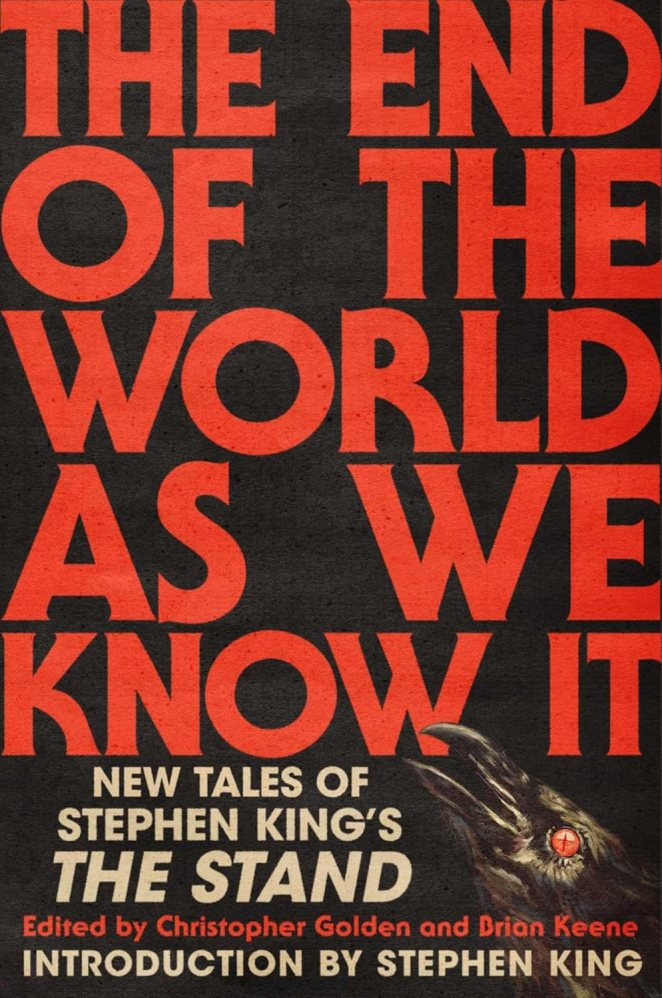
For the first time ever, Stephen King has authorized other writers to expand the world of The Stand, his iconic 1978 novel about a pandemic that wipes out most of humanity and pits survivors in a battle between good and evil. Edited by Christopher Golden and Brian Keene, TheEnd of the World as We Know It features 36 all-new stories from a dazzling lineup of authors: Wayne Brady, Caroline Kepnes, Tananarive Due, Paul Tremblay, Alma Katsu, and many more.
The stories span the initial outbreak, the migrations to Boulder and Las Vegas, and even decades beyond the original novel’s timeline. They’re terrifying, philosophical, and sometimes heartbreakingly tender. For readers who feel like they’re living through their own version of The Stand, this anthology offers catharsis, community, and a reminder that even in collapse, there’s room for hope.
If The End of the World As We Know It is a fictional dive into the apocalypse, Everything Must Goby Dorian Lynskey is its nonfiction counterpart, a sweeping, witty, and surprisingly comforting cultural history of how we’ve imagined the end across centuries. Lynskey explores everything from religious prophecies to pandemic fiction, climate collapse, rogue AI, and nuclear dread. He name-checks everything from The Road to Children of Men, The Twilight Zone to The Purple Cloud, weaving together pop culture, science, and philosophy into a rich tapestry of our collective anxieties.
What makes this book so compelling is its insight: apocalyptic stories aren’t just about destruction, they’re about transformation. They reflect our fears, but also our longing for clarity, justice, and rebirth. For readers struggling in 2025, these books offer more than just entertainment. They offer validation and say: You’re not alone in feeling like the world is ending. And they do it without sugarcoating or false cheer. Instead of asking you to pretend everything’s fine, they invite you to sit with the chaos—and maybe even find meaning in it.
Angie is an Instructor & Research Specialist at Central Branch and is a co-facilitator for Reads of Acceptance, HCLS’ first LGBTQ-focused book club. Her ideal day is reading in her cozy armchair, with her cat Henry next to her.
Our next chapter starts soon when the blog moves to the newly redesigned hclibrary.org. All the same great reviews and news, plus more library information!
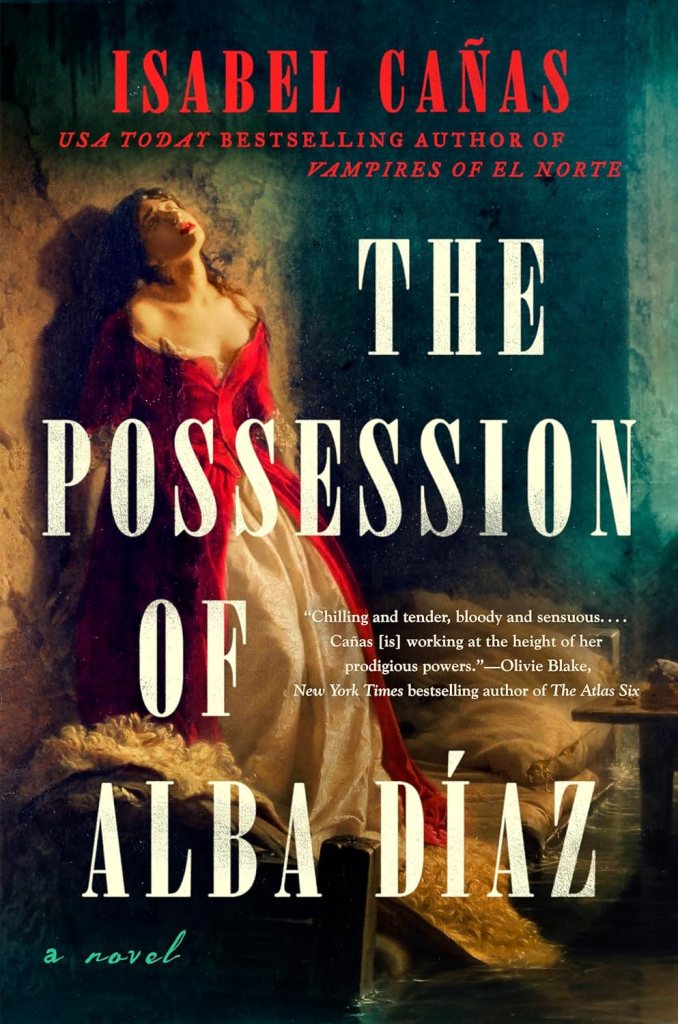
If you’re anything like me, September 1 marks the start of Halloween season (yes, season). There’s no better way to celebrate the start of all things scary and ghoulish than by reading a horror novel, and that’s what I did when I picked up Isabel Cañas’ newest book, The Possession of Alba Díaz. If you like ghosts, Mexican history, and gothic romance, this is the story for you!
The Possession of Alba Díaz is set in Zacatecas, Mexico in 1765. When a plague descends on her city, a young woman named Alba and her family retreat into the mountains. They take refuge at a mine owned by Alba’s fiancé and his family, but it is not the safe haven they were promised. Alba starts sleepwalking and hearing strange voices from deep in the mine, but most worrying of all is how she no longer feels alone in her own head.
Meanwhile, Elías, the black sheep of her fiancé’s family, has arrived in the New World hoping to quickly make his fortune and escape his greedy family. His plan falls apart when he meets Alba and the two are drawn to one another, despite her rather inconvenient engagement to his cousin and the demon lurking under her skin. Lucky for Alba, Elías knows a thing or two about demons…
I raced through this book. Cañas does a wonderful job of blending history and the paranormal to create a rich, fully lived-in world. Her two narrators, Alba and Elías, have voices that are distinct and wholly compelling, which makes for an electric romance. As for the horror aspect, Alba’s possession takes up a large chunk of the novel and there are more than a few creepy scenes. I’d say they lean more towards unsettling than scary, but your mileage may vary.
Come for the haunted mine and angry demon, stay for the gothic romance and a delightfully wicked ending that’ll have you desperate for more historical horror this Halloween season.
The Possession of Alba Díaz is available in print from HCLS in English and Spanish, and as an e-book and an e-audiobook from Libby/OverDrive.
Alex is a Teen Instructor & Research Specialist at the Glenwood Branch. When she’s not at the library, she likes to crochet cute animals, read all the horror and romance books she can get her hands on, and write stories about things that go bump in the night.
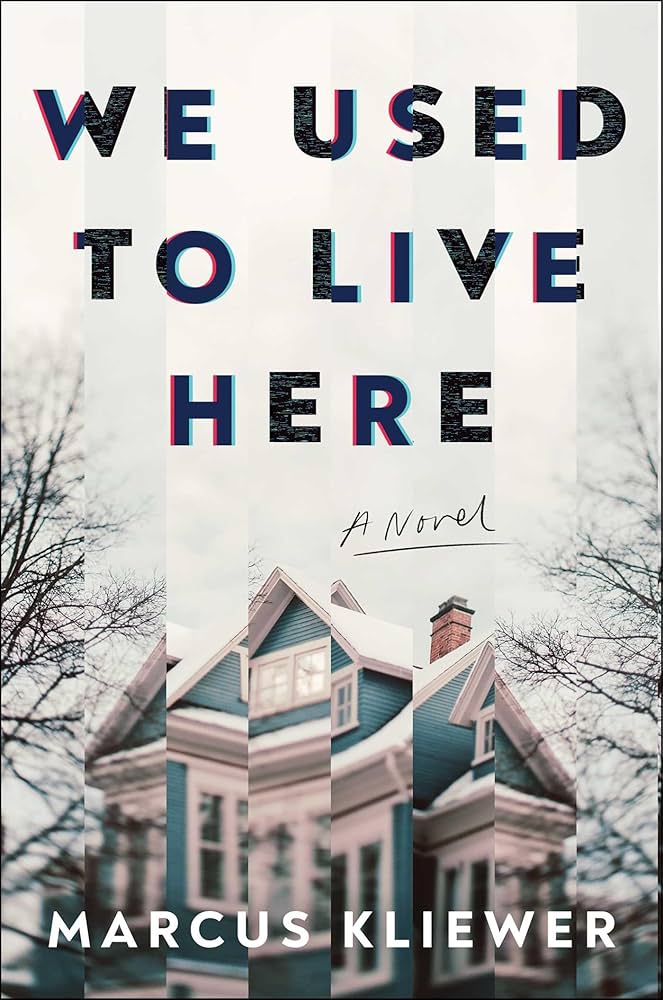
At first glance, the premise of We Used to Live Here by Marcus Kliewer feels familiar: a woman named Eve, living in a quiet, isolated home, receives a knock at the door. A family of five stands outside, the father claiming they used to live there and asking if they can take a look inside. It’s an unnerving request, made even more disturbing by the sheer passivity of Eve, as she ends up letting them in. Her submissiveness makes Eve the perfect vessel for the horror that unfolds.
“Of course, a well-adjusted individual would’ve simply told him no, she thinks to herself. But self-destructive people-pleasing was another of her plentiful idiosyncrasies. She had a crippling fear of disappointing anyone, even complete strangers—even people she disliked.“
Unlike a protagonist who fights back, she simply lets the story consume her, and in doing so, the reader is dragged down alongside her. It’s this very helplessness that enhances the eeriness of We Used to Live Here. From that moment on, the story moves into a confusing, almost dreamlike descent where nothing feels solid, and the very idea of escape seems out of reach. The family who has arrived at her door isn’t just intruding, they are manifesting something deeper, something perhaps inevitable. Whether they are ghosts, memories, or simply an extension of Eve’s own unraveling mind, their presence marks a shift where logic disintegrates, and the rules of the world no longer apply.
Eve never feels fully present, never takes decisive action, and ultimately, that’s what makes her experience so scary. She doesn’t fight to escape because escape might not even be real. We Used to Live Here isn’t just about horror, it’s about uncertainty, about the way reality itself can be manipulated, distorted, or perhaps even erased. It refuses to give us clarity, instead leaving us in a disorienting space where what is real and what isn’t can never be firmly decided. And maybe that’s the true horror, not ghosts, not violence, but the realization that sometimes, reality isn’t as solid as we think it is.
Angie is an Instructor & Research Specialist at Central Branch and is a co-facilitator for Reads of Acceptance, HCLS’ first LGBTQ-focused book club. Her ideal day is reading in her cozy armchair, with her cat Henry next to her.
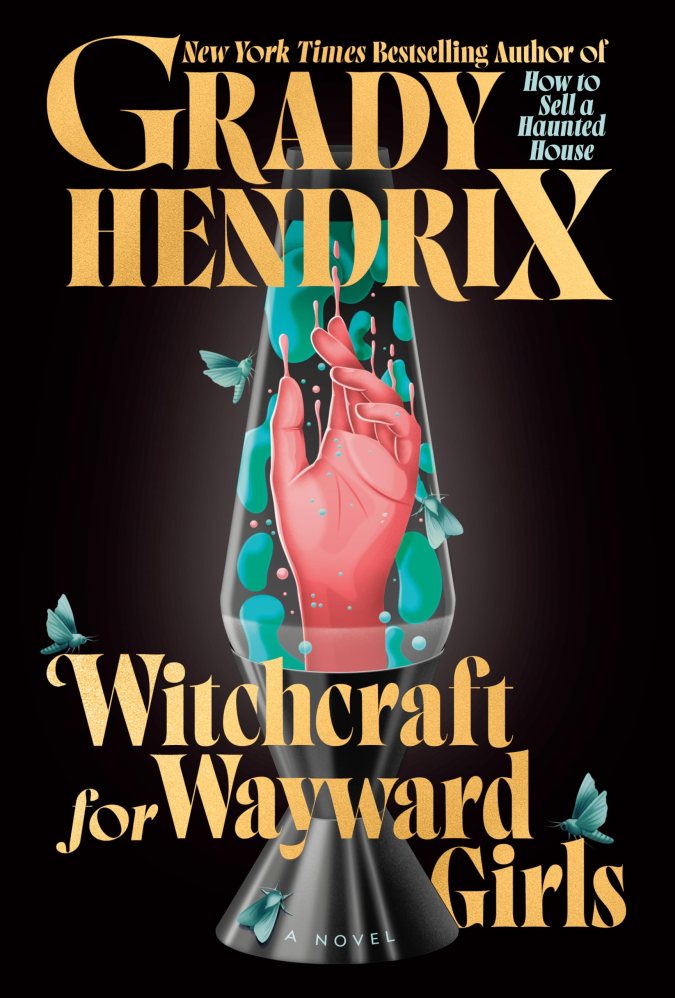
The newest Grady Hendrix book, Witchcraft for Wayward Girls, is out but a lot of people have already reserved it. While waiting on the holds list, you may want to re-familiarize yourself with his previous works or start fresh, you can always start with We Sold Our Souls or My Best Friend’s Exorcism.
Grady Hendrix is renowned for his ability to mix spine-chilling scares with biting wit and heartfelt humanity. Born in South Carolina and based in New York City, Hendrix has carved a place in the literary world by revitalizing classic horror tropes with a fresh, often darkly comedic twist. His novels, such as Horrorstör(a haunted IKEA-esque nightmare) and The Southern Book Club’s Guide to Slaying Vampires (suburban-mom vs. ancient-evil), have earned him a cult following for their nostalgic charm, social commentary, and genre-bending creativity.
If Black Sabbath and Stephen King ever had a love child, it would be We Sold Our Souls, flowing with distortion, saturated in dread, and rocking a leather jacket. Hendrix’s novel is a wild, riff-loaded joyride through the dark side of fame, where the price of stardom isn’t just your soul… it’s way messier. Kris Pulask, once a guitarist for the 1990s metal band Dürt Würk, is a down-and-out hotel night manager. When her ex-bandmate emerges as a superstar solo act, Kris uncovers a menacing plot involving Faustian deals, creepy contracts, and a conspiracy that makes Spinal Tap’s exploding drummers look tame.
Hendrix cranks the amp to 11, mixing gnarly horror with a love letter to metal’s rebellious spirit. Kris is a hero you’ll root for (think Alien’s Ripley with a Gibson SG) in a quest that is equal parts hair-raising and headbanging. Don’t let the gore and guitar solos fool you, though; beneath the blood-splattered surface lies a sharp critique of sellout culture. Hendrix nails how the music industry (and capitalism in general) chews up artists and spits out hollowed-out souls. It’s smart, savage, and uncannily uplifting, like a mosh pit that leaves you bruised but grinning.
And if you’re left wanting more and Witchcraft for Wayward Girls is still on hold, there is also My Best Friend’s Exorcist. The Exorcist meets Clueless in Hendrix’s loving ode to the 80s, with a John Hughes-level devotion to teen angst. Hendrix nails the era’s aesthetic like a crimped hair goddess: think demonic possession via Jell-O Pudding Pops, exorcisms with soundtracks by Whitesnake, and a villainous priest who probably shops at Spencer’s Gifts. The horror is gruesome, but the heart is pure ’80s cheese.
Hendrix’s work frequently explores themes of community, resilience, and the everyday fears of modern life, all while delivering page turning plots and memorably offbeat characters. A long-time horror enthusiast, he also wrote the nonfiction bestseller Paperbacks from Hell, a fond deep dive into the wild world of 1970s and ’80s horror paperbacks. In 2023, he snagged the Bram Stoker Award for Superior Achievement in a Novel for How to Sell a Haunted House, proving his gift for turning even the most absurd ideas into emotionally resonant tales. You can’t go wrong, really, with any of his books.
Angie is an Instructor & Research Specialist at Central Branch and is a co-facilitator for Reads of Acceptance, HCLS’ first LGBTQ-focused book club. Her ideal day is reading in her cozy armchair, with her cat Henry next to her.
October is the season of frights and jump-scares. If you are anything like my friends and I, it means setting aside time to indulge in the shivers, chills, and heart palpitations that come with quality horror.
Over the years, my relationship with horror has evolved in surprising ways. As a child, the game Animal Crossing scared me so badly with a cheeky Easter egg that I ripped the disc from my GameCube and banished it to the farthest corner of my basement closet. Yes, the quaint, whimsical game about quirky animal neighbors and paying off a mortgage once sent me into a panic. As an adult, however, I’ve grown to love horror.
To celebrate the season, I wanted to share a brief list of media that use horror in fascinating and effective ways (as opposed to cliché or tired tropes). This selection of my favorites showcases how horror can transcend traditional scares, confronting us not just with fear but with deeper questions about meaning, control, and survival. Whether it’s through surreal absurdity, cosmic dread, or psychological unraveling, each of these works leaves a mark that lingers long after the story ends. Happy Halloween!
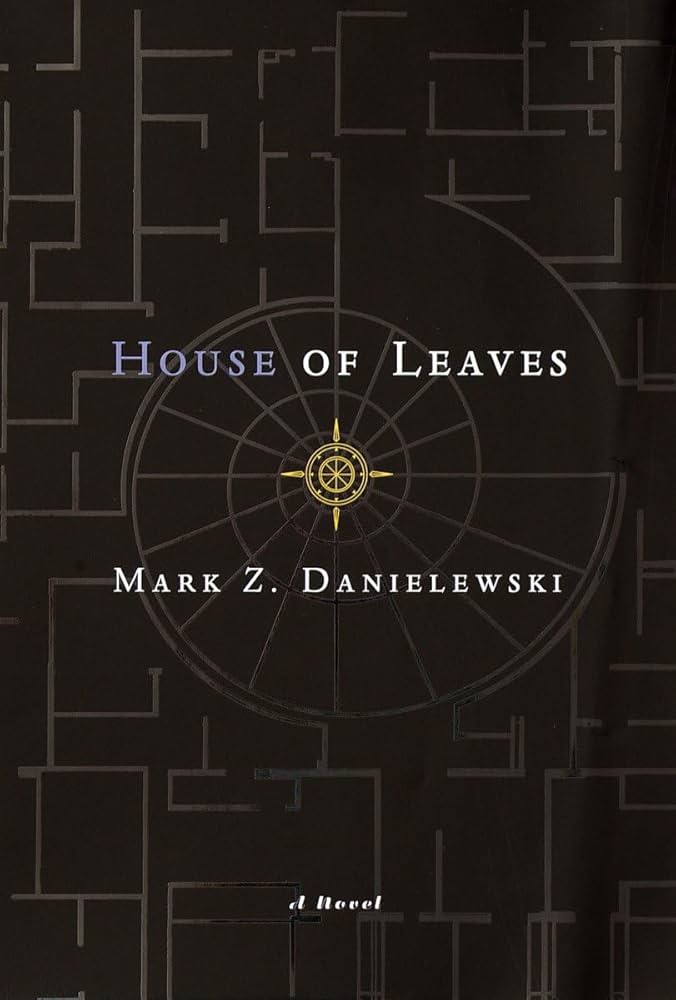
House of Leaves is one of the best pieces of fiction I have ever read – a wild, shifting text as concerned with the construction of meaning through language and signs as it is with the emotional turbulence of love, security, and existential dread. At its most succinct, House of Leaves is a book about an essay about a movie about a house that does not exist – and that house is also the book itself.
The story begins with Johnny Truant, a troubled, erratic young man living recklessly, burning the candle at both ends. One day, Johnny is invited into the apartment of his recently deceased neighbor, Zampanò. In the disheveled, eerie apartment, he discovers Zampanò’s final work: an academic treatise on a film called The Navidson Record. The catch? Zampanò had been blind for years, and The Navidson Record – a documentary by renowned photographer Will Navidson chronicling his family’s search for peace in a new home – does not seem to exist.
The house on Ash Tree Lane, as depicted in documentary, reveals itself to be bigger on the inside than the outside. As Will and a growing team investigate, the house grows endless, until the gravity of this impossibility threatens to undo everything. As you read, Johnny Turant does too – editing Zampanò’s fragmented manuscript while unraveling under his own troubles, which may all stem from the manuscript itself. Is the house real? Is it a curse? These questions spiral outward, pulling the reader into a labyrinth where certainty slips away leaving behind nothing at all —and perhaps the absence of anything is the most terrifying thing of all.
Greek filmmaker Yorgos Lanthimos has enjoyed international acclaim with films such as The Lobster, The Killing of a Sacred Deer, and Poor Things. Lanthimos excels at the strange and unsettling, crafting horror from the surreal and the absurd.
Case in point: Dogtooth centers on a family—a husband, wife, and their adult children—who live in complete isolation within a barricaded compound. The children have never left the confines of their home. They are raised on a manipulative regime of misinformation and control, where their parents deliberately distort language, knowledge, and their reality. Words are redefined to remove meaning. A ‘zombie’ is a small yellow flower. Cats are the most dangerous predator known to man. An adult is someone who has lost their dogtooth and is ready to leave the house. Fear of the outside is instilled with brutal efficiency to maintain compliance.
The result is a deeply unsettling exploration of control, isolation, and the fragility of identity. As the children struggle to conform to this artificial reality, cracks begin to form—revealing the horror that lies in the breakdown of personal autonomy. Dogtooth offers a stark, absurdist look at the consequences of power unchecked, leaving viewers disturbed not by monsters or supernatural forces, but by the cruelty of manipulation and the terrifying plasticity of human perception.
Junji Ito masterfully exposes the stark horror lurking within the mundane. Uzumaki follows the residents of a small Japanese town cursed by spirals—patterns that begin to consume not just the environment, but the minds and bodies of the people.
The father of the protagonist’s boyfriend becomes obsessed with spirals, collecting spiral-shaped objects, bathing in whirlpools, and only eating spiral-shaped noodles. He stares into spiral patterns for hours until even his eyes twist in opposite directions. Eventually, he dies attempting to twist his own body into a spiral. At his funeral, the crematory smoke spirals upward—only to shift and coalesce into a grotesque, grinning image of the man’s face, spiraling downward as if to envelop the town.
And from that moment, everything begins to unravel.
Junji Ito, a master mangaka, explores his work episodically in a sort of slice-of-fear narrative. Each chapter plays with the themes of the work, as it also delivers high quality and terrifying artwork. Uzumaki’s exploration delves into the erupting terror of grappling with forces beyond one’s control or comprehension. The horror of Uzumaki is mindless and indifferent, transforming even ordinary things—snails, ears, and babies—into sources of visceral dread. In Ito’s hands, the spiral becomes the embodiment of an absurd, indifferent universe where nothing is safe from corruption.
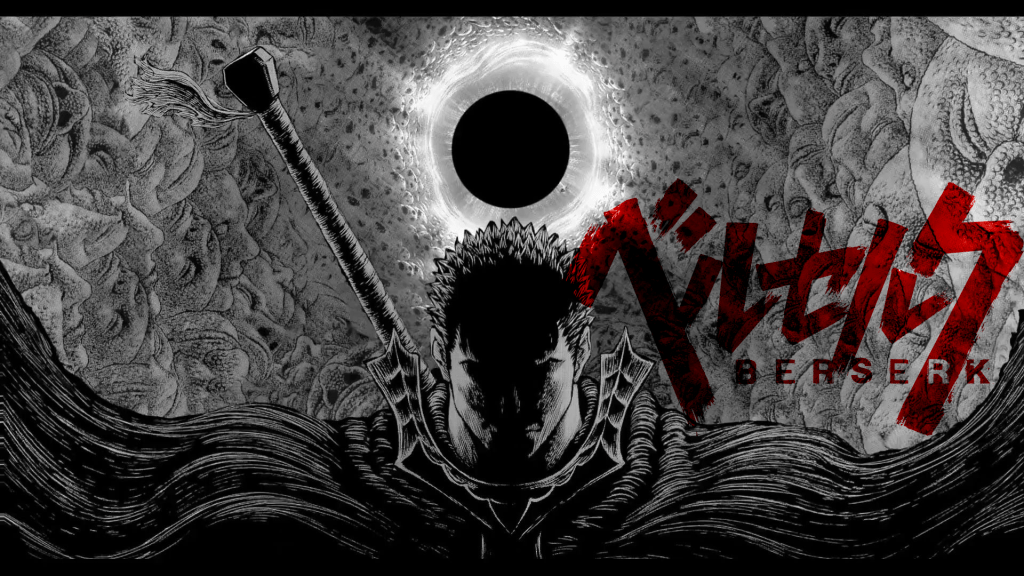
Berserk is a masterpiece: an amazing, serious, and beautiful piece of art.
Miura blends dark fantasy, psychological horror, and cosmic dread into one stunning and harrowing tale. Berserk follows Guts, the Black Swordsman and lone mercenary, as he battles through a relentless horde of monsters and demons. What begins as a journey of survival transforms into a profound meditation on trauma, betrayal, and the price of ambition.
The horror of Berserk lies partly in its grotesque monsters and their monstrous actions, but these monsters are rarely fully inhuman. This tension between humanity and power is central to the narrative, exemplified in “The Eclipse”—the most grueling, nightmarish scene in the story. This sequence rivals the most terrifying moments in any medium, where betrayal, loss, and monstrous transformation collide, leaving an unforgettable mark on both the characters and the audience. I do not say this lightly.
Berserk’s resonance and impact go beyond its grotesque (and frankly beautiful) artwork or the epic battles between Guts and the demon apostles. Its characters are written with profound psychological depth. Guts may present as a stoic, muscle-bound warrior, dismissing his problems with grim resolve, but that could not be further from the truth. His struggle is both external—hunted by the evil Godhand and their legion of apostles—and internal, as he wrestles daily with despair and rage. These emotions stem from what he and his comrades endured at the hands of someone they once trusted as their leader.
Berserk is not just horror for the sake of horror—it is tragic, beautiful, and unforgettable. It reminds us that even in the face of overwhelming darkness, the struggle to endure can be its own kind of victory.
Berserk contains highly intense themes and disturbing scenes that may be difficult for many readers. If you’re considering reading it, I strongly recommend looking into its content beforehand to ensure you’re comfortable with the material. Berserk offers incredible depth and artistry, but it is not a story to approach lightly—you should know what you’re getting into.
Ian Lyness Fernandez is an instructor and research specialist at East Columbia Branch. Although he first engaged with most of these works in high school, he wants to emphasize that these recommendations are intended for adults—adults who want to be horrified, to boot. Dead dove: do not eat, and so on.
Imagine a collection of stories where Black Mirror (Netflix series) meets Get Out, reminiscent of Octavia E. Butler’s work, blending science fiction, horror, and fantasy to tackle issues of race, class, and prejudice. This thrilling and often heartbreaking debut introduces an extraordinary new voice.
Justin C. Key has been fascinated by monsters since childhood. Growing up reading R. L. Stine’s Goosebumps, he pictured himself heroically battling monsters. However, watching Scream 2, where the only Black couple is swiftly killed off, made him realize that Black and Brown characters in his favorite genre were often the victims or villains—if they appeared at all. In The World Wasn’t Ready for You, Key broadens and redefines the horror genre to delve into themes of race, class, prejudice, love, exclusion, loneliness, and the essence of humanity, exposing the inherent horror within us all.
The opening story, “The Perfection of Theresa Watkins,” begins as a sci-fi love story, but quickly turns nightmarish when a husband employs new technology to transfer his deceased Black wife’s consciousness into the body of a White woman. To secure an early release, a Black inmate joins an experimental medical study in “Spider King” and soon faces disturbing side effects. In the collection’s title story, a father strives to protect his son by teaching him how to maneuver a prejudiced world that perceives him as a threat. “The Quantum Mechanics of the Heart” is an examination of both quantum physics and emotional connections, poignant and intellectually stimulating. Another keeper, “The Last Library,” transports readers to a world where libraries are sentient beings, safeguarding knowledge and memories. The sad beauty of this tale lingers long after the last page.
Key’s writing is lyrical, infused with wonder and empathy. His ability to evoke emotions through speculative scenarios is commendable. Whether it’s a grieving astronaut seeking solace among the stars or a time-traveling violinist chasing echoes of lost melodies, Key’s characters grapple with universal truths. The World Wasn’t Ready for You is a testament to the power of speculative fiction. It challenges conventions, celebrates diversity, and invites readers to question their own existence. Key’s storytelling transcends genres, leaving an indelible mark on the literary landscape.
Angie is an Instructor & Research Specialist at Central Branch and is a co-facilitator for Reads of Acceptance, HCLS’ first LGBTQ-focused book club. Her ideal day is reading in her cozy armchair, with her cat Henry next to her.
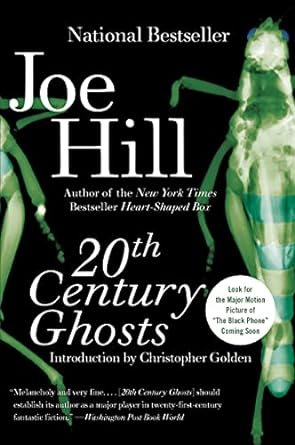
I like Joe Hill’s fiction, no matter which selection it is. I am particularly drawn to and sometimes revisit his amazing anthology 20th Century Ghosts. The collection comprises 15 short stories, each with its own unique theme and style. Joe Hill’s versatility shines through as he explores various aspects of horror, from traditional ghost stories to psychological thrillers. The stories are infused with elements of fantasy, science fiction, and dark humor, creating a diverse and engaging reading experience.
The opening story, “Best New Horror,” sets the tone for the entire collection. It tells the tale of a jaded horror fiction editor who stumbles upon a manuscript that takes him on a horrifying journey into a world he could never have imagined. Hill’s use of meta-fiction in this story adds layers of complexity to the narrative, leaving readers with much to ponder.
Joe Hill’s ability to create compelling characters makes his fiction unforgettable. Whether it’s a young boy who can transform into a living comic book character in “Pop Art” or the ghost of a movie projectionist in “The Projectionist,” his characters have a depth and humanity that gives the supernatural elements all the more a stirring and relatable feel. Hill’s skill in creating atmospheric settings also permeates the collection. Whether it’s a creepy movie theater, a haunted tunnel, or a sinister roadside attraction, the locations in these stories are as much a part of the narrative as the characters themselves. The sense of place adds to the overall immersion and tension in each tale.
While horror is its primary genre, 20th Century Ghostsdoesn’t rely solely on scares. Many of the stories delve into deeper emotional territory, exploring themes of love, loss, and the complexities of human relationships. “Better Than Home” and “Voluntary Committal” are poignant examples of Hill’s ability to tug at the heartstrings. Joe Hill’s imaginative storytelling is a defining feature of this collection. He doesn’t rely on clichés or tired horror tropes; instead, he constantly surprises the reader with fresh ideas and innovative twists. “My Father’s Mask” and “The Black Phone” are prime examples of his originality and the ability to keep readers on the edge of their seats.
The titular story, “20th Century Ghosts,” is a beautiful and melancholic piece that serves as a fitting conclusion to the collection. It explores the idea that we are all haunted by the past in one way or another, and Hill’s prose resonates long after the final page is turned.
Angie is an Instructor & Research Specialist at Central Branch and is a co-facilitator for Reads of Acceptance, HCLS’ first LGBTQ-focused book club. Her ideal day is reading in her cozy armchair, with her cat Henry next to her.
This is a True story. The events depicted took place in Minnesota in 2006.
At the request of the survivors the names have been changed.
Out of respect for the dead, the rest has been told exactly as it occurred.
What defines the ‘truth’ of a story? Is it accuracy to the literal account of events, or that it resonates with a more elusive truth about our perceptions of ourselves and the world? Every episode of Fargo opens with the passage above, adjusted for the specific time and place of the season’s focal bedlam. Each season is independent, although loose connections unite each season into a shared world with Easter eggs for the eagle-eyed viewer. But each season is a ride along, a shocking and surreal crime wave that disrupts the deceptively quaint communities of the Midwest.
Watching Fargo is like having an intimate view into two trains hurtling towards an inevitable collision. It is tense and dramatic, unpredictable and quirky. As if the trains were full of seemingly supernatural criminal murderers and diffident Minnesotan house-spouses who would use phrases like “You betcha” and “Aw Jeez” even as the world burns down around them. A mix of crime drama and magical realism with a substantial dose of Minnesota Nice, all brought to a boiling point.
I cannot overstate my love for this series. The creative aesthetics behind the production are unlike anything else on TV. The sets are gorgeous; nigh-eternal winters loom over the Midwestern plains, enhancing a sense of stasis that stands in contrast to the rupturing of the status quo. The music fills the show with an exciting dynamism. The theme song is stellar, evoking a kind of folk melody that is nostalgic, yet somber and plaintive. As it pertains to the larger show, the music is curated to great effect. The soundtrack is a diverse mix of iconic songs of the time and original compositions, which all serve to influence the emotions of any given scene.
However, it is the writing that stands above all else. The framing device which opens each episode always fills me with anticipation. Borrowed from the original Coen Brothers’ film, the statement “This is a true story” calls to mind Truman Capote’s creative nonfiction novel In Cold Blood, which itself serves as a founding inspiration for true crime as a literary genre. Stories about crime have always drawn audiences, but true crime’s magnetism is unique. The next two lines of the opening comment on respect, for the living and the dead. The contrasting means of showing this respect are wryly humorous. One wouldn’t be remiss in wondering if the calls for respect are a means to an end so that the story can be told. Perhaps elements of these stories compel us to share them, as a lesson to be learned or a chance to understand something better.
However, contrary to the opening lines, Fargo is fiction. Many of us are familiar with films that take liberties with their claims of truthfulness (looking at you, The Conjuring). Fargo is different. The show revels in the contradiction of this deliberate and ironic narrative choice. This narrative flourish prepares the audience for a cavalcade of untrustworthy narrators. Truth is, unfortunately, not easily uncovered.
The police investigations which act as a through line for the series are not the pinnacle of competent detective work. There is neither a Sherlock nor a Hercule Poirot to be found. Instead, we are presented with a motley crew of eccentric characters possessed each by their own perspective, and everyone is wrestling for control. Their actions are influenced by their respective worldviews and the lengths they will go to ensure their particular truths remain unimpeachable. When these characters are pitted against each other, their perspectives paint a dynamic portrait of what it looks like to live in our world.
This interplay reveals discussions on all manner of philosophical and political topics. Uncovering the reference behind each episode title is a fun bonus game for an active viewer. I want to focus on one particular example from Fargo’s second season entitled “The Myth of Sisyphus.” Season two takes place in 1979 and covers the grisly collision between a hapless couple who accidentally killed a member of the local Gerhardt crime family, the vengeful crime family in question, the encroaching Fargo mob, and the state troopers who are trying to prevent the violence from spreading. The season opens with the words of Jimmy Carter:
It is a crisis of confidence. It is a crisis that strikes at the very heart and soul and spirit of our national will. We can see this crisis in the growing doubt about the meaning of our own lives. And in the loss of unity and purpose.
Fargo places Carter’s crisis of confidence in direct conversation with Albert Camus’ essay on Absurdism, “The Myth of Sisyphus,” with a handful of characters reading the essay.Camus’ essay discusses how we crave meaning and purpose in our lives but are confronted by a world that has no meaning and is defined by chaos. In the classic myth, Sisyphus was cursed to push a boulder up hill, which ultimately rolls back down once it reaches the top. Sisyphus must then return to the boulder and begin pushing it again. Forever. The myth represents futility and the struggle against meaninglessness. Arguably, none of the characters gained a great comprehension of this essay. Some of them flatly reject the framework of the essay, but nonetheless act in ways that exemplify Camus’ different propositions for responses to the Absurd. Through the contrasting reactions to the text and the responses to increasingly absurd circumstances, we see the show develop its philosophical inquiry into the issue.
This inquiry is not accomplished without a lot of heart. Fargo is ultimately hopeful. The largest source of friction, the catalyst of all chaos, stems from the inability to communicate and the resulting misunderstanding chips away at our sense of unity. Giving up is not an option, or at least, not a particularly good one. We make meaning in our lives through the things we cherish, that we wish to protect or pay our attention to. Whatever trial or tribulation, we face those challenges to preserve what is valuable. To do otherwise is tantamount to letting it fade.
Fargo is special for how it juggles this stylistic blend. It presents humor and horror together with sentimentality. None overshadows the other. Fantastic casting choices breathe life into the writing. No matter how quirky the characters may be, they embody a sense of realism that makes the world feel alive and not too distant from our own, especially now in our own bizarre and heightened reality. Sometimes, even truth must be disguised for others to regard it. Fargo uses the medium of fiction to bypass our skepticism and take us on a journey through and around the strange heart of the modern world. And it makes sure that the journey is going to be wild and fun along the way.
If your interest is piqued, the good news you can borrow the first three seasons of Fargo on DVD. Season 5 of Fargo is currently airing on FX and select streaming services.
Ian is an Instructor and Research Specialist at East Columbia Branch.He is a huge nerd with too many interests to list here. Currently, he is fixated on the interconnection between history and fiction. His favorite kind of stories are stories about stories.
I first read Night Film earlier this year over the course of a long weekend. Though the temperature was hot and the humidity almost unbearable, author Marisha Pessl transported me to a chilly October night in New York City with ease. Night Film is a perfect November book and is best enjoyed as the temperatures cool and the nights grow longer.
The book opens with the mysterious death of Ashley Cordova, piano prodigy and daughter of infamous horror director Stanislas Cordova. Stanislas, who has a huge cult following, hasn’t been seen outside of his huge upstate New York estate in 30 years.
Investigative journalist Scott McGrath has long been obsessed with Cordova and the mystique surrounding him and his films. He teams up with two unlikely sidekicks – a drifter and a wannabe actress – to uncover the truth behind Ashley’s death. Along the way, the three encounter a fair share of kooky and offbeat characters who offer insight into the case.
Pessl peppers newspaper clippings, online forum posts, and other documents throughout the book, making you feel immersed in the investigation. This immersion is taken a step further with the bonus content available on Pessl’s Night Film Decoder website, which includes even more mixed media sources, like video and audio recordings.
On top of all this, it’s clear that Pessl took her time devising Stanislas Cordova’s filmography. The details included about some of the fictional films are so illustrative and specific – down to the blocking or costumes in his most iconic movies’ scenes. All the descriptiveness surrounding the fictional films culminates in a jaw-dropping sequence about two-thirds through the novel. A sequence that I still find myself thinking about, nearly five months after reading the book.
Night Film is an engrossing, unputdownable read perfect for fans of horror and mystery. It’s a book whose atmosphere and characters stay with you for a long time.
You can request a physical copy here or check out the e-book and e-audiobook versions on Libby/Overdrive.
Emily is an Instructor & Research Specialist at the Central Branch. She enjoys puzzling, reading, listening to music, and re-watching old seasons of Survivor.
Hello there, fellow horror enthusiasts! If you’re on the hunt for a bone-chilling, pulse- pounding read to get you into the Halloween spirit, look no further than Julia by Peter Straub (print and e-audiobook). The author emerged as a rising star in the 1970s alongside his friend and sometimes collaborator, Stephen King. Together, they revitalized the horror genre, redefining its bounds with The Talisman (print and e-audiobook) and Black House (print and e-audiobook).
Despite this early success, Straub and his individual contributions to literature have often taken a backseat to the towering presence of King. However, his unique writing style, masterful storytelling, and depth of character development make him a force to be reckoned with, especially in stories like Julia – about a woman with a haunting past and a dark secret. As the narrative unfolds, you’ll find yourself drawn deeper into the web of her life, unable to escape its sinister grip. Straub’s character development is top-notch; you’ll feel like you know Julia intimately, yet she remains shrouded in mystery, making her all the more compelling.
What makes Julia a standout Halloween read is its ability to mess with your mind. Straub has this knack for creating an atmosphere so thick with dread that you can practically taste it. The line between reality and the supernatural blurs, and you’ll start questioning everything you thought you knew. Is it ghosts, madness, or something even more sinister? The pacing is relentless. The tension keeps ratcheting up, and Straub’s prose is beautifully haunting, painting vivid, unsettling images in your imagination. You’ll be right there with the characters, wandering the eerie, fog-shrouded streets of their world.
The novel is not just about cheap thrills and jump scares. Straub explores profound themes like guilt, redemption, and the nature of evil. It’s a thinking reader’s horror novel that will haunt your thoughts long after you’ve finished it. Julia is the perfect spooky holiday read, as it’s a master class in psychological horror, filled with unforgettable characters, a chilling atmosphere, and plenty of twists and turns. So, grab your favorite blanket, and prepare for a Halloween night you won’t soon forget.
Angie is an Instructor & Research Specialist at Central Branch and is a co-facilitator for Reads of Acceptance, HCLS’ first LGBTQ-focused book club. Her ideal day is reading in her cozy armchair, with her cat Henry next to her.












 CHAPTER CHATS