Apocalypse and Heartbreak: Atmospheric Tales of Horror

Deep red slats of wood with title set in single word lines, emphasizeing Cabin, End, World.

by Angie E.

Good horror scares me, but great horror breaks my heart and mind, seeping into me and playing in my head like a found footage trope.  I find solace in horror somehow, and I know I’m not alone because others feel this way, too, even if they are quiet about it (“Why do anxious people love scary movies?”).

The first horror fiction I ever read was The Mist by Stephen King (e-book on Libby), which first appeared in a 1980 anthology called Dark Forces (an outstanding collection of stories I cannot recommend enough). It is hard to come by these days, but you can check interlibrary loan. Director Frank Darabont took The Mist and gave it an unimaginable, twisty, emotionally devastating ending – hence the heartbreak.

The Cabin at the End of the World by Paul Tremblay evokes similar feelings of heartache, and, like The Mist, captures themes such as faith and trust and how both can be warped by strangers we have the fortune (or misfortune) to meet under trying circumstances. Do we take a chance on others, or ourselves, or possibly a mash-up of both? A contributor to the website Bloody Disgusting sums up what could easily be said about both Tremblay’s and King’s novels, saying that a complete lack of faith can be just as insane as a fanatical sense of faith.

The novel invites readers into the lives of Eric and Andrew, a couple vacationing at a remote cabin with their young daughter Wen. Tremblay’s sensitive storytelling allows us to witness their love and vulnerability, amplifying the impact of the anguish that unfolds. Their journey takes an unexpected turn when a group of mysterious strangers appear at their door, whose mission (they say) is to save the world from an impending apocalypse. Their ominous beliefs shatter the tranquility of the cabin, leaving the family trapped and frightened. 

The strangers demand an impossible choice: sacrifice one of their own to stop the apocalypse. As fear and uncertainty overcome them, the bond between Eric, Andrew, and Wen deepens, revealing the strength of their love and the resilience of the human spirit. You’ll find yourself empathizing with the family’s plight, feeling their fear, and grappling with the moral dilemmas they face. 

Ultimately, The Cabin at the End of the World is not just a horror story; it’s an exploration of family ties, sacrifice, and the will to protect those we love. Like The Mist, The Cabin at the End of the World has a haunting film based on it: Knock at the Cabin. Both novel and film create an air of mystery and seclusion, but they do so subtly, evoking different atmospheres. 

Knock at the Cabin may appear superficial, but it carries a sense of abruptness, brevity, and vagueness distinct from Tremblay’s novel. The former hints at the story’s initiation and leaves us questioning, “Who’s there?” The Cabin at the End of the World explicitly suggests apocalyptic themes. Both titles succeed in unique ways, captivating the audience with their enigmatic allure. 

I could go on about both Tremblay and King, but I won’t. If you also seek out heartbreak in your reading, though, consider the following: 

  1. Frankenstein by Mary Shelley: Published in 1818, this classic Gothic horror novel tells the tragic story of Victor Frankenstein and his creation. The creature’s isolation, rejection, and search for acceptance evoke profound empathy from readers. 
  1. Dracula by Bram Stoker: From 1897, the epistolary novel delves into themes of loss, love, and the consequences of immortality. The tragic fate of some characters, such as Lucy Westenra, leaves a lasting impact on readers. 
  1. The Road by Cormac McCarthy: This post-apocalyptic novel from 2006 depicts the journey of a father and his young son through an ashen landscape. The bleakness and desolation of their surroundings combined with the father’s love and determination to protect his son create an emotionally compelling narrative. 
  1. Beloved by Toni Morrison: While not typically thought of as a horror novel, the 1987 Pulitzer Prize-winning work incorporates ghostly, supernatural elements. Set in the aftermath of slavery, the book explores the haunting effects of past trauma, loss, and the desperate longing for freedom. 

These masterpieces blend elements of horror with deep emotional resonance, leaving readers with a poignant sense of heartbreak and empathy for the characters’ experiences. 

Angie is an Instructor & Research Specialist at Central Branch and is a co-facilitator for Reads of Acceptance, HCLS’ first LGBTQ-focused book club. Her ideal day is reading in her cozy armchair, with her cat Henry next to her.

Spooky Kanopy Picks

by Emily B.

Did you know you can use your library card to watch eight movies every month on Kanopy? Here are some spooky films to check out this October.

The image depicts a woman on pointe shoes in profile with her arms raised above her head and her head thrown back. The red of her dress runs down her legs and shoes and onto the ground, puddling as if it is blood.

Suspiria (1977) 

An American ballet student discovers that sinister things are afoot at a prestigious German dance academy. The film is regarded as one of the most influential horror films, with its striking visuals and haunting soundtrack.  

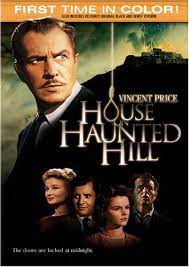
The image depicts a house on a distant hill against the backdrop of a cloudy sky. In the foreground are two men and two women and, superimposed above them, another man looking to the side with a slightly shocked expression and an eyebrow raised. The title of the film has a noose for the "o" in the word "House."

House on Haunted Hill (1959) 

An eccentric millionaire invites five strangers to a party at a haunted house, offering $10,000 to whomever survives the night. Partially inspired by Shirley Jackson’s The Haunting of Hill House, this film has solidified itself as a campy horror classic.  

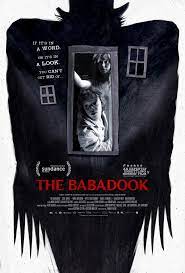
The movie poster depicts a silhouette of the Babadook surrounding an open door and two windows, as if the Babadook is the house containing them. Viewed through the open door are two children, one perched above the other, both looking out as if into the dark.

The Babadook (2014) 

A widow struggles to raise her young son, who is convinced that a character from a pop-up book is real and lurking around their home. 

The movie cover depicts a train in the background, with smoke and fire as if there has been an accident. In the foreground are several people fleeing the carnage, including a man carrying a young child whose face looks back a the train.

Train to Busan (2016) 

A man and his daughter attempt to survive a rapidly-spreading zombie infection that breaks out while they are on the train. This record-breaking Korean film will soon undergo an American remake. 

The movie cover depicts half of a woman's face from the neck up; she wears a coronet of flowers and greenery and appears frightened or distressed.

Midsommar (2019) 

A woman accompanies her boyfriend and his friends on a trip to Sweden for a midsummer festival and chaos ensues. Don’t let the beautiful setting and cheery color palate of the film deceive you – Midsommar is one of the most disturbing horror films I’ve ever seen.

The movie cover image depicts two children standing at the end of a hallway flooded with water. There are doors to their left and high windows to their right all along the sides of the hall. One child looks straight at the camera; the other is looking down and wears a facial-obscuring hoodie.

Dark Water (2002) 

A woman, in the midst of divorce negotiations, moves to a run-down apartment with her young daughter. A mysterious ceiling leak and ghostly appearances ensue. In 2005, an American remake of this Japanese film starring Jennifer Connelly was released.

You can borrow Midsommar, Dark Water, Train to Busan, The Babadook, and House on Haunted Hill on DVD, too.

Emily is an Instructor & Research Specialist at the Central Branch. She enjoys reading, listening to music, and re-watching old seasons of Survivor.

Mexican Gothic by Silvia Moreno-Garcia

A woman with black hair, wearing an off the should red gown, holds bunch of flowers while standing in front of a green floral wallpaper.

by Kristen B.

Horrifyingly creepy. Creepily horrifying. Either way, it’s gothic. The author tells you right there in the title. I’m not a big fan of horror – gothic or otherwise. You can keep your atmospheric creepies to yourself.

This book absorbed me. I literally could not put it down.

Noemi Taboada is my kind of girl: smart and sassy. She’s contemplating an advanced degree in anthropology, if only she can convince her father that there’s more to a well-off woman’s life than marriage and family. In Mexico in the 1950s, this is a harder sell than it should be. She’s also something of a party girl, who enjoys dancing and smoking with her active social circle.

Her cousin Catalina, though, is cut from more traditional cloth. She is married and has moved to her new husband’s remote estate, away from the family in Mexico City. When the family receives troubling letters from and about Catalina, Noemi agrees to her father’s plan to visit her cousin and investigate the situation.

Catalina has married Virgil Doyle, oldest son of a family that immigrated to Mexico generations ago but have maintained an English sensibility, including not speaking Spanish. They came for the silver mines and stayed for reasons that become clear later. The house (in all honestly, a sinister mansion) is dark – literally with drapes pulled and limited electricity – decorated with overwrought furnishings in a variety of mythological motifs and loaded with tarnished silver. Gothic oozes out of the story’s rotting wainscoting.

Noemi is not a particularly welcome visitor. She smokes. She asks questions. She’s not particularly interested in being obedient to the Doyles’ odd rules. She wants to see her cousin. She visits town. She roams the family’s cemetery where she befriends younger cousin Francis, who helps her understand that not all is right or well at High Place – and not just because the family’s fortunes are dwindling with the mines being closed.

Francis has a fascination with fungus. Mushrooms are his main interest, and I don’t want to spoil too much – but it’s relevant. He also seems to spend plenty of time outdoors to get away from his overbearing family: Virgil who reeks of ambition and charisma but codes as emotionally abusive, and Florence, the strict maiden aunt who is the enforcer for Howard, the ailing patriarch with a keen interest in eugenics. Honestly, I’d spend as much time outside as I could, too.

Noemi’s questions reveal that the Doyle family has all sorts of secrets and scandals, including murder and incest. Things start to fall into place just as Noemi begins to demonstrate the same sort of worrisome symptoms as her cousin Catalina. Noemi’s vivid dream sequences contribute to the sense of impending doom and overall wrongness. When Howard and Florence forcibly insist that Noemi marry Francis, it all comes apart at the seams and a nightmare of truly gothic proportions ensues. The author fully embraces Latin magical realism as she dives into the deep end of the horror genre.

You should read it, preferably on a dank, rainy day in a spider-infested garret. Personally, I am glad I read it on a hot, summer day next to a window while traveling on a train. Mexican Gothic is available in print, ebook, and eaudiobook.

Kristen B. is a devoted bookworm lucky enough to work as the graphic designer for HCLS. She likes to read, stitch, dance, and watch baseball (but not all at the same time).

The Institute by Stephen King

The book cover shows a boy in sideways silhouette in the back of a train caboose; he is seated on a bed with pillows and there is a desk with a lamp and a chair next to him. The small room contains a window with a cloudy bright sky, surreal because it is facing forward towards the next train car. The caboose is on a train track and is surrounded by a darkened landscape and skyscape depicting either dawn or dusk.

By Gabriela P.

Until recently, if someone mentioned Stephen King around me, all I pictured were the usual horror staples: clowns, spiders, dark hallways, mysteriously red and sticky substances. Of course my familiarity with King’s work was about the same as the average media consumer – starting and ending with the Hollywood blockbusters like It and The Shining. As a reader who prefers historical fiction over horror, I never ventured into his dizzyingly enormous body of work.

It was not until my recent read of King’s 2019 novel The Institute that I realized I may have been missing out on his ever-developing literary skills. The Institute delivers on a terrifying antagonist, but rather than supernatural, the bad guys in this story are all-too human. In the “Institute,” inmates with telekinetic abilities are kidnapped, imprisoned, and tormented with unexplained experiments. The inmates are children. The story primarily revolves around Luke Ellis, a 12-year old with extraordinary genius, as he wakes up in the Institute and attempts to navigate the sadistic staff and build peculiar friendships. As he and his newfound friends and allies learn more about where they are, readers come to understand that those working for the Institute believe they serve a higher good, and that there exists a place for cruelty with a purpose. The staff members in charge of the children would show up to work, run their terrifying tests, stop for coffee in their breakrooms, chat and flirt, then head home each night. Even as Ellis and his fellow captives live their days bouncing between mysterious injections and surreally normal basketball games, the real horror is apparent in the quiet complacency towards child abuse as a necessary evil, and at its worse no more than daily routine.

How could children survive in a place designed to strip them of dignity and humanity? Could they even survive? The Institute weaves together a story of unimaginable scale with the most authentically human characters: policemen, innkeepers, custodians. And yes, there is a 12-year old genius and kids who can read minds, but their abilities are the least important things about them. Their moments of anger, sadness, courage, and joy are their characters’ truly grounding elements.

While definitely a tough read, it surprised me how much I enjoyed this novel. Ruthless and brutal, but at times captivatingly heart-warming. If you’re interested in making a foray into the Stephen King sphere, The Institute is a great book to pick up and get absorbed into.

The Institute is available from HCLS in a variety of formats: regular print, large print, as an audiobook on CD, and as an eBook and an eAudiobook from Libby/OverDrive.

Gabriela is a customer service specialist at the Miller Branch. She loves long walks, reading with her dog, and a good cup of coffee.