The Hunter by Tana French

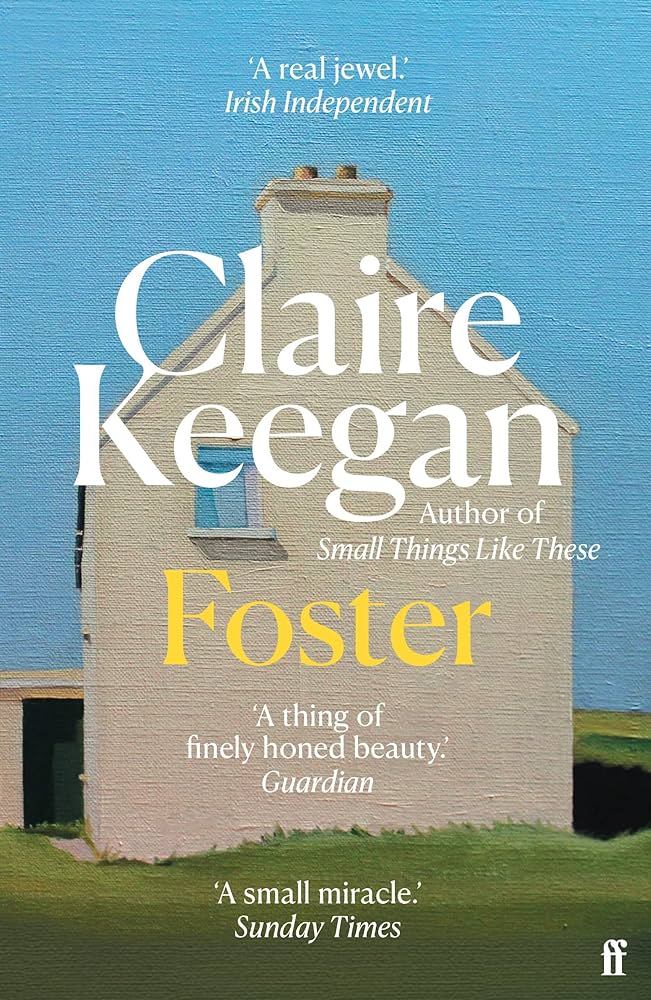
A small white house sits alone in a field with billowing red clouds behind it.

by Kristen B.

Reading a Tana French novel is a bit like riding an old-fashioned roller coaster. First, you have the huge anticipation of slowly, so slowly, tracking up that first big hill, complete with some hitches and wiggles to keep things interesting. Then, the pause at the top before plummeting down headlong into the fast thrills of bumps and twists and loops.

French excels at that slow build of nerves and excitement, teasing you along the way with hints of danger and drama. Her latest, The Hunter, continues the story of American ex-cop Cal Hooper, retired to the west of Ireland, and local teenager Trey Reddy. It picks up two years after the events of The Searcher (Chapter Chats review), with the two still in close contact doing carpentry and other projects. The “townland” figures Cal as a decent foster parent for young Trey and approves of her having a path toward responsible adulthood. Lena Dunne provides the other part of this found family unit, along with the dogs.

All is well until Trey’s dad, Johnny Reddy, blows back into Ardnakelty talking treasure. Sure, and it’s an awful hot summer with no rain with everyone looking for a little distraction. Playing along with Johnny’s con seems like a grand opportunity – even if only for its entertainment value. But matters don’t stay there (because they never do), and the stakes are steeper than anyone realizes.

Still waters run deep, and Trey has never forgiven or forgotten how things ended two years ago. To her, the whole new situation seems, as most cons are, too good to pass up. She’s after the chance to get back a little of her own. The decisions that affect her relationships with the adults in her life – in her families of birth and choice – offer a rare and wonderful study of a traumatized young woman on the edge of adulthood. The Hunter, at its base, is Trey’s book, and it shines even without all the other shenanigans.

This book follows the first one fairly closely if you want to appreciate all the nuances, but you could read it on its own. Most of the characters from The Searcher return, in fine form and fettle. The language and dialogue evoke the rhythms of small town life, especially how there are no real secrets – and ones that remain could be worth their weight in gold, literally.

There’s a bit of a holds list, so you might want to borrow The Searcher first anyways – available in print, large print, e-book, e-audiobook, and audiobook on CD. (Sure, and it will be good fer ya.)

The Hunter by Tana French is available in print, large print, e-book, e-audiobook, and audiobook on CD.

Kristen B. is a devoted bookworm lucky enough to work as the graphic designer for HCLS. She likes to read, stitch, dance, and watch baseball (but not all at the same time).

The Perfect Stories of Claire Keegan

by Cherise T.

In literary fiction, every month should celebrate Irish Heritage. For 2024, explore the beauty that is the work of Claire Keegan. “Long short stories,” as Keegan refers to them, are the ideal length for busy times and for reading again and again. Every word is perfect.

Keegan has joined the impressive lineage of Irish writers who construct characters of such depth, with language of such magic, that their work is beyond compare. So Late in the Day: Stories of Women and Men, Keegan’s most recent work to be published in the US, is a collection of three relationship stories.
In the first, a self-absorbed man’s engagement fails. In the second, a woman writer faces her creative process. In the third, a woman stepping out of her comfort zone walks into
a hell-bound affair.

In Small Things Like These (also as e-book), the setting is 1980s rural Ireland during the Christmas season. The protagonist Bill Furlong, a thoughtful, hardworking supplier of coal and lumber, is grateful for his wife, his financially stable life in economically treacherous times, and his five daughters for whom he provides a loving home and a solid Catholic school education. Born out of wedlock, Bill yearns to know who his father was, although few people from his early life remain to shed light on his parentage. Bill cares about those around him, and as he tries to sleep each night, his mind is “going round in circles,” as his thoughts are “going over small things like these.” The narrative follows Bill as he discovers the exploitation of girls and young women at a local convent. Will Bill risk what he knows and what he has and stand against this oppression?

In Foster (also as e-book), the elementary school-aged Cait is sent to live with relatives who are virtual strangers to her. Because her parents do not have the means to raise their numerous children and her mother is pregnant again, Cait spends a summer filled with attention and love that she has not before experienced. “I am in a spot where I can neither be what I always am nor turn into what I could be.” Foster is the source material for The Quiet Girl, the first Irish language film to be shortlisted for an Oscar. Indulge in both and life will be richer for it.

Cherise Tasker is an Adult Instructor and Research Specialist at the Central Branch. When not immersed in literary fiction, Cherise can be found singing along to musical theater soundtracks.

For the Love of Irish Poets

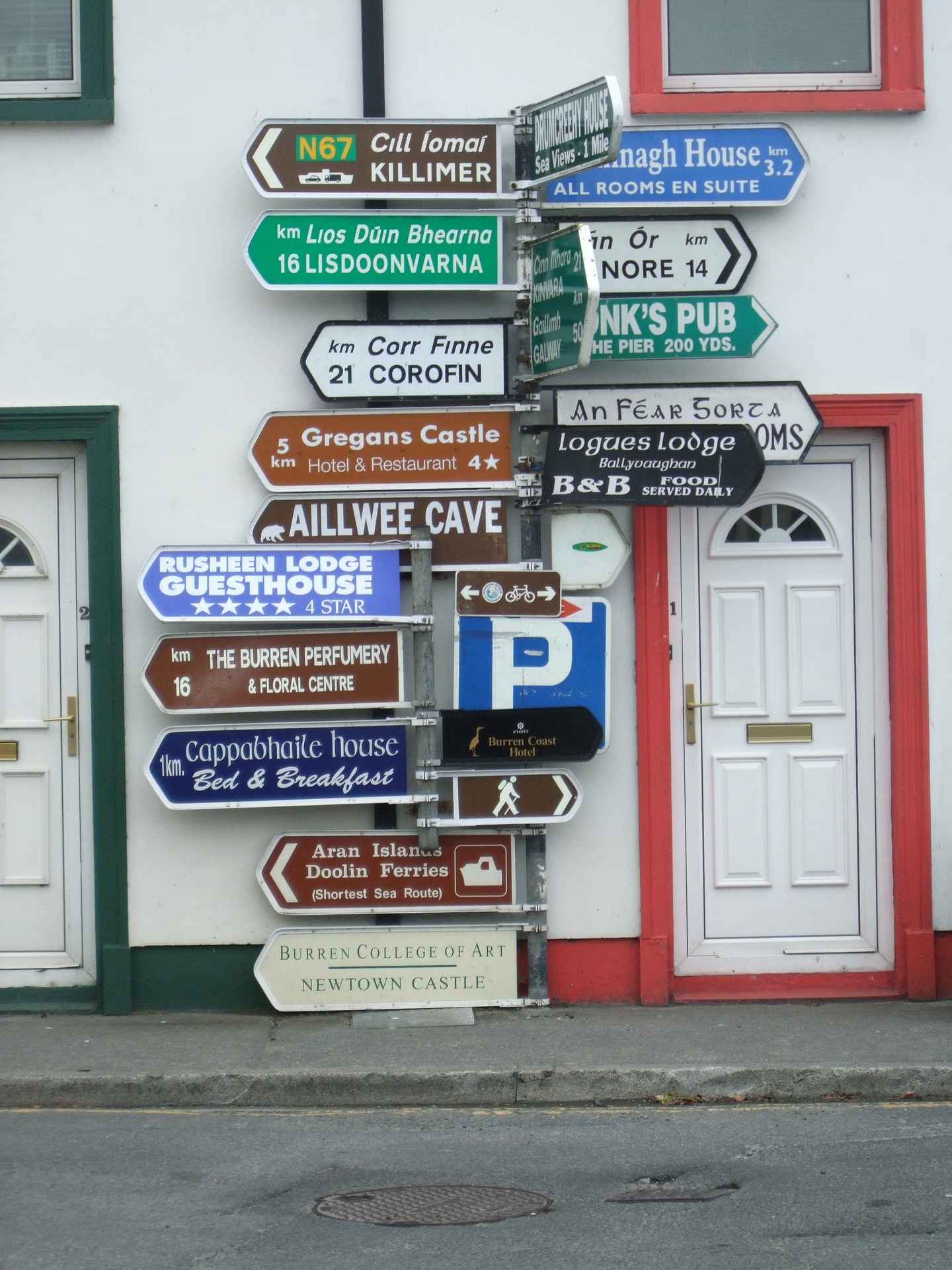
A road sign between two doors, with full post of signs in English and Gaelic.

by Cherise T.

Where tales be told, words be woven, and music be made, an Irish poet can be found. Indulge in the glorious Irish literary tradition by exploring the riches of Boland, Heaney, and Yeats. One of Ireland’s, and the English language’s, most famous poets, William Butler Yeats won the Nobel Prize in 1923 for his works such as “The Second Coming,” where the phrase “Things fall apart; the centre cannot hold” was born. His poems embrace the mythological, the historical, and the political while adhering to traditional verse structures. An excellent starting point for those new to Irish poetry is the anthology, The Collected Poems of W.B. Yeats.

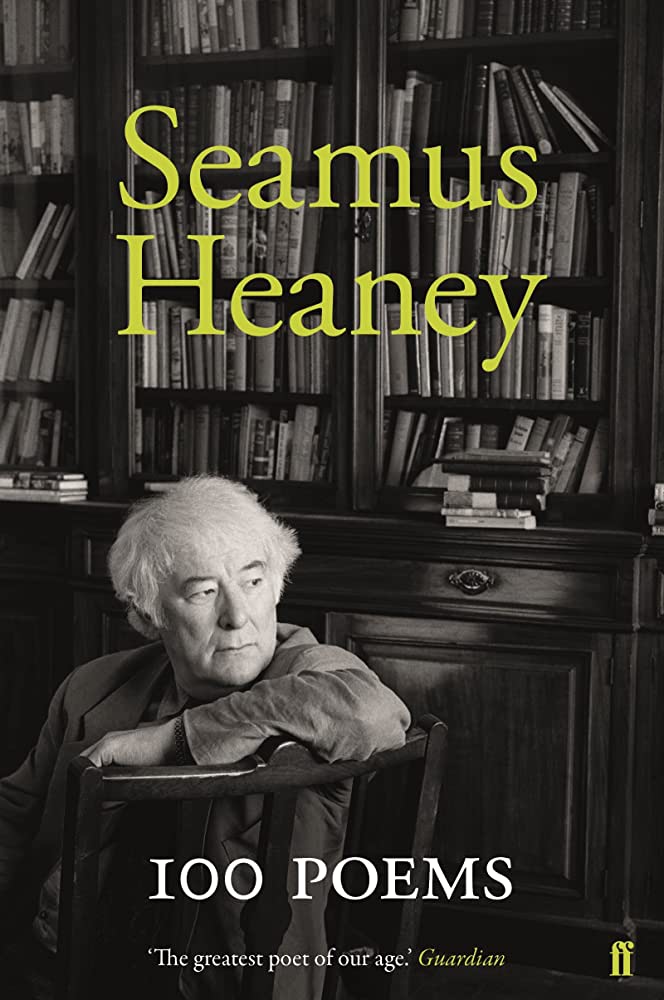
Poet Seamus Heaney sitting in front of full bookshelves, looking over the back o

Scaffolding by Seamus Heaney

Masons, when they start upon a building,
Are careful to test out the scaffolding;

Make sure that planks won’t slip at busy points,
Secure all ladders, tight bolted joints.

And yet all this comes down when the job’s done
Showing off walls of sure and solid stone.

So if, my dear, there sometimes seems to be
Old bridges breaking between you and me,

Never fear. We may let the scaffolds fall
Confident that we have built our wall.

Written in 1966 around the time of Heaney’s marriage, ”Scaffolding” is a unique expression of love and devotion. Heaney was awarded the Nobel Prize in 1995, and while his writing also leans toward history, much of the content is personal. Feast on the rich, precise language in his compilation, 100 Poems. The collection includes an excerpt from “The Cure at Troy” where this renowned stanza is found:

History says, Don’t hope
On this side of the grave,
But then, once in a lifetime
The longed-for tidal wave
Of justice can rise up,
And hope and history rhyme.

Eavan Boland, the most contemporary of the three, subverts tradition, exploring women’s daily lives in the context of feminism and Irish history. In A Woman Without a Country, Boland addresses a range of women, from Eurydice to her own daughter. In the eponymous poem sequence, she writes about her grandmother, “What troubled me was not whether she had included her country in her short life. But whether that country had included her.”

Our online collection includes the Gale LitFinder resource. At hclibrary.org, go to the Research tab and select the Literary Criticism & Analysis section. In LitFinder, use the search term “Irish poetry” or enter an author name, subject, or document type (such as “sonnet”) to explore additional classical through contemporary works by Irish poets.

Cherise Tasker is an Adult Instructor and Research Specialist at the Central Branch. When not immersed in literary fiction, Cherise can be found singing along to musical theater soundtracks. 

The Searcher by Tana French

The cover features the duo-tone image in a dusty green of long grass in a field and a cloud covered sky.

by Kristen B.

Tana French’s The Searcher offers homage to the American Western, from its namesake The Searchers to John Wayne’s True Grit. In this slightly updated version, Cal Hooper retires from the Chicago PD to a small town in the west of Ireland. He’s an outsider, looking to start a new life after leaving his job and getting divorced. He’s focused on making the house he bought livable before winter arrives.

Cal’s cop senses come to high alert unexpectedly. He eventually figures out that a local teenager has been spying. Trey Reddy comes from a family generally unapproved of in Ardnakelty and is desperately looking for a missing big brother. The two form an uneasy relationship as Cal agrees to do a little sleuthing about Brendan’s disappearance and Trey helps with chores around the house, refinishing an old desk and painting the walls. At heart, Cal is a doer and fixer – hence the extensive retirement project. It’s easier to put his professional skills to use helping with Trey’s cause than to deal with the emotional fallout of the past and present. Cal even has a theory about how all most young men need is the equivalent of a horse, a gun, and a homestead.

A slow burn mystery then unspools around the whereabouts of Brendan Reddy, involving local lads, drug dealers from Dublin, and whatever is terrorizing the local sheep. Cal wrestles with taciturn country folk plus his continued confusion over how and why his marriage ended. The author does a marvelous job of winding the past and the present together as Cal tries to make sense of it all. As I attempted to put the pieces of the puzzle together, it resolved into the idea of a small town trying to keep on keeping on, without examining any preconceived notions too closely. And, perhaps, not being quite as friendly to newcomers as it originally seemed. The scene at the local pub involving shots of poteen that literally make Cal go a little cross-eyed might be one of my favorites. The gift of gab can disguise as much as it reveals. A little humor can serve to distract and deceive equally so. The Irish are masters at it.

Ireland itself serves almost as another character, with the townsfolk, the shops, the sheep, and the countryside itself. French’s descriptions of mists and bogs and biting winds are simply lyrical. They paint such vivid pictures that I could imagine the landscapes almost better than I could the characters. This book is just begging to be made into a movie with clear cut characters, a plot that wraps you up in its mysteries, and gorgeous scenery. I’d watch it (although I usually like the book better).

The Searcher by Tana French is available in print and large print, as e-book and e-audiobook, and audio on CD.

The Pull of the Stars

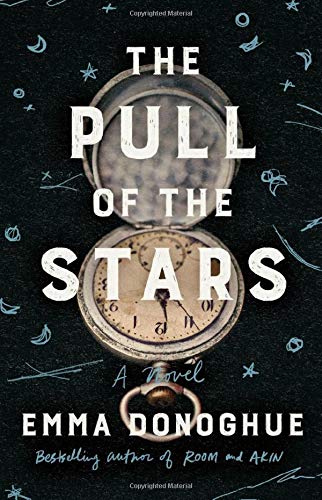
The cover shows an old-fashioned, open pocket watch against a dark blue background, with simple hand-drawn celestial objects including moons, stars, and planets scattered around it.

By Julie F.

Many novels depict the brotherhood of men at war. Donoghue celebrates the sisterhood of women bringing life into the world and those who help them along this perilous journey.” – Wendy Smith, The Washington Post, July 21, 2020

The Pull of the Stars by Emma Donoghue mesmerizes in the best possible sense. Both the pacing and the claustrophobia of this novel are intense – but it’s claustrophobic in a way that fully serves the plot, as the reader finds themselves in the tiny, overcrowded pandemic maternity ward of a Dublin hospital in 1918, basically the size of a closet, with the Spanish flu raging and World War I coming to a close. The little room is witness to so much – grief, pain, joy, love, trauma, fear, friendship, teamwork, unity, discovery – with the stories of nurse Julia Power and her influenza-ridden patients at the forefront of the action. The reader is propelled through the story, into this place where the characters’ trials and triumphs, representative of those experienced by women across the globe and across millennia, are so poignantly described. It is a story that will impress the reader with its introspective attention to detail and historical accuracy.

Nurse Power is a formidable character: efficient, tenacious, fearless, full of seemingly inexhaustible reserves of energy. Yet she is still young and, although not naive, full of uncertainty in a world where children randomly end up orphaned, babies and/or mothers die in childbirth, unequal outcomes are dependent upon wealth and social class, and soldiers like her brother Tim return from the war front unable to speak – or don’t return at all. She tries so hard to keep a cheerful spirit for her patients and for her young volunteer, Bridie Sweeney, yet at one point finds herself asking, “Back to this moment – what would be asked of me this morning?” (169). Her story echoes those of countless women who served their communities and countries in wars past, nurses and doctors and midwives and ambulance drivers who never shirked what was asked of them.

Post-2020 readers will find much of the pandemic description sad and uncannily eerie; Donoghue delivered the manuscript to her publishers in March of 2020, two days before Covid was declared a pandemic. But at heart, while still managing to address the random heartaches individuals experience in a world rent asunder by war, disease, and traumatic personal loss, The Pull of the Stars remains a hopeful, inspiring story (as is the author’s more famous and equally claustrophobic Room), about women’s solidarity and strength when tackling what seem to be insurmountable medical issues.

The Pull of the Stars is availalble from HCLS in print and large print, and also as an ebook and an eaudiobook from Libby/OverDrive.

Julie is an instructor and research specialist at HCLS Miller Branch who finds her work as co-editor of Chapter Chats very rewarding. She loves gardening, birds, books, all kinds of music, and the great outdoors.

Selkie Tales for Irish Heritage Month

Poster for the animated movie shows a large blond man, his two children, a dog, and a bunch of seals gathered close on a rock with waves splashing all around. A bright blue sky show a lighthouse in the distance.

by Kristen B.

According to President Biden and Governor Hogan, March 2022 is officially proclaimed as Irish American Heritage Month, coinciding with St. Patrick’s Day on March 17. I boast of wee bit of Irish heritage from my mother’s side of the family. We drink tea, eat soda bread, and watch The Quiet Man in March. To be fair, we drink tea year round. There are so many wonderful books and movies that show off the Emerald Isle to its best advantage – from films such as Waking Ned Devine and Dancing at Lughnasa (available via Interlibrary Loan) to authors such as Colm Toibin and Maeve Binchy.

Beyond the mainstream, I have always loved the folktales and mythology of the Celts, and of Ireland in particular. Are the Fair Folk involved? I’m in! One of my favorite traditional tales involves the selkies, the shapeshifting folk who transform into seals in the sea and humans on land. There are countless stories and songs about the Selkie Wife, wherein a fisherman (most usually) or a sailor falls in love with a selkie and hides her sealskin while she is dancing upon the shore. They are usually wonderfully, truly in love, but she is trapped living only half her life. When she finds her skin again, she leaves him and their children to reclaim her life in the waves. As with so many traditional Irish tales, it’s the sense of tragedy that makes it beautiful.

Selkie tales have also made their way into plenty of film and books. Seanan McGuire’s long-running urban fantasy series featuring changeling detective October Daye includes selkies as important characters that you can find in several of the titles. Tanya Huff’s modern fantastical Gale Girl books are a ton of fun, with a family full of odd magics and dangerous aunties. The Gale family boasted a young girl named Dorothy and her Auntie Em, once upon a time. The second book in the trilogy’s plot hinges on a supposed selkie colony off the coast of Maritime Canada being threatened by oil drilling. It’s a quick, fun read full of selkies, traditional music festivals, and the occasional dragon.

As for movies, probably my favorite selkie movie is The Secret of Roan Inish, which tells the story of a young girl, Fiona, and her determination to find and bring home her lost younger brother, Jamie, who is living among the seals. The rhythms of the movie are quintessentially Irish, and it needs very little in the way of special effects or soundtrack to keep me engrossed. Song of the Sea is an animated film that tells a slightly different version of the Selkie Wife. When lighthouse keeper Ben’s wife disappears after giving birth to their second child it leads to all sorts of family and fey drama. The creative team behind this gorgeous, lyrical tale first made The Secret of Kells, concerning the famous illustrated manuscript during the burning of the Irish monasteries by Vikings – and at a time where the old magics may still have been found in the wilderness. These movies have a particularly rich animation style of that borrows from ancient Irish art. While animated, they aren’t necessarily just for children.

I wish you a wonderful St. Patrick’s Day! Enjoy one of these suggestions … or any of the other wonderful poems, stories, music, or movies that celebrate our Irish heritage.

Kristen B. is a devoted bookworm lucky enough to work as the graphic designer for HCLS. She likes to read, stitch, dance, and watch baseball (but not all at the same time).