
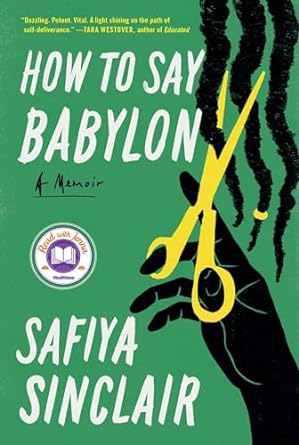
by Piyali C.
Babylon, according to the strictest sect of Rastafari, is the corrupting influence of the Western world on Black people. Safiya Sinclair’s father, a follower of the religion’s most militant faction, was obsessed with the purity of his three daughters and determined to keep the immorality of Babylon from touching them. Howard Sinclair, who later took the name Djani to feel closer to his Rastafarian beliefs, was a staunch follower of Haile Selassie. He wanted to sing reggae songs, never touch his dreadlocks, and seek livity – the Rastafarian concept of righteous living. The precept meant he should raise his children in the Rastafarian tradition and live a life of harmony with his partner, Esther, the mother to his four children.
Djani was a musician with big dreams. After being rejected by his own mother for following the Rastafarian religion, after repeated failed attempts to make a name for himself in the music world, and finally, after having to relegate his music to being a source of entertainment for rich tourists (baldheads, as he called them, due to the lack of dreadlocks) visiting his homeland of Jamaica, Djani grew increasingly militant in his belief in the harmfulness of Western influences. Safiya, his oldest child, bore the brunt of his obsession with keeping the deceitful ways of Babylon out of his gate.
Safiya’s childhood was spent near the sea and seemed almost idyllic. Her father left home every day to play his music at the hotels, and her mother nurtured her and her siblings with love and nourishment. Her parents met at the tender age of 18, found commonality in their Rastafarian beliefs, and never married but decided to make a life together. Esther became a demure Rastafarian woman who stayed home to nurture their children, cook Ital food, never disagree with her man, and do every household chore silently. Despite her quietude, she instilled a culture of hard work and a desire to achieve excellence in all of her children.
As a result, Safiya and her siblings excelled in school, scoring the highest grades in their exams. Djani continued to play music in hotels and even made a couple of trips to Japan to form a music band. He was the undisputed leader of his household just as his religion dictated. Safiya accepted this dynamic in her childhood, but Djani’s obsession about Safiya’s purity took a dangerous turn as she became an adolescent. Held captive by her father’s vicious efforts to keep her body and mind pure, Safiya turned to writing poetry to express her confusion, anger, and helplessness. The beautiful expression of her suffering through her art started resonating with the outside world, and Safiya won accolades and fame for her poetry. Gradually, Safiya grew into the woman that she wanted to become and not the woman her father envisioned her to be – another duty-bound and voiceless Rastafarian wife to a Rastafarian husband.
How to Say Babylon is a brutally honest portrayal of a life that initially felt nourishing and enriched with a lot of laughter, love, and filial admiration, but which soon turned into one of oppression and control. This is a story of a courageous woman’s endeavor to dictate the course of her life on her own terms, despite the shackles that threatened to hold her captive. While telling her own story in radiant, lyrical prose, Sinclair also paints a picture of the oppression of Black people by the Western world, the racial injustice, and the voices of women that are forcibly silenced by patriarchy. Yet those voices are still finding a way to ring free. Sinclair’s memoir recounts the history of Rastafarian religion– a religion that started as love and benevolence but which turned to fanaticism and radicalism on the part of some who wanted to use it to their own benefit and to control women. How to Say Babylon is also Safiya Sinclair’s love letter to her beloved Jamaica, her mother Esther, and her siblings Lij, Ife, and Shari.
As I read, I felt Sinclair wrote in order to set herself free and embark on a path to find forgiveness in her heart for the man who wronged her in a most cruel way. Writing a memoir is such a brave thing to do. Authors who write about their innermost pain, fear, and experiences allow themselves to be completely vulnerable. Such vulnerability is the first step towards healing, strengthening, and growing. In author Tara Westover’s words, How to Say Babylon is “Dazzling. Potent. Vital. A light shining on the path of self-deliverance.” I could not put this book down.
How to Say Babylon by Safiya Sinclair is available in print, large print, e-book and e-audiobook formats.
Piyali is an instructor and research specialist at HCLS Miller Branch, where she facilitates Light But Not Fluffy and co-facilitates Global Reads. She keeps the hope alive that someday she will reach the bottom of her to-read list.

 CHAPTER CHATS