Marry Me by Midnight by Felicia Grossman

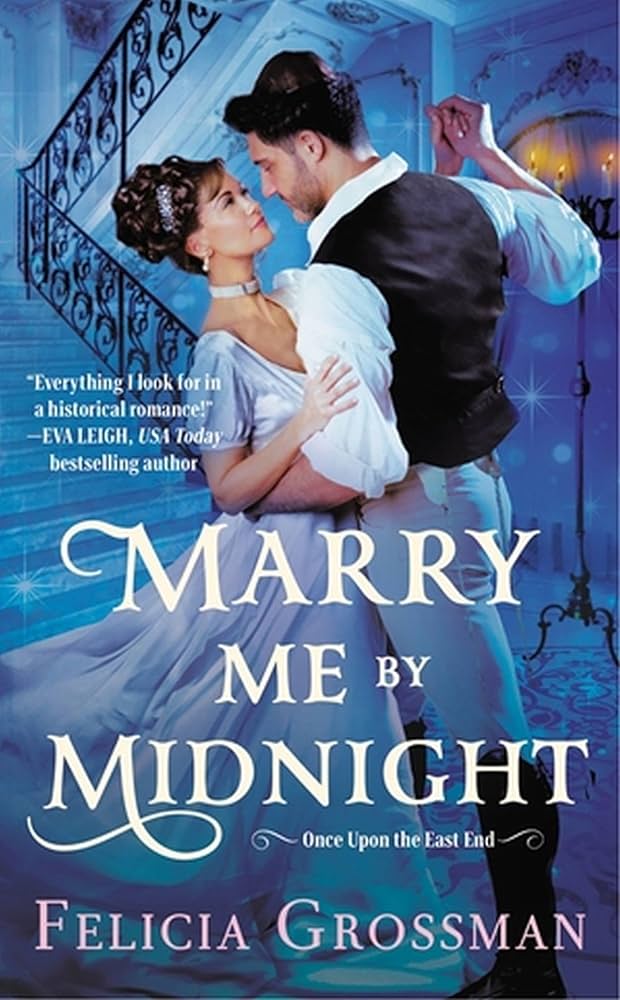
Two people dance at the bottom of a sweeping staircase, she's in a fancy dress with her hair up and he's in shirtsleeves, vest, and trousers.

by Angie E

Felicia Grossman’s Marry Me By Midnight intertwines romance with Jewish heritage in 1830s London. Isabelle Lira, the belle of the London Jewish community, faces a challenging situation after her father’s unexpected death. She must find a suitable husband to assure her family’s business and standing. 

The powerful Berab brothers, her father’s business partners, see her marriage as a danger to their livelihood. Isabelle’s desire to take over her father’s business clashes with social norms that limit women’s roles, especially Jewish women. To help her search for a husband, Isabelle hosts a series of festivals and events centered around Jewish holidays. Her goal is to meet eligible Jewish men and find someone with secrets and a background she can exploit for her independence. 

Enter Aaron Ellenberg, a synagogue caretaker with no family or wealth, perfect for Isabelle’s schemes. She employs Aaron as a spy, instructing him to learn about her potential suitors. However, unexpected attraction and risks await them both as they navigate love, secrets, and societal expectations. 

Marry Me By Midnight embraces its Judaic roots. The novel provides a fascinating glimpse into the 19th-century Jewish community in London. It portrays a passionate and daring romance while weaving in mystery and intrigue. The author captures Jewish London as a world-within-a-world, adjacent to but distinct from the English upper classes of that time. The dynamics of the Judaic community come alive, making this book a must-read for historical fiction and romance enthusiasts who long for more Jewish characters at the heart of the story. 

This title is available in print.

Angie is an Instructor & Research Specialist at Central Branch and is a co-facilitator for Reads of Acceptance, HCLS’ first LGBTQ-focused book club. Her ideal day is reading in her cozy armchair, with her cat Henry next to her.
Now That’s Chutzpah 

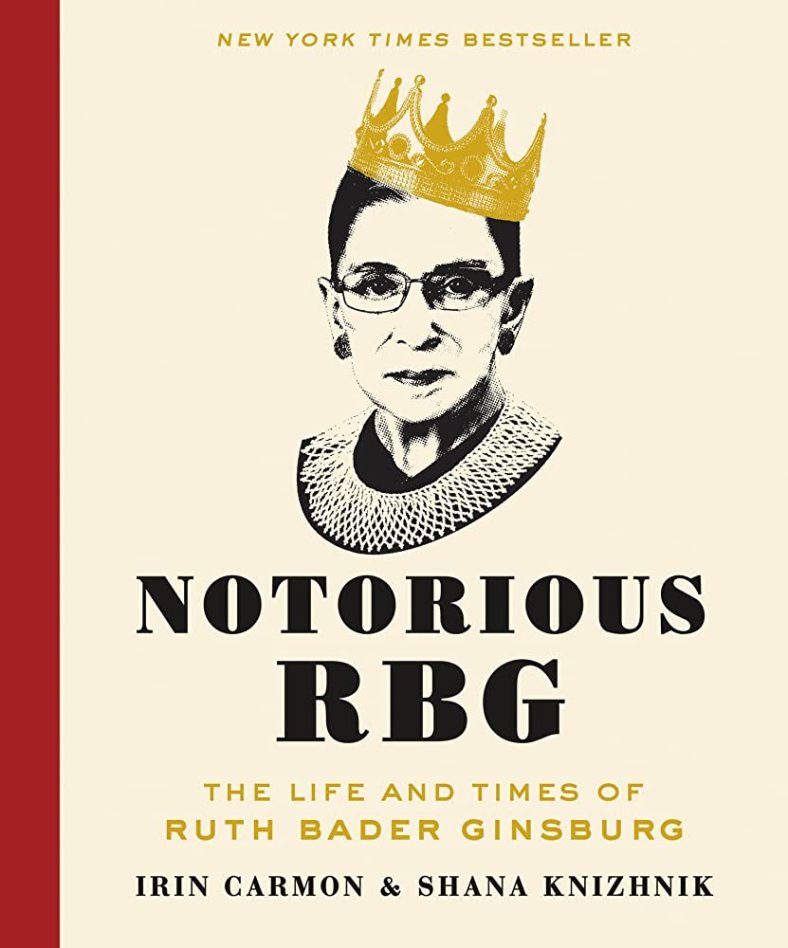
A black and white portrait of Supreme Court Justice Ruth Bader Ginsburg, wearing her dissent color and sporting a golden crown.

Truly walking a mile in another person’s shoes is rarely possible, but when you want to take a stroll, biography and memoir are right here inside the doors of everyone’s favorite library. Aspiring to understand the Jewish experience, readers can check out materials with unique perspectives on Jewish heritage. Consider exploring the lives of three Jews raised in Brooklyn, New York. 

In June 2013, Ruth Bader Ginsburg seized the rare opportunity to read a dissent from the bench of the Supreme Court. Wearing her “dissent collar,” she stated that the court’s majority opinion was a “demolition” of the Voting Rights Act. A slight 80-year-old woman with a soft voice, Justice Ginsburg was already legendary for her groundbreaking work on gender equality as well as her rigorous workout regimen, but her words were her superpower. She may have been the physical opposite of the deceased rapper Notorious B.I.G., but they both used language to pack a punch, and so the Notorious R.B.G. Tumblr (a multimedia blog site) was born. Fact-checked by RBG herself, Notorious RBG: The Life and Times of Ruth Bader Ginsburg, by Irin Carmon and Shana Knizhnik, presents one of the most fun and inspiring biographies available. Packed with tribute art, photographs of folks in RBG costumes, judicial wisdom, and primary sources, tweens and adults alike can embrace this book. There is also a young readers’ edition

Speaking of art, who does not love Where the Wild Things Are and New Yorker cartoons? Wild Visionary: Maurice Sendak in Queer Jewish Context, by Golan Y. Moskowitz, makes an in-depth journey into Sendak’s legacy. His upbringing and life as a Jewish gay man informed the futuristic outlook he brought to his books. Because they lost so much family in the Holocaust, Sendak’s parents were overly protective, and home felt as if it were filled with “dead Jews.” Considered a literary and artistic disrupter, Sendak believed that books were a way for children to safely explore their natural fears. Throughout his life, Sendak used his art to confront injustice, challenge prejudice, and engage readers in the gravity of children’s emotional lives. 

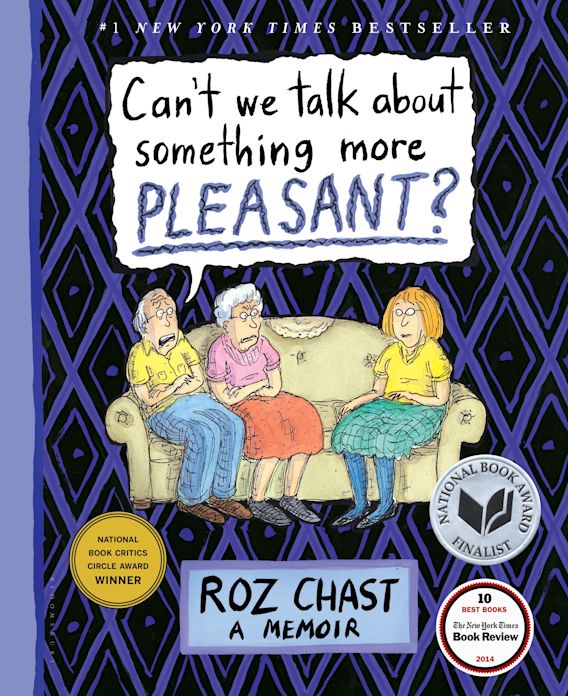
Against a backdrop of a black and puple diamond pattern, an illustration shows three people sitting on an sofa. Two elderly people next to a younger person. The text bubble reads, "Can't we talk about something more PLEASANT?"

Can’t We Talk About Something More Pleasant is New Yorker magazine cartoonist Roz Chast’s graphic memoir. The art is poignant and funny, provocative and familiar. Doesn’t every family have at least one closet so deep that we never know what was really in it until the person dies and the time comes to clean out its contents? Chast mines the contents of her life, including drawings, possessions, photos, letters, and family anecdotes to create an unforgettable portrait of her upbringing and a piercing view of death. Her relationship with her parents was fraught, making this an uncomfortable read at times. Chast’s dark humor in addressing challenging end-of-life issues resonated deeply with me. Her parents lived into their 90s, and she draws and writes about falls, elder law, dementia, nursing aides, financial fears, incontinence, bed sores, hospice. Filled with universal family truths, the book is one I’ve read and reread, rare for me. It’s a head-on confrontation with the circle of life. 

Cherise Tasker is an Adult Instructor and Research Specialist at the Central Branch. When not immersed in literary fiction, Cherise can be found singing along to musical theater soundtracks. 

Author Works with Michael Twitty

Portrait of Michael W. Twitty, wearing a zip-up hoodie and touching his beard.

Thursday, Aug 11 from 7 – 8 pm at Miller Branch.

Please register to attend. Limited seats.
Register at bit.ly/twittyhcls

In partnership with the Howard County Jewish Federation and Baltimore Jewish Council

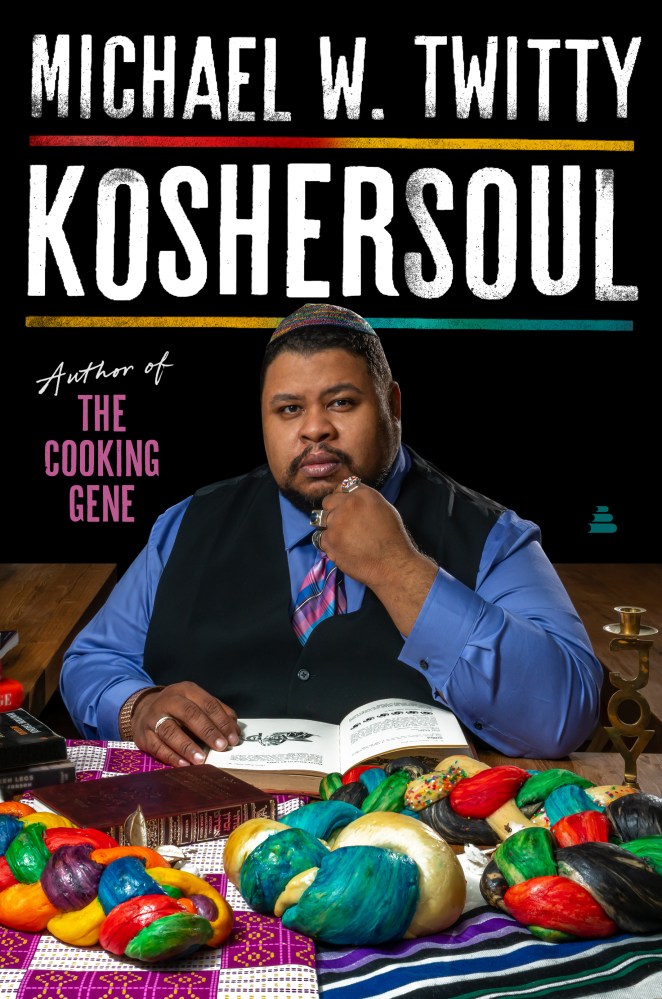
In his new book KosherSoul, Michael Twitty, author of the acclaimed The Cooking Gene (read a review), explores the cultural crossroads of Jewish and African diaspora cuisine and issues of memory, identity, and food.

Twitty examines the creation of African/Jewish global food as a conversation of migrations, a dialogue of diasporas, and the rich background for people who participate in it. At the same time, he shares recipes for Southern culinary touchstones like apple barbecue sauce, watermelon and feta salad, and collard green lasagna, while blending the traditions of his mixed identity into new creations such as Louisiana style latkes and kush. KosherSoul is more than a cookbook, it’s an exploration of selfhood when born at a crossroads of race.

The question is not just who makes the food and who it belongs to, but how food makes the people, reflects the journey, and validates the existence of these marginalized identities. Twitty aims to move beyond the idea of Jews of Color as outliers, but as significant and meaningful cultural creators in both Black and Jewish civilizations.

ABOUT THE AUTHOR

A highly sought-after speaker and consultant, Twitty has appeared on programs with Andrew Zimmern, Henry Louis Gates, Padma Lakshmi, and most recently on Michelle Obama’s Waffles and Mochi.

He is a TED Fellow and was just named as a National Geographic Emerging Explorer. His first MasterClass course, “Tracing Your Roots Through Food,” is now available. Over the past year he has partnered with Atlas Obscura to teach multiple online seminars and was the first guest on a new web series for their food division. Michael will also be a Consulting Producer on a new food competition program coming soon from OWN. He lives in Fredericksburg, Virginia.

Good Talk: A Memoir in Conversations by Mira Jacob

The picture shows author Mira Jacob wearing a denim shirt against a purple background, next to a copy of the book, which shows the title and author in block letters of turquoise and orange with graphics of people contained in each letter.

Review by Claudia J.

I glanced over at my pile of “to be read” books and picked up Good Talk: A Memoir in Conversations by Mira Jacob. I checked the book out long before the coronavirus pandemic kept us in and images of systemic racism made their way out. In a time when I was feeling particularly hopeless, with all of the events toppling onto each other, Good Talk provided a much needed respite from the day-to-day.

Told from the perspective of Jacob herself in discussion with her young son, she answers the many questions he has about race, his culture, and his family. In doing so, she bares the nation’s truth: that we as Americans are imperfect and have a lot of work to do. 

Thank you, Mira. Thank you for your beautiful, vulnerable, and at times uncomfortable account of your life as an imperfect American, as an Indian woman, but also as a human existing in our incredibly fallible nation. How were you able to make me feel so many emotions at simultaneous levels? How did you speak so honestly about colorism and pages later talk about the complicated relationship between Black and Brown people? How did you encompass the pain of watching a sibling, whom of course you’re happy for, find true love, but also just a short section away, haunt me with your memories of a paper city?

The illustrative design, the words, the soft voice I heard as I read, said, “It’s okay, I know this struggle too.” Reading this felt like the meditation we all need right now. Good Talk is not only one of my favorite graphic novels of all time, but it is one of the books that should be required reading. Mira, thank you again.

Available in print at HCLS as well as in ebook and eaudio through OverDrive/Libby.

Claudia J. has worked for Howard County Library System for a little over four years. She enjoys writing on rainy days and drinking iced coffee on sunny days.