The Stars Too Fondly by Emily Hamilton

The Book Cover depicts two young people, one wearing blue and one wearing brown and gold, reaching out for each other while moving through space in front of a bright heavenly body., with distant stars in the background.

by Eliana H.

What makes someone a person? What is needed to fall in love? How might society grapple with a significant and mystifying setback in their efforts to secure a safe new home for humanity? What might another dimension be like? What are the moral ramifications of destroying a sentient species we can’t begin to comprehend if it means saving humanity? Readers of The Stars Too Fondly by Emily Hamilton may find themselves pondering these and other questions, while also laughing, crying, and maybe falling a little bit in love themselves.

Twenty years ago, humanity’s hope suffered a huge blow. The Providence I, a spacecraft powered by a dark matter engine, was supposed to take its crew of more than 200 people to a planet orbiting Proxima Centauri, where they would establish the first human colony on an exoplanet. Instead, the entire crew vanished at the moment of launch, leaving the empty ship and a very confused populace behind. Cleo McQueary and her best friends were children when the Providence I crew was preparing to launch and then disappeared, and they have grown up under the shadow of the mystery, wondering what happened. 

Due to a troubled relationship with her father, Cleo spends most of her time with those best friends who have become her chosen family, Abe, Kaleisha, and Ros. Each of them was profoundly influenced by the anticipation of the Providence I launch and the disaster of the crew’s disappearance. Now adults, they have spent the past two decades frustrated by Earth’s abandonment of space exploration after being unable to determine what happened to the Providence I crew. And of course, the situation on Earth has continued to deteriorate since then as well. 

Cleo’s insatiable curiosity has led the four friends to devise a “space heist,” where they will break into the abandoned facility owned by now-defunct Erebus Industries and explore the Providence I for themselves. The friends are able to reach the ship surprisingly easily, but things do not go according to plan from there. The dark matter engine activates at Cleo’s touch, and they find themselves heading toward Proxima Centauri B. None of them are trained astronauts, and they haven’t even said goodbye to their families. Thankfully, their topics of expertise are fairly relevant. They also have unexpected help from a holographic version of the original mission’s captain, Wilhelmina Lucas. Captain Lucas looks just the same as they remember, but she’s 20 years behind on what has been happening. And, of course, she’s a computer construction of the real Captain Lucas’s consciousness. 

This particular computer has a lot more personality than readers may be used to, and the book invites readers to consider what constitutes consciousness and sentience – is this version of Billie, as Captain Lucas invites her unexpected passengers to call her, a person? Cleo and her friends certainly come to see her as one, even without ever being able to physically interact with her. The relationships they develop with her certainly push the boundaries of what one would imagine might develop between a human and a hologram. As the group tries to solve the problem of returning home to Earth, they also work to unravel the mystery of exactly what happened on the Providence I all those years ago. Will they be able to find the missing crew? Will they make it home themselves? What else will they discover on their travels? To learn the answers, check out The Stars Too Fondly, a debut described by the publisher as “part space odyssey, part sapphic rom-com.”

Eliana is a Children’s Instructor and Research Specialist at the Elkridge Branch and co-chair of the HCLS Equity Committee. She loves reading, even if she’s slow at it, and especially enjoys helping people find books that make them light up. She also loves being outside and spending time with friends and family (when it’s safe).
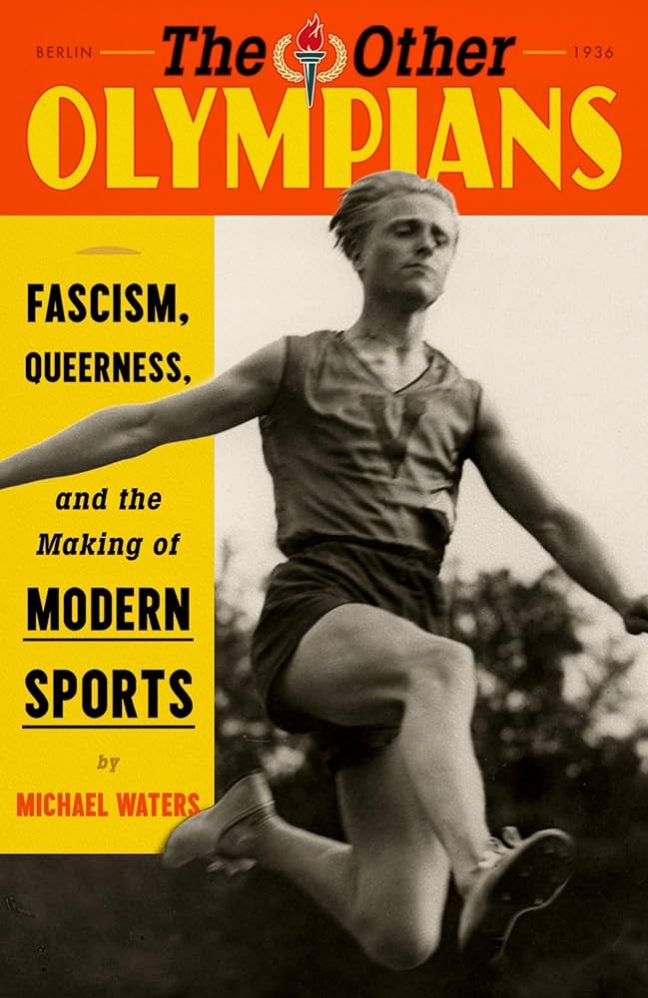
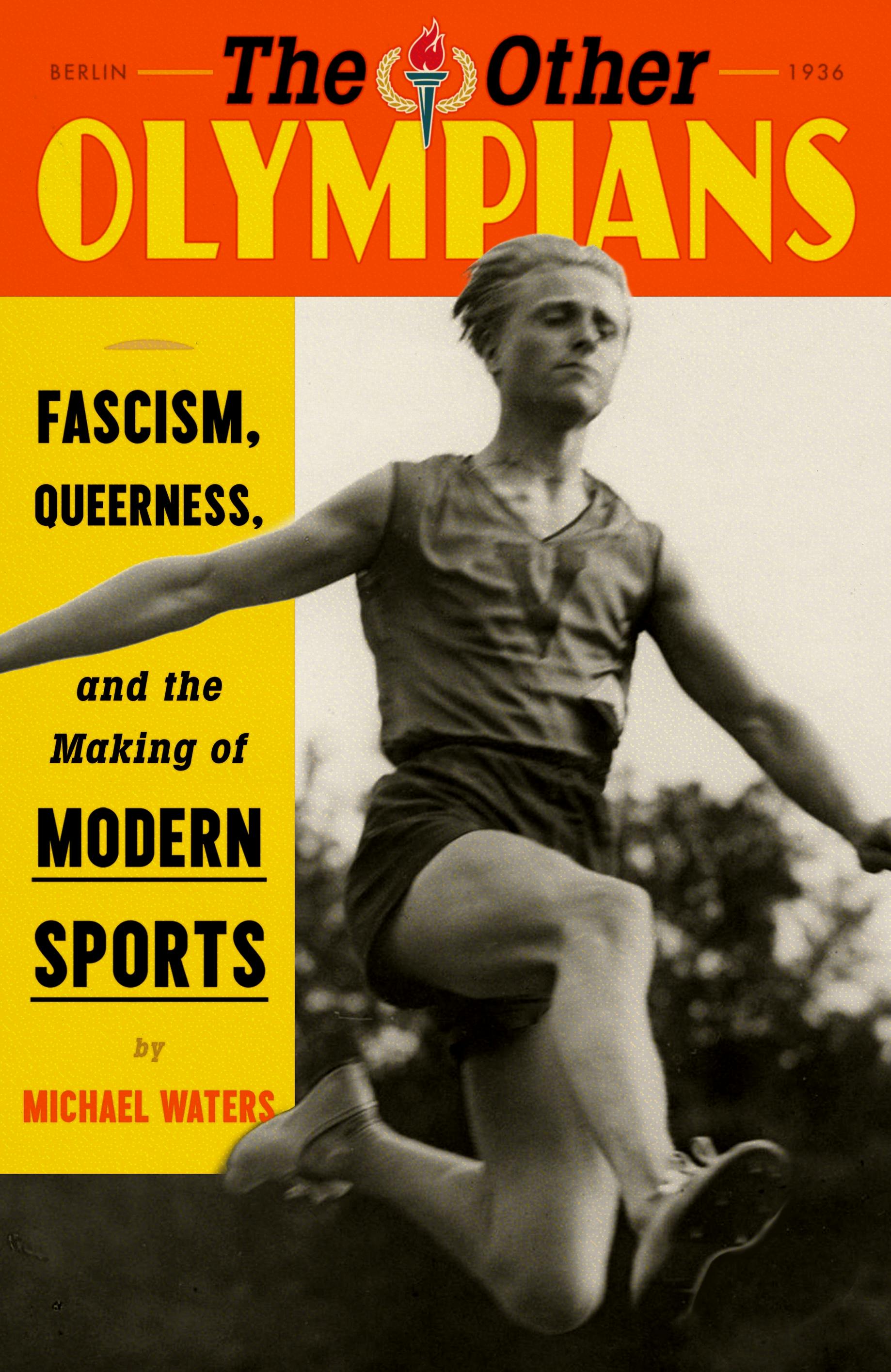
The Other Olympians: Fascism, Queerness, and the Making of Modern Sports by Michael Waters

The book cover depicts Olympian Zdeněk Koubek participating in a jumping event, leaping into the air with arms spread wide and hair blown back.

By Ash B.

To say that “men” in women’s sports is a hot-button issue would be an understatement. 

Many individuals have a knee-jerk emotional reaction to this topic; far fewer know the facts about transgender or intersex athletes. I’d bet even fewer know that gender anxieties in relation to sports are nothing new – in fact, they date back over a century. For example: mandatory medical exams, to ‘prove the womanhood’ of female athletes, were first popularized by a Nazi sports physician for the 1936 Olympics. Sex testing would become more prominent in the following decades, particularly in the context of the Cold War. Such is one bit of history unveiled in The Other Olympians: Fascism, Queerness, and the Making of Modern Sports by Michael Waters.

As indicated by its title, this nonfiction book addresses political, social, cultural, and scientific developments in the early twentieth century. Waters digs deep into the history of professional, international athletics, exploring the forces that impacted where, and by whom, sports could be played – particularly at the 1936 Berlin Olympic Games in Nazi Germany. The idea of women playing sports, whether leisurely or professionally, was enough to cause public (primarily male) concern and outrage in this time period. The founder of the modern Olympics, Pierre de Coubertin, declared that female athletes did not, “constitute a sight to be recommended before the crowds I gather for an Olympiad.” 

On a surface level, it’s not difficult to imagine why there’s a patriarchal bias regarding athletics – consider how current broadcasts of women’s sports get less viewership and the teams get fewer resources than their male counterparts. Dig a bit deeper, and you quickly run into norms about what a female body is ‘supposed’ to look like. Notice how women are ridiculed and called “manly” when they are seen as too muscular? Think about how many people now accuse female athletes with ‘masculine’ characteristics – a square jawline, a broad nose, wide shoulders, a small chest – of being male. 

This is the cruel irony of the anti-trans “defending women’s sports” issue; it doesn’t just target trans people. It significantly harms cisgender women by policing their bodies and appearances, too, especially women of color and intersex women. This fixation on gender conformity in sports – specifically women being ‘feminine’ enough – can be traced back decades, to when women were discouraged from playing sports at all. Fear-mongering abounded regarding the ‘masculinizing’ effects that playing sports, especially sports that were accessible to working-class women. As Waters paraphrases the British paper The Daily Herald, “women who participated in ‘masculine’ sports like soccer or track and field risked creating a third category of sex.”

These cultural fears were elevated by news of Zdeněk Koubek and Mark Weston – each assigned female at birth and raised as girls – publicly transitioning to living as men, in 1935 and 1936 respectively. Because both Koubek and Weston had formerly won titles in the Women’s World Games, an international competition similar to the Olympics, their gender revelations had significant influence on discourse regarding women’s sports, including paranoia that male athletes could ‘pose’ as women to win professional competitions.

With an engrossing narrative approach, Waters traces the histories of Koubek and Weston along with the stories of key bureaucrats in the sports world, such as Alice Milliat, founder of the Women’s World Games, and Avery Brundage, an American sports administrator who climbed his way to Olympic leadership. Whether you’re interested in athletics, politics, or gender, you’re sure to glean knowledge from Waters’ depth of research. This is a great read for all history lovers who relish in learning little-known facts, woven together in personal and national narratives, as well as anyone who is concerned (or simply confused) about the culture wars around gender and women’s sports.

The Other Olympians is available in print and as an e-audiobook from Libby.

Interested in a brighter side of queer history? Learn about drag history and makeup on June 17, 7 – 8:30 pm at HCLS Central Branch for You Betta Werk! The Art & History of Drag. Free makeup will be given to attendees, while supplies last, on a first-come, first-served basis.

Ash is an Instructor and Research Specialist at HCLS Central Branch with a passion for information literacy and community engagement. They love music, gardening, hiking, and cuddling with their golden retriever.

Meet the Author: Neon Yang

Meet Author Neon Yang
Wed, May 7 | 12:30 – 1:30 pm
Online. Register at bit.ly/Author-Yang to receive the link for the event.
For adults.

Neon Yang is a queer non-binary author based in the UK. They have been nominated for the Hugo, Nebula, World Fantasy, Lambda Literary, Ignyte, and Locus Awards, and their Tensorate series of novellas (The Black Tides of Heaven, The Red Threads of Fortune, The Descent of Monsters, and The Ascent to Godhood) was an Otherwise Award Honoree. In previous incarnations, Neon was a molecular biologist, a science communicator, a writer for animation, games and comic studios, and a journalist for one of Singapore’s major papers.

The Black Tides of Heaven & The Red Threads of Fortune

Review by Kristen B.

A person with long black hair and a determined scowl, dressed in black robes, sits cross-legged upon a cloud. The art is ornate and swirling like classic Asian paintings.

How do fate and free will coexist? Can they? Is a person’s fate preordained no matter their actions, or can they swim upstream against the current? The Black Tides of Heaven by Neon Yang examines this conundrum through a set of turning points in Sanao Akeha’s life. Born an unexpected twin, Akeha lives their life always in the shadow of their more famous sibling, Mokoya the prophet, who has visions of future events. This novella considers Akeha’s opposition to the roles and responsibilities of being a member of the ruling dynasty. In a series of vignettes from childhood through early adulthood, Akeha makes choices that affect himself and his relationships, his twin, his mother, and maybe the entire nation.

In these books, the magic system is based on elemental powers, such as air, water, and earth, that weave through the Slack. Magic users “tense” to employ the energies available. I really like the idea of tense/slack as a way of projecting power. In another interesting piece of world-building, children are genderless. Each person confirms their chosen gender as they approach adulthood. The twins’ mother, the Protector, rules as a complete authoritarian, with an iron fist in the form of Tensorate pugilists who train at the Great Monastery. Akeha discovers a rebellion of Machinists, who employ physics and chemistry to rival the Tensors. Yang does an excellent job building a rich world that seems both familiar and foreign.

The Red Threads of Fortune follows Mokoya, after the devastating and tragic events of the first book. She has moved on from her role as prophet and now hunts magical beasts in the desert. She’s following rumors of a particularly large and dangerous naga, a dragonish serpent from the Quarterlands where gravity is lighter so the monsters can fly. Rider, who comes from the Quarterlands astride a tamed naga, hunts the same creature, and they team up with Akeha and the Machinists rebellion after the naga attacks a small city. Moyoka eventually finds an answer to the unwanted prophecies that seem to ruin her life. I look forward to reading the next two installments in this complicated world.

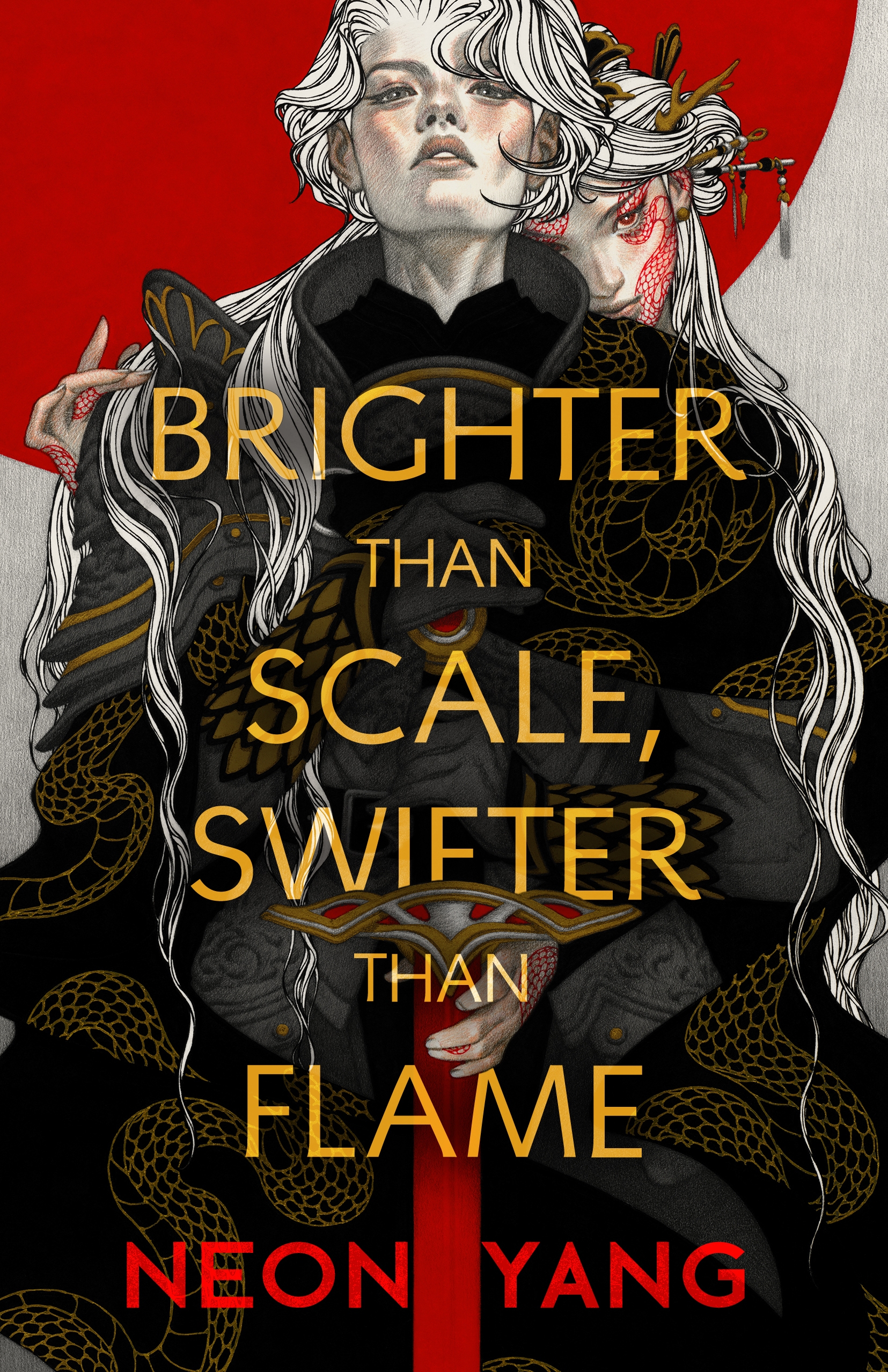
Their latest book, Brighter Than Scale, Swifter Than Flame, is a stunning queer novella about a dragon hunter finding home with a dragon queen. New York Times bestselling author Olivie Blake calls it, “A lovely, intricate gem of a fairy tale about finding yourself in another person and traveling distant lands to finally come home. I loved it.”

Kristen B. is a devoted bookworm lucky enough to work as the graphic designer for HCLS. She likes to read, stitch, dance, and watch baseball (but not all at the same time).

Reading List for Trans Visibility

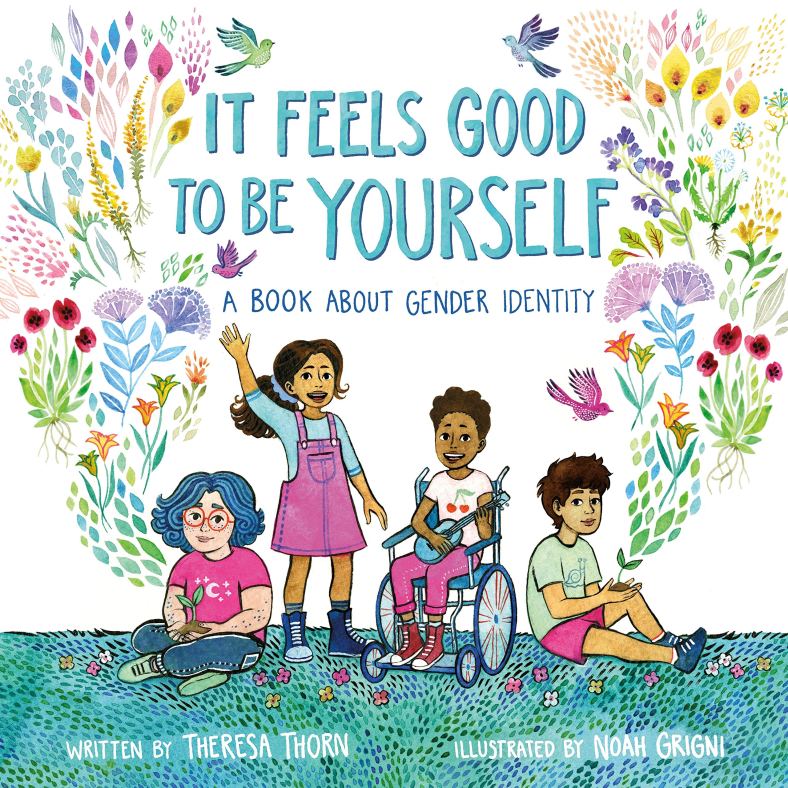
A colorful illustrated cover shows many children framed by sprays of flowers, with the title above them.

By Ash B.

Since 2009, March 31 has been recognized internationally as Transgender Day of Visibility. Created by trans community member Rachel Crandall-Crocker, the day is meant to spark hope and spread awareness of trans lives, especially through trans joy. 

General awareness of trans-ness has increased in the past 15 years; however, visibility does not always mean progress. Over the past three years, Americans (across all political parties) have grown less supportive of policies that support trans people (ex. protection against job and housing discrimination) and more supportive of policies that cause harm and restrict trans rights, particularly relating to athletics, restrooms, and healthcare (Pew Research).

The majority of Americans, particularly those aged 50+, report they do not personally know a transgender person. Perhaps that’s why the trans community has become such an easy target for disinformation and scapegoating. If a sizeable majority of the population personally knew trans and nonbinary people – truly knew us, as peers and coworkers and friends, as humans trying to live our lives as best we can – then perhaps we would be guaranteed more safety and bodily autonomy.

In the spirit of trans joy, all are invited to celebrate the trans community at the following events: 

This Friday (Mar 28), join HCLS for a free Trans Day of Visibility celebration hosted by the Howard County LGBTQIA+ Commission, in partnership with the Office of Human Rights and Equity. The event takes place at the Elkridge 50+ Center from 4 – 7:30 pm with read-alouds, arts and crafts, games, and a dance party. More info here. 

On Monday, March 31, 10 am – 12 pm & 3 – 5 pm, join us at Central Branch to make buttons, zines, collages, and vision boards. From 4 – 5 pm, a representative from Community Allies of Rainbow Youth (CARY) shares resources and answers questions.

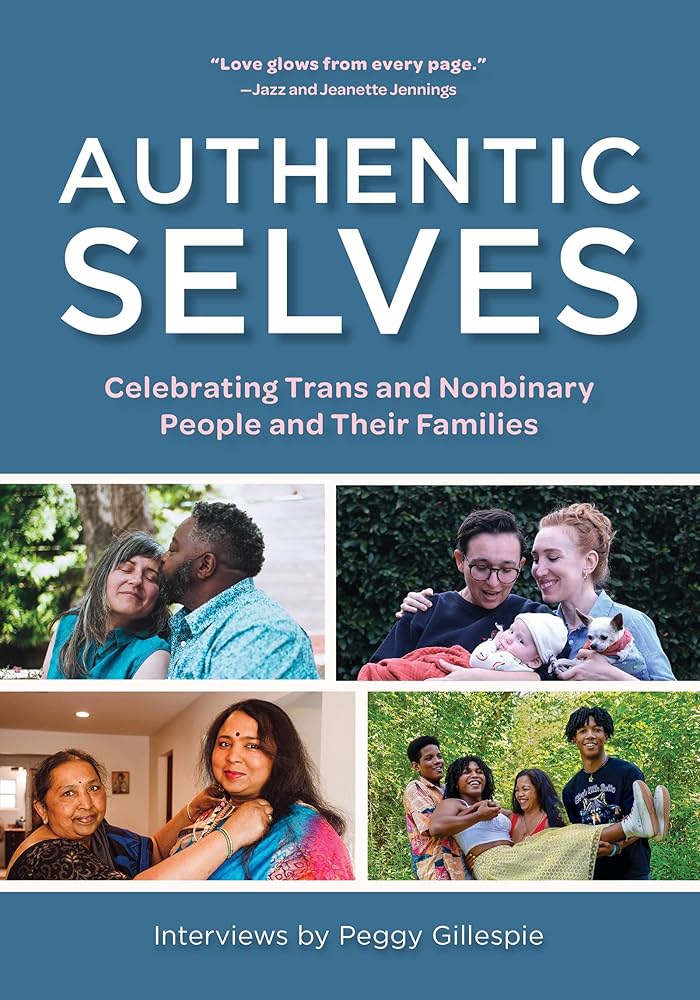
Below is a robust roundup of titles from our collection, most of them authored by trans people. Regardless of your gender identity and personal background, there’s something here for everyone; I hope you check one out and learn something new! 

Trans 101 Information

Anthologies to Better Understand Transgender Experiences

Trans History

If You’re a Parent (whether or not you currently have a trans child) 

Inclusive Picture Books

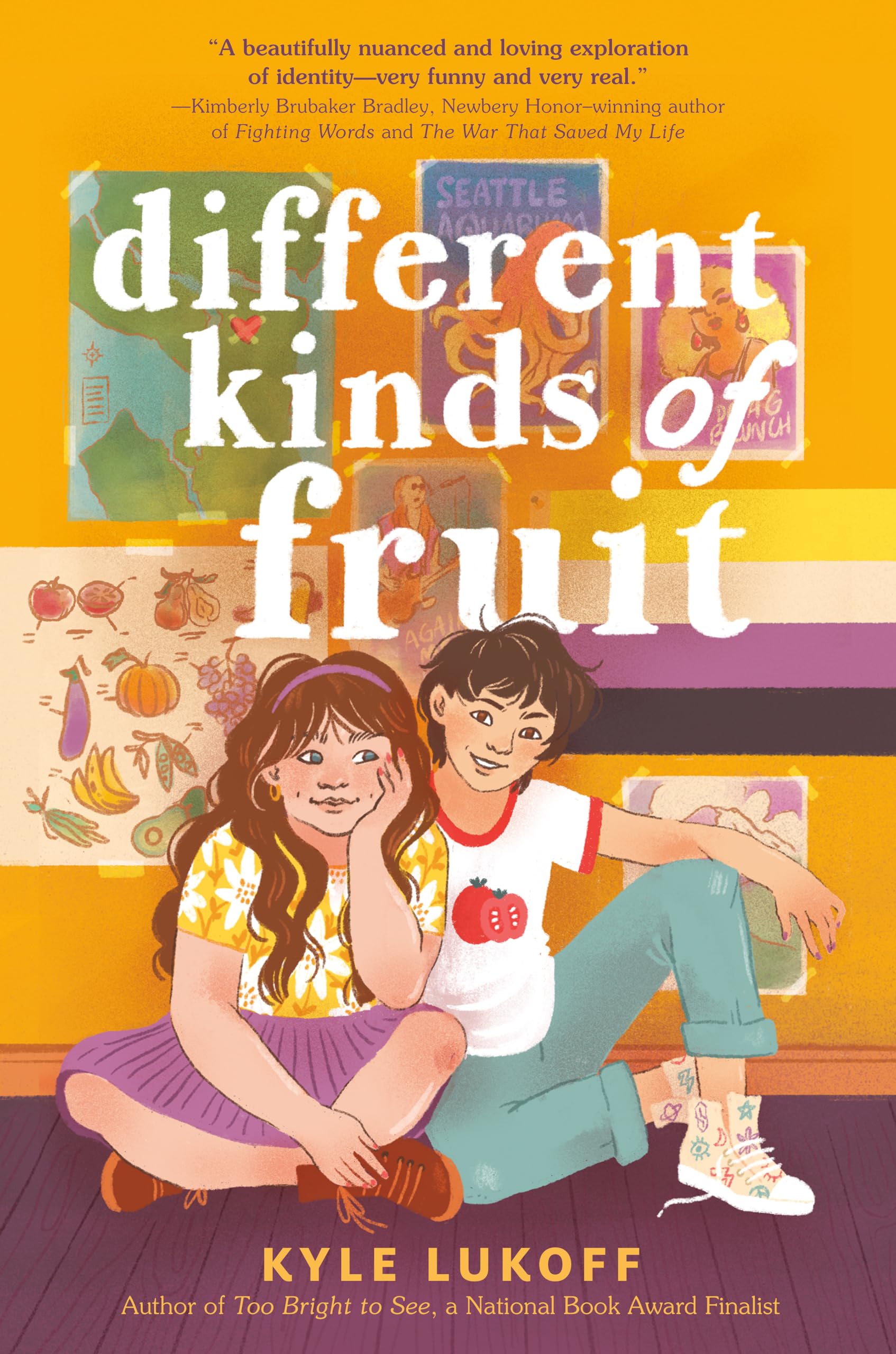
Middle Grade Fiction

Young adult novels & graphic novels

Adult Fiction

Need more book recommendations? Feel free to contact us, and if we don’t own a title you’re looking for, you can Suggest an Addition to the Collection.

For more resources and organizations to connect with, here are the resource lists from Community Allies of Rainbow Youth and PFLAG Howard County.

Ash is an Instructor and Research Specialist at HCLS Central Branch with a passion for information literacy and community engagement. They love music, gardening, hiking, and cuddling with their golden retriever.

In One Person by John Irving

The book cover, a black and white photograph, shows a woman reaching with both hands behind her bare back to fasten, or possibly unfasten, her brassiere.

by Angie E.

John Irving’s In One Person is a moving and powerful exploration of identity, sexuality, and the quest for acceptance. At its heart is Billy Abbott, a bisexual man reflecting on his life. The novel chronicles Billy’s life from age 13 in the 1950s to his late 60s in 2010. Rather than following a strict chronological order, Irving skillfully weaves the narrative, shifting between pivotal moments in Billy’s journey to create a more authentic, lifelike portrayal. 

From Miss Frost, the enigmatic librarian who plays a pivotal role in Billy’s awakening, to Richard Abbott, his stepfather and a source of guidance and support, each character is richly drawn and adds depth to the narrative. Irving’s portrayal of these relationships is nuanced, highlighting the importance of connection and the impact of those who accept and understand us. 

Irving does not shy away from addressing the prejudices and challenges faced by the LGBTQ+ community. Through Billy’s eyes, readers witness the AIDS crisis, shifting attitudes towards sexuality, and the enduring struggles for acceptance. In One Person’s exploration of these themes is both heart-wrenching and hopeful, offering a candid look at the progress made and the work that remains. 

Fans of John Irving will recognize his signature style: the blend of humor and tragedy, the richly detailed settings, and the intricate plotting. Irving’s ability to create a world that feels both specific and universal is on full display, making Billy’s journey relatable to readers from all walks of life. 

When I first read In One Person I was incredibly drawn to how Billy goes to the library (thus meeting Miss Frost) seeking novels about “crushes on the wrong people.”  She starts him out with Wuthering Heights and Jane Eyre, but expresses less confidence in giving him Henry Fielding’s Tom Jones, something I both love and laugh at at every time. Anyone who has ever had a crush on the “wrong person” will probably crush, even if just for a bit, on this too.

In One Person by John Irving is available from HCLS in regular print and large print.

Angie is an Instructor & Research Specialist at Central Branch and is a co-facilitator for Reads of Acceptance, HCLS’ first LGBTQ-focused book club. Her ideal day is reading in her cozy armchair, with her cat Henry next to her.

How We Named the Stars by Andrés N. Ordorica

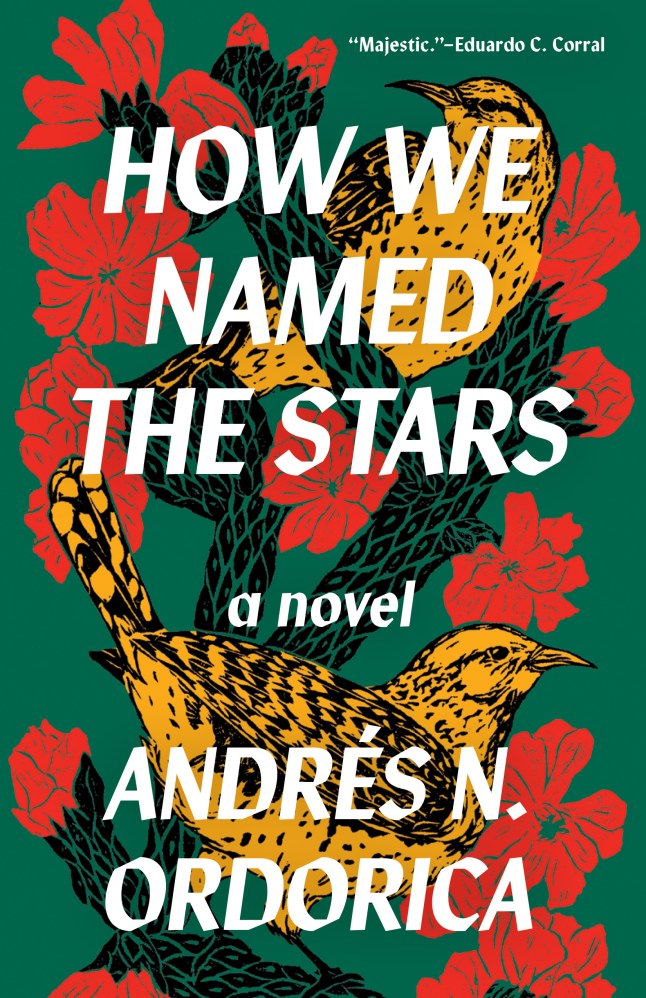
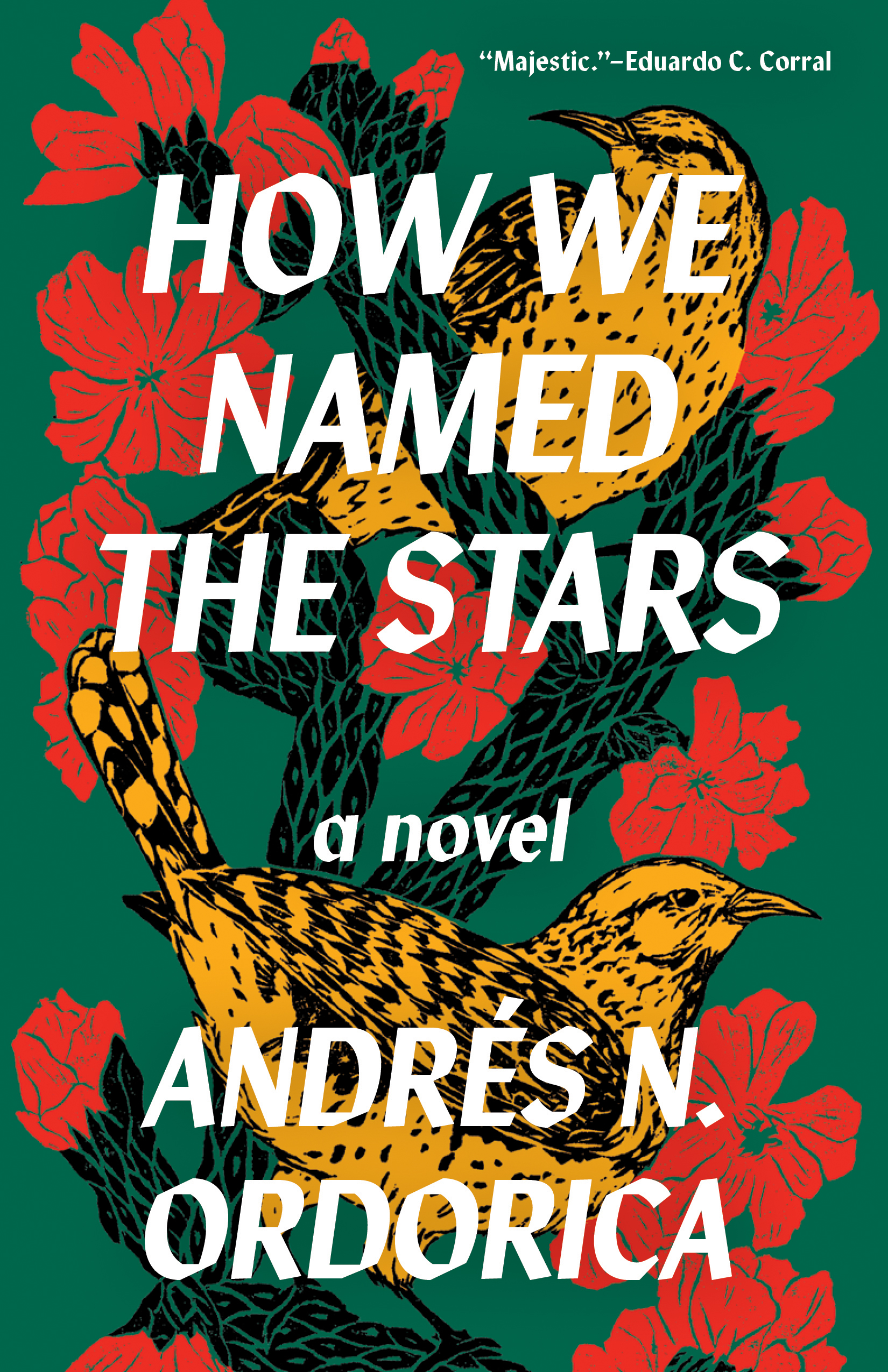
The green backgroup shows off bright red flowers and two yellow birds.

by Ash B.

Every year, instructors from HCLS Central Branch put together the Books for Discussion list and promote titles from it at our annual Book Club Revue. (If you missed it, you can watch this year’s Book Club Revue on YouTube.) Titles are selected from both established and debut authors across all genres, with consideration of whether the book is ‘discussable.’ Books that yield great discussions often have compelling characters and thought-provoking themes, leading to conversations not only about the story itself but also current events and readers’ own experiences. (For more book club tips, check out our Community Book Clubs page.)

Out of a hundred titles on the list, the one I’m championing most often is How We Named the Stars by Andrés N. Ondorica. If there is one novel I want you to read before year’s end, it is this one! Ordorica has waltzed into my heart as one of my new favorite authors with this debut, and the characters he created will have a special place in my heart for years to come. Set in his first year of college, the protagonist Daniel is a first-generation Mexican-American creative writing student who develops an unexpected closeness with his roommate Sam. Over the course of the novel, Daniel navigates insecurities, queer desire, grief, and self-discovery.   

Ordorica writes the type of atmospheric prose that I want to crawl into, curl up, and live inside forever. While this book is deeply tragic, it is thoughtfully so, and it defies the tropes you might expect of queer or Latino characters (which was very welcome and refreshing). Despite immense heartbreak, Daniel’s story is ultimately so hopeful and healing. It reminds me of my long-time favorite YA novel, Aristotle and Dante Discover the Secrets of the Universe by Benjamin Alire Sáenz. While their plots are quite different, they are both tender, lyrical coming-of-age stories that include friends-to-lovers romance and nuanced family dynamics. They also explore the particular challenges and joys of being both gay and Mexican-American, influenced by the lived experiences of their respective authors.  

The title is in script set off within white margin doodles in a big twiligh sky above a red pickup truck in a field.

Aristotle and Dante is set in 1980s Texas – a notably difficult time and place to come out as gay – with the boys approaching the end of high school. How We Named the Stars is more contemporary – while never specified, it is likely set in the 2010s – and it begins at an East Coast university, where there is a queer community for Daniel to explore. Whereas Aristotle must come to terms with being gay over the course of an entire novel, and in isolation, Ordorica’s Daniel more-or-less understands he is gay from the outset. His story shows a journey towards outwardly claiming and living that label, first in community with other queer people, secondly in relation to an intimate partner, and finally, as an out gay man to his Mexican family. Both novels are valuable contributions to the growing canon of queer Mexican American literature, and I recommend both wholeheartedly. 

Aristotle and Dante was one of the first LGBTQ books I read as a teenager, and it helped me inch towards realizing that I was part of that community. Fast forward to 2024: reading How We Named the Stars in my late twenties helped validate the struggles I faced in early adulthood. If I could go back in time and give my college-aged-self one book to read to help me get through life’s challenges, it would be this one. If you want a book that fills up your heart, shatters it into pieces, and then puts it back together again, How We Named the Stars is a perfect book for you. 

Ash is an Instructor and Research Specialist at the Central Branch with a passion for information literacy and community engagement. They love music, gardening, hiking, and cuddling with their golden retriever.

Affinity by Sarah Waters

The lettering appears large and wavy against a deep teal background. There's a set of manacles in grey at the bottom.

by Angie E.

I doubt I can do Affinity justice with a traditional review, although I’ll certainly try. Sarah Waters broke my heart by writing this book, and I went through several tissues, basically just ugly crying all over the place. My heart also skipped several beats as I journeyed through the twists and turns the novel took. 

Affinity transports readers to 1870s Victorian England, weaving together elements of gothic mystery, psychological exploration, and heart-wrenching drama. Margaret Prior, an unmarried woman from an upper-class family, grapples with inner demons. She’s recovering from her father’s death and a subsequent suicide attempt. Despite being almost 30, she feels powerless living at home with her over-involved mother. 

Seeking consolation and purpose, Margaret becomes a “Lady Visitor” at  Millbank Prison, one of Victorian London’s grimmest jails. Her goal is to guide and support the female prisoners. During her visits, Margaret encounters Selina Dawes, a mysterious and infamous medium of spirits. Selina has been imprisoned for two years, accused of causing the death of the wealthy woman she lived with. 

The relationship between the two women evolves, blurring the boundaries between friendship, desire, and the inexplicable. Is Selina a fraud or a genius? And can Margaret find redemption through their connection? The novel’s spooky atmosphere and psychological tension keep readers mesmerized until the very end. 

If you crave a blend of historical richness, mystery, and heartache, Affinity is a must-read. Whether you’re drawn to magic, tragedy, or forbidden connections, this novel will leave an indelible mark on your heart. 

Affinity by Sarah Waters is available in print and e-book.

Angie is an Instructor & Research Specialist at Central Branch and is a co-facilitator for Reads of Acceptance, HCLS’ first LGBTQ-focused book club. Her ideal day is reading in her cozy armchair, with her cat Henry next to her.

The Works of Carmen Maria Machado

An illustrion of a big house with wrap around white porches appears burnt through to show a figure peering through the hole.

By Angie E.

Machado’s narratives delve into the emotional and physical vulnerabilities of characters, challenging traditional notions of strength and weakness. Her stories often blur the lines between reality and fantasy, creating a space where vulnerability is not a flaw, but a powerful force in its own right.

“Especially Heinous: 272 Views of Law & Order SVU” is a novella written by Carmen Maria Machado in 2013. It unfolds through 272 synopses, each encapsulating a distinct perspective from the initial 12 seasons of the police procedural series of the same name. Originally published in The American Reader in May 2013, “Especially Heinous” features parallel universe versions of Elliot Stabler and Olivia Benson and is included in Machado’s 2017 short story compilation, Her Body and Other Parties.

Carmen Maria Machado’s Her Body and Other Parties dissects power imbalances in various forms. Through a series of surreal and haunting tales, Machado explores the ways in which power is wielded, misused, and resisted, often using the female body as a focal point for her narratives. The stories challenge societal norms, inviting readers to reconsider their understanding of power and its implications. Despite the unusual nature of “Especially Heinous” (and how it deviates from the actual SVU), the story fits perfectly within the anthology. Law and Order: SVU itself and Her Body and Other Parties may exist in different realms of storytelling, but their thematic resonance is undeniable.

Moving from short story collection to memoir, Machado has also written In The Dream House, which takes readers on an intimate journey through the author’s experiences. She opens up about her past relationship with an abusive partner, exploring the complexities of domestic abuse within the LGBTQ+ community. Structured as a series of interconnected essays, In The Dream House defies traditional memoir conventions. Machado employs various literary forms, from folklore to lesbian pulp fiction, to recount her harrowing experiences. The result is a poignant and powerful narrative that sheds light on the often-overlooked issue of abuse within queer relationships.

Machado’s exposed and raw honesty are palpable in every page, inviting readers to confront the uncomfortable realities of abuse. In The Dream House not only serves as a personal catharsis for Machado, but also as a vital contribution to the ongoing conversation about abuse within the marginalized.

In The Dream House is available in print, e-book, and e-audiobook.

Angie is an Instructor & Research Specialist at Central Branch and is a co-facilitator for Reads of Acceptance, HCLS’ first LGBTQ-focused book club. Her ideal day is reading in her cozy armchair, with her cat Henry next to her.

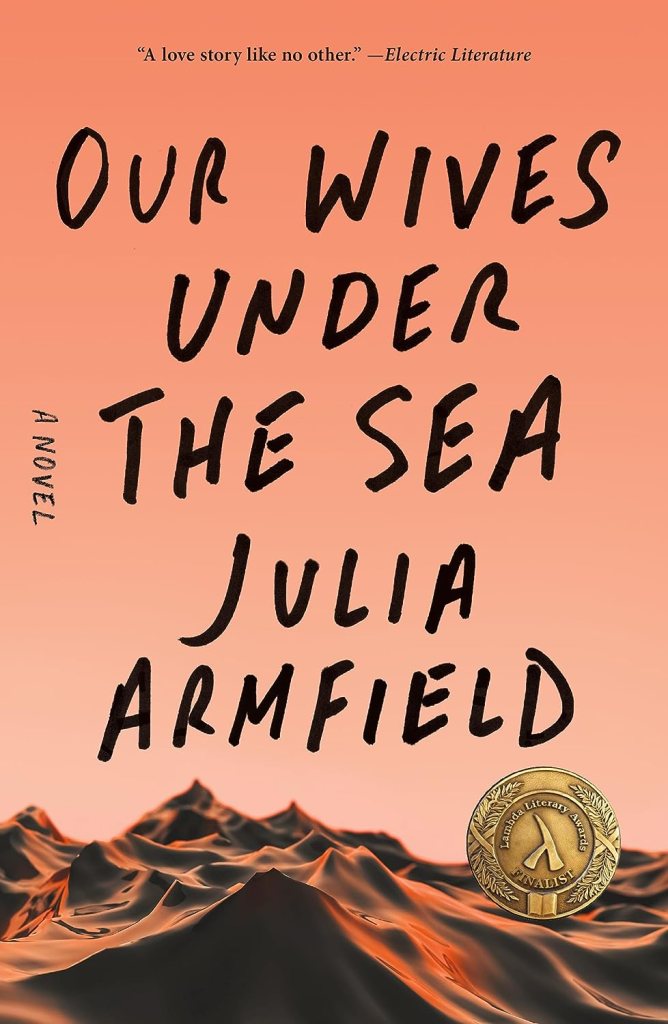
Our Wives Under the Sea by Julia Armfield

The book cover depicts waves against a reddish-orange background, possibly as if the sun is shining down on them.

By Sahana C.

There are books that belong in discussion, that beg to be read in community. Then there are books like this, that I don’t know if I’ll really be able to talk about in a meaningful way. But you deserve to know about it, so I’ll try my best.  

I’ll tell you first that I read this in one sitting. Each turned page made it evident that this book was heart-wrenchingly, desperately, tenderly romantic, and just as tragic. I was reminded of Rebecca by Daphne du Maurier in a lot of ways – the story of the protagonist, Miri, starts in the middle of an existing tragedy, with fog and haze over the order of events in such a way that everything feels like a dream. The classic gothic element where the setting acts as a main character is incredibly present as well – the sea takes its due, from Miri and from her partner Leah, and it is greedy with what it has. The home is a center, as in most gothic tales, and the sea takes the place of home for both Miri and Leah. Armfield writes, “To know the ocean, I have always felt, is to recognize the teeth it keeps half-hidden.”  

Miri thinks something is not quite right about her marine biologist wife, Leah, who has just returned from six months on a deep sea mission that did not end well. Despite Miri’s best efforts, Leah cannot seem to return to life as normal. Miri does what she can, but she can’t escape the fact that she feels she is losing Leah to the sea, somehow, inexplicably. There is a real sense of the liminal throughout the book, but especially in the first chapters as Miri begins to tell the story. Armfield herself says it perfectly, writing about loss but inadvertently summarizing the themes of the novel: “It’s not grief…it’s more like haunting.”  

This idea of haunting is compounded by the ways we learn about Miri and Leah’s relationship throughout the story, in fleeting moments and flashbacks, woven together with this real sense of longing for a time that cannot return, with desperation mounting, and mounting, and mounting, as we need to know what has happened, what will happen, what’s next.  

At some points, this book had a similar energy to one I’ve written about before, Emily Austin’s Everyone In This Room Will Someday Be Dead, with a smattering of “anxious” fiction interspersed among the more gothic notes. The characters are so unfortunately lovable, too, in their desire for one another, and that’s the real tragedy in the novel – Armfield wonders aloud “what happens when love isn’t enough?” The readers are left begging her to stop asking the question.

This book deserves to be read. I read a lot of books; I’m surrounded by them all day, and I can tell you, with full assurance, that this book will make you feel. You’ll bear witness to the love that was there, that was lost, that had something unbelievable change it, and instead of that love living on the paper, in the book, it will belong to you instead.  

Our Wives Under the Sea is available from HCLS in print and as an e-book.

Sahana is an Instructor and Research Specialist at HCLS Savage Branch. They enjoy adding books to their “want to read” list despite having a mountain of books waiting for them already.

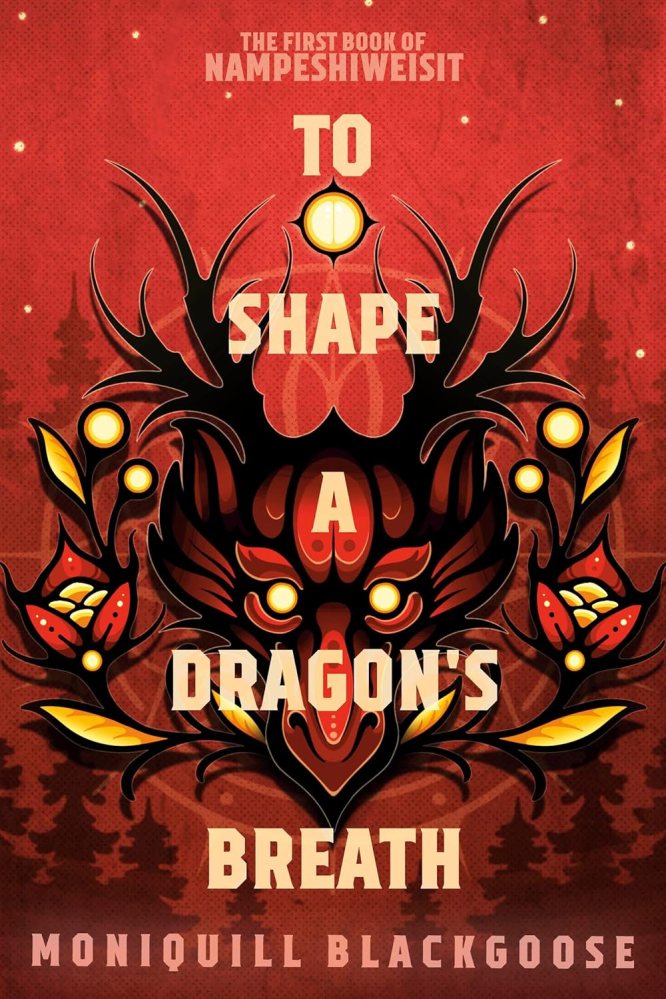
To Shape a Dragon’s Breath by Moniquill Blackgoose

A illustration of a dragon like mask with horns. Pine trees

By Julia M.

When I’m looking for a new book to read, any book with a dragon on the cover immediately calls my name. To Shape a Dragon’s Breath caught me at the title, and with a gorgeous red-and-black illustration of a fierce dragon on the cover, I was sold! 

To Shape a Dragon’s Breath is the debut novel from author Moniquill Blackgoose. It’s a queer, Native American dragon rider story, full of originality and anti-colonial power. The magical worldbuilding is strong, and the cultural commentary is not subtle but refreshingly straightforward. We get dragons, Indigenous and LGBTQ+ representation, magical academia adventures, political intrigue, and more in this first book of the Nampeshiweisit series.  

Blackgoose cites Peter Beagle’s The Last Unicorn and Terry Pratchett’s Discworld as her favorites of the fantasy genre, and hers is an important and timely addition to the fantasy literature canon. I was instantly struck by Blackgoose’s clear, cutting prose, the rich alternate-history Victorian universe, and the strength of the characters. It’s easy to claim “strong female protagonist” as a checklist item, but it’s harder to make good on that claim, and Blackgoose achieves it thoroughly. Anequs is a protagonist who refuses to let her will be shaped by others, and though our main character knows herself from the start of the book, we watch her discover who she will become in a world that seeks to make her into something else—a world that is inhabited by humans that are crueler than the dragons they try to control. 

Like any good dragon book, there are dragons on every page. They are controlled by the alternate-universe Vikings, known as the Anglish, who colonized the land they live in, and claim ownership of land, people, and dragons whom Anequs is aware cannot be owned by anyone. Due to the colonizers’ control over the dragons, the book’s main character is the first among the indigenous people to be chosen as the partner of a dragon hatchling in many generations, and the story follows Anequs as she travels to the Anglish-run Kuiper’s Academy of Natural Philosophy to train in all aspects of raising and keeping a dragon.  

Although it’s set in an alternate history, the social and political events that occur in Anequs’s life mirror those of the real world, and it’s a story that deals frankly with the harms of colonization and racial injustice. The book delves into societal issues of prejudice and deep-rooted worldview differences between Anequs and the colonizers who run the dragon academy. We see through Anequs’s eyes as she confronts the depths of racism, colonialism, sexism, and homophobia that are ingrained in the colonizer society. Her strength in the face of their bigotry is refreshing and powerful, and presents a complex examination of tokenism, while questioning the white colonial savior complex and reminding readers that Anequs and her Indigenous people never needed saving or advancement.  

Blackgoose’s version of the dragon-rider archetype is unlike anything I’ve read before, but readers who enjoyed books like Eragon or Fourth Wing will love this refreshingly original dragon story, told in Anequs’s direct, clear voice. I hope you’ll join me in eagerly awaiting the sequel! 

To Shape a Dragon’s Breath by Moniquill Blackgoose is available in print and e-book.

Julia is a Teen Instructor & Research Specialist at the Glenwood Branch + Makerspace. She loves reading YA books, playing the cello, practicing martial arts, trying new cookie recipes, and generally trying to squeeze as many hobbies into a day as possible.