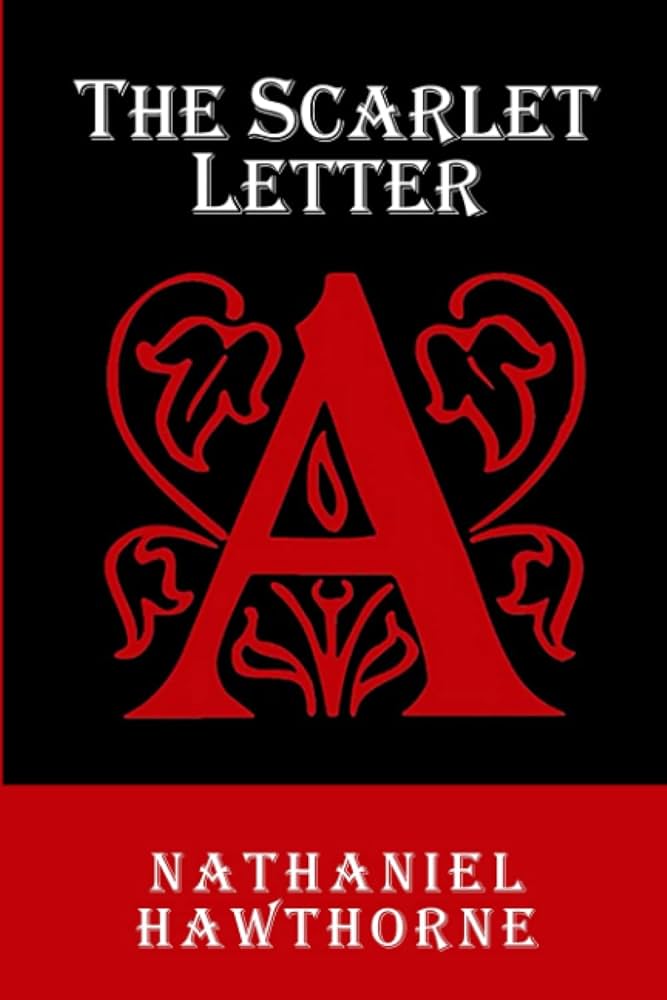
The Scarlet Letter by Nathaniel Hawthorne

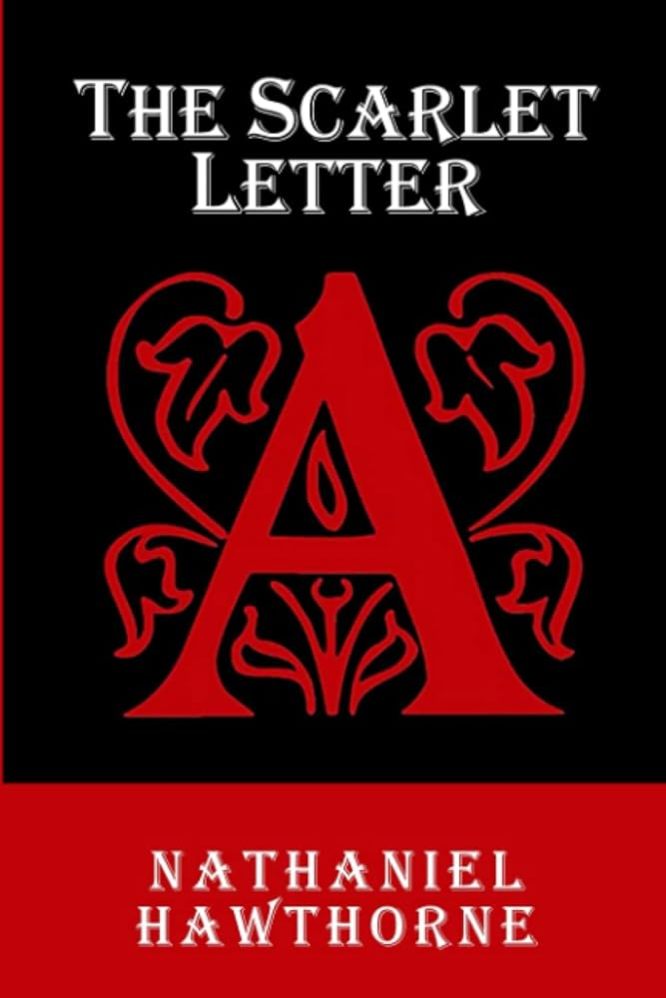
An ornate capital letter A in deep red against a black background sits beneath the title in white.

by Angie E.

The poet W.H. Auden once said, “a classic is a book that survives generations because it continues to speak to us in new ways.” Classics persist because they challenge, provoke, and resonate, especially when the world feels uncertain or unjust. Nathaniel Hawthorne’s The Scarlet Letter is one of my favorite books of all time. I can feel some of you wincing but before you scoff, I highly recommend you ignore the opening “Custom-House” chapter and go straight to the good stuff and then, maybe, you’ll see what I mean. 

Not only do I love it a bit more than most people probably would, but my love for it is directly related to my favorite Halloween memory from 1989 when I won third prize in a costume contest my sophomore year at college. Dressed as Hester Prynne with a long dark cloak with a bold red A smack dab in the middle, I kept getting mistaken for Alvin the Chipmunk so when I got to the microphone to clarify what my costume was I said “I’m Hester Prynne.” 

“Who?” Several people yelled out in the crowd. 

“Hester Prynne from The Scarlet Letter. Nathaniel Hawthorne? Puritan times?” 

No one in the audience appeared to have ever heard of any of it so I finally yelled, “I am with child and a woman of sin!” as I waved my baby bunny stuffed animal in the air. It seemed like everyone roared with laughter, most likely because I was painfully shy at the time and I went against type or maybe I just really could not shatter their Alvin the Chipmunk illusions and hopes. My other favorite book is Washington Square by Henry James. I agree with everything James once said of The Scarlet Letter: “It is beautiful, admirable, extraordinary; it has in the highest degree that merit which I have spoken of as the mark of Hawthorne’s best things—an indefinable purity and lightness of conception…One can often return to it.” 

I know The Scarlet Letter is not an easy sell, I really do. For many, the book is tangled up with high school English class, dense prose, and the frustrating ambiguity of Arthur Dimmesdale. It’s often shelved as a classic American novel, a historical piece, or even—bafflingly!—a romance.  I have never been able to see it that way, especially with its eerily Puritan version of #MeToo vibes. To call this story a romance is to fundamentally misunderstand its brutal, brilliant heart. This isn’t a tale of love triumphing over adversity. It’s a forensic examination of power: who has it, who wields it, and who is crushed by it.

Reading it today, in our world of public shaming and relentless scrutiny of women’s bodies and choices, Hester Prynne’s story feels less like a history lesson and more like a reflection. Margaret Atwood has acknowledged The Scarlet Letter as one of the texts she considered while writing The Handmaid’s Tale. In fact, she has acknowledged that her dystopia was built from historical precedents, not fantasy. Hester Prynne’s punishment for adultery and forced isolation echoes the way Atwood’s handmaids are reduced to reproductive vessels under a theocratic regime. 

The central injustice of Hawthorne’s novel has always taken my breath away. One person bears the visible, lifelong mark of their shared “sin,” while the other is celebrated, pitied, and ultimately forgiven for his private struggle. The community’s wrath is laser-focused on the woman, the visible proof of the transgression, while the system effortlessly protects the man. This is not a romance. This is a blueprint for how societal structures (legal, religious and social) are designed to punish women disproportionately. This is where Hester’s story becomes so starkly modern. We may not brand women with a literal scarlet letter anymore, but we have our own versions. 

Hester’s quiet, stubborn resilience is what makes her my hero. She doesn’t crumble under the weight of the ‘A’. She does something far more radical: she reclaims it. She takes the symbol meant to annihilate her and, through sheer force of character, transforms it. She becomes “Able.” She survives, she raises her daughter, she thinks for herself. She endures, not with passive acceptance, but with a powerful, silent defiance. She is not waiting for a man to save her. She is saving herself. 

That’s why I keep returning to this difficult, profound book. It’s not a comfortable read, but it is an essential one. It’s a reminder that the battles women fight over their own bodies and narratives are not new. They are ancient. It’s a testament to the incredible strength it takes to wear a label you didn’t choose and rewrite its meaning through your own grace and power. So, if you haven’t read The Scarlet Letter since you were assigned it in school, I urge you to pick it up again. Don’t read it looking for a love story. Read it looking for Hester. Read it for every woman who has ever been judged more harshly, held to a different standard, or forced to wear a scarlet letter of someone else’s making. 

You might just find, as I did, that it’s one of the most relatable books you’ll ever read. 

The Scarlet Letter by Nathaniel Hawthorne is available in print and large print, e-book and e-audiobook. There’s also audiobook on CD, Playaway and a manga adaptation.

Angie is an Instructor & Research Specialist at Central Branch and is a co-facilitator for Reads of Acceptance, HCLS’ first LGBTQ-focused book club. Her ideal day is reading in her cozy armchair, with her cat Henry next to her.

Women’s History Month

Rosie the Riveter appears on the left hand side of the image, against a bright yellow background. The dark blue quote bubble above her head says "We Can Do It!" and the one to the right says, "Celebrate Women's History Month!"

Beginning Saturday, we celebrate Women’s History Month throughout March. Established in 1981 as a memorial week, it grew to the entire month in 1987. It’s purpose is to commemorate and encourage the study, observance and celebration, “of the vital role of women in American history.” From Betsy Ross to Diana Ross, women have made a wide variety of contributions to our culture and society.

Join us for a few classes early in the month, and visit the library’s calendar often for more opportunities to celebrate. There’s an adage, sometimes attributed to Eleanor Roosevelt, that says, “Well behaved women seldom make history.” It certainly holds true for Zelda Fitzgerald, DC’s madams, and Dorothy Parker!

Zelda Fitzgerald’s Journey
Sat, Mar 1 | 2 – 3 pm
HCLS Miller Branch
For adults. Register here.

Historian Jack Burkert gives glimpses into the fascinating life of Zelda Fitzgerald, the “First Flapper” of the Jazz Age. Born in comfortable circumstances in Montgomery, Alabama, the twenty-year-old Zelda Sayre married F. Scott Fitzgerald, beginning their tumultuous life together. Their adventures took them across America and through Europe, writing both short stories and novels, while Zelda sought artistic fulfillment. By 1930, early signs of her mental illness coupled with his alcoholism made their partnership of greatness a distant dream. Through twenty years of treatment, a maturing Zelda paints, dances, writes, and slowly recovers, creating a life story few could imagine.

Off the Mall, DC: Madams of DC
Fri, Mar 7 | 12 – 1 pm
online
For adults. Register here.

Step into the lesser known history of Washington, D.C.’s red light district and learn about the lives of the women who shaped it. Washington, D.C. experienced an unprecedented rise in prostitution during and after the Civil War. During this period, Pennsylvania Avenue became D.C.’s most notorious red-light district, from the ramshackle “boarding houses” of Murder Bay to the glamorous pleasure houses of Marble Alley, all within sight of the Capitol. Also, a new profession for women was rising, that of the “female lobbyist.” This virtual tour introduces you to some of the most notorious women of mid-19th century DC.

Presented in partnership with Off the Mall D.C. founder and guide, Katie Kirkpatrick

Dorothy Parker: Unique American Writer
Thu, Mar 13 | 7 – 8 pm
HCLS Glenwood Branch
For adults. Register here.

Writer, poet, screenwriter, playwright, and essayist Dorothy Parker was known as the wittiest woman in America in the mid-20th century. In an era when the printed word was powerful and readers voraciously consumed written comments, critiques, and opinions, her sharp writing appeared in the New Yorker, Vanity Fair, and other publications. Readers anxiously awaited her next words as her clever quotations became legendary, but her personal life was often troubling: alcohol, divorce, and suicide attempts continued through her life. Learn about the legacy of this unique contributor to the American literary tradition from historian Jack Burkert.

Shakespeare: The Man Who Pays the Rent by Judi Dench

A light blue cover with a small watercolor illustration of a tree above text that reads: Judi Dench. Then, Shakespeare in a big script above copperplate type: The Man Who Pays the Rent.

by Kristen B.

If you have ever wanted an in-depth, behind the scenes look at Dame Judi Dench’s formative years with the Royal Shakespeare Company, have I got a book for you! If you haven’t but have a fondness for the Bard, you still want to get your hands on this book. And if you simply love to listen in on two friends trading stories from their past and arguing over details, this one is for you, too – it’s that much fun!

Dame Judi Dench and her good friend Brendan O’Hea engage in a series of conversations in Shakespeare: The Man Who Pays the Rent, during which they discuss Shakespeare and acting, and – in all honesty – just dish about various productions. You can almost hear the teacups in the background. It’s fascinating to eavesdrop on them quarreling about interpretation or reminiscing about pranks and misdeeds. They cover some of the best-known plays, such as Twelfth Night, Macbeth, and Romeo and Juliet, but they also spend time with Coriolanus, The Merry Wives of Windsor, and The Winter’s Tale. I was simply amazed by how much of each play Judi Dench can apparently recite from memory – entire sequences, from multiple parts.

I assume the physical book is lovely, but the audiobook is pure gold. Barbara Flynn provides Dame Judi’s voice, and you would think that you’re listening to a younger version of the great actress (which you essentially are). She talks about her favorite parts, her views for the motivation of various characters, how Shakespeare manipulates the audience, and more details about stagecraft. She also tells stories about being mostly naked and painted green, sharing rooms, and having a ton of fun with other (now revered) fellow actors.

As she says, ““Everything you have felt or are yet to feel is all in there in his plays: oppression, ambition, loneliness, remorse, everything….Shakespeare has examined every single emotion….His writing has the capacity to make us feel less alone.” This book helped me remember exactly that! I laughed, I learned, and I was gloriously entertained.

Shakespeare: The Man Who Pays the Rent by Judi Dench and Brendan O’Hea is available in print, e-book, and e-audiobook.

Kristen B. is a devoted bookworm lucky enough to work as the graphic designer for HCLS. She likes to read, stitch, dance, and watch baseball (but not all at the same time).

Ancient History, Modern Tradition

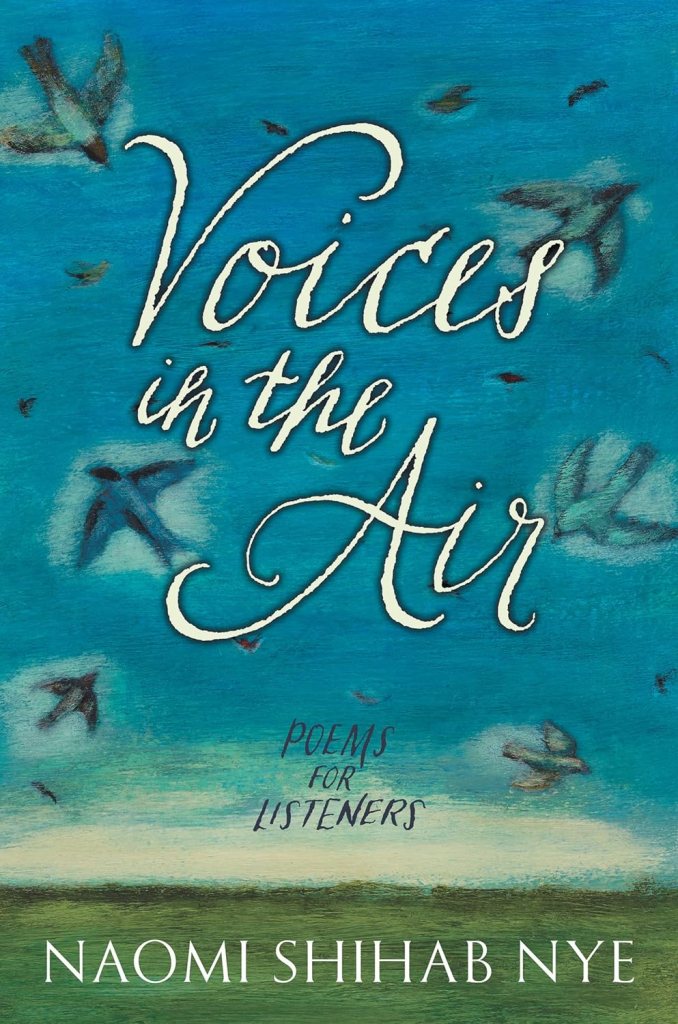
The book cover shows a number of birds that resemble swallows flying and swooping against a blue sky, with clouds in the distant background, low to the ground, and a grassy green landscape at the bottom.

by Sahana C.

I’m not a high school English teacher, so I rarely have an audience that will listen to me lecture about poetic tradition, but April is National Poetry Month, so there’s no better time to try. What if you pick up a book of poetry?

“Which one?” you ask me, as I thought you might.

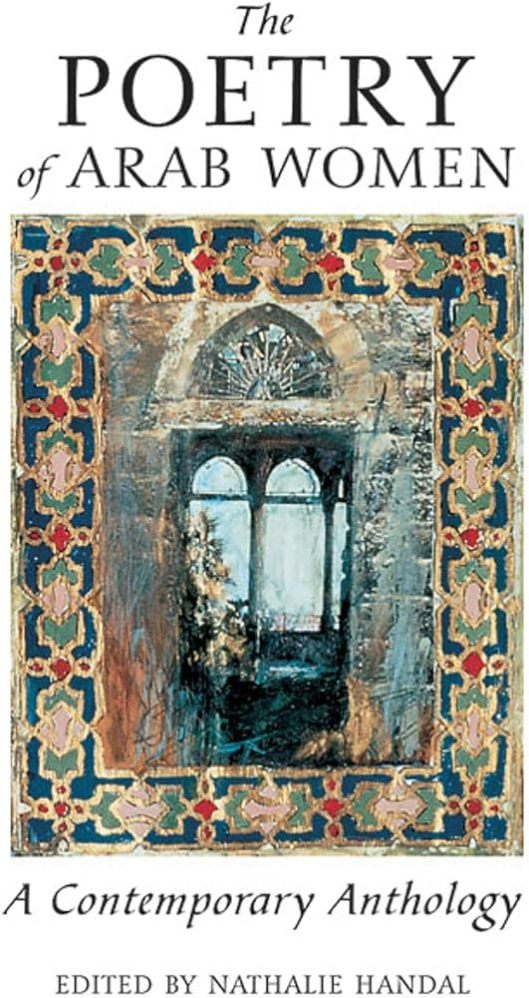
The book cover shows a view through arched window panes of a tree with white blossoms and a blue sky. The wall surrounding the window is constructed of brick and stone and is surrounded by a colorful geometric border in blue, green, and red.

Great question. Did you know that April also happens to be National Arab American Heritage Month?
One of the earliest forms of Arabic literature was poetry, but the oral tradition of Arabic poetry extends far beyond that. Flow, expression, and verbiage are singular in Arabic and the language was chosen by UNESCO as “the language of Poetry and Arts.” It only feels appropriate, then, to celebrate National Arab American Heritage Month alongside National Poetry Month. To highlight the perfect modern continuation of the ancient history, here are some Arab and Arab American poets to get you started:

  • Naomi Shihab Nye is the first Arab American Young People’s Poet Laureate and has several books for teens and children in our collection.
  • The Poetry of Arab Women: A Contemporary Anthology is deeply evocative, tying together the heritage mentioned above and making it accessible in the West, blending established poets and emerging voices.
  • Mahmoud Darwish is a prolific author, world-renowned for his lyrical work and vivid imagery.
  • Charif Shanahan wrote Trace Evidence about intersectional Arab American themes, a sense of place, queerness, and intimacy with oneself and one’s heritage.
  • Written by a wide variety of authors, This Is Not a Border: Reportage & Reflection from the Palestine Festival of Literature contains poems and essays reflected on PalFest and the power of culture.
  • Salim Barakat’s Come, Take a Gentle Stab is a compilation of Barakat’s most lauded work, and is translated to English from Arabic, drawing attention to the power of testing the limits of language.
  • Finally, one of the most celebrated Arab American authors, Etel Adnan’s work, Sea and Fog, cannot be omitted from this list; it’s a tour de force about individualism, place, and interconnectedness.
The abstract book cover, in shades of dark blue, turquoise, and grey, is painted in thick brushstrokes that could represent the ocean and/or bodies of land with a grey foggy sky in the background.

Check out the works above from your closest branch or online, and try poetry this month – there’s a reason poetry has such an ancient history, and it still hasn’t gone away.

Sahana is an Instructor and Research Specialist at the Savage Branch. They enjoy adding books to their “want to read” list despite having a mountain of books waiting for them already.

Ancient History: The Silk Road

The public domain map in green, blue, and tan shades depicts the Silk Road Route that ran from China through India and Persia and into Europe,, as well as a more southerly route that encompassed modern-day Malaysia and Singapore, the coast along the Indian Ocean, and eastern Africa up to Europe via the Red Sea.
Map of the Silk Road Routes (Public Domain)

Formally established during the Han Dynasty of China, the Silk Road was a vast network of trade routes that was the lifeline of commerce from 130 BCE – 1453 CE. Many different branches comprised this road connecting China, India, and Persia, with Persia being a gateway further into Europe. The main route of the Silk Road was established much before the Han dynasty; known as the Persian Royal Road during the Achaemenid Empire, it connected north Persia (modern-day Iran) to Asia Minor (modern-day Turkey). The Persian Road was maintained with a system of postal stations and gradually expanded into the Indian sub-continent across Mesopotamia and into Egypt.  

Howard County Library System and the Walters Art Museum present a fascinating class that looks at works from the Walters Art Museum that illuminate the expansive story of the Silk Road. 

May 17 from 12 – 1 pm. Register here.  

A manuscript page with Arabic script at the top, featuring a shade tree, bamboo, and a man in a turban studying with writing tools surrounding him. A smaller figure kneels in the bottom right hand cornder.

The term “Silk Road” wasn’t coined until 1877, when German geographer and historian Ferdinand von Richthofen first used it to describe the trade routes. Historians now prefer the term “Silk Routes,” which more accurately reflects the fact that there was more than one thoroughfare. 

Many different goods including gunpowder, precious stones, and ivory were traded along this route; however, it was the exotic silk that gave its name to this road. Many of the goods traded across this route had a great impact on the cultural development of the world. Paper and gunpowder, both developed in China, and the rich spices from India contributed to both European culture and warfare. Similarly, techniques for making glass migrated eastward to China from the Islamic world. However, silk continued to be the most sought-after and expensive commodity, especially in Rome. The Byzantine emperor Justinian (327-565 CE) sent emissaries to steal the closely guarded secret of silk and bring it back to initiate the Byzantine silk industry. In 1453 CE, the Byzantine Empire fell to the Ottoman Empire which closed the Silk Road and cut ties with the west.  

The legacy of the Silk Road is the impact on art, religion, technology, science, and language that fostered a growth and enrichment of world civilization. Unfortunately, disease also traveled along and the bubonic plague of 542 CE was thought to have spread to Constantinople via the Silk Road. Famous Italian explorer Marco Polo traveled overland on the Silk Road to the Mongol Empire ruled by Kublai Khan in 1275 and wrote the epic The Travels of Marco Polo (also available as an eBook from Libby/OverDrive). 

The closing of the Silk Road in 1453 forced traders to explore sea routes and discover new ports. This was the beginning of the Age of Discovery which led to a new era with the rise of seafaring nations. Join us for the class with a docent from The Walters Art Museum to learn more.

What is Home? asks Brandon Hobson

The book cover depicts a woodsy scene in grays and blues, with a lone figure inverted on a path in the center, framed by three interlocking triangles in pink, green, and gold.

by Rohini G.

Brandon Hobson, author of The Removed, believes that good fiction starts with a question. 

“The big question here was how do we grieve, and how do we heal. But I’m also interested in the question of what is home?” Examining these questions is the starting place for his writing, Hobson says in an interview with Zibby Owens.  

In The Removed, Hobson hauntingly weaves together two strands. First is the story of personal loss experienced by the Echota family; second, the devastating loss experienced by the Cherokee Nation – the traumatic heritage of the Trail of Tears, the forced removal by the U.S. government from 1830 to 1850 of an estimated 100,000 indigenous people (including Cherokee, Creek, Chickasaw, Choctaw, and Seminole, among other nations) from their homes. 

After fifteen years, the Echotas are still struggling to come to terms with the death of their son, Ray-Ray, who was killed in a police shooting at the mall. Maria tries to keep the flame of remembrance alive for her son, as she deals with her husband Ernest’s struggle with Alzheimers, son Edgar’s meth use, and daughter Sonja’s detachment. As the family’s annual bonfire approaches – an occasion marking both the Cherokee National Holiday and Ray-Ray’s death – Maria takes in a foster child, Wyatt. Buoyant and quirky, Wyatt is a born storyteller, spinning gripping tales about snakes and birds and an underworld, called the Darkening Land. 

While reading this book, I was enthralled with the way Hobson shifted perspective with each character and got into the skin of that person, especially Tsala, a Cherokee spirit who tells a story of his own murder for refusing to be removed. Written in a lyrical, minimalistic style, The Removed is a a powerful story, a profound yet quick read, available in book format and also as an eaudiobook and ebook from Libby/OverDrive. 

Hear author Brandon Hobson in person on Wednesday, March 10. For information, click here.

The book cover depicts a stylized eagle in black silhouette with outstretched wings against an orange background, with a single feather fallen to the ground beneath.

Hobson is an enrolled citizen of the Cherokee Nation of Oklahoma, with a PhD in English and seven years’ experience as a social worker for disadvantaged youth. His previous book, Where the Dead Sit Talking (also available as an eaudiobook from Libby/OverDrive) was a finalist for the 2018 National Book Award for Fiction and winner of the Reading the West Book Award. He is an assistant professor of creative writing at New Mexico State University and teaches in the MFA program at the Institute of American Indian Arts.

A RECOMMENDED BOOK FROM

USA Today * O, the Oprah Magazine * Entertainment Weekly * Harper’s Bazaar * Buzzfeed * Washington Post * Elle * Parade * San Francisco Chronicle * Good Housekeeping * Vulture * Refinery29 * AARP * Kirkus * PopSugar * Alma * Woman’s Day * Chicago Review of Books * The Millions * Biblio Lifestyle * Library Journal * Publishers Weekly * LitHub 

Rohini is the Adult Curriculum Specialist with HCLS. She loves literature and rainy days.

Virtual Author Visit with Fredrik Backman

The author, dressed in a dark grey button down shirt, stands with his hands in his jeans pockets. He has short brown hair, and a slight beard.

Frederik Backman discusses his newest book, Anxious People, on Thursday, September 10 at 5 pm. Signed copies of Anxious People are available for online pre-order through the Curious Iguana bookstore. This poignant comedy tells the story of a crime that never took place, a bank robber who disappears into thin air, and eight extremely anxious strangers who find they have more in common than they ever imagined.

Rich with Backman’s, “pitch-perfect dialogue and an unparalleled understanding of human nature,” according to Shelf Awareness, Anxious People’s whimsical plot serves up unforgettable insights into the human condition and a gentle reminder to be compassionate to all the anxious people we encounter every day. 

Backman is the New York Times bestelling author of A Man Called Ove, My Grandmother Asked Me to Tell You She’s Sorry, and Britt-Marie was Here, among other titles. He lives in Stockholm with his wife and two children.

A Man Called Ove is the classic story of a curmudgeon, but with a twist: he didn’t develop this attitude in old age, he’s been “a grumpy old man since he started elementary school.” As we learn more about Ove through glimpses of his past, we realize that the rule-following, the caustic comments, the meticulous planning, all ensue from a beautiful love story and Ove’s resulting losses. With dismayingly unconventional new neighbors, can he find a path forward and live up to the example of his wife, Sonja, a wonderful woman whose thoughtfulness and kind nature would welcome them with open arms? Or will he continue to be his cantankerous, resistant self? Read this delightful story to find out, if you are not already one of the millions who have loved this book full of hilarity and heart.

My Grandmother Asked Me to Tell You She’s Sorry describes a touching relationship between 7-year-old Elsa and her 77-year-old Grandmother. The two of them have a secret world, where they escape to tell stories and play make-believe (or so you think). The regular world holds many scary realities for a precocious little girl, including big dogs, bullies, impending new siblings, and cancer. Sometimes grandmothers, even the eccentric ones, know exactly what their grand-daughters need. This story rewards the reader’s patience, as all the seemingly disparate pieces slowly form a highly satisfactory, emotional resolution.

Whether you jump in with the newest book or treat yourself to some of Backman’s older titles, you will be entertained and enlightened. Register now for the online author event!

The event is cosponsored by Maryland Humanities, Frederick County Public Library, Curious Iguana, and the Weinberg Center for the Performing Arts.

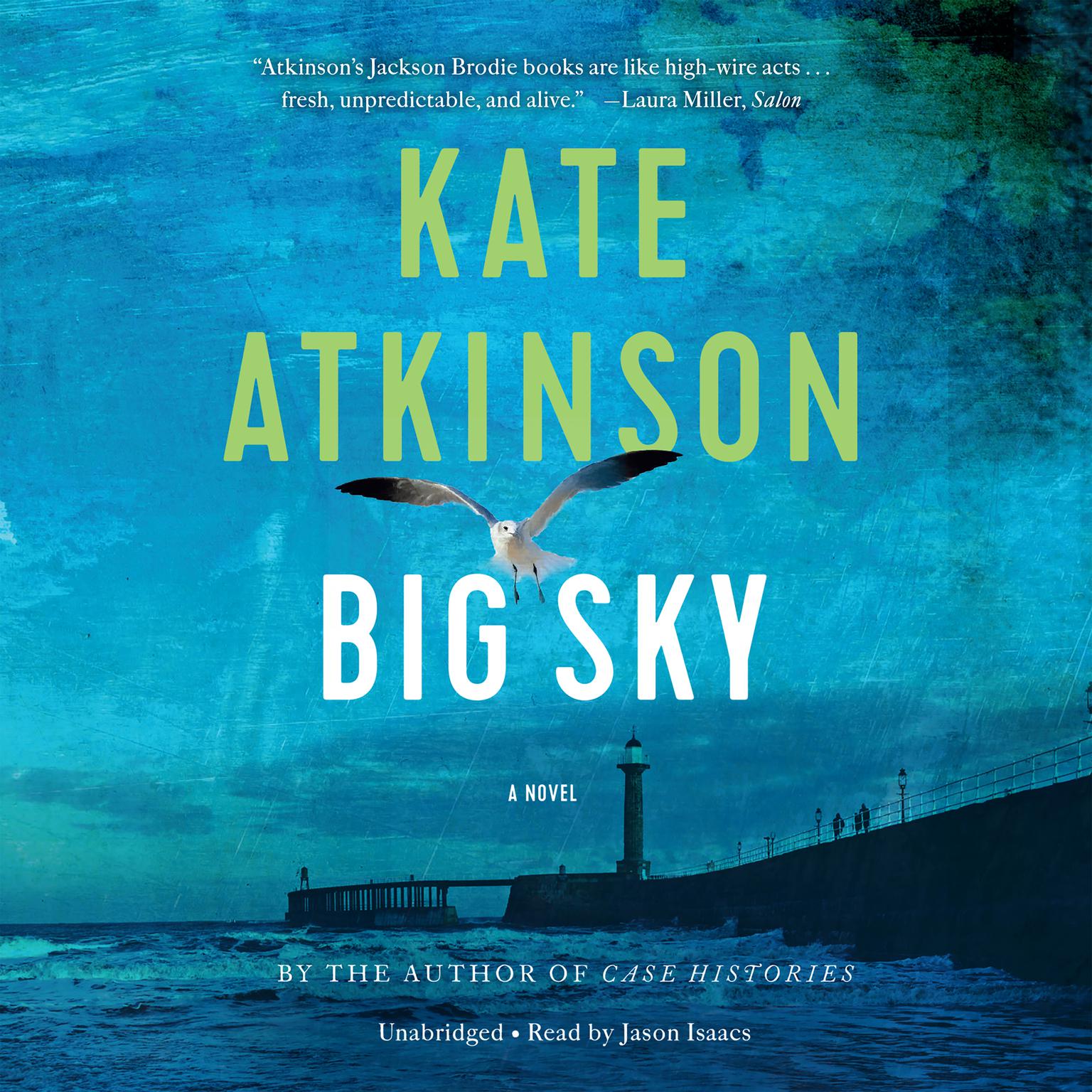
Big Sky by Kate Atkinson

The book cover shows a turquoise sky and ocean, with a long pier extending into the water with a lighthouse and bridge at the end, and several people walking on the pier.  A seagull with wings extended is aloft in the foreground.

Review by Alan S.

Big‌ ‌Sky‌ ‌is‌ ‌the‌ ‌fifth‌ novel ‌featuring‌ ‌Jackson‌ ‌Brodie‌. ‌Brodie‌ ‌retires‌ ‌to‌ ‌a‌ ‌small‌ ‌coastal‌ ‌town,‌ ‌and‌ ‌sometimes‌ ‌cares‌ ‌for‌ ‌his‌ ‌teenage‌ ‌son,‌ ‌while‌ ‌working‌ ‌as‌ ‌a‌ ‌private‌ ‌investigator.‌ ‌Brodie‌ ‌will‌ ‌soon‌ ‌discover‌ ‌that‌ ‌small‌ ‌towns‌ ‌can‌ ‌hold‌ ‌big‌ ‌secrets‌ ‌after‌ ‌a‌ ‌chance‌ ‌meeting‌ ‌on‌ ‌the‌ ‌beach‌ ‌draws‌ ‌him‌ ‌into‌ ‌a‌ ‌criminal‌ ‌conspiracy.‌ ‌ 

‌Big‌ ‌Sky‌ ‌starts‌ ‌with‌ ‌two‌ ‌sisters‌ ‌interviewing‌ ‌via‌ ‌Skype‌ ‌for‌ ‌jobs‌ ‌in‌ ‌London.‌ ‌It‌ ‌is‌ ‌clear‌ ‌that‌ ‌there‌ ‌is‌ ‌something‌ ‌sinister‌ ‌afoot‌ ‌even‌ ‌before‌ ‌it‌ ‌is‌ ‌revealed‌ ‌after‌ ‌the‌ ‌call‌ ‌that‌ ‌the‌ ‌agency‌ ‌is‌ ‌not‌ ‌on‌ ‌the‌ ‌up‌ ‌and‌ ‌up.‌ ‌The‌ ‌story‌ ‌then‌ ‌careens‌ ‌from‌ ‌character‌ ‌to‌ ‌character,‌ ‌generally‌ ‌among‌ ‌the‌ ‌country‌ ‌club‌ ‌set‌ ‌in‌ ‌the‌ ‌town.‌ ‌Brodie,‌ ‌it‌ ‌seems,‌ ‌is‌ ‌on‌ ‌the‌ ‌outskirts‌ ‌of‌ ‌the‌ ‌action‌ ‌and‌ ‌you‌ ‌are‌ ‌left‌ ‌wondering‌ ‌when‌ ‌and‌ ‌how‌ ‌he‌ ‌intertwines‌ ‌with‌ ‌the‌ ‌main‌ ‌story.‌ ‌An unexpected encounter ‌on‌ ‌the‌ ‌beach‌ ‌with‌ ‌one‌ ‌of‌ ‌the‌ ‌characters‌ ‌and‌ ‌his‌ ‌hiring‌ ‌by‌ ‌another‌ ‌eventually‌ ‌brings‌ ‌him‌ ‌into‌ ‌the‌ ‌circle.‌ ‌Even‌ ‌then,‌ ‌the‌ ‌action‌ ‌is‌ ‌not‌ ‌‌propelled‌ ‌by‌ ‌Brodie‌ ‌and‌ ‌he‌ ‌doesn’t‌ ‌really‌ ‌do‌ ‌much‌ ‌detecting.‌ ‌Even‌ ‌when‌ ‌the‌ ‌police‌ ‌become‌ ‌involved‌ ‌in‌ ‌the‌ ‌form‌ ‌of‌ ‌Brodie’s‌ ‌protégé (introduced‌ ‌in‌ ‌an‌ ‌earlier‌ ‌book‌ ‌I‌ ‌did‌ ‌not‌ ‌read),‌ ‌the‌ ‌story‌ ‌and‌ ‌its‌ ‌conclusion‌ ‌tend‌ ‌to‌ ‌stem‌ ‌from‌ ‌coincidence‌ ‌more‌ ‌than‌ ‌detective‌ ‌and‌ ‌police‌ ‌work.‌ ‌

Big Sky‌ ‌is‌ ‌an‌ ‌interesting‌ ‌story‌ ‌of‌ ‌the‌ ‌evil‌ ‌that‌ ‌lurks‌ ‌in‌ ‌unlikely‌ ‌places.‌ ‌Go‌ ‌into‌ ‌it‌ ‌knowing‌ ‌that‌ ‌you‌ ‌are‌ ‌entering‌ ‌a‌ ‌detective‌ ‌story‌ ‌without‌ ‌much‌ ‌detecting‌ ‌and‌ ‌a‌ ‌main‌ ‌character‌ ‌who,‌ ‌while‌ ‌appealing,‌ ‌is‌ ‌generally‌ ‌on‌ ‌the‌ ‌outer‌ ‌edges‌ ‌of‌ ‌the‌ ‌main‌ ‌story.‌ ‌I‌ ‌didn’t,‌ ‌and‌ ‌it‌ ‌took‌ ‌me‌ ‌a‌ ‌while‌ ‌to‌ ‌get‌ ‌past‌ ‌that‌ ‌and‌ ‌enjoy‌ ‌the‌ ‌compelling‌ ‌characters‌ ‌and‌ ‌storyline.‌ ‌ ‌

Big Sky is available in ebook and eaudio format through Libby.

Alan has worked for HCLS for just under 25 years, currently at the Savage Branch. He enjoys reading, television and most sports.