As we celebrate the library as a space of learning and community, and honor AAPI Month as a time to uplift Asian voices and stories, it is worth asking: what makes something literature? The shape of the story, the seriousness of its tone, its prestige? Or is it about seeing something deeper, something about the world or the human condition? Across corners of every continent, stories take shape in countless forms: in prose, poetry, images, screens, and panels.
Perhaps, literature isn’t defined by medium or legacy. It’s shaped by how we engage with a work. When we treat literariness as something a reader brings to the page, not something a story inherently owns, we begin to find meaning in places we’ve often overlooked, like one of those Japanese comic books you might find in the teen section.
Manga is Japanese graphic storytelling that pairs image and text across serialized chapters. It continues a long East Asian tradition of visual storytelling. Its reach, however, is global. Manga is a major literary and commercial force in France, a cultural touchstone across Latin America, and a stylistic influence on everything from fashion to hip-hop. Its narratives, aesthetics, and emotional tones have shaped how stories are told, and who gets to see themselves in them.
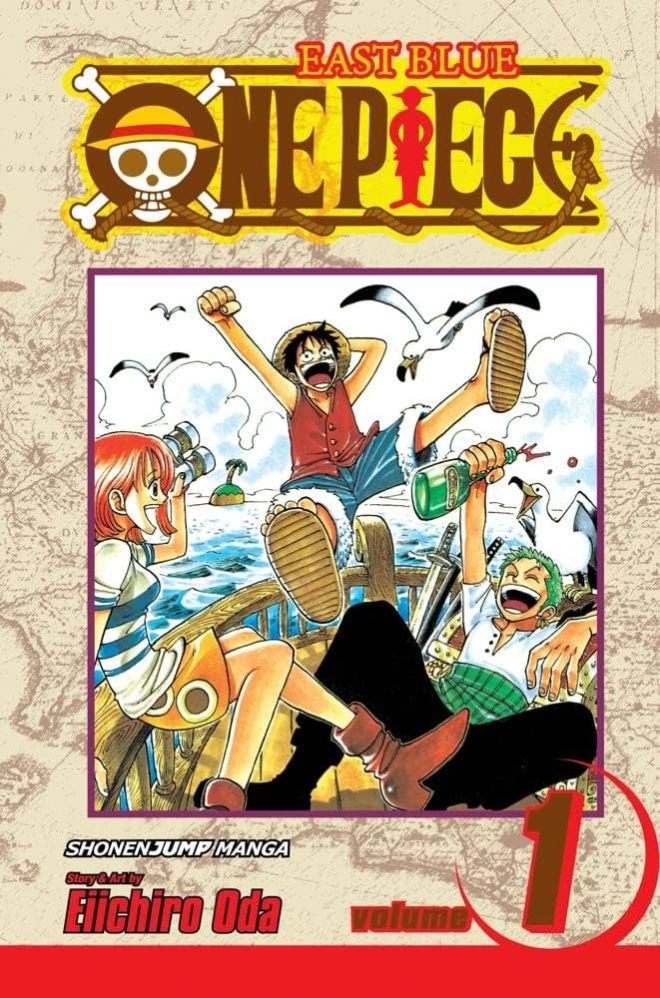
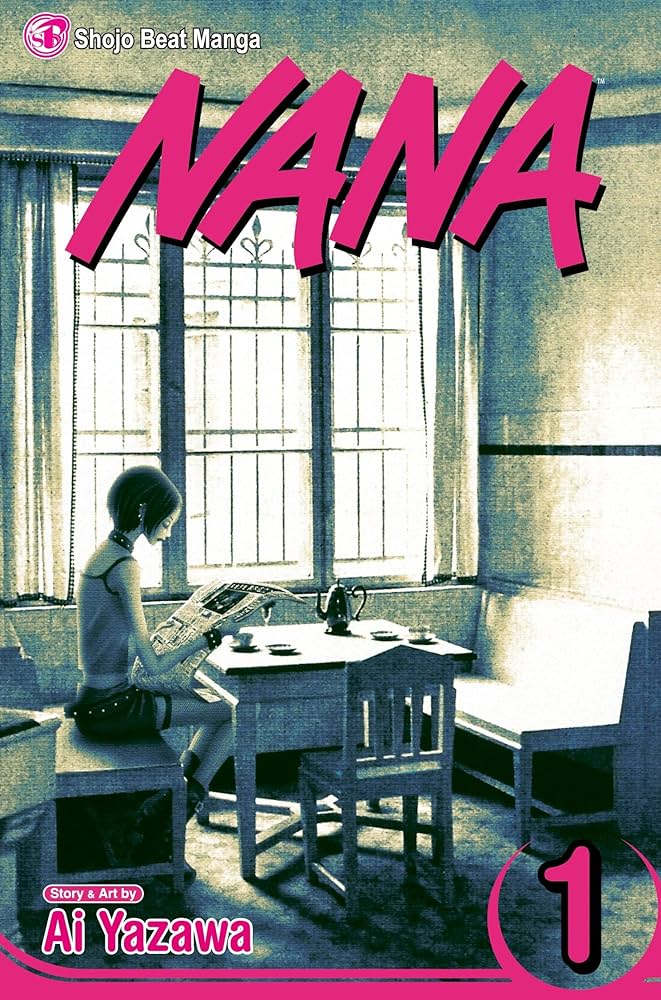
One vivid examples can be found in One Piece by Eiichiro Oda. What begins as a chaotic pirate adventure becomes a vast meditation on justice, memory, and history. The series offers a reminder that joy can be defiant, and freedom contagious. Manga’s depth doesn’t end with epics. Nana by Ai Yazawa offers a raw portrayal of friendship and identity, or Goodnight Punpun by Inio Asano, a surreal coming-of-age spiral, shows how the medium holds hope, loss, and emotional complexity with equal grace. These stories speak to something real and something human, but we need to be willing to listen.
You can find them all at the library — where stories of every kind wait side by side, ready to be read with curiosity, care, and imagination.
History of Comics in Asia Tue, May 6 | 7:30 – 8:30 pm HCLS Savage Branch For adults. Explore the world of comics new and old! East Asian comics have exploded in popularity and dominate today’s reading environment. Whether you’ve read them all or have never picked one up, learn about their history before getting a chance to draw your own.
Ian Lyness-Fernandez is not quite used to being Instructor at the East Columbia Branch. He hopes his passion for learning can somehow translate into a skill for teaching.
I admit this is a fairly niche set of titles, especially given my past with archaeology, but it is interesting to see how Central and Western Asia can fascinate far Eastern writers as much as it does the Western reader. These manga series all share a common thread of being set in real or fantasy versions of places like Turkmenistan or the various Persian dynasties. The stories may be different, but they all have a cultural or at least aesthetic backdrop of a mythical Silk Road-esque past.
The Bride’s Story by Kaoru Mori No, not the cult classic movie, but rather a brilliant manga series set in mid 19th century central Asia (think modern day –Stans). The detail that Mori puts into her work is staggering, and she placed specific emphasis on the rich textile traditions of the area. Bold patterns and intricate needlework serve not only as part of the plot revolving around a nontraditional marriage, but as a luxurious backdrop for rather complex characters. Colonialism and foreign power threaten to upend traditional life constantly, and Mori places her characters firmly between the Russian and British factions, during the time period of The Great Game of shadow diplomacy and proxy wars during the 1850s. This series does not stick to one genre, with elements of slice-of-life, coming of age tales, romance, history, and ethnography. No matter the topic or conflict, The Bride’s Story is gorgeously illustrated and historically sound.
Heroic Legend of Arslan byHiromu Arakawa From the mangaka of Fullmetal Alchemist, this series takes place in a mythical and magical version of ancient Persia. This series utilizes a lot of place names and proper names that are real aspects of several eras of the Persian Empire. Places like Ecbatana and Fars, and people named Daryun and Andragoras, transport the reader into a different, ancient world. Following a young prince who is navigating the trials and tribulations of sudden leadership, the reader watches his coming of age as a compassionate leader in a land accustomed to war. FMA readers will find this series visually familiar, but with enough change to keep it interesting.
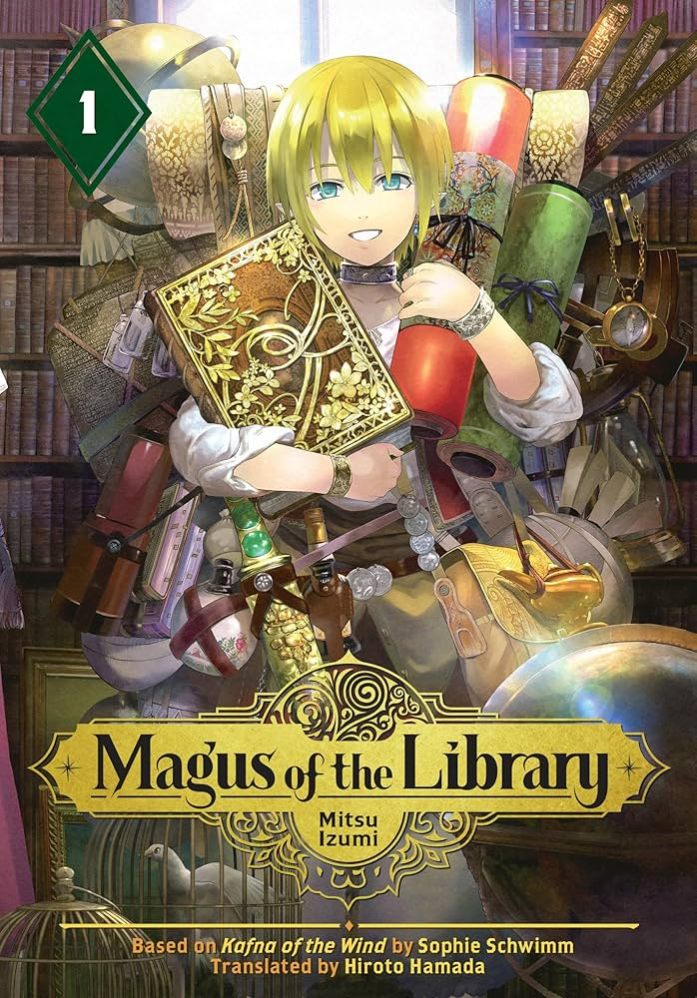
Magus of the Library by Mitsu Izumi Another story rich in detail and set in an alternative Western Asia, this manga leans less on history and more on magic. This was a bit of an indulgent read as a librarian, as most of the characters simply gush about their love of books and passions for various aspects of librarianship and reading. It also does not hurt that the fantasy society in question treats their magical librarians like super-humans. The series revels in diversity of characters, both real and fantasy, drawing from multiple historic inspirations for the factions complete with rivalry and culture shock.
Tony is an Instructor and Research Specialist at HCLS Miller Branch. He has a degree in history and a renewed interest in science fiction and fantasy.
October is the season of frights and jump-scares. If you are anything like my friends and I, it means setting aside time to indulge in the shivers, chills, and heart palpitations that come with quality horror.
Over the years, my relationship with horror has evolved in surprising ways. As a child, the game Animal Crossing scared me so badly with a cheeky Easter egg that I ripped the disc from my GameCube and banished it to the farthest corner of my basement closet. Yes, the quaint, whimsical game about quirky animal neighbors and paying off a mortgage once sent me into a panic. As an adult, however, I’ve grown to love horror.
To celebrate the season, I wanted to share a brief list of media that use horror in fascinating and effective ways (as opposed to cliché or tired tropes). This selection of my favorites showcases how horror can transcend traditional scares, confronting us not just with fear but with deeper questions about meaning, control, and survival. Whether it’s through surreal absurdity, cosmic dread, or psychological unraveling, each of these works leaves a mark that lingers long after the story ends. Happy Halloween!
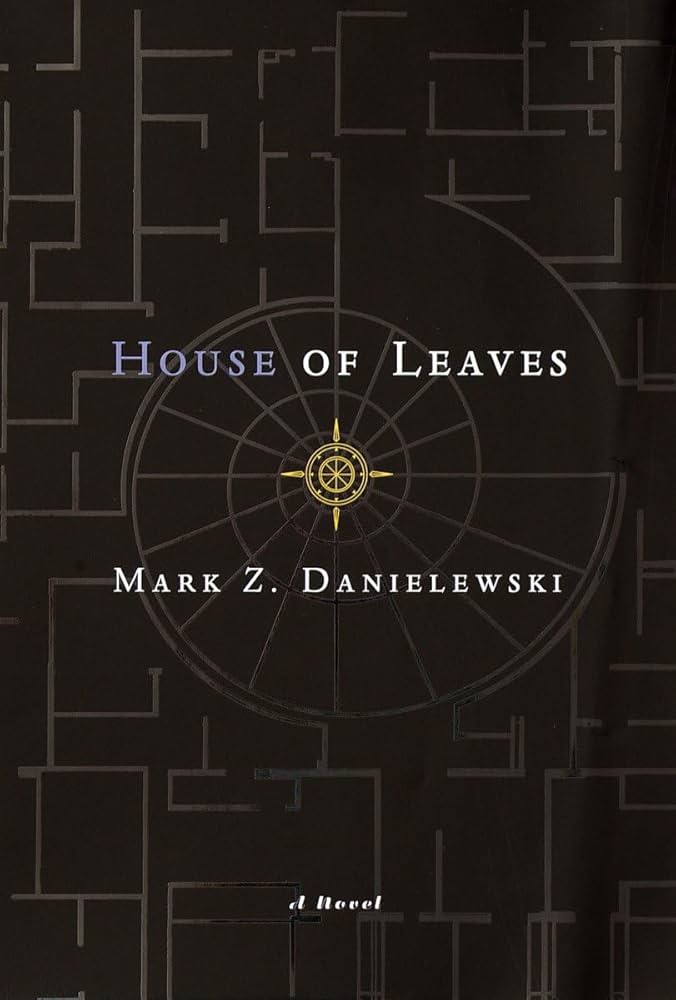
House of Leaves is one of the best pieces of fiction I have ever read – a wild, shifting text as concerned with the construction of meaning through language and signs as it is with the emotional turbulence of love, security, and existential dread. At its most succinct, House of Leaves is a book about an essay about a movie about a house that does not exist – and that house is also the book itself.
The story begins with Johnny Truant, a troubled, erratic young man living recklessly, burning the candle at both ends. One day, Johnny is invited into the apartment of his recently deceased neighbor, Zampanò. In the disheveled, eerie apartment, he discovers Zampanò’s final work: an academic treatise on a film called The Navidson Record. The catch? Zampanò had been blind for years, and The Navidson Record – a documentary by renowned photographer Will Navidson chronicling his family’s search for peace in a new home – does not seem to exist.
The house on Ash Tree Lane, as depicted in documentary, reveals itself to be bigger on the inside than the outside. As Will and a growing team investigate, the house grows endless, until the gravity of this impossibility threatens to undo everything. As you read, Johnny Turant does too – editing Zampanò’s fragmented manuscript while unraveling under his own troubles, which may all stem from the manuscript itself. Is the house real? Is it a curse? These questions spiral outward, pulling the reader into a labyrinth where certainty slips away leaving behind nothing at all —and perhaps the absence of anything is the most terrifying thing of all.
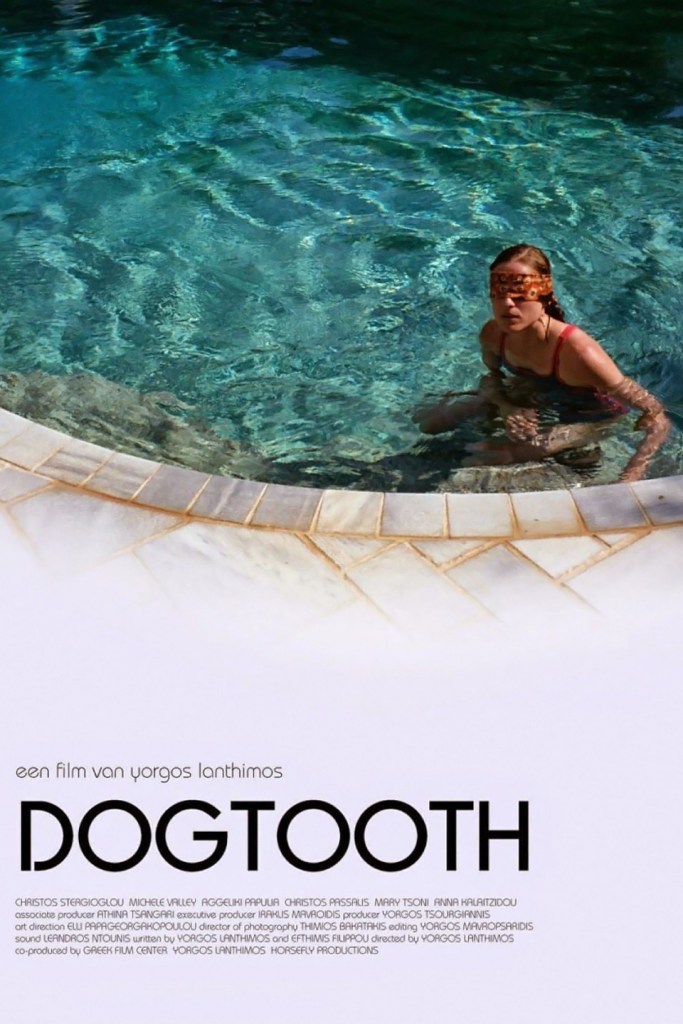
Greek filmmaker Yorgos Lanthimos has enjoyed international acclaim with films such as The Lobster, The Killing of a Sacred Deer, and Poor Things. Lanthimos excels at the strange and unsettling, crafting horror from the surreal and the absurd.
Case in point: Dogtooth centers on a family—a husband, wife, and their adult children—who live in complete isolation within a barricaded compound. The children have never left the confines of their home. They are raised on a manipulative regime of misinformation and control, where their parents deliberately distort language, knowledge, and their reality. Words are redefined to remove meaning. A ‘zombie’ is a small yellow flower. Cats are the most dangerous predator known to man. An adult is someone who has lost their dogtooth and is ready to leave the house. Fear of the outside is instilled with brutal efficiency to maintain compliance.
The result is a deeply unsettling exploration of control, isolation, and the fragility of identity. As the children struggle to conform to this artificial reality, cracks begin to form—revealing the horror that lies in the breakdown of personal autonomy. Dogtooth offers a stark, absurdist look at the consequences of power unchecked, leaving viewers disturbed not by monsters or supernatural forces, but by the cruelty of manipulation and the terrifying plasticity of human perception.
Junji Ito masterfully exposes the stark horror lurking within the mundane. Uzumaki follows the residents of a small Japanese town cursed by spirals—patterns that begin to consume not just the environment, but the minds and bodies of the people.
The father of the protagonist’s boyfriend becomes obsessed with spirals, collecting spiral-shaped objects, bathing in whirlpools, and only eating spiral-shaped noodles. He stares into spiral patterns for hours until even his eyes twist in opposite directions. Eventually, he dies attempting to twist his own body into a spiral. At his funeral, the crematory smoke spirals upward—only to shift and coalesce into a grotesque, grinning image of the man’s face, spiraling downward as if to envelop the town.
And from that moment, everything begins to unravel.
Junji Ito, a master mangaka, explores his work episodically in a sort of slice-of-fear narrative. Each chapter plays with the themes of the work, as it also delivers high quality and terrifying artwork. Uzumaki’s exploration delves into the erupting terror of grappling with forces beyond one’s control or comprehension. The horror of Uzumaki is mindless and indifferent, transforming even ordinary things—snails, ears, and babies—into sources of visceral dread. In Ito’s hands, the spiral becomes the embodiment of an absurd, indifferent universe where nothing is safe from corruption.
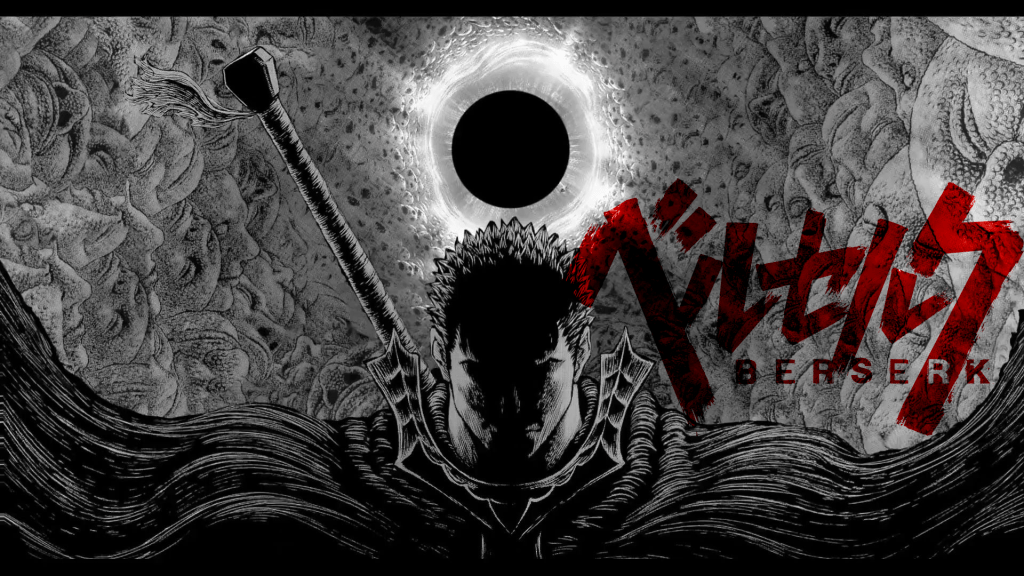
Berserk is a masterpiece: an amazing, serious, and beautiful piece of art.
Miura blends dark fantasy, psychological horror, and cosmic dread into one stunning and harrowing tale. Berserk follows Guts, the Black Swordsman and lone mercenary, as he battles through a relentless horde of monsters and demons. What begins as a journey of survival transforms into a profound meditation on trauma, betrayal, and the price of ambition.
The horror of Berserk lies partly in its grotesque monsters and their monstrous actions, but these monsters are rarely fully inhuman. This tension between humanity and power is central to the narrative, exemplified in “The Eclipse”—the most grueling, nightmarish scene in the story. This sequence rivals the most terrifying moments in any medium, where betrayal, loss, and monstrous transformation collide, leaving an unforgettable mark on both the characters and the audience. I do not say this lightly.
Berserk’s resonance and impact go beyond its grotesque (and frankly beautiful) artwork or the epic battles between Guts and the demon apostles. Its characters are written with profound psychological depth. Guts may present as a stoic, muscle-bound warrior, dismissing his problems with grim resolve, but that could not be further from the truth. His struggle is both external—hunted by the evil Godhand and their legion of apostles—and internal, as he wrestles daily with despair and rage. These emotions stem from what he and his comrades endured at the hands of someone they once trusted as their leader.
Berserk is not just horror for the sake of horror—it is tragic, beautiful, and unforgettable. It reminds us that even in the face of overwhelming darkness, the struggle to endure can be its own kind of victory.
Berserk contains highly intense themes and disturbing scenes that may be difficult for many readers. If you’re considering reading it, I strongly recommend looking into its content beforehand to ensure you’re comfortable with the material. Berserk offers incredible depth and artistry, but it is not a story to approach lightly—you should know what you’re getting into.
Ian Lyness Fernandez is an instructor and research specialist at East Columbia Branch. Although he first engaged with most of these works in high school, he wants to emphasize that these recommendations are intended for adults—adults who want to be horrified, to boot. Dead dove: do not eat, and so on.
As soon as I saw the cover, a captivatingly adorable kitty belly-up with goggles slung around his neck, I knew this manga was for me. Night of the Living Cat (also known as Nyaight of the Living Cat) combines the post-apocalyptic zombie pandemic genre with the fun ridiculousness of horror B-movies.
It starts with a mysterious explosion at a cat food factory. Since then, the human population has been slowly declining, while the cat population has been increasing. A virus is discovered that is transmitted through physical contact with an infected cat. If an unfortunate human contracts this virus, there is one main symptom: they are fully transformed into a cat. Which means that if one should wish to survive as a human, their previous life as a friend to feline-kind is over. There can be no petting, no ear scritches, not even a little boop on the nose. A world where cats are both revered and feared – how paw-sitively dreadful! (My apologies, I could not help myself.)
Kunagi is a man with a mysterious past and a tough determination to survive. He can’t remember who he is or anything about his past, but he possesses an encyclopedic knowledge of all facts pertaining to cats. Kaoru, who was previously the co-owner of a cat café, is quick-witted and resilient. She is the person who found Kunagi wandering the streets in his amnesiac state and took him in. They and a group of other survivors join together to defend themselves against the hordes of cats that have taken over the city. As cat lovers, they naturally take great pains to ensure that any cat whose path they cross does not get hurt, to comedic effect. Catnip or a toy mouse on a string might be used to lure or distract, but to use a water spray bottle to frighten them can instill over-the-top anguish in some of the more cat-sensitive characters. Some of the cats seem to have special powers, such as super intelligence and siren-like caterwauling that beckons surrounding cats to gather in clusters (clowders, even!). These talents are likely carried over from their previous human lives.
The art style, courtesy of artist Mecha-Roots, is fantastic. The action sequences are artistically treated seriously, balanced with the levity of the cuddly creatures from which they are defending themselves. The realistic illustrations display the gamut of cat breeds in fluffy detail, from Norwegian Forest cat to Devon Rex. I love how newly transformed cats are often depicted with a distinguishing physical characteristic or clothing accessory from their previous human forms: cats with cool sunglasses, spiked collars, and little baseball caps.
Sprinkled with (sometimes) plot-relevant cat facts and care tips, along with the occasional reference to horror/sci-fi movies and meme culture, Night of the Living Cat is perfect for the cat-lover who enjoys post-apocalyptic theming and wants something that’s just plain fun. Some might feel that there’s an over-reliance on one main joke (downfall by CUTE KITTIES), but it’s one I’m coming back for time and time again.
The series is ongoing, and I can’t wait to see what’s in store. What’s the connection between the explosion at the cat food factory and the ensuing cat pandemic? Who was Kunagi really before that fateful day? And will humanity ever get to feel the warm purr of a cat ever again? A deserved anime adaptation is also reportedly coming out in 2025 at the time of this writing.
Robyn is a Customer Service Specialist at the East Columbia Branch. She enjoys various media that paint a surreal or dark atmosphere, animation, drawing, cats, and anything related to Finland, especially Moomin.
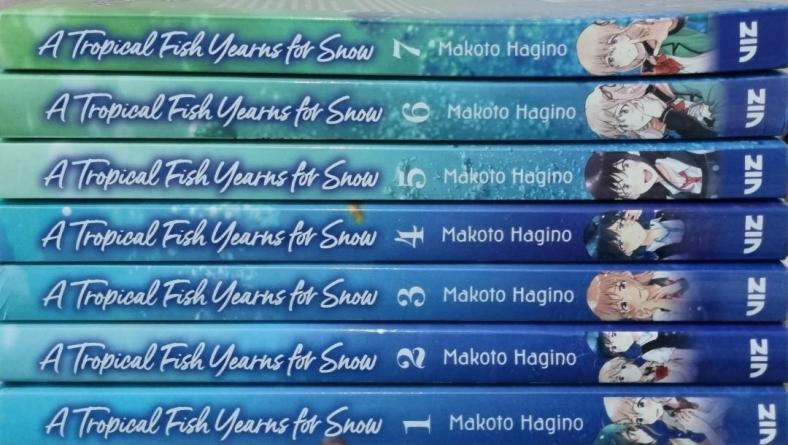
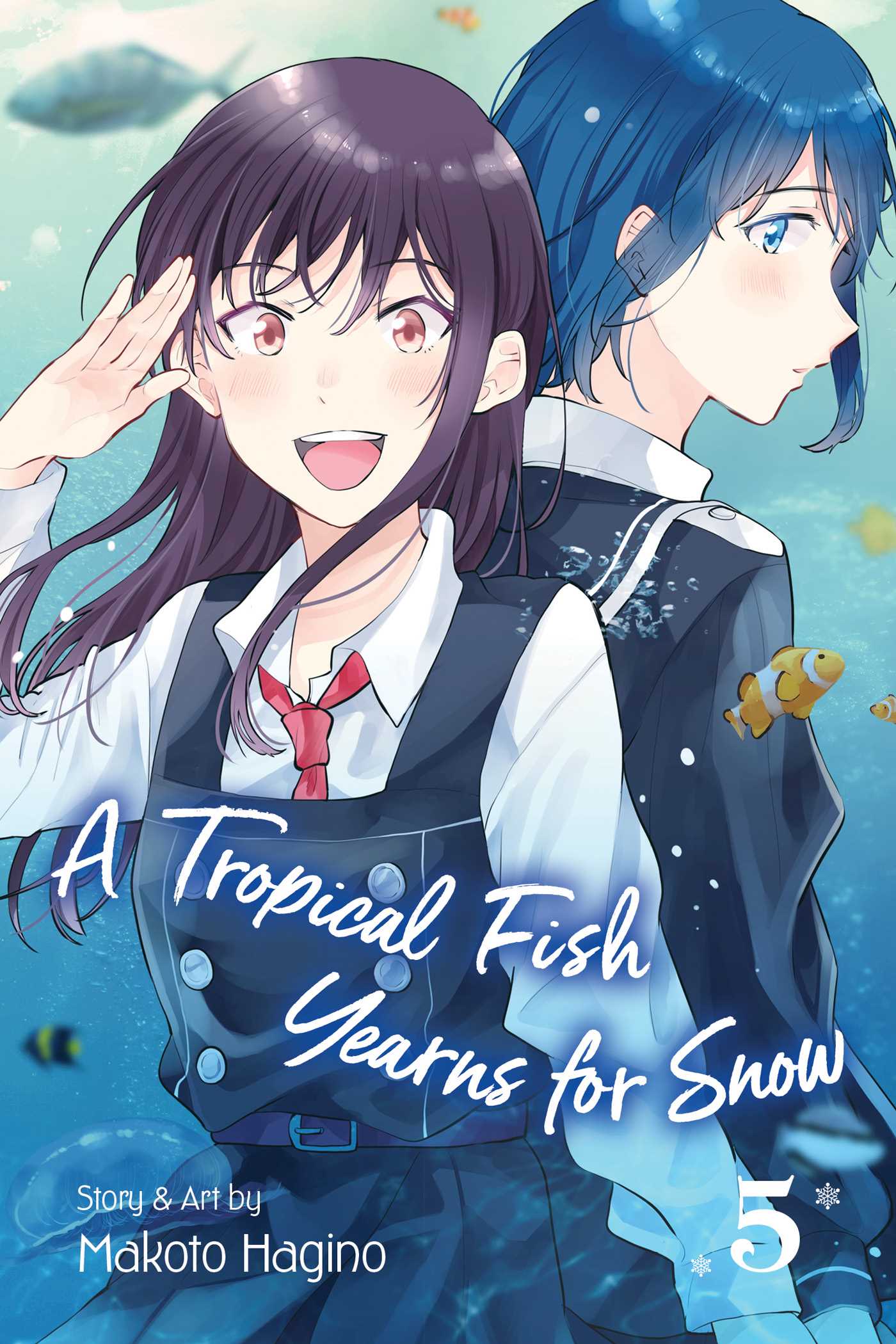
This year has seen me reading completely different books than usual. Am I back in middle school, 2011? I was obsessed with Asian culture, anime, and most relevant, manga. This format of Japanese comics was all I read. From action, to slice of life, to romance, I engulfed every book I could get. If I had known that Savage Branch was not the only library I could visit, I would have read a lot more, alas I had no idea. Now that I work in the library system and am aware of the resources, I find myself falling back in love with manga as I read A Tropical Fish Yearns for Snow.
Makato Hagino is a female author from Ehime Prefecture, Japan. This series has nine books and follows characters Konatsu and Koyuki – two girls who bond in a most unlikely place. Konatsu’s father gets a new job overseas and they have to leave Tokyo to stay with her aunt. From the large city to the small seaside town, adjusting is not easy. As if that was not enough, Konatsu, who is not adept or fond of change, must also adapt to a new school surrounded by new people. Eventually she ends up joining a club that drops her straight into the lap of the Introverted and extremely shy Koyuki. The two slowly grow out of their shells and build a friendship that has the potential to be a lifelong bond.
This heartwarming story will hit home for all of us introverted individuals and will give extroverts insight into the quiet thought process of an introvert. This romantic slice of life will keep you wanting more and close the story leaving you with nothing but warmth.
Monae is a Children’s Instructor and Research Specialist at HCLS East Columbia Branch.
Calling all anime- and manga-loving teens! Join other like-minded teens the last Wednesday of every month (subject to change) at HCLS Miller Branch for Anime & Manga Club.
What will you be doing there? Glad you asked! Come and enjoy a hangout especially for teens where you can enjoy anime-related programming, a craft or two, and discussions of the latest mangas and animes to hit the scene. You also have the opportunity to get recommendations from staff and your peers for what to read or watch next.
Also learn how you can access anime and manga using your library card through online resources such as Libby, Cloud Library, and Hoopla.
The next meeting of Miller’s Anime & Manga Club takes place Wednesday, November 30 at 6 pm. We hope to see you there!
よろしく!
Peter is an Instructor and Research Specialist at the Miller Branch who desperately hoped that the digital world and Digimon were real when he was a kid, and still remembers seeing the first Pokémon movie in theaters and crying with Pikachu when Ash “died.“
Witch Hat Atelier by Kamome Shirahama boasts magnificent artwork, a lively world, and a complex cast of characters. It is classified as shounen (for teen boys) but is friendly for all demographics. The adult cast also actively works to protect and care for the child cast, something seldom seen in shounen and young adult media due to the limitations adults can sometimes pose in a story. Shirahama typically frames her arcs across two volumes, so I suggest reading two at a time.
In Volume 1, our main character, Coco, is the daughter of a seamstress out in the countryside. The people of this world use inventions made by witches – such as a spring of water that cleans itself after every use or cobblestone pathways that glow when you step on them – in their day to day lives. Having seen all of these inventions, Coco wishes dearly for magic.
After a series of unfortunate events, Coco is orphaned and initiated as a student of Qifrey’s atelier. Volume 1 follows Coco’s initiation and journey into the magical world.
A BRIEF INTRODUCTION TO THE GIRLS Coco is the main character. She is also unfamiliar with much of the magical community, its history, and its customs. From a technical standpoint, Coco is a vehicle what allows the mangaka to explain her world. We learn about the setting as Coco does. From a narrative standpoint, Coco’s newness to the world around her means that she brings fresh ideas and solutions to the table. Since she knows only a handful of basic spells, she must use them creatively. One early example is her solution to the first test, retrieving a rare herb from the top of a series of floating mountains.
Aggot is a ambitious student. She practices day in and day out. Aggot shares a workspace with Coco and feels that Coco has not earned her place at the atelier. As a matter of fact, it is Aggot who hurries an unprepared Coco into the first test. Aggot often overexerts herself due to pride. However, Aggot’s technical expertise tempers Coco’s more experimental ideas. Since Aggot has the most understanding of magic she is able to assist Coco in implementing a solution without collateral damage.
Richeh is a taciturn and sleepy young girl. She is aloof and only draws spells she enjoys. Richeh has a favorite hiding place filled with glowing ribbons. I personally relate to Richeh the most, but since she does not take much of an active role in volume one, I will refrain from discussing her in depth.
Tetia is a cheerful young lady with curly twintails. She is the most welcoming to Coco when she first arrives. Tetia believes happiness comes in twos. When she grows up, Tetia hopes to be someone who can bring happiness to many people. This does not mean that Tetia is one-note either. Tetia does get angry, but she is also a genuinely kind and empathetic person. It is Tetia’s wish to provide happiness and comfort that leads to the solution to the conflict in the second arc of volume one.
ON THE SETTING The story largely takes place in a rural/pastoral community. It is earlier than the typical fantasy story, so it is a refreshing change of scenery. Additionally, the casting method of magic is unique. Spells are not cast by way of incantation or ritual but with drawing sigils in a very specific ink.
Two main factions operate within the setting. The Knights Moralis are the enforcers of the magical community. In the past, when magic was common knowledge, people used it to their own ends and caused grevious harm. Nowadays, magic is kept secret from the public. Any and all magic that changes the human body or the natural world is forbidden. Any member of the community suspected of casting forbidden spells will have their memory erased. It is illegal for witches to cover their faces. The Brimmed Caps are opposed to the Knights Moralis. They believe that the Knights have gone too far in restricting knowledge. Healing spells, after all, are among the forbidden spells.
The old saying goes, “Don’t judge a book by its cover” – but what about a title?
Assassination Classroom is a manga whose title initially repelled me. Even with its bright and simple covers, I looked at a volume, read the back description, and wondered if this was another manga like Death Note. You know, that sort of intensely serious story, full of extended monologues about power and authority, each chapter twisting into the next. Because, after reading Death Note, I was satisfied; I didn’t need another version of that grim-dark comic book. With a title like “Assassination Classroom,” how could this series be anything else?
Well, I couldn’t have been more wrong. Assassination Classroom has an overall story, yes, and it certainly has intrigue: spies and soldiers working in the shadows of government organizations, with alphabet soup names. But mostly, it’s a gag manga. Yes, the manga about a class of teens attempting to kill their omnipotent teacher is, shockingly, mostly about dumb jokes and silly characters learning about themselves.
One day, the moon suddenly explodes. The culprit makes himself known to the world with a declaration: I will destroy the world in one year’s time, unless I am stopped. He is a monster of superhuman strength and speed, who then demands the world government let him…teach a class of lovable misfits? Did I mention the monster is tentacled, bright yellow, and wears a classical teacher outfit with a robe and square hat?
In another author’s hands, this premise would be deathly serious in tone. But here, author Yusei Matsui takes all that global turmoil and high stakes and makes it super light-hearted. Koro-sensei (a pun on “to kill” in Japanese) has threatened to destroy the world, yes, but he also wants to actually teach these kids – not only about science, math, and literature, but growing up and being a better person, too. And uh, also firearms, subterfuge, and assassination techniques, as he playfully dodges their barrages of bullets, all while offering praise and critiques.
Over 21 volumes, we meet the students and fellow staff at the school, watching them react to this absurdity. Nagisa, the closest thing to a protagonist we have, was bullied for his small frame, but under Koro-sensei’s tutelage, he learns how to accept himself and be confident. Mr. Karasuma is a military officer charged with overseeing Koro-sensei, but as he teaches both gym and martial arts, he softens into a capable instructor. Even Miss Jelavic, a trained assassin disguised as an English instructor, learns that education is a two-way street – as you teach, you learn more than you’d imagine.
Yes, it is corny! Underneath the global plot to destroy a banana-colored octopus, the story is heartfelt and honest. I was fairly effected by the series’ conclusion, despite the tonal clash throughout. The simple and cartoonish art makes the characters more personable, making both the jokes and earnest conversations more meaningful. No one is some “cool” and impervious hero – they’re students and teachers, goofing off while learning how to be better than they are.
In this way, Assassination Classroom resembles a coming-of-age school story, like Ouran High School Host Club (with guns) or Naruto (but far less serious). Its title hides the lightness of plot, how quickly and jovially it moves from school trip to midterms to holiday breaks. The result is a pleasure to read, for its stream of gags and touching moments, for Koro-sensei’s silly faces and his quips of honest wisdom.
Be aware though – this is a title for older teens and adults. The violence of the series is mostly unserious, but the lives of these students and teachers sometimes share the mature themes of the best of Young Adult literature. Bullies, abuse, and family trauma are the dangers in these characters’ lives, not the moon-destroying creature who can move at Mach-20. Still, this is a comedy series first and foremost, and these more “real” themes come forth only in certain moments, and never in a way that I found triggering.
I really enjoyed my time with Assassination Classroom, and was delighted to see how wrong I was to judge this one by its title.
One of the great things about manga is the wide range of topics authors can focus on. Sure, there are still those popular power fantasy series, with heroes rising from lowly origins to take on a supreme evil. Dragon Ball Z or Kimetsu no Yaiba: Demon Slayer play a similar tune to Superman and Batman. Still, over the last few decades, comics in the West have stretched outside superheroes into new genres, like autobiography, travelogues, and other strange and unique styles of story. There’s no shortage of variety for a graphic novels reader in 2021.
But there’s one genre that the west hasn’t really explored, while manga has done so quite thoroughly: food. Yes, manga about baking, frying, cooking, and eating – they exist, and they’re quite popular, too!
More interestingly, as a genre, food manga isn’t strict about its features. In “shonen” manga, like Bleach or Naruto, there’s a specific path the hero follows, training to becoming better and overcoming new challenges to fulfill their dream. In romance manga, like Skip-Beat or Nana, our protagonist stumbles into young love, leaving us to wonder if those two crazy kids will or won’t finally kiss (until they finally do (at the very end)).
But in food manga, you can really mix any other genre – like documentary or fantasy or combat or history – with the presentation and description of some aspect of food and cooking. The results can be intensely different!
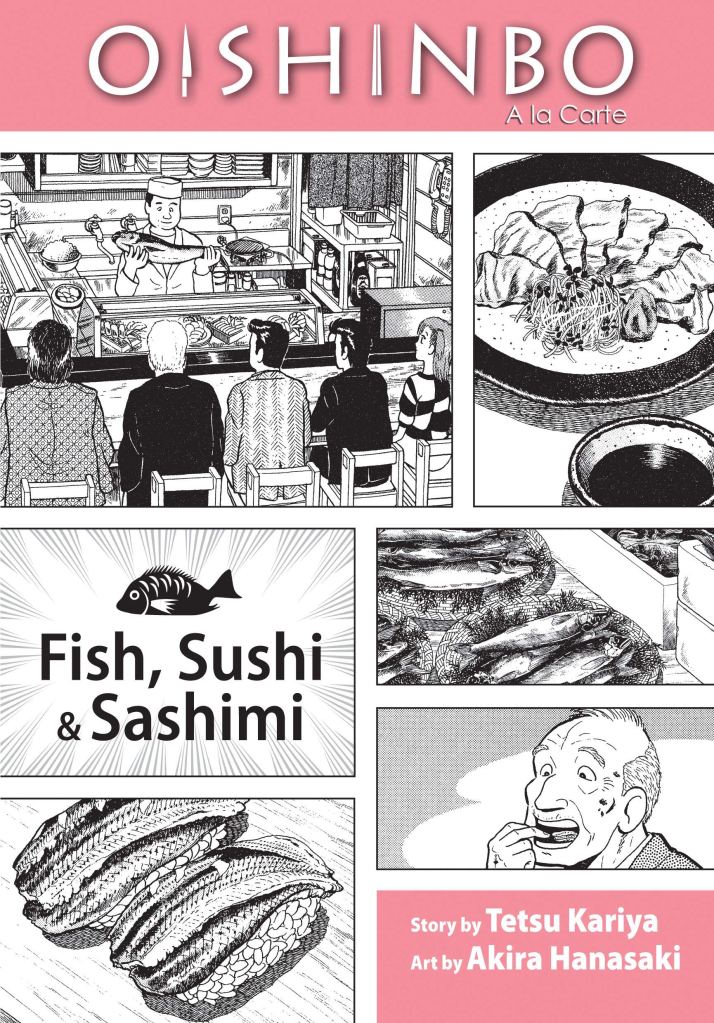
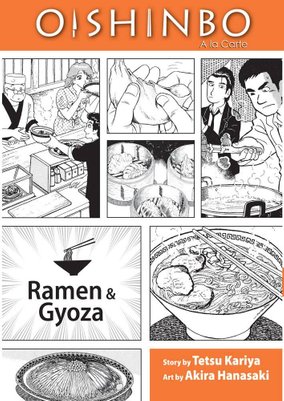
Oishinbo is a more direct sort of food manga. In each of its six volumes, its author, Tetsu Kariya, focuses on a different aspect of Japanese cuisine and food culture (helpfully described in each title). In one volume, we can learn about ramen and gyoza (fried dumplings), those two staples of Japanese street food, and in another, a deep dive into sushi and sashimi, two varieties of raw fish with rice. Of course, there are gorgeous drawings of the dishes, feeding the reader’s eyes in the same way Studio Ghibli films do. But along the way, we’re told more about the history and culture surrounding the food, in addition to the step-by-step process of making each.
But this isn’t a printed Instagram feed of cool food art – no, there is a plot! Or, at least, there are characters. Shiro Yamaoka is a journalist who has a troubled family history with cooking, but he still tries to develop the “Ultimate Menu” as a project, visiting restaurants and chefs across Japan. He is joined by Yuko Karita, his assistant, as they sample foods and consider the history of the dishes alongside their own experiences. Keep in mind: Oishinbo ran for over 30 years and 111 volumes, and these few volumes we have are an “A La Carte” compilation. As such, the overarching story has been compressed and mostly removed, resulting in these translated volumes feeling like episodes of documentary travelogue. And that’s alright by me!
Reflecting the time in which the manga started, the characters have a very 1980s aesthetic to their designs. For long-time readers of comics, the style can be nostalgic, but even for new readers, I think the clearer and less-cute style helps the manga’s focus come through much clearer. And that focus? Food is good. It’s a perfect mini-series for amateur chefs, readers new to manga, or for anyone who wants to know more about Japanese cuisine.
On the far end from the realism of Oishinbo is Delicious in Dungeon, by Ryoko Kui. Yes, that’s a silly title, but this is a very silly series – about fantasy food! One of the recent trends in anime/manga are stories featuring western-style fantasy, a la Lord of the Rings, Dungeons & Dragons roleplaying, and console roleplaying video games. Delicious in Dungeon is about a party of adventurers in such a fantasy world. You have Laios, the dimwitted human knight, Marcille, the squeamish elf mage, and Chilchuck, the halfling lockpick. They’re trying to get to the bottom of the dungeon to save Laios’ sister, but man, it’s a long way down…
During one of their hungrier moments, they meet Senshi, a dwarf, who shows them the craft of cooking beasts they find (and fight) in the dungeon. Which is, as you might imagine, a strange prospect for our adventurers, who aren’t sure if they want to eat boiled mandrakes or a wyvern egg scramble. But Senshi shows them the benefits and necessity of “eating off the land,” as they can delve deeper by cooking along the way.
So we have action and fighting, as the party battles various mythical monsters. But then we get Senshi cooking their conquest over a fire, using his shield as a wok. Kui draws the process of cooking and the final dish with the same care as Kariya did in Oishinbo, but instead of buckwheat noodles, it’s tentacles. Recipes are included with each fantastical dish, making the whole thing seem both real and absolutely ridiculous. Yet, you know, that roast dragon flank does look pretty good…
These are just two examples of food manga we have at HCLS! We have other series too:If you’re looking for another fantasy cooking series, Drifting Dragons has a visual style and tone similar to Delicious in Dungeon, but a large world and character designs reminiscent of Nausicaa of the Valley of the Wind.
If you’d rather have a more cozy experience, Otherworldly Izakaya Nobu is a slice of life story of fantasy characters (I told you it was a popular topic) magically transporting into an izakaya, a sort of pub in Japan.
If you’re looking for another fantasy cooking series, Drifting Dragons has a visual style and tone similar to Delicious in Dungeon, but a large world and character designs reminiscent of Nausicaa of the Valley of the Wind.
If you’d rather have a more cozy experience, Otherworldly Izakaya Nobu is a slice of life story of fantasy characters (I told you it was a popular topic) magically transporting into an izakaya, a sort of pub in Japan.
And if you’d rather have some competition with your food, Food Wars! is a fun shonen series, wherein chefs compete in cooking duels to see who’s the best.
Whether you’re new to comics or if you’re just hungry for something new (ha), food manga is a genre worth sampling.
Khaleel has worked at the Miller Branch since 2015, though he’s been back and forth between HCLS and high school, college, and graduate school since 2003.
Reading a multi-book series can be a bittersweet thing. On one hand, you get to spend more time in the world of the story, more time with the characters, seeing them grow and change with each volume. On the other hand, even the best series must ultimately end, or risk devolving into endless sequels with lesser and lesser impact. How does an author balance continuing a story versus ending it?
In the world of graphic novels, this is an eternal problem. For superhero comics, authors and illustrators can swap in and out, resulting in entirely different styles – sometimes, Batman is a gritty noir detective, and other times, he’s an ultra-genius rubbing elbows with omnipotent aliens. For manga, authors don’t often get replaced, but over the course of a long series, the authors themselves change, for better and for worse. Compare the first volume of Bleach with the sixtieth, and you’ll see an incredible difference in visual and narrative style. It can be jarring, particularly if you’re reading it after years (or decades) of publication.
This is why a short series can pack more impact in a few volumes. Our Dreams at Dusk is a perfect example. The author, Yuhki Kamatami, wrote twenty-three chapters, which are collected into a mere four volumes. You can hold the entirety of the tale in your hands.
And it is a tale to read, one that I didn’t want to end. Tasuku Kamane is a teen, hiding his sexual identity from his family and peers. He’s gay, and he loves his table tennis clubmate, Toma – but he can’t say anything, he can’t be himself. When his classmates discover some gay erotica on his phone, he’s driven to self-harm and worse. But at that darkest point, he meets Someone.
Someone is a person who refuses to be identified, or even really known. At the top of the town’s highest point, they appear like a spirit to Tasuku, talking to him with a quizzical honesty. They guide him to the Drop-in Center, a local hang-out spot for LGBTQ+ people, those who can’t really be themselves out in the town. It is an oasis for Tasuku, exactly what he needed at the moment he needed it.
Haruko and Saki are a lesbian couple who haven’t made their relationship public to their families, but at the Drop-in Center, they can be together with a degree of comfort. Tchaiko is an older gentleman, who makes fine coffee and plays Tchaikovsky for the group, but quietly hides his long-term relationship with his partner. And over time, we meet Shuji, a middle schooler who is wrestling with how to identify, and others, all seeking some zone in which they can be accepted.
It is not a wholly happy tale. Tasuku and the others don’t always find acceptance among their family and friends – or even each other, at times. Feelings are stepped on, and feelings are crushed. Tasuku himself even hurts others, in his growing understanding of gender, resulting in some chapters that were incredibly hard to read.
But by the end of the fourth volume, people have changed, mostly for the better. We see a small slice of each character’s journey, which will assuredly continue after closing the book. I put off reading the final volume for months, not wanting the story to end – partly because I didn’t want to discover an unhappy ending for anyone, and partly because I didn’t want it to be over. But it ends as best it can, and for that, I am grateful. Even Someone has their mystery revealed (but not the whole of it, just as they’d prefer).
There is a certain aspect of Our Dreams at Dusk that feels like checking off the boxes of the LGBTQ+ experience, ensuring the story represents some major facets of gender and sexual identity. On one hand, it can seem a bit forced, but on the other hand, I wasn’t thinking about that at all – the art carried me along, finding ways to say what words couldn’t. This is the sort of illustration that captures youth and longing, commitment and family, those experiences that are universal and those that are entirely specific to one human being. The art is sometimes fragile, and sometimes harsh, but it always finds a way to visually speak to the interior experience, in that way only masterpieces of graphic novels do.
Our Dreams at Dusk is an LGBTQ+ story, but to sell it as only that wouldn’t be right. It’s a coming of age story, and a love story, and a mystery, with comedy and tragedy laced throughout. I’ve not read anything else quite like it in manga. Its handling of its characters and LGBTQ+ issues, particularly from a Japanese perspective, are unique, and all of this is built upon an amazing art style that shows off what this medium can do.
I can’t recommend it enough – to readers of manga, of LGBTQ+ fiction, and of quality books of any stripe. Plus, as I said, it’s only four volumes! So if you’re a tad nervous about reading a graphic novel series for the first time, this is a great one to start with, if you can handle a bit of heartache along the way.
Khaleel has worked at the Miller Branch since 2015, though he’s been back and forth between HCLS and high school, college, and graduate school since 2003.












 CHAPTER CHATS