Born Standing Up by Steve Martin

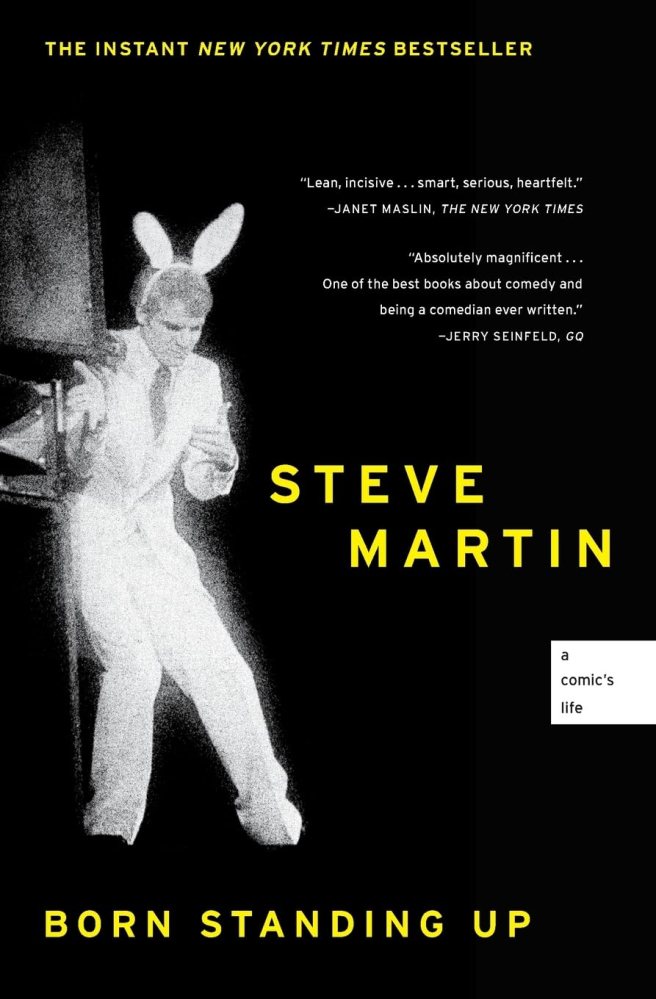
The photograph shows comedian and author Steve Martin wearing a white suit, a tie, and rabbit ears while on stage.

By Alex P.

Steve Martin is best known as an accomplished Hollywood actor, recognized as the star of classic comedies like Father of the Bride, Three Amigos, and Cheaper By The Dozen, but some folks may remember his brief time as a standup entertainer. In fact, Martin achieved national stardom through his standup work, released four comedy albums (Let’s Get Small and A Wild and Crazy Guy sold millions of copies), and established national catchphrases, such as, “well excuuuuse me”. His acting career only began after he burned out from that stardom, and Martin seeks to revisit those beginnings in his new memoir.

Born Standing Up focuses on the early life and career of the Hollywood multi-hyphenate. He comes of age in California; his first jobs included selling guidebooks at Disneyland and performing in a comedy troupe at Knott’s Berry Farm. His surreal sense of humor got him a position as a writer for the Smothers Brothers Comedy Hour, which kept him afloat while his “experimental” standup comedy struggled in California clubs and on late-night TV appearances. Against the blunt advice of his agent (“stick to writing”), he quit writing to take his performances on the road. 

Steve Martin’s standup comedy was weird, conceptual, nonsensical, and almost completely unique. There were props, he was a master juggler, and he played the banjo. He was a consummate entertainer, but his work was intellectual too; his friend Rick Moranis termed it “anti-comedy.” He had a theory behind his performances: “What if there were no punch lines? What if there were no indicators? What if I created tension and never released it?… What would the audience do with all that tension?… if I kept denying them the formality of a punch line, the audience would eventually pick their own place to laugh, essentially out of desperation.”

Some typical Martin one-liners:  

  • “I’m so depressed today. I just found out this ‘death thing’ applies to me.” 
  • “Here’s something you don’t often see:” [spreads mouth open with fingers, and leaps into the air while screaming] 
  • “I think communication is so firsbern.” 

The driving force of Martin’s life during this time seems to be either deep dissatisfaction or reckless ambition, as he constantly abandons his own comfort to try his hand at success. Martin seems more motivated by the idea of mastering his craft than by fame and fortune. He taped his shows on cheap cassette recorders so he could listen back and master his timing, obsessing over how to make audiences “get” his weird material better. He found the uncharted territory of playing those clubs exciting as he refined his craft, but the constant work was met with lukewarm results. It clearly took a toll on him,“ When I think of moments of elation I have experienced over some of my successes, I am astounded at the number of times they have been accompanied by elation’s hellish opposite.” 

He finally broke through and his inventiveness was widely recognized, but he lost the thrill of winning over those tough, small audiences. He now performed in arenas to crowds who were eager to recite his catchphrases and punchlines at him. “The nuances of stand-up still thrilled me, but nuance was difficult when you were a white dot in a basketball arena. This was no longer an experiment; I felt a huge responsibility not to let people down… I dabbled with changes, introducing a small addition or mutation here or there, but they were swallowed up by the echoing, cavernous venues.” Stardom made him terribly lonely and deeply exhausted. He was determined to use his stardom to try to find success while he could, and he pitched a tentative screenplay for The Jerk to Paramount. Carl Reiner signed on to direct, the film became a smash hit, and the rest is history.  

This obsession with self-improvement, artistic satisfaction, mastery, and success seems to stem from family issues: Martin is clearly haunted by his parents. His father, who physically disciplined Martin, sometimes indiscriminately, could barely acknowledge his son’s fame and success and would only do so disparagingly. His mother was clearly happy that her son became a star, but her compliments took an oddly backhanded form: “Oh, my friends went to the movies last weekend, and they couldn’t get in anywhere so they went to see yours, and they loved it!” The book ends with the deaths of each of his parents, with him at their sides, attempting to bring closure to the trauma and understand why they shaped each other the way they did. 

When you’re reading a comedian’s memoir, you usually expect an entertaining, light read with some poignant biographical vignettes to add a little gravitas. Born Standing Up reverses the ratio of jokes to earnestness. Not only does Martin impart a tremendous amount of wisdom and pain from his life experiences, he offers some of the most profound and thoughtful writing I’ve read in a long time. Martin reserves the jokes for either explaining the details of his standup material or making light of awkward life situations he found himself in, and I never really minded.

Born Standing Up is available in print or as an audiobook read by the author. 

Alex Pyryt is a DIY Instructor & Research Specialist at HCLS Elkridge Branch. 
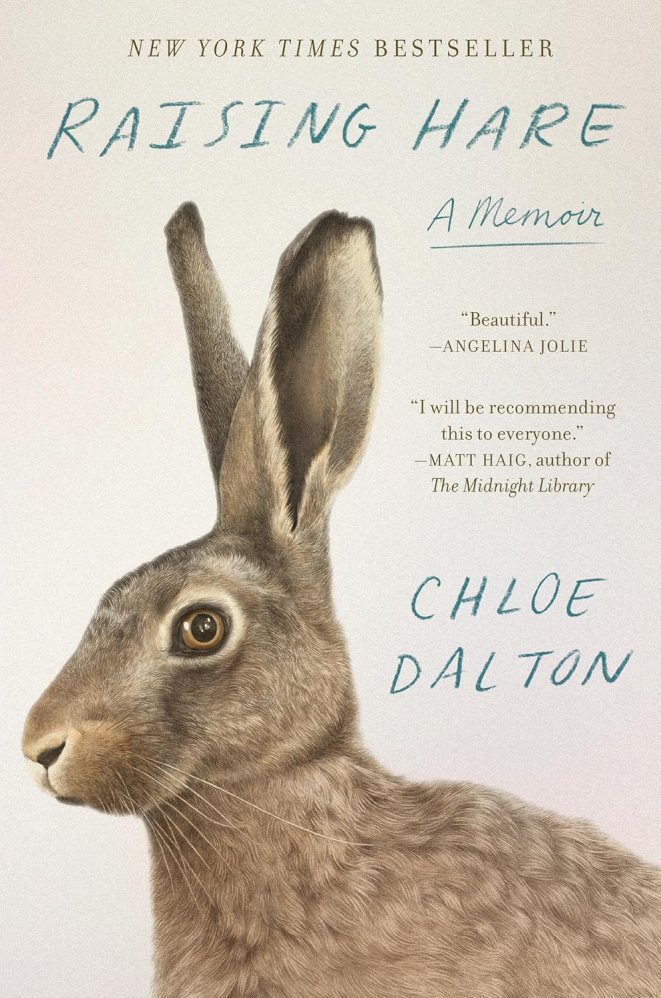
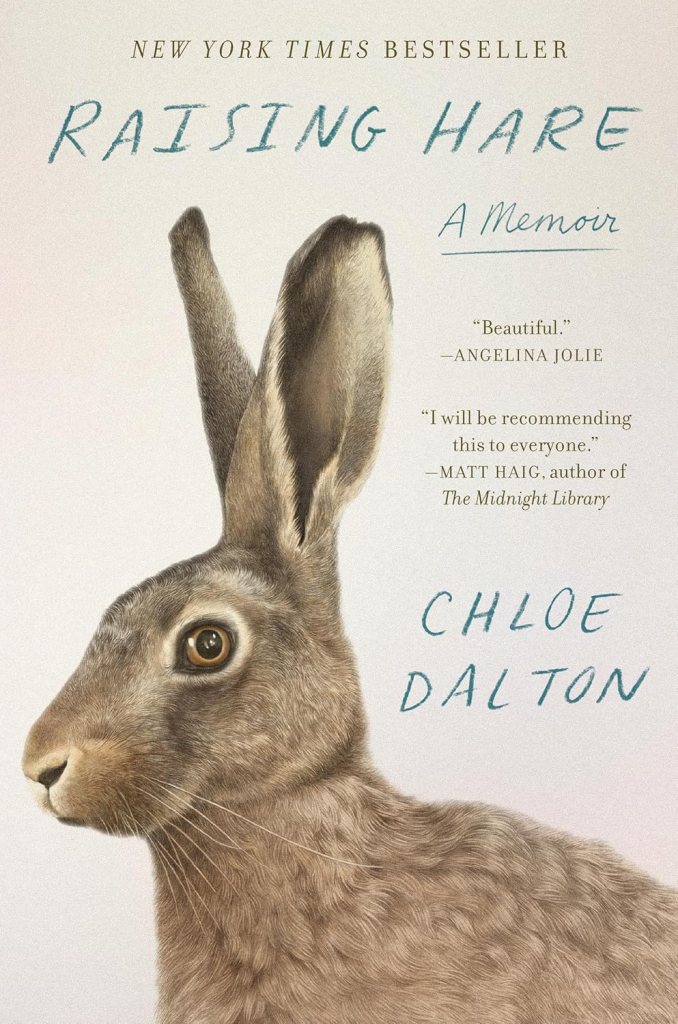
Raising Hare: A Memoir

The book cover is a colored illustration of a hare in profile, with its ears alert and its whiskers extended. The viewer sees one golden-brown eye staring back at them.

By Julie F.

Chloe Dalton, the author of Raising Hare: A Memoir, is a writer, political adviser, and foreign policy specialist who decided to escape London during the pandemic. In February 2021, while still getting used to the lay of the land and the run-down home she purchased in the dead winter landscape, she discovers a leveret (a baby hare) in her garden. Not knowing anything about the species, but determining that the mother is not close and may not return, she brings it in and sets about trying to keep it alive.

There is a lovely, intimate prologue from the perspective of the mother hare that offers one explanation for how the leveret, which she has carefully hidden from predators, might have come to be separated from her. Dalton is clearly the kind of person who listens to the landscape and tries to discern what it wants to communicate. She tries very hard to ensure that the leveret stays wild. She bottle-feeds it and then offers it porridge oats, but then she plans to release it into the wild. Although the leveret ventures into her garden, and then eventually over the garden wall, it never becomes fully wild (nor fully tame), and it returns again and again–delivering the next litters of baby leverets in the garden, and even later in the house, where she feels safe and they grow up feeling even safer, having been born on the floorboards.

The memoir is a lovely meditation on what is tame and what is wild, the tenuous but loving connection between humanity and nature, and how slow, deliberate observation can teach us so much about a species. Dalton knew next to nothing about hares when she began and is surprised to learn that there’s not that much information out there; most of what she learns is gleaned from the poet William Cowper, whose period of depression in 1774 was relieved when he was gifted a three-month-old hare and later acquired two more, all of whom he adored. She says, “I doubt that Cowper imagined his poems might be used as a guide to raising a leveret nearly 250 years later, but his words were in many ways the most useful of any I found” (53). This is particularly true in relation to feeding and shelter; though Cowper kept his leverets in pens at night, she didn’t keep the leveret locked in, “never want[ing] it to feel trapped inside, nor barred from coming in” (53).

This is a tour-de-force–beautifully written, resonant, humorous, and charming at times, but full of emotional and philosophical heft. I can’t say enough good things about it, and it’s such an accomplished first book from a thoughtful, skilled, and talented author. If you enjoy audio, the narration by Louise Brealey is also accomplished and is a beautiful accompaniment to the text (if you like to listen as you read along as I did). The illustrations by Dublin-based artist Denise Nestor are also full of wonder and beauty. Near the end of the book, she talks about the impact of the hare on her life, and her description is a wonderful summation of the emotions you feel while reading her story. I’ll conclude with her words, because my own are inadequate in comparison:

“She has taught me patience. And as someone who has made their living through words, she has made me consider the dignity and persuasiveness of silence. She showed me a different life, and the richness of it. She made me perceive animals in a new light, in relation to her and to each other. She made me re-evaluate my life, and the question of what constitutes a good one. I have learnt to savour beautiful experiences while they last–however small and domestic they may be in scope–to find the peace to live in a particular state of feeling, and to try to find a simplicity of self. The sensation of wonder she ignited in me continues to burn, showing me that aspects of my life I thought were set in stone are in fact as malleable as wax, and may be shaped or reshaped. She did not change, I did. I have not tamed the hare, but in many ways the hare has stilled me” (275).

Raising Hare: A Memoir is available in print and as an e-book and e-audiobook from Libby.

Julie is an instructor and research specialist at HCLS Miller Branch who finds her work as co-editor of Chapter Chats very rewarding. She loves gardening, birds, crime and espionage fiction, all kinds of music, and the great outdoors.

National Library Week: Graphic Novels for Adults

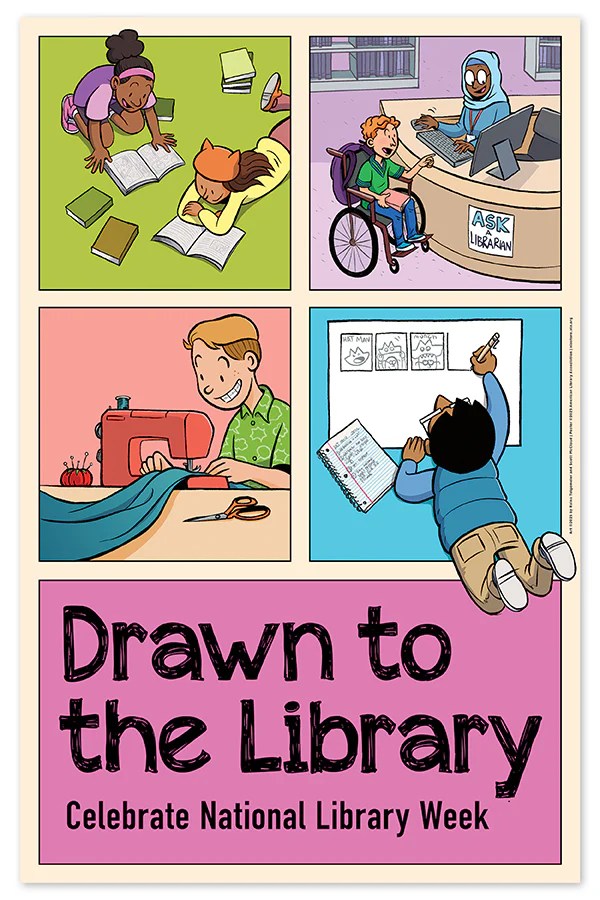
National Library Week Poster shows four different, common scenarios at the library: reading, talking at the desk, using a sewing machine from the library of things, and someone drawing.

by Emily B.

There seems to be a common misconception that graphic novels don’t count as “real reading.” This could not be much further from the truth! Reading takes on many forms beyond the printed word, each format with its own appeal. Everyone connects with stories and information in unique ways. No matter the format, reading counts, as long as you’re engaged with the material.

I find that nay-sayers tend to focus on how graphic novels differ from traditional books, rather than considering the unique elements that make graphic novels so engaging. The combination of text and illustrations might make reading more approachable to hesitant readers. Not only can the illustrations help bring the story to life, but they also can aid readers in interpreting and understanding the narrative. Literary devices like symbolism, flashbacks, and foreshadowing are enhanced with the added visual component.

Legendary comic artist Will Eisner introduced the term “sequential art” to describe comics in his 1985 book Comics and Sequential Art, giving a name to an art form that has existed for many thousands of years. Though graphic novels have experienced a recent surge in popularity, they are rooted in ancient tradition. Some early examples of sequential art include Egyptian hieroglyphs, the Trajan Column in Rome, and Maya script.

Graphic novels really offer something for everyone, from fictional stories to memoirs and depictions of real-life experiences. Interested in giving graphic novels a try? Here are just a few classics to start you on your journey:

The cover of Maus shows a black swastika with a cat behind two mice wearing trench coats.

Art Spiegelman’s The Complete Maus – This book is the first and, so far, only graphic novel to win the Pulitzer Prize. Spiegelman tells the story of his father, a Holocaust survivor, in his years leading up to World War II, his survival and liberation from a Nazi concentration camp, and his life in the years that follow. Maus is heralded as a unique blend of memoir, history, and biography in a sleek graphic novel package.

Marjane Satrapi’s Persepolis and Persepolis II – In two volumes, Satrapi recounts her childhood in Iran amidst the Islamic Revolution and her adult years in Austria. Her graphic novel memoirs were adapted into an Oscar-nominated animated film of the same title.

John Lewis’ March I-III – Late civil rights activist and politician John Lewis, at the suggestion of his aide Andrew Aydin, tells the story of the Civil Rights Movement from his perspective. The two compiled Lewis’ anecdotes, experiences, and stories, and artist Nate Powell helped bring the important story to life on page.

Emily is an Instructor & Research Specialist at HCLS Central Branch. When she’s not reading, she enjoys puzzling, listening to music, and re-watching old seasons of Survivor.

Meet Battle of the Books 2025 authors: Victoria Jamieson and Matt Phelan

Tue, Apr 8 | 7 – 8 pm
online
For ages 5-11. Register at bit.ly/2025-BoB

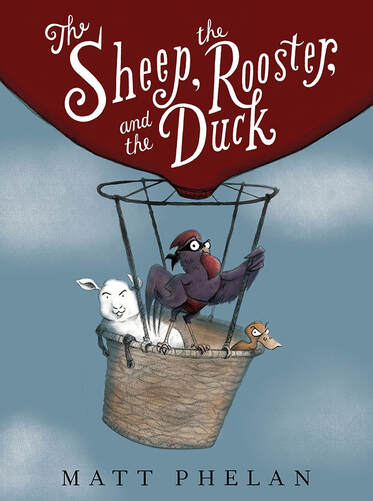
Battle of the Book featured authors Victoria Jamieson and Matt Phelan answer your questions about their books, When Stars Are Scattered and The Sheep, the Rooster, and the Duck. When you register, you have the opportunity to submit questions to them. The authors will answer selected questions during the virtual presentation. You receive an automated email confirmation containing the Zoom link when you register.

Victoria Jamieson
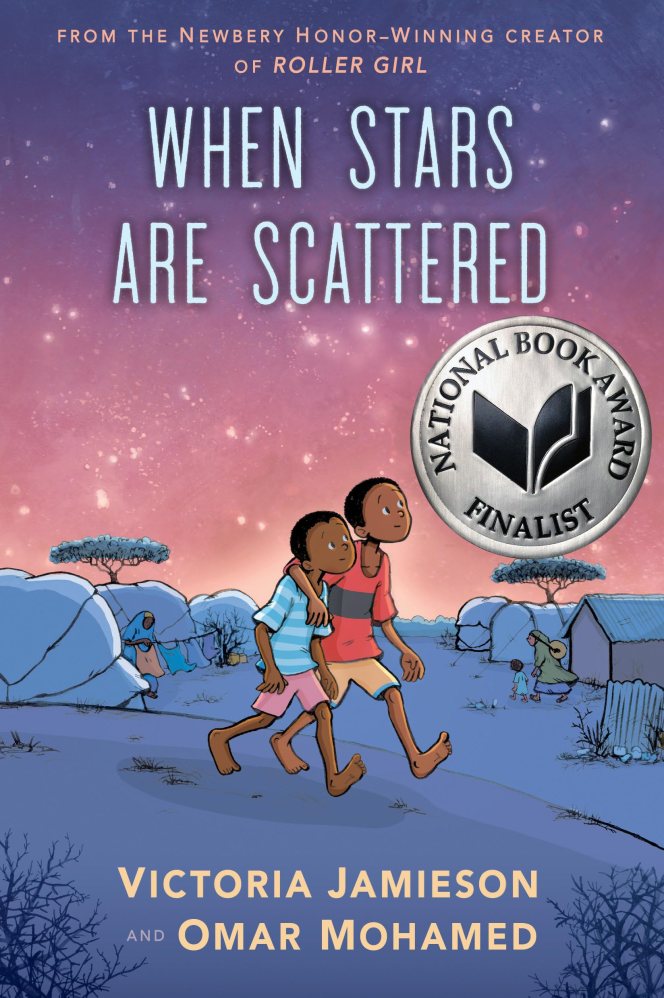
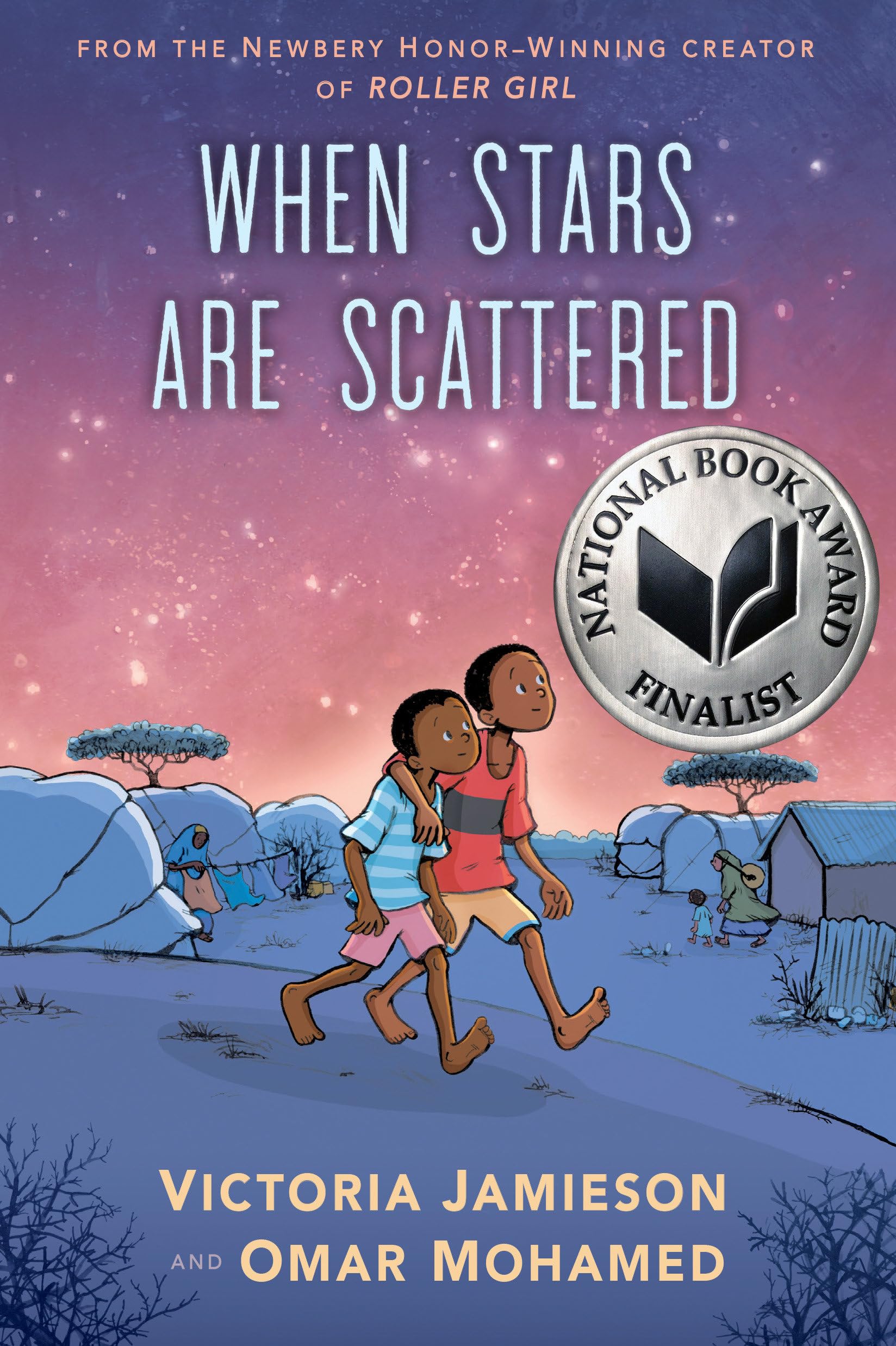
When Stars Are Scattered by Victoria Jamieson and Omar Mohamed is a graphic novel based on co-author Omar Mohamed’s life growing up in a refugee camp in Kenya called Dadaab. It is told to New York Times bestselling author and artist Victoria Jamieson by Omar Mohamed, the Somali man who lived the story.

Victoria Jamieson is the creator of Newbery Honor Book Roller Girl. She received her BFA in illustration from the Rhode Island School of Design and worked as a children’s book designer before becoming a full-time illustrator. She now lives with her family in Pennsylvania.

Matt Phelan
The Sheep, the Rooster, and the Duck is an adventure full of secrets, fun, and re-imagined historical events. Author Matt Phelan is an award-winning, New York Times bestselling author/illustrator of picture books, middle grade novels, and graphic novels for young readers. In 2014, Matt was awarded the Free Library of Philadelphia/Drexel University Children’s Literature Citation. Matt also teaches on the faculty for Vermont College of Fine Arts’ MFA program in Writing for Children and Young Adults.

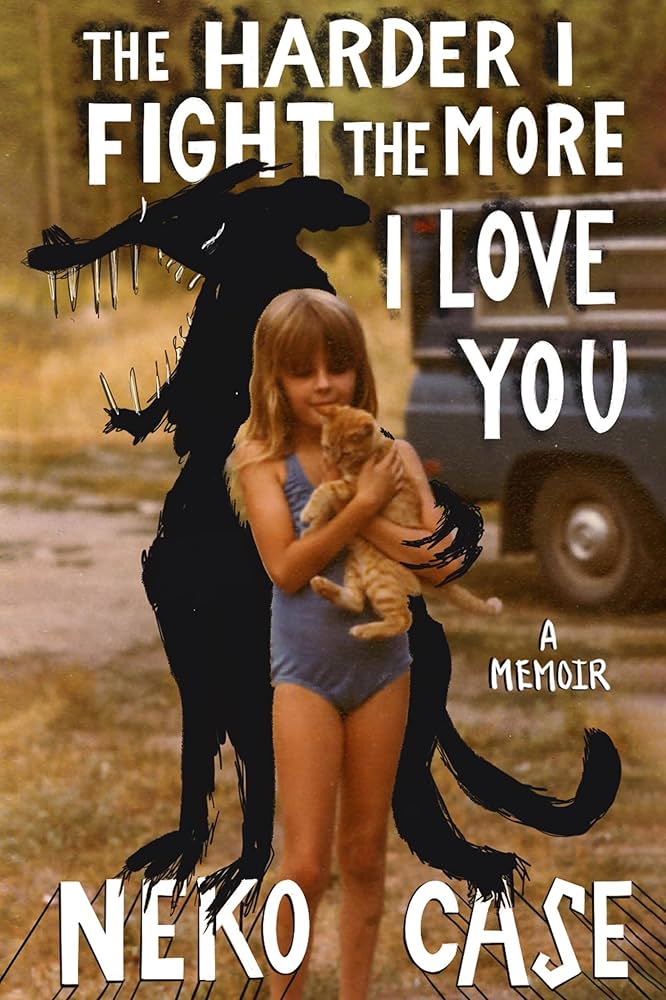
The Harder I Fight The More I Love You by Neko Case

A young girl stands in a run-down yard, wearing a bathing suite and holding an orange kitten. Appearing immediately behind her is a rough sketch of a big black dog with sharp teeth.

By Holly L.

“I had actually DONE IT. I had made horses appear!!!” Neko Case recalls a defining moment described as “a bit of magic” from her childhood. Neglected by young parents who left her home alone from a too-early age, she was constantly hungry for food and companionship. One day, while desperately yearning for a horse, she makes not one but two horses appear before her eyes, a visualization she describes as “a real arrival to a real place.” In drawing these beasts from her imagination, Case establishes a sense of self and a creative identity that proves comforting.

She says that today, at age 52, she, “can still see the horses clear as day.” An early scene from Case’s new memoir, The Harder I Fight The More I Love You, it is one of many pictures drawn from memory that illustrates a fierce bond with nature and longing for connection in a world in which she felt unwanted. Today, she is a critically praised Grammy-nominated artist and has recently been welcomed back to the Grand Ole Opry after being banned in 2001 after taking her shirt off (playing an outdoor festival on a sweltering day, she found herself delirious and stripped down to her bra to avoid heatstroke).

I discovered Neko Case in 2005 when my friend Amanda tipped me off to her. Encouraging me to give her a listen, she said the name of Case’s third album like a command: Blacklisted. So I listened. The opening song Things That Scare Me hooked me from the start with its dark country twang and noir vibes (Case mentions the recently departed David Lynch as a strong influence). By the second song, “Deep Red Bells,” the saturated images of her haunted world gave me chills and had me fully converted: 

The red bells beckon you to ride
A handprint on the driver’s side
It looks a lot like engine oil and tastes like being poor and small
And Popsicles in the summer

Case details her traumatic childhood, starting out poor and small outside Bellingham in Northwestern Washington State. She recalls communing with the velvety-tracked ferns outside the trailer she shared with her mom and dad as she lay on the ground to “pet the soft dots” for hours. Throughout the book, she speaks reverently of animals and nature as wondrous beings, benign and free of ill-intent, unlike the adults in her life. Looking back on a short stint in her early childhood when the family lived near Cocoa Beach, FL when her dad was in the Air Force, Case recalls encounters with crabs, “little magicians of harmless danger, their black eyes atop long stalks like cartoon exclamation points.” This kind of vivid imagery, familiar to fans of her music, injects her prose with sound and color, conjuring up a sort of real-life fairy tale. 

Things get dark in Case’s story when, as a second grader, her Dad abruptly informs her that her mother is dead. His story is that her mother has been “very sick” recently, which is news to Case, who recalls only a few doctor’s visits, nothing that seemed serious. Stunned with disbelief, she gets on with life as kids do, only to be told by her father a little more than a year later that her mother is actually alive and has been living in Hawaii to receive treatment for her illness. The explanation is that her mother left so that the family wouldn’t have to see her suffer. Case is so elated to have her mother back that she doesn’t really question the story until years later, and the family never speaks about it.

From these turbulent beginnings outside Bellingham, Case crisscrosses the state as she splits time between her parents, who have divorced. Whether with her mom or dad, she is left alone for hours at a time, an only child who finds connection to the music that she hears on the radio: Buffy Sainte-Marie, the Go-Go’s, and Blondie are among those whose records she listens to in her school’s library when the other kids are playing at recess. Music becomes Case’s comfort and escape. Putting on headphones and pressing play on her “lavender off-brand, gas-station Walkman” helps her drown out the noise of a menacing world occupied by depressed, neglectful parents and the ever-present threat of the Green River Killer, whose murders dominate the local news. When she leaves Washington to attend a fine arts college in Vancouver, BC, she starts playing drums in a punk band called Maow. Feeling comfortable behind the drum kit, she’s reluctant to sing and one day asks her bandmates which one of them should sing a song when one shoots back “YOU sing it!” And so she does. The rest is history.

Although she had loved to sing all her life, it took her a long time to consider herself a capital S singer. Throughout a 30+ year career spanning solo and collaborative albums with such bands as power pop dynamos The New Pornographers, Case has taken ownership of her voice—which ranges from a soaring clarion call to a soft, breathy lilt and is always uniquely her own. I tore through this page-turner of a memoir, enthralled by Case’s heartbreaking story told in her trademark voice. Case’s sense of humor and nuanced perspective help the reader process some of the darker elements of her past, which includes severe neglect and sexual abuse. Ultimately, this is an affirming tale about survival and the transformative power of art. I came away from the book with an enhanced appreciation for the strength underpinning Case’s voice, eagerly anticipating her future projects, which include a forthcoming album later this year as well as a musical adaptation of the 1991 film Thelma and Louise.

The Harder I Fight The More I Love You is available in print, e-book, and e-audiobook. Neko Case also publishes a Substack newsletter called Entering the Lung.

Holly is an Instructor & Research Specialist at HCLS Miller Branch. She enjoys reading widely, knitting sporadically, and baking as often as she gets the chance.

Shakespeare: The Man Who Pays the Rent by Judi Dench

A light blue cover with a small watercolor illustration of a tree above text that reads: Judi Dench. Then, Shakespeare in a big script above copperplate type: The Man Who Pays the Rent.

by Kristen B.

If you have ever wanted an in-depth, behind the scenes look at Dame Judi Dench’s formative years with the Royal Shakespeare Company, have I got a book for you! If you haven’t but have a fondness for the Bard, you still want to get your hands on this book. And if you simply love to listen in on two friends trading stories from their past and arguing over details, this one is for you, too – it’s that much fun!

Dame Judi Dench and her good friend Brendan O’Hea engage in a series of conversations in Shakespeare: The Man Who Pays the Rent, during which they discuss Shakespeare and acting, and – in all honesty – just dish about various productions. You can almost hear the teacups in the background. It’s fascinating to eavesdrop on them quarreling about interpretation or reminiscing about pranks and misdeeds. They cover some of the best-known plays, such as Twelfth Night, Macbeth, and Romeo and Juliet, but they also spend time with Coriolanus, The Merry Wives of Windsor, and The Winter’s Tale. I was simply amazed by how much of each play Judi Dench can apparently recite from memory – entire sequences, from multiple parts.

I assume the physical book is lovely, but the audiobook is pure gold. Barbara Flynn provides Dame Judi’s voice, and you would think that you’re listening to a younger version of the great actress (which you essentially are). She talks about her favorite parts, her views for the motivation of various characters, how Shakespeare manipulates the audience, and more details about stagecraft. She also tells stories about being mostly naked and painted green, sharing rooms, and having a ton of fun with other (now revered) fellow actors.

As she says, ““Everything you have felt or are yet to feel is all in there in his plays: oppression, ambition, loneliness, remorse, everything….Shakespeare has examined every single emotion….His writing has the capacity to make us feel less alone.” This book helped me remember exactly that! I laughed, I learned, and I was gloriously entertained.

Shakespeare: The Man Who Pays the Rent by Judi Dench and Brendan O’Hea is available in print, e-book, and e-audiobook.

Kristen B. is a devoted bookworm lucky enough to work as the graphic designer for HCLS. She likes to read, stitch, dance, and watch baseball (but not all at the same time).

Wham! It’s Big Issue

The magazine cover photo depicts members of the 1980's pop music group Wham!. George Michael is wearing a Santa hat and clutching an armload of wrapped Christmas packages, and Andrew Ridgeley, standing slightly behind him, has reins in his mouth and a reindeer hat on his head

by Angie E.

Big Issue is one of many magazines you can get through the Libby app, with your library card. Founded in 1991 in the United Kingdom, Big Issue originated with one central goal: to help people who are experiencing homelessness. It provides individuals who are struggling or have struggled with homelessness the opportunity to sell the magazine to the public.

These vendors buy the magazine at a discounted rate and sell it for a profit, which helps them earn an income. What makes Big Issue different from other charity-driven organizations is that it empowers people by providing them with the tools and opportunity to help themselves. This model allows people to build their confidence, learn business skills, and become part of a supportive community. 

Big Issue isn’t just a way to make a difference, it’s also a source of quality content. The magazine covers a wide range of topics, from current events and social issues to arts, culture, and interviews with people from all walks of life. You might find features on everything from mental health to pop culture, book reviews, or inspiring stories about people who have overcome tough times. It’s a great publication for anyone who is curious about what’s happening in the world and wants to stay informed. Some of the best books I’ve read in recent years came by suggestion of Big Issue. 

In “Last Christmas Will Last Forever,” the November 27/December 1 Big Issue takes a look back at the enduring legacy of Wham!’s iconic Christmas hit, “Last Christmas.” The article features an interview with Andrew Ridgeley, who reminisces about the song. He shares heartfelt stories about working with George Michael and the magic of that time. “George set himself a task as a songwriter to write a Christmas song that would endure and be perennial,” says Ridgeley, and, indeed, “Last Christmas” continues to warm hearts and remind us of the power of music and memories. 

With its beautiful melody and catchy hook, you can’t help but sing along. But what sets it apart from many other holiday songs is its vulnerability. While other Christmas classics may celebrate the joy and magic of the season, “Last Christmas” is about heartbreak and regret, the flip side of love that many of us experience during the holidays. 

The book cover photograph depicts the members of the 1980's pop group Wham!, George Michael and Andrew Ridgeley. Both are looking at the photographer. George is wearing a black tank top and Andrew is wearing a white open-collared shirt and black jacket.

For further Wham!/George Michael readings check out these: 

Wham!: George Michael and Me by Andrew Ridgeley

George Michael: Freedom, The Ultimate Tribute 1963-2016 by David Nolan

To hear his music, check out the following: 

Ladies and Gentlemen: The Best of George Michael 

Last Christmas: The Original Motion Picture Soundtrack 

Symphonica

You can access the current and many back issues of Big Issue through Libby, including a recent one that includes an article on the new movie release “Wicked.” You can also access it here.

Angie is an Instructor & Research Specialist at Central Branch and is a co-facilitator for Reads of Acceptance, HCLS’ first LGBTQ-focused book club. Her ideal day is reading in her cozy armchair, with her cat Henry next to her.

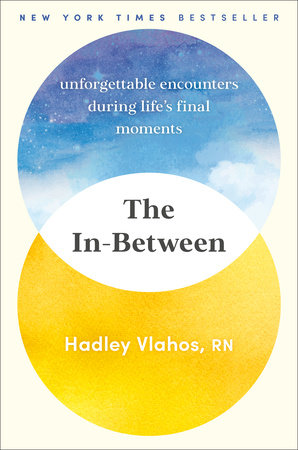
The In-Between: Unforgettable Encounters During Life’s Final Moments by Hadley Vlahos

Two interlocking circles, the top one show a cloudy blue and the bottom is yellow,

by JP Landolt

I am experiencing melancholy. Instead of trying to push away the feeling, I’ve been leaning into it. I couldn’t say the same thing last summer, though, when I was waiting for The In-Between. I had been following Nurse Hadley on TikTok for a while and when I heard she was writing a book, I had to read it.

I was lucky to get a copy in June 2023 but the moment I started the book, I had to put it down. I wasn’t ready. I wasn’t prepared for what I was experiencing emotionally. So, I returned the book so someone else could borrow it. As silly as it sounds, I believe that some books have particular timing. Have you ever encountered a story you thought you were ready for, then you’re surprised by how absolutely NOT ready you were? That was me. It was the wrong time for me and this book. 

Somehow, my somberness led me to listen to this book instead of reading it. Now, I was resolute in the knowledge that I have lost loved ones: I held my father’s hand when he died in hospice. I’ve had cancer a couple times and experienced being close to death. They were all the same things I said to myself last year. However, this time, I also added gentleness in allowing space and time to listen, feel, and process. All this to say, leaning into the various stories of hospice patients has been cathartic. 

Last December, The In-Between was picked to be made into a television series, which the author has been promoting heavily. Hadley’s book and subsequent (and soon-to-be released) TV show has helped her realize one of her many dreams – founding her own hospice house, which will help people navigate their end-of-life preparations. Amidst all this success, she is currently mitigating divorce. All of which makes reading this book more complex, because this book is a memoir. These are Hadley’s experiences with hospice patients and families intertwined with her own growth and familial issues.

If you want to feel something and maybe even have a cry, I invite you to read or listen to this book. If you’re looking for a thoughtful daily devotional, this could be it. I probably feel this way because that was how I paced this book. One story at a time. One hospice case at a time. One lesson at a time. You don’t have to be spiritual or religious or have magical thinking to appreciate what this compilation offers. A peek into the future. A glimpse of what a “good death” looks and feels like. A chance to reconcile what we all must face at some point. Simple, confusing, beautiful, and real because death is all of those things.   

The In-Between: Unforgettable Encounters During Life’s Final Moments by Hadley Vladhos is available in print, e-book, and e-audiobook.

JP Landolt is a Children’s Instructor & Research Specialist for the Savage Branch and has been with HCLS since 2006. “Free people read freely” – ALA

A Dream About Lightning Bugs: A Life of Music and Cheap Lessons by Ben Folds 

The silhouette of a man standing up, over a player's bench, to play an open grand piano sits in front of a sky blue background with cotton ball clouds.

by Eliana H.

A title recently caught my eye while I was tidying books around the branch: A Dream About Lightning Bugs. I’ve mentioned my ridiculous reading challenge before, and one of our categories this year is a book with 24 letters in the title. So, I’ve started to count letters in titles to see if I can find a fit. Lo and behold, this title that grabbed my attention also happens to have 24 letters in it! (We can disregard the subtitle for these purposes.) Plus, it is a memoir by a musical artist I enjoy. I was sold! 

My reading of print books has been going very slowly in recent months, so rather than check out that copy, I looked on Libby to see if the e-audiobook was available. Happily, it was, AND it was narrated by the author. Things were lining up very nicely. I don’t tend to read a lot of biographies, or nonfiction in general, but this seemed meant to be. 

I was pretty solidly in the target audience of Ben Folds during his peak fame with Ben Folds Five. His voice and snippets of songs shared in the audiobook put me in a pleasantly nostalgic mood, and I was excited to find that most of the Ben Folds Five songs I remember are available on Freegal as well. [If you haven’t checked out Freegal yet, take a look at this post to learn more.] I did not know a lot about his life or musical journey before listening to A Dream About Lightning Bugs, but Ben’s down-to-earth attitude and conversational tone comfortably brought me along for the ride. He acknowledges repeatedly and from the beginning that he had a lot of luck and privilege to help him along his way, and he explicitly thanks a number of people who provided support, assistance, and guidance, especially educators. 

I don’t tend to pay much attention to the lives of celebrities, so hearing about his journey was interesting and informative to me. Some might not consider Ben’s “cheap lessons” all that cheap, but there was certainly potential for more negative outcomes in many of the stories he shares. One section which especially stuck out to me is called “Creative Visualization or Useful Delusion?” In it, Ben describes an experience he’s had several times in which he has a vision of something happening and sees it as inevitable, which enables him to achieve things that would otherwise seem – and be – impossible. “It’s the universe that wants it to be so, and so it shall be. I only have to follow through on my part.” If only we could summon that kind of focus and confidence on command! Even Ben admits that it comes from outside himself, he cannot wish it into being. 

From performing on a keyboard with digital sampler at a German restaurant, while wearing lederhosen and wooden clogs, to Artistic Advisor to the National Symphony Orchestra, Ben Folds has had quite a journey in music and in life. Perhaps you can learn some “cheap lessons” for free just by reading – or listening – to his book. 

Content note: Ben Folds uses expletives freely throughout his book. 

This title is available in print, e-book, and e-audiobook.

Eliana is a Children’s Instructor and Research Specialist at the Elkridge Branch and co-chair of the HCLS Equity Committee. She loves reading, even if she’s slow at it, and especially enjoys helping people find books that make them light up. She also loves being outside and spending time with friends and family (when it’s safe).

Sigh, Gone by Phuc Tran

The book cover shows a school picture of the author as a child, against a gray background. He is wearing a white shirt with a collar beneath a peach sweater.

By Holly L.

When I first glimpsed the cover of Phuc Tran’s powerful 2020 memoir, Sigh, Gone, I chuckled at the title. Sigh Gone—hahaha, I get it! As in Saigon. As in Vietnam, the country Tran fled with his family as a little boy in the mid-70s. The unsubtle title perfectly suits the story of, “a misfit’s memoir of great books, punk rock, and the fight to fit in.” In his debut book, Tran tells a compelling coming-of-age story of a book-obsessed punk in small-town Pennsylvania. His case for the transformative power of books struck a chord with me, as a library worker. As an Asian American who also came up in 1980s America, I empathized with Tran’s struggle to fit into a society that was relentlessly calling his American-ness into question.   

Each of the book’s sections is titled with a famous work of literature, the prologue being Oscar Wilde’s The Picture of Dorian Grey. The opener is a scene from Carlisle Senior High School in Carlisle, Pennsylvania, a small town in the Susquehanna Valley. Tran is sizing up the new kid, Hoàng Nguyễn, whose arrival marks Phuc’s demotion as the (meaning only) Vietnamese kid at his school. “@#$% that kid,” he thinks. Rather than seeing Hoàng as a potential comrade, Tran regards him as “a fun-house mirror’s rippling reflection of me…I was filled with loathing.” By this time, as an eleventh-grade Asian kid who had finally achieved “insider status”—acceptance among his punk crew and being better read than any of his classmates—Tran saw Hoàng as only a distorted picture of who he might have been had he not assimilated so well.

The story begins in earnest in 1978 with Tran’s earliest memory. He’s in the eat-in kitchen of his family’s first apartment in the United States, having fled Vietnam three years earlier. While his mother prepares dinner and his father tries to make sense of some bills with his limited grasp of English, Tran asks his dad, “Ba, what’s my name?” The question arises from playground encounter when another kid asked Tran his name and he didn’t know how to reply. Among all the nicknames and endearments he was labeled with by his family, he didn’t know which name to give. Young Tran felt he needed a name, an English name, that would make sense to his playmates. After a minute of consideration, Tran’s dad decided that the actual Vietnamese pronunciation of his name (which sounds more like Fuhp, with a rising tone at the end) would be too confusing to Americans, and he settled on Phuc (sounds like Fook, rhymes with Luke), which Tran adopts, referring to it as an alter ego.

Tran’s story takes us from childhood through adolescence with identity being a central theme. As he forms friendships and battles racist bullies, Tran struggles to define who he is, along with where he and his family fit in a mostly white working-class town. He expresses an ambivalence about his community, “(as refugees) random strangers had saved us. And random strangers were cruel to us, too.” Violence is another thread running through the memoir, inflicted upon Tran by school bullies and members of his own family.

He finds refuge and a means of self-fortification through books (first comics then Western classics) and later, music, specifically punk rock and its rebellious, non-conformist subculture. Tran’s scuffed Doc Martens and rotation of band T-shirts represent an identity of his choosing, not one imposed upon him by society. As Tran’s reinvention into honor-roll skate punk becomes complete, we see a growing alienation from his family, whose notions of success and assimilation don’t align with his own. One exception being Tran’s second-hand store hauls, approved of by his thrift-conscious father.

Some reviewers criticized Tran’s memoir as lacking in nuance and maturity, but I loved how he channeled the voice of his teenage self in all its egocentric, pained, misunderstood glory. In the best scenes I felt like I was right there, hanging out with his crew, cheering them on when they successfully fled the cops on their skateboards during their annual “Running of the Pigs.” By the end of the book, I felt a kind of pride in this self-made young man, considering how far he had gone, what he had endured, and who he had become. I almost wished for another few chapters detailing the adventures that awaited Tran beyond graduation. But that was the end of the story, at least until he writes another memoir. Sigh, gone. 

Sigh, Gone is available from HCLS in print and also in e-audiobook and e-book formats.

Holly Learmouth is an Instructor & Research Specialist at HCLS Miller Branch. She enjoys reading widely, knitting sporadically, and baking as often as she gets the chance.