Surrender: 40 Songs, One Story by Bono 

Upclose black and white photo of Bono from the band U2, with the title and author and an earring drawn in bright yellow.

by Christie L.

I’ve been a U2 fan since the 80s when they released The Unforgettable Fire album. I eagerly purchased that album and The Joshua Tree, learning all the songs and watching all the videos. During The Joshua Tree tour, I saw them perform in Austin, Texas in November 1987. When Rattle and Hum came out, I eagerly bought the CD and saw the documentary in the theater.  

College is a formative time, and U2’s lyrics really spoke to my growing social justice consciousness. I was a member of Students Against Apartheid, and I was starting to follow the news out of El Salvador. Bono’s words about injustice, laced with spiritual references, moved me. Their music propelled and sustained me as I graduated and started putting words into action, joining a domestic volunteer program and working for justice. 

Over time, their musical style and my tastes diverged and I didn’t follow them as closely. But when I heard about Bono’s memoir, Surrender: 40 Songs, One Story, I wanted to read it. He writes about his childhood in Ireland, with a Catholic father and Protestant mother, during the Troubles. His mother died of a stroke when he was just 14, leaving Bono, his older brother, and his Da in a state of shock that they never discussed. His resulting and unresolved anger issues come up over and over. 

“Drummer seeks musician to form band.” Six words that changed Bono – and the world. Larry Mullen’s flyer, posted in the school where he, Bono, David Evans (the Edge), and Adam Clayton attended, pulled together four classmates who have been playing together since 1976. A fifth student became Bono’s soulmate and wife. He and Ali Stewart wed in 1982 and have four children. 

Throughout his memoir, Bono writes about growing up amid violence in Northern Ireland as well as his spiritual journey, one that he shared with the Edge and Larry at a small community church, and how both deeply shaped their sense of justice, lyrics, and music. Bono drives himself – and those around him – relentlessly to be his best. It was interesting to read how many times the band almost broke up because of his ideas, which often differed from his bandmates. Thankfully for their fans, they always come to an understanding. 

As U2’s success grew, so did Bono’s belief in using his fame for good. He joins another “band” as an activist, immersing himself in issues, meeting with world leaders, and traveling the globe on relief missions. He was instrumental in the Jubilee 2000 initiative, to convince the United States and other nations to start the new millennium by forgiving the unpayable debt of African countries, and he worked to persuade the U.S. to respond to the global AIDS pandemic in a major way. One of his most surprising stories was about meeting the late Senator Jesse Helms who blessed Bono in his office and later repented for the way he spoke about AIDS (apparently the Edge was not happy when he learned about that meeting). More recently, he and the Edge made an undercover trip to Ukraine to meet with President Zelenskyy and perform in a makeshift bomb shelter. 

It’s clear to anyone who listens to U2’s lyrics and reads this book that Bono is a man of deep convictions. He treasures his lifelong friends, he deeply loves his wife and children, and he cherishes his bandmates, who have become his extended family. He is passionate about people on the margins of society. Bono recognizes his responsibility to work for justice. 

As I alternated between reading the physical book and listening to Bono narrate the audiobook, I returned to those first albums that first made me a fan. I found some new songs that I added to my U2 Faves playlist, which has been on repeat for the last few weeks. “I will sing, sing a new song…” 

Surrender: 40 Songs, One Story by Bono is available in print, e-book, and e-audiobook.

You can find U2’s music for free on Hoopla, using your library account.

Christie is the Director of Communications and External Affairs for Howard County Library System. She loves walking through the network of pathways in Columbia, sitting on the beach, and cheering for the Baltimore Orioles and Texas Aggies football team.
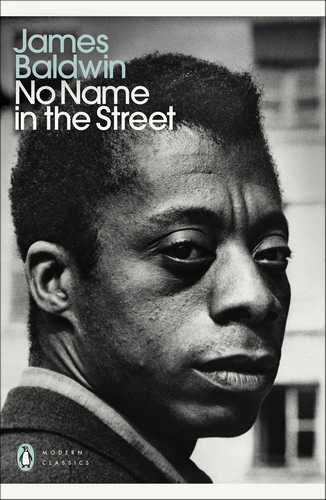
No Name in the Street by James Baldwin

A black and white photo of James Baldwin, looking to the right. The author and title appear in fine type in the upper left corner.

by Ben H.

“People who treat other people as less than human must not be surprised when the bread they have cast on the waters come floating back to them, poisoned.” 

James Baldwin writes gorgeous prose. I copy lines that I find memorable, but I find myself copying down entire pages. If you’re still waiting to read Baldwin, don’t wait! Read now!   

In No Name in the Street, Baldwin writes about his experience traveling in the southern states for the first time. Baldwin, never at a loss for words (check out this incendiary debate on YouTube), writes about his first impression of southerners, “what struck me was the unbelievable dimension of their sorrow. I felt as though I had wandered into hell.” What a first impression!

This theme of sorrow surfaces in another memorable passage where Baldwin describes his visit with civil rights leader Reverend Fred Shuttlesworth. Shuttlesworth’s Alabama home had recently been bombed and destroyed by the KKK. Baldwin writes about Shuttlesworth, “It was as though he were wrestling with the mighty fact that the danger in which he stood was as nothing compared to the spiritual horror which drove those who were trying to destroy him. They endangered him, but they doomed themselves.” The idea of racism being a cancer, a parasite that dooms the host and turns it into something less than human, is a theme that Baldwin returns to many times in No Name in the Street. The sorrow that he refers to is the byproduct of this loss of humanity.

That said, not every passage is heavy. Baldwin has the rare ability to combine the tragic and the humorous in the same sentence. He insightfully, humorously, and poetically describes things such as grits (“a pale, lumpy, tasteless kind of porridge which the Southerner insists is a delicacy but which I believe they ingest as punishment for their sins”) and buying whiskey in dry states (“where whiskey was against the law, you simply bought your whiskey from the law enforcers”).  

Baldwin’s color commentary of historical events is a crucial part of the story of America. Statistics and reportorial accounts of racism in America don’t paint the full picture. Baldwin writes the narrative and helps the reader taste it, hear it, and feel it. I find that tragic historical events can sometimes, through familiarity, fade into the timeline of history; but reading about the phone call that Baldwin and Billy Dee Williams received when Martin Luther King Jr was assassinated highlights it in technicolor. 

On a personal note (as if the rest of this hasn’t been personal), I consider myself well-read and aware, but I still only have my lived experiences. The following passage about well-meaning folks without first-hand experience of discrimination struck me, “These liberals were not, as I was, forever being found by the police in the ‘wrong’ neighborhood, and so could not have had first-hand knowledge of how gleefully a policeman translates his orders from above. But they had no right not to know that; if they did not know that, they knew nothing and had no right to speak…” By reading books like No Name in the Street, I grow my understanding, if not experientially, at least academically and empathetically, and that is no small thing. 

Ben works at Project Literacy, Howard County Library’s adult basic education initiative, based at HCLS Central Branch. He loves reading, writing, walking, and talking (all the basics).

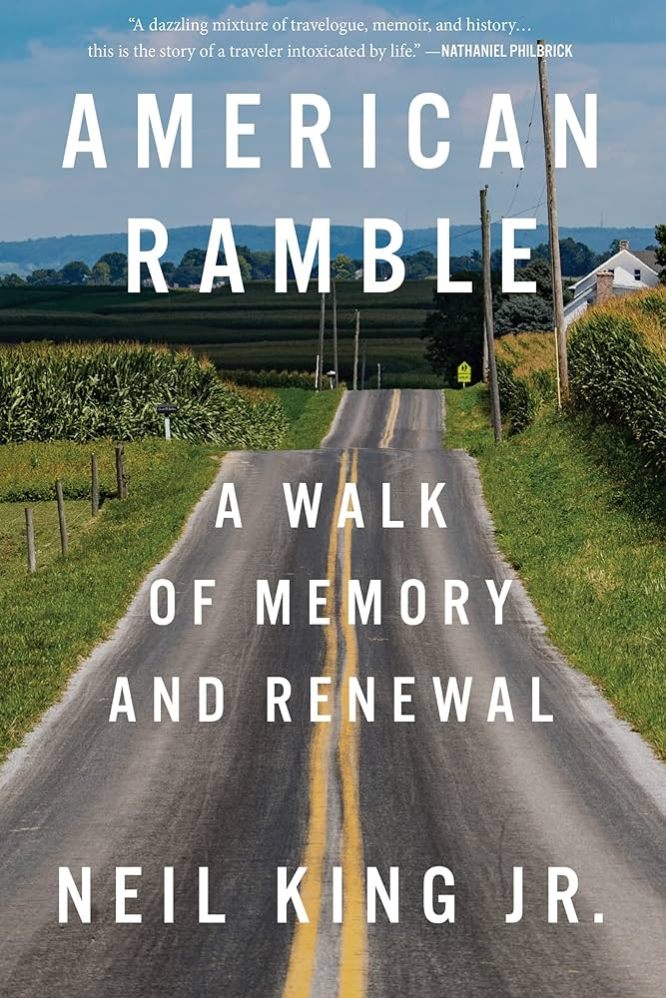
American Ramble by Neil King, Jr.

A two lane road with a double yellow line runs through rolling corn fields with blue hills in the background.

by Kristen B.

Author Works
Thu    Jul 11  7 – 8 pm   Miller
Register now.

According to Chaucer, April is the proper month for pilgrimage. Neil King agreed, and in 2021 he walked from Capitol Hill in Washington, DC to Central Park in New York, NY. His route traced up Rock Creek Park and Wisconsin Avenue through the suburbs, across Woodstock (MD), over the Mason-Dixon Line into York, PA and Amish country, then to Valley Forge, across the Delaware River, through New Jersey while finally crossing under Interstate 95, and into New York.

In his travelogue and memoir, American Ramble, he refers to these areas as “mini-nations,” and often relates them to the early history of the American colonies. He meets a wide variety of people along the way, who account for many of the anecdotes that drive the story. Some people instantly understand and bless him along his way. Others can’t even be bothered to offer the sojourner the basic necessity of water. Each night, he stays safely at planned spots – usually an AirBnB.

He acknowledges the privilege of making the trip as a White man, with the resources to finance the trip and the connections that further him along the way. He fully recognizes that not everyone would be safe on a similar trek. He also has a lifetime of travel experience and wanderlust behind him, so a month-long journey isn’t particularly daunting. Rather, it’s a fundamental reclamation of his preferred mode of living, after the pandemic and an ordeal with cancer.

King often refers back to Chaucer and other travels, and this month away from ordinary life is truly a pilgrimage for him. Not after only his own medical difficulties; he is also dealing with his brother’s diagnosis. He had been a Wall Street Journal reporter on 9/11, and the trip connects his present and his past – DC and NY. So, after the Covid pandemic and the racial unrest in the wake of George Floyd’s death, the author walked to reconnect with America itself. His goal was to meet all sorts of people where they are and to remember that we’re all part of the fabric that makes America.

At a quick 360-ish pages, the book is a delightful read. King leans into his journalism background to paint sketches of people and places. Some of my favorite anecdotes took place in Pennsylvania: one where he comes across a gaggle of Mennonite school kids playing softball, and another when he’s at the Eastern State Penitentiary in Philadelphia. His reflections upon the connections between pilgrims and penitents are particularly well done. The other moment that has stayed with me was how he solved crossing the I-95 corridor, to continue traveling eastwards, but I don’t want to spoil the episode with more detail.

The author has a personal distinction about how some people (like himself) are from – and at home in – Anywhere, while others (like myself) are home-bodies who occupy Somewhere. Whichever you are, American Ramble has some lovely moments for you to enjoy and ponder.

The author is an older White man wearing a tweed driving cap and medium grey zip up jacket, with grey clouds behind him.

Neil King, Jr. discusses his trip and his book at an upcoming event at Miller Branch. American Ramble is available in print and e-book.

Thu    Jul 11  7 – 8 pm   Miller
Register now

Kristen B. is a devoted bookworm lucky enough to work as the graphic designer for HCLS. She likes to read, stitch, dance, and watch baseball (but not all at the same time).

The Works of Carmen Maria Machado

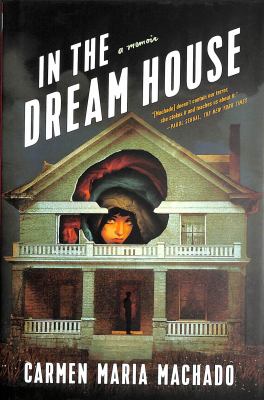
An illustrion of a big house with wrap around white porches appears burnt through to show a figure peering through the hole.

By Angie E.

Machado’s narratives delve into the emotional and physical vulnerabilities of characters, challenging traditional notions of strength and weakness. Her stories often blur the lines between reality and fantasy, creating a space where vulnerability is not a flaw, but a powerful force in its own right.

“Especially Heinous: 272 Views of Law & Order SVU” is a novella written by Carmen Maria Machado in 2013. It unfolds through 272 synopses, each encapsulating a distinct perspective from the initial 12 seasons of the police procedural series of the same name. Originally published in The American Reader in May 2013, “Especially Heinous” features parallel universe versions of Elliot Stabler and Olivia Benson and is included in Machado’s 2017 short story compilation, Her Body and Other Parties.

Carmen Maria Machado’s Her Body and Other Parties dissects power imbalances in various forms. Through a series of surreal and haunting tales, Machado explores the ways in which power is wielded, misused, and resisted, often using the female body as a focal point for her narratives. The stories challenge societal norms, inviting readers to reconsider their understanding of power and its implications. Despite the unusual nature of “Especially Heinous” (and how it deviates from the actual SVU), the story fits perfectly within the anthology. Law and Order: SVU itself and Her Body and Other Parties may exist in different realms of storytelling, but their thematic resonance is undeniable.

Moving from short story collection to memoir, Machado has also written In The Dream House, which takes readers on an intimate journey through the author’s experiences. She opens up about her past relationship with an abusive partner, exploring the complexities of domestic abuse within the LGBTQ+ community. Structured as a series of interconnected essays, In The Dream House defies traditional memoir conventions. Machado employs various literary forms, from folklore to lesbian pulp fiction, to recount her harrowing experiences. The result is a poignant and powerful narrative that sheds light on the often-overlooked issue of abuse within queer relationships.

Machado’s exposed and raw honesty are palpable in every page, inviting readers to confront the uncomfortable realities of abuse. In The Dream House not only serves as a personal catharsis for Machado, but also as a vital contribution to the ongoing conversation about abuse within the marginalized.

In The Dream House is available in print, e-book, and e-audiobook.

Angie is an Instructor & Research Specialist at Central Branch and is a co-facilitator for Reads of Acceptance, HCLS’ first LGBTQ-focused book club. Her ideal day is reading in her cozy armchair, with her cat Henry next to her.

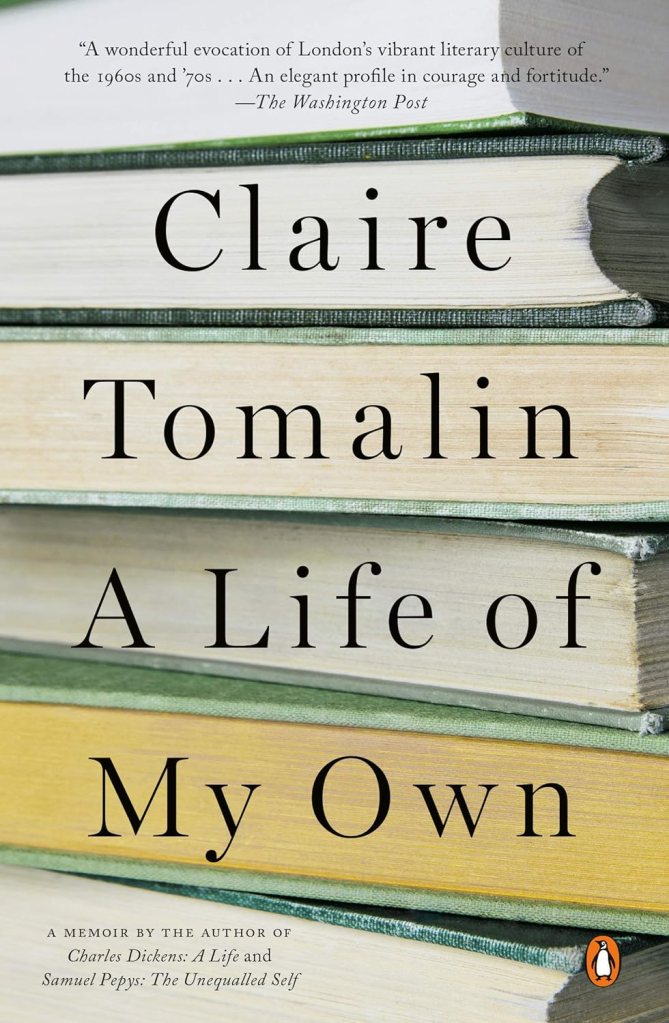
A Life of My Own by Claire Tomalin

The book cover is a photograph of stacked hardcover books in shades of green, yellow, and white.

By Julie F.

British author Claire Tomalin, acclaimed for her biographies of British writers, tackles autobiography in A Life of My Own, which recounts her life and work through the mid- to late-twentieth century among memorable, clever people. Born in 1933, she was the second daughter of a French father and an English mother, two brilliant parents (a scholar and a gifted pianist and writer of music) who ended up despising one another. Both of them loved Tomalin, though, and she was encouraged and well-educated despite their disastrous relationship. Her years at grammar school, boarding school, and eventually at Newnham College at Cambridge were clearly an adventure, but also a “calm and generally cheerful life” (73). Given the era, of course, there were moments of hardship and difficulty. Although “the war made everything odd” (33) and her mother lived in very straitened circumstances due to the divorce, Tomalin frequently mentions her gratitude to various individuals and for the opportunities she pursued. Her early years were a happy and secure life overall.

Still, hers is not a life without heartbreak. Tomalin lost her charming but somewhat errant husband, journalist Nick Tomalin, to a missile strike in the Golan Heights when he was reporting on the 1973 Arab-Israeli war. Her description of the loss is matter-of-fact but so very tragic, including one of the saddest sentences I’ve ever read:

“I had now to telephone Beth, Nick’s mother, and give her the news that the son she loved more than her own life had been killed” (201).

Tomalin’s grief plays out while surrounded by loving and supportive friends and family, and she goes on to forge an amazing career and raise her and Nick’s children, including their disabled son Tom, but the reader gets a profound sense of the isolation she sometimes felt as a widow bereft too early in life.

It was actually the second tragedy she deals with, the loss of her brilliant daughter Susanna, that made me put the book down for a while even though I was close to finishing; it seemed like too much for one woman to bear. But when I came back to her story, I was glad to read that Tomalin found the means to cope, developed her career as an author, editor, and biographer, maintained many friendships with the literati, and found love later in life with playwright and novelist Michael Frayn (I read his book Headlong years ago and highly recommend it. You can request it via interlibrary loan).

You get a wonderful sense of the milieu in which she and Nick (and later she and Michael Frayn) thrived. As literary editor at The New Statesman, she counted Martin Amis and Julian Barnes among her deputies. She lectured in front of John Updike about his work with next to no notice that he would be in the audience (“A nightmare”) and had a delightful encounter with Saul Bellow. Alan Bennett, Christopher Hitchens, Cecil Day Lewis, V.S. Pritchett, and Beryl Bainbridge are just a few examples of the famous figures in British literature and culture she met, edited, worked with, socialized with, and befriended. And, of course, she wrote her notable biographies: Samuel Pepys, Katherine Mansfield, Jane Austen, Nelly Ternan, Charles Dickens, and Mary Wollstonecraft, among others.

But it is still as a wife, mother, and daughter that the reader gains the most intimate and profound sense of Tomalin’s character and personality. She has been devoted to her son Tom all his life, inspired by his example, and proud of how independent he is despite his disability. She was equally devoted to her parents as they were approaching the end of life, and faults herself for not devoting enough time to them, her mother in particular – a genuine, relatable feeling that many women undergo in mid-life.

Now in her nineties (as is Frayn), she talks about how her “seventies and eighties have been easy” (330), describing a life of gardening, writing and editing, traveling, public speaking, concerts, opera, and films. With six surviving children and ten grandchildren between them, the joyful tone of the last chapter had me hoping for many more years for this erudite pair of writers. A delightful memoir despite the sadness; a life of her own, and a life well-lived.

Claire Tomalin is the author of the following biographies available from HCLS:

Julie is an instructor and research specialist at HCLS Miller Branch who finds her work as co-editor of Chapter Chats very rewarding. She loves gardening, birds, crime fiction, all kinds of music, and the great outdoors.

Star Trek: The Next Generation

The book cover is a photograph of Patrick Stewart facing the camera, hands crossed in front of him and smiling slightly. He is wearing a light green shirt and a gray jacket.

By Eliana H.

I grew up watching Star Trek: The Next Generation, and Jean-Luc Picard will always be my captain. With family connections to Yorkshire, his home county in England, I’m especially fond of Sir Patrick Stewart. He grew up a scant three miles from the hotel where we used to stay when visiting relatives. Even if you are not a Trekkie, you probably would recognize the classically-trained actor from his depiction of Professor Charles Xavier in X-Men and its sequels. If you’ve missed all of those, you might have spotted him in the recent Super Bowl ad for Paramount+, in which he wore a very old-fashioned football uniform and threw a “Hail Arnold” as Creed sang in the background. I enjoyed his performances throughout the Star Trek franchise as well as in the X-Men films, Jeffrey, and more, so I was excited to see that Sir Patrick Stewart had a new memoir out. I have very positive associations with his voice and was especially delighted to see that he narrates the audiobook. 

Making It So is a nod to one of his signature lines as Captain Picard, one that my father happened to enjoy using as well. I don’t read a lot of memoirs, so I was glad that it kept my interest. I learned a lot about Patrick Stewart’s humble beginnings, the work he had to put in to succeed in the world of British theater, and how he ended up playing his most recognized iconic roles. I will admit that some of what I learned about his personal life tarnished the shine a bit, as he was not always a good partner. Still, it was a pleasure to feel more connected to one of my childhood icons. I found myself wishing that I could go back in time to see some of the stage performances that I wasn’t aware he was engaged in during my adult lifetime! Thankfully, Sir Patrick Stewart indicates in the book that he has more to share with the world, so I anticipate opportunities to appreciate his artistry in the future. In the meantime, I’m working on watching Blunt Talk, one of his more recent television shows. 

Making It So is available from Howard County Library System in print, in e-book and e-audiobook formats, and as an audiobook on CD.

Eliana is a Children’s Instructor and Research Specialist at the Elkridge Branch and co-chair of the HCLS Equity Committee. She loves reading, even if she’s slow at it, and especially enjoys helping people find books that make them light up. She also loves being outside and spending time with friends and family (when it’s safe).

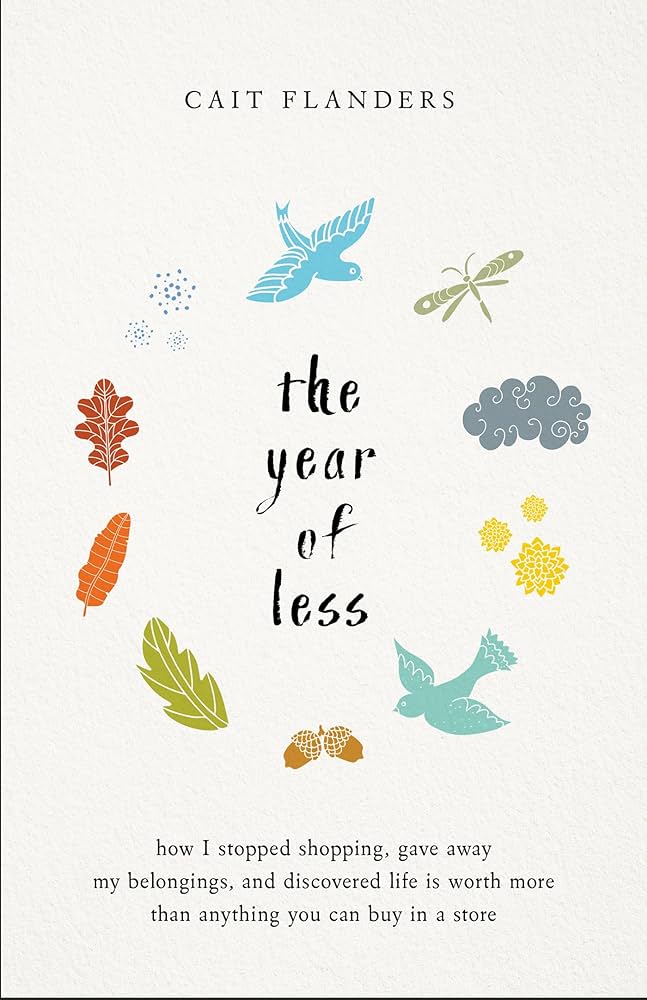
The Year of Less by Cait Flanders

Small colorful illustrations of a birds, flowers, and leaves sit around the title in a minimalist composition.

by JP Landolt

Do not mistake this title for another ode to Marie Kondo’s practice of sparking joy and tidying up, but more as a diary of an experiment created to help a young woman find herself. Themes of addiction, depression, and “doing hard things” fill these pages. Flanders is an established freelance writer, current co-host of the podcast Budget & Cents, and author. Forbes featured her 2015 experiment, described as a year-long shopping ban. That post resulted in book offers and the subsequent publishing of The Year of Less in 2018.

Cait gives us a brief synopsis of all the previous experiments she has completed: a year dedicated to weight loss, another year getting sober, then another getting debt-free as outlined on her former blog (blondeonabudget.ca). She outlines a set of rules designed to de-clutter her life, save money, and live with less.

Admittedly, I almost stopped listening to this book with the introduction. Was this going to be another variation of minimalism from a self-important, self-righteous, affluent-organizational-trend-setter-wannabe? No. She explicitly says she does not judge anyone’s choices. These choices were necessary for her, and she could only share her experience. Once I heard that and put aside my bias, I found Cait to be a sincere young woman who struggled with the same things that most of us do, including weight and self-esteem, debt and savings, and family issues. She sets intentions with these multifaceted experiments which eventually help her accomplish her goals.

She lost 30 pounds, paid down $30K in consumer debt, and finally got sober!

All these accomplishments are monumental achievements alone, and more so in succession! Each of these things are addictions that she combats daily. Flanders made huge, life-changing decisions while battling depression and coming to terms with her sobriety. Most experts would tell you not to do this. Somehow, it worked for her, and that is my only frustration with this book. I am reluctant to say it was her sheer will that pulled her through because that is false. She has admitted that she is naturally organized and does not suffer from any kind of executive dysfunction.

As an aside: If you struggle, and I mean STRUGGLE, with messiness or too much eating, too much buying – just TOO MUCH, I think Keeping House While Drowning may be a much better fit for practical systems and compassionate approaches while being neurodiverse. It’s a memoir with some tips, tricks, and advice in the epilogue.

Cait’s story is inspiring because she takes on the challenges, and she makes it through to the end with measurable data points. This book wraps up neatly; it is easy to find yourself rooting for her and simultaneously jealous of her integrity in satisfying her intentions. My greatest takeaway was this question that Cait started asking herself when facing a purchase (paraphrased): “Am I buying this (item) for who I am or am I buying this for the person I want to be?” 

While this is no “how to,” it is certainly inspirational and logical. If you want a simpler life filled with more quality than quantity, you must let go of things. And the less you have, the less you eventually need. I mean, I could use an extra $17K this year.  

The Year of Less by Cait Flanders is available in print, e-book, and e-audiobook.

JP has worked for HCLS since 2006. She enjoys gallivanting, Jollibee, and all the halo-halo she can eat.

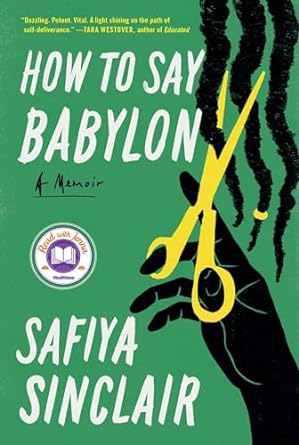
How to Say Babylon by Safiya Sinclair

The cover shows a hand holding a pair of yellow scissors and cutting three dreadlocks that are dangling from above; one has a yellow bead at the end.

by Piyali C.

Babylon, according to the strictest sect of Rastafari, is the corrupting influence of the Western world on Black people. Safiya Sinclair’s father, a follower of the religion’s most militant faction, was obsessed with the purity of his three daughters and determined to keep the immorality of Babylon from touching them. Howard Sinclair, who later took the name Djani to feel closer to his Rastafarian beliefs, was a staunch follower of Haile Selassie. He wanted to sing reggae songs, never touch his dreadlocks, and seek livity – the Rastafarian concept of righteous living. The precept meant he should raise his children in the Rastafarian tradition and live a life of harmony with his partner, Esther, the mother to his four children.

Djani was a musician with big dreams. After being rejected by his own mother for following the Rastafarian religion, after repeated failed attempts to make a name for himself in the music world, and finally, after having to relegate his music to being a source of entertainment for rich tourists (baldheads, as he called them, due to the lack of dreadlocks) visiting his homeland of Jamaica, Djani grew increasingly militant in his belief in the harmfulness of Western influences. Safiya, his oldest child, bore the brunt of his obsession with keeping the deceitful ways of Babylon out of his gate.  

Safiya’s childhood was spent near the sea and seemed almost idyllic. Her father left home every day to play his music at the hotels, and her mother nurtured her and her siblings with love and nourishment. Her parents met at the tender age of 18, found commonality in their Rastafarian beliefs, and never married but decided to make a life together. Esther became a demure Rastafarian woman who stayed home to nurture their children, cook Ital food, never disagree with her man, and do every household chore silently. Despite her quietude, she instilled a culture of hard work and a desire to achieve excellence in all of her children.

As a result, Safiya and her siblings excelled in school, scoring the highest grades in their exams. Djani continued to play music in hotels and even made a couple of trips to Japan to form a music band. He was the undisputed leader of his household just as his religion dictated. Safiya accepted this dynamic in her childhood, but Djani’s obsession about Safiya’s purity took a dangerous turn as she became an adolescent. Held captive by her father’s vicious efforts to keep her body and mind pure, Safiya turned to writing poetry to express her confusion, anger, and helplessness. The beautiful expression of her suffering through her art started resonating with the outside world, and Safiya won accolades and fame for her poetry. Gradually, Safiya grew into the woman that she wanted to become and not the woman her father envisioned her to be – another duty-bound and voiceless Rastafarian wife to a Rastafarian husband.

How to Say Babylon is a brutally honest portrayal of a life that initially felt nourishing and enriched with a lot of laughter, love, and filial admiration, but which soon turned into one of oppression and control. This is a story of a courageous woman’s endeavor to dictate the course of her life on her own terms, despite the shackles that threatened to hold her captive. While telling her own story in radiant, lyrical prose, Sinclair also paints a picture of the oppression of Black people by the Western world, the racial injustice, and the voices of women that are forcibly silenced by patriarchy. Yet those voices are still finding a way to ring free. Sinclair’s memoir recounts the history of Rastafarian religion– a religion that started as love and benevolence but which turned to fanaticism and radicalism on the part of some who wanted to use it to their own benefit and to control women. How to Say Babylon is also Safiya Sinclair’s love letter to her beloved Jamaica, her mother Esther, and her siblings Lij, Ife, and Shari.

As I read, I felt Sinclair wrote in order to set herself free and embark on a path to find forgiveness in her heart for the man who wronged her in a most cruel way. Writing a memoir is such a brave thing to do. Authors who write about their innermost pain, fear, and experiences allow themselves to be completely vulnerable. Such vulnerability is the first step towards healing, strengthening, and growing. In author Tara Westover’s words, How to Say Babylon is “Dazzling. Potent. Vital. A light shining on the path of self-deliverance.” I could not put this book down. 

How to Say Babylon by Safiya Sinclair is available in print, large print, e-book and e-audiobook formats. 

Piyali is an instructor and research specialist at HCLS Miller Branch, where she facilitates Light But Not Fluffy and co-facilitates Global Reads. She keeps the hope alive that someday she will reach the bottom of her to-read list.

Inspiring Laughter

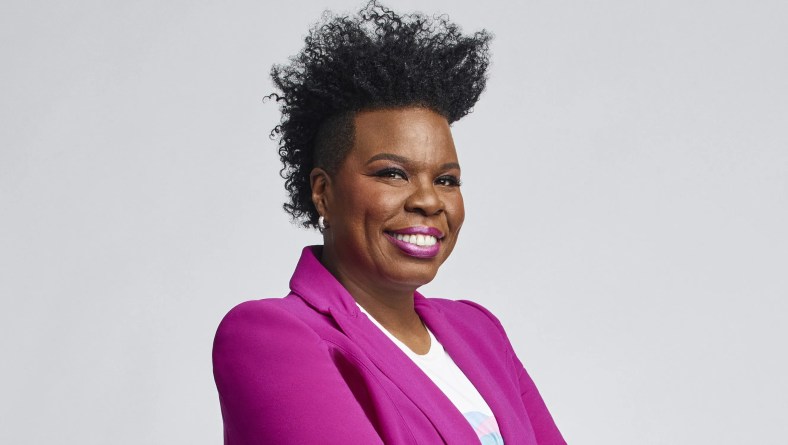
The author as a child, in a blue dress and hair in pigtails, is holding a microphone and smiling. Title and author type in large yellow block type.

by Carmen J.

Behind the laughter of most comics is a big bag of pain. Laughter, the ultimate defense mechanism, is a way for them to commiserate with their audience. Let me help you forget your pain for even just a few minutes. Let’s laugh at the world’s absurdity. I will take you there. Leslie Jones takes you along for a wildly candid, gritty, and funny ride in her memoir, Leslie F*cking Jones, available in print and OverDrive formats (e-book and e-audiobook).

I devoured this book over one weekend, not only because I’ve enjoyed her work on Saturday Night Live (SNL) and on Supermarket Sweep (!). In 268 well-crafted pages, we are taken on a journey through her childhood (and some truly sad tales of abuse, alcoholism, and chronic family illness) to her rise on the comedy scene (from the early auditions and late-night sets to the hard-fought stand-up crowds). Despite the poignant accounts of her difficult relationships with her father, brother, and the occasional ex-friend and former roommate, there is always a lesson with every anecdote. And you will root for Leslie Jones until the final page.

She’s Leslie F*cking Jones, just like the title says. Read her book. Have fun requesting it over the phone; you may want to reserve yours online.

If you want to see her in action, enjoy this clip of “Black Jeopardy” from SNL that included the beloved late Chadwick Boseman.

Carmen J. is a teen instructor at HCLS East Columbia Branch. Among her favorite things are great books, all things 80s, shamelessly watching The Bachelor, gardening, and drinking anything that tastes like coffee.

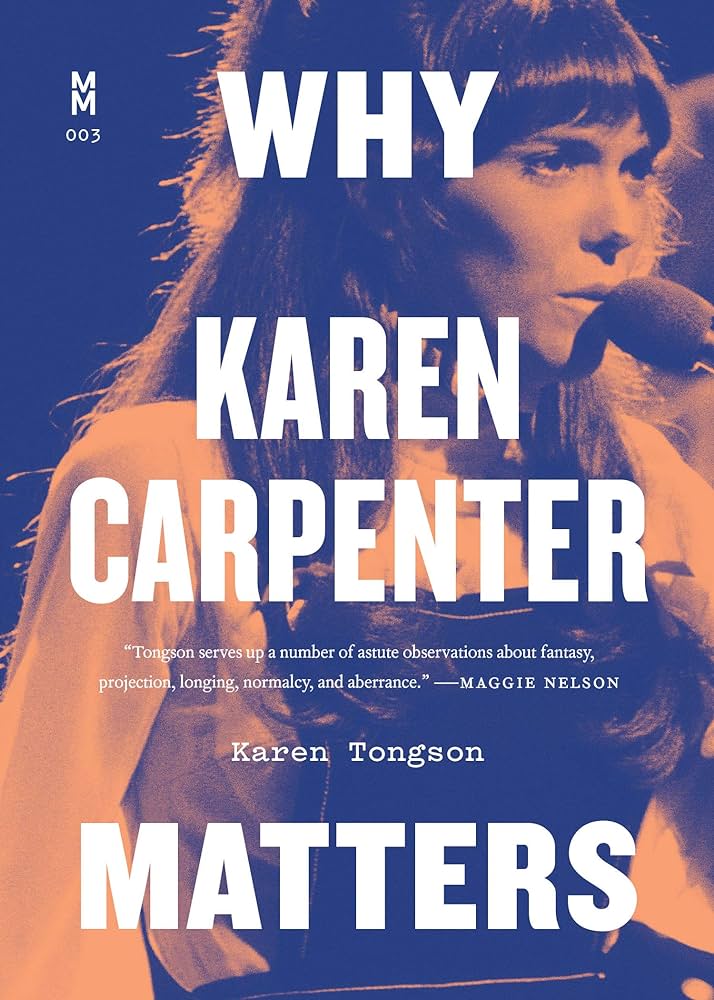
Why Karen Carpenter Matters by Karen Tongson

A blue and beige duotone image of Karen Carpenter singing into a microphone, with text in white block letters "Why Karen Carpenter Matters".

by Angie E.

In Why Karen Carpenter Matters, the author writes about something she calls “the Karen effect,” being “the capacity to make you feel something, to make you believe in a spiritual undoing and trembling beneath the polished arpeggios and vacuum-sealed harmonies.” She speaks for many fans, I am sure, in describing the distinct sound of one of the most gifted vocalists of all time.

Author Karen Tongson (named after the singer) is a Filipino-American cultural critic, writer, and queer studies scholar. In this moving and often riveting half memoir/half biography she intertwines cultural analysis and personal anecdotes, creating a rich mix of insight and emotion into the life of Karen Carpenter.

The Carpenters’ music was immensely popular in the Philippines and other parts of Asia during the 1970s and beyond. Their songs had a significant impact on Filipino culture, and Tongson grew up with a deep appreciation for their music.“To be corny is to be mawkishly old-fashioned; tiresomely simple and sentimental,” Tongson writes, explaining part of the reason of her love for Karen Carpenter, who ultimately became the tether to the Philippines.

Tongson also navigates the sensitive topic of Karen’s eating disorder with grace, shedding light on the societal pressures that contributed to Karen’s tragic struggle. She emphasizes that Karen’s story is not just one of personal struggle, but a reflection of the larger issues women faced during that era, and still to this day, a powerful reminder of the need for compassion and understanding.

One of the most striking aspects of Why Karen Carpenter Matters is its examination of the intersection of race, gender, and music. Tongson studies the ways in which Karen Carpenter’s voice transcended cultural boundaries and challenged stereotypes, making her an unexpected icon in the LGBTQ+ community. Karen’s voice, as the writer beautifully describes, became a “sonic balm” for those who found solace and identity in her music.

I have loved the Carpenters since I was a kid and find Why Karen Carpenter Matters to be one of the most authentic and soulful nonfiction reads ever, not just on Karen Carpenter, but on any person or subject. I can still feel sad when I hear a song of hers on the radio or my music streaming, but that doesn’t take away the power or comfort or loveliness of one of the most sincere voices I have ever heard in music. From all accounts written about her, from everything friends of hers have said, Karen was a fun and funny woman, sweet and a genuine person.

For more about the Carpenters:
Carpenters: The Musical Legacy is an enchanting journey through the timeless melodies of Karen and Richard Carpenter. There are lots of fascinating tidbits about recording sessions and songs chosen for albums and what Karen and Richard thought about their music and about music in general.

Lead Sister: the Story of Karen Carpenter is not owned by HCLS, but is well-worth tracking down through Marina. A 2023 release, it takes a more artistic look at her life and how much more there was to her in her musical life than that magical voice. Karen herself once said that she thought of herself as a drummer who sang, not a singer who played the drums. I think she would like this book a lot.

Angie is an Instructor & Research Specialist at Central Branch and is a co-facilitator for Reads of Acceptance, HCLS’ first LGBTQ-focused book club. Her ideal day is reading in her cozy armchair, with her cat Henry next to her.