The Hardest Job in the World: Providing for Loved Ones and Their Caregivers

By Maryam S.

Caretaking for elderly adults with limited mobility demands physical strength, mental flexibility, and proper education, as I have learned from personal experience. A caretaker is not there only as a nurse but also as financial and emotional support. When my octogenarian loved one was diagnosed with an incurable illness, her amazing medical team showed up for her in the hospital but left me on my own to figure out how to tend to her needs once she was discharged.

I received numerous messages from the close circle of my kindhearted friends who kept reminding me to make sure I was taking care of myself, too. As one put it: caregiving for an elderly adult is the hardest job in the world. It’s a marathon, not a sprint. Those were the words of wisdom I wish I had taken to heart before caregiving started taking its toll on me. I experienced setbacks numerous times. One day I would be more hopeful for her, but the next day would push me back to the verge of despair.

While still at the hospital, her case manager found a rehab facility to keep my patient as long as she needed – but after visiting and seeing the sad reality of how the rehab center functioned, I realized that I would not be able to forgive myself if I made that choice. I told myself: lets see how much I can expend from myself in terms of taking some time off from work to manage my patient’s house as well as her medical needs to ultimately try to make her life as comfortable as possible.

A large bowl of healthy soup surrounded by individual ingredients sits on a grey wooden table. The title information appears in bold red and orange stripes above the bowl, "The Cancer Fighting Kitchen: Nourishing Big-Flavor Recipes for Cancer Treatment and Recovery"

For nutrition, I took from my experience of cooking from different recipes around the world. At Howard County Library System, a large selection of cookbooks for special diets with medical conditions not only made my personal daily goals more enjoyable, they helped me share the idea behind each meal with my patient, who could see these efforts help her feel better despite having a very small appetite. One I can recommend is The Cancer-Fighting Kitchen: Nourishing, Big-Flavor Recipes for Cancer Treatment and Recovery by Rebecca Katz with Mat Edelson. A considerable number of self-help books about caretaking and related topics gave me a broader view of how to react in different situations (see list below).

During many sleepless nights while watching my patient, I found an opportunity to work on my delayed handmade projects. While working quietly on my crafts, e-audiobooks from Libby, cloud library, and Hoopla became my late-night companions. The handmade world was like a sweet scent of cinnamon and cardamom sprinkling over the world, as opposed to the unpleasant smell of medications, pain, sadness, and uncertainty. I learned that I had to fill my own cup first; you can’t pour from an empty cup. For me, I needed to work on my art and being creative, doing exercise, writing, singing – essentially any hobby that can keep the hands and mind occupied.

Hoopla with its various fitness channels also helped me to do my daily workout without being interrupted by unrelated advertisements on social media. I had limited time for myself every day and I had to keep my spirit and physical health in a better condition in order to help my patient. Technology became a useful tool to bring some discipline to my loved one’s daily recovery routine. I found workout videos online from the different universities for the public view to help a loved one practice healthy movement at home.

During this journey, I also learned about the Howard County Office on Aging and Independence, who offer classes and group conversations for caregivers dealing with elderly adults with dementia, cancer, and other conditions. These events are free of charge and encourage caregivers to participate and take benefit from the services of this department. During my conversations with them, I learned how to reach a representative once I face questions that my patient’s medical team may not be available to answer.

I share my experiences for those who may be going through similar experiences. You are not alone. You have so many good resources through HCLS, along with other resources that life provides for you. We all gain a lot of experiences in life by trying different things for ourselves and for our families. We lose and we gain over and over – because it’s all about the patient that we spending our time with. It’s something that doesn’t happen to everyone but happens to many. I call it becoming more.

October is Mental Health Awareness Month, and here are some of many resources available at the library that helped me in my mental health journey while caregiving:

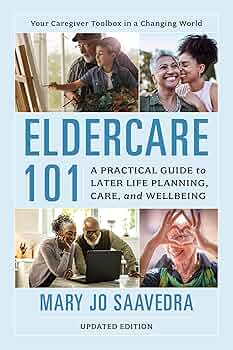
Eldercare 101: a Practical Guide to Later Life Planning, Care and Wellbeing by Mary Jo Saavedra

It’s OK That You’re Not OK by Megan Devine

The Art of Dying Well: A Practical Guide to a Good End of Life by Kathy Butler

The American Cancer Society New Healthy Eating Cookbook by Jeanne Besser

Life After the Diagnosis: Expert Advice on Living Well with Serious Illness for Patients and Caregivers by Steven Z. Pantilat, MD

Maryam S. is a customer service specialist at HCLS Miller Branch. She loves traveling near and far and loves to cook and bake from new recipes.

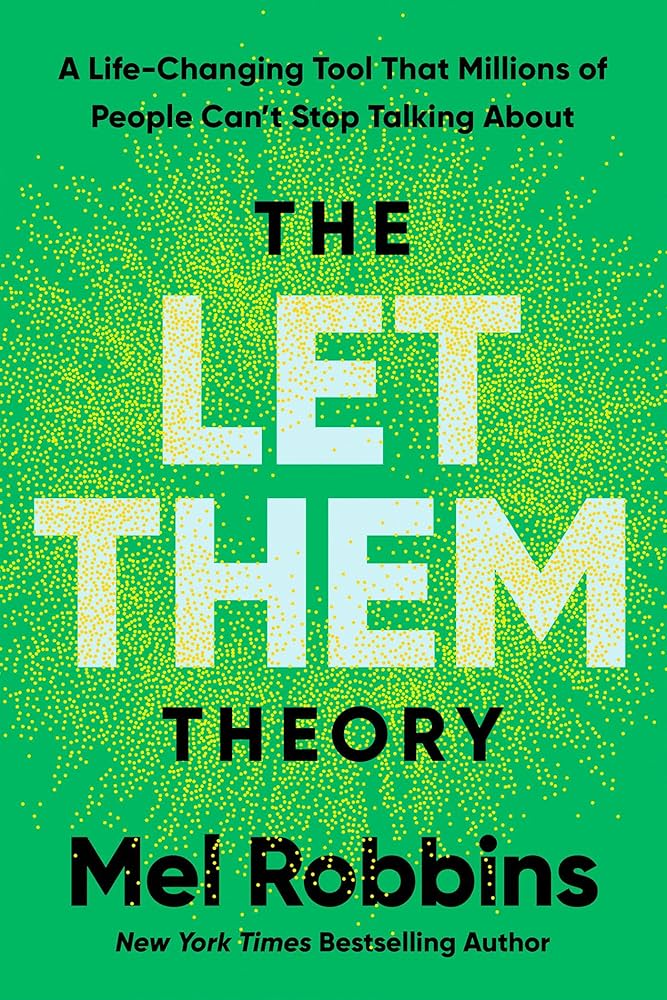
The Let Them Theory by Mel Robbins

A bright green clor has an explosion of yellow dots, like someone threw confetti at the center of the book.

by Carmen J.

Days before the new year had me ruminating about resolutions and the things I want to accomplish in 2025. Work out more? Eat better? Stop procrastinating about my dreams? Sound familiar? Have you made similar intentions and broke them, and kept them, only to break them again?

This year, I turned to “my friend Mel” – as she regularly coins herself to her millions of followers of The Mel Robbins Podcast and her readers of best-selling titles such as The 5 Second Rule and The High 5 Habit.  I am savoring her latest work, The Let Them Theory: A Life-Saving Tool That Millions of People Can’t Stop Talking About. It’s the book I never knew I needed.

Simply put, the theory puts into sharp perspective how we can’t control others, including their thoughts, emotions, and opinions about us. Similarly, we can’t control when things don’t necessarily go our way. For example: If someone decides they don’t like you or an opinion you have or the way you live your life: Let Them. Often times, there will be nothing you could say or do to change those thoughts, emotions, and opinions. Consequently, what we can control is the next step: Let Me. The Let Me is our reaction, the thing we can control. Sometimes the reaction is no response, or it’s setting boundaries, or having difficult conversations that need to be had. Robbins shares more in-depth strategies and experiences from her own life and from her followers.

If you are one who has people pleased and sucked it up, all in the gallant hope of keeping the peace, Robbins’s book will be a walk through mud: uncomfortable and messy, yet survivable and relatable nonetheless. It’s part of the human condition to wonder and think about the opinions of others and try to check all of the boxes in accordance. What if we vow this year in the face of uncertain times or certainly hard times and with the utmost certainty to let the chips, opinions, and emotions happen. Let Them wash over you without fury but with fearlessness. And Let Me (and Us) make the focused choice not to change course and be OK with any mild discomfort. Let Them, Let Me, Let Us be better for it.

The Let Them Theory: A Life-Saving Tool That Millions of People Can’t Stop Talking About by Mel Robbins is available in print and e-book.

Carmen J. is a teen instructor at HCLS East Columbia Branch. Among her favorite things are great books, all things 80s, shamelessly watching The Bachelor, gardening, and drinking anything that tastes like coffee.

Talking about Teen Mental Health

PSA ad: a young Black woman wearing glasses looks down at her cell phone while her other arm is full of books. A blue square to the left says: 988 Suicide and Crisis Lifeline

by Brandon B.

During National Mental Health Awareness Month each May, and throughout the year, you can find a wealth of resources at the library. Many teenagers may suffer from mental health issues such as depression and anxiety. Some teens might feel isolated, bullied, or ostracized from society. If you are looking for a place to belong, we have created a safe and friendly environment just for you.

Are you looking for a fun and free spot to hang out after school? Your local branch is always looking forward to seeing you. At HCLS East Columbia Branch, you can interact with other teens for fun and excitement most afternoons. Do you have anxiety about math or need assistance with your homework? You can get assistance with your math studies and face your fear of arithmetic at Central Branch from 4-5 pm on Tuesdays. For high school students, final exams are soon! Miller and Elkridge Branches offer a chance to de-stress with some friendly, furry faces.

According to a New York Times article, you can cope with your mental health issues in some simple ways. Just 20 minutes of exercise can relieve stress, or you can use meditation techniques like deep breathing exercises. If you are truly feeling overwhelmed with life challenges, you need to find a trusted adult (parent, teacher, counselor) to talk with. If you are thinking about doing harm to yourself or others, call the national suicide hotline at 988 to talk to a mental health professional. For a local connection, call the Grassroots 24-hour Crisis Line at 410.531.6677.

Tutoring Tuesdays: Math Made Easy!
Ages 11–18. Register here.
Do you struggle with math homework or tests? Do you want to improve your math skills and confidence? If you answered yes, then this is the perfect class for you! Middle school and high school students can get extra help or practice with math topics in middle school math, Pre-Algebra, Algebra 1, and Algebra 2.
Tuesdays; May 7 – Jun 4
4 – 5 pm  
Central Branch

Teen Chill Room: Dog Cafe
For high school students, but 11 & up are welcome. Walk-in only.
Finals stressing you out? Take a peaceful brain break in the Teen Chill Room, and return to studying feeling refreshed.
Spend time unwinding with loving, furry friends. Pets on Wheels certified therapy dogs, along with their trainers, bring calm and smiles to busy a midterm week.
Mon, Jun 10
3 – 4 pm
Miller Branch
De-stress with Pets
Sat, Jun 8
2 – 3 pm
Elkridge Branch – Registration opens June 1 at 2 pm.

Brandon is a Customer Service Specialist at HCLS Central Branch who loves reading, football, and taking nice long walks around his neighborhood.

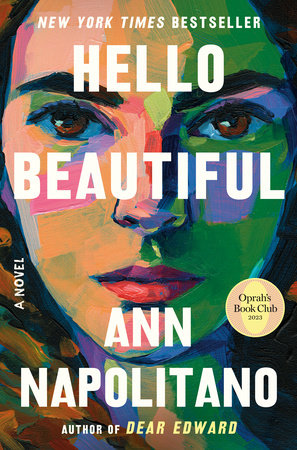
Hello Beautiful

A woman's face painting in bold swatches of color. The shape of the face is a perfect oval with strong brows, brown eyes, and deep pink lips.

by Cherise T.

End of year “best of” lists provoke debate and motivate future selections. What have I read and seen that are on the list? Do I agree with the reviews? Which choices will I add to my precious “I want to read” file? 

One of my book clubs is so longstanding that it was originally an “Oprah book club.” When it was time to celebrate our over-20-year anniversary, we decided on a girls’ weekend. Hello Beautiful by Ann Napolitano was already scheduled for that month, and we could not have chosen a better capstone read. Not only was the discussion more content than neighborhood gossip, more talking than drinking, more debate than segue, we continued to consider the book throughout the weekend. 

All families bear hurt feelings, grudges, and anger. Because the four Padavano sisters (yes, think Little Women) are so close and have such distinct personalities, the emotion in Hello Beautiful runs deep and long. Add a strong mother, a devoted father, and a young man with essentially no family, and you’ve got a multi-generational literary novel that reads like a page turner. 

Beginning in 1960, we meet William Waters whose absent parents contrast with the Padavano parents. Always on his own, William dedicates himself to excelling at basketball. In college, he meets Julia, the oldest Padavano sister, who is his opposite in every way. Now William finds himself enveloped in the love of Julia’s family, including her three sisters, especially Sylvie.  

Throughout, the sisters compare themselves to the March girls in Little Women, and there are many parallels, but this book shines on its own plot twists. Be prepared for love stories, loss, mental illness, and estrangement. We want all the best for this family, but with Napolitano’s skill as a writer, we travel the complicated paths of realistic, complex characters. We see life through the eyes of each of the sisters as well as their children. 

One of my favorite aspects of the book is the empathetic portrayal of William’s teammates and the contrasts between the social world of women and that of men as we move through the end of the 20th century. Napolitano effectively portrays the sisters as a team as well, but a very different team who can hurt each other in only the ways that sisters can. Often, the characters seemed walled off between those who can compartmentalize their emotions and ambitions and those who can’t. 

Truly a novel that has earned a “best of 2023,” Hello Beautiful merits a holiday read or a book discussion’s scrutiny. It holds epiphanies and small miracles. May you have those who greet you throughout your life with “Hello, beautiful.” 

Hello Beautiful by Ann Napolitano is available in print, large print, e-book,and e-audiobook.

Cherise Tasker is an Adult Instructor and Research Specialist at the Central Branch. When not immersed in literary fiction, Cherise can be found singing along to musical theater soundtracks. 

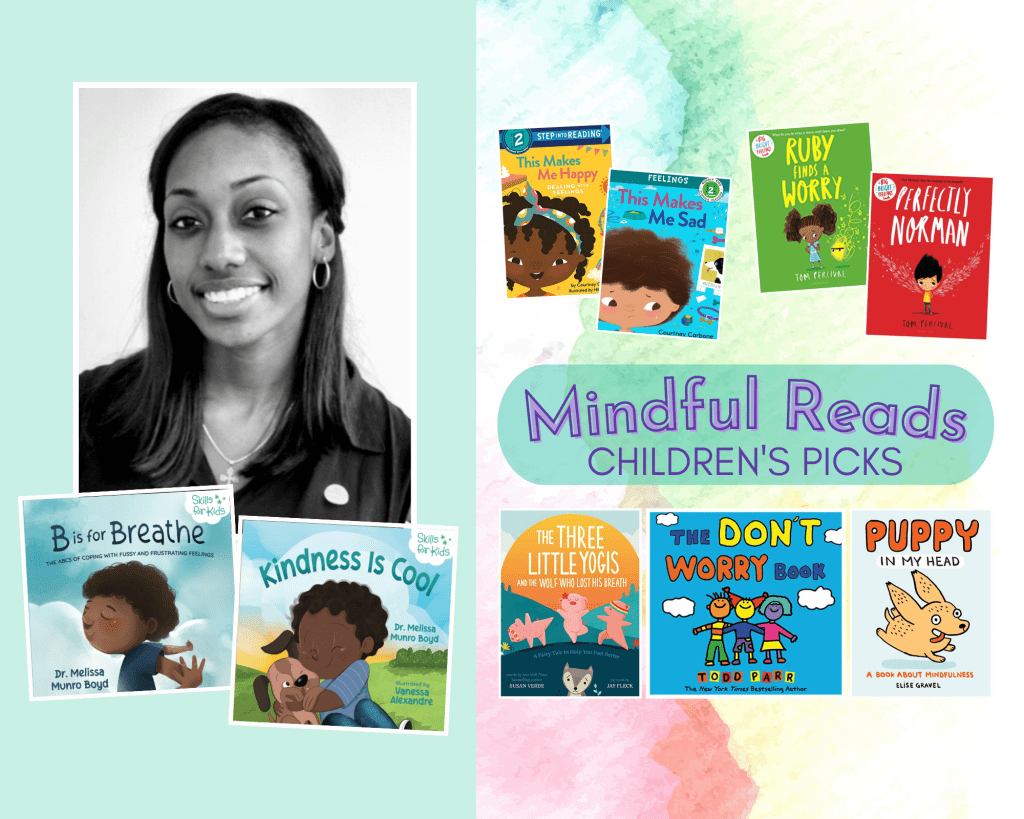
Mindful Reads with Dr. Melissa Munro Boyd and other children’s picks

The collage shows a photograph of the speaker accompanied by two of her books: B is for Breathe and Kindness Is Cool. On the right are a selection of the other books promoted in the blog post, surrounding the title "Mindful Reads: Children's Picks."

Meet the Author
Wednesday, May 31 | 6:30 – 7 pm
Miller Branch

Ticketed event; tickets available at children’s desk starting at 6:15.

In recognition of Mental Health Awareness Month, Howard County Library System is excited to welcome children’s author Dr. Melissa Munro Boyd to our Miller Branch. A wife, mother of three, clinical psychologist, and officer in the United States Army, Dr. Boyd will read her picture book, B is for Breathe. She then will talk about how to use literature to help children with identifying and expressing their emotions, along with relaxation techniques, including deep breathing and guided imagery. Books available for purchase. More details can be found here

Each year, the Annie E. Casey Foundation releases the KIDS COUNT Data Book, a 50-state report of recent household data analyzing how children and families are faring.1 In the most recent edition (released in 2022), the focus on youth mental health included a mix of pre-pandemic and current data, shedding light on the extraordinary mental health crisis facing not only Maryland’s children, but American children overall.2 One of the most startling figures revealed “an urgent need to address youth mental health, as 1 in 8 young people in Maryland deal with anxiety or depression.”3 

The topic of mental health may feel difficult to tackle, especially when thinking of how best to support children. Many people wonder where to begin. Luckily, HCLS offers resources to help. Our children’s collection features many books (in both print and electronic format) that cover the topics of emotions, mental health, mindfulness, and more. Here are a few of my favorites to get you started: 

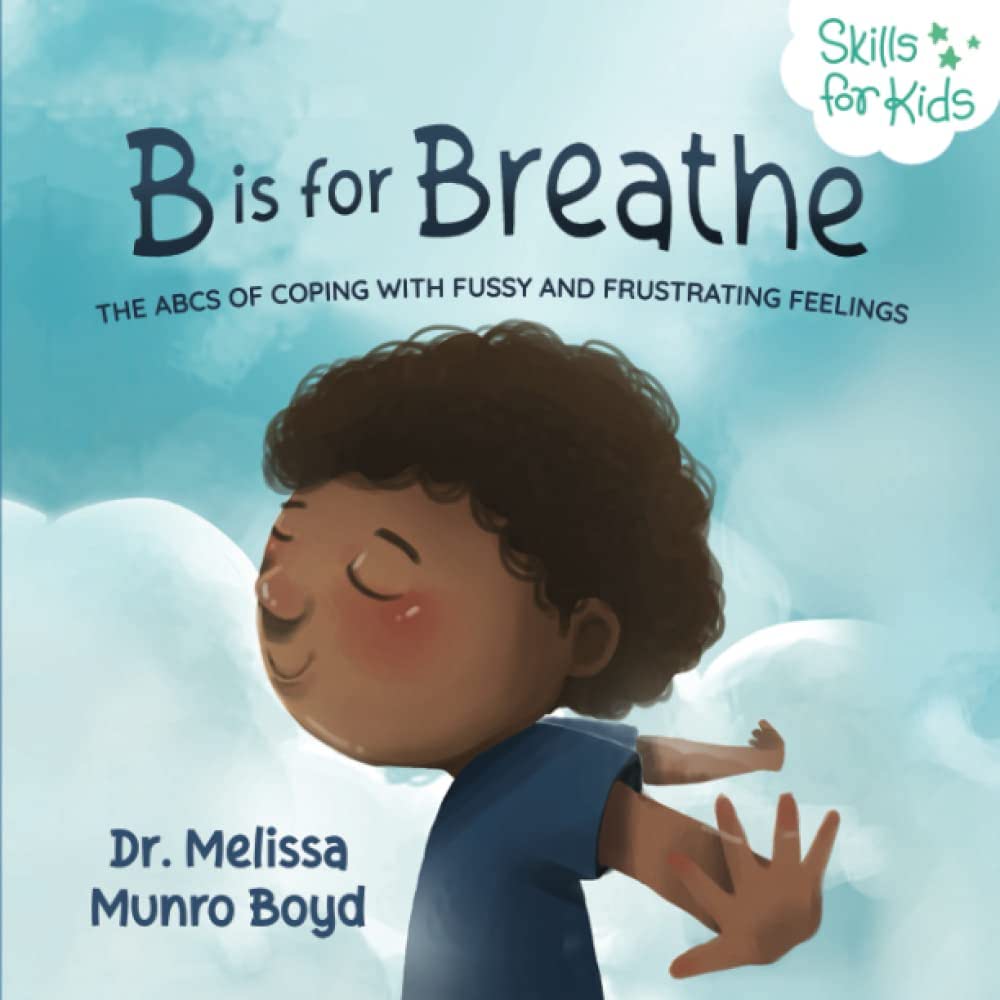
A blue cloud background features a child with their arms wide, eyes closed, and smiling.

B is for Breathe by Dr. Melissa Munro Boyd 

From A to Z, this book shares simple ways for children to express their emotions and practice mindfulness. It provides language for discussing feelings and teaches coping strategies to process frustrating emotions. 

Kindness is Cool by Dr. Melissa Munro Boyd 

A new addition to our collection, this most recent book by Dr. Boyd shows examples of children practicing kindness in the world around them and teaches how simple acts of kindness make our world a better place. 

The Three Little Yogis and the Wolf Who Lost His Breath by Susan Verde 

“Once upon a time, there lived a wolf who lost his huff and puff.” For him, this was a big, big problem. One morning, he meets a yogi doing sun salutations. He really wants to huff and puff and blow her house down, but before he does so, the yogi suggests that he “meditate on that.” Similar things happen when he meets a second yogi, and a third, and, with their help, he learns ways to find his calming breath. A fun twist on a classic fairy tale, this story provides readers with breathing exercises they can use to regulate their emotions. 

The Don’t Worry Book by Todd Parr 

Everyone worries sometime; it is a part of life. This book teaches children that although there may be situations which are scary or overwhelming, there is always something that can comfort them. Todd Parr is known for his simple text and colorful illustrations that are both engaging and provide starting points for conversations on what can be difficult topics to discuss with young children. Other books with similar topics include, It’s Okay to Be Different, The Feelings Book, Be Who You Are, and many more. 

Puppy in My Head by Elise Gravel 

Ollie is a puppy, and sometimes runs around barking and jumping when he should be calm and quiet. The problem is, he is inside our narrator’s head, so when Ollie has these feelings, his person does too! How can our narrator teach Ollie to be calm? This story introduces children to techniques to calm their active minds when they may feel stressed or overwhelmed. The analogy of Ollie brings the concept of anxiety to a child level and teaches useful strategies for stressful, busy situations. 

Big Bright Feelings series by Tom Percival 

Looking for a kid-friendly introduction to social-emotional topics? This series of books by Tom Percival is a great place to start! Covering topics from loving yourself (Perfectly Norman) to dealing with worries (Ruby Finds a Worry) and managing anger (Ravi’s Roar), the books provide great opportunities for conversations about mental health, self-confidence, and managing feelings. 

Dealing with Feelings series by Courtney Carbone 

With titles like This Makes Me Happy, This Makes Me Scared, and This Makes Me Silly, the Dealing with Feelings series of early reader books brings the topics of feelings and emotions to a child-friendly level. Each story follows a different child as they experience a situation or event and learn to identify their emotions and coping strategies. The simple text and vivid illustrations help children learn to read, while giving names to what they may be feeling inside. 

Whether you visit one of our branches or check out resources online, we are here for you! Our staff can direct you to community resources available for you and your family and are happy to suggest titles to support you on your journey. We look forward to seeing you soon. 

——————————

1. Nonso Umunna, “Kids Count: Maryland’s Children Are Experiencing Higher Rates of Anxiety and Depression,” Maryland Center on Economic Policy, August 8, 2022, http://www.mdeconomy.org/kids-count-marylands-children-are-experiencing-higher-rates-of-anxiety-and-depression.

2. see note 1 above 

3. Schumitz, Kali, “New Maryland Data Show the Pandemic’s Toll on the Mental Health and Well-Being of Children and Families,” Maryland Center on Economic Policy, August 8, 2022, http://www.mdeconomy.org/new-maryland-data-show-the-pandemics-toll-on-the-mental-health-and-well-being-of-children-and-families

Sylvia is a Children’s Instructor and Research Specialist at the Miller Branch. She enjoys crafting, listening to audiobooks, naps, and walks with her dogs in 75 degree-ish weather.

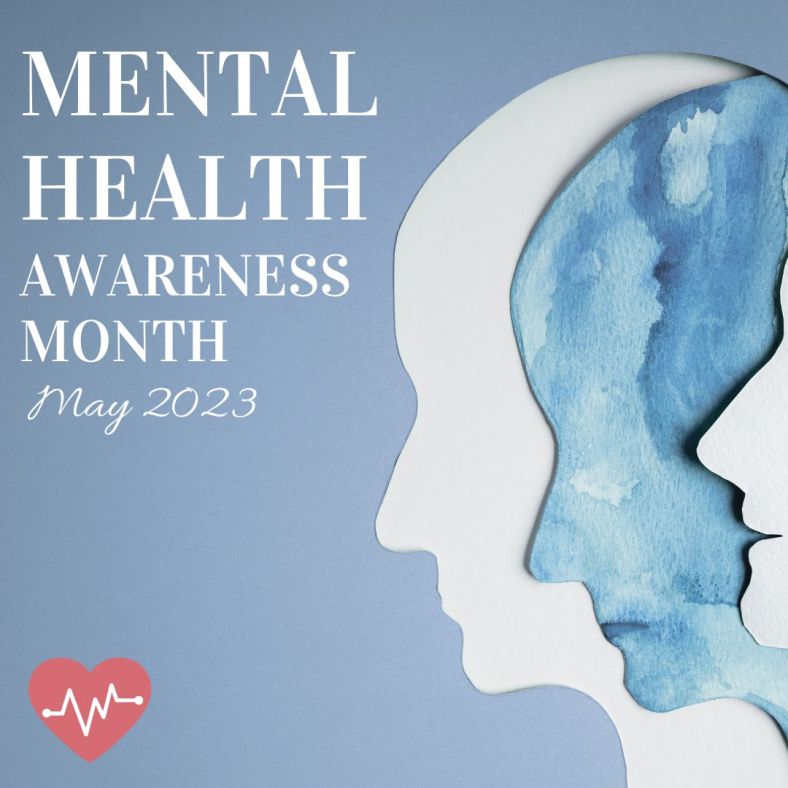
May is Mental Health Awareness Month

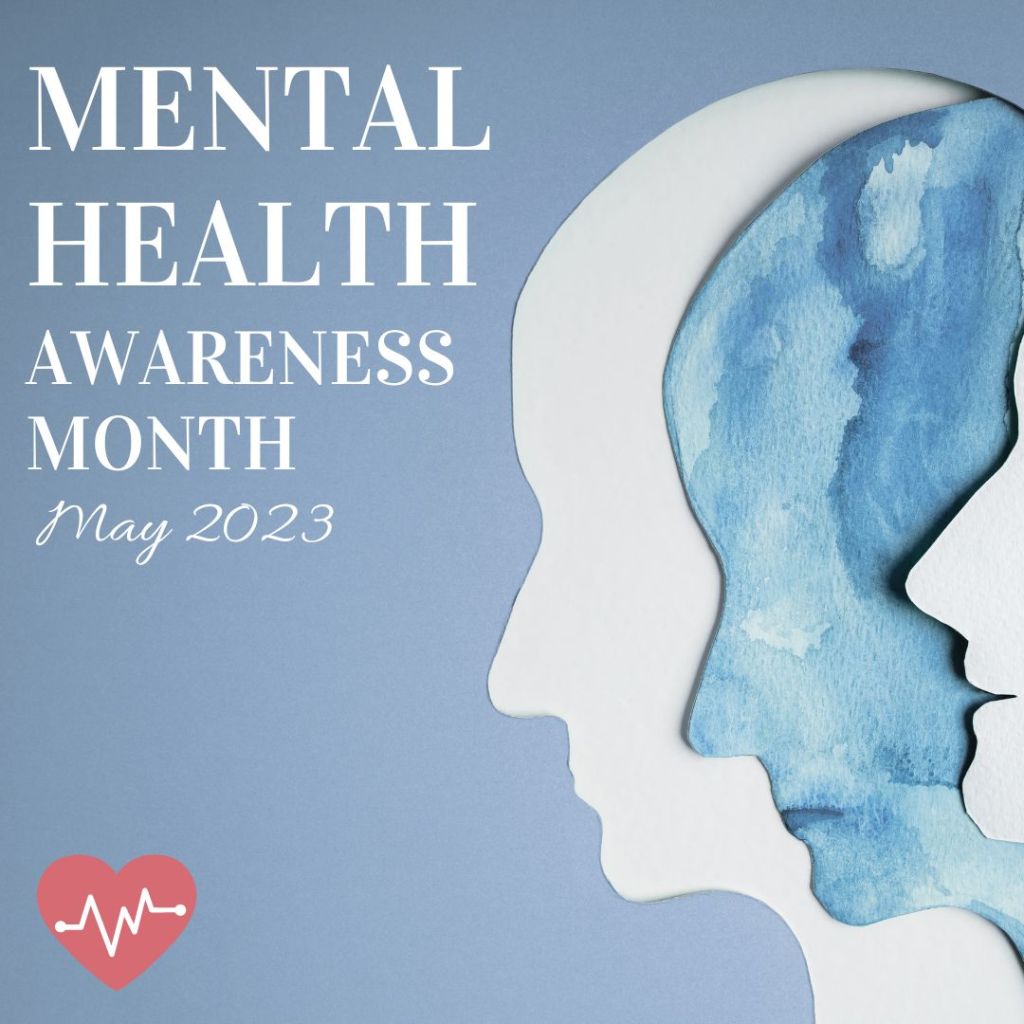
The picture shows three heads in silhouette in blue and white, with a beating pink heart in the lower left corner against a blue background. The words "Mental Health Awareness Month May 2023" are written in the upper left corner in white.

By Kimberly J.

In 2013, I was living overseas as a military spouse and was struggling with my mental health. Desperate for help, I did a quick internet search to find the number for the Mental Health Services on base. The first question asked was, “Are you active duty?” When I replied that I was not, the response I got was, “Then we can’t help you.” Hearing those words was devastating to my despairing mind and I felt defeated in that moment. The person on the other end then asked, “Are you experiencing suicidal thoughts or do you feel that you might harm yourself or others?” My reply was, “If I was, I’d be in trouble, since you just said you can’t help me!” I made it past the lies that depression was telling me and the very insensitive message that I received that day. I have been traveling a road of healing for the last 10 years. Some days are hard, but I now know that there is help.

May is Mental Health Awareness Month and I want to begin by saying three things:

1. You are not alone.

2. Help is always available.

3. You (and your mental health) matter.

You Are Not Alone

Almost everyone knows someone with a mental illness. Understanding the prevalence of mental health conditions is important in destigmatizing it. Nearly 450 million people worldwide are currently living with a mental illness. In the United States, one in four adults suffer from a diagnosable mental disorder. Almost half of adults in the US will experience a mental illness during their lifetime. The three most common diagnoses are anxiety disorders, depression, and post-traumatic stress disorder (PTSD).

Life can be challenging, but every day shouldn’t feel out of control. Take time to ask yourself about your thoughts, feelings, and behaviors to see if this is part of a pattern that may be caused by a mental health condition. Here are some questions to get you started:

  • Have things that used to feel easy started feeling difficult?
  • Does the idea of doing daily tasks like making your bed now feel really, really hard?
  • Have you lost interest in activities and hobbies you used to enjoy?
  • Do you feel irritated, possibly to the point of lashing out at people you care about?

If your answers to the any of the above are yes, start a conversation with your primary care provider, a trusted friend, or a family member about your mental health. Please note: A mental health provider (such as a doctor or a therapist) can give you a full assessment and talk to you about options for how to feel better.

Help is Always Available – Free Community Resources

  • 988 – Suicide and Crisis Lifeline – offers free 24/7 call, text, and chat (988lifeline.org/chat) access to trained crisis counselors who can help people experiencing suicidal thoughts, substance use, mental health crisis, or any other kind of emotional distress. Just text or call 988 nationwide. People can also dial 988 if they are worried about a loved one who may need crisis support. While text and chat are available in English only, calling services are in English and Spanish and use Language Line Solutions to provide translation services in over 250 additional languages.
  • 211 Maryland is the state’s most comprehensive health and human services resource database. With more than 7,500 resources, individuals with essential needs can get connected to local help 24/7/365.
    • 211, Press 1 is an immediate, always-on-call suicide prevention, substance use intervention, and mental health emergency assistance line available in the state of Maryland. Dial 211 and Press 1. 211 specialists are also available to chat or text. For text services, text your ZIP code to 898-211.
    • 211 Health Check – provides proactive mental health check-ins to support those with anxiety, stress, and depression. The weekly connections provide one-on-one support with the goal of preventing suicide and other mental health emergencies. If requested, the 211 specialist can connect the caller with mental health resources. To sign up for weekly mental health checks, text MDMindHealth to 898-211.
    • MD Young Minds is a new resource for teens and adolescents who are struggling with their mental health. It sends supportive text messages, with a focus on teen and adolescent concerns and worries. To sign up, teens should text MDYoungMinds to 898-211. The ongoing messages also remind youth that immediate mental health support is always available through 211, Press 1.
  • Local Mental Health resources are available through the Howard County Health Department by visiting this website.

You (and your mental health) Matter

Mental health is an important part of overall health and well-being. Mental health includes our emotional, psychological, and social well-being. It affects how we think, feel, and act. It also helps determine how we handle stress, relate to others, and make healthy choices. Mental health is important at every stage of life, from childhood and adolescence through adulthood.

No matter your age or stage in life, you and your mental health are important. If you’re looking for resources to help make self-care part of your routine, the library can help get you started.

The Little Book of Rest: 100 Ways to Relax and Restore Your Mind, Body, and Soul by Stephanie Thomas is a book that can help you formulate your own actionable self-care plan. Everyone is unique, so make a self-care routine that works for YOU. This book is divided into four sections, with plenty of ideas for each category: physical, mental, emotional, and spiritual exercises to give yourself time and space to focus on wellness.

In The Self-Healing Mind, Dr. Gregory Brown advocates for a holistic approach to mental health treatment. Dr. Brown supports integrating conventional treatments (medication and talk therapy) with lifestyle changes that he calls the pillars of self-care: breathing mindfully, sleep, spirituality, nutrition, and movement.

Mindful Moments for Kids is an audio CD that is broken down into one-minute “mind breaks” – including guided meditations, relaxing music, nature sounds, and breathing exercises. Using these moments can help calm, focus, and inspire mental health as an everyday practice.

As a form of self-care, you can also try out meditation with some beginner’s meditation classes on HCLS’ YouTube Channel. There are three meditation sessions available:

Finally, HCLS Miller Branch is offering Suicide Prevention Training on Monday, May 15 at 6:30 pm, in partnership with Grassroots Crisis Prevention Center. Register here (starting Monday, May 8) for this training, which will show you how to recognize the warning signs of a suicide crisis and is designed for people who do not have experience in suicide intervention.

These are just a few of the resources and opportunities available at Howard County Library System.

If you are thinking about harming yourself or attempting suicide,
tell someone who can help right away.
Call 911 for emergency services.
Go to the nearest hospital emergency room.
Call or text 988 to connect with the 988 Suicide & Crisis Lifeline. The Lifeline provides 24-hour, confidential support to anyone in suicidal crisis or emotional distress. Support is also available via live chat.

Para ayuda en español, llame al 988.

Sources: ADAA.org, hopkinsmedicine.org, mhanational.org, National Institute of Mental Health

Kimberly J is an Instructor and Research Specialist at the HCLS Glenwood Branch. She enjoys reading, photography, creating, crafting, and baking.

NEW Healthy Living Series in July

A pile of fruit including lemons, limes, tangerines, apples, kiwis, and a bananas.

by Chloe M.

Did you know there is a link between your mood and what you eat? Can you effectively mitigate challenging situations for yourself and those around you? Have you learned about the new mental health crisis number 988?

If you are an adult who answered no to any or all of these questions, you need to join us for the new Howard County Health Department Healthy Living Series. The series consists of three upcoming classes offered at the library (HCLS Miller, Savage, and Central branches) with the goal of fostering resilient communities. Taught by a variety of healthcare professionals, the free classes are supplemented with peer lived experience. We engage on topics including nutrition, self-care, and effective coping, which are recommended for even the healthiest of adults – not just to have solid information yourself but in case you need to assist friends and family members.

The 2021 Howard County Health Assessment Report data was published last fall. The data demonstrated an increased need to share mental health information and resources with adults in Howard County. Thirty-five percent of residents reported feeling depressed or lonely during the two-week period prior to being surveyed. Additionally, 50 percent of residents reported experiencing feelings of nervousness or anxiety in the 2-week period of being surveyed.

These trends were particularly concerning among young adults (18-24 years old). Respondents were asked, “Over the last two weeks, how often have you been bothered by ‘feeling down, depressed, or hopeless?’” Six percent of all residents responded, “nearly every day. However, when broken down by age, nearly one quarter (23 percent) of residents ages 18-24 said they felt down, depressed, or hopeless “nearly every day.” Residents were also asked, “Over the last two weeks, how often have you been bothered by ‘feeling anxious, nervous, or on edge?’” Ten percent of all residents responded “nearly every day.” A quarter (25 percent) of residents ages 18-24 years old said they felt anxious, nervous, or on edge “nearly every day.”

The HCHD Healthy Living Series looks to combat the stigma associated with mental health that continues to prevent adults from seeking help. The three-class series takes place on Tuesday evenings, as follows:

1. When the Going Gets Tough: Managing Stress with Peer Stories

Tuesday, July 19; 7 – 8 pm at HCLS Miller Branch

Become a community care access point! Join us in developing the skillset to mitigate challenging situations for yourself and those around you. This presentation will include real stories from National Alliance on Mental Illness volunteers and stress screening resources.

Registration required.

2. Our Community Care Roadmap: Navigating the Landscape of Mental Health Resources in Howard County

Tuesday, July 26; 7 – 8 pm at HCLS Savage Branch

Follow the roadmap to care with instructional stops along the way at brain health education, early intervention, and intensive intervention. The class introduces new health resources, including 988 and GBRICS.

Registration required.

3. Building Your Toolbox: Nutrition, Exercise, and Self-care for Better Brain Health

Tuesday, August 2; 7 – 8 pm at HCLS Central Branch

Explore the science behind nutrition and mental health to understand the link between your mood and what you eat. Learn how exercise and self-care activities can improve brain health.

Registration required.

If you have any questions, email HCLS Information and Research Specialist Nancy Targett at nancy.targett@hclibrary.org. Together we can create a model community care system in which all Howard County residents know how to prevent and respond to health challenges. We hope to see you there!

Chloe McGeehan is a recent River Hill High School graduate. Through the DukeEngage Gateway summer program, she is working to facilitate collaborations that generate behavioral health resources for residents of all socioeconomic backgrounds. She enjoys trail running, spending time with family and friends, painting, and making music.

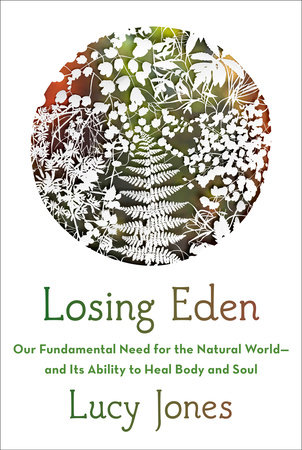
Losing Eden by Lucy Jones

A circle filled with the white "negative" space of different sorts of ferms and plants against a green and red background sits above the title and author.

by Ben H.

What can a casual reader take away from Lucy Jones’s 2020 book Losing Eden: Our Fundamental Need for the Natural World and its Ability to Heal Body and Soul? I’d like to say I’m not just a casual reader, but I am. Losing Eden isn’t as entertaining as Rhythm of War, as helpful as The Korean Vegan (I can’t stop making the spicy and crunchy garlic tofu!), or as cathartic as rewatching The Return of the King. But, it’s totally worth your while!

Losing Eden is informative, thought-provoking, and well researched. I found inspiration in its pages. I found it comforting and distressing. Sometimes it’s comforting to read a whole book about how the world is hurtling toward disaster instead of dozens of headlines, short articles, op-eds, and social media posts. Reading Losing Eden made me feel like Ethan Hawke in First Reformed, except I have a daughter and I don’t pour Pepto-Bismol in my whiskey.

Losing Eden is glued together with memoir paste, but it’s mostly an academic, research-based treatise on the importance of time spent outdoors, the immense value of plants and animals, and the urgent need to protect the natural world. Jones uses climate change, mental health, socio-economics, and racial equity as reasons to care about this green world. She also references dozens, if not hundreds, of studies, books, and research projects running the gamut from the social effects of green space in Chicago to the importance of the Białowieża Forest, a primeval area in Poland and Belarus. 

She cites Robert Pyle’s theory of the extinction of experience. Pyle’s general idea is that the less we interact with nature, the less we will care about it. Extinction leads to extinction of experience and then to more extinction. Jones writes, “Over the past fifty years the populations of mammals, birds, reptiles, and fish have fallen by 60 percent worldwide.” Passages like that are distressing.  

Jones explores the possible emotional impact of spending time outdoors. The answer might be in the dirt. A bacteria found in dirt, mycobacterium vaccae, has been linked to increased happiness. In 2004, oncologist Mary O’Brien created, “a serum that contained M. vaccae, a species of bacteria found in soil.” It did not have the desired effect, a cure for cancer, “but, strangely, those who received the immunization reported feeling happier.” Dr. Christopher Lowry was separately working on a similar research project and found that ,“mice injected with the bacterium exhibited fewer anxiety- or fear-like behaviour and were 50 percent less likely to have stress-induced colitis.” It’s dangerous to label nature as a panacea for mental health issues, but I think Jones makes a compelling argument, while being careful not to stray into an irresponsible reliance on nature as a magical cure.  

Jones also mentions chronic inflammation and its connection with mental health. She writes, “people with depression, anxiety, schizophrenia, and other neuropsychiatric disorders have been found to have higher levels of inflammation biomarkers.” Cytokines are a biomarker for inflammation, and “studies show that just two hours In a forest can significantly lower cytokine levels in the blood, soothing inflammation. This could partly be caused by exposure to important microorganisms.” If you’ve never heard of shinrin-yoku, this book is for you.

She also approaches the topic from a socioeconomic angle. She writes that “people in lower socio-economic groups or from racial and ethnic minorities usually have less access to green space and parks than those who are white and affluent.” She traces this issue back to the 17th century and the enclosure acts in England: “the practice of enclosing land from the British people began in earnest with the passing of over 5,200 Enclosure Acts between 1604 and 1914, which fenced off 6.8 million acres of previously common land.” I particularly loved this part of her book because the enclosure acts were an integral part of my thesis on pastoral poetry. If you’re ever in the UMBC library, check out: “Borrowed Weeds: Courtiers in Disguise in Renaissance Pastoral.” I guarantee you’ll be the first person to ever check it out.  

Jones saved one of her most compelling arguments for last. She cites the research of Professor Rich Mitchell from the University of Glasgow. His idea of “equigenesis” is full of real-world applications. The basic idea is that “If an environment is equigenic, it may reduce the gap between the rich and the poor by weakening the link between socio-economic inequality and health inequality.” Prof. Mitchell realized that the massive changes needed to address inequity weren’t going to happen, so he searched for other solutions. A 2015 study looking at more than 20,000 people in 34 European countries showed that, “access to nature was the one characteristic that reduced socio-economic inequality in mental well-being (by 40 percent).” 

Her evidence is compelling. Jones accumulated loads of research and attacked the question from many angles. I had a lot of takeaways from her book. I should definitely encourage my daughter to play in the dirt. I should garden. I should spend time outdoors. Should I buy a chicken to diversify my microbiota like Jones did? Maybe? 

I’ll definitely encourage my daughter to continue to watch squirrels, look for the moon during the day, and watch for chubby hawks in the trees.  

Ben Hamilton works at Project Literacy, Howard County Library’s adult basic education initiative, based at HCLS Central Branch. He loves reading, writing, walking, and talking (all the basics).

Talk Therapy

By Holly L.

When faced with a personal problem, some people will talk about it. Find a shoulder to cry on, a sympathetic ear to fill. Others of us have a tendency to downplay it, to deny it, to avoid talking about it. This isn’t the healthiest coping method, bottling it all up inside and burying that bottle in the backyard behind the garden that really needs watering and….what was that? A problem? There’s no problem. It’s all….just…. FINE. 

(smiles sheepishly) 

Even though I sometimes — okay, often — have trouble talking about my problems, when I do let down my guard and confide to someone, I almost always feel miraculously better. The truth is that talking helps, and I find the same sort of comfort reading about the personal struggles of others and learning about how they’ve navigated their own difficult moments. Two recent nonfiction books recall this power of a good talk to bring peace to a troubled mind.

The cover shows a square, yellow tissue box with a white tissue coming out of the top of it, against a turquoise background with the title overlaid in black lettering.


Maybe You Should Talk to Someone: A Therapist, Her Therapist, and Our Lives Revealed is a fascinating and highly readable memoir by psychotherapist Lori Gottlieb. In this 2019 book, she shares her experience as a therapist going to therapy following a devastating personal crisis. We are introduced to the character of Wendell, her quirky therapist with a shabby office and a straightforward but compassionate demeanor. During the author’s sessions with Wendell, we are allowed glimpses of the kinds of thoughts that run through a therapist’s mind when she herself is in therapy: Does he think my problems are trivial? Will he ever replace this old couch? Does he like me? Weaving the story of her own journey with those of her patients, Gottlieb offers up a humor-laced but empathetic glimpse into her own and her patients’ sessions, giving the reader a behind-the-scenes look at therapy from both sides of the therapist’s couch. As I followed Gottlieb and her patients’ struggles and successes, I saw parts of myself reflected in the characters and was prompted to examine my own relationship to therapy and the benefits of talking through problems. Also available as an eBook.

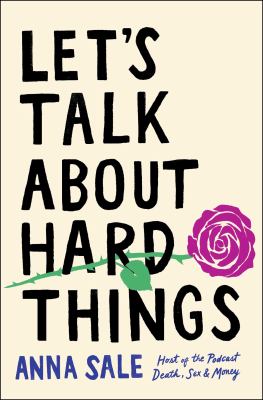
The book cover shows a pink rose with a thorny green stem, winding through the black lettering of the title against a cream-colored background. The author's name, Anna Sale, and "Host of the Podcast Death, Sex & Money" are written in cornflower blue.

I have been a fan of Anna Sale’s podcast Death, Sex, and Money for a few years and had been eagerly anticipating the release of Let’s Talk About Hard Things when it landed on our library shelves in May (also available as an eBook). This moving book continues the kinds of discussions that make her podcast so compelling, focusing on, “the things we think about a lot and need to talk about more.” Subjects ranging from, yes, death, sex, and money, but also family and identity. Sale opens the book by sharing some hard things from her own past, specifically the unraveling of her first marriage. Feeling utterly lost after her divorce, she began to find strength and clarity by talking to others about their own dark times and hearing how they found, or didn’t find, peace. Realizing how therapeutic these hard conversations can be, she was inspired to launch her podcast in 2014 on WNYC, New York City’s public radio station. Let’s Talk About Hard Things serves as a companion piece to Death, Sex, and Money, and it contains some of the most crucial conversations and valuable lessons from Sale’s life. Fans of the podcast will be reassured to know that, although the book may include a few references to the podcast, the majority of the material comes from fresh interviews conducted for this project. Sale’s written tone is as warm and personal as the voice she brings to her podcast (for this reason, I highly recommend the eAudiobook). After finishing this book, I was left with a feeling of comfort, as if I had just had a conversation with a close friend. The kind of conversation that doesn’t always find answers but that deepens connections and speaks to the power of just talking. And being heard. 

If you need someone to talk to, please visit this HCLS page for local mental health resources.

Holly L. is an Instructor and Research Specialist at the Miller Branch. She enjoys knitting and appreciates an audiobook with a good narrator.

Death in Her Hands

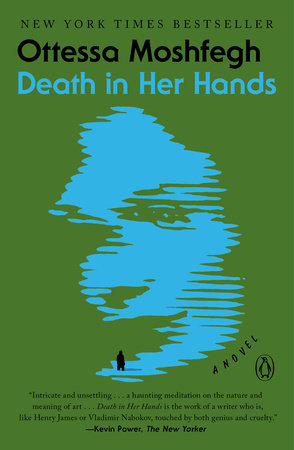
The cover is in green, with the semi-profile of a woman in light blue; its edges are jagged as if pixilated on a flickering TV screen. At the very bottom of her profile, where the chin would be, is a tiny human silhouette in black, facing her as if approaching.

By Ben H.

“Her name was Magda. Nobody will ever know who killed her. It wasn’t me. Here is her dead body” 

Vesta, the amazingly unstable 72-year-old narrator of Death in Her Hands, is my favorite of all of Ottessa Moshfegh’s growing roster of eccentric narrators. The main conceit of Death in Her Hands is that Vesta must solve a murder mystery. Before we know anything else about Vesta, we learn that she found a note in the woods (quoted above) and believes that she needs to solve the mystery (there is no body).  

Based solely on that note, Vesta envisions a detailed backstory for Magda and the murderer. She imagines one plausible idea after another and adds details until she’s created a truth that is incredibly real to her. A wild journey, Death in Her Hands occurs mostly inside Vesta’s head. Moshfegh immerses the reader so far into Vesta’s isolated, almost solipsistic, world that it’s jarring when Vesta interacts with anyone other than her dog Charlie. She must interact with others because her investigation takes her all around her small Northeastern town. She visits the public library, picks up a hitchhiker, visits odd neighbors, runs from wild animals, and finds clues. As she finds clues about the murder, she drops clues about her own mysterious past.

The book is a murder mystery, and Moshfegh plays with that genre and those tropes, but it is also a psychological drama. Moshfegh is an accomplished writer who gives the reader enough information to know that Vesta is not trustworthy, but not enough information to completely dismiss the murder as a figment of her imagination. At times Death in Her Hands reads more like Woolf’s The Waves or Pynchon’s The Crying of Lot 49Vesta’s thoughts carry us like waves; and her investigation doesn’t always make sense, but it always almost makes sense.

It’s easy to believe Vesta. She’s likable and very persuasive.
You almost believe that she’s solved the mystery! 
…Then you realize that you aren’t sure that there ever was a note. 

The book explores mental health, aging, abusive relationships, and isolation. Those don’t sound like cheery topics, but Vesta is a funny narrator, and she makes it an enjoyable ride: “My God, he could be crouched behind the kitchen door, and there you’d be, standing in your socked feet and bathrobe, agog at the knife glinting in the rack. Had you used it to chop onions? Had you forgotten that you’d wandered down for a midnight snack, left the knife out, et cetera? Were you still dreaming? Was I?” 

Moshfegh is a master of cultivating a dreamlike quality (she nailed it in McGlue as well). When everything seems off, it’s hard to know if anything is real. If you like dark, brilliant, insightful, inventive writing, I think you’d enjoy Death in Her Hands.

P.S. This is ostensibly a review of Death in Her Hands, but it’s really a recommendation to go read ANY Ottessa Moshfegh (she’s incredible). If you’re looking to have a weird weekend, pick up a bunch of Moshfegh from your local library and get lost in her wild world.  Also available as an eBook and an eAudiobook via Libby/OverDrive.

Ben Hamilton works at Project Literacy, Howard County Library’s adult basic education initiative, based at HCLS Central Branch. He loves reading, writing, walking, and talking (all the basics).