Bob’s Burgers Movie

An animated family in poses with arms raised in excitement or fright is centered over the silhouette of a burger, all against a bright yellow background

by Angie E.

The Bob’s Burgers Movie throws the lovable and zany Belcher family onto the big screen with all the charm, chaos, and condiment-fueled comedy fans adore. Between Tina’s erotic friend-fiction fantasies, Gene’s musical ambitions (this time with a burger-themed rock opera, obviously), and Louise’s pink-ear-capped schemes, the Belchers are beefier than ever. Toss in a murder mystery, some off-key original songs, and the eternal struggle to pay rent, and you’ve got yourself a recipe for delicious dysfunction.

Whether you’re a long-time fan or a first-time fryer, this film is a celebration of awkward family love, small business spirit, and burger puns that never quit. It’s heartfelt, hilarious, and just weird enough to make you wonder if your food might burst into song. In a season five episode of Bob’s Burgers, Tina (the eldest of the Belcher children and one of the most lovelorn characters to ever appear in animation) is righteously upset when a friend of hers mentions the girl he likes is way “out of his league.” The scene takes place in a bowling alley (again, the smart writing!) and Tina yells, “Damn it, there are no leagues!” The intercom interrupts to call forth bowling leagues that are entered in a contest. Well, okay, Tina continues, there are bowling leagues, “but there should be no people leagues.”

Bob’s Burgers pulls me in like no other comedy. I absolutely want to live in BB’s world, I want to know all of the characters and walk down the streets of their town and visit their shops and their boardwalk. I want to go to karaoke with Linda, talk about life with Tina and get into hijinks with Louise and Gene. Never have I known a show to be both wholesome and provocative, to be sweet and subversive. Best of all, Bob’s Burgers holds on to  kindness, even in the middle of chaos. One of my favorite quotes from the show, from any show really, is this:

Maybe we all have a little bully inside of us. Maybe when we think people are being mean to us it can make us mean. But even if people are difficult we have to resist, we have to try to be nice. Maybe it will bring out the nice in other people.

HCLS owns the first season of Bob’s Burgers as well as the movie. For more seasons, consider using Interlibrary Loan Services.

And if you want to try your hand at some Bob’s Burgers-inspired cooking, you might want to check this out: The Bob’s Burgers Book: Real Recipes for Joke Burgers.

Angie is an Instructor & Research Specialist at Central Branch and is a co-facilitator for Reads of Acceptance, HCLS’ first LGBTQ-focused book club. Her ideal day is reading in her cozy armchair, with her cat Henry next to her.
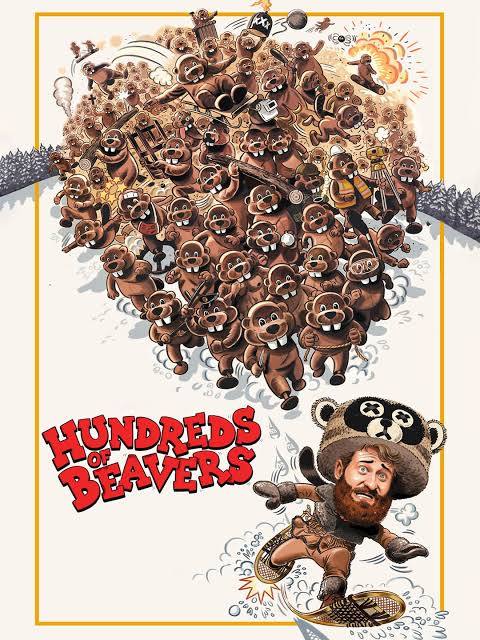
Hundreds of Beavers

In a style reminiscent of National Lampoon or other madcap movies, the illustration shows a man dressed in a beaver costume fleeing a crowd of beavers. Text appears in red hand-drawn blocky letters.

by Alex P.

When Hundreds of Beavers got released to streaming services last year, it became one of the biggest success stories and most beloved films of the year, and for good reason. As a black-and-white slapstick comedy, awash in practical effects and Adobe After Effects 2D animation, completely devoid of dialogue and produced with only $150,000, it feels remarkably out of place in a cinema landscape dominated by CGI and character-driven dramas. But that very out-of-placeness is what makes its inventive qualities all the more precious. I feel that the poster, which IndieWire called one of the best of 2024, captures this perfectly. Its hand-drawn caricatures and bold red lettering are a direct throwback to the absurd comedies like It’s a Mad, Mad, Mad, Mad World and those by National Lampoon from the 60s and 70s, which make up just some of the film’s many influences. 

The influences are even wider than Hollywood comedies. The first act is a perfect translation of Looney Tunes cartoons to live-action film, before heavily incorporating video game logic in the second act. I particularly like how directly it translates the video game mechanics of survival games like Minecraft or Terraria into film action. We’ve seen a lot of video games adapted into films in the past decade, but they seem to flatten how the games work into standard Hollywood action. Seeing a movie that literally functions and presents itself like a video game as a framework for its action and plot is a bold innovation. Similarly fusing old and new influences, the slapstick feels equal parts Charlie Chaplin and early YouTube sketch comedy. 

Co-writer Ryland Tews stars as Jean Kayak, a 19th century applejack salesman turned fur trapper. The film’s action completely centers around his efforts to trap and kill cute critters (played by people in mascot suits) for sustenance and to trade their pelts for goods. The rigid logic about the tactics to trap each animal (beavers always fall for turds lacquered in castor oil, rabbits will go for anything that resembles a carrot) sets up most of the action as Jean discovers the logic of his world and his trade the hard way. The film’s best quality is the virtuosity with which it immerses you in recurring gags and wild internal logic that feel as well-scripted as a classical symphony. Again, thanks to the heavy use of video game logic, gags that would be throwaways in other movies recur again and again only to culminate in centerpieces where Jean uses everything he’s learned to set up giant, hilarious Rube Goldberg machines. 

In our age of digital proliferation, you’d think independent film would have flourished to a much greater extent than it has. Nearly everyone has a camera and powerful editing software sitting in their pockets. Instead, though, modern film has felt more suffocated than ever, as big studios insulate themselves from big risks by trying fewer crazy ideas and releasing fewer movies. In this era, then, it’s comforting and much needed to see a film made with no money whatsoever that looks amazing and oozes more creativity than most blockbusters and made more than six times its money back solely by word of mouth.  

You can watch Hundreds of Beavers on Kanopy with your library card and PIN. 

Alex Pyryt is a DIY Instructor & Research Specialist at HCLS Elkridge Branch.  

Winter Holidays + Classes

A fat red pillar candle burns, framed by a pinecone and holly berries.

by Sahana C.

As the dark days at the end of the year approach, we look to holidays and gatherings to bring us together with loved ones. Across the world, there are traditions for people to come together in warm places, with good food, to celebrate being sheltered from the cold. We often see a lot about Chanukah, Christmas, and Kwanzaa in the media, but winter holidays extend beyond those, from the Festival of Lights to Solstice celebrations. The dark months are a great time to come together, reflect, and curl up with a good book.

Diwali, the Hindu festival of lights celebrated predominantly in India, symbolizes the victory of light over darkness, good over evil, and knowledge over ignorance. And around the time of the winter solstice, many cultures have festivals that celebrate the return of the sun and the gradual lengthening of days. Yule, or Midwinter, is an ancient pagan festival observed by Germanic peoples. It involves decorating with evergreens, burning a Yule log, and feasting. The winter solstice also marks the beginning of Bodhi Day for Buddhists, commemorating the enlightenment of Buddha under the Bodhi tree.

Not everything during the dark days is warm however; if you’re looking for a scary story to keep you tucked warm underneath your sheets, explore the stories of Krampusnacht, celebrated on December 5 in the Alpine regions of Europe. Krampus is a horned, demonic figure who accompanies St. Nicholas, punishing misbehaving children in contrast to St. Nick’s rewarding of the good. Explore our collection of folklore and mythology books to learn more about this captivating figure.

Whether you’re indulging in festive treats, or simply enjoying the cozy company of loved ones, the winter holidays offer a chance to embrace the darkness and find the light within. Visit your local branch to explore books, films, and resources that delve deeper into these rich cultural traditions and tell your local librarians about your own favorite winter holidays, as we keep each other in the light this year.

How to Wrap (Almost) Anything
For ages 10+ and adults. Learn more at bit.ly/wrap_anything
Learn how to wrap gifts of varying shapes and sizes this holiday season. All materials (including wrapping paper and boxes to practice on) are provided, and you are also welcome to bring your own.
Tue, Dec 3 from 7 – 8 pm at HCLS Glenwood Branch
Sat, Dec 21 from 11 am – 12 pm at HCLS Glenwood Branch

Jan Brett’s The Mitten: Story and Dramatic Play
Ages 5 – 8. Ticket required. Tickets available 15 minutes before class.
Cozy up and celebrate the winter season with Jan Brett’s classic adaptation of the Ukrainian folktale, The Mitten! Act out the story and make an adorable craft.
Tue, Dec 3 from 6:30 – 7:15 pm at HCLS Central Branch

Family Movie Time: Encanto
Día de las Velitas/Little Candle Day

All ages/Families.
Let’s celebrate “Little Candles’ Day” by watching Encanto and making a craft related with this traditional Colombian holiday which takes place every year on December 7. The tradition consists of lighting candles and lanterns.
Encanto (2021) Rated PG
Deep in the Colombian mountains, the Madrigal family possesses an extraordinary secret. Each member of the family is able to perform magic, except for 15-year-old Mirabel, who does not seem to possess any unusual abilities.Mirabel struggles to reconcile her place within her family while searching for who she truly is.
Sat, Dec 7 from 2 – 4 pm at HCLS Elkridge Branch

Winter Celebration
All ages. Tickets available 15 minutes before start of class.
Winter time is here! Listen to stories, learn about what animals do in the winter, and make awesome crafts to celebrate the season.
Sat, Dec 28 from 2 – 2:45 pm at HCLS Elkridge Branch

Noon Year’s Eve
Families. Ticket required. Free tickets available 15 minutes before class.
It’s Noon Year’s Eve! Not staying awake until midnight? Ring in the new year early with stories, dancing, and a special countdown.
Tue, Dec 31 from 11:30 am – 12:15 pm at HCLS Savage Branch

The Big Sleep by Raymond Chandler

A bright yellow cover features a red cutout image of a revolver.

by Jean B.

I took an uncharacteristic turn this summer by watching a movie before reading the book. Heresy! When my book club decided to read the Raymond Chandler classic, The Big Sleep, I felt unenthusiastic and decided to first check out the famous film adaptation, starring Humphrey Bogart and Lauren Bacall. 

I discovered an atmospheric masterpiece that is like a train wreck: you can’t look away, even as the bodies are piling up and the unanswered questions are mounting faster. Seamy and steamy, the film’s careless violence and social dysfunction surprised me in a 1940s-era production. Of course, that’s why they call it film noir, right?  Bogart, as the hard boiled private detective Philip Marlowe, dives into the sordid world of the spoiled, rich Sternwood sisters (Bacall and Martha Vickers) to catch a blackmailer and through a meandering investigation, ignites all kinds of sparks – romantic and otherwise.   

I appreciated the film for its classic style and mesmerizing performances, but I also felt perplexed by the story. It turns out, I’m not alone: as one critic wrote, “The Big Sleep is the best scripted, best directed, best acted, and least comprehensible film noir ever made.” Interestingly, the screenplay was written by William Faulkner, known for his own complex literature. I wondered, did Faulkner make the plot incomprehensible or was that Chandler’s work? 

Clearly, it was time to read the book and find out for myself. Told in first person by Marlowe, the story unfolds through sharp dialogue and terse descriptions of people and urban landscapes. Having seen the movie first, I heard Humphrey Bogart’s voice as I read, a definite bonus! While I usually prefer to form my own image of a character from the author’s writing, Bogart and Bacall seemed perfectly suited to Chandler’s style and words, so I didn’t mind having them in my head. 

The book provided a wealth of detail and allowed me to add more depth to my understanding of the characters and their predicaments. Still, this is not the kind of mystery you try to solve on your own. As a detective, Marlowe makes no effort to be especially clever or careful; he doesn’t store up observations and deductions a la Sherlock Holmes. 

Instead, he confronts a suspicious character, spills whatever information he has, then stands back to see what happens. Although the plot feels more comprehensible in the book than the movie, it’s still like a many-layered onion: each time Marlowe deciphers one crime and its culprit, another one emerges and more motives, corruption, romantic relationships, and villainy appear. Still, Chandler’s language and pungent metaphors make the effort to untangle these webs worthwhile. When a writer can make even a dreary office evocative (“His office had the musty smell of years of routine”), you can’t help but turn the page to keep reading.  

So which was better:  the book or the movie? I’m glad to have experienced both. The Big Sleep is all about atmosphere – when you soak it up both through the author’s words and the performances of great actors on the screen, you get the full picture, even if you’re still a little fuzzy on whodunnit! 

Borrow either or both at HCLS: in print and on DVD.

Jean is a Children’s Instructor and Research Specialist at HCLS Central Branch. She loves talking about books with people of all ages, but especially enjoys leading the Heavy Medals book club for fourth and fifth graders, exploring award-winning books of all genres.  

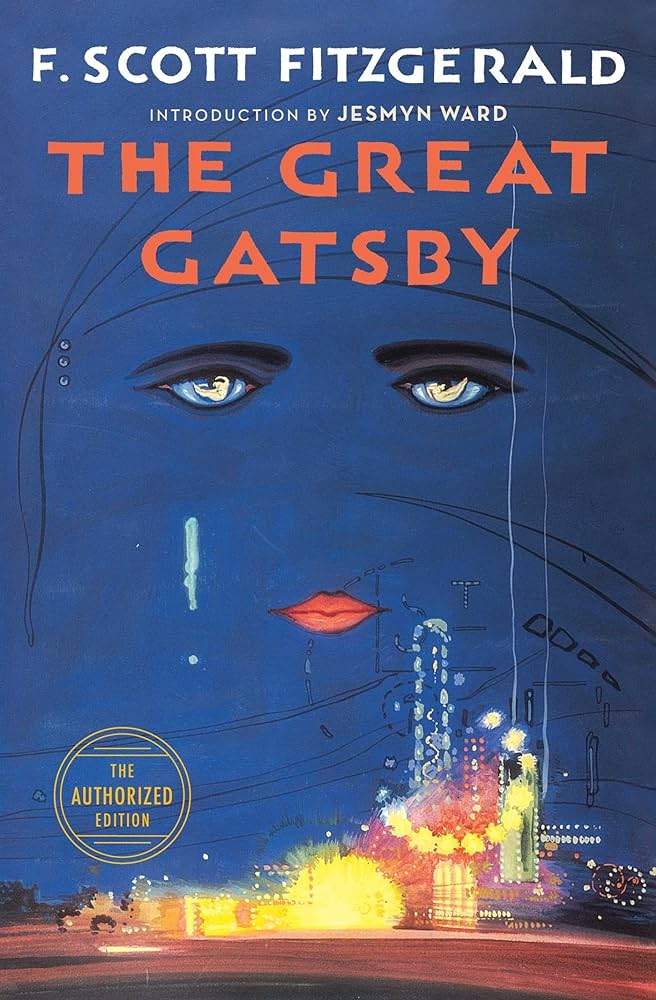
The Great Gatsby: Revised and Reimagined

Deep blue cover has disembodied eyes and both above a lit up cityscape.

by Kristen B.

F. Scott Fitzgerald’s masterpiece, The Great Gatsby, has always struck me as a story about selfish people doing terrible things, in the service of nothing much at all. It’s one of the books that most of us first encounter as assigned reading in high school or college. However, I find myself returning to it and continuing to be fascinated, as well as a bit repulsed. The slim novel packs of a lot of punch and has proven itself worth revisiting and even re-imagining.

In high school, we were given the dark blue cover with a lit-up city-scape and disembodied eyes looming above it all (see above). It haunts me. The jazz age fable recounts a tale of obsession and excess, capturing the essence of the 1920s. It also plays with some quintessential idea of the American Dream, but one that’s gone a little seedy and unappealing at the edges. After all, everyone seemingly aspires to the life of the rich and famous, spending summers in East or West Egg, driving fast cars, and attending Gatsby’s extravagant parties along with the up and coming, dreadfully naive Nick Carraway. But (again, but), there’s a cost.

The story takes place during one hot summer in New York, fitting for seasonal reading. The pivotal scene happens when the exhausting weather drives the main characters, Gatsby and Nick, Daisy and Tom Buchanan, and Daisy’s friend Jordan Baker into the city, hoping for respite and entertainment at The Plaza. From there, all the carefully maintained charades and illusions come apart, leading to unresolved tragedy. The book ends with a deep yearning for what might have been, if only other choices had been possible.

An Asian woman's with a short bob, wearing black gloves and holding a cigarette, is posed among white leaves.

What brought me back to Gatsby recently was The Chosen and the Beautiful by Nghi Vo. She is one of my current favorite authors (see The Singing Hills novellas), who turned this well-known story on its axis. The retelling stars professional golfer Jordan Baker and her lifelong friendship with Daisy, as opposed to newly-minted businessman Nick Carraway and his bewilderment with Jay Gatsby. Plus, the subtle (and not-so) metaphors of Fitzgerald’s text became all too real with the inclusion of magical realism. They really do float about in white linen in the opening scenes. Tom Buchanan continues to provide the White, patriarchal establishment’s status quo against which all their boats beat back so fruitlessly, but he is even less appealing through the female gaze. While everyone is still privileged to the point of carelessness, the feminine emphasis makes the book slightly more sympathetic and tragic.

It’s still a good idea to have the original under your belt before enjoying the other variations. I recently (finally) watched the 2013 movie, starring Tobey Maguire and Leonardo DiCaprio in a Baz Luhrmann production. It certainly does the story justice, and in some ways conveys the outrageous excesses better than the book with all the lush visuals and big scenes. The text and the film complement each other well. As is true for most Luhrmann movies, the soundtrack was amazing.

If you’re looking to refresh your memory of the story, without perhaps reading the original, consider the graphic novel adaptation by K. Woodman-Maynard. It does a good job of mixing the bare bones of the story with some of Fitzgerald’s more luscious prose. The illustrations and the placement of the words within the images makes some of the more subtle, interpersonal nuances more obvious.

The Great Gatsby, the ultimate tale of reinvention and breath-taking chutzpah in the name of love and ambition, is one of the cultural touchstones of the American literary canon. It’s worth retelling, to reconsider what else it can convey to audiences almost a century after it was published. If you aren’t familiar with it, summer is a great time to devote some time to those books that you have always meant to read.

Kristen B. is a devoted bookworm lucky enough to work as the graphic designer for HCLS. She likes to read, stitch, dance, and watch baseball (but not all at the same time).

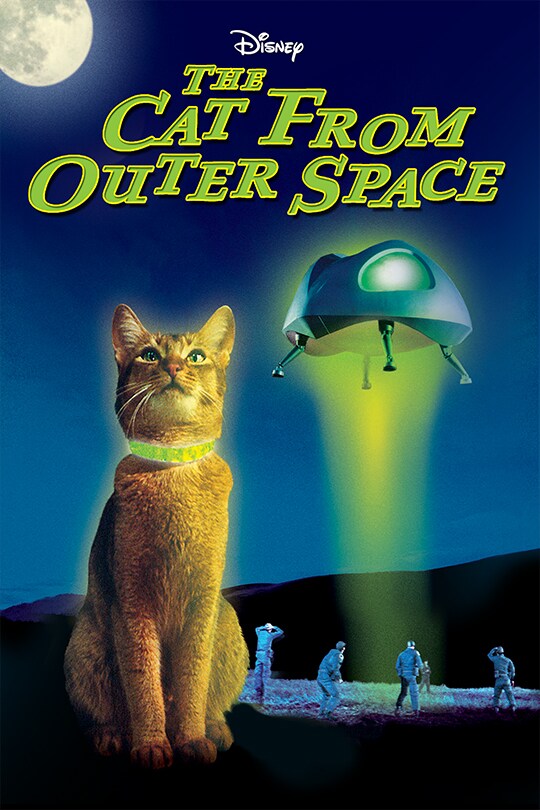
The Cat from Outer Space

An orange marmalade cat sits in the foreground, wearing a glowing green collar, while in the background a spaceship hovers above a group of seemingly confused people.

by Angie E.

I apologize in advance for the puns, but I can’t help but hold a very special place in my heart for a movie I first saw in 1978 with my mom and my sister at the Security Square Mall theater…back when Spencer Gifts and the smell of kettle corn were a big thing and the multiplex was not. Unless my memory is completely fooling me, this movie jump-started my deep love of and for cats. 

The Cat From Outer Space is a purrfectly out-of-this-world cinematic experience that will have you feline fine! This intergalactic tail, I mean, tale, stars a su-purr-naturally talented cat from another galaxy, and it’s a claw-some adventure from start to finish. 

From the moment our furry, four-legged friend crash-lands on Earth, you know you’re in for a wild ride. With a collar that’s basically a space-age Swiss Army knife and a penchant for piloting UFOs, our extraterrestrial feline is the cat’s meow of interstellar travelers. The human cast is equally entertaining, with their over-the-top reactions to the incredible abilities of our whiskered visitor. They’re all in on the secret, but they don’t seem to mind. Who can blame them? I mean, if a cat could fix your car and whip up a gourmet meal with the flick of its tail, you’d keep the secret too! 

The special effects might not be up to today’s standards, but that’s part of the charm. It’s like a time capsule from a bygone era of film-making. You’ll marvel at the “cutting-edge” technology and laugh at the adorable alien. You’ll witness one fur-midable showdown between our feline friend and a military general with a penchant for paw-sitively dramatic speeches. It’s an epic showdown that will have you on the edge of your seat, or should I say, scratching post? 

So, if you’re in the mood for a nostalgic, campy, and uproarious adventure that’s as delightful as a basket of kittens and so silly you’ll find yourself embracing it fully, look no further. The Cat From Outer Space is the cat-astrophic, uh, I mean, fantastic film you’ve been waiting for! Grab your popcorn and get ready to be whisker-ed away into a world of cosmic comedy and kitt-tastic capers! 

Angie is an Instructor & Research Specialist at Central Branch and is a co-facilitator for Reads of Acceptance, HCLS’ first LGBTQ-focused book club. Her ideal day is reading in her cozy armchair, with her cat Henry next to her.

Films for Change & Racial Equity Report

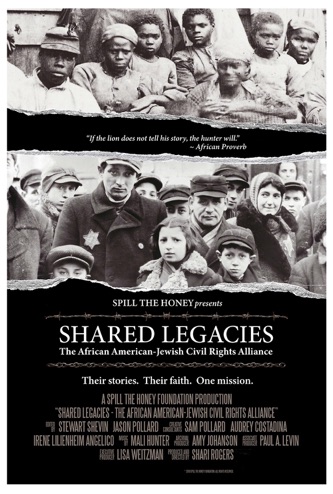
The Shared Legacy movie poster is all in grey scale, with a photo of a Black family shown on top and a Jewish family in the middle, with an African proverb separating them: If the lion does not tell his story, the hunter will.

Thursday, January 12
5 pm: film
7 pm: discussion
HCLS Miller Branch

Registration required.

Shared Legacies depicts inspirational African American and Jewish collaboration in the 60s Civil Rights era, shows that connection changing, and calls for it to be renewed in light of “divisive seeds of hate taking root anew in the American landscape.”

After viewing, participants and panelists from the African American and Jewish communities ask:

  • Can the legacy continue? How can our communities move forward with a shared agenda to promote racial equity in Howard County, as well as fight for an inclusive economy, education, and healthcare for all, and the equitable dispensation of justice?
  • Is there a joint role in the era of mass-incarceration and the post-January 6th America?
  • Can we move from friction (like that surrounding Ye and Kyrie Irving) to relationship and shared action?

The discussion will be informed by the local report recently released by HCLS: Inequity Within: Issues of Inequity Across Communities.

Films for Change is a series of documentaries about racial equity, each followed by panels featuring local leaders and organizations. Sponsored by the Horizon Foundation.  

In partnership with the African American Community Roundtable, the Jewish Community Relations Council of Howard County, The Martin Luther King Jr. Holiday Commission, and the Howard County NAACP.

Inequity Within Report

Over the last two years, Howard County Library System engaged more than 600 people in racial equity training. Using national data about disparities across education, health, housing, and legal systems, the trainers found that racial inequity looks the same across systems, socioeconomic difference does not explain racial inequity, and systems contribute significantly to disparities.
Howard County Library System’s new Inequities Within: Issue of Inequity Across Communities report examines the racial equity landscape in Howard County and across the state of Maryland. The data show disparities across education, healthcare, housing, economic, and legal systems for every racial group.

Page 10 of the Inequity Within report, showing bar graphs, titled "Jurisdictional Comparison of Socioeconomic Indicators".

In Howard County, for example:

  • Black residents are three times more likely to be denied a home loan than non-Hispanic white residents.
  • Hispanic students are 5.4 times more likely than white students to skip school because they felt unsafe.
  • Asian residents in the county are 1.8 times more likely to face poverty than non-Hispanic white residents.

As one of the wealthiest, healthiest, and most diverse communities in the state and the US, the belief that racial inequity does not exist here can be a hindrance to addressing those disparities.

We invite you to read the report, educate yourself, and join with us and others in this work.

For opportunities to learn more and discuss with community members, check here for classes and events.

Funded by a grant from the Institute of Museum and Library Services and administered by the Maryland State Library Agency

Do the Right Thing

Movie cover for the Spike Lee movie, showing Danny Aiello as Sal and Spike Lee as Mookie, looking up at the camera.  Mookie is holding a pizza box that says "Sal's Famous Pizzeria" and dressed in a work uniform with the red and green colors of the Italian flag.  Sal is wearing a black patterned shirt, white pants, and white tennis shoes.

by Eric L.

As the weather heats up and tensions in America never seem to ebb, I am reminded of the Spike Lee masterpiece (or “joint’ as he prefers to creatively call them), Do the Right Thing. I am surprised by the number of people I speak with who have not seen this film. I am a fan of Lee; I find him humorous, I like his style and his honesty. I also like how much he likes the New York Knicks, despite the fact that they are a fairly disappointing sports franchise. I’m not really sure why I appreciate his devotion to the Knicks, but perhaps I wish I sat courtside at the Washington Wizards’ games (they’re still my Baltimore Bullets). 

Visually the movie is very well done. The whole film takes place on a hot summer day in Brooklyn, New York in the late 1980s. Having spent much time in a southwest Baltimore small business cluster, it seemed pretty true to life and almost stereotypical. The setting is replete with the animosity, resentment, struggle, and misunderstandings of an American multiracial neighborhood. It’s a contentious place. Moreover, it reminds me of just how hot a city feels on the East Coast in summer and how riots often happen on scorching days. Lee creates and presents this masterfully, and the tensions are palpable. Someone I know that spent time in a similar environment, and is rather conservative-minded, claimed that the movie is “spot on.” I concur.

There is the Italian family who owns the pizza shop (Sal’s) for generations, the Asian family that owns the small corner store, (neither of whom presumably live in the neighborhood), the black and Hispanic residents, the white “gentrifying” guy that just bought the brownstone, etc. The scenes with Danny Aiello, Spike Lee, et al. filmed looking at the camera and enumerating racial epithets are raw, stripped down, and very powerful. By the way, you’ll recognize many great actors in the film, giving great performances.  

One of my favorite scenes, which is famous, involves the character that would be me. A young white man carrying his mountain bike, with longish hair, stubble, and running shoes accidentally steps on a black character’s “brand new white Air Jordans.” Then, a very telling exchange and slick commentary on race relations in the U.S. ensues. Like all great comedic moments, it is also tragic.  

There are several references to athletes and race throughout the film. In fact, Lee dons a Jackie Robinson jersey and wears Air Jordan sneakers himself. What’s more, one subtle detail is also clever – the white “gentrifier,” who accidentally mis-steps on the character’s shoes which he “paid $100 for,” is wearing a Larry Bird Boston Celtics jersey shirt. As a side note, if you’re interested in watching an outstanding documentary, check out Magic and Bird: A Courtship of Rivals. Even if you’re not into basketball or sports in general, it is a compelling story about race in America and the relationship of two kindred spirits. As a blonde kid with floppy hair, Larry Bird was my guy in the NBA for sure; however, he had no interest in being the “white savior” America desired. But I digress.

Lee’s examination of his own beliefs and experiences, neighborhood, and America is real art. I would go so far as to say it’s a must-watch for Americans. In sum, Do the Right Thing is a micro-examination of inner-city race relations and how they can easily boil over in the sweltering heat. After watching this film you may ask yourself, how could they not? 

Eric is a DIY Instructor and Research Specialist at Elkridge Branch. He enjoys reading, films, music, doing nearly anything outside, and people.

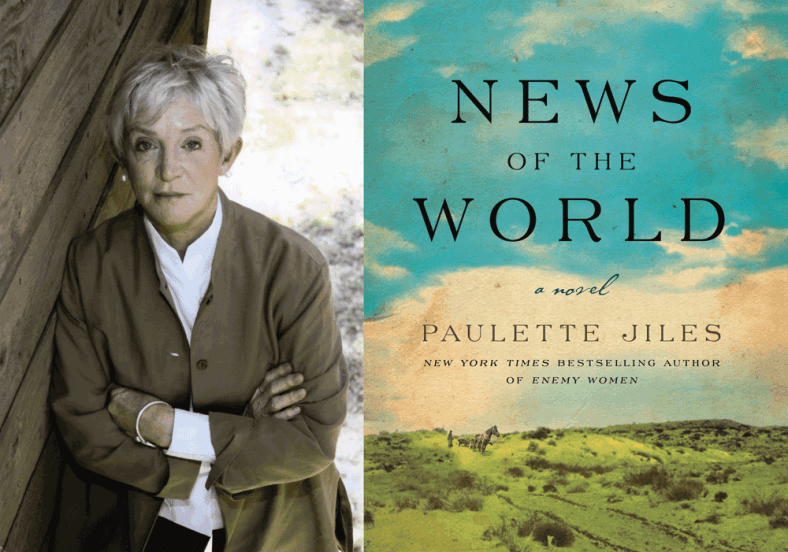
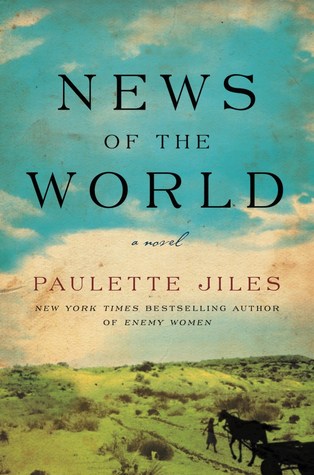
News of the World by Paulette Jiles

The title appears against a painting of a green landscape and blue sky with white clouds, with a silhouette of a girl leading a horse and cart in the bottom left

By Jean B.

I love a book with a map, so News of the World captured me even before page one. Throughout my reading, I pored over the sepia endpaper map of Texas circa 1870, with its bright red line tracing a path from Wichita Falls along the northern border with Indian territory, all the way down to San Antonio and the Rio Grande. As you might guess, given the map, this is a book about a journey – across both rough territory and psychological barriers. As the characters made their way along the bright red line, Giles’ beautiful prose transported me into this time and place and into the lives of Captain Jefferson Kyle Kidd, age 71, and Johanna Leonberger, age 10.  

It’s the Reconstruction era in Texas, a time of political turmoil and uncertainty, random violence and unexpected kindness, across an incredibly varied landscape. Captain Kidd, a survivor of three wars, has dedicated his life to connecting people through information. He is alone, having lost his wife and his printing business in the Civil War. Kidd now makes his living by traveling through small towns, performing live readings of newspapers from around the country and the world to isolated residents hungry for stories of faraway places and remarkable events. Suddenly, his nomadic routine is disrupted by an unsought responsibility – he must deliver Johanna, a traumatized orphan who has lived as a captive of the Kiowa tribe for six years and knows no other family, back to her relatives near San Antonio. Traversing that 400 mile path, the characters must overcome challenges small and large and, in the process, build mutual trust and companionship.

I would not call myself a fan of Westerns, in either novels or movies, but Paulette Jiles’ exquisite descriptions of the plants, weather, and settlements of this landscape drew me in. Her writing made me want to ride a horse through the hills, canyons, and prairies of Texas (minus the deadly threats along the way). Maybe I’ll do that someday, but in the meantime, luckily, we can get the visual experience by watching the 2020 movie based on the book! Starring Tom Hanks as Captain Kidd, the movie garnered four Oscar nominations, and you borrow the DVD from HCLS.  

While both the book and the movie open a window into a beautiful yet treacherous moment in Texan history, News of the World goes much deeper than a travelogue. Across the miles, the tragic characters discover the power of empathy to leap differences in age, language, experience and loss. Although the book is barely 200 pages, it paints a picture of great historical and personal complexity. If you’re looking for some armchair traveling this summer, News of the World is a journey worth taking – and it comes with a map!

Available in print, large print,audio CD,  ebook, and eaudio, as well as DVD.

Jean B. is a Children’s Instructor and Research Specialist at the Central Branch. A fan of historical fiction and nonfiction, she also enjoys exploring the natural world through books and on foot.

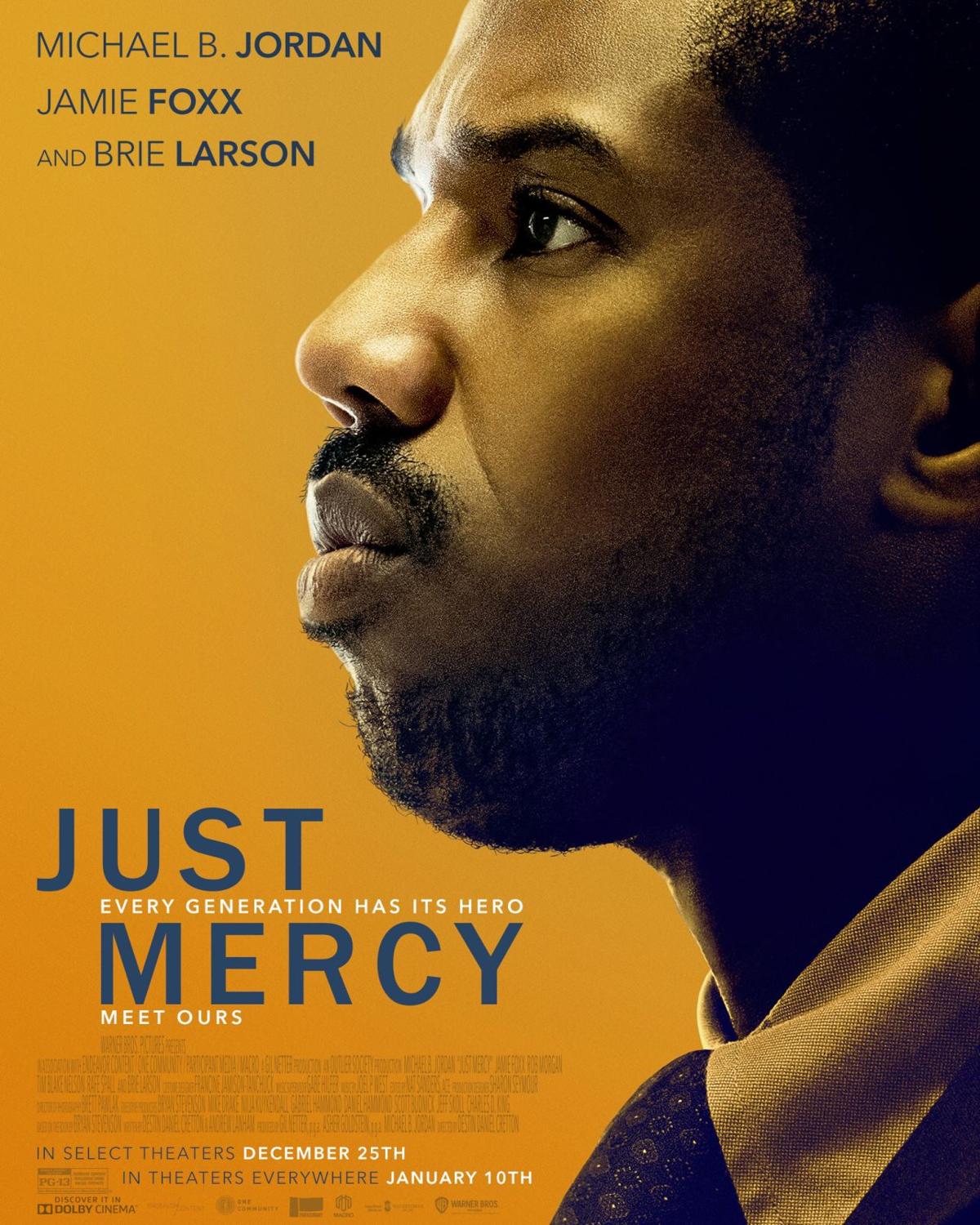
Just Mercy

Michael B Jordan stands tall in a gray suit and blue shirt and tie, looking off into the distance.  Behind him, in muted yellow are scenes from the movie. Just Mercy is written in white, along with names of actors, Michael B Jordan, Jamie Foxx, and Brie Larson

Let me be clear… Just Mercy is a hard and emotionally draining movie to watch. And it needs to be seen. This film tells the true story of a civil-rights attorney, Bryan Stevenson (Michael B Jordan), who works to defend wrongfully convicted death-row inmate Walter McMillian (Jamie Foxx).

In this deeply affecting movie, the repressed and palpable fury that Bryan Stevenson feels sits uneasy with me. Jordan portrays the complexities of emotion in a stirring and emotive way. Stevenson conducts himself professionally at all times, even when the behavior he endures made me want to scream.  My indignation and anger at Stevenson’s mistreatment pales in comparison to the outrage at the injustices that are perpetrated against his clients. This film is honest and frank about sharp truths, and it had an impact on me.

In the United States, we proclaim, “Liberty and justice for all,” but this movie shines light on the harsh reality of systemic injustice. Our system is broken: for every nine people executed by the state since 1973, one person has been exonerated and released. It is an untenable rate of error. I felt uncomfortable after watching this movie and investigating further. However, I think it is important not to shy away from that response.

Sit in that discomfort.

Ask hard questions.

Have the conversations.

Advocate for change.

“Always do the right thing, even when the right thing is the hard thing.”

– Bryan Stevenson

Bryan Stevenson’s book, Just Mercy: A Story of Justice and Redemption, is available as an eBook and eAudiobook on CloudLibrary and OverdriveJust Mercy (Adapted for Young Adults) is also available on eAudiobook on Overdrive.

During the month of June, Warner Bros. has made Just Mercy free to watch through a variety of digital movie services in the US, including Amazon Prime Video, Apple TVFandangoNowGoogle PlayMicrosoft, the PlayStation Store, RedboxVudu,  and YouTube.

Just Mercy is rated PG-13 for thematic content including some racial epithets.

Click here to learn more about Bryan Stevenson’s work with the Equal Justice Initiative.

Kimberly is a DIY Instructor and Research Specialist at HCLS Elkridge Branch.  She enjoys reading, photography, crafting, and baking.