Sunday, October 5 2 – 4 pm HCLS Miller Branch Registration encouraged, as space may be limited.
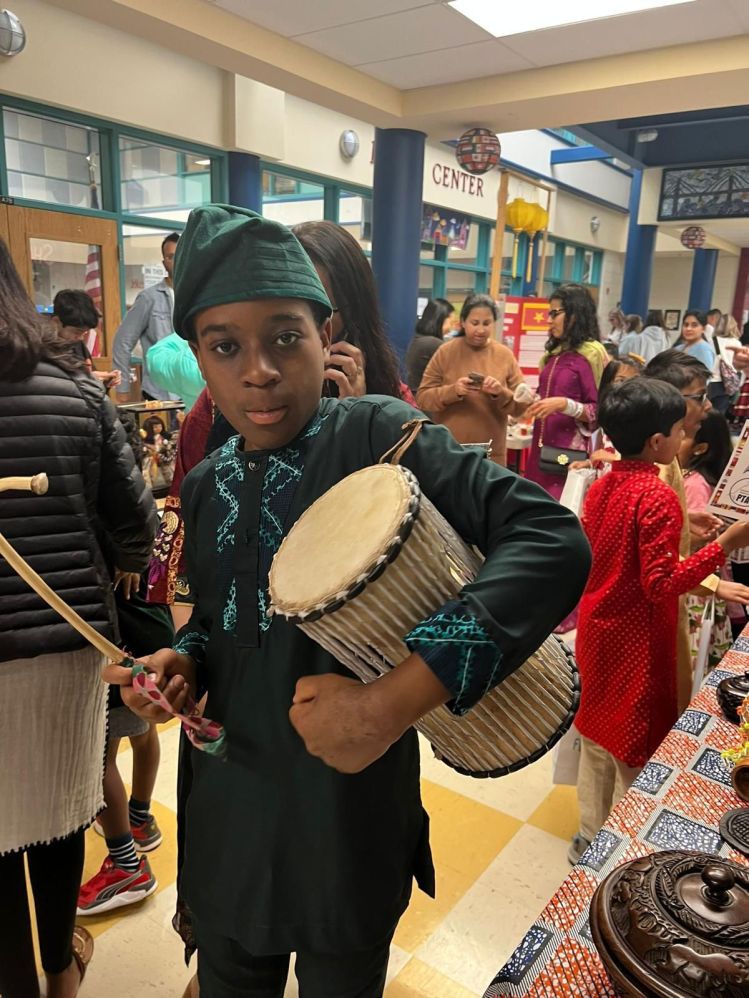
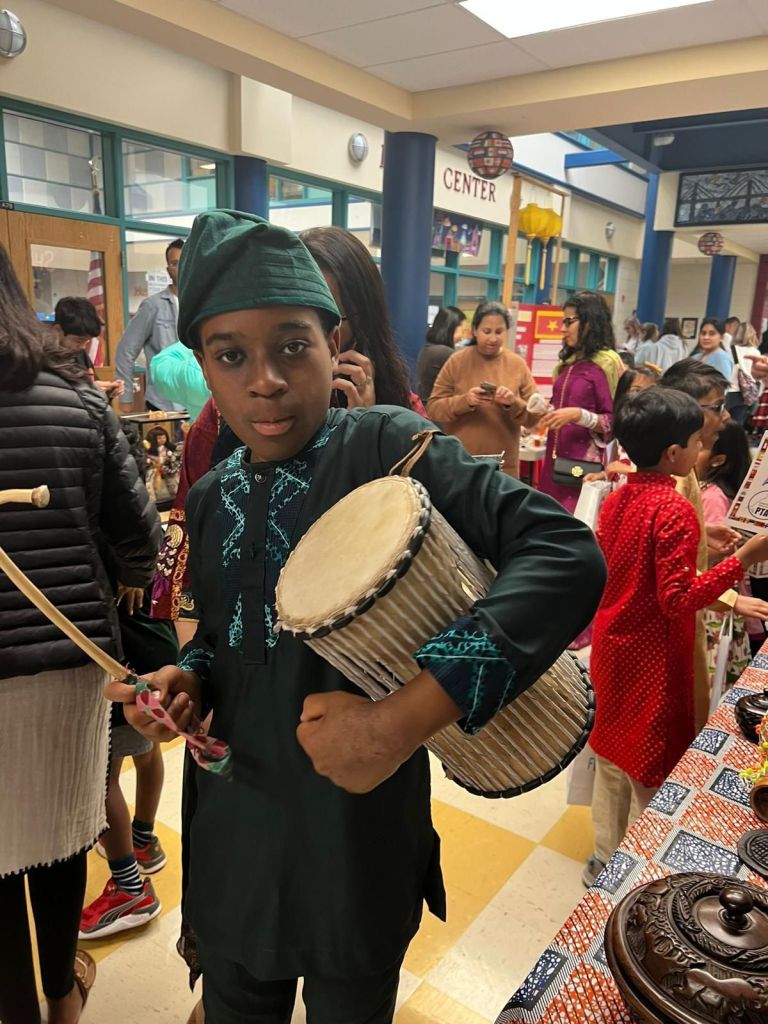
The Global Neighbors team invites you to join in a heartfelt celebration of the traditions, stories, and values that bind us together across generations at our upcoming Global Neighbors Africa: Experience the Continent event on Sunday, October 5 from 2 – 4 pm at HCLS Miller Branch! This special program invites our community to celebrate the vibrancy and diversity of Africa through storytelling, music, dance, and food. Connect with your neighbors to share in the wisdom of the past and the promise of the future.
An interactive and personal experience, Global Neighbors Africa showcases performances and demonstrations that highlight the continent’s regional richness. The event features art displays and offers additional layers of connection and inspiration. Intentionally inter-generational, this is about feeling, remembering, and being part of something bigger. It’s a reminder that the best lessons in life are often shared through the moments we create together.
Guests can enjoy the opportunity to sample regional African food (as long as supplies last) and take home a door prize (also as long as supplies last). Celebrate connection, joy, and cultural discovery. Everyone is welcome – bring your family, friends, and curiosity as we travel the continent together, right here at the library.
Piyali is an instructor and research specialist at HCLS Miller Branch, where she facilitates two book discussion groups: Light But Not Fluffy and Global Reads. She keeps the hope alive that someday she will reach the bottom of her to-read list.
Want a free alternative to your paid streaming subscription? The library has you covered. With your card, you can stream unlimited music from Freegal, which has more than 20 million ad-free songs. Not only do you get tons of classic albums and artists, but Freegal also features many cool and creative playlists to fit your activities and vibes. There’s an app, too, so you can blast your favorite artist in the car or hit the gym with an energetic playlist. I found playlists like “Hits from the Wasteland,” which has music from the Fallout game series, and “Metal Morning Workout,” in case you want to lift weights to Judas Priest and Ozzy Osbourne.
Included is Sony Music’s vast catalog, which includes Beyoncé, Pink Floyd, Ray Charles, OutKast, Leonard Cohen, and Oasis. I was surprised to find how much of my regular listening I could have been doing for free all along with my library card.
Sly and the Family Stone is included in Freegal, so to mourn Sly Stone’s recent passing, now is a good time to revisit his pioneering funky R&B work. And if you enjoyed A Complete Unknown, last year’s Bob Dylan biopic starring Timothée Chalamet, Bob Dylan is featured in Freegal as well, so you can explore his folk and rock eras from the film as well as his many sides that lie beyond in his later studio albums and live recordings.
Don’t forget about our CDs, either. Your car or computer may have a built-in CD player that lets you take home and explore a plethora of tunes whenever you visit the library. Revisit 2024 phenomena like Charli XCX’s brat or Kendrick Lamar’s GNX or discover new releases like Franz Ferdinand’s The Human Fear and Tate McRae’s So Close To What, free of charge, offline, and with no ads.
Alex Pyryt is an IT Systems Support Specialist at the Administrative Branch of the Howard County Library System.
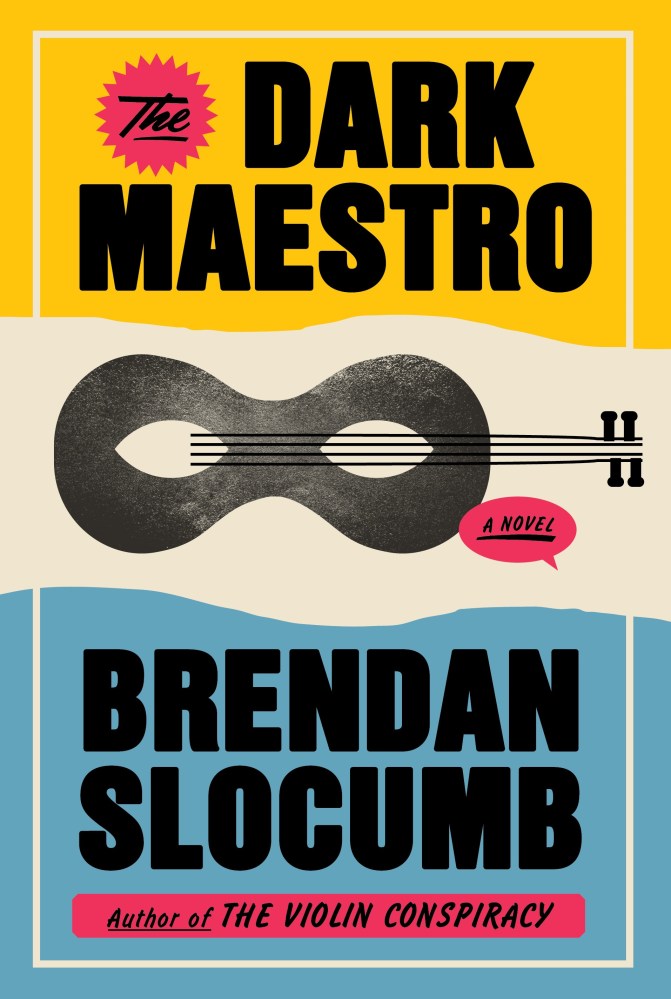
Author Works: The Dark Maestro by Brendan Slocumb For adults. Register at bit.ly/Author-Slocumb Tue Sep 16 5:30 – 6:30 pm Book Signing 6:30 – 7:30 pm Author Event East Columbia 50+ Center 6610 Cradlerock Way, Columbia (adjacent to library)
His cello made him famous. His father made him a target.
Curtis Wilson is a cello prodigy, growing up in the Southeast DC projects with a drug dealer for a father. But through determination and talent, and the loving support of his father’s girlfriend, Larissa, Curtis claws his way out of his challenging circumstances and rises to unimagined heights in the classical music world — even soloing with the New York Philharmonic.
And then, suddenly, his life disintegrates. His father, Zippy, turns state evidence, implicating his old bosses to the FBI. Now the family, Curtis included, must enter the witness protection program if they want to survive. This means Curtis must give up the very thing he loves most: sharing his extraordinary musical talents with the world. When Zippy’s bosses prove too elusive for law enforcement to convict them, Curtis, Zippy, and Larissa realize that their only chance of survival is to take on the cartel themselves. They must create new identities and draw on their unique talents, including Curtis’s musical ability, to go after the people who want them dead. But will it be enough to keep Curtis and his family alive?
A propulsive and moving story about sacrifice, loyalty, and the indomitable human spirit, The Dark Maestro is Slocumb at the height of his powers.
Brendan Nicholaus Slocumb was raised in Fayetteville, NC, and holds a degree in music education (with concentrations in violin and viola) from the University of North Carolina at Greensboro. For more than twenty years he has been a public and private school music educator and has performed with orchestras throughout northern Virginia, Maryland, and Washington, DC. He is currently based in DC.
Author Works: The Art Thief: A True Story of Love, Crime, and a Dangerous Obsession by Michael Finkel For adults. Register at bit.ly/Author-Finkel Wed Sep 17 7 – 8 pm online: register to receive a link
Stéphane Bréitwieser is the most prolific art thief of all time. He pulled off more than 200 heists, often in crowded museums in broad daylight. His girlfriend served as his accomplice, and his collection was worth an estimated $2 billion… but he never sold a piece, and instead displayed his stolen art in his attic bedroom.
He felt like a king. Until everything came to a shocking end.
The Art Thief, a spellbinding portrait of obsession and flawed genius, Michael Finkel gives us one of the most remarkable true-crime narratives of our times, a riveting story of art, theft, love, and an insatiable hunger to possess beauty at any cost.
Bauder Adult Battle of the Books is a new Friends & Foundation of HCLS fundraiser event launching as part of the Library’s 85th birthday celebration. It’s an adults-only reading competition where teams of 3–5 people read six preselected books and compete in a trivia challenge held at local restaurants. Proceeds will support some of your favorite Friends’ sponsored initiatives, such as author events, summer reading, Project Literacy graduation, and the youth Battle of the Books.
Why does the United States celebrates Labor Day on the first Monday of September? As a child, I never gave it much consideration. Any importance was overshadowed by having the day off from school. The answer lies in the checkered history of the American labor movement, which is as much about setbacks as it is about resilience. Workers fighting for their rights, from the railroads to the streets of Chicago, were often met with violent resistance. Nonetheless, those hard-won victories have shaped the experience of modern workers to this very day.
American labor is by its nature intersectional, with roots in the economic and social divides that culminated in the Civil War and shaped the centuries to follow. It is a history where the shop floor, Sunday service, and the union hall shared the same spaces. The advancement of technologies, from railroads to steel drills, brought both opportunity and exploitation. These emerging conditions forced workers to organize, not just for wages but for dignity. As these struggles unfolded, they drew upon the power and potential of immigrant communities, civil rights groups, preachers, and artists alike.
Music has been a constant companion of the laborer, carrying meaning and messages farther than words alone. From the plantations and fields came spirituals like Go Down, Moses, which turned suffering into a promise of deliverance. John Henry commemorates the toil of railroad laborers and transforms it into a ballad of defiance. Folksingers gave voice to the dignity of ordinary folk, whose effort and struggle sustain the very functioning of our society. Later artists like Pete Seeger and Woody Guthrie would carry this tradition forward, inspiring generations of protest music.
If you’re interested in learning more about the labor movement in the United States, check out this list of resources available at HCLS.
From Factories to Folksongs For adults. Register here. Celebrate Labor Day through the exploration of the music, industrial advancements, and struggles that define this long history. Fri, Sep 5 | 11:30 am – 1 pm HCLS East Columbia Branch
Ian Lyness-Fernandez is not quite used to being an Instructor at HCLS East Columbia Branch. He hopes his passion for learning can somehow translate into a skill for teaching.
Music has been an integral part of my life, and I consider it almost like a second language full of nuance and strange etymology. From cello and bass lessons in middle and high school, exploring other strings and voice in college, to finding a new prog band, music has always been a mainstay for me. Making a habit of falling down musical “rabbit holes” exposes me to all kinds of new musical vocab, including some really inventive genre bends and blends. Fun stuff like modern metal mixed with Japanese instrumentation , or EDM with classical samples. Much like how books can transport you to another place and time and travel abroad can expose you to more of humanity, I think that a widely cast net of musical experiences can benefit the listener in similar ways.
The universal nature of music is one of the many facets that we will explore in Musical Mondays, HCLS’ new music-centric book club. If you’ve ever had a song give you goosebumps, wondered how music affects the brain, or thought about expanding your own musical vocabulary, then come to Musical Mondays! Whether you are a professional musician, avid car singer, or just enraptured by music like so many of us are, I can’t wait to hear your experiences. Bring song recommendations as well!
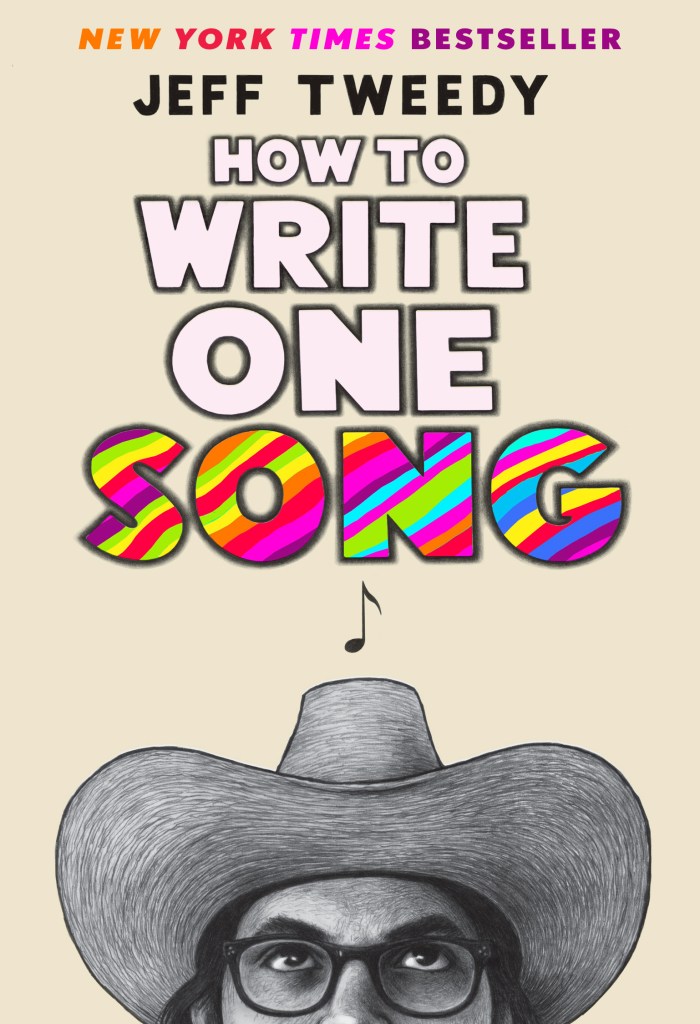
Musical Mondays meets the second Monday of each month, from 6-7 pm at HCLS Miller Branch. We will read both nonfiction and fiction titles, the first of which is How to Write One Song by Jeff Tweedy. Tweedy is best known as the lead singer/songwriter of Wilco and has written several books about music and the creative process. You can pick up copies of the book at the branch.
Sep 8: How to Write One Song by Jeff Tweedy, lead singer and songwriter of hit band Wilco Oct 13: The Violin Conspiracy by Brendan Slocumb Nov 10: Anatomy of a Song by Marc Myers
Tony is an Instructor and Research Specialist at HCLS Miller Branch. He has a degree in history, started playing cello in third grade, and enjoys reading science fiction and fantasy.
“I had actually DONE IT. I had made horses appear!!!” Neko Case recalls a defining moment described as “a bit of magic” from her childhood. Neglected by young parents who left her home alone from a too-early age, she was constantly hungry for food and companionship. One day, while desperately yearning for a horse, she makes not one but two horses appear before her eyes, a visualization she describes as “a real arrival to a real place.” In drawing these beasts from her imagination, Case establishes a sense of self and a creative identity that proves comforting.
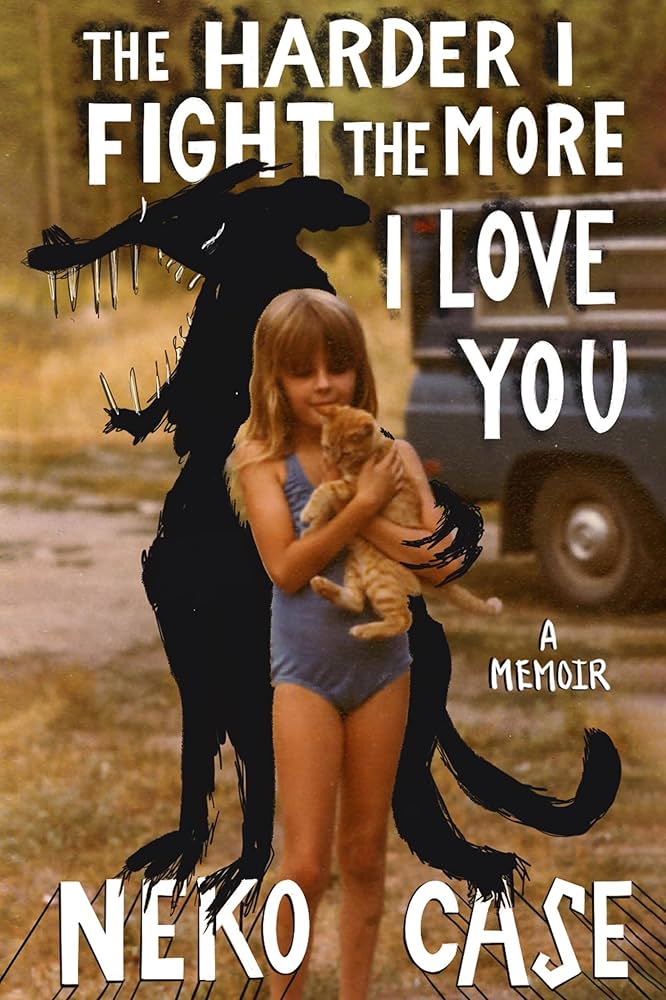
She says that today, at age 52, she, “can still see the horses clear as day.” An early scene from Case’s new memoir, The Harder I Fight The More I Love You, it is one of many pictures drawn from memory that illustrates a fierce bond with nature and longing for connection in a world in which she felt unwanted. Today, she is a critically praised Grammy-nominated artist and has recently been welcomed back to the Grand Ole Opry after being banned in 2001 after taking her shirt off (playing an outdoor festival on a sweltering day, she found herself delirious and stripped down to her bra to avoid heatstroke).
I discovered Neko Case in 2005 when my friend Amanda tipped me off to her. Encouraging me to give her a listen, she said the name of Case’s third album like a command: Blacklisted. So I listened. The opening song Things That Scare Me hooked me from the start with its dark country twang and noir vibes (Case mentions the recently departed David Lynch as a strong influence). By the second song, “Deep Red Bells,” the saturated images of her haunted world gave me chills and had me fully converted:
The red bells beckon you to ride A handprint on the driver’s side It looks a lot like engine oil and tastes like being poor and small And Popsicles in the summer
Case details her traumatic childhood, starting out poor and small outside Bellingham in Northwestern Washington State. She recalls communing with the velvety-tracked ferns outside the trailer she shared with her mom and dad as she lay on the ground to “pet the soft dots” for hours. Throughout the book, she speaks reverently of animals and nature as wondrous beings, benign and free of ill-intent, unlike the adults in her life. Looking back on a short stint in her early childhood when the family lived near Cocoa Beach, FL when her dad was in the Air Force, Case recalls encounters with crabs, “little magicians of harmless danger, their black eyes atop long stalks like cartoon exclamation points.” This kind of vivid imagery, familiar to fans of her music, injects her prose with sound and color, conjuring up a sort of real-life fairy tale.
Things get dark in Case’s story when, as a second grader, her Dad abruptly informs her that her mother is dead. His story is that her mother has been “very sick” recently, which is news to Case, who recalls only a few doctor’s visits, nothing that seemed serious. Stunned with disbelief, she gets on with life as kids do, only to be told by her father a little more than a year later that her mother is actually alive and has been living in Hawaii to receive treatment for her illness. The explanation is that her mother left so that the family wouldn’t have to see her suffer. Case is so elated to have her mother back that she doesn’t really question the story until years later, and the family never speaks about it.
From these turbulent beginnings outside Bellingham, Case crisscrosses the state as she splits time between her parents, who have divorced. Whether with her mom or dad, she is left alone for hours at a time, an only child who finds connection to the music that she hears on the radio: Buffy Sainte-Marie, the Go-Go’s, and Blondie are among those whose records she listens to in her school’s library when the other kids are playing at recess. Music becomes Case’s comfort and escape. Putting on headphones and pressing play on her “lavender off-brand, gas-station Walkman” helps her drown out the noise of a menacing world occupied by depressed, neglectful parents and the ever-present threat of the Green River Killer, whose murders dominate the local news. When she leaves Washington to attend a fine arts college in Vancouver, BC, she starts playing drums in a punk band called Maow. Feeling comfortable behind the drum kit, she’s reluctant to sing and one day asks her bandmates which one of them should sing a song when one shoots back “YOU sing it!” And so she does. The rest is history.
Although she had loved to sing all her life, it took her a long time to consider herself a capital S singer. Throughout a 30+ year career spanning solo and collaborative albums with such bands as power pop dynamos The New Pornographers, Case has taken ownership of her voice—which ranges from a soaring clarion call to a soft, breathy lilt and is always uniquely her own. I tore through this page-turner of a memoir, enthralled by Case’s heartbreaking story told in her trademark voice. Case’s sense of humor and nuanced perspective help the reader process some of the darker elements of her past, which includes severe neglect and sexual abuse. Ultimately, this is an affirming tale about survival and the transformative power of art. I came away from the book with an enhanced appreciation for the strength underpinning Case’s voice, eagerly anticipating her future projects, which include a forthcoming album later this year as well as a musical adaptation of the 1991 film Thelma and Louise.
The Harder I Fight The More I Love You is available in print, e-book, and e-audiobook. Neko Case also publishes a Substack newsletter called Entering the Lung.
Holly is an Instructor & Research Specialist at HCLS Miller Branch. She enjoys reading widely, knitting sporadically, and baking as often as she gets the chance.
It’s 1982 and rock and roll musician Bruce Springsteen is reeling from triumph after triumph. He experienced phenomenal acclaim and commercial success with three successive albums (Born to Run, Darkness on the Edge of Town, and The River), two show-stopping worldwide tours with the E Street Band, and a massive hit single on the radio that’s still on the lips of his multitude of fans today – everybody’s got a hungry heart, right? But there were disappointments and challenges, too. A failed romantic relationship, as well as exhaustion from a bitter legal fight with his onetime manager, Mike Appel, left Bruce questioning the direction of the band and, more importantly, how he envisioned his future as an artist and songwriter.
1982 was a year of tremendous change in the music industry; MTV had launched in August of 1981, and Michael Jackson’s Thriller, still the best-selling album of all time, changed the way record producers thought about hit singles and short-form videos. Everything was splashy, colorful, and calculated to grab your attention. But Bruce had a different ethos altogether.
Enter Nebraska, with its black-and-white cover and photographs: Bruce’s album of rootlessness and isolation, a lonely place with a “dark highway where our sins lie unatoned,” as he says in the lyrics of “My Father’s House.” With its stripped-down sound and Woody Guthrie-esque lyrics, Bruce wanted to plumb the soul of rural American culture. He wrote about the forgotten and spiritually lost: from the Starkweather killings, to the decline of Atlantic City in his home state, to the inner musings of a worried police officer whose brother couldn’t stay out of trouble with the law. Originally recorded in his bedroom as a series of demos on a four-track TEAC recording machine, the album baffled a lot of people in the record industry and caused a few headaches for the engineers trying to mix those primitive tracks down into some semblance of a releasable recording. But when the band tried, and failed, to make the demos into E Street-style rock-and-roll anthems, Bruce knew that the tracks had to be released as they were. Warren Zanes was the guitarist for The Del Fuegos and a contemporary of Springsteen’s; as a writer who is also a musician, he does a wonderful job of telling the story of that process, with descriptions of the technical detail that are fascinating for music aficionados but which won’t overwhelm the casual reader.
Near the end, Zanes is discussing Elvis Presley and his impact on Springsteen as a child, and states that, “His [Presley’s] end would suggest that what might start as an American dream can become a deal gone very wrong” (273). Reading about how Springsteen wrestled with issues of identity and belonging, as well as personal depression, it’s clear that the songs on Nebraska were his attempt to reconcile his American dream – success and the freedom and escape that rock and roll represented – with the decline of the cultural touchstones like Presley who inspired him. As Zanes asks earlier in the book, “who should fight to expose all that was hidden from view?” (78). The answer is artists like Springsteen, driven by their artistry to answer our questions, expose our flaws and contradictions, and illuminate our common truths. He continues to do so today, decades into his journey as a musician and songwriter.
Author Warren Zanes looks not just at the making of Nebraska, but also at the cultural landscape it emerged from and the lasting impact it had on the musicians and fans with whom it resonated. Filled with interviews with musicians I admire – Rosanne Cash, Richard Thompson, and Dave Alvin, among others – as well as excerpts from Peter Ames Carlin’s Bruce and extensive interviews with Bruce himself, this is a well-researched and deeply thought-out tribute to a great album, one very specific to its moment and place in music history.
Deliver Me From Nowhere: The Making of Bruce Springsteen’s Nebraska by Warren Zanes is available from HCLS in print.
Julie is an instructor and research specialist at HCLS Miller Branch who finds her work as co-editor of Chapter Chats very rewarding. She loves gardening, birds, crime fiction, all kinds of music, and the great outdoors.
A title recently caught my eye while I was tidying books around the branch: A Dream About Lightning Bugs. I’ve mentioned my ridiculous reading challenge before, and one of our categories this year is a book with 24 letters in the title. So, I’ve started to count letters in titles to see if I can find a fit. Lo and behold, this title that grabbed my attention also happens to have 24 letters in it! (We can disregard the subtitle for these purposes.) Plus, it is a memoir by a musical artist I enjoy. I was sold!
My reading of print books has been going very slowly in recent months, so rather than check out that copy, I looked on Libby to see if the e-audiobook was available. Happily, it was, AND it was narrated by the author. Things were lining up very nicely. I don’t tend to read a lot of biographies, or nonfiction in general, but this seemed meant to be.
I was pretty solidly in the target audience of Ben Folds during his peak fame with Ben Folds Five. His voice and snippets of songs shared in the audiobook put me in a pleasantly nostalgic mood, and I was excited to find that most of the Ben Folds Five songs I remember are available on Freegal as well. [If you haven’t checked out Freegal yet, take a look at this post to learn more.] I did not know a lot about his life or musical journey before listening to A Dream About Lightning Bugs, but Ben’s down-to-earth attitude and conversational tone comfortably brought me along for the ride. He acknowledges repeatedly and from the beginning that he had a lot of luck and privilege to help him along his way, and he explicitly thanks a number of people who provided support, assistance, and guidance, especially educators.
I don’t tend to pay much attention to the lives of celebrities, so hearing about his journey was interesting and informative to me. Some might not consider Ben’s “cheap lessons” all that cheap, but there was certainly potential for more negative outcomes in many of the stories he shares. One section which especially stuck out to me is called “Creative Visualization or Useful Delusion?” In it, Ben describes an experience he’s had several times in which he has a vision of something happening and sees it as inevitable, which enables him to achieve things that would otherwise seem – and be – impossible. “It’s the universe that wants it to be so, and so it shall be. I only have to follow through on my part.” If only we could summon that kind of focus and confidence on command! Even Ben admits that it comes from outside himself, he cannot wish it into being.
From performing on a keyboard with digital sampler at a German restaurant, while wearing lederhosen and wooden clogs, to Artistic Advisor to the National Symphony Orchestra, Ben Folds has had quite a journey in music and in life. Perhaps you can learn some “cheap lessons” for free just by reading – or listening – to his book.
Content note: Ben Folds uses expletives freely throughout his book.
Eliana is a Children’s Instructor and Research Specialist at the Elkridge Branch and co-chair of the HCLS Equity Committee.She loves reading, even if she’s slow at it, and especially enjoys helping people find books that make them light up. She also loves being outside and spending time with friends and family (when it’s safe).
Music can really set the mood for any occasion, even if the occasion is cleaning your house. Playing the right tunes can energize, relax, or provide the catharsis you need to express your feelings. Over our lifetimes, we’ve had to access music in all different formats: vinyl records, 8-track, cassette tapes, CDs, MP3s, and more. Maybe you miss visiting the local record store to buy the newest release from your favorite artist. Maybe you remember waiting by the radio to record a song you wanted onto a mix tape. Or maybe you have mostly listened to songs you downloaded or streamed online. Whatever your personal history, the landscape of how we consume music has definitely changed.
Thankfully, the library has continued to offer options for ensuring everyone has access to the music they enjoy. We still provide music CDs for borrowing, if you have a device with which to listen to them. However, I want to highlight another resource that you may not be aware of: Freegal Music.
Freegal, a clever portmanteau of “free” and “legal,” gives you access to an extensive library of music with your library card. When you log into Freegal with your library card number and PIN, you have access to more than 7 million songs, including Sony Music’s catalog of legendary artists. You can download up to 3 songs each week (DRM free, so they are yours to keep once you’ve downloaded them) and stream unlimited songs. The range of artists, songs, and styles is vast, and everyone is sure to find something they enjoy.
I’ve been pleasantly surprised by how many songs and artists I have been able to find on Freegal. I can create my own playlists to suit my needs or explore existing playlists and discover music that’s new to me. The mobile app makes Freegal especially convenient, allowing me to stream music from my phone anytime. As CD players become harder to find, I especially appreciate access to some of my favorite jams without having to hassle with ripping them all off the CDs I have and transferring them to my phone.
Eliana is a Children’s Instructor and Research Specialist at the Elkridge Branch and co-chair of the HCLS Equity Committee.She loves reading, even if she’s slow at it, and especially enjoys helping people find books that make them light up. She also loves being outside and spending time with friends and family (when it’s safe).
I’ve been a U2 fan since the 80s when they released The Unforgettable Fire album. I eagerly purchased that album and The Joshua Tree, learning all the songs and watching all the videos. During The Joshua Tree tour, I saw them perform in Austin, Texas in November 1987. When Rattle and Hum came out, I eagerly bought the CD and saw the documentary in the theater.
College is a formative time, and U2’s lyrics really spoke to my growing social justice consciousness. I was a member of Students Against Apartheid, and I was starting to follow the news out of El Salvador. Bono’s words about injustice, laced with spiritual references, moved me. Their music propelled and sustained me as I graduated and started putting words into action, joining a domestic volunteer program and working for justice.
Over time, their musical style and my tastes diverged and I didn’t follow them as closely. But when I heard about Bono’s memoir, Surrender: 40 Songs, One Story, I wanted to read it. He writes about his childhood in Ireland, with a Catholic father and Protestant mother, during the Troubles. His mother died of a stroke when he was just 14, leaving Bono, his older brother, and his Da in a state of shock that they never discussed. His resulting and unresolved anger issues come up over and over.
“Drummer seeks musician to form band.” Six words that changed Bono – and the world. Larry Mullen’s flyer, posted in the school where he, Bono, David Evans (the Edge), and Adam Clayton attended, pulled together four classmates who have been playing together since 1976. A fifth student became Bono’s soulmate and wife. He and Ali Stewart wed in 1982 and have four children.
Throughout his memoir, Bono writes about growing up amid violence in Northern Ireland as well as his spiritual journey, one that he shared with the Edge and Larry at a small community church, and how both deeply shaped their sense of justice, lyrics, and music. Bono drives himself – and those around him – relentlessly to be his best. It was interesting to read how many times the band almost broke up because of his ideas, which often differed from his bandmates. Thankfully for their fans, they always come to an understanding.
As U2’s success grew, so did Bono’s belief in using his fame for good. He joins another “band” as an activist, immersing himself in issues, meeting with world leaders, and traveling the globe on relief missions. He was instrumental in the Jubilee 2000 initiative, to convince the United States and other nations to start the new millennium by forgiving the unpayable debt of African countries, and he worked to persuade the U.S. to respond to the global AIDS pandemic in a major way. One of his most surprising stories was about meeting the late Senator Jesse Helms who blessed Bono in his office and later repented for the way he spoke about AIDS (apparently the Edge was not happy when he learned about that meeting). More recently, he and the Edge made an undercover trip to Ukraine to meet with President Zelenskyy and perform in a makeshift bomb shelter.
It’s clear to anyone who listens to U2’s lyrics and reads this book that Bono is a man of deep convictions. He treasures his lifelong friends, he deeply loves his wife and children, and he cherishes his bandmates, who have become his extended family. He is passionate about people on the margins of society. Bono recognizes his responsibility to work for justice.
As I alternated between reading the physical book and listening to Bono narrate the audiobook, I returned to those first albums that first made me a fan. I found some new songs that I added to my U2 Faves playlist, which has been on repeat for the last few weeks. “I will sing, sing a new song…”
You can find U2’s music for free on Hoopla, using your library account.
Christie is the Director of Communications and External Affairs for Howard County Library System. She loves walking through the network of pathways in Columbia, sitting on the beach, and cheering for the Baltimore Orioles and Texas Aggies football team.









 CHAPTER CHATS