Sisters with Transistors

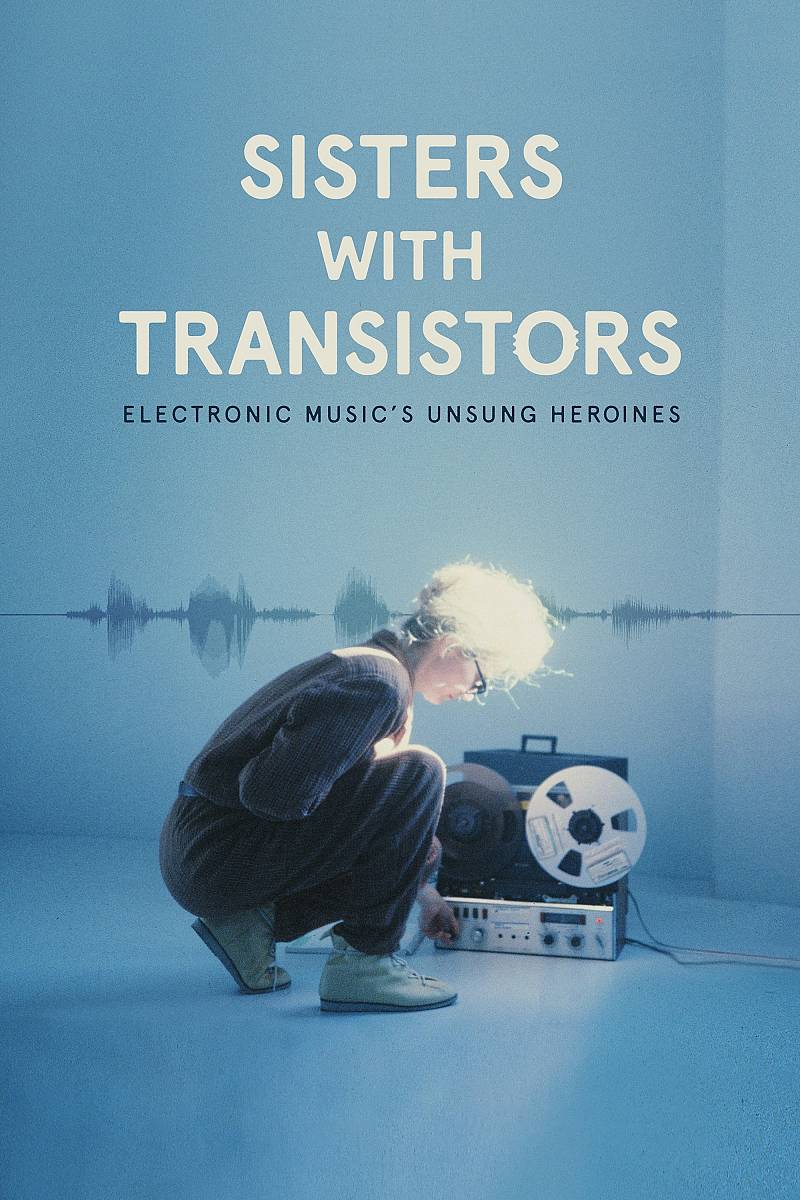
A woman squats in front of an old reel to reel recording device. Her hair appears white in a bright light and a sound wave rests behind her. The cover is a

by Robyn E.

“The history of women has been a story of silence, of breaking through the silence… with beautiful noise.” 

There was a time when a harmonious sequence of bleeps and bloops would not be considered music. Nowadays, the influence and techniques of electronic music are so ubiquitous, you can hear them in most songs found on the pop charts. A good number of my favorite music artists are influenced by this broad genre umbrella. The more sonically creative and mind-bending tracks I’ve enjoyed have made me wonder: Did they hear these magnificent sounds swirling in their heads first? Or did they just emerge from trial and error, through the persistent fiddling of knobs on machinery? 

Sisters With Transistors is a documentary film that puts the spotlight on the women who contributed to the birth of electronic music but who are often relegated to the background. They brought their experiences in math, science, and art along with a passion for experimentation to create sounds that, at the time, sounded like nothing that had existed on this planet before. Through archival footage and testimonies, we get to see each creator with their own equipment and hear about their creative processes, influences, and philosophies.

One important contributor was Delia Derbyshire, who arranged the electronic version of the opening theme to Doctor Who. She credited her love of abstract and meaningful sounds to the World War II air-raid sirens she heard as a child. The duo of Bebe Barron and her husband Louis Barron created sounds by overloading homemade circuits. Strange and unique sounds emerged from the resulting burnout which they then recorded, transformed, and edited. They are best known for creating the soundtrack to the movie Forbidden Planet, considered the first movie with an all-electronic score. There are many other stories like these to be found within the film. 

Some of the equipment that could be found in these pioneers’ studio-laboratories include homemade electronic circuits, tape recorders, electronic oscillators, and synthesizers. Each of the women featured harnessed new technologies for their creative liberation, in spite of fears that these same tools might instead be used for dehumanization. There was also, in a way, freedom for these women. Since they were not accepted through more mainstream outlets such as radio stations or record companies, they ultimately had more control over what they created. Adopting a DIY mentality was essential, not because they chose to, but because of the barriers they encountered.  

While watching this film, seeing the raw creativity and curiosity on display lit something in my own brain. I was taken back to a time in my younger years when I would experiment with tape recorders (did any other fellow 90s kids have a Talkboy tape recorder??), capturing snippets of sound effects, songs, and TV audio and assembling them into a sequence to create what I thought at the time were hilarious results. To be honest, I genuinely don’t think I could listen to those tapes now if I ever found them. Still, the liberating feeling of artistic experimentation and expression is an important one to keep alive. That same spark of creativity can be so difficult for me to capture these days, but I love to experience it vicariously through others. 

While certainly only a cross-section of the musicians who contributed to the genre, Sisters With Transistors offers a fascinating look at the women who helped lay the foundations for the evolution of electronic music that followed. Here’s to those who follow the call of the unknown and answer with unearthly and beautiful noise. 

Robyn is a Customer Service Specialist at the East Columbia Branch. She enjoys various media that paint a surreal or dark picture, animation, drawing, cats, and drinking coffee out of her Moomin mugs. 

Global Neighbors Series: Lunar New Year

Paper cut image of a panda.

The staff here at the Miller branch have had such fun highlighting the cultures of the different countries from which many of our community members come through our Global Neighbors Series. Not only have we put in a lot of work to display the different traditions of the countries we have spotlighted but our wonderful community members have volunteered their time and talents as well to exhibit their cultures by performing their traditional dances, music, martial arts, recitation, and crafts for us. Through the Global Neighbors series, our community has had the chance to peek into our neighbors’ lives and celebrate our diversity. We believe the more we know about each other’s cultures, the better we understand each other to create a more cohesive community. 

 We learned about Korea in May, about India in October and we will get a glimpse of the rich cultural heritage of China as we celebrate Lunar New Year with one of the largest demographics in Howard County. Howard County Library System is partnering with Chinese Parent Association of Howard County (CAPA) to bring to you traditional Chinese music and dance, senior choir, Peking Opera, tai chi, wushu (another form of Chinese martial art), Chinese calligraphy, and Chinese paper craft.

We invite you to join us on February 3 at 2 pm at Miller Branch to enjoy the performances by our community members and celebrate Lunar New Year in Global Neighbors Series – China.

Register for the event. Registration is preferred, not required. 

Visions: Tuba with Spoken Word

A Black woman stands in a studio apartment, on a patterned rug, with her hand resting on bell-down tuba.

Sunday, Nov 12 
2 – 3 pm  
Miller Branch

For adults. Register.

The arts are, at their core, about telling stories. Jasmine Pigott, tuba player, is exploring multiple art forms in her program “Visions,” which combines spoken word with composition for solo tuba.
Each of the pieces in this 45 minute program tells a story-stories with themes of overcoming adversity, fighting inner-demons in mental health battles, and navigating this world as a Black woman in America.

Jasmine “Jazzie” Pigott is a tuba player, composer, podcaster, and writer based in Baltimore, MD. Believing in the power of representation, Jasmine is a solo performer on a mission to empower the next generation of musicians of color. She has placed in numerous solo competitions, including first place in Peabody’s Yale Gordon Competition and bronze in the Leonard Falcone Tuba Student Competition, and she released her EP, Revolution, in July 2022.

Jasmine is a co-founder and member of the Chromatic Brass Collective. Outside of music, Jasmine ran a podcast Harmony and Healing, centered around health and wellness for musicians from July 2021 to September 2022. She holds degrees from Ithaca College (B.M.) and Michigan State University (M.M.) and is working on her DMA in tuba performance at the Peabody Conservatory at Johns Hopkins.


Celebrating AAPI Heritage Month

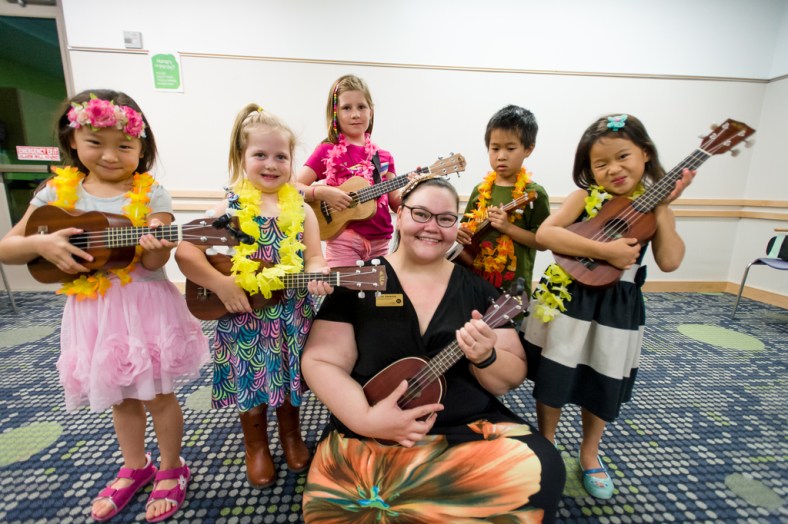
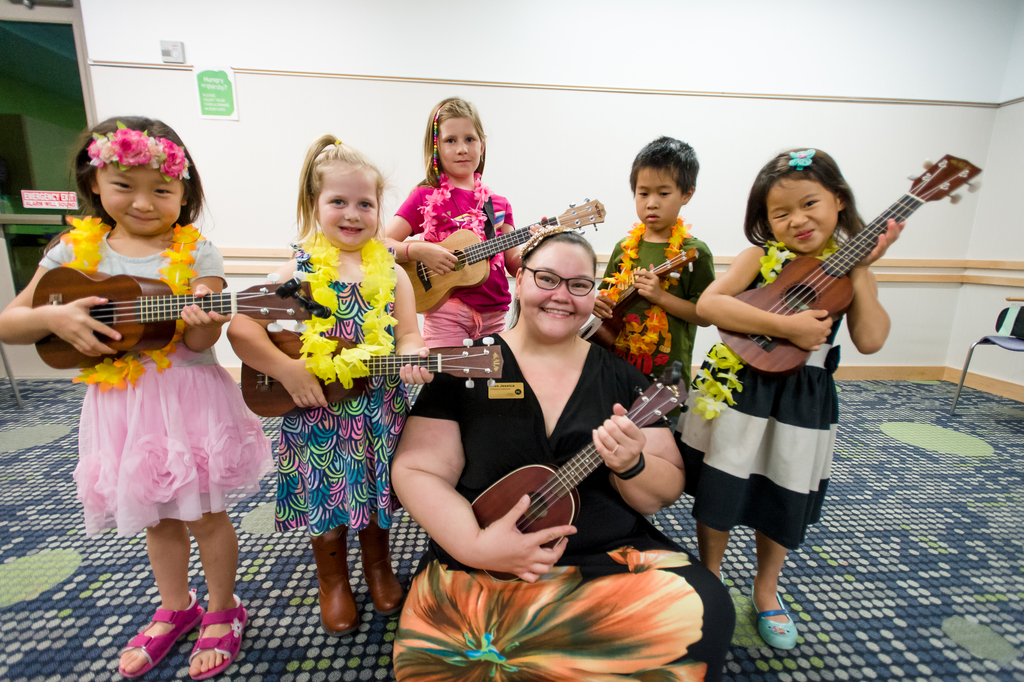
Several children stand around a library instructor, everyone strumming a ukulele.
Ukulele series Play, Practice & Perform, HCLS Savage Branch.

by Sahana C.


This Asian American and Pacific Islander Heritage Month celebrate the incredible diversity and cultural influence of folks under the AAPI umbrella. AAPI culture has become more prominent recently, though it has long been an integral part of our community and our county. Going from K-Pop to Bollywood, from Vietnamese cuisine, Thai food, and Chinese staples, to things like ukuleles and tattooing that hail from the Pacific Islands, there are traces of and homages to AAPI influence across society. Howard County Library System has a World Language Collection, and while the specific materials may differ between branches, we have DVDs, books, and other materials in a wide variety of languages, including Bengali, Chinese (Mandarin and Cantonese), Hindi, Korean, Japanese, Tagalog, Thai, and Vietnamese, to name a few.

I grew up listening to Bollywood and watching Bollywood movies that we would bring home from the library. Having the World Language Collection as a staple within the library has always been incredibly significant to me. It’s a tangible connection to my culture. I try always to recommend that folks looking for new and different movies give Bollywood a try, and the expanse of our World Language selection makes that possible.

This spring we have a wealth of classes to highlight AAPI authors, traditions, art, food, and culture. We’ll jam out at Savage Branch using ukuleles (that can be requested and borrowed!) with Savage Ukes. We’ll create origami flowers and learn about the history of kusudama, participate in Anime Clubs at Savage and Miller branches to talk about our favorite anime and manga, and read books like Interior Chinatown together (with the Reading Human Rights book discussion group) so that we can discuss in community.

We would love to see you at the branches, attending any of our events. Discover more on our classes and events calendar.

Asian Cuisine Made Easy!
For adults. Register here.
Thu Huynh, a registered dietitian nutritionist with the Health Living Team at Giant Food, presents seven top tips on how to incorporate Asian cuisine and lifestyle into your life.
Wed, May 3 | 7 – 8 pm
online

Nonfiction Addiction
For adults. Register here for the in-person session and here for the online/hybrid session.
bit.ly/econfa11
Explore the genre of nonfiction.
In May: The Best We Could Do by Thi Bui.
Thu, May 18 | 7 – 8 pm
East Columbia Branch

Glenwood Goes to Hawaii
Ages 0-5. Ticketed; free tickets available 15 mins before class starts.
Shake off winter blues and go Hawaiian as we catch a wave. Enjoy tropical music, games, and stories under palm trees on beach blankets. Tropical attire encouraged.
Fri, May 19 | 10:30 – 11:15 am   
Glenwood Branch

High Tide in Hawaii: A Magic Tree House Special
Ages 6-10. Ticketed; free tickets available 15 mins before class starts.
Join Jack & Annie in the Magic Tree House as they escape high tide in Hawaii. Enjoy games, music, and a craft under palm trees and sunny skies. Tropical attire encouraged. Catch a wave!
Fri, May 19 | 2 – 3 pm     
Glenwood Branch

National Museum of Asian Art
All ages.
Investigate scenes and objects of daily life in works of art across Asia to discover what people in the past valued and how they celebrated through food and rituals. Through the objects you examine, compare daily life in the past to today.
Fri, May 19 | 2 – 3 pm
Elkridge Branch

Global Neighbors – Republic of Korea
All ages.
Experience the culture and contributions of one of the largest demographics in our community. Enjoy a presentation and celebration showcasing traditional Korean music, Taekwondo, Korean Fan Dance, K-Pop dance demonstration, and Korean origami and calligraphy. Celebrate the diversity of our community!
Sun, May 21 | 2 – 4 pm
Miller Branch

Craft Pop-up Shop: AAPI Heritage Month Edition
Ages 4 and up. Allow 15 minutes. Drop in.
Pop in and make a craft inspired by AAPI Heritage Month.
Tue, May 23 | 5:30 – 7 pm
Miller Branch

Recipe Exchange: Asians Chefs and Asian American Cuisine
For adults.
Learn about Asian chefs and the history of Asian American cuisine. Meet other foodies to learn new recipes or share some your favorites.
Wed, May 24 | 7 – 8 pm
Savage Branch

Sahana is an Instructor and Research Specialist at the Savage Branch. They enjoy adding books to their “want to read” list despite having a mountain of books waiting for them already.

Arrow Through the Heart

Black and White photo shows Andy Gibb performing in a white suit.

By Angie E.

“What really surprised me was how well people who knew him still talk about him,” Matthew Hild tells Closer magazine about his experience with writing his new book Arrow Through The Heart: The Biography of Andy Gibb. “People remember him as the kindest and sweetest person. They all said he had a vulnerability about him that didn’t prepare him for being a star.”

Born in Manchester, England, Andy was the youngest brother of the Bee Gees. He began his solo career in 1977 with the single “Words and Music,” which reached the top of the charts in Australia, New Zealand, and the United Kingdom. In 1979, he was nominated for the Grammy Award for Best New Artist.

Despite Andy’s own achievements as a musician and singer, with hits like “I Just Want to Be Your Everything,” “Shadow Dancing” and “Thicker Than Water,” he spent much of his life struggling to be his own person, separate from the gigantic success of The Bee Gees. This constant insecurity and his heartbreak over the end of his relationship with Dallas star Victoria Principal are thought to have led to Andy’s battle with substance abuse and depression which, over time, destroyed his health and damaged his reputation.

By early February of 1988, it seemed as if he had made inroads in beating his addiction; he started working on a new album. Less than a month later, though, things took a turn when he complained of chest pains and was admitted to the hospital. On March 10 Andy died from myocarditis, an inflammation of the heart muscle.

Hild shares that Andy Gibb and Karen Carpenter once shyly held hands during a Broadway production of The Pirates of Penzance in New York City. They had been introduced through a mutual friend of theirs, Olivia Newton John, and though Andy and Karen never dated, they stayed in touch. Reading about the fragile nature they had in common and that touching moment in the theater just hit me so hard as I read Hild’s words.

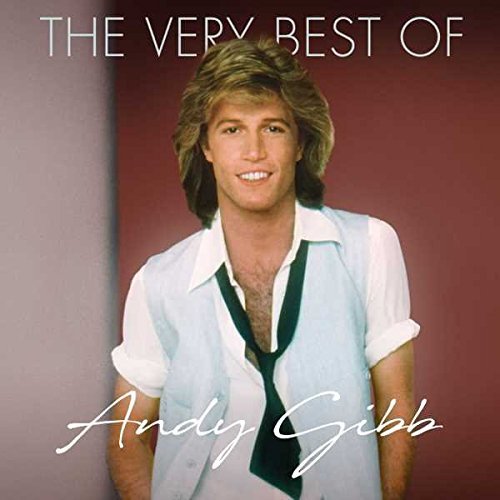
Cover of "The Very Best of Andy Gibb" album, complete with feathered hair and undone shirt and vest.

Their music had been a huge part of my childhood and early teen years, as had the Bee Gees, and their music still means so much to me today. Both singers were known for their gentle and caring sides and for having lovely voices. Both lost their lives way too soon.

Andy’s voice, even more gentle and sweet than his older brother Barry’s, had always spoken to my heart. Even now I remember how I felt the first time I heard the sincerely passionate “I Just Want to Be Your Everything” in Harmony Hut at Security Square Mall and can still smell the print from the many issues of Teen Beat Andy adorned.

It was this part of me that resurfaced last week as I browsed the new non-fiction section at Central and spotted the cover of Arrow Through The Heart. I gasped and immediately pulled the book off the shelf, startled to see it and its serious treatment of a singer often relegated to “teen idol” status in pop culture history. As tragic of Andy’s story is, I am so glad Matthew Hild decided to put this book out into the world. It’s not sensational or salacious in nature at all and gives a voice to an underrated singer and lost soul.

You can listen to Andy Gibb, free, on Hoopla, where you’ll findThe Very Best of Andy Gibb as well of other albums, including: Shadow Dancing, After Dark and Flowing Rivers.

As music critic Amy Hanson writes about The Very Best of Andy Gibb on allmusic.com: “Laugh if you must, dismiss if you’re so inclined, but no matter what anyone may argue, it cannot be disputed that Andy Gibb realized many of his aspirations across this LP and, in so doing, became a vital part of the late ’70s music scene.”

Angie is an Instructor & Research Specialist at Central Branch and is a co-facilitator for Reads of Acceptance, HCLS’ first LGBTQ-focused book club. Her ideal day is reading in her cozy armchair, with her cat Henry next to her.

World Language Karaoke

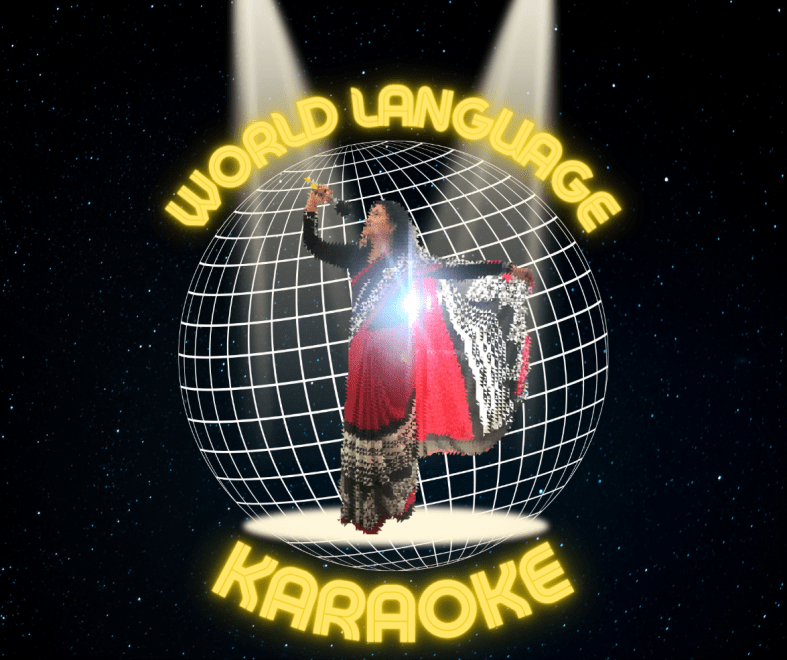
The photograph depicts a woman in traditional Indian clothing of red, black, white, holding a microphone with arm outstretched as if belting out a song. She stands in two spotlights shining on her from above, and in front of a representation of the globe with the words "World Language Karaoke" surrounding the globe in yellow. All of this is against a backdrop of twinkling stars against in the darkness of outer space.

by Piyali C.

“Reading is not really my thing. I don’t come to the library.” My customer told me this as he waited for me to find a book that he needed for his school project. He was honest with me about his preferences. He was only at the library because his teacher made him come.

“Do you like music?” I asked him.

“Oh yes. I love music.” He replied enthusiastically.

“Did you know that we are having a class called World Language Karaoke ” I asked him.

“WHAT? You can do karaoke in a library?” He was incredulous.

The idea of library being a quiet place filled with books is a thing of the past. To quote Paula Poundstone, libraries have truly become, “raucous clubhouses for free speech, controversy, and community.” And we love to celebrate our diverse community every chance we get. Our community speaks so many different languages. It makes us smile as we walk around our library and hear the plethora of languages being spoken around us. We thought, why not celebrate all these different languages and bring everyone together for an evening of music? After all, Henry Wadsworth Longfellow did say that “music is the universal language of humanity.”

Join us on Thursday, January 26 at 7 pm for World Language Karaoke at Miller Branch to sing songs in the language that you prefer, INCLUDING ENGLISH.

When you register, please tell us the song or songs that you are going to sing in the ‘Special Notes’ field, so we can create a playlist before the class and keep it ready for you to belt it out!

Register for the class here.

Piyali is an instructor and research specialist at HCLS Miller Branch, where she co-facilitates Global Reads and facilitates Light But Not Fluffy (starting in March 2023!) and keeps the hope alive that someday she will reach the bottom of her to-read list.

June is African American Music Appreciation Month

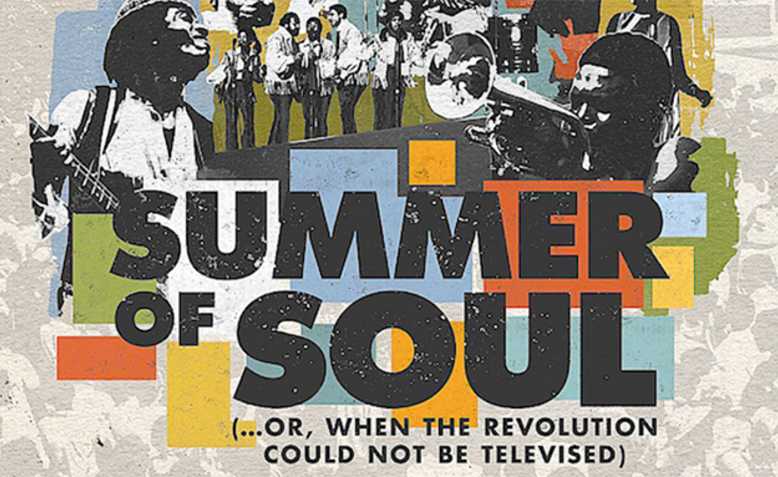
Collage of black and white photos of musicians and color blocks in red, green, blue, and yellow with "Summer of Soul" overlaid.

by Jean B.

Count Basie. Billie Holliday. Duke Ellington. I am an enthusiastic jazz fan, and I appreciate that sliver of African American music all year long, not just in June. But the musical expression of Black experience and artistry certainly isn’t limited to jazz or any other single genre. Gospel, rhythm and blues, soul, hip hop, rap, classical, rock and roll, techno, musicals – African American Music Appreciation Month provides a great opportunity to acknowledge and explore the tremendous breadth of African American musicians, composers, styles, and music entrepreneurs. Established in 1979 as National Black Music Month, it has been proclaimed by every U.S. President from Jimmy Carter to Joe Biden. So for this 43rd annual celebration, use HCLS as a portal to enjoy more of what you already like or discover something entirely new.

Expand Your Playlist
If you’re looking for new tunes, HCLS offers thousands of CDs across all genres to borrow. Using your library card and PIN, you also can stream music from Freegal. Not only can you search for favorite artists or songs, but you can find already curated Black Music Month playlists – like the one created by the Central Arkansas Library System with ten hours of music, ranging from Jimi Hendrix, to Sister Rosetta Tharpe; from Kendrick Lamar to Miles Davis. That’s a lot to appreciate!

Experience Live Concerts
Do you want to imagine you’re there, in concert? Documentary DVDs can bring the live concert experience right into your home. Check out Questlove’s Oscar-winning documentary, Summer of Soul, about the epic 1969 Harlem Cultural Festival that features performances by artists like Stevie Wonder, Nina Simone, B.B. King, and more. Or watch Eminem, Nas, and other hip-hop artists perform on Something From Nothing: the Art of Rap. From our Kanopy service, stream films like Rejoice and Shout: Gospel Music and African-American Christianity, which features legends of gospel like The Staple Singers and The Dixie Hummingbirds, to trace the 200-year evolution and contribution of gospel music in American pop culture.

The cover of I'm Possible: A Story of Survival, a Tuba, and the Small Miracle of a Big Dream features the outline illustration of a red figure playing a black tuba, framed by text.

Explore the Lives of African American Creators
If you’re curious about the life experiences that produced the music you hear, check out some great nonfiction. Be blown away by the memoir of Baltimore native Richard Antoine White, whose dream of classical tuba performance took him from a homeless childhood to a prestigious symphony orchestra career, an extraordinary story he tells in I’m Possible: A Story of Survival, A Tuba, and the Small Miracle of a Big Dream. Or be swept up in the incredible combination of poetry, art, biography, and music history in Jazz A-B-Z: An A to Z Collection of Jazz Portraits, where Wynton Marsalis writes wordplay jazz. I love his ode to Ellington, “a most elegant man” who sought “to educate, to elevate, to urge the earthbound ear and heart alike to soar,” just like the resources at HCLS!

Jean B. is a Children’s Instructor and Research Specialist at the Central Branch and loves reading books for all ages when she isn’t enjoying the outdoors.

Oona Out of Order by Margarita Montimore

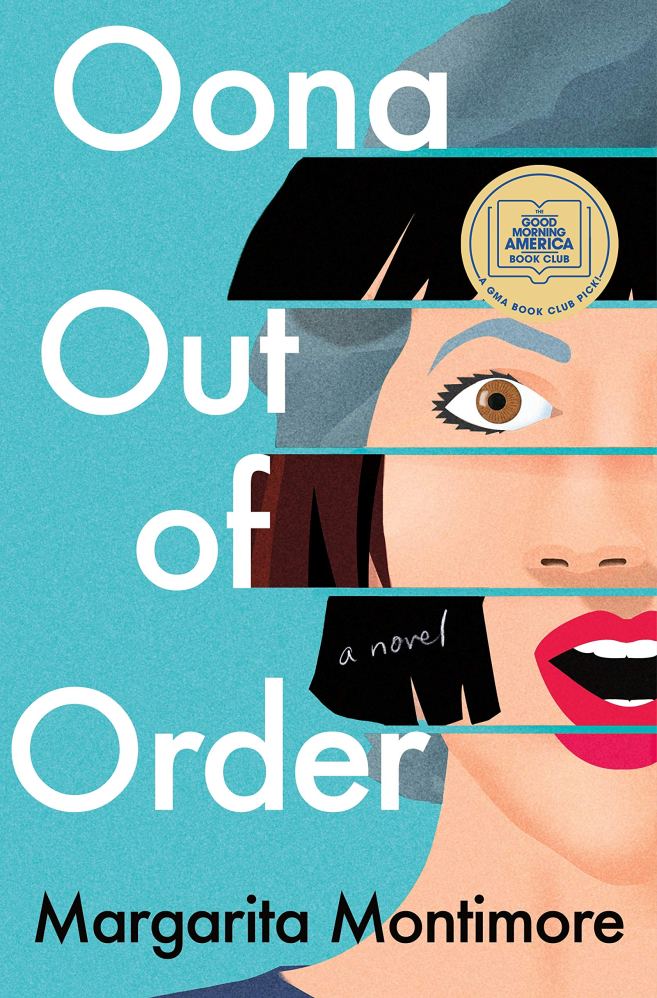
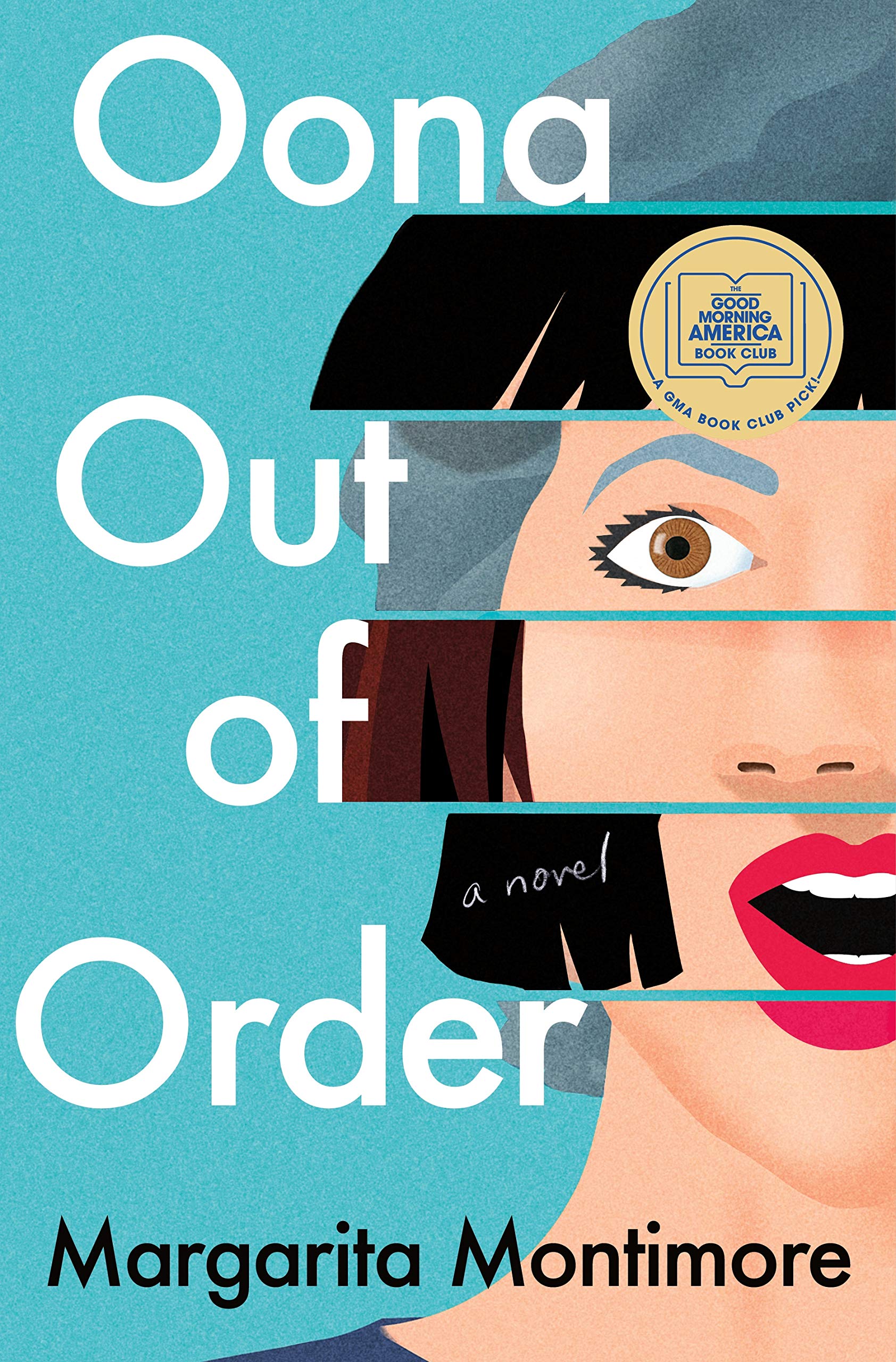
The bright blue cover shows the sliced up illustration of white woman with short dark bobbed hair with eyes and mouth wide in suprise. The portrait is only halfway on the right side of the book and the sliced strips are disjointed.

by Kristen B.

Oona Out of Order is a slightly different sort of time travel novel … Oona’s mind jumps randomly from year to year into her chronologically aging body, always on her birthday, which happens to be January 1.

Imagine never being quite sure what year you’re in, although you’re always you. What would your touchstones be? For Oona, it’s her mom and, for later years, her personal assistant.

As the novel begins, Oona enjoys a rocking New Years Eve party with her boyfriend, the band they are in, and most of her friends, and she’s about to turn 19. De rigueur teen drama plays out all around, but there are some real decisions that Oona has to make soon, decisions that set the stage for the rest of the book. She can either skip out on college and go on a European tour with the beloved boyfriend and the band (opening for other, larger acts) or she can do a year abroad in London with her bestie from childhood.

Only when the clock strikes midnight, Oona finds herself completely disoriented at age 51. That turns out to be a quiet year, taking stock and figuring out what’s what. In subsequent years, Oona jumps around from party-hard years in the New York club scene, to a brief foray into married life, to traveling the world.

Montimore was smart about creating the structure of her impressive debut. She never explains or solves the time-traveling issue; it’s just a given. She also sets up Oona as being independently wealthy after some good bets and smart stock trading given her knowledge of future years. Managing her portfolio (literally a set of folders) is her only job, leaving her free to absorb each year as it comes. Being based largely in New York helps a lot, too, as she can always find another facet of life to become immersed in.

There’s also Oona’s mom, who helps her (mostly) to bridge the years and explain what’s going on. In fact, Madeleine may be my favorite character, who is trying her best to live her own life as well as take care of her daughter’s chaos. Not always an easy relationship, it rings true in many ways as it’s the only one that Oona manages to sustain for much of the book. Oona’s love for music provides the other constant in her life, to the point that you might be tempted to listen to some Velvet Underground and Blondie as you read.

Monitmore gives us a fun book that doesn’t take itself too seriously, but nonetheless asks questions about what it means to live a good, meaningful life. It does also give some closure to the big questions facing Oona at the beginning of the book – which she gets to answer with a lot more maturity and experience than most 19-year-olds have at their disposal. Don’t you wish you could tell your teenage self a few things?

Oona Out of Order is available as a book, an eBook, and an eAudiobook.

Kristen B. is a devoted bookworm lucky enough to work as the graphic designer for HCLS. She likes to read, stitch, and make soup in the winter.

Where Black Music Month and Pride Month Intersect

Shea Diamond, a Black woman, sits by herself at a table covered in a red striped cloth. She's wearing a yellow sundress, hoop earrings, and a bracelet. Her chin rests in her hands as she looks toward the camera from the edge of her eye. The wall behind her is a weathered blue.

by Ash B.

As a passionate lover of music and self-proclaimed band nerd for life, I love analyzing the music I listen to. I enjoy paying attention to all the choices that go into a work of music – the chord structure, time signature, melody, instrumentation, and so on – and I love identifying the possible musical influences that affected those choices.  

Music is fascinating, in part, because so many different styles connect in some way, even if those connections are not immediately obvious. However, innovation doesn’t occur out of thin air; new musical styles have always developed out of existing ones, with artists often blending different cultural influences to create new sounds. I believe that understanding the history of American music is essential to fully appreciating the music of today, and to do so, we must center the musical innovations of Black Americans. 

And now is the perfect time to do so! 

While it may be a coincidence, I find it extremely fitting that June is LGBTQ+ Pride Month as well as Black Music Appreciation Month. While we don’t know how many of them would label themselves with today’s language, many pioneering Black musicians throughout history defied gender norms, had same-gender relationships, or both. Some expressed their sexuality quite openly, such as Gladys Bentley, a 1930s blues singer and pianist who performed in men’s tuxedos while flirting with female audience members. Other musicians were not as public regarding their sexuality, such as Sister Rosetta Tharpe, the gospel-singing, electric-guitar playing “Godmother of Rock ‘n’ Roll” who had relationships with both men and women.

Regardless of the labels that would best suit historical figures, it is worth recognizing the personal complexities of artists who lived these intersections of race, gender, and sexuality. A refusal to acknowledge the intersections between Black music history and LGBTQ+ history would be a failing to understand the foundations of American pop culture and music.

Black LGBTQ+ artists continue to have great impact on the American musical landscape: Janelle Monáe, Lil Nas X, Kehlani, and Frank Ocean, just to name a few. However, there are still many incredible artists that don’t get the amount of attention they deserve, and that is why I’d like to shine the spotlight on the singer-songwriter and activist Shea Diamond. 

Shea Diamond singing “Seen It All” in the recording studio and speaking to the It Gets Better Project about her life experiences.

Shea Diamond’s music draws upon her lived experiences as a formerly incarcerated, Black trans woman, speaking to the challenges of navigating a society that has frequently marginalized her, all while remaining confident and determined to create space for herself. 

Her first EP Seen It All was released in 2017 and is definitely among the most mature and masterful debuts I’ve ever heard. Shea’s dynamic, powerhouse voice conveys raw emotion, amplifying the message of her vulnerable and authentic lyrics. From playful to proud, celebratory to somber, reflective to resilient, Shea seamlessly weaves threads of her experience together into a tapestry that portrays the complexities of her life, all in five gorgeous songs that show an impressive musical range.  

While she is predominantly considered a soul and R&B singer, her music has a very strong rock/pop presence that incorporates elements of funk, blues, gospel, and folk. Many artists are skilled in their musical range, but I find Shea to be unique in the particular way that she cohesively brings together the aforementioned genres. Her music is fresh and contemporary while being clearly rooted in these American musical traditions, and the message of her lyrics is amplified by the corresponding musical style and instrumentation of each song. I don’t think there’s any other artist that can get me from dancing to crying and back again as quickly and as powerfully as Shea can!

Ultimately, I find her most inspiring because of the authenticity and passion she brings to her work. She is an artist who knows the power of her voice, and she isn’t afraid to use it – from her emotional vocal techniques to the lyrics she sings. Shea Diamond has a lot to say; will you listen?

Find Shea Diamond’s music on your preferred platform here, or stream Seen It All for free on hoopla through HCLS.

Interested in listening to CDs, too? Check out our current bundle bag options for Black Music Month and Pride in Music.

Ash is an Instructor & Research Specialist at Central Branch. They grew up playing piano and clarinet, and are now slowly learning the ukulele. At any given moment, they might be thinking admirably about Janelle Monáe.

Girl in a Band by Kim Gordon

Photo of Kim Gordon in a subway, with duotone wash in red.

By Ben H.

“it’s hard to write about a love story with a broken heart” – Kim Gordon 

Girl in a Band is a breakup memoir and it’s a good one.  

It is also much more than a breakup memoir. It is a pretty killer Künstlerroman* (Gabrielle Hamilton’s Blood, Bones & Butter is a good comparison); a brilliant memoir of place(s) (like Joan Didion’s “White Album” essay), and a behind the music for music nerds (I don’t have a good comp, but I need to keep the parallelism going). Kim Gordon was the eponymous “girl in a band” with Sonic Youth, a band that made loud noisy rock records. She was married to her bandmate, Thurston Moore, for 29 years until she learned of him having an affair. Neither the couple nor the band survived the affair. My review isn’t necessarily for the Sonic Youth fans out there, because they’ve probably already read this and devoured the middle section where Gordon highlights her favorite tracks and gives them biographical context; my review is for the people who need another reason to read a memoir about a girl in a band. 

Gordon writes beautifully about the places she’s lived. From her childhood in L.A. to her adulthood in New York to her motherhood in Massachusetts, Gordon excels at remembering tiny details and writing gorgeous descriptions of the distinct phases of her life. L.A. is a maze to be escaped and returned to; New York is chaotic and fertile like an overgrown garden; and Massachusetts is suffocating, domestic, and tense.

Gordon’s L.A. is a Janus-faced landscape of “rustic hillsides filled with twisted oak trees, scruffy and steep, with lighter-than-light California sunshine filtering through the tangles,” and flat neighborhoods of “freshly mowed green lawns camouflaging dry desert-scape…everything orderly but with its own kind of unease.” The places Gordon writes about become characters through her tapestry of vivid vignettes. For me, she does her best writing about places. If you still aren’t convinced, the vintage photographs Gordon uses for each chapter, like the one of her standing with her arms around Iggy Pop and Nick Cave, are reason enough to read this book. 

When I think of Sonic Youth, I don’t necessarily think of the awesome sheets of sound they made as a band. I think of the husky and wild vocals of Gordon. Her delivery is one of a kind. She drones. She growls. She talks. She screams. She sings. As an author, she might not possess the same kind of singular voice, but she knows how to tell a story and set a scene. At the risk of sounding adolescent, she is also very cool. Speaking of cool, Gordon references William Gibson’s thriller Pattern Recognition – she named a song after it. His cool-hunting protagonist Cayce Pollard is totally cut from the same cloth as Kim Gordon. Listen to any of the tracks off Gordon’s solo album, No Home Record, and tell me she isn’t very cool.

I won’t review the details of her relationship with Thurston Moore, but I think she does a marvelous job writing about the arc of their relationship. The passages describing them falling in love are lovely. The passages describing Thurston’s increasingly erratic behavior in Massachusetts are heartbreaking.

Kim Gordon, band aside, has led a fascinating life. My wife recommended this book to me and now I’m recommending it to you. Take a trip back in time to when CDs were the only way to listen to music and request Sonic Youth’s Daydream Nation while you’re at it! 

*artist’s book about growing into maturity

Ben Hamilton works at Project Literacy, Howard County Library’s adult basic education initiative, based at HCLS Central Branch. He loves reading, writing, walking, and talking (all the basics).