Greeking Out

The book cover depicts cartoon versions of various characters from classical Greek mythology, including the Cyclops, Athena, Zeus, and three snakes.

by Jean B.

Greek myths are having a moment. From the Percy Jackson series where Greek gods inhabit today’s world, to Madeline Miller’s feminist novel Circe, to the blues and jazz songs driving the hit musical Hadestown, ancient stories keep popping up in new guises.

There’s a reason myths have stuck around for thousands of years. The core elements – the heroes, quests, relationships, life lessons – are memorable and timeless, but not static. These stories can be told in endless ways and the details suited to the times in which we live. They’re riveting and relatable whether recounted around a fire, in a book, on a stage, or even – in our electronic age – on a podcast.  

Enter the epically popular creators of Greeking Out, a National Geographic Kids podcast and book series. This fall, Kenny Curtis, a 30-year veteran of kids’ radio, and his daughter, Jillian Hughes, are bringing their funny, family-friendly renditions of classic world myths to HCLS. The Greeking Out podcast started in 2019 as an extension of the National Geographic book series, Zeus the Mighty, but gained great popularity in its own right and now includes three print books, each a collection of 20 stories and associated sidebars (silly, snarky, informational), as well as comic illustrations, a glossary of people and places with pronunciation guides, and maps of ancient places referenced in the tales. Whew!  Material of mythic proportions! Irresistible titles like “Three Scary Old Ladies and One Dirty Eyeball” and “The Princess, the Cow, and the Giant with 100 Eyes,” instantly pull in readers, young and old alike.
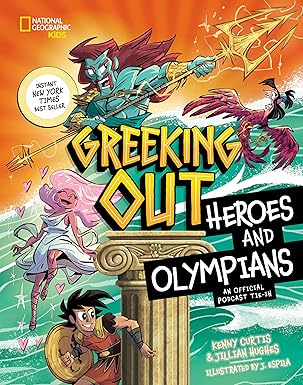
The book cover depicts cartoon images of characters from classical Greek mythology, including Poseidon, Aphrodite, Perseus, and a harpy.

I saw this for myself on September 17, when an enthusiastic crowd at HCLS Central Branch listened with delight to Curtis’s rendition of Persephone’s story. Maybe you think you know it? Probably not like this! How did she really feel about the Underworld? Was she tricked or was she the trickster? Curtis gave his listeners lots to think about. And while the storyteller helped the audience see different perspectives and possibilities, he didn’t have free rein with the facts. Fortunately, the Oracle of Wi-Fi (modern descendant of the one that resided in Delphi, and bearing a close resemblance to Jillian Hughes) weighed in regularly to bestow all-knowing wisdom, definitions, cultural tidbits, and little-known facts. For example, did you know that strawberries are NOT berries? And acorns are fruit?   

An exciting takeaway, for sure, but even more noteworthy was the atmosphere in the room. Demonstrating the power of myth and storytelling skills, Curtis and Hughes held the audience of eight- to ten-year-olds (and their grownups) without screens, devices, or even togas –  just dramatic voices and entertaining material.   

If you’re thinking, “I’ve got to see this for myself!” – you’re in luck! The Greeking Out authors offer two more presentations in October: 

Thursday, October 16 at HCLS Miller Branch at 6 pm

Saturday, October 18 at HCLS Glenwood Branch at 12 pm 

Greeking Out books on sale from local independent bookseller The Last Word, and the authors will gladly sign them. Registration preferred, as space is limited.

The book cover depicts various mythological characters from around the globe, one holding a scythe, one about to eat an apple, and one goddess wearing traditional Hindu dress.

In the meantime, check out a copy from the library: 
Book 1: Epic Retellings of Classic Greek Myths is available in print and as an e-book
Book 2: Heroes and Olympians is also available in print and as an e-book
Book 3: Tales from the Underworld, reaches into myths from other regions of the world. Set to be published on October 7, the latest book can be placed on hold.

While you’re waiting, listen to the podcast on Apple Podcasts, Amazon Radio, Spotify, or YouTube. And for kids who just can’t get enough of these classic characters and stories, lots of other entertaining modern versions can keep them reading, including:

Goddess Girls/Thunder Girls by Joan Holub. Available as chapter books, first chapter books, and graphic novels. 

Myth-o-Mania by Kate McMullan. Chapter book series featuring classic characters telling their stories.

Heroes in Training various authors. Short chapter books with illustrations. 

You Choose Greek Myths various authors. Interactive stories put the reader in charge. 

Olympians by George O’Connor. Graphic novel series for kids, each volume about a particular god. 

Weird but True Know-It-All: Greek Mythology by Sarah Wassner Flynn. Trivia for fact fans.  

Be part of something epic and start Greeking Out!

Jean is a Children’s Instructor and Research Specialist at HCLS Central Branch. She loves talking about books with people of all ages, but especially enjoys leading the Heavy Medals book club for fourth and fifth graders, exploring award-winning books of all genres.
Water Moon by Samantha Sotto Yambao

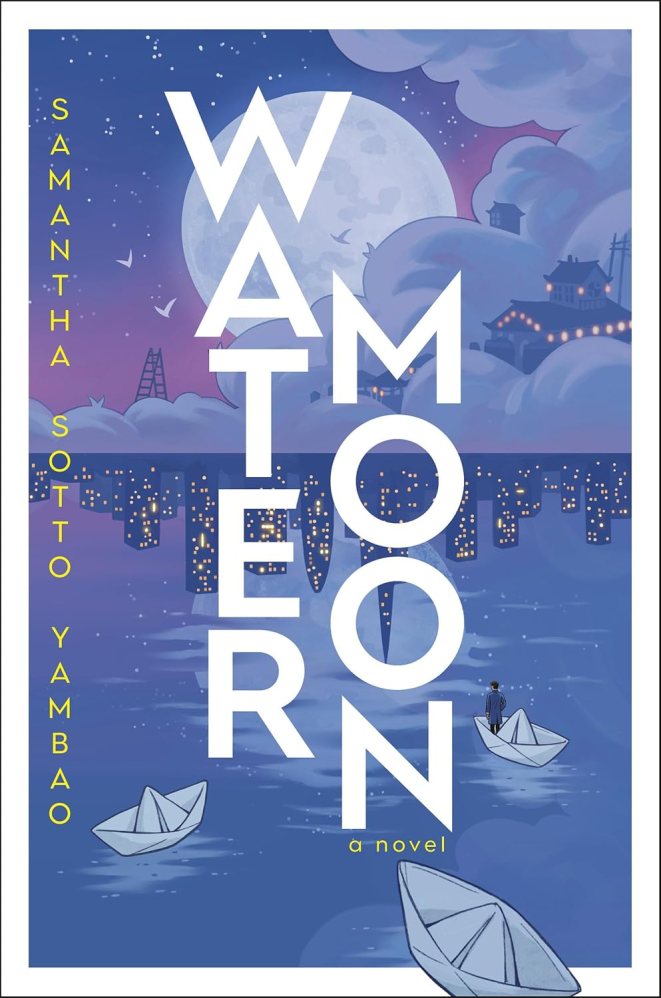
The book cover shows a city skyline reflected in water in the moonlight, with several small boats approaching, one with a passenger facing the shore.

by Kristen B.

Sometimes, a quirky book comes into your life at just the right time. Water Moon was that book for me recently, during a high-stress time. It’s a delightful, cozy sort of fantasy set in a Japanese-inspired mythology, and it feels like an anime show that could air on a Saturday morning.

As the story opens, Ishikawa Hana is ready to take the reins of her family’s pawnshop when her father retires. It’s an unusual shop; only people who need it can find it, sitting tucked next to a popular ramen restaurant. The shop allows people to bargain away their greatest regrets. Kei is a nuclear physicist who is in Japan to work on the Super-K conductor looking for neutrinos. He’s in Tokyo for ramen – and hoping for a little wish fulfillment. Kei stumbles into the pawnshop and finds Hana standing amid ransacked wreckage.

Hana’s father has disappeared, on the run from mysterious figures who collect the regrets that are bargained away every month. The Shiikuin have no mercy for those who stray outside their roles. Hana’s father, Ishikawa Toshio, seems to have stolen one of the regrets, which take the shape of brightly-colored birds, and fled. When Kei wanders in looking for ramen, he immediately offers Hana all the help he can.

Hana then introduces Kei to the world on the other side of the puddle, where magic has its own rules that run counter to everything Kei thinks he knows. The two adventure through dreamlike sequences in a rather episodic manner, which made me think it would be a great animated show. They visit Hana’s grandmother’s tea house, explore the floating Night Market, and experience falling through a paper door and being folded like origami, among other memorable vignettes. All the while, Hana and Kei try to stay one step ahead of the cruel monsters on their trail.

While they are running and solving puzzles, Hana constantly tells Kei that things are not what they seem. The two have an instant connection and spend the course of the story falling in love while being sure they can’t be together. Hana is engaged to a childhood friend, and Kei is from our world, not hers. But, the story wonders, what is the price of happiness? What duty do we owe to how things are “supposed to be?” How do you set aside expectations so you can truly live your most authentic life?

All these weighty questions are wrapped up in spare, lovely prose and a fast-moving plot. You keep reading to find out how they escape the next pickle, always looking for Hana’s missing parents – and the answer to how you get to be with the one you love. Things might not be as they seem, but the resolution is wonderfully, romantically satisfying.

Water Moon is available from HCLS in print and as an e-book and e-audiobook on Libby.

Kristen B. is a devoted bookworm lucky enough to work as the graphic designer for HCLS. She likes to read, stitch, dance, and watch baseball (but not all at the same time).

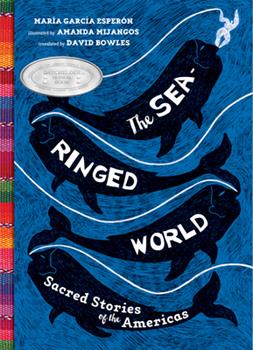
The Sea-Ringed World: Sacred Stories of the Americas

The book cover shows four whales in dark-blue silhouette, facing in opposite directions against a lighter blue ocean background. One whale is emitting a breath, which turns into a long white line that connects all four of them together. The title and subtitle of the book are inscribed in white across their bodies.

By Eliana H.

November is Native American Heritage Month, and I’d like to share a special book in honor of that observance. I am writing this post at the Elkridge Branch, and before I begin sharing the information about the book, I’d like to acknowledge the history of the land we are occupying. 

We want to respectfully honor the Susquehannock Confederation who governed, lived, farmed, and hunted on the land now called Howard County. Their nations conceded into land treaties in 1652 and 1661 after English colonizers ended their generational governance and stewardship of the land Howard County is built upon. This practice of land acknowledgement is to honor and respect the indigenous inhabitants both from the past and the present. 

Native Americans are part of our present as well as our past, still living in communities around the Americas despite the atrocities that have been committed against them. While none of us has the power to go back and change the course of history, we can make a step toward greater shared understanding through the power of stories. One source for stories from various Native American traditions is The Sea-Ringed World: Sacred Stories of the Americas by María García Esperón, illustrated by Amanda Mijangos, and translated by David Bowles. 

I noticed this book on our new children’s nonfiction shelf, and I had to pick it up. I was eager to increase my understanding of some of the mythology of the groups that lived here for thousands of years before Europeans arrived. I read the tales aloud to my 10-year-old child, and we were both captivated by the narratives, which were very new to us. As with any mythology, the stories in The Sea-Ringed World explore essential questions of humanity: What is our place in the universe? What are the origins of this world? What happens when we move out of this life? And many others.

Before you begin reading the stories in this volume, I encourage you to peruse the back matter a bit. A note about transcription of Indigenous terms is followed by a pronunciation guide, which is especially helpful if you are reading aloud. In addition to those, you will find “A Quick Guide to Cultures,” along with a map of those cultures, a glossary (including more pronunciation help!), and a bibliography. 

Even if you do not make it through all of the narratives contained in The Sea-Ringed World, it is worth exploring at least a few. Be sure to pause on the striking tricolor illustrations that adorn many of the pages. 

Extra note: I was especially glad for the background knowledge provided by this book when I read Gods of Jade and Shadow!

Eliana is a Children’s Instructor and Research Specialist at the Elkridge Branch and co-chair of the HCLS Equity Committee. She loves reading, even if she’s slow at it, and especially enjoys helping people find books that make them light up. She also loves being outside and spending time with friends and family (when it’s safe).

Urban Fantasy Series

by Kristen B.

Do you remember the old Hershey’s Peanut Butter Cup ad? Who got their chocolate in my peanut butter? Who got their peanut butter in my chocolate? Sometimes, two great tastes go together! Urban fantasy follows this winning formula – you get all the modern conveniences candy-coated with some of your favorite myths and fairy tales.The genre can get a bad rap, though, with werewolves, witches, and vampires living among us, hidden in the hustle and bustle of cities.

But who doesn’t love a good series? However, they make for tricky book reviews because it’s hard to know where to begin. So, here’s a peek at four urban fantasy series by three of my favorite authors, all of whom have other work. You can decide whether you want to commit to the long – but rewarding – experience of either finding and reading a backlist title or starting at a good pickup point. Honestly, the author will tell you what you really need to know in setting up the newest book. If it turns out you enjoy urban fantasy, you’re in luck, because this is just the tip of the iceberg.

Some common, positive elements across all these series include found family, short and long narrative arcs across the series, and a subversive sense of humor.

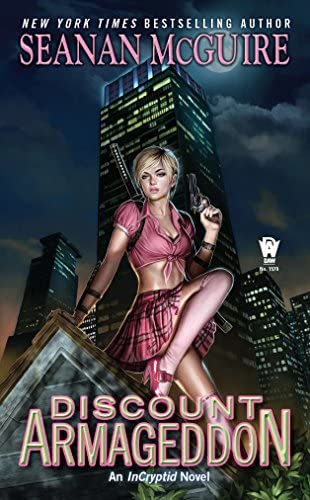
Young bond woman dressed in a short skirt, a tied up bluse, and heels holds a fun while sitting a room. A city skyline fills the background.

Seanan McGuire: Incryptids & October Daye

McGuire is a beyond-prolific writer, maintaining multiple series at a time. The Incryptid series concerns the most recent generation of the Price/Healy clan, who have made it their goal to study and save all the “monsters” and myths who have managed to adapt and survive. The series begins with Verity Price, who is a competitive ballroom dancer for her day job. Tons of fun and super fast-paced, these books move main point-of-view characters every second or third book, so you have easy access points. Come for the scary and smart women, stay for the Aeslin Mice who worship them (no, really).
First book: Discount Armageddon
Most recent/last in series: Spelunking Through Hell, available via Interlibrary Loan

McGuire’s other big UF series follows changeling October Daye, born of a fairy mother and a mortal father. When the series begins, she has spent more than a the decade as a fish. Yep, you read that right. Toby finds work as a private investigator solving problems that involve the fey courts along the west coast. Sixteen books later, Sir Toby has made big strides with her abilities and sense of self-worth, as she strives to make the world a better place, because, honestly, she cannot leave well enough alone. Come for the wonderful cast of characters, and stay for the genuine other-ness, sometimes downright creepily so, of the faerie world.
First book: Rosemary and Rue (I started with An Artificial Night)
Most recent: Be the Serpent

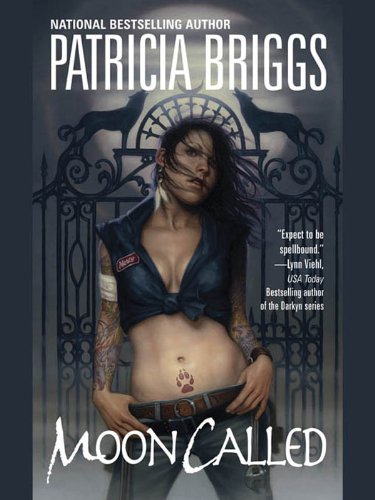
A woman poses in front of an iron gate with wolves howling figured at the top. She has a paw print tattoo low on her belly, above low-rise jeans. She also has full sleeves.

Patricia Briggs: Mercy Thompson

These qualify as guilty pleasures, given the number of new, interesting books published every year. I still look forward to spending the occasional weekend with Mercy Thompson and the local werewolf pack. As the series begins, Mercy is eking out an existence for herself in the Tri-City area of Washington state, working as a mechanic and staying loosely connected to local fey community. She’s something of an oddity, as she can turn into a coyote at will but was raised in a werewolf family. The local pack lives, more or less, in her backyard, and their leader isn’t quite sure what to make of Mercy. The world-building may be a little haphazard, but it fits together well enough as repercussions from previous adventures circle around to cause further problems. Come for the sassy, stubborn VW mechanic/were-coyote, stay for a series that has grown with its protagonist.

First book: Moon Called
Most recent: Soul Taken

A dark palette conveys mystery and a sinister air, with a man in a hat, long coat, and staff figures prominently.

Jim Butcher: Harry Dresden

I have to admit these took a turn into gritty, almost grimdark, territory, and I’m a little behind with the series. As the series opens, Harry Dresden is Chicago’s only wizard for hire, complete with an ad in the yellow pages (wow, that dated quickly). He is a sarcastic, sardonic sort of knight in battered armor, tilting at windmills and living by his personal (slightly sexist) code of honor. One of Butcher’s strengths is that everybody gets their own story arc, affected by and, in turn, affecting Harry’s. Actions have consequences, and the series deals with a wide variety of disasters. Come for Harry’s adventures as he takes on high-powered enemies and frenemies – mortal, fey, and monstrous alike; stay for the sense of humor that brings you Sue the T-Rex (from the Field Museum) being animated by a one-man polka band.

First book: Storm Front
Most recent: Battle Ground

Kristen B. is a devoted bookworm lucky enough to work as the graphic designer for HCLS. She likes to read, stitch, dance, and watch baseball in season (but not all at the same time).

The Actual Star by Monica Byrne

A black and gold swirl centers on a pinpoint of a star. Two blue bands stripe the book vertically, while the text appears in orange horizontal bars.

By Sahana C.

It’s hard to find a good place to start with this book, so I’ll start at the end, in the year 3012. Society is different, and so are the people as the result of hundreds of years of war and compromise and cultural evolution. As a species, we are a genderless and raceless band of nomads, with a blatant disdain for those who settle down in nuclear family units.  

So yeah, there’s a lot going on. The above phrasing makes it seems starkly unnatural, but somehow, Monica Byrne’s weaving together of three different stories across time makes the future version of us feel tangible. Despite all of the modifications and the general foreignness of the shape of this future society, the basics of humanity remain the same. We are emotional and community oriented, no matter when we are in history. We follow patterns that remain, no matter how far we try to stray outside the bounds of history.  

The ripple effects from past to present to future were incredible. Seeing names and places that were mentioned briefly in the past become more important in the future was almost an exciting reward for paying close attention through the timelines. And this book does reward close attention. It is obvious that Byrne put immense time and research into all aspects of the novel, going from the Maya, to modern Belize, to what made sense for the future based on the results of the events she described in the first two timelines. Most importantly, the story of the Hero Twins, some of the most important figures in the Maya mythos, is described and adapted in such a faithful light that Byrne has room to play with the elements of the mythology.  

The story of the Hero Twins is one that Byrne explains in the novel, but, like the rest of Maya mythology, it is complex and bears repeating. The Hero Twins were the central characters of one of the oldest preserved Maya works, the Maya equivalent of the Epic of Gilgamesh, with just as much adventure. They were often portrayed as complementary forces, the sky and the earth, the sun and the moon, the masculine and feminine, life and death. All in all, the Hero Twins were born to represent the two sides of a single entity. The shortest way to explain their greatest triumph is that they defeated the lords of Xibalba, the Maya equivalent of the realm of the dead, in a ball game, essentially representing that together, they had conquered death and diminished the power of all Xibalba. 

In the first of the three timelines in the novel, the year 1012, we are introduced to Ixul and Ajul through the point of view of their little sister, Ket. They are royalty and are said to be the reincarnation of the Hero Twins, with all the strength, power, and greatness that entails. The second timeline in 2012 follows Leah, a nineteen-year-old half Maya girl from Minnesota who goes to Belize to reconnect with her heritage. While she is there, she explores sacred caves and meets Javier and Xander, another set of twins, who work as tour guides. Business is booming, because in 2012, at the end of one Maya calendar, the Western world had decided the world was going to end. And then, in 3012, we follow Niloux, someone who is speaking out about the way society has evolved. She is embroiled in debate about the very nature and purpose of humanity, a thousand years after the change in the Maya cycle.  

Each of these timelines finds the characters on the precipice of a great and life altering change. The story is a blend of mythology, history, and sci-fi, and speaks, ultimately, to the way we use history to justify the present, and the way that our understanding of the past informs our future, no matter what we do.  

The Tor.com review called the novel, “one of the most effective examples of worldbuilding you’re likely to see on a page this year,” and I have to agree. Despite being longer than 600 pages, it’s somehow still a fast read. It’s a hefty book that tries to cover a lot, and sometimes just doesn’t have the space to explore all of the various threads it brings up, but when Byrne is allowed to go into detail on a subject, she does not miss.   

The Actual Star is available in print.  

Sahana is an Instructor and Research Specialist at the Savage Branch. She enjoys adding books to her “want to read” list despite having a mountain of books waiting for her already.

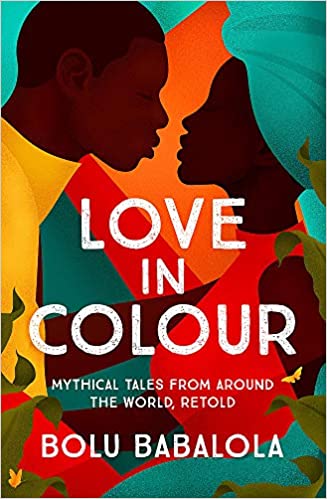
Love in Color: Mythical Tales from Around the World, Retold by Bolu Babalola

Two figures poised to kiss are color blocked in bold color of turquoise, red, and yellow.

by Sahana C.

Some really popular retellings of myths are going around now: The Song of Achilles, Circe, and The Women of Troy, to name a few. But all three have one thing in common: they center Greek and Roman mythology. The world of myth is much more vast than Greek and Roman mythology, and Bolu Babalola weaves her magic around folktales from West Africa, the Middle East, and even China, alongside Greek and Roman myths that she writes through a more diverse slant. She brings these often untold tales to the forefront with her compilation of short stories, Love in Color: Mythical Tales from Around the World, Retold.  

More than just retellings of these myths, however, Babalola brings each story fully into the modern world. Instead of Scheherazade being a trapped princess, she’s a journalist managing some dangerous new sources. Psyche works for Eros’s mother in a fiercely corporate world that she wants to break free from. This, too, is a break from tradition among popular retellings today, and it adds to the timeless nature of the stories by showing just how universal each love story really is.  

The stories are not too long, with just enough context and world building in each to make readers fall firmly in love with the world, to build a new universe around these characters, and make them fall in love with each other. These stories don’t necessarily keep all the magic and mythic details consistent, but the essence of the myth, what it would mean in the modern context, remains the same. Instead of magic crocodile skins that cause them strife in their personal lives, for example, characters have vitiligo, a skin condition that they have to learn to love about themselves.  

Personally, Nefertiti’s story, Zhinu’s, and Thisbe’s have been at the forefront of my mind since reading, each taking the original myth and twisting it into something lovely and appropriate for a modern age, while retaining a timeless quality. The stories revolve around love; love and POC joy are centered with every character. In the ordinarily Eurocentric realm of mythology, Love in Color is the best of romance: poignant, beautiful, complex in plot but simple enough to convey its message. 

I would lean towards reading up about each myth before reading the stories, however. The myths that I had context for, I enjoyed more upon a first read than the others, but after doing some research on the other stories, I went back and enjoyed the less familiar stories just as much on a reread.  

The publisher review for the anthology notes the diversity of the source material, saying, “Focusing on the magical folktales of West Africa, Babalola also reimagines Greek myths, ancient legends from the Middle East, and stories from long-erased places. With an eye towards decolonizing tropes inherent in our favorite tales of love, Babalola has created captivating stories that traverse across perspectives, continents, and genres.” 

Love in Color: Mythical Tales from Around the World, Retold by Bolu Babalola is available in print

Sahana is an Instructor and Research Specialist at the Savage Branch. She enjoys adding books to her “want to read” list despite having a mountain of books waiting for her already.

The Library of the Unwritten by A.J. Hackwith

The book cover depicts someone tearing through the pages of a book as if through a curtain, with a dark abyss behind and a bare arm reaching from inside the book.

By Eliana H.

“Hell is a series of hallways.” I think I can believe that. In The Library of the Unwritten, author A.J. Hackwith imagines not only Hell, but a variety of realms of the afterlife, down to the bureaucracy that governs them.

Claire Hadley has been Hell’s Librarian for a few decades now. She runs the Unwritten Wing, home to all of the stories that authors never actually wrote. Brevity, Claire’s assistant, is a former muse, and the two are joined by a demon, Leto, as they set off to retrieve a character who has escaped from his book and made his way to earth to seek his author. As they are ready to return to the Library, an angel shows up, expecting them to have a completely different book – the Devil’s Bible. 

Before they know it, Claire, Brevity, Leto, and Hero find themselves on an adventure to try to avert war between Heaven and Hell. They know such a battle would spell disaster for the humans who would be caught in the middle. In the end, all of the library’s resources will be needed to defend against those who would harm it. 

Hackwith does a beautiful job describing the worlds they travel through as we learn more about the intriguing cast of characters, none of whom are quite what they seem. She also demonstrates the politics of the different domains. 

This book was refreshing in the way it tied different beliefs and mythologies into an original premise with unique characters. I was captivated throughout. The journal entry or two from librarians through the ages beginning each chapter, which hinted at some of the challenges they faced in previous eras, were a helpful touch. This is the first book in a new series, so I look forward to learning more about the past – both Claire’s and the library’s – as well as further adventures to come.

The Library of the Unwritten is available from HCLS in print and also as an eaudiobook through OverDrive/Libby.

Eliana is a Children’s Instructor and Research Specialist at HCLS Elkridge Branch. She loves reading, even if she’s slow at it, and especially enjoys helping people find books that make them light up. She also loves being outside and spending time with friends and family (when it’s safe).