
Women Poets

The top half of the cover is white with Mary Oliver in blue, and the bottom half is ochre with A Poetry Handbook in white.

by Sahana C.

March’s Women’s History Month and April’s National Poetry Month offer the perfect chance to celebrate some remarkable women poets in our collection. Across generations, their voices have turned shared experiences into art at all levels, teaching us about love, identity, resilience, and nature. Here are a few notable names whose works you should check out:

Emily Dickinson must be included in any list about women poets. She wrote with an intensity and originality that set her apart in 19th-century American literature. Her compact, untitled poems challenge conventions, exploring themes of death, nature, and the self with wit and depth.

Maya Angelou, a powerhouse of literature and activism, weaves autobiography and poetry to speak of struggle and triumph. Her groundbreaking poem “Still I Rise” affirms the resilience of the human spirit and is a testament to hope despite all odds.

Joy Harjo was the first Native American U.S. Poet Laureate, and her work reflects that identity. Her poems often blend moments from her heritage and upbringing with vivid musicality. Her anthology, Living Nations, Living Words brings many Native poets to the forefront and connects past injustices to present resilience.

Mary Oliver is a consummate naturalist. Her poetry, though deceptively simple in form, encourages readers to reflect on nature’s quiet wisdom and the profound lessons it offers. These are the perfect poems to meditate on, mull over, and chew on. Oliver is also the author of one of the seminal handbooks about reading and writing poetry, A Poetry Handbook.

A bright yellow cover shows fancy scrolls in red framing the title, The Hill We Climb, which is in blue.

Rupi Kaur is the most contemporary by far on this list but she deserves a mention for her contemporary style, which has redefined poetry for a digital age. With poignant reflections on love, trauma, and healing, Kaur connects with a new generation of readers through her evocative, minimalist verse.

Amanda Gorman, the first National Youth Poet Laureate, brings her background, her activism, and her fire to her poetry. She was first put on the map with her poem “The Hill We Climb,” which is a testament to community, togetherness, and solidarity.

Ada Limón, the current U.S. Poet Laureate, captures the beauty and complexity of everyday life. Her work is both profound and accessible, imbued with a rich emotional resonance.

Celebrate these poets by exploring their works, available in our collection. Let their words inspire you this spring!

Family Story and Craft: Poet-Tree
Families, ages 6+. Ticket required.
Celebrate National Poetry Month by listening to some poetry and creating a Poet-Tree craft.
Tue, Apr 29 at 6:30 – 7 pm
HCLS Miller Branch
Ancient History, Modern Tradition

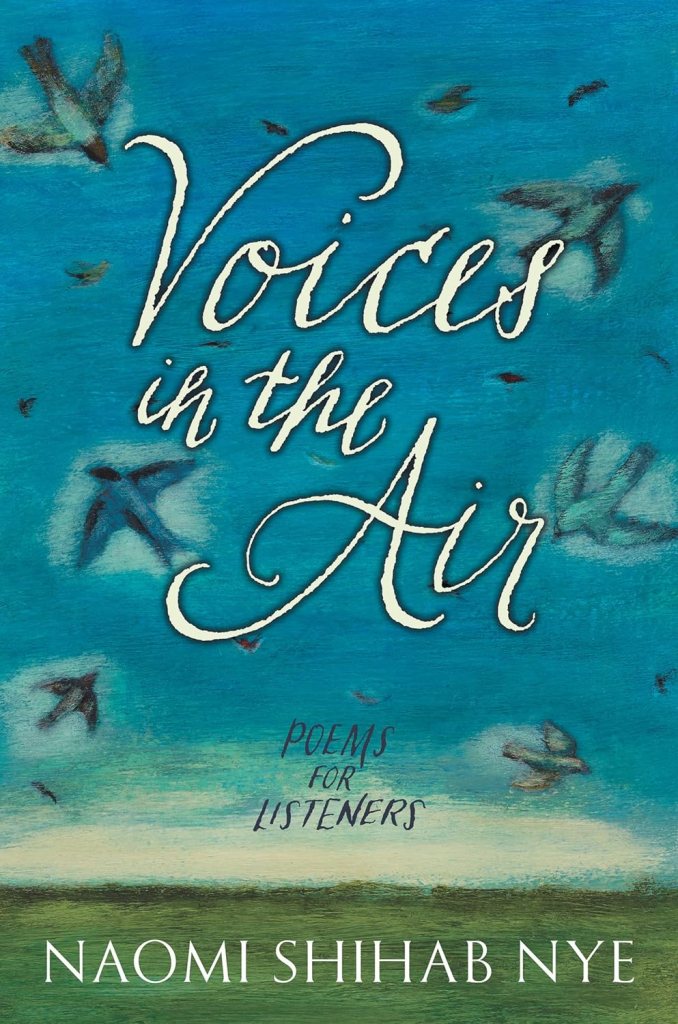
The book cover shows a number of birds that resemble swallows flying and swooping against a blue sky, with clouds in the distant background, low to the ground, and a grassy green landscape at the bottom.

by Sahana C.

I’m not a high school English teacher, so I rarely have an audience that will listen to me lecture about poetic tradition, but April is National Poetry Month, so there’s no better time to try. What if you pick up a book of poetry?

“Which one?” you ask me, as I thought you might.

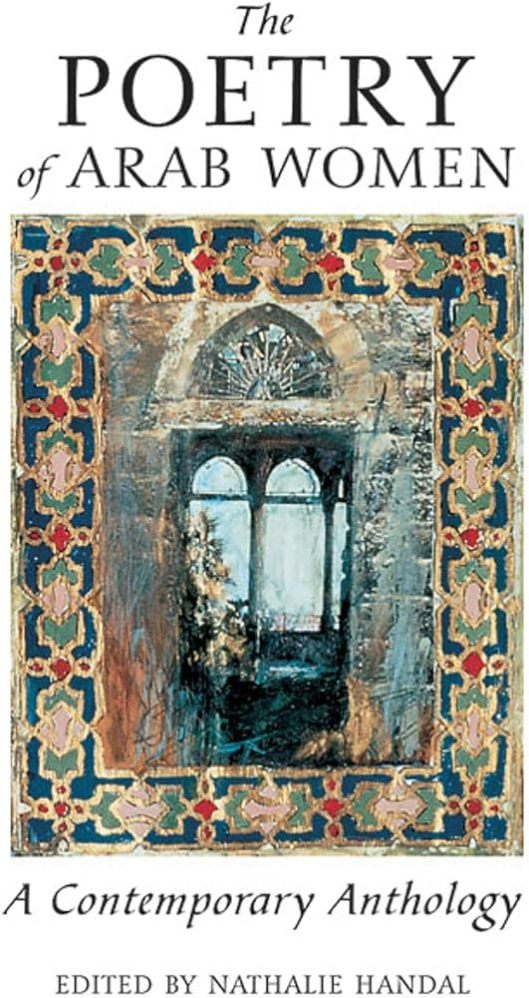
The book cover shows a view through arched window panes of a tree with white blossoms and a blue sky. The wall surrounding the window is constructed of brick and stone and is surrounded by a colorful geometric border in blue, green, and red.

Great question. Did you know that April also happens to be National Arab American Heritage Month?
One of the earliest forms of Arabic literature was poetry, but the oral tradition of Arabic poetry extends far beyond that. Flow, expression, and verbiage are singular in Arabic and the language was chosen by UNESCO as “the language of Poetry and Arts.” It only feels appropriate, then, to celebrate National Arab American Heritage Month alongside National Poetry Month. To highlight the perfect modern continuation of the ancient history, here are some Arab and Arab American poets to get you started:

  • Naomi Shihab Nye is the first Arab American Young People’s Poet Laureate and has several books for teens and children in our collection.
  • The Poetry of Arab Women: A Contemporary Anthology is deeply evocative, tying together the heritage mentioned above and making it accessible in the West, blending established poets and emerging voices.
  • Mahmoud Darwish is a prolific author, world-renowned for his lyrical work and vivid imagery.
  • Charif Shanahan wrote Trace Evidence about intersectional Arab American themes, a sense of place, queerness, and intimacy with oneself and one’s heritage.
  • Written by a wide variety of authors, This Is Not a Border: Reportage & Reflection from the Palestine Festival of Literature contains poems and essays reflected on PalFest and the power of culture.
  • Salim Barakat’s Come, Take a Gentle Stab is a compilation of Barakat’s most lauded work, and is translated to English from Arabic, drawing attention to the power of testing the limits of language.
  • Finally, one of the most celebrated Arab American authors, Etel Adnan’s work, Sea and Fog, cannot be omitted from this list; it’s a tour de force about individualism, place, and interconnectedness.
The abstract book cover, in shades of dark blue, turquoise, and grey, is painted in thick brushstrokes that could represent the ocean and/or bodies of land with a grey foggy sky in the background.

Check out the works above from your closest branch or online, and try poetry this month – there’s a reason poetry has such an ancient history, and it still hasn’t gone away.

Sahana is an Instructor and Research Specialist at the Savage Branch. They enjoy adding books to their “want to read” list despite having a mountain of books waiting for them already.

April is National Poetry Month

Black and white drawing of two children peering over the edge of a crumbling sidewalk edge, with the title beneath. A dog has fallen partway through behind them.

by Kristen B.

April is National Poetry Month. We need at least that long to appreciate all the wonderful poets and poems that enrich our lives. Poetry allows us the see the world in new ways. The rhythms and allusions of poetry open views or thoughts that ordinary prose simply cannot elicit through standard structures. Whether recounting lengthy epics like the Iliad or appreciating life’s little joyous moments with Mary Oliver, poetry’s language can transport us.

Do you have any favorites? Do any memorized pieces live in your mind? I first read Dylan Thomas‘ “Do Not Go Gentle Into That Good Night” the year my father was diagnosed with cancer. “Rage, rage, against the dying of the light” has been with me ever since. In less fraught circumstances, my sister memorized Shel Silverstein‘s “Sick” when she was in elementary school – it’s still fun to recall its whimsical truth as adults. I know quite a few people who can recite all the nonsensical words of the heroic “Jabberwocky,” from Lewis Carroll’s classic story, Through the Looking Glass – famously performed by the Muppets, in case you haven’t seen it.

We invite you to celebrate a month of poetry. Whether you borrow a volume or anthology of poetry, or attend a class, we hope that you take a moment or two to enjoy some wonderful words. And, on April 27 – official Poem in Your Pocket Day – you can keep handy an old favorite or a new, original composition to share throughout the day.

Creating from Wounds: A Generative Workshop
Adults. Register.
The power of poems is that they allow us to create from disaster, making something out of the brokenness to process and cope. In this workshop, Meg Eden shares tools that she has used in writing her latest poetry collection. Compose using interactive prompts, then receive resources to continue with your writing.
Sat, Apr 15
12:30 – 1:30 pm
Savage Branch

Poets Corner
Ages 6-11, 45 minutes. Ticketed; free tickets available 15 minutes before class starts.
There’s a poem in your head just shouting to come out! Discover the tools poets use to create verses that sparkle and shine. Read, write, and have fun sharing poems!
Sat, Apr 22
2 – 2:45 pm
Elkridge Branch

Playful Poetry
Ages 6-9, 45 minutes. Ticketed; free tickets available 15 minutes before class starts.
April is National Poetry Month – celebrate by joining us to hear and share fun poems from a variety of creators. Participants are welcome to bring a poem they love to share with the group. Maybe you will even be inspired to compose a poem of your own!
Thu, Apr 27
5 – 5:45 pm
Elkridge Branch

Kristen B. is a devoted bookworm lucky enough to work as the graphic designer for HCLS. She likes to read, stitch, dance, and watch baseball in season (but not all at the same time).