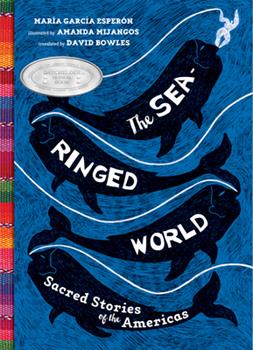
The Sea-Ringed World: Sacred Stories of the Americas

The book cover shows four whales in dark-blue silhouette, facing in opposite directions against a lighter blue ocean background. One whale is emitting a breath, which turns into a long white line that connects all four of them together. The title and subtitle of the book are inscribed in white across their bodies.

By Eliana H.

November is Native American Heritage Month, and I’d like to share a special book in honor of that observance. I am writing this post at the Elkridge Branch, and before I begin sharing the information about the book, I’d like to acknowledge the history of the land we are occupying. 

We want to respectfully honor the Susquehannock Confederation who governed, lived, farmed, and hunted on the land now called Howard County. Their nations conceded into land treaties in 1652 and 1661 after English colonizers ended their generational governance and stewardship of the land Howard County is built upon. This practice of land acknowledgement is to honor and respect the indigenous inhabitants both from the past and the present. 

Native Americans are part of our present as well as our past, still living in communities around the Americas despite the atrocities that have been committed against them. While none of us has the power to go back and change the course of history, we can make a step toward greater shared understanding through the power of stories. One source for stories from various Native American traditions is The Sea-Ringed World: Sacred Stories of the Americas by María García Esperón, illustrated by Amanda Mijangos, and translated by David Bowles. 

I noticed this book on our new children’s nonfiction shelf, and I had to pick it up. I was eager to increase my understanding of some of the mythology of the groups that lived here for thousands of years before Europeans arrived. I read the tales aloud to my 10-year-old child, and we were both captivated by the narratives, which were very new to us. As with any mythology, the stories in The Sea-Ringed World explore essential questions of humanity: What is our place in the universe? What are the origins of this world? What happens when we move out of this life? And many others.

Before you begin reading the stories in this volume, I encourage you to peruse the back matter a bit. A note about transcription of Indigenous terms is followed by a pronunciation guide, which is especially helpful if you are reading aloud. In addition to those, you will find “A Quick Guide to Cultures,” along with a map of those cultures, a glossary (including more pronunciation help!), and a bibliography. 

Even if you do not make it through all of the narratives contained in The Sea-Ringed World, it is worth exploring at least a few. Be sure to pause on the striking tricolor illustrations that adorn many of the pages. 

Extra note: I was especially glad for the background knowledge provided by this book when I read Gods of Jade and Shadow!

Eliana is a Children’s Instructor and Research Specialist at the Elkridge Branch and co-chair of the HCLS Equity Committee. She loves reading, even if she’s slow at it, and especially enjoys helping people find books that make them light up. She also loves being outside and spending time with friends and family (when it’s safe).
For Native American Heritage Month

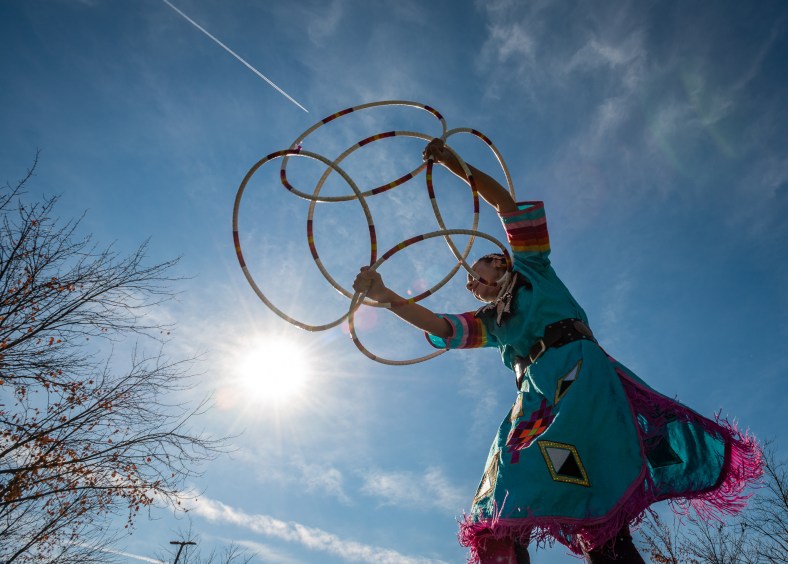
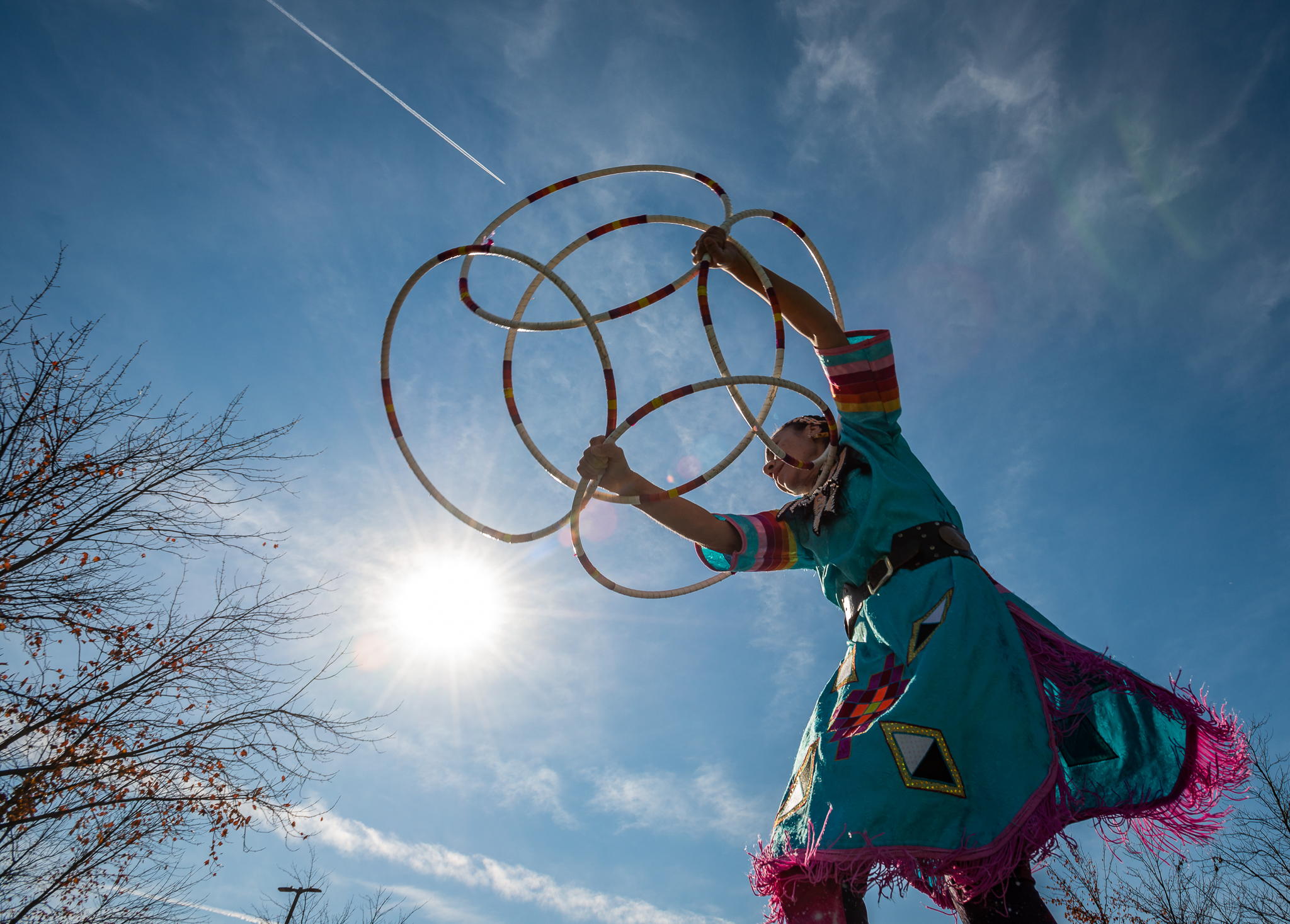
Native American hoop dancer with her interlocked hoops above her head against a sunny sky.

Native American Heritage Month Celebration

Saturday, Nov 5
11 am – 3 pm
East Columbia Branch

Celebrate Native American culture and resilience at this free event. Filled with performances, arts and crafts, and food vendors (including Navajo tacos), you can have lunch, do a little shopping, and enjoy amazing traditional dance.

2 pm: Meet the Author Brian Lee Young
An enrolled member of the Navajo Nation, Young grew up on the Navajo Reservation and currently lives in Brooklyn, New York. His debut novel, Healer of the Water Monster, shares the story of a seemingly ordinary Navajo boy who must save the life of a Water Monster—and who comes to realize that he’s a hero at heart.

Performances by:
Angela Gladue
Chris EagleHawk
Shawn Iron Maker
Max Yamne
Rose Powhatan
Lance Fisher & Giovanna
Walking Eagle

Sponsored by Capital Native Nations and Nava Be Diné

Understanding Land Acknowledgements and How to Move Beyond Them

Thursday, Nov 10
7 – 8:30 pm
Miller Branch
Register here.

“Land acknowledgments” are statements that recognize Indigenous peoples dispossessed of their land and/or relationships with land by settler colonists. These statements are seen as an effective and ethical way to begin acknowledging Indigenous sovereignty, begin correcting the stories and practices that erase Indigenous people’s history and culture, and begin inviting and honoring the truth.

Join Maryland State Arts Council Folklife Specialist Ryan Koons for a presentation about land acknowledgements using materials from MSAC’s Land Acknowledgement Project. In this project, MSAC staff engaged in compensated consultations with tribal elders from American Indian tribes whose lands are claimed by Maryland. Most importantly, this presentation will discuss ways to move beyond land acknowledgements towards positive change led by tribal peoples.

Reading Human Rights

Thursday, Nov 17
6:30 – 7:30 pm
Savage Branch
Register here.

The book cover depicts two feathers facing in opposite directions, sketched in brown ink against a bright orange background, with the title in yellow lettering.

Reading Human Rights is a monthly book discussion hosted by the Howard County Office of Human Rights & Equity and Howard County Library System. We read books that promote cultural awareness, diversity, and equity.

In November, we read and discuss national bestseller There There by Tommy Orange (also available in large print, e-Book, e-Audiobook, and book on CD formats). This wondrous and shattering novel follows twelve characters from Native communities: all traveling to the Big Oakland Powwow, all connected to one another in ways they may not yet realize. Hailed as an instant classic, There There is at once poignant and unflinching, utterly contemporary, and truly unforgettable.

Native Expulsion & Manifest Destiny

Monday, Nov 21
7 – 8 pm
online
Register here.

This talk explores westward expansion and its impact upon Native communities.

Even though the phrase ‘manifest destiny’ was not used in print until 1845, the spirit of American expansionism that it referred to was very apparent long before the 1840s. Americans had been talking about pushing westward as if it was their manifest destiny ever since folks in Jamestown in the 1600s had started eyeing the land on which Natives were settled.

University of Maryland historian Richard Bell begins by tracking the story of Native expulsion and colonial expansion from the Revolution era through the 1850s, paying particular attention to the ways in which the West and westward expansion came to be romanticized in the American imagination.

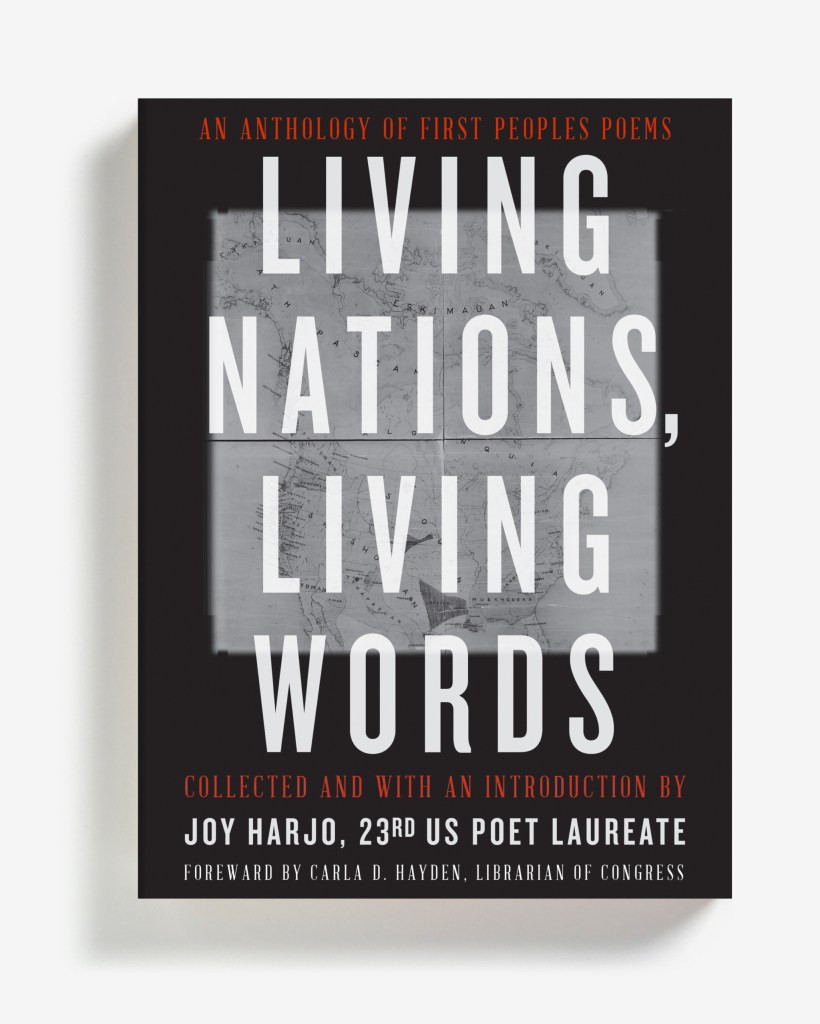
Living Nations, Living Words

The image has the book title superimposed over a black and white map of North America.

Wednesday, Nov 30
7 – 8 pm
Miller Branch
Register here.

Explore Poet Laureate Joy Harjo’s edited poetry collection and accompanying project for the Library of Congress: “Living Nations, Living Words.” Listen to poems and author commentary, explore an interactive story-map, reflect on common themes, and discuss Native American representation in literature and society.