Born Standing Up by Steve Martin

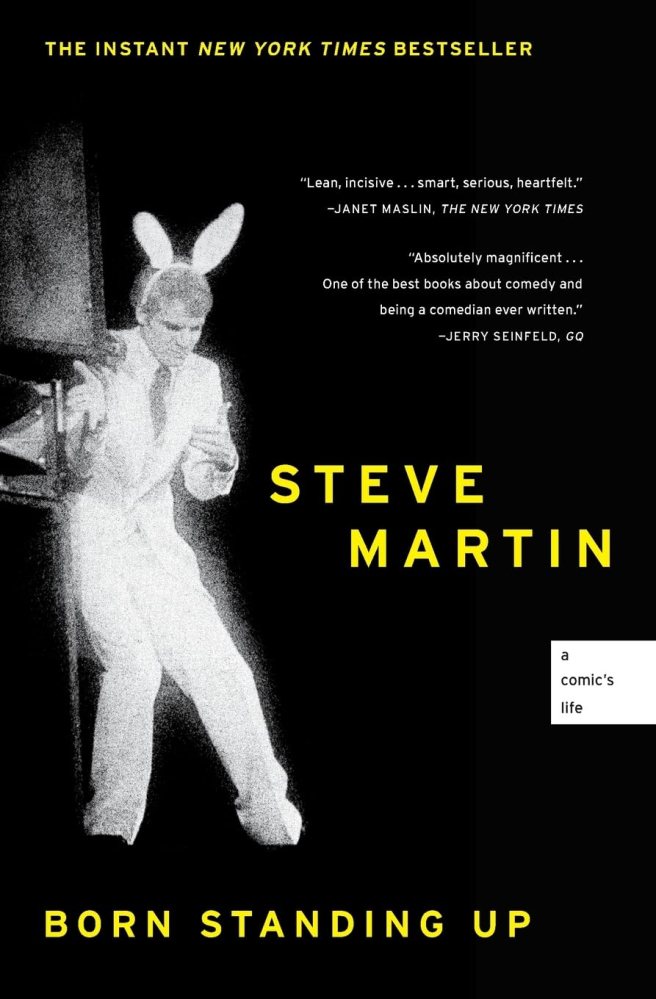
The photograph shows comedian and author Steve Martin wearing a white suit, a tie, and rabbit ears while on stage.

By Alex P.

Steve Martin is best known as an accomplished Hollywood actor, recognized as the star of classic comedies like Father of the Bride, Three Amigos, and Cheaper By The Dozen, but some folks may remember his brief time as a standup entertainer. In fact, Martin achieved national stardom through his standup work, released four comedy albums (Let’s Get Small and A Wild and Crazy Guy sold millions of copies), and established national catchphrases, such as, “well excuuuuse me”. His acting career only began after he burned out from that stardom, and Martin seeks to revisit those beginnings in his new memoir.

Born Standing Up focuses on the early life and career of the Hollywood multi-hyphenate. He comes of age in California; his first jobs included selling guidebooks at Disneyland and performing in a comedy troupe at Knott’s Berry Farm. His surreal sense of humor got him a position as a writer for the Smothers Brothers Comedy Hour, which kept him afloat while his “experimental” standup comedy struggled in California clubs and on late-night TV appearances. Against the blunt advice of his agent (“stick to writing”), he quit writing to take his performances on the road. 

Steve Martin’s standup comedy was weird, conceptual, nonsensical, and almost completely unique. There were props, he was a master juggler, and he played the banjo. He was a consummate entertainer, but his work was intellectual too; his friend Rick Moranis termed it “anti-comedy.” He had a theory behind his performances: “What if there were no punch lines? What if there were no indicators? What if I created tension and never released it?… What would the audience do with all that tension?… if I kept denying them the formality of a punch line, the audience would eventually pick their own place to laugh, essentially out of desperation.”

Some typical Martin one-liners:  

  • “I’m so depressed today. I just found out this ‘death thing’ applies to me.” 
  • “Here’s something you don’t often see:” [spreads mouth open with fingers, and leaps into the air while screaming] 
  • “I think communication is so firsbern.” 

The driving force of Martin’s life during this time seems to be either deep dissatisfaction or reckless ambition, as he constantly abandons his own comfort to try his hand at success. Martin seems more motivated by the idea of mastering his craft than by fame and fortune. He taped his shows on cheap cassette recorders so he could listen back and master his timing, obsessing over how to make audiences “get” his weird material better. He found the uncharted territory of playing those clubs exciting as he refined his craft, but the constant work was met with lukewarm results. It clearly took a toll on him,“ When I think of moments of elation I have experienced over some of my successes, I am astounded at the number of times they have been accompanied by elation’s hellish opposite.” 

He finally broke through and his inventiveness was widely recognized, but he lost the thrill of winning over those tough, small audiences. He now performed in arenas to crowds who were eager to recite his catchphrases and punchlines at him. “The nuances of stand-up still thrilled me, but nuance was difficult when you were a white dot in a basketball arena. This was no longer an experiment; I felt a huge responsibility not to let people down… I dabbled with changes, introducing a small addition or mutation here or there, but they were swallowed up by the echoing, cavernous venues.” Stardom made him terribly lonely and deeply exhausted. He was determined to use his stardom to try to find success while he could, and he pitched a tentative screenplay for The Jerk to Paramount. Carl Reiner signed on to direct, the film became a smash hit, and the rest is history.  

This obsession with self-improvement, artistic satisfaction, mastery, and success seems to stem from family issues: Martin is clearly haunted by his parents. His father, who physically disciplined Martin, sometimes indiscriminately, could barely acknowledge his son’s fame and success and would only do so disparagingly. His mother was clearly happy that her son became a star, but her compliments took an oddly backhanded form: “Oh, my friends went to the movies last weekend, and they couldn’t get in anywhere so they went to see yours, and they loved it!” The book ends with the deaths of each of his parents, with him at their sides, attempting to bring closure to the trauma and understand why they shaped each other the way they did. 

When you’re reading a comedian’s memoir, you usually expect an entertaining, light read with some poignant biographical vignettes to add a little gravitas. Born Standing Up reverses the ratio of jokes to earnestness. Not only does Martin impart a tremendous amount of wisdom and pain from his life experiences, he offers some of the most profound and thoughtful writing I’ve read in a long time. Martin reserves the jokes for either explaining the details of his standup material or making light of awkward life situations he found himself in, and I never really minded.

Born Standing Up is available in print or as an audiobook read by the author. 

Alex Pyryt is a DIY Instructor & Research Specialist at HCLS Elkridge Branch. 

The Death of Expertise by Tom Nichols

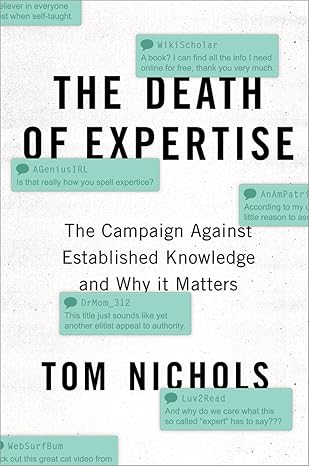
The book cover includes seven speech bubbles or fragments of speech bubbles from writers with different user names, such as "DrMom_312" stating, "This title just sounds like yet another elitist appeal to authority" and "WikiScholar" saying "A book? I can find all the info I need online for free, thank you very much." All of them slyly support the premise of the book.

By Julie F.

Tom Nichols is a staff writer at The Atlantic, a professor, and a policy professional; I have followed him on social media and read his opinions for years. In this thoughtful analysis, he considers the death of expertise: the sense that previously acknowledged experts aren’t to be trusted and that the layperson can navigate their own way through a sea of information (and mis/disinformation). Looking at the disciplines of education and journalism, the rise of the internet, and the experts themselves (who consult with and influence policymakers), he traces the ways that citizens in our democracy have decided that they have the expertise to make decisions about a host of issues that were previously deferred to specialists (doctors, professors, and other expert advisors).

Nichols convincingly demonstrates how confirmation bias, the commodification of higher education, anti-intellectualism, and millions of web pages with uncurated, dubious information have enabled this often-misguided attitude. Librarians and library workers, take heart! You will appreciate his deep understanding of the nature of our work. My favorite quotes are from (not surprisingly) his chapter on the internet, called “Let Me Google That For You: How Unlimited Information Is Making Us Dumber”:

“The Internet, however, is nothing like a library. Rather, it’s a giant repository where anyone can dump anything, from a first folio to a faked photograph, from a scientific treatise to pornography, from short bulletins of information to meaningless electronic graffiti” (110).

“Research requires the ability to find authentic information, summarize it, analyze it, write it up, and present it to other people. It is not just the province of scientists and scholars, but a basic set of skills a high school education should teach every graduate because of its importance in any number of jobs and careers” (111).

Although his exploration of these concerns left me a little anxious at times for the future of our republic, Nichols wasn’t as cynical as I’d expected, and at the end of The Death of Expertise: The Campaign Against Established Knowledge and Why It Matters, he sums up similar situations we’ve recovered from in the past, when Americans were “capable of shrugging off their self-absorption and isolation and taking up their responsibilities as citizens” (237). Hopefully, a resurrection in interest in participatory democracy and the education of our citizenry will speed that process along.

The Death of Expertise: The Campaign Against Established Knowledge and Why It Matters is available from HCLS in print and as an e-audiobook from Libby.

Julie is an instructor and research specialist at HCLS Miller Branch who finds her work as co-editor of Chapter Chats very rewarding. She loves gardening, birds, crime and espionage fiction, all kinds of music, and the great outdoors.

Pick a Bunch of Black-Eyed Susans This Summer

A lot of black-eyed susans in full bloom, showing bright yellow petals and a dark brown center.

by Jean B.

It’s summertime in Maryland and Black-Eyed Susans, the state flower, dot the landscape with their bright yellow blooms in gardens, along highway medians, and across open fields. Black-Eyed Susans also are blooming inside the library. These award-winning books for kids and young adults make a perfect choice for summertime reading.

The Black-Eyed Susan Book Award is Maryland’s student choice award, voted on by students in grades K-12 every year since 1992. With seven categories of competition, there are contenders for every age and reading preference: Picture Books (for grades K-2); Fiction/Nonfiction for grades 3-5, grades 6-8, and high school; and Graphic Novels for grades 3-5, grades 6-8, and high school.

Why pick a Black-Eyed Susan? The nominees for this award are selected by school librarians for high quality AND kid appeal. The winners have been voted the best by 20,000 students across Maryland – that’s a major stamp of approval!

But here’s the best reason to pick a Black-Eyed Susan: to make YOUR voice count for next year’s award winner! The 2025-26 nominees are out: students in participating schools or homeschool co-ops who read at least eight of the nominated picture books or three of the nominated fiction/nonfiction or graphic novel nominees will be eligible to vote in April 2026. HCLS also provides a pathway to voting through our Black-Eyed Susan book clubs at Central Branch.

Twenty thousand Maryland kids can’t be wrong! Here’s a sampling of what they liked best in 2024-25:

Picture Book winner:
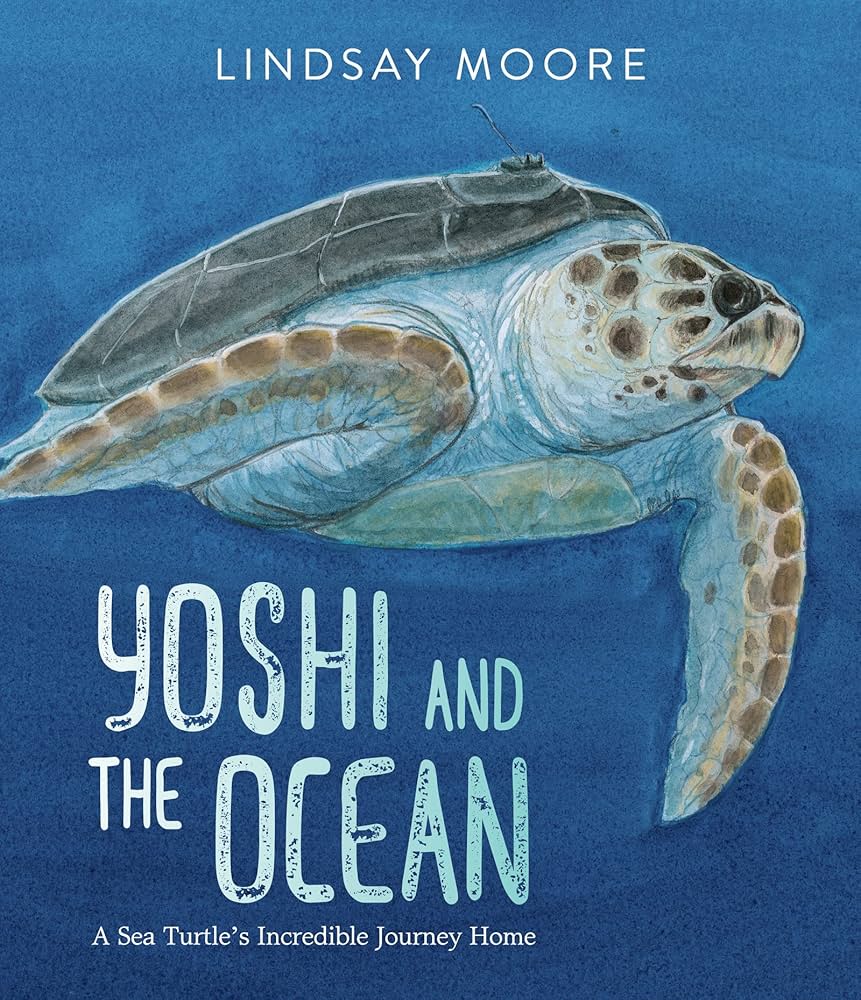
Yoshi and the Ocean by Lindsay Moore tells the amazing true story of a sea turtle’s return to the wild after 20 years of care in a South African aquarium. With lyrical text and gorgeous artwork, this book follows Yoshi as she navigates a 25,000 mile journey across two oceans, mapped by a tracking device, to reach her original home. Beautiful to read with younger children, it also contains a wealth of information about ocean life, loggerhead turtles and oceanography.

Grades 3-5 Fiction/Nonfiction winner:
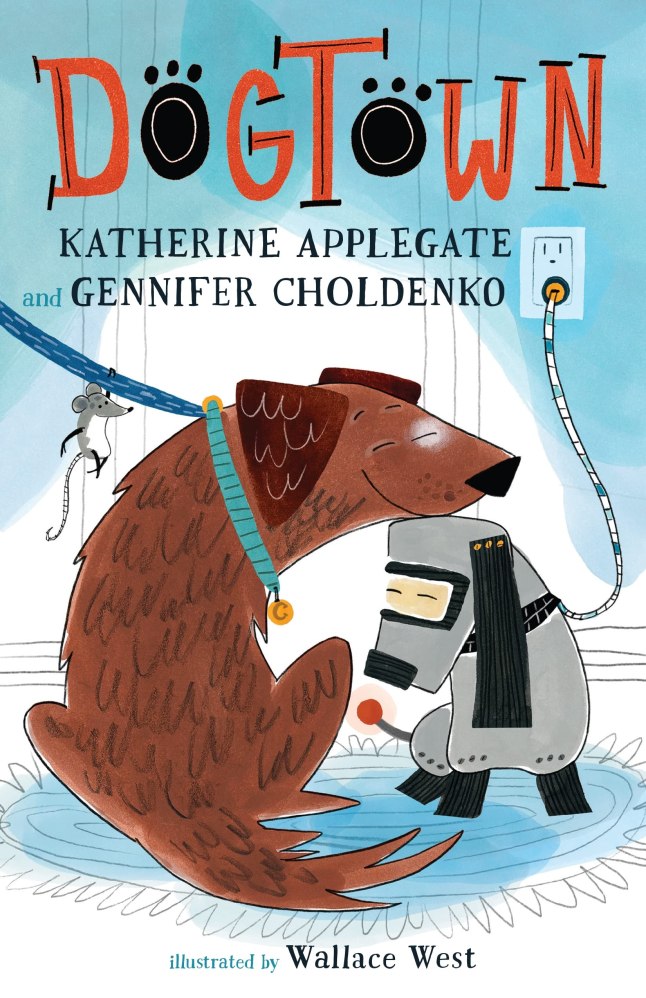
In Dogtown by Katherine Applegate and Gennifer Choldenko, a real dog, a robot dog, and a mouse band together to engineer an escape from the Dogtown Shelter and find their forever homes. In this charming animal adventure, short chapters and fun illustrations make it a perfect choice for a family read aloud or for kids just beginning to tackle full-length chapter books.

Grades 6-8 Fiction/Nonfiction winner:
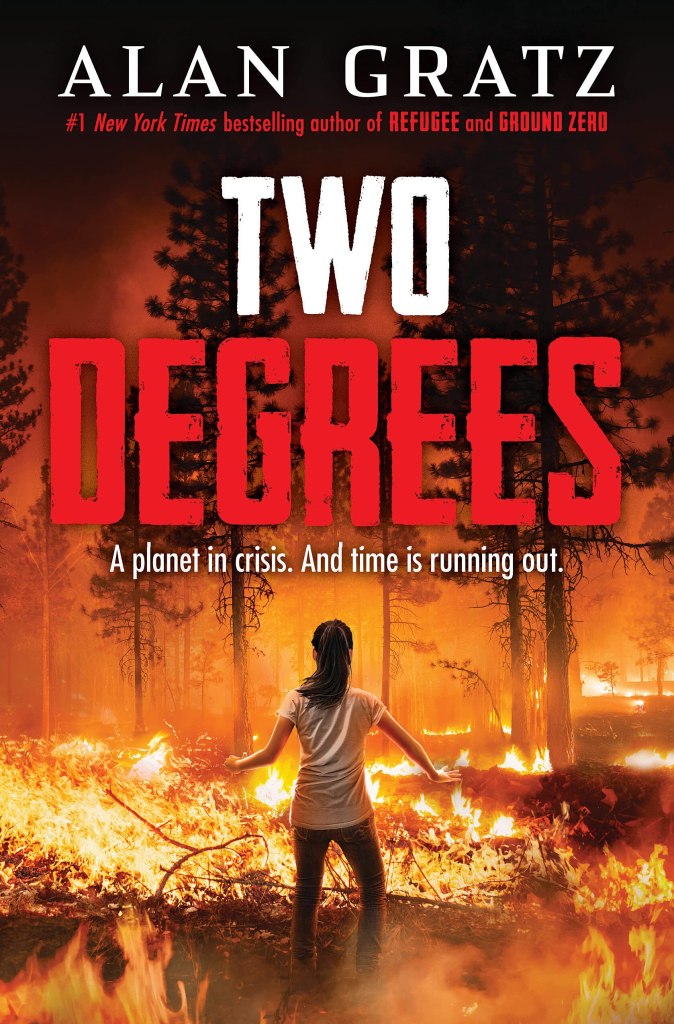
Two Degrees by Alan Gratz is an action-packed thriller for those who love survival stories. The book follows four middle school kids in different regions of North America, each battling climate-change natural disasters. Though their challenges are different and parallel, the kids’ fierce struggles are linked as part of a bigger picture requiring joint action.

Jean is a Children’s Instructor and Research Specialist at HCLS Central Branch. She loves talking about books with people of all ages, but especially enjoys leading the Heavy Medals book club for fourth and fifth graders, exploring award-winning books of all genres. 

Summer Reading for Adults

Classic Americana tattoo style of a red heart with a banner acroos it and a black-eyed susan in the bottom left. The white banner reads: People are the heart of the library.

This summer kicks off the third annual reading challenge for adults, while also celebrating 85 years of the library. People are the heart of our library – and we want to see you achieve your goals, explore the world, and find joy in the pages of a good book. Pick up a booklet at any branch to inspire you through a year of reading, filled with suggested titles and prompts for reflection.

While there are 14 reading challenges listed, you need to complete only three of them to participate in summer reading. Once you have read three books (print, e-book, and audio all count), come back to the Library to receive a prize and be entered into a grand prize drawing.

Here’s a sneak peek – and a Chapter Chats review or two:

Read a book published in or before 1940
Celebrate our birthday with us by reading a book that would have been on the shelves when we first opened our doors. Suggestions include:
The Sun Also Rises by Ernest Hemingway
The Heart is a Lonely Hunter by Carson McCullers
Native Son by Richard Wright

Revisit Your Library Memories
What is the first book you remember checking out of the library? Or, what book have you borrowed from the library that impacted you the most? We invite you to read it again! Suggestions include:
A Tree Grows in Brooklyn by Betty Smith
We Have Always Lived in the Castle by Shirley Jackson
The Catcher in the Rye by J.D. Salinger

The Language of Art
In addition to books, libraries are places for artists and the arts. At HCLS, you can borrow artworks by and books about famous artists from around the world and from local artists. Suggestions include:
All the Beauty in the Word: The Metropolitan Museum of Art and Me by Patrick Bringley: read review
The Henna Artist by Alka Joshi: read review
The Work of Art: How Something Comes From Nothing by Adam Moss

85 Years of Connection: Bridging Generations Through the Library
Explore stories of multi-generational relationships, families, and communities. Suggestions include:
Real Americans by Rachel Khong: read review
A Grandmother Begins the Story by Michelle Porter
The Covenant of Water by Abraham Verghese

These are a taste of what a year of reading could have in store for you. Visit our branches often to check displays for more titles or to ask a staff member for a recommendation.

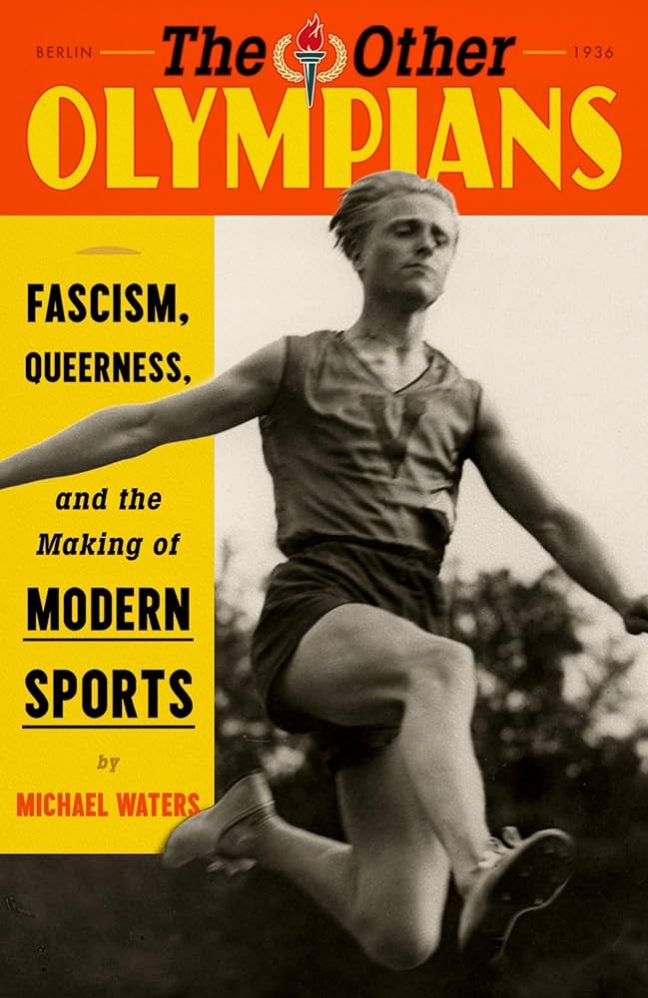
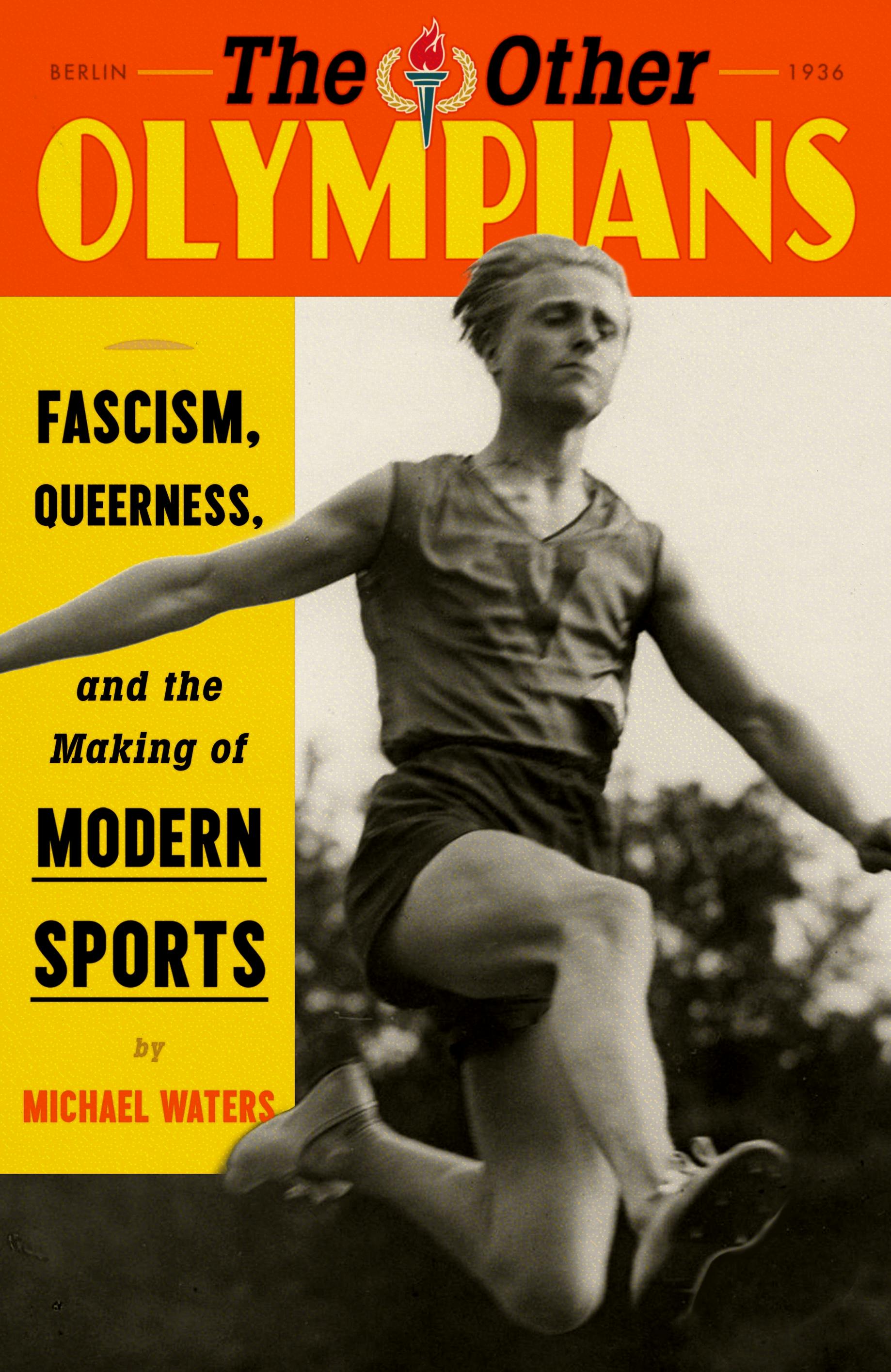
The Other Olympians: Fascism, Queerness, and the Making of Modern Sports by Michael Waters

The book cover depicts Olympian Zdeněk Koubek participating in a jumping event, leaping into the air with arms spread wide and hair blown back.

By Ash B.

To say that “men” in women’s sports is a hot-button issue would be an understatement. 

Many individuals have a knee-jerk emotional reaction to this topic; far fewer know the facts about transgender or intersex athletes. I’d bet even fewer know that gender anxieties in relation to sports are nothing new – in fact, they date back over a century. For example: mandatory medical exams, to ‘prove the womanhood’ of female athletes, were first popularized by a Nazi sports physician for the 1936 Olympics. Sex testing would become more prominent in the following decades, particularly in the context of the Cold War. Such is one bit of history unveiled in The Other Olympians: Fascism, Queerness, and the Making of Modern Sports by Michael Waters.

As indicated by its title, this nonfiction book addresses political, social, cultural, and scientific developments in the early twentieth century. Waters digs deep into the history of professional, international athletics, exploring the forces that impacted where, and by whom, sports could be played – particularly at the 1936 Berlin Olympic Games in Nazi Germany. The idea of women playing sports, whether leisurely or professionally, was enough to cause public (primarily male) concern and outrage in this time period. The founder of the modern Olympics, Pierre de Coubertin, declared that female athletes did not, “constitute a sight to be recommended before the crowds I gather for an Olympiad.” 

On a surface level, it’s not difficult to imagine why there’s a patriarchal bias regarding athletics – consider how current broadcasts of women’s sports get less viewership and the teams get fewer resources than their male counterparts. Dig a bit deeper, and you quickly run into norms about what a female body is ‘supposed’ to look like. Notice how women are ridiculed and called “manly” when they are seen as too muscular? Think about how many people now accuse female athletes with ‘masculine’ characteristics – a square jawline, a broad nose, wide shoulders, a small chest – of being male. 

This is the cruel irony of the anti-trans “defending women’s sports” issue; it doesn’t just target trans people. It significantly harms cisgender women by policing their bodies and appearances, too, especially women of color and intersex women. This fixation on gender conformity in sports – specifically women being ‘feminine’ enough – can be traced back decades, to when women were discouraged from playing sports at all. Fear-mongering abounded regarding the ‘masculinizing’ effects that playing sports, especially sports that were accessible to working-class women. As Waters paraphrases the British paper The Daily Herald, “women who participated in ‘masculine’ sports like soccer or track and field risked creating a third category of sex.”

These cultural fears were elevated by news of Zdeněk Koubek and Mark Weston – each assigned female at birth and raised as girls – publicly transitioning to living as men, in 1935 and 1936 respectively. Because both Koubek and Weston had formerly won titles in the Women’s World Games, an international competition similar to the Olympics, their gender revelations had significant influence on discourse regarding women’s sports, including paranoia that male athletes could ‘pose’ as women to win professional competitions.

With an engrossing narrative approach, Waters traces the histories of Koubek and Weston along with the stories of key bureaucrats in the sports world, such as Alice Milliat, founder of the Women’s World Games, and Avery Brundage, an American sports administrator who climbed his way to Olympic leadership. Whether you’re interested in athletics, politics, or gender, you’re sure to glean knowledge from Waters’ depth of research. This is a great read for all history lovers who relish in learning little-known facts, woven together in personal and national narratives, as well as anyone who is concerned (or simply confused) about the culture wars around gender and women’s sports.

The Other Olympians is available in print and as an e-audiobook from Libby.

Interested in a brighter side of queer history? Learn about drag history and makeup on June 17, 7 – 8:30 pm at HCLS Central Branch for You Betta Werk! The Art & History of Drag. Free makeup will be given to attendees, while supplies last, on a first-come, first-served basis.

Ash is an Instructor and Research Specialist at HCLS Central Branch with a passion for information literacy and community engagement. They love music, gardening, hiking, and cuddling with their golden retriever.

Meet the Author: Becky Aikman

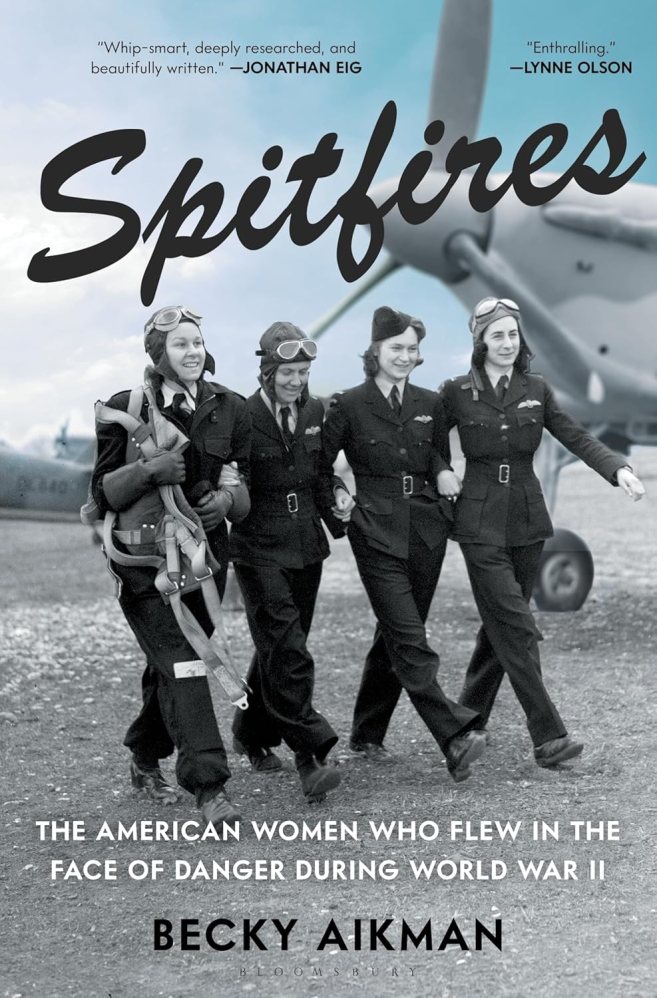
The photograph shows four women aviators from the World War II era in uniform, several with flight gear and goggles, marching arm-in-arm in front of a propeller plane.

Spitfires: American Women who Flew in the Face of Danger during WWII
Mon May 19 7 – 8:30 pm Miller
For adults. Register here.

“A bold and soaring work of history …whip-smart, deeply researched, and beautifully written.”
~ Jonathan Eig, Pulitzer Prize-winning author of King: A Life

The heart-pounding true story of the daring American women who piloted the most dangerous aircraft of World War II through the treacherous skies of Britain. They were crop dusters and debutantes, college girls and performers in flying circuses–all of them trained as pilots. Because they were women, they were denied the opportunity to fly for their country when the United States entered the Second World War. But Great Britain, desperately fighting for survival, would let anyone serve in this capacity: even Americans, even women piloted warplanes. Thus, 25 daring young aviators bolted for England in 1942, becoming the first American women to command military aircraft.

In a faraway land, these “spitfires” lived like women decades ahead of their time. Risking their lives in one of the deadliest jobs of the war, they ferried new, barely tested fighters and bombers to air bases and returned shot-up wrecks for repair, never knowing what might go wrong until they were high in the sky. Many ferry pilots died in crashes or made spectacular saves. It was exciting, often terrifying work. The pilots broke new ground off duty as well, shocking their hosts with thoroughly modern behavior.

With cinematic sweep, Becky Aikman follows the stories of nine of the women who served, drawing on unpublished diaries, letters, and records, along with her own interviews, to bring these forgotten heroines fully to life. Spitfires is a vivid, richly detailed account of war, ambition, and a group of remarkable women whose lives were as unconventional as their dreams.

Becky Aikman is the author of two books of narrative nonfiction: her memoir, Saturday Night Widows (available as an e-book from CloudLibrary and an e-audiobook from Libby), and Off the Cliff: How the Making of Thelma & Louise Drove Hollywood to the Edge. A former journalist at Newsday, Aikman has written for The New York Times, The Los Angeles Times, and other publications. She lives in New York.

Books available for purchase and signing.

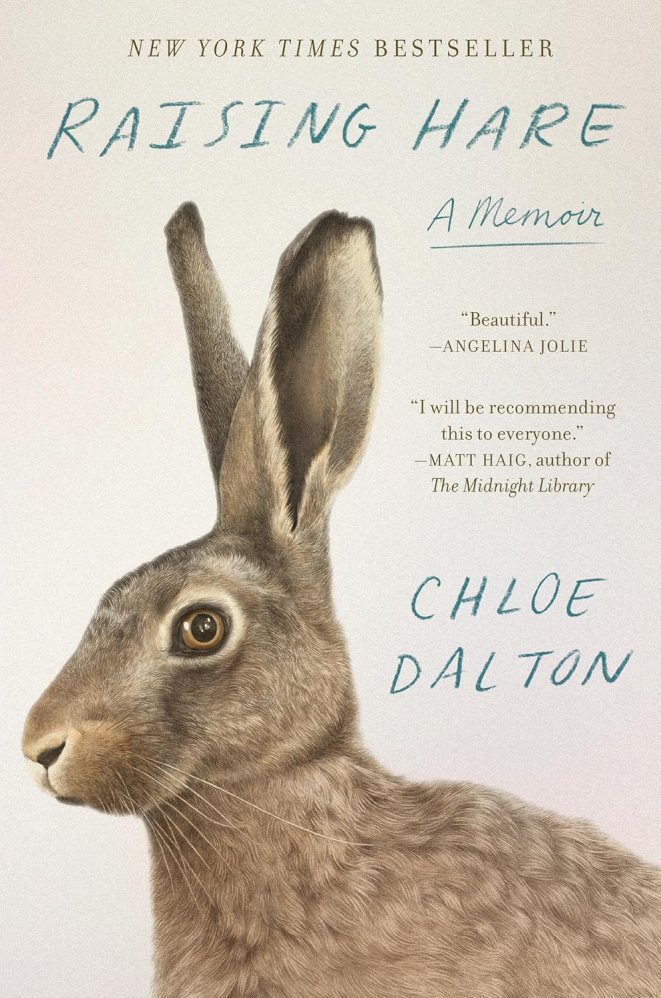
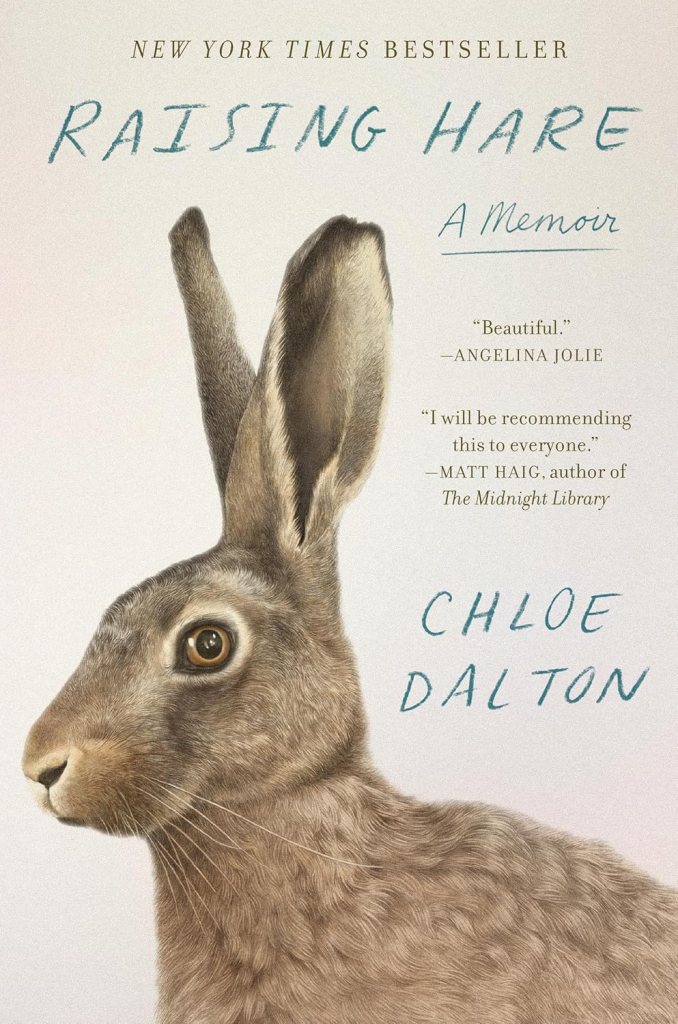
Raising Hare: A Memoir

The book cover is a colored illustration of a hare in profile, with its ears alert and its whiskers extended. The viewer sees one golden-brown eye staring back at them.

By Julie F.

Chloe Dalton, the author of Raising Hare: A Memoir, is a writer, political adviser, and foreign policy specialist who decided to escape London during the pandemic. In February 2021, while still getting used to the lay of the land and the run-down home she purchased in the dead winter landscape, she discovers a leveret (a baby hare) in her garden. Not knowing anything about the species, but determining that the mother is not close and may not return, she brings it in and sets about trying to keep it alive.

There is a lovely, intimate prologue from the perspective of the mother hare that offers one explanation for how the leveret, which she has carefully hidden from predators, might have come to be separated from her. Dalton is clearly the kind of person who listens to the landscape and tries to discern what it wants to communicate. She tries very hard to ensure that the leveret stays wild. She bottle-feeds it and then offers it porridge oats, but then she plans to release it into the wild. Although the leveret ventures into her garden, and then eventually over the garden wall, it never becomes fully wild (nor fully tame), and it returns again and again–delivering the next litters of baby leverets in the garden, and even later in the house, where she feels safe and they grow up feeling even safer, having been born on the floorboards.

The memoir is a lovely meditation on what is tame and what is wild, the tenuous but loving connection between humanity and nature, and how slow, deliberate observation can teach us so much about a species. Dalton knew next to nothing about hares when she began and is surprised to learn that there’s not that much information out there; most of what she learns is gleaned from the poet William Cowper, whose period of depression in 1774 was relieved when he was gifted a three-month-old hare and later acquired two more, all of whom he adored. She says, “I doubt that Cowper imagined his poems might be used as a guide to raising a leveret nearly 250 years later, but his words were in many ways the most useful of any I found” (53). This is particularly true in relation to feeding and shelter; though Cowper kept his leverets in pens at night, she didn’t keep the leveret locked in, “never want[ing] it to feel trapped inside, nor barred from coming in” (53).

This is a tour-de-force–beautifully written, resonant, humorous, and charming at times, but full of emotional and philosophical heft. I can’t say enough good things about it, and it’s such an accomplished first book from a thoughtful, skilled, and talented author. If you enjoy audio, the narration by Louise Brealey is also accomplished and is a beautiful accompaniment to the text (if you like to listen as you read along as I did). The illustrations by Dublin-based artist Denise Nestor are also full of wonder and beauty. Near the end of the book, she talks about the impact of the hare on her life, and her description is a wonderful summation of the emotions you feel while reading her story. I’ll conclude with her words, because my own are inadequate in comparison:

“She has taught me patience. And as someone who has made their living through words, she has made me consider the dignity and persuasiveness of silence. She showed me a different life, and the richness of it. She made me perceive animals in a new light, in relation to her and to each other. She made me re-evaluate my life, and the question of what constitutes a good one. I have learnt to savour beautiful experiences while they last–however small and domestic they may be in scope–to find the peace to live in a particular state of feeling, and to try to find a simplicity of self. The sensation of wonder she ignited in me continues to burn, showing me that aspects of my life I thought were set in stone are in fact as malleable as wax, and may be shaped or reshaped. She did not change, I did. I have not tamed the hare, but in many ways the hare has stilled me” (275).

Raising Hare: A Memoir is available in print and as an e-book and e-audiobook from Libby.

Julie is an instructor and research specialist at HCLS Miller Branch who finds her work as co-editor of Chapter Chats very rewarding. She loves gardening, birds, crime and espionage fiction, all kinds of music, and the great outdoors.

National Library Week: Graphic Novels for Adults

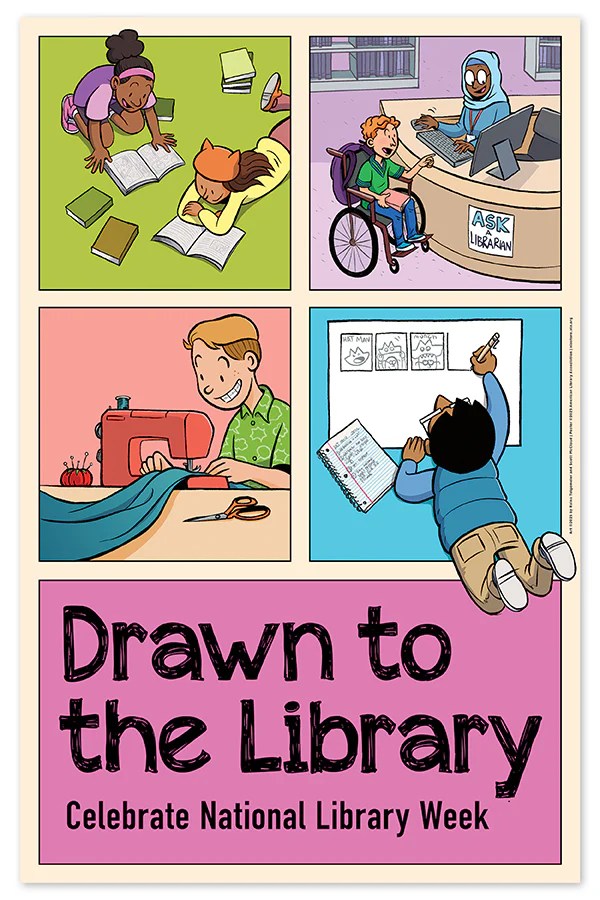
National Library Week Poster shows four different, common scenarios at the library: reading, talking at the desk, using a sewing machine from the library of things, and someone drawing.

by Emily B.

There seems to be a common misconception that graphic novels don’t count as “real reading.” This could not be much further from the truth! Reading takes on many forms beyond the printed word, each format with its own appeal. Everyone connects with stories and information in unique ways. No matter the format, reading counts, as long as you’re engaged with the material.

I find that nay-sayers tend to focus on how graphic novels differ from traditional books, rather than considering the unique elements that make graphic novels so engaging. The combination of text and illustrations might make reading more approachable to hesitant readers. Not only can the illustrations help bring the story to life, but they also can aid readers in interpreting and understanding the narrative. Literary devices like symbolism, flashbacks, and foreshadowing are enhanced with the added visual component.

Legendary comic artist Will Eisner introduced the term “sequential art” to describe comics in his 1985 book Comics and Sequential Art, giving a name to an art form that has existed for many thousands of years. Though graphic novels have experienced a recent surge in popularity, they are rooted in ancient tradition. Some early examples of sequential art include Egyptian hieroglyphs, the Trajan Column in Rome, and Maya script.

Graphic novels really offer something for everyone, from fictional stories to memoirs and depictions of real-life experiences. Interested in giving graphic novels a try? Here are just a few classics to start you on your journey:

The cover of Maus shows a black swastika with a cat behind two mice wearing trench coats.

Art Spiegelman’s The Complete Maus – This book is the first and, so far, only graphic novel to win the Pulitzer Prize. Spiegelman tells the story of his father, a Holocaust survivor, in his years leading up to World War II, his survival and liberation from a Nazi concentration camp, and his life in the years that follow. Maus is heralded as a unique blend of memoir, history, and biography in a sleek graphic novel package.

Marjane Satrapi’s Persepolis and Persepolis II – In two volumes, Satrapi recounts her childhood in Iran amidst the Islamic Revolution and her adult years in Austria. Her graphic novel memoirs were adapted into an Oscar-nominated animated film of the same title.

John Lewis’ March I-III – Late civil rights activist and politician John Lewis, at the suggestion of his aide Andrew Aydin, tells the story of the Civil Rights Movement from his perspective. The two compiled Lewis’ anecdotes, experiences, and stories, and artist Nate Powell helped bring the important story to life on page.

Emily is an Instructor & Research Specialist at HCLS Central Branch. When she’s not reading, she enjoys puzzling, listening to music, and re-watching old seasons of Survivor.

Reading List for Trans Visibility

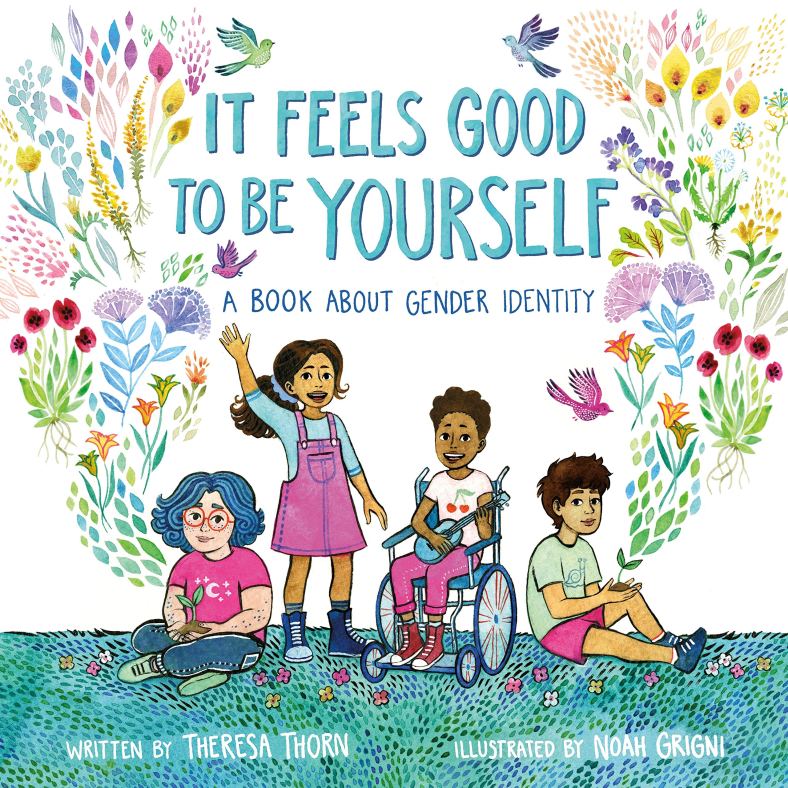
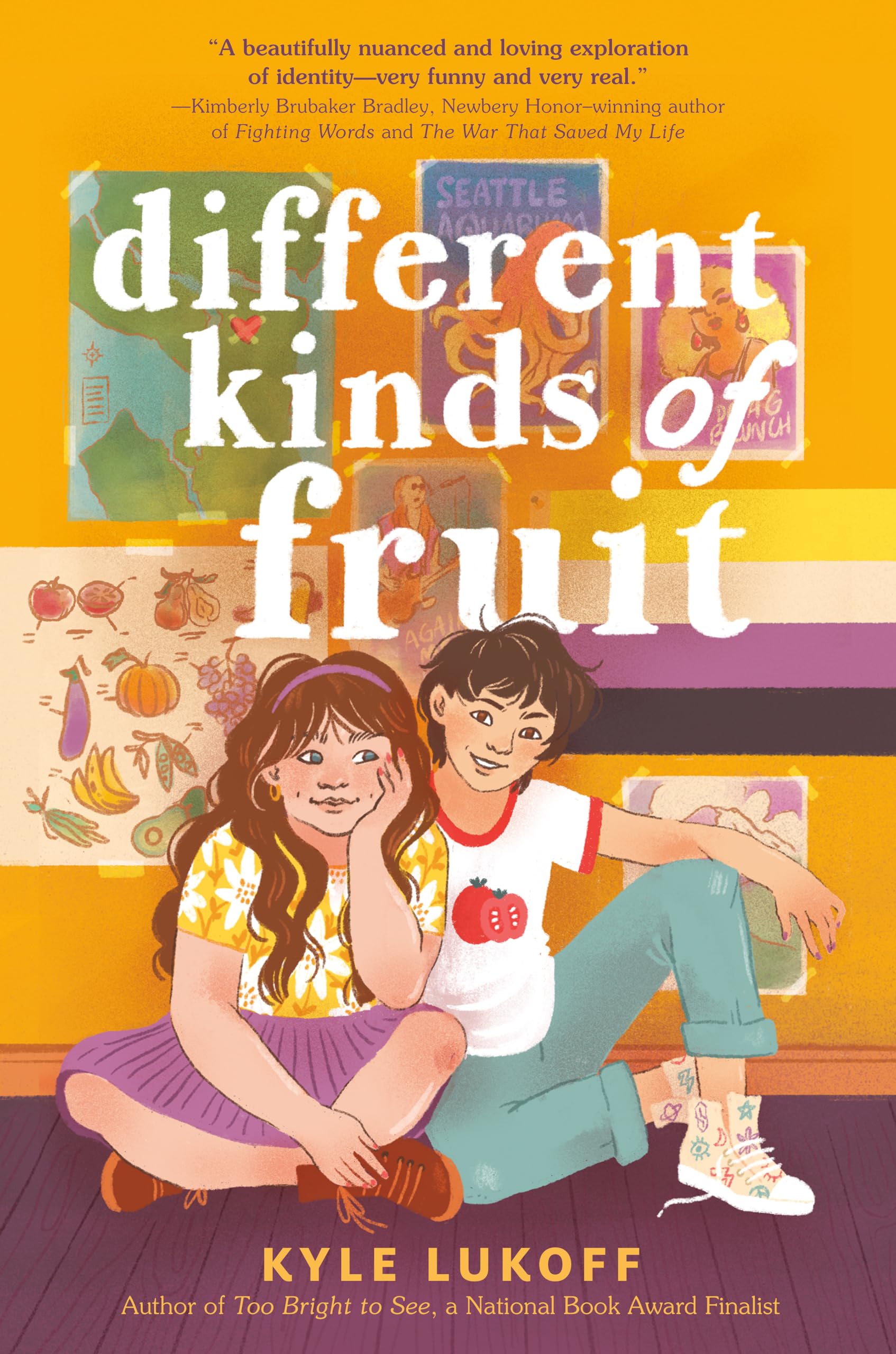
A colorful illustrated cover shows many children framed by sprays of flowers, with the title above them.

By Ash B.

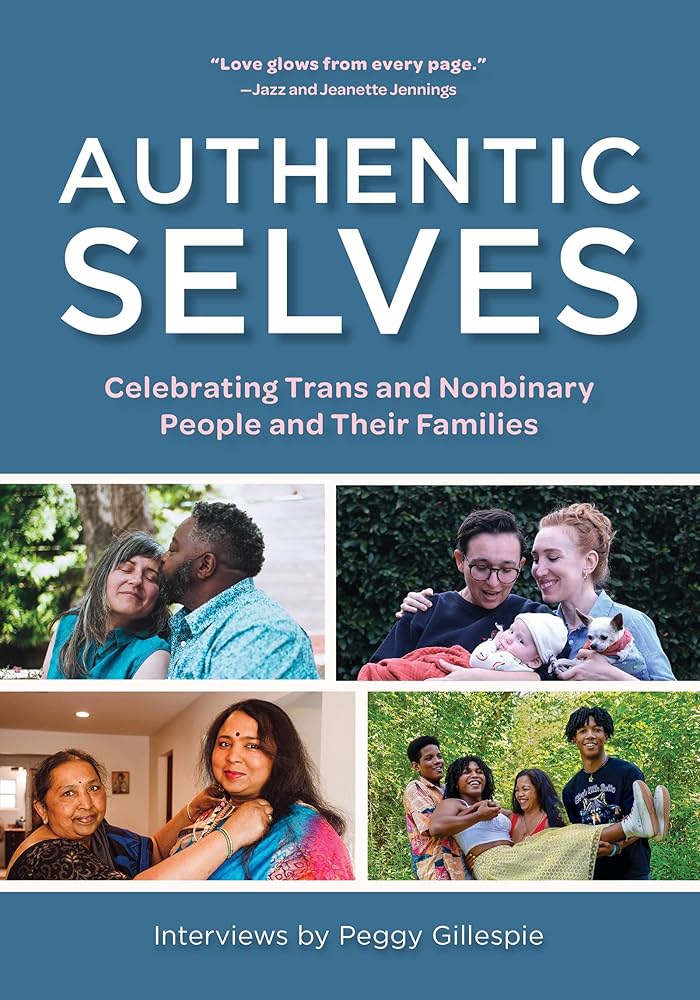
Since 2009, March 31 has been recognized internationally as Transgender Day of Visibility. Created by trans community member Rachel Crandall-Crocker, the day is meant to spark hope and spread awareness of trans lives, especially through trans joy. 

General awareness of trans-ness has increased in the past 15 years; however, visibility does not always mean progress. Over the past three years, Americans (across all political parties) have grown less supportive of policies that support trans people (ex. protection against job and housing discrimination) and more supportive of policies that cause harm and restrict trans rights, particularly relating to athletics, restrooms, and healthcare (Pew Research).

The majority of Americans, particularly those aged 50+, report they do not personally know a transgender person. Perhaps that’s why the trans community has become such an easy target for disinformation and scapegoating. If a sizeable majority of the population personally knew trans and nonbinary people – truly knew us, as peers and coworkers and friends, as humans trying to live our lives as best we can – then perhaps we would be guaranteed more safety and bodily autonomy.

In the spirit of trans joy, all are invited to celebrate the trans community at the following events: 

This Friday (Mar 28), join HCLS for a free Trans Day of Visibility celebration hosted by the Howard County LGBTQIA+ Commission, in partnership with the Office of Human Rights and Equity. The event takes place at the Elkridge 50+ Center from 4 – 7:30 pm with read-alouds, arts and crafts, games, and a dance party. More info here. 

On Monday, March 31, 10 am – 12 pm & 3 – 5 pm, join us at Central Branch to make buttons, zines, collages, and vision boards. From 4 – 5 pm, a representative from Community Allies of Rainbow Youth (CARY) shares resources and answers questions.

Below is a robust roundup of titles from our collection, most of them authored by trans people. Regardless of your gender identity and personal background, there’s something here for everyone; I hope you check one out and learn something new! 

Trans 101 Information

Anthologies to Better Understand Transgender Experiences

Trans History

If You’re a Parent (whether or not you currently have a trans child) 

Inclusive Picture Books

Middle Grade Fiction

Young adult novels & graphic novels

Adult Fiction

Need more book recommendations? Feel free to contact us, and if we don’t own a title you’re looking for, you can Suggest an Addition to the Collection.

For more resources and organizations to connect with, here are the resource lists from Community Allies of Rainbow Youth and PFLAG Howard County.

Ash is an Instructor and Research Specialist at HCLS Central Branch with a passion for information literacy and community engagement. They love music, gardening, hiking, and cuddling with their golden retriever.

The New Menopause: Navigating Your Path Through Hormonal Change with Purpose, Power, and Facts by Mary Claire Haver, MD

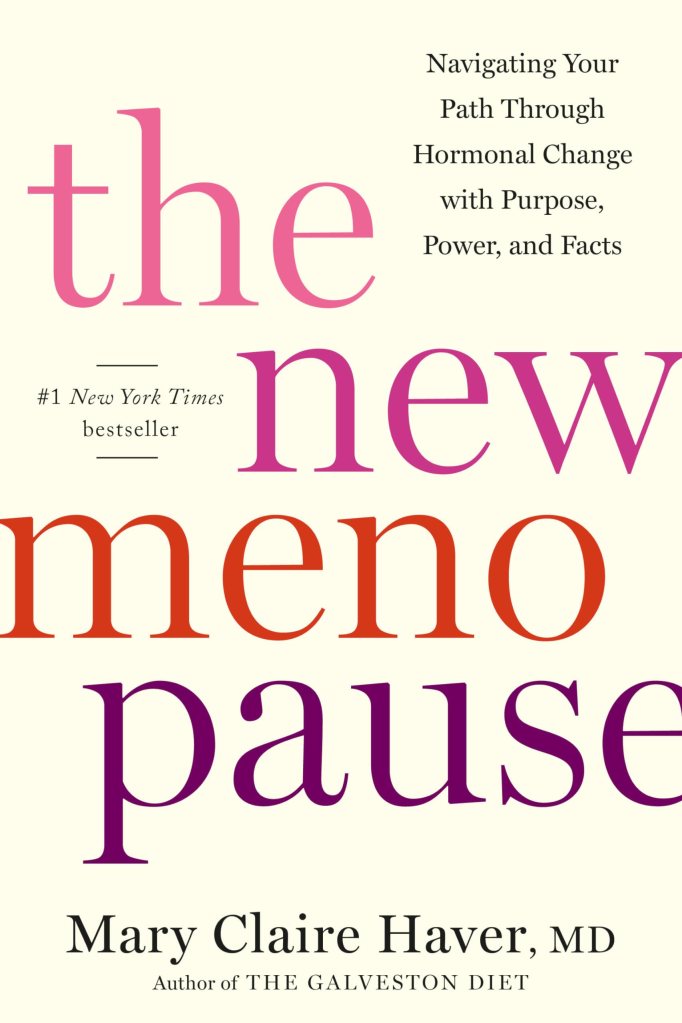
A pale yellow cover has large type in light pink "the", dark pink "new", orange "meno" and purple "pause." So, it reads clearly The New Menopause.

By Carmen J.

I remember when I was 10 years old, my beautiful mother complained about growing whiskers. So, she crankily sought electrolysis treatments, and the term menopause was ingrained in my pre-puberty mind as being a time of much discomfort. I knew I didn’t want to be cranky and have whiskers, either.

As I started my first period in my early teens, the thought of menopause seemed completely out of reach and more for the grandmotherly folks I came into contact with. Menstruation in my teens and early 20s served much more as a general annoyance at times or a sign that contraception was doing its due diligence.

While planning for a family, a missed period would signal joyful anticipation leading to motherhood’s promise of a sabbatical for nursing. As my daughter toddled and entered pre-K, I noticed changes about myself that were surprising. I started sweating without much exertion, my moods were unexplainable, and my reliable cycles became shorter in length and less frequent.

“You’re in perimenopause,” my doctor noted.  “And it may be like this for several years.” Hmm… what?

Fast forward to my book recommendation: Mary Claire Haver, MD’s The New Menopause: Navigating Your Path Through Hormonal Change with Purpose, Power, and Facts. I would qualify this as required reading for all women. 

Dr. Haver, who has garnered a powerful reputation for debunking menopause myths and normalizing conversations about women’s health, delivers a tour de force book that explains perimenopause, menopause, and post-menopausal care. You’ll learn about the variety of symptoms (66!) women can experience and how they are not limited to crankiness and whiskers (Sorry, Mom!). Examples include some that are unexpected or less frequently discussed, including body odor, depression, itchy skin, and tingling extremities. Dr. Haver shares insights surrounding hormone replacement therapy’s role in minimizing symptoms while sharing benefits versus risks. Particularly eye-opening for me was learning about estrogen’s critical duty outside of reproduction (i.e., cognitive and cardiac functions). The book includes a tool kit that serves as a symptom-based resource section and shares strategies for each individual symptom. 

Recently, Dr. Haver appeared on Mayim Bialik’s Breakdown, a terrific podcast. If you remember Mayim Bialik from the sitcom Blossom, you’re most likely already perimenopausal. Bialik is a neuroscientist, and her podcast is simply outstanding. I have the YouTube episode link below.

So to all those women of a certain age feeling hot flashes, irritable, or in need of some hormone regulation, you are not alone. Knowledge is power. And there is power in every page of The New Menopause. Period.

The New Menopause is available from HCLS in print and as an e-book and e-audiobook from Libby.

Carmen J. is a teen instructor at HCLS East Columbia Branch. Among her favorite things are great books, all things 80s, shamelessly watching The Bachelor, gardening, and drinking anything that tastes like coffee.