The Harder I Fight The More I Love You by Neko Case

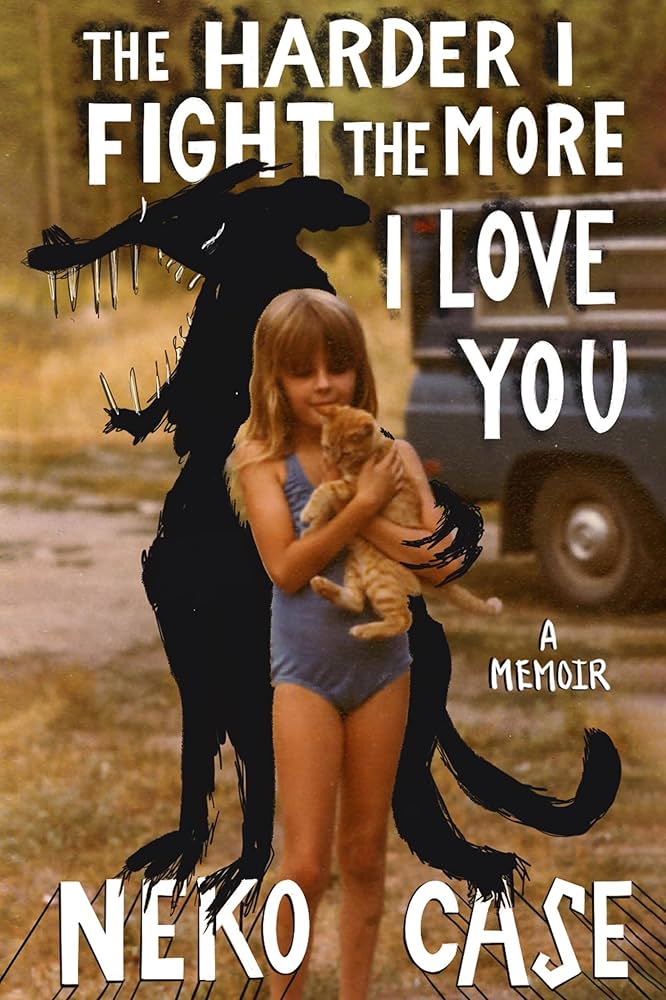
A young girl stands in a run-down yard, wearing a bathing suite and holding an orange kitten. Appearing immediately behind her is a rough sketch of a big black dog with sharp teeth.

By Holly L.

“I had actually DONE IT. I had made horses appear!!!” Neko Case recalls a defining moment described as “a bit of magic” from her childhood. Neglected by young parents who left her home alone from a too-early age, she was constantly hungry for food and companionship. One day, while desperately yearning for a horse, she makes not one but two horses appear before her eyes, a visualization she describes as “a real arrival to a real place.” In drawing these beasts from her imagination, Case establishes a sense of self and a creative identity that proves comforting.

She says that today, at age 52, she, “can still see the horses clear as day.” An early scene from Case’s new memoir, The Harder I Fight The More I Love You, it is one of many pictures drawn from memory that illustrates a fierce bond with nature and longing for connection in a world in which she felt unwanted. Today, she is a critically praised Grammy-nominated artist and has recently been welcomed back to the Grand Ole Opry after being banned in 2001 after taking her shirt off (playing an outdoor festival on a sweltering day, she found herself delirious and stripped down to her bra to avoid heatstroke).

I discovered Neko Case in 2005 when my friend Amanda tipped me off to her. Encouraging me to give her a listen, she said the name of Case’s third album like a command: Blacklisted. So I listened. The opening song Things That Scare Me hooked me from the start with its dark country twang and noir vibes (Case mentions the recently departed David Lynch as a strong influence). By the second song, “Deep Red Bells,” the saturated images of her haunted world gave me chills and had me fully converted: 

The red bells beckon you to ride
A handprint on the driver’s side
It looks a lot like engine oil and tastes like being poor and small
And Popsicles in the summer

Case details her traumatic childhood, starting out poor and small outside Bellingham in Northwestern Washington State. She recalls communing with the velvety-tracked ferns outside the trailer she shared with her mom and dad as she lay on the ground to “pet the soft dots” for hours. Throughout the book, she speaks reverently of animals and nature as wondrous beings, benign and free of ill-intent, unlike the adults in her life. Looking back on a short stint in her early childhood when the family lived near Cocoa Beach, FL when her dad was in the Air Force, Case recalls encounters with crabs, “little magicians of harmless danger, their black eyes atop long stalks like cartoon exclamation points.” This kind of vivid imagery, familiar to fans of her music, injects her prose with sound and color, conjuring up a sort of real-life fairy tale. 

Things get dark in Case’s story when, as a second grader, her Dad abruptly informs her that her mother is dead. His story is that her mother has been “very sick” recently, which is news to Case, who recalls only a few doctor’s visits, nothing that seemed serious. Stunned with disbelief, she gets on with life as kids do, only to be told by her father a little more than a year later that her mother is actually alive and has been living in Hawaii to receive treatment for her illness. The explanation is that her mother left so that the family wouldn’t have to see her suffer. Case is so elated to have her mother back that she doesn’t really question the story until years later, and the family never speaks about it.

From these turbulent beginnings outside Bellingham, Case crisscrosses the state as she splits time between her parents, who have divorced. Whether with her mom or dad, she is left alone for hours at a time, an only child who finds connection to the music that she hears on the radio: Buffy Sainte-Marie, the Go-Go’s, and Blondie are among those whose records she listens to in her school’s library when the other kids are playing at recess. Music becomes Case’s comfort and escape. Putting on headphones and pressing play on her “lavender off-brand, gas-station Walkman” helps her drown out the noise of a menacing world occupied by depressed, neglectful parents and the ever-present threat of the Green River Killer, whose murders dominate the local news. When she leaves Washington to attend a fine arts college in Vancouver, BC, she starts playing drums in a punk band called Maow. Feeling comfortable behind the drum kit, she’s reluctant to sing and one day asks her bandmates which one of them should sing a song when one shoots back “YOU sing it!” And so she does. The rest is history.

Although she had loved to sing all her life, it took her a long time to consider herself a capital S singer. Throughout a 30+ year career spanning solo and collaborative albums with such bands as power pop dynamos The New Pornographers, Case has taken ownership of her voice—which ranges from a soaring clarion call to a soft, breathy lilt and is always uniquely her own. I tore through this page-turner of a memoir, enthralled by Case’s heartbreaking story told in her trademark voice. Case’s sense of humor and nuanced perspective help the reader process some of the darker elements of her past, which includes severe neglect and sexual abuse. Ultimately, this is an affirming tale about survival and the transformative power of art. I came away from the book with an enhanced appreciation for the strength underpinning Case’s voice, eagerly anticipating her future projects, which include a forthcoming album later this year as well as a musical adaptation of the 1991 film Thelma and Louise.

The Harder I Fight The More I Love You is available in print, e-book, and e-audiobook. Neko Case also publishes a Substack newsletter called Entering the Lung.

Holly is an Instructor & Research Specialist at HCLS Miller Branch. She enjoys reading widely, knitting sporadically, and baking as often as she gets the chance.
The Cat Encyclopedia by DK

The book cover shows an orange and white, short-haired tabby in profile, looking up.

by Angie E.

I am so very grateful for and to my cat. He is my best friend, my roommate, and a wonderful companion. I know (despite my not wanting to be) that I am an overprotective cat mom, and I struggle with how to avoid that and yet still be a force of good for him. That is why I was excited when I saw The DK New Edition Cat Encyclopedia: The Definitive Visual Guide — an essential read for any cat parent who worries about their kitty’s well-being and strives to be the best caregiver possible.

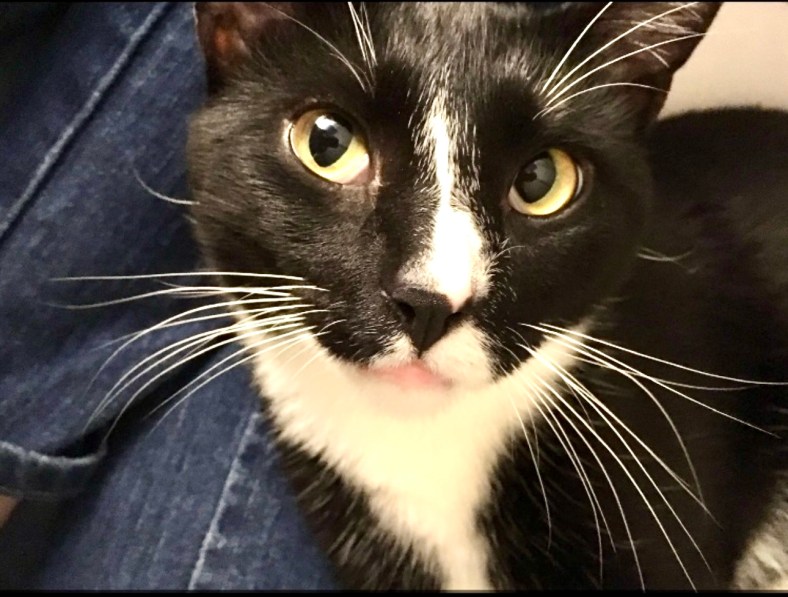
The photograph depicts a black and white, short-haired cat with a white streak on its nose and yellow eyes, looking at the camera from the lap of someone wearing blue jeans.
Henry, Angie’s purr-fect kitty

This comprehensive guide is like having a feline expert on your coffee table. Whether you’re a seasoned cat owner or a newbie, The Cat Encyclopedia covers everything from breed-specific care tips to understanding your cat’s behavior. It’s packed with impressive visuals and detailed information that helps you become even closer to your furry friend. 

Curious about your cat’s lineage? The breed section is a treasure trove of information. Discover the unique traits and histories of various breeds — each one is beautifully photographed. It’s eye-opening to see how diverse and magnificent our feline friends are. Plus, if you’re considering expanding your kitty family, this guide can help you find the breed that matches your lifestyle and personality. 

One of the standout features is the detailed health section. It walks you through common and not-so-common ailments, so you’re better equipped to spot any potential issues early on. Knowledge is power, and this guide empowers you to keep your kitty in tip-top shape and the less stressful life is for both you and your cat. 

The image depicts a black and white, short-haired cat, resting on the top of a chair or sofa in front of a tie-dyed banner, with sunlight streaming in through the window behind the cat. The top of the cat owner's head and part of their eyeglasses appear in the lower left corner.
Henry relaxes and enjoys a favorite sunny spot.

Ever wondered why your cat insists on kneading your favorite blanket or suddenly darts around the house at 3 am? The behavior section dives into the mysterious world of cat antics, decoding their actions, and helping you understand their unique language. It’s like having a translator for every purr, meow, and head-butt. 

The Cat Encyclopedia is more than just a book — it’s a love letter to our feline companions. It’s a reminder that our cats are more than just pets; they’re family members who deserve our utmost care and attention. So, whether you’re snuggled up with your kitty on a lazy afternoon or in the midst of a full-on kitty play session, this guide will become your go-to resource.

The DK New Edition Cat Encyclopedia: The Definitive Visual Guide is available in print from HCLS.

Angie is an Instructor & Research Specialist at Central Branch and is a co-facilitator for Reads of Acceptance, HCLS’ first LGBTQ-focused book club. Her ideal day is reading in her cozy armchair, with her cat Henry next to her.

Author Works with Jeffrey Boutwell (Feb 24)

Portrait of George Boutwell, looking to the right, with a greying beard. Title: Boutwell Radical Republican and Champion of Democracy


Mon, Feb 24 | 7 – 8:30 pm
HCLS Miller Branch
For adults. Register here.

Jeffrey Boutwell discusses his new book, Boutwell: Radical Republican and Champion of Democracy, a biography of family member George S. Boutwell – perhaps the most consequential American political figure you’ve never heard of. During his career from 1839 to 1905, George Boutwell was Governor of Massachusetts, served in the U.S. House of Representatives and the Senate, was treasury secretary for Ulysses Grant and Commissioner of Revenue for Abraham Lincoln, helped create the Republican Party in the 1850s, and forty years later opposed Republican Presidents William McKinley and Teddy Roosevelt over their plans to annex the Philippines following the Spanish-American War.

Boutwell was instrumental in framing the Fourteenth and Fifteenth Amendments, initiating the impeachment of Andrew Johnson, and investigating white vigilante violence against Black people in Mississippi in the 1870s. For seven decades, George Boutwell sought to “redeem America’s promise” through racial equality, economic equity, and the humane use of American power abroad.

Jeffrey Boutwell is a writer and historian living in Columbia, Maryland, after a 40-year career in journalism, government, and international scientific policy. He began his career as a reporter and editor with the famed City News Bureau of Chicago and was a book reviewer for the Chicago Sun-Times. After two years in the Windy City, Boutwell moved to Berlin and then to England, where he received an M.Sc. in Economics and Politics from the London School of Economics. He received a Ph.D. in political science from the Massachusetts Institute of Technology in 1984. He has written and spoken widely on issues ranging from nuclear weapons arms control to Middle East peace to environmental issues.

Shakespeare: The Man Who Pays the Rent by Judi Dench

A light blue cover with a small watercolor illustration of a tree above text that reads: Judi Dench. Then, Shakespeare in a big script above copperplate type: The Man Who Pays the Rent.

by Kristen B.

If you have ever wanted an in-depth, behind the scenes look at Dame Judi Dench’s formative years with the Royal Shakespeare Company, have I got a book for you! If you haven’t but have a fondness for the Bard, you still want to get your hands on this book. And if you simply love to listen in on two friends trading stories from their past and arguing over details, this one is for you, too – it’s that much fun!

Dame Judi Dench and her good friend Brendan O’Hea engage in a series of conversations in Shakespeare: The Man Who Pays the Rent, during which they discuss Shakespeare and acting, and – in all honesty – just dish about various productions. You can almost hear the teacups in the background. It’s fascinating to eavesdrop on them quarreling about interpretation or reminiscing about pranks and misdeeds. They cover some of the best-known plays, such as Twelfth Night, Macbeth, and Romeo and Juliet, but they also spend time with Coriolanus, The Merry Wives of Windsor, and The Winter’s Tale. I was simply amazed by how much of each play Judi Dench can apparently recite from memory – entire sequences, from multiple parts.

I assume the physical book is lovely, but the audiobook is pure gold. Barbara Flynn provides Dame Judi’s voice, and you would think that you’re listening to a younger version of the great actress (which you essentially are). She talks about her favorite parts, her views for the motivation of various characters, how Shakespeare manipulates the audience, and more details about stagecraft. She also tells stories about being mostly naked and painted green, sharing rooms, and having a ton of fun with other (now revered) fellow actors.

As she says, ““Everything you have felt or are yet to feel is all in there in his plays: oppression, ambition, loneliness, remorse, everything….Shakespeare has examined every single emotion….His writing has the capacity to make us feel less alone.” This book helped me remember exactly that! I laughed, I learned, and I was gloriously entertained.

Shakespeare: The Man Who Pays the Rent by Judi Dench and Brendan O’Hea is available in print, e-book, and e-audiobook.

Kristen B. is a devoted bookworm lucky enough to work as the graphic designer for HCLS. She likes to read, stitch, dance, and watch baseball (but not all at the same time).

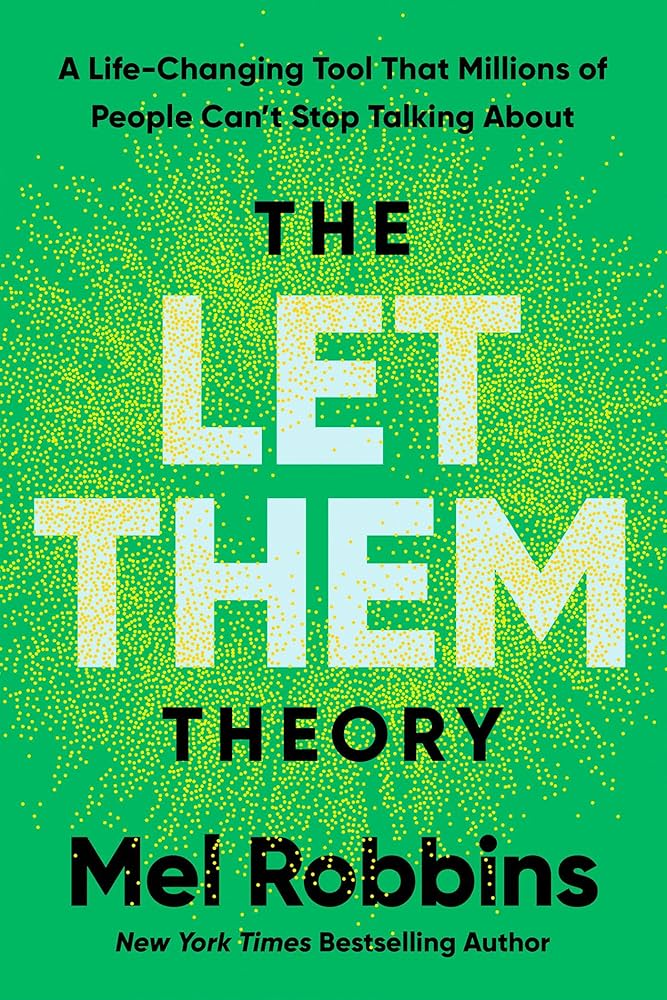
The Let Them Theory by Mel Robbins

A bright green clor has an explosion of yellow dots, like someone threw confetti at the center of the book.

by Carmen J.

Days before the new year had me ruminating about resolutions and the things I want to accomplish in 2025. Work out more? Eat better? Stop procrastinating about my dreams? Sound familiar? Have you made similar intentions and broke them, and kept them, only to break them again?

This year, I turned to “my friend Mel” – as she regularly coins herself to her millions of followers of The Mel Robbins Podcast and her readers of best-selling titles such as The 5 Second Rule and The High 5 Habit.  I am savoring her latest work, The Let Them Theory: A Life-Saving Tool That Millions of People Can’t Stop Talking About. It’s the book I never knew I needed.

Simply put, the theory puts into sharp perspective how we can’t control others, including their thoughts, emotions, and opinions about us. Similarly, we can’t control when things don’t necessarily go our way. For example: If someone decides they don’t like you or an opinion you have or the way you live your life: Let Them. Often times, there will be nothing you could say or do to change those thoughts, emotions, and opinions. Consequently, what we can control is the next step: Let Me. The Let Me is our reaction, the thing we can control. Sometimes the reaction is no response, or it’s setting boundaries, or having difficult conversations that need to be had. Robbins shares more in-depth strategies and experiences from her own life and from her followers.

If you are one who has people pleased and sucked it up, all in the gallant hope of keeping the peace, Robbins’s book will be a walk through mud: uncomfortable and messy, yet survivable and relatable nonetheless. It’s part of the human condition to wonder and think about the opinions of others and try to check all of the boxes in accordance. What if we vow this year in the face of uncertain times or certainly hard times and with the utmost certainty to let the chips, opinions, and emotions happen. Let Them wash over you without fury but with fearlessness. And Let Me (and Us) make the focused choice not to change course and be OK with any mild discomfort. Let Them, Let Me, Let Us be better for it.

The Let Them Theory: A Life-Saving Tool That Millions of People Can’t Stop Talking About by Mel Robbins is available in print and e-book.

Carmen J. is a teen instructor at HCLS East Columbia Branch. Among her favorite things are great books, all things 80s, shamelessly watching The Bachelor, gardening, and drinking anything that tastes like coffee.

Another Year Full of Reviews & News!

We launched Chapter Chats in 2020 as a way to stay in touch with our community during the Covid pandemic. We’re still here and doing better than ever! 2024 was Chapter Chats’ best year yet – our 147 posts garnered more than 34,400 views from 24,400 visitors. Thank you for making us part of your online reading!

The Marvel franchise is still apparently a force to be reckoned with, as a look at an older TV series was far and away the top post for the year (with more than 1,200 views): Agents of S.H.I.E.L.D.

The next Top Ten entries included:

The Storm We Made by Vanessa Chan: This debut novel is set in Bintang, Kuala Lumpur during the British rule and Japanese occupation of Malaysia.

The Frozen River by Ariel Lawhon: In 1789 Maine, an unexplained death pushes the sleepy town of Hallowell into an intricate legal battle, full of conspiracy, power plays, and intrigue.

The Shadow Children Series: The Shadow Children series by Margaret Peterson Haddix has an entirely new feeling and meaning now that we have experienced something similar.

Community Building with Mah Jongg: The community is the heart of the library, and in February we marked the second anniversary of one such community building activity: Mah Jongg Meet Up.

Global Neighbors series: Lunar New Year: We learned about Korea in May, about India in October, and we glimpsed the rich cultural heritage of China with Lunar New Year.

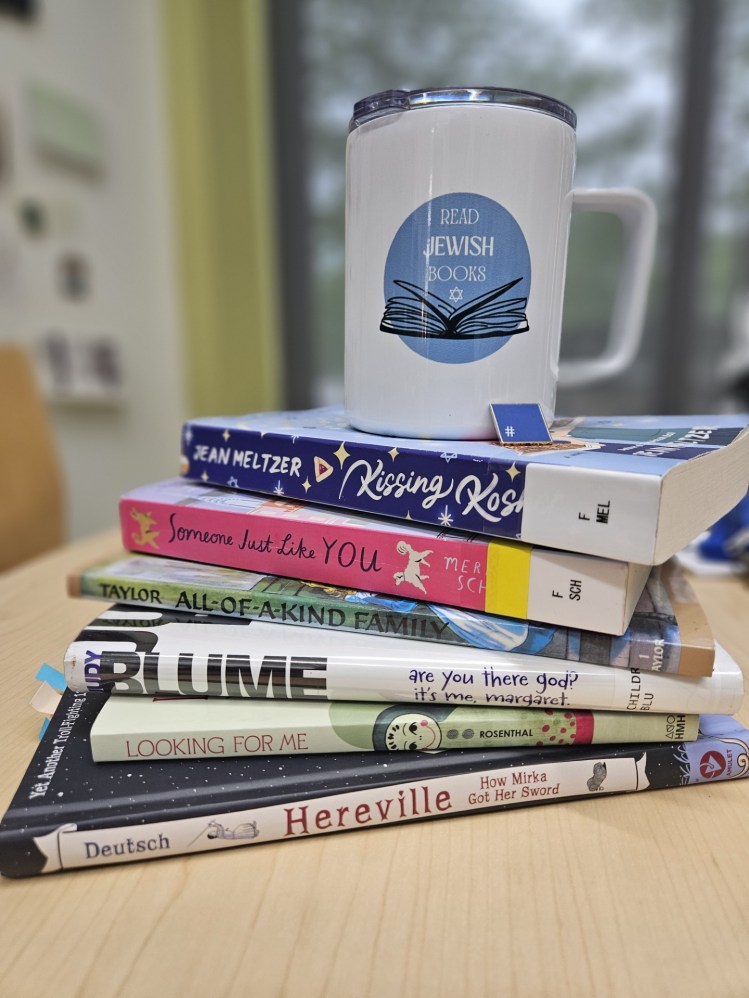
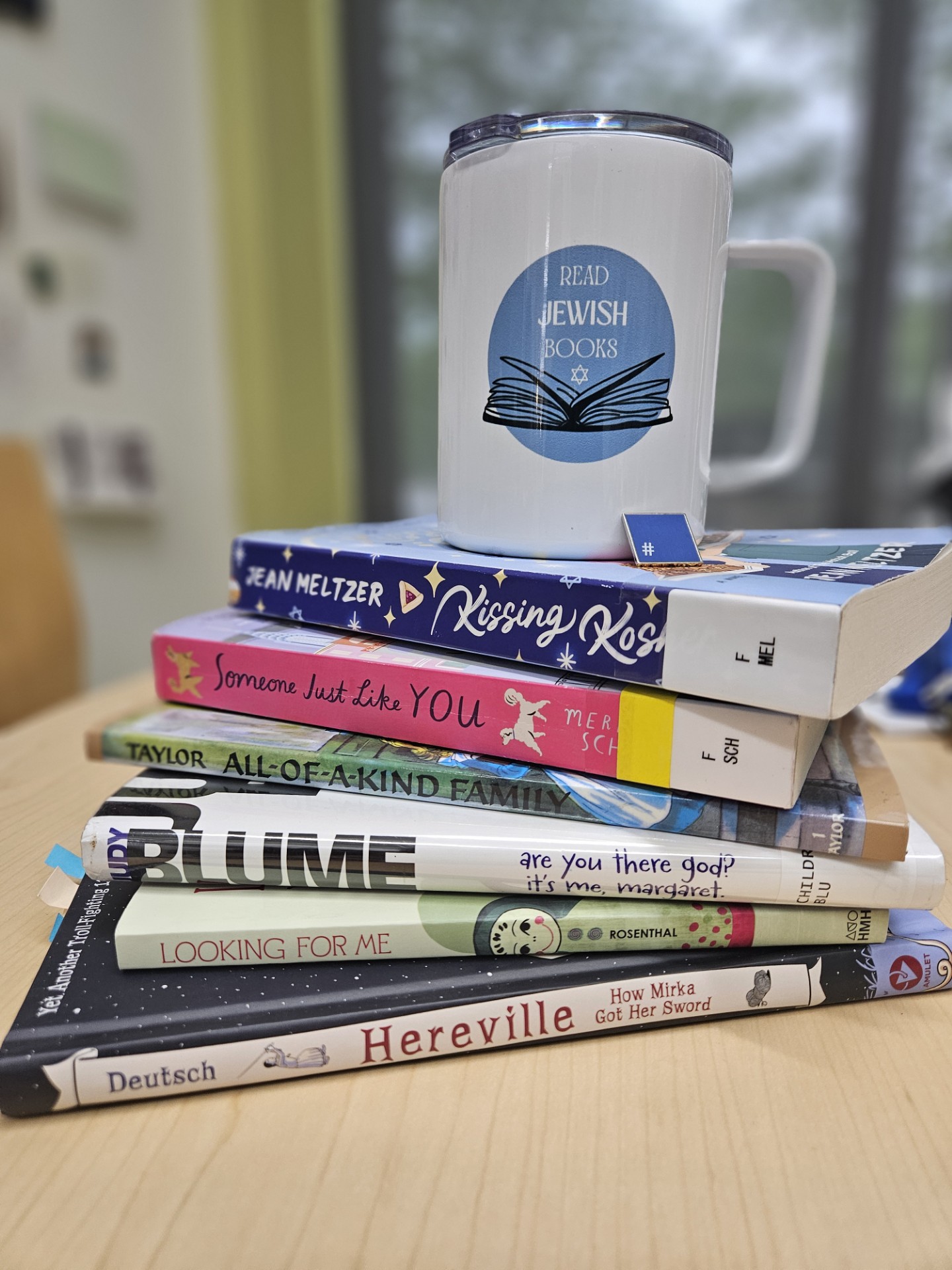
Jewish Joy: Windows & Mirrors during Jewish American Heritage Month: A look at ordinary people who happen to be Jewish, living their lives, finding humor and, most importantly, their happily-ever-afters.

Get “Schooled” on the Board of Education: Even if you do not have school-aged children, the well-being and success of students and staff should be the concern of the entire community.

Inspiring Laughter: A review of Leslie Jones’ memoir that takes you along for a wildly candid, gritty, and funny ride.

Donate Your Gently Used Books and Support a Good Cause: A quick overview about donating your books to the Library.

Studying to Succeed: Do you ever wonder where all those navigation tabs at hclibrary.org go? One of the answers is homework help!

Here are a few equally excellent posts that maybe you missed:

A Master of Djinn by P. Djeli Clark: It’s an alternative history, magical, buddy cop, police procedural romp of a story, complete with a little romance.

The Perfect Stories of Claire Keegan: “Long short stories,” as Keegan refers to them, are the ideal length for busy times and for reading again and again. Every word is perfect.

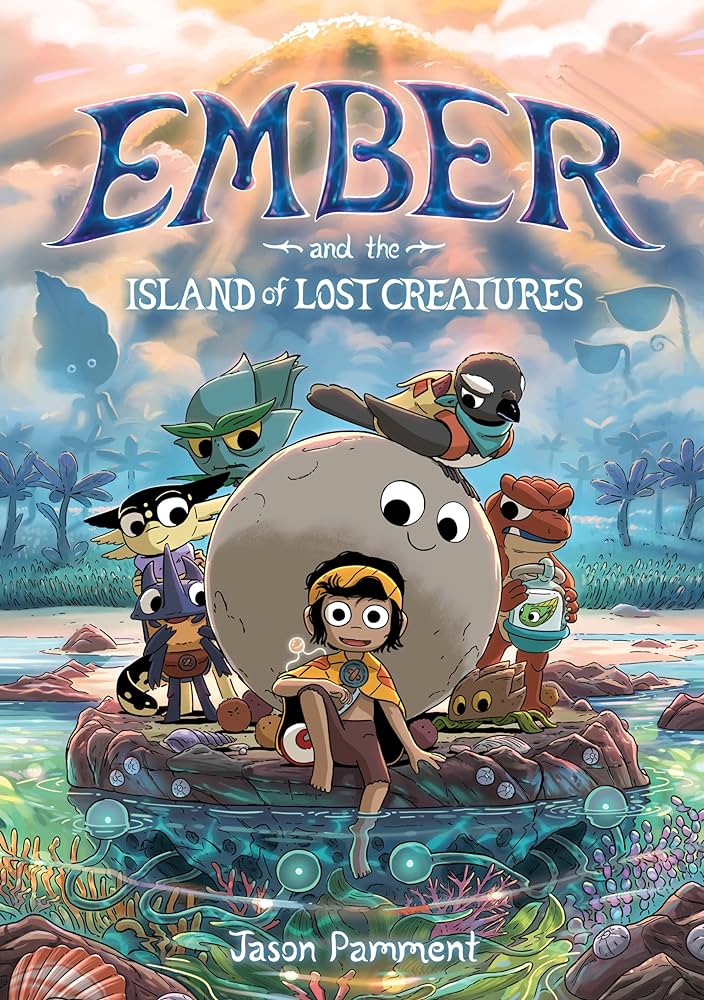
Cozy Graphic Novels About Being Friends: If your children love reading about friendship, mystery, and character growth, take a chance with the middle grade graphic novel, Ember and the Island of Lost Creatures and Treasure in the Lake.

Cerritos Strong!: This show is truly a love letter to the Star Trek franchise. It is filled with humor, adventure, heart, and more than a starbase full of legacy references.

And still, the most viewed post since Chapter Chats began: How to Bypass the News Paywall with Your Library Card.

Consider joining the more than 300 folks who subscribe, so you never miss a Chapter Chats post.

Happy New Year!

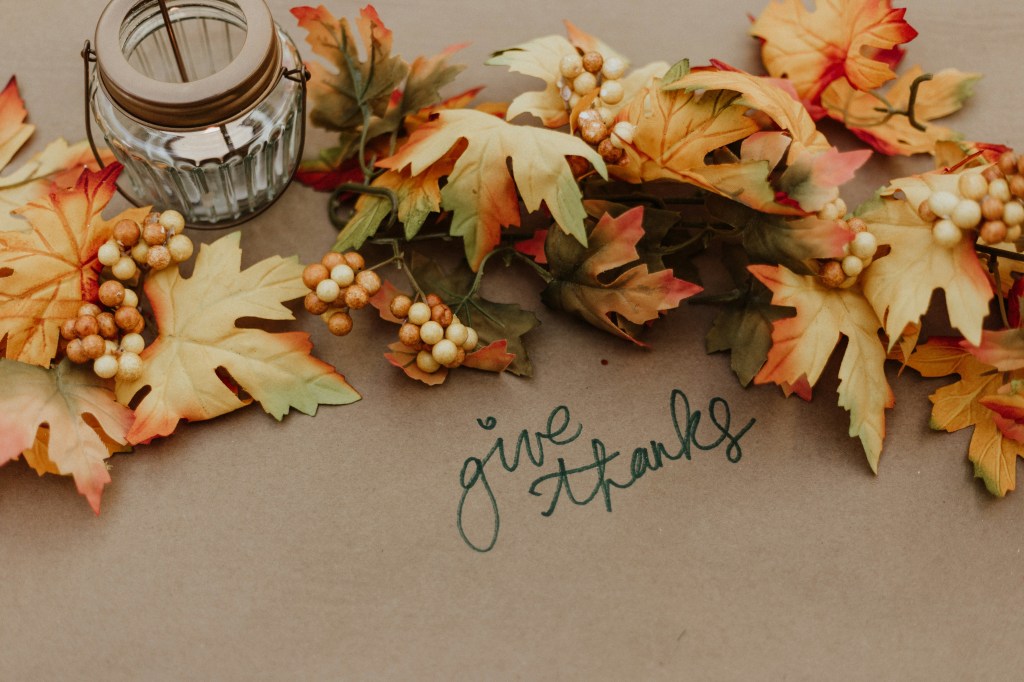
Happy Thanksgiving!

The photograph shows a table with an arrangement of autumn leaves and berries in shades of yellow, orange, green, and brown, with a votive candle in a glass and metal lantern-shaped holder and the words 'give thanks' written beneath them on the table in green cursive script.
Photo by Priscilla Du Preez 🇨🇦 on Unsplash.

Wishing you and yours a very happy Thanksgiving! If you wish to do some reading about gratitude, please stop by a branch and ask for recommendations – our staff loves sharing their favorites.

If you’re still in need of recipe ideas for the coming weekend or the holiday season, the library has a considerable collection of cookbooks at every branch – and some great magazines available on Libby.

You can never go wrong with King Arthur Baking. Take a look at Baking School: Lessons & Recipes for Every Baker for straightforward, step-by-step instructions to become a baking expert.

If you like to be prepared: The Complete Make-Ahead Cookbook: From Appetizers to Desserts 500 Recipes You Can Make in Advance by the Editors at America’s Test Kitchen.

For many generations in the kitchen together, everyone can learn something with: The Science of Baking by Andrea Beatty.

You can celebrate all our many states during our national holiday with: 50 Pies, 50 States: An Immigrant’s Love Letter to the United States Through Pie by Stacy Mei Yan Fong.

On behalf of all the HCLS staff who write and edit for Chapter Chats, enjoy your celebrations this holiday season with family, friends, and loved ones. Happy Thanksgiving!

Deliver Me From Nowhere by Warren Zanes

The book cover is a photograph of two sets of stairs with railings, creating a zigzag pattern; Bruce Springsteen is walking up the second set of stairs, with mostly just his face visible, facing down at the camera.

By Julie F.

It’s 1982 and rock and roll musician Bruce Springsteen is reeling from triumph after triumph. He experienced phenomenal acclaim and commercial success with three successive albums (Born to Run, Darkness on the Edge of Town, and The River), two show-stopping worldwide tours with the E Street Band, and a massive hit single on the radio that’s still on the lips of his multitude of fans today – everybody’s got a hungry heart, right? But there were disappointments and challenges, too. A failed romantic relationship, as well as exhaustion from a bitter legal fight with his onetime manager, Mike Appel, left Bruce questioning the direction of the band and, more importantly, how he envisioned his future as an artist and songwriter.

1982 was a year of tremendous change in the music industry; MTV had launched in August of 1981, and Michael Jackson’s Thriller, still the best-selling album of all time, changed the way record producers thought about hit singles and short-form videos. Everything was splashy, colorful, and calculated to grab your attention. But Bruce had a different ethos altogether.

Enter Nebraska, with its black-and-white cover and photographs: Bruce’s album of rootlessness and isolation, a lonely place with a “dark highway where our sins lie unatoned,” as he says in the lyrics of “My Father’s House.” With its stripped-down sound and Woody Guthrie-esque lyrics, Bruce wanted to plumb the soul of rural American culture. He wrote about the forgotten and spiritually lost: from the Starkweather killings, to the decline of Atlantic City in his home state, to the inner musings of a worried police officer whose brother couldn’t stay out of trouble with the law. Originally recorded in his bedroom as a series of demos on a four-track TEAC recording machine, the album baffled a lot of people in the record industry and caused a few headaches for the engineers trying to mix those primitive tracks down into some semblance of a releasable recording. But when the band tried, and failed, to make the demos into E Street-style rock-and-roll anthems, Bruce knew that the tracks had to be released as they were. Warren Zanes was the guitarist for The Del Fuegos and a contemporary of Springsteen’s; as a writer who is also a musician, he does a wonderful job of telling the story of that process, with descriptions of the technical detail that are fascinating for music aficionados but which won’t overwhelm the casual reader.

Near the end, Zanes is discussing Elvis Presley and his impact on Springsteen as a child, and states that, “His [Presley’s] end would suggest that what might start as an American dream can become a deal gone very wrong” (273). Reading about how Springsteen wrestled with issues of identity and belonging, as well as personal depression, it’s clear that the songs on Nebraska were his attempt to reconcile his American dream – success and the freedom and escape that rock and roll represented – with the decline of the cultural touchstones like Presley who inspired him. As Zanes asks earlier in the book, “who should fight to expose all that was hidden from view?” (78). The answer is artists like Springsteen, driven by their artistry to answer our questions, expose our flaws and contradictions, and illuminate our common truths. He continues to do so today, decades into his journey as a musician and songwriter.

Author Warren Zanes looks not just at the making of Nebraska, but also at the cultural landscape it emerged from and the lasting impact it had on the musicians and fans with whom it resonated. Filled with interviews with musicians I admire – Rosanne Cash, Richard Thompson, and Dave Alvin, among others – as well as excerpts from Peter Ames Carlin’s Bruce and extensive interviews with Bruce himself, this is a well-researched and deeply thought-out tribute to a great album, one very specific to its moment and place in music history.

Deliver Me From Nowhere: The Making of Bruce Springsteen’s Nebraska by Warren Zanes is available from HCLS in print.

Julie is an instructor and research specialist at HCLS Miller Branch who finds her work as co-editor of Chapter Chats very rewarding. She loves gardening, birds, crime fiction, all kinds of music, and the great outdoors.

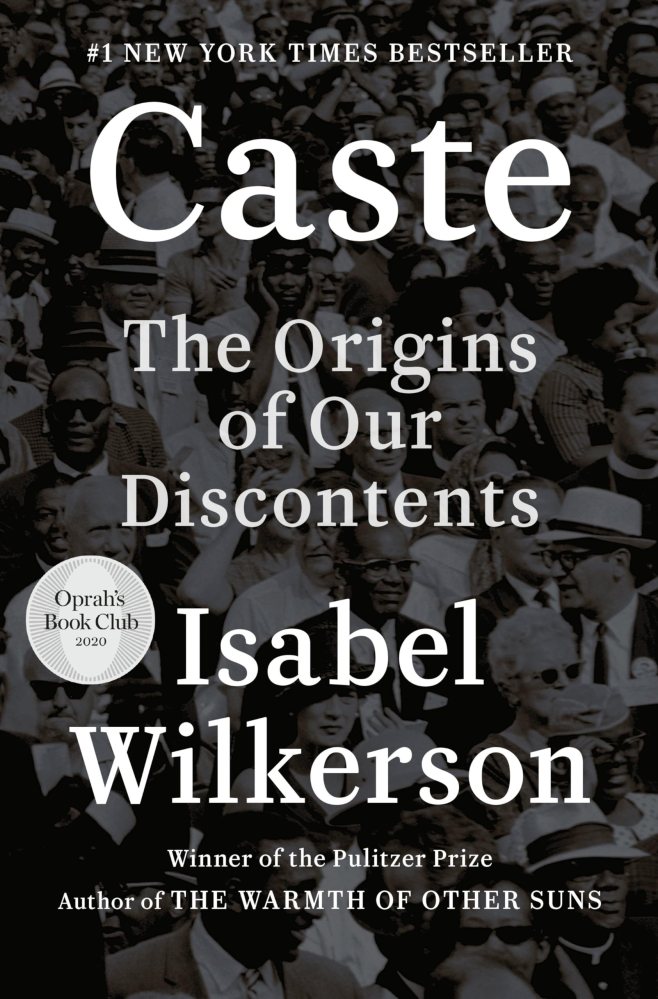
Caste and The Warmth of Other Suns by Isabel Wilkerson

Isabel Wilkerson’s indelible books The Warmth of Other Suns and Caste: The Origins of Our Discontent have, both of them, won awards and have been properly lauded; they don’t need to be touted by me but tout them I shall. They are meticulously researched, precisely written, and pack a devastating emotional punch.  

I have a long commute to work (shout out to my 795 and 695 buds), and I need to fill that time with something. I’m obdurately old school and prefer CDs and radio to podcasts. When NPR is too much (Esther Ciammachilli is never too much) and the Orioles aren’t playing, I check out nonfiction audiobooks from the library. I listened to The Warmth of Other Suns a few years ago and Caste this year; I learned so much from both. The sheer number of primary documents cited is overwhelming. The personal narratives are enlightening and heartbreaking.  

Side note: I’d listen to Robin Miles read a Comcast contract. She narrates both books and she’s a national treasure. I feel like she should win an Oscar or a Grammy – or something. 

The Warmth of Other Suns tells the story of the Great Migration, the movement of millions of African Americans from the South to more Northerly states, through the lives of three people who made the journey. It is intense. I’ve been known to cry in the car, and there were tears.  

Caste is an incredibly persuasive comparison of the caste systems in Nazi Germany, India, and the United States. Wilkerson’s central conceit is that the caste system in America is, in many ways, the most oppressive or violent system. She writes, “Jews in Nazi-controlled Europe, African-Americans in the antebellum and Jim Crow South, and Dalits in India were all at the mercy of people who had been fed a diet of contempt and hate for them” (151). The results of a diet of hate and contempt are unfortunately predictable. Wilkerson explores the grotesque, hateful, and banal violence of the caste system in depth. She writes, “African-Americans were mutilated and hanged from poplars and sycamores and burned at the courthouse square, a lynching ever three or four days in the first four decades of the twentieth century” (155). I won’t focus on the physical violence in this review, but it is all here, and it is terrible.  

Wilkerson includes illuminating episodes from her own life along with historical comparisons. While traveling for the book and for work (at the New York Times), Wilkerson is mistreated by academics, flight attendants, businessmen, and small-business owners, as well as being unjustly accosted by the DEA, all because of her position in America’s caste system. Based on her personal experience, she writes, “this was the thievery of caste, stealing the time and psychic resources of the marginalized, draining energy in an already uphill competition” (223). Outside of the obvious physical violence wrought by the caste system, Wilkerson highlights the daily mental and emotional violence, and that seems really important. 

I’ll end this review with a few more words from Wilkerson on the more subtle ways the caste system continues to do harm. She bluntly writes, “The friction of caste is killing people” and “Societal inequity is killing people” (304). This is not someone who writes for dramatic effect without evidence to support her claims. To back up her claims, she cites a study by a Harvard scientist, “’High levels of everyday discrimination contribute to narrowing the arteries over time,’ said the Harvard social scientist David R. Williams. ‘High levels of discrimination lead to higher levels of inflammation, a marker of heart disease” (306). This struck me. This internal manifestation of external discrimination is horrendous.

The American caste system is real and it is, overtly and insidiously, violent. The study goes on to find that, “People who face discrimination…often build up a layer of unhealthy fat, known as visceral fat, surrounding vital organs, as opposed to subcutaneous fat, just under the skin. It is this visceral fat that raises the risk of diabetes and cardiovascular disease and leads to premature death” (307). There are dozens of powerful and insightful passages I could have highlighted, but I wanted to highlight the above passages because they so powerfully illustrate how the American caste system continues to destroy black and brown bodies from without and within.

Caste: The Origins of Our Discontent by Isabel Wilkerson is available in print, large print, e-book, e-audiobook and audiobook on CD.

The Warmth of Other Suns: The Epic Story of America’s Great Migration by Isabel Wilkerson is available in print, e-book, audiobook on CD, and as a Playaway.

Ben works at Project Literacy, Howard County Library’s adult basic education initiative, based at HCLS Central Branch. He loves reading, writing, walking, and talking (all the basics).

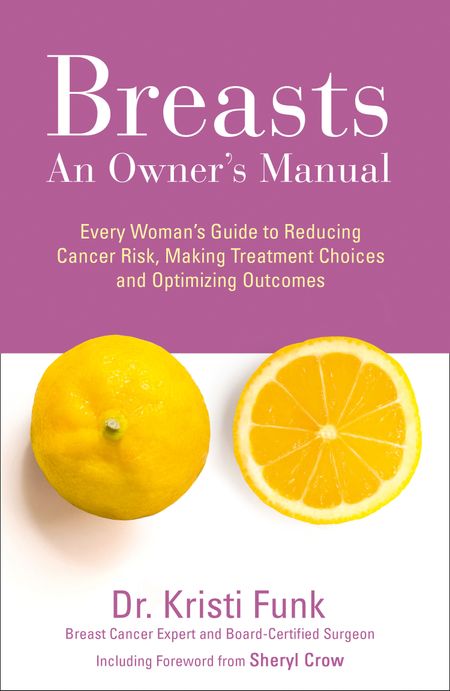
Five Minutes of Discomfort

The cover is half pink, where the title sits, and half white, with a cut open lemon showing one side open and the

by Carmen J.

Every woman, especially over 40, who reads these words every year exhales a sigh of relief. I’m one of them.

Mammogram results that read, "No suspicious masses, calcifications, or other suspi

Every year since I turned 40, I’ve received the reminder for my annual mammogram and diligently scheduled the appointment. After recently hearing on the news and by the appointment receptionist about advanced screenings for those with dense breasts, I decided the extra $40 out-of-pocket expense would mean greater peace of mind. I feel a bit shameful admitting that before I turned 40 and until I gave birth to my daughter just before turning 41, my breasts were not my priority. I rarely gave them much thought, if I’m being completely honest.

I was never ample or busty by any means, and only during pregnancy did I fill out my bras and shirts. “Will you breastfeed?” my doctor asked. What started as an “I guess so,” led to 14 months of nourishing my daughter with my own body. How could I have taken my breasts and my body for granted? I’m sure it wasn’t the first time nor would it be the last, but my perspective heightened. 

Now with my own daughter, I know annual screenings are important for my own health and wellness, and I want to set a positive example for my daughter. I want to live a long and happy life free of cancer. And with my own mother being a breast cancer survivor, after a diagnosis in her 70s, I know my risks are riskier than others. 

The process of this year’s appointment didn’t change from previous years, only the depth of imaging. I was reminded not to wear deodorant and to remove my shirt and bra, and put on the gown I was given with the opening in the front. Over the 10 years I have had these screenings done, I’m always pleased that despite my initial anxiety and minor discomfort, the screening itself takes about five minutes. And according to my technician, the imaging would detect cancer two years in advance of what would be seen by the naked eye.  

When the time comes to slip out of my gown and stand topless facing the screening machine, the technician positions my arms and gives clear instructions about where to insert my breast. We start with images of the right breast followed by images of the left. Each is placed on a clear shelf-like surface and then compressed by another mechanism that flattens it out. Once placed in position, the technician walks away and instructs you to hold your breath, while the images are taken. Hundreds of images are taken of each breast from similar angles. Once completed, you get dressed and leave. Months of anxiety melt away after five minutes. 

Does it hurt? No. Is it uncomfortable? Sure. But if getting my boobs squished each year is an effort to keep myself healthy, then five minutes of discomfort are worth the remaining peace of mind. Squish away.

October is Breast Cancer Awareness Month. Consider this my gentle reminder to those with breasts: Schedule your mammograms. Five minutes of discomfort may save your life and your peace of mind.

For more information:
Breasts: The Owner’s Manual: Every Woman’s Guide to Reducing Cancer Risk, Making Treatment Choices, and Optimizing Outcomes by Dr. Kristi Funk

The New Generation Breast Cancer Book: How to Navigate Your Diagnosis and Treatment Options–and Remain Optimistic–in an Age of Information Overload by Elisa Port, MD, FACS, Chief of Breast Surgery at The Mount Sinai Hospital and Co-director of the Dubin Breast Center