The In-Between: Unforgettable Encounters During Life’s Final Moments by Hadley Vlahos

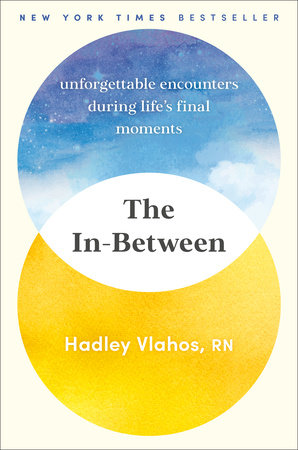
Two interlocking circles, the top one show a cloudy blue and the bottom is yellow,

by JP Landolt

I am experiencing melancholy. Instead of trying to push away the feeling, I’ve been leaning into it. I couldn’t say the same thing last summer, though, when I was waiting for The In-Between. I had been following Nurse Hadley on TikTok for a while and when I heard she was writing a book, I had to read it.

I was lucky to get a copy in June 2023 but the moment I started the book, I had to put it down. I wasn’t ready. I wasn’t prepared for what I was experiencing emotionally. So, I returned the book so someone else could borrow it. As silly as it sounds, I believe that some books have particular timing. Have you ever encountered a story you thought you were ready for, then you’re surprised by how absolutely NOT ready you were? That was me. It was the wrong time for me and this book. 

Somehow, my somberness led me to listen to this book instead of reading it. Now, I was resolute in the knowledge that I have lost loved ones: I held my father’s hand when he died in hospice. I’ve had cancer a couple times and experienced being close to death. They were all the same things I said to myself last year. However, this time, I also added gentleness in allowing space and time to listen, feel, and process. All this to say, leaning into the various stories of hospice patients has been cathartic. 

Last December, The In-Between was picked to be made into a television series, which the author has been promoting heavily. Hadley’s book and subsequent (and soon-to-be released) TV show has helped her realize one of her many dreams – founding her own hospice house, which will help people navigate their end-of-life preparations. Amidst all this success, she is currently mitigating divorce. All of which makes reading this book more complex, because this book is a memoir. These are Hadley’s experiences with hospice patients and families intertwined with her own growth and familial issues.

If you want to feel something and maybe even have a cry, I invite you to read or listen to this book. If you’re looking for a thoughtful daily devotional, this could be it. I probably feel this way because that was how I paced this book. One story at a time. One hospice case at a time. One lesson at a time. You don’t have to be spiritual or religious or have magical thinking to appreciate what this compilation offers. A peek into the future. A glimpse of what a “good death” looks and feels like. A chance to reconcile what we all must face at some point. Simple, confusing, beautiful, and real because death is all of those things.   

The In-Between: Unforgettable Encounters During Life’s Final Moments by Hadley Vladhos is available in print, e-book, and e-audiobook.

JP Landolt is a Children’s Instructor & Research Specialist for the Savage Branch and has been with HCLS since 2006. “Free people read freely” – ALA

Space Shuttle Stories with Astronaut Tom Jones

A black book with large white type features the space shuttle in the place of the A.

Thursday, Oct 17
7 – 8 pm
HCLS Elkridge Branch
For everyone. Registration preferred.
In partnership with the Maryland STEM Festival and the Howard Astronomical League. Books available for purchase and signing.

“Astronaut Tom Jones provides readers of all ages with a definitive look into the spirit, challenges, enjoyment, and faith that accompanies Earth-orbit exploration. Space Shuttle Stories takes us inside the lives, the risks, and the dedication of those men and women who are reaching for the stars.”
—Harrison H. Schmitt, Apollo 17 astronaut and geologist

NASA’s space shuttle was the world’s first reusable spacecraft, accomplishing many firsts and inspiring generations across its 30-year lifespan as America’s iconic spaceship. In Space Shuttle Stories, astronaut Tom Jones interviewed more than 130 fellow astronauts for their personal vignettes, covering all 135 space shuttle missions from Columbia’s maiden flight in 1981 to the final launch of Atlantis in 2011.

Dr. Thomas Jones in a blue flight suit covered in patched standing with arms crossed in front of the Atlantic shuttle.

Thomas D. Jones, Ph.D., is a veteran astronaut, planetary scientist, pilot, author, and speaker who completed four space shuttle missions and three spacewalks in helping build the International Space Station. Jones has authored six books, including Sky Walking: An Astronaut’s Memoir, and has written for aerospace magazines such as Air & Space Smithsonian, Aerospace America, Popular Mechanics, and The Planetary Report. A senior research scientist for IHMC, he appears regularly on television news as an expert commentator for space exploration and science stories.

Space Shuttle Stories is available to borrow in print.

A Dream About Lightning Bugs: A Life of Music and Cheap Lessons by Ben Folds 

The silhouette of a man standing up, over a player's bench, to play an open grand piano sits in front of a sky blue background with cotton ball clouds.

by Eliana H.

A title recently caught my eye while I was tidying books around the branch: A Dream About Lightning Bugs. I’ve mentioned my ridiculous reading challenge before, and one of our categories this year is a book with 24 letters in the title. So, I’ve started to count letters in titles to see if I can find a fit. Lo and behold, this title that grabbed my attention also happens to have 24 letters in it! (We can disregard the subtitle for these purposes.) Plus, it is a memoir by a musical artist I enjoy. I was sold! 

My reading of print books has been going very slowly in recent months, so rather than check out that copy, I looked on Libby to see if the e-audiobook was available. Happily, it was, AND it was narrated by the author. Things were lining up very nicely. I don’t tend to read a lot of biographies, or nonfiction in general, but this seemed meant to be. 

I was pretty solidly in the target audience of Ben Folds during his peak fame with Ben Folds Five. His voice and snippets of songs shared in the audiobook put me in a pleasantly nostalgic mood, and I was excited to find that most of the Ben Folds Five songs I remember are available on Freegal as well. [If you haven’t checked out Freegal yet, take a look at this post to learn more.] I did not know a lot about his life or musical journey before listening to A Dream About Lightning Bugs, but Ben’s down-to-earth attitude and conversational tone comfortably brought me along for the ride. He acknowledges repeatedly and from the beginning that he had a lot of luck and privilege to help him along his way, and he explicitly thanks a number of people who provided support, assistance, and guidance, especially educators. 

I don’t tend to pay much attention to the lives of celebrities, so hearing about his journey was interesting and informative to me. Some might not consider Ben’s “cheap lessons” all that cheap, but there was certainly potential for more negative outcomes in many of the stories he shares. One section which especially stuck out to me is called “Creative Visualization or Useful Delusion?” In it, Ben describes an experience he’s had several times in which he has a vision of something happening and sees it as inevitable, which enables him to achieve things that would otherwise seem – and be – impossible. “It’s the universe that wants it to be so, and so it shall be. I only have to follow through on my part.” If only we could summon that kind of focus and confidence on command! Even Ben admits that it comes from outside himself, he cannot wish it into being. 

From performing on a keyboard with digital sampler at a German restaurant, while wearing lederhosen and wooden clogs, to Artistic Advisor to the National Symphony Orchestra, Ben Folds has had quite a journey in music and in life. Perhaps you can learn some “cheap lessons” for free just by reading – or listening – to his book. 

Content note: Ben Folds uses expletives freely throughout his book. 

This title is available in print, e-book, and e-audiobook.

Eliana is a Children’s Instructor and Research Specialist at the Elkridge Branch and co-chair of the HCLS Equity Committee. She loves reading, even if she’s slow at it, and especially enjoys helping people find books that make them light up. She also loves being outside and spending time with friends and family (when it’s safe).

Sigh, Gone by Phuc Tran

The book cover shows a school picture of the author as a child, against a gray background. He is wearing a white shirt with a collar beneath a peach sweater.

By Holly L.

When I first glimpsed the cover of Phuc Tran’s powerful 2020 memoir, Sigh, Gone, I chuckled at the title. Sigh Gone—hahaha, I get it! As in Saigon. As in Vietnam, the country Tran fled with his family as a little boy in the mid-70s. The unsubtle title perfectly suits the story of, “a misfit’s memoir of great books, punk rock, and the fight to fit in.” In his debut book, Tran tells a compelling coming-of-age story of a book-obsessed punk in small-town Pennsylvania. His case for the transformative power of books struck a chord with me, as a library worker. As an Asian American who also came up in 1980s America, I empathized with Tran’s struggle to fit into a society that was relentlessly calling his American-ness into question.   

Each of the book’s sections is titled with a famous work of literature, the prologue being Oscar Wilde’s The Picture of Dorian Grey. The opener is a scene from Carlisle Senior High School in Carlisle, Pennsylvania, a small town in the Susquehanna Valley. Tran is sizing up the new kid, Hoàng Nguyễn, whose arrival marks Phuc’s demotion as the (meaning only) Vietnamese kid at his school. “@#$% that kid,” he thinks. Rather than seeing Hoàng as a potential comrade, Tran regards him as “a fun-house mirror’s rippling reflection of me…I was filled with loathing.” By this time, as an eleventh-grade Asian kid who had finally achieved “insider status”—acceptance among his punk crew and being better read than any of his classmates—Tran saw Hoàng as only a distorted picture of who he might have been had he not assimilated so well.

The story begins in earnest in 1978 with Tran’s earliest memory. He’s in the eat-in kitchen of his family’s first apartment in the United States, having fled Vietnam three years earlier. While his mother prepares dinner and his father tries to make sense of some bills with his limited grasp of English, Tran asks his dad, “Ba, what’s my name?” The question arises from playground encounter when another kid asked Tran his name and he didn’t know how to reply. Among all the nicknames and endearments he was labeled with by his family, he didn’t know which name to give. Young Tran felt he needed a name, an English name, that would make sense to his playmates. After a minute of consideration, Tran’s dad decided that the actual Vietnamese pronunciation of his name (which sounds more like Fuhp, with a rising tone at the end) would be too confusing to Americans, and he settled on Phuc (sounds like Fook, rhymes with Luke), which Tran adopts, referring to it as an alter ego.

Tran’s story takes us from childhood through adolescence with identity being a central theme. As he forms friendships and battles racist bullies, Tran struggles to define who he is, along with where he and his family fit in a mostly white working-class town. He expresses an ambivalence about his community, “(as refugees) random strangers had saved us. And random strangers were cruel to us, too.” Violence is another thread running through the memoir, inflicted upon Tran by school bullies and members of his own family.

He finds refuge and a means of self-fortification through books (first comics then Western classics) and later, music, specifically punk rock and its rebellious, non-conformist subculture. Tran’s scuffed Doc Martens and rotation of band T-shirts represent an identity of his choosing, not one imposed upon him by society. As Tran’s reinvention into honor-roll skate punk becomes complete, we see a growing alienation from his family, whose notions of success and assimilation don’t align with his own. One exception being Tran’s second-hand store hauls, approved of by his thrift-conscious father.

Some reviewers criticized Tran’s memoir as lacking in nuance and maturity, but I loved how he channeled the voice of his teenage self in all its egocentric, pained, misunderstood glory. In the best scenes I felt like I was right there, hanging out with his crew, cheering them on when they successfully fled the cops on their skateboards during their annual “Running of the Pigs.” By the end of the book, I felt a kind of pride in this self-made young man, considering how far he had gone, what he had endured, and who he had become. I almost wished for another few chapters detailing the adventures that awaited Tran beyond graduation. But that was the end of the story, at least until he writes another memoir. Sigh, gone. 

Sigh, Gone is available from HCLS in print and also in e-audiobook and e-book formats.

Holly Learmouth is an Instructor & Research Specialist at HCLS Miller Branch. She enjoys reading widely, knitting sporadically, and baking as often as she gets the chance.

Pathogenesis by Jonathan Kennedy 

A primitive-style illustration shows people stewn about a barren lansdscape with

by Sahana C.

Four years after the start of the COVID-19 pandemic, it still felt a bit too soon for me to sink my teeth into this title, but I’m so glad I persevered. I’m on a mission to read more nonfiction this year, to make myself a more well-rounded reader (who knew that there were just as many genres of nonfiction as there are of fiction?! Mr. Dewey Decimal, I suppose). This was a satisfying, fascinating read to satiate my sci-fi loving heart. It’s a testament, I think, to the ways that fiction can only go so far – the real world always has something more unimaginable, more bizarre to throw at us. 

Jonathan Kennedy made it easy in this absolutely fascinating read. I am no science buff, so some of the more nuanced language about the ways that viruses exist was lost on me. But it was so worthwhile to struggle through some of the more technical descriptions of the bacterial and viral elements to understand the social implications of the plagues, as promised by Kennedy.

The premise this book asserts is that viruses have had a lasting impact on humanity, and beyond, shaping history through the ages. I won’t say that I feel like the world can attribute much of its development and evolution to plagues as Kennedy seems to assert, but I also can never again claim that plagues did not have a major role to play in the evolution of our understandings of race, class, and capital. Beyond the obvious examples of the ways in which architecture and city planning changed after events like the Black Plague and advancements in healthcare, Kennedy also lays out clear paths to explain the ways things like mercantilism and the slave trade emerged and the impact viruses had on them.  

Seeing the world through this public health lens has made me step back and consider all of the other intersections and influences that I might not have clocked as important – but for this fascinating study of the history of the ways we became what we are now through the perspective of viral history. It made the fall-out from our most recent (and ongoing) plague feel less “unprecedented” and more like something that can and will shape us moving forward. It’s not about “returning to normal” and all about looking to the future to see how we evolve, as we move, slowly, forward.  

Pathogenesis is available in print, e-book, and e-audiobook.  

Sahana is an Instructor and Research Specialist at HCLS Savage Branch. They enjoy adding books to their “want to read” list despite having a mountain of books waiting for them already.

How to Do Nothing: Resisting the Attention Economy by Jenny Odell

The title and author's name nestle into groups of color

by Eric L.

How to do nothing. I want to know. 

Jenny Odell is an interesting person and quite a writer. Let me give the caveat that we have a similar worldview, so perhaps I’m biased. In How to Do Nothing: Resisting the Attention Economy, she cites numerous writers with whom I also seem to share beliefs and an ethos, including Rebecca Solnit and Jia Tolentino. (Check out their books and articles; both are worth your time.) I am now reading Odell’s latest work Saving Time: Discovering a Life Beyond the Clock

The title of How to Do Nothing is a bit of a misnomer. (The book cover is beautiful, by the way.) It’s not about doing nothing, but about a sort of resisting in place and trying to distance yourself a bit, not completely, from technology and productivity as the subtitle suggests. Two things that have come to dominate American culture, as well as are inextricably linked in many cases. 

Odell likes labor, a lot, both as a movement and a concept. Her brief anecdotes about the history of the labor movement in the United States alone make the book worth reading. Odell also mentions interesting art and literature throughout the text. These are things that interest me a great deal, and Odell made me think that I don’t know nearly enough about them. It’s a feeling I like, and one of the many reasons I read books. 

Odell suggests that instead of dropping out, we should rather “resist in place.” She devotes a section of the book to the various movements to start a new “society” outside of mainstream society and the reasons for their failures. Starting a new society is something I’ve considered, intellectually at least, as it is a common trope in both books and films. Unfortunately, problems of equality and politics tend to persist in any sort of human organization, as is the case in Odell’s examples. This reality is also often borne out in the history of any political revolution. Animal Farm, although appearing to be about the Russian revolution, is really a satirical allegory of this concept. 

The actual world and humans are much easier to avoid than ever as we work remotely, stare at screens, and seemingly try to avoid one another. Odell offers us a simple solution; observe the world around us, the local, the quotidian moments of each day as a form of resistance. Take a longer look at your real surroundings and your fellow humans. For example, she recommends that you go to the park and just sit or be. Truth be told, I’m already pretty good at this sort of thing, however I could probably observe the world around me better. (I plan to work on this.)

It may sound cliched at this point, but Odell implores us to get back to nature and each other. I do believe these things could drastically change society for the better. She does concede, and I agree, this is a privilege and requires time. In other words, many of us are squeezed for time and the specter of economic precariousness looms large for far too many. That said, this is a sort of a circular reinforcement to her argument, and it’s certainly easier said than done. However, she successfully bolsters her argument with historical examples of how the US labor movement took back their time. In short, people working in solidarity improved not only conditions and pay, but their amount of free time. I have no doubt we’re all the better for that. But let me be clear, this doesn’t happen easily or quickly, and there are very powerful forces that will push back. 

Some folks in my book discussion group (Read. Think. Talk.) didn’t care for the book’s style. They found it disjointed and posited that the book seemed like a series of essays. This is a fair criticism; however, I recognized the overarching theme and liked the disjointed style. They suggested that Orwell’s Roses by Rebecca Solnit has a similar style, I agree, but I also love that book. (read a review)

In sum, I found the book packed full of interesting information and great commentary on our society. I like the simple way Odell recommended how we could improve our coexistence with others and the planet. Actions that may be necessary at this juncture. 

How to Do Nothing: Resisting the Attention Economy by Jenny Odell is available in print, e-book, and e-audiobook.

Eric is a DIY Instructor and Research Specialist at HCLS Elkridge Branch. He enjoys reading, films, music, doing nearly anything outside, and people.

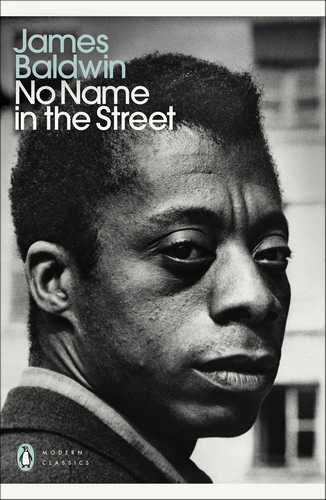
No Name in the Street by James Baldwin

A black and white photo of James Baldwin, looking to the right. The author and title appear in fine type in the upper left corner.

by Ben H.

“People who treat other people as less than human must not be surprised when the bread they have cast on the waters come floating back to them, poisoned.” 

James Baldwin writes gorgeous prose. I copy lines that I find memorable, but I find myself copying down entire pages. If you’re still waiting to read Baldwin, don’t wait! Read now!   

In No Name in the Street, Baldwin writes about his experience traveling in the southern states for the first time. Baldwin, never at a loss for words (check out this incendiary debate on YouTube), writes about his first impression of southerners, “what struck me was the unbelievable dimension of their sorrow. I felt as though I had wandered into hell.” What a first impression!

This theme of sorrow surfaces in another memorable passage where Baldwin describes his visit with civil rights leader Reverend Fred Shuttlesworth. Shuttlesworth’s Alabama home had recently been bombed and destroyed by the KKK. Baldwin writes about Shuttlesworth, “It was as though he were wrestling with the mighty fact that the danger in which he stood was as nothing compared to the spiritual horror which drove those who were trying to destroy him. They endangered him, but they doomed themselves.” The idea of racism being a cancer, a parasite that dooms the host and turns it into something less than human, is a theme that Baldwin returns to many times in No Name in the Street. The sorrow that he refers to is the byproduct of this loss of humanity.

That said, not every passage is heavy. Baldwin has the rare ability to combine the tragic and the humorous in the same sentence. He insightfully, humorously, and poetically describes things such as grits (“a pale, lumpy, tasteless kind of porridge which the Southerner insists is a delicacy but which I believe they ingest as punishment for their sins”) and buying whiskey in dry states (“where whiskey was against the law, you simply bought your whiskey from the law enforcers”).  

Baldwin’s color commentary of historical events is a crucial part of the story of America. Statistics and reportorial accounts of racism in America don’t paint the full picture. Baldwin writes the narrative and helps the reader taste it, hear it, and feel it. I find that tragic historical events can sometimes, through familiarity, fade into the timeline of history; but reading about the phone call that Baldwin and Billy Dee Williams received when Martin Luther King Jr was assassinated highlights it in technicolor. 

On a personal note (as if the rest of this hasn’t been personal), I consider myself well-read and aware, but I still only have my lived experiences. The following passage about well-meaning folks without first-hand experience of discrimination struck me, “These liberals were not, as I was, forever being found by the police in the ‘wrong’ neighborhood, and so could not have had first-hand knowledge of how gleefully a policeman translates his orders from above. But they had no right not to know that; if they did not know that, they knew nothing and had no right to speak…” By reading books like No Name in the Street, I grow my understanding, if not experientially, at least academically and empathetically, and that is no small thing. 

Ben works at Project Literacy, Howard County Library’s adult basic education initiative, based at HCLS Central Branch. He loves reading, writing, walking, and talking (all the basics).

Savor Summer Reading

A blue banner says "Adult Reading Challenge" and has an image of the booklet "Reading is for Everyone" at the right side.

by Cherise T.

Opinions on the best summer reading selections abound. Some readers look forward to extended spans of time to sink into those longer books. Anticipating many hours reading epic novels or multi-volumed biographies, they embrace the joy of following multiple characters or complex historical chronologies uninterrupted. On the opposite side of the spectrum are readers who want their vacation books to be as light as warm-weather clothing or as intoxicating as a margarita. Nothing too serious, please; they want stress-free romance, memoir, and mystery.

The HCLS year-round Adult Reading Challenge journal speaks to everyone. Any time of year, every genre, you can pick a challenge category to enjoy. There are book recommendations, but selections from your “to-be-read” pile are perfect too. All genres are welcome, creating the ideal opportunity to try something new, be it poetry, self-help, science fiction, fantasy, graphic novel, or thriller, to names a few.

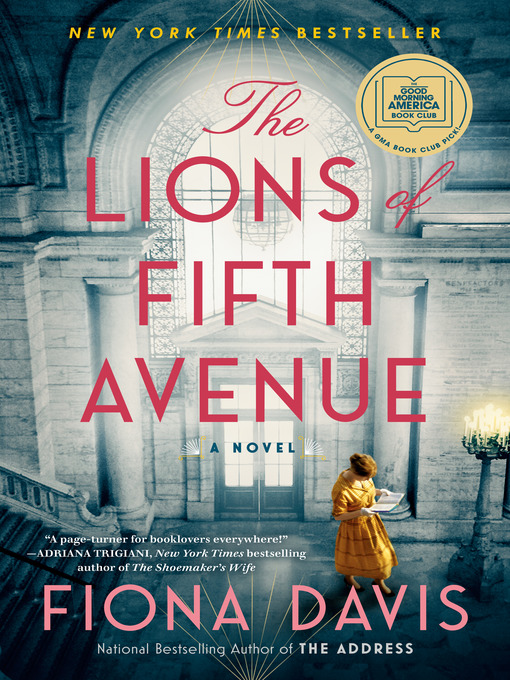
A woman dressed in a bright yellow dress walks while reading through a grand lobby with well-lit doors and windows behind her.

This summer, explore the new 2024-2025 challenges and journal prompts. For example, if Read a Book Set in a Library appeals, check out the historical fiction of The Lions of Fifth Avenue by Fiona Davis (which I reviewed). Parallel stories unspool of a New York public librarian in 1993 and her grandmother, the wife of the NYPL superintendent, in 1913, as both women aspire to grow professionally and personally. As a delightful added twist, the 1913 family lives in the library.

If magical fiction sounds just right, The Midnight Library by Matt Haig imagines a library where every book offers the protagonist a different life. Would she have been more fulfilled as a sports star, a musician, or a parent? For a nonfiction page-turner, pick up Susan Orlean’s The Library Book about the devastating 1986 Los Angeles Central Library fire. The arson investigation reads like a good mystery, and librarian interviews delve into the current role of libraries in society.

To participate in the Adult Summer Reading Adventure, complete any three of the challenges or read three books by August 31, 2024. Topics include Explore the American West; Visit a Galaxy Far, Far Away; Get Lost in a Translation; and Reimagined Reading. Finishers receive a completion prize and entry into grand prize drawings.

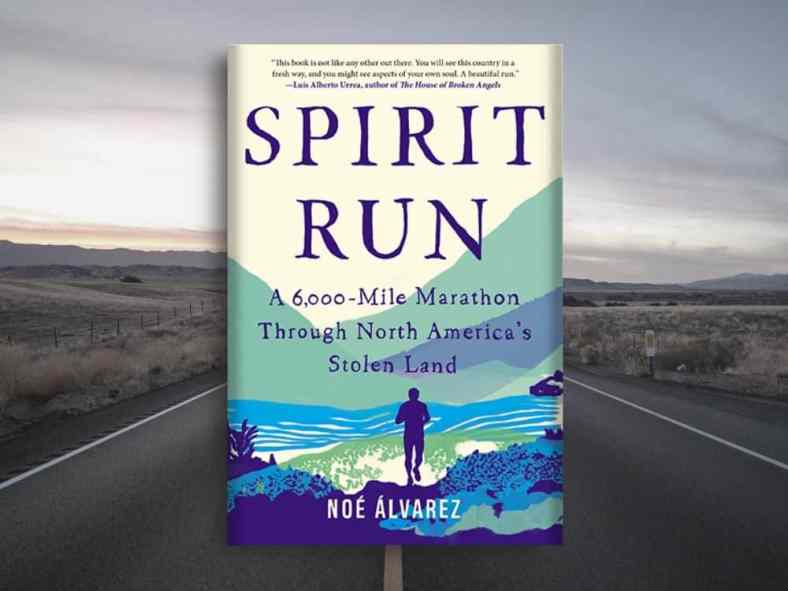
The book cover shows the silhouette of a person running, with illustrated hills, river, and scrub around them. The book cover is superimposed over an actual stretch of empty highway through wilderness.

World Adventures Summer Book Discussions: Spirit Run by Noé Álvarez
Adults. Register.
This summer, read and discuss books that celebrate journeys of discovery around the world. In June, we discuss Spirit Run: A 6000-Mile Marathon Through North America’s Stolen Land by Noé Álvarez.
Mon, Jun 17; 7 – 8 pm | Elkridge Branch


Spinster: Making a Life of One’s Own

The book cover has the title in stylized gold lettering and the subtitle with the appearance of handprinted red lettering against a cream-colored background.

By Angie E.

In her book Spinster: Making a Life of One’s Own, Kate Bolick invites us into a thoughtful consideration of remaining single. She weaves her own experiences with those of pioneering women from the past century, women who defied societal norms and forged their paths. These women include:

  • Neith Boyce: A columnist who challenged conventions.
  • Maeve Brennan: An essayist whose wit and insight left an indelible mark.
  • Charlotte Perkins Gilman: A social visionary who advocated for women’s autonomy.
  • Edna St. Vincent Millay: A poet whose passion resonates across time.
  • Edith Wharton: A novelist who crafted stories of love, longing, and independence.

Bolick’s exploration reminds us that the pursuit of a good life transcends societal expectations. Whether young and unencumbered or middle-aged and free, our years are ours to savor, not bound by convention.

One of the most liberating aspects of Spinster is its rejection of the notion that a woman’s worth is in and of itself tied to her marital status. Bolick celebrates the idea that a woman can lead a fulfilling and meaningful life without adhering to traditional expectations. She eloquently challenges the societal pressure to conform and encourages women to define their own paths, unapologetically.

Her exploration of solitude as a source of strength rather than a symptom of loneliness is especially affecting. In a society that can still view unmarried women past a certain age with pity or suspicion, Spinster is a rallying cry for independence, self-determination, and the dismissal of societal pressures.

As a 21st century old maid, I find comfort in the words of Kate Bolick and her celebration of the unconventional. And while I am all for defending singlehood at any age and claiming my cat lady status with pride, I have to confess to a part of me that loves fiction, especially romantic, which features old maids and spinsters who end up in love after all. The following are just a few titles that tickle my fancy:

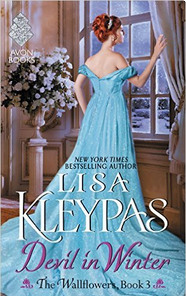
The book cover depicts a redheaded woman in a long, flowing light blue off-shoulder gown, with a vase of white flowers on a pillar behind her, gazing out a curtained window at a snowy outdoor scene.

Devil in Winter by Lisa Kleypas

  • Heroine: Evangeline Jenner, a shy and unconventional woman
    Plot: Evangeline proposes a marriage of convenience to the notorious rake, Sebastian St. Vincent.
The book cover, all in shades of blue and purple, is an illustration of a manor house surrounded by trees and foliage.

Romancing Mr. Bridgerton by Julia Quinn

  • Heroine: Penelope Featherington, a witty wallflower
    Plot: Penelope secretly writes a gossip column while harboring feelings for her best friend’s brother, Colin Bridgerton.
The book cover depicts a woman in an off-shoulder coral-colored gown with a bejeweled waistline and fluffy hemline. She is visible below the nose; the view does not reveal her eyes.

Nine Rules to Break When Romancing a Rake by Sarah Maclean

  • Heroine: Lady Calpurnia Hartwell, a spinster with a list of daring adventures
    Plot: Calpurnia seeks adventure and love, breaking society’s rules along the way.
The book cover has an illustration of a kneeling man in a suit, reaching out for the hands of the woman standing in front of him, who is wearing a magenta gown and high-heeled shoes. What appears to be a marriage proposal is taking place in front of a gazebo decorated with pink flowers and green foliage, and there are trees and stars in the background.

A Spinster’s Guide to Danger and Dukes by Manda Collins

  • Heroine: Poppy Delamare, who flees an “odious” betrothal to live in London as quiet and unassuming Flora Deaver
    Plot: Poppy agrees to marry the Duke of Langham to save her younger sister, but that’s only the beginning!

Being a cat lady and embracing spinsterhood doesn’t mean missing out on love. It means defining love on your terms, just as the heroines in these novels do. So, raise a cup of tea (or a cat) and embrace the joy of being unapologetically you! 📚🐾

Angie is an Instructor & Research Specialist at Central Branch and is a co-facilitator for Reads of Acceptance, HCLS’ first LGBTQ-focused book club. Her ideal day is reading in her cozy armchair, with her cat Henry next to her.

Mixed Plate: Chronicles of an All-American Combo by Jo Koy

Jo Koy poses against a bright red backdrop, holding his suit jacket out between his pinched fingers and with his

by JP Landolt

My man Jo Koy bombed as the host of the Golden Globes. As I was reviewing some of the clips, my heart fell. This was NOT the Jo Koy I knew. I can’t help wondering where it went wrong, and I felt even worse about the kind of awful press he was getting. Comments like “Who even was this guy?” and “What a loser!” kept popping up in these online clips. I felt myself wanting to defend him and to prove to people that Jo Koy was truly funny. Unfortunately, hosting gigs like that are tough. They can sour (or sweeten) the masses to you, especially as a comic. And goodness me, even I know that a friendly roast of Taylor Swift is a “no-no” these days!  

If you get a chance to watch his numerous Netflix specials and pick up his book Mixed Plate, I believe you’ll gain more of an appreciation for Jo Koy. I am absolutely biased as I am also a “mixed plate” like he is – half Filipino and half white. 

You know, aside from my brother and me, the only Jewish-Filipino person I had ever heard of in the 90s was Rob Schneider, one of our most beloved comedians. I heard of Jo Koy through Filipino friends and family who alerted me to the fact there was a Filipino American comic who was crushing it (thanks for the heads up). He’d been grinding for years and made his way onto “Chelsea Lately” as a panelist. I saw one of his specials on Comedy Central in the early 2010s and would continue to look for Jo Koy material and find random snippets on YouTube. Finally, by 2017, Live from Seattle was on Netflix. I shared this with my husband and he, too, has become a Jo Koy fan.   

My family revels in comedians. We had cassettes of comedians that we’d listen to over and over. In fact, we had the same Richard Pryor cassette that Jo Koy references in this book. In the 90s I loved In Living Color, All That, and any comedy sketch show I could find. And SNL? SNL in the 90s was ripe with talent: Dana Carvey, Adam Sandler, Chris Farley, David Spade, and the rest of them. I remember Eddie Murphy in red leather, George Carlin and his bad words, and today I enjoy Jo Koy, Tiffany Haddish, Tom Segura, and others. When he finally “makes it,” he starts name-dropping his idols who soon become friends. Most surprising (and hilarious) is his friendship with Jon Lovitz!

Other revelations in this book proved to me just how incredible humor is. Some things make you laugh to keep from crying, and others make you laugh until your cheeks are wet with tears! The struggles in this book are so painfully real. There’s the struggle of not being enough, then there’s the struggle of not having enough. Growing up impoverished and mixed can amplify those feelings of not really belonging and simultaneously doing whatever you can to be seen. Jo Koy lived this reality, and I felt it in his words. Humor and shared experiences bring people together. There’s about seven pages of thank you’s at the end of this book, and it’s only a short testament to how much this book was created with love and gratitude. Jo Koy seems to have a happily ever after, and I’m here for it!

Mixed Plate is available from Howard County Library System in print and as an e-book.

JP has worked for HCLS since 2006. She enjoys gallivanting, Jollibee, and all the halo-halo she can eat.