The Sewing Girl’s Tale: A Story of Crime and Consequences in Revolutionary America by John Wood Sweet

A dark cover showing a young woman's profile and a braid draped over her shoulder. A set of award stickers runs down the left.
Version 1.0.0

By Piyali C.

My co-worker and I facilitate a class at HCLS Miller Branch called What’s On Your Shelf? Fiction and Non-Fiction Book Chat, which takes place on the second Thursday of each month at 2 pm. We gather to talk about our favorite books, either read that month or in the past. My co-facilitator and I share two or three of our favorite reads and then open the floor for participants to share what they have been reading. My partner makes a lovely PowerPoint presentation of our picks, and I take feverish notes about all the suggestions from participants. We then compile the list and send it out to the group. If someone does not have a book to share, they are welcome to listen.

I look forward to this class with joy and apprehension. Joy, because I get to hear about amazing books. Apprehension, because after each session my to-read list gets longer. But, as one of the participants in the class pointed out to me, the beauty of being a bibliophile is always having a robust to-read list and the resources (like a free public library) to access them. Anyway, all this goes to say that the book I am about to review, The Sewing Girl’s Tale, was suggested by one of the What’s On Your Shelf? participants. I hope you join us for our April session – register here.

In The Sewing Girl’s Tale, author John Wood Sweet brings to light a fascinating piece of history with his superb historical detective skills. In 1793, Lanah Sawyer, a seventeen-year-old seamstress in New York, is assaulted and raped by twenty-six-year-old Harry Bedlow, a member of the upper echelon of society. Often when such assaults occurred, the women were considered ruined and ostracized. Loss of virginity was synonymous with loss of status, prestige, and standing in society. For the most part, the men went on to marry and live successful lives while the victims vanished into obscurity and shame. Lanah decides to fight back with the support of her stepfather, John Callanan.

She brings a lawsuit against Harry Bedlow and the case is brought to trial. What follows is a fascinating legal drama where the key players are white men looking out for other white men, trying to keep them from the noose as the punishment for rape was hanging. Lanah has to testify in court, in front of a packed house, recounting and reliving the horror that was inflicted upon herself. At some point during this legal battle, New York’s top lawyers get involved, including Alexander Hamilton. 

The author does a fascinating job of bringing post-Revolutionary War New York to life, exposing the rampant sexual exploitation of women, class privilege, and sexual double standards. Interestingly, women of a certain class and color were considered victims, as their sexual innocence was considered a virtue. The city at least heard their cases of assault if they wished to file a report against their assailants. Black or poor women did not merit the same treatment. It was heartening to read, however, that when this case caught the attention of the people of New York, women took up pens. They wrote under pseudonyms and ignited an intense debate about holding men accountable for their deeds and considering the previously-mentioned sexual double standard. It could not have been easy for them, given the shackles placed on women at the time, but they spoke out to pave the way for younger generations. 

As I read the book, I kept thinking how some aspects of rape cases have remained the same, when women are not believed, men get off easily, and women must recount their most traumatic experience repeatedly in front of a large number of people to find justice. 

The Sewing Girl’s Tale: A Story of Crime and Consequences in Revolutionary America by John Wood Sweet is available in print format. 

The Wager by David Grann

The book cover depicts a sailing ship caught in a storm, with grey clouds in the background and a rough, windswept turquoise sea beneath.

By Sahana C.

Land lubbers beware – this one was made for sea-lovin’ folk.  

I grew up obsessed with shipwreck stories. The might and fury of the ocean, the hubris of all those little people attempting to cross her, and their inevitable failures along the way always felt like the ultimate story of man versus nature.

Between Daniel Defoe’s Robinson Crusoe, Jonathan Swift’s Gulliver’s Travels, and Johann David Wyss’ The Swiss Family Robinson, I felt like I was preparing myself in case something wild happened and my account was needed to tell the story. I wrote field notes, carried a compass with me, and also carried a little kit full of tools in case I was caught off guard and thrown into the wilderness. It was like I was doomsday prepping, but I was eleven and only prepared for a night or two on my own.  

The Wager: A Tale of Shipwreck, Mutiny and Murder by David Grann, nonfiction though it may be, is the same kind of rollicking, wave-crashing tale of survival that I devoured growing up, and the most titillating part is that it was all real. Lord Byron (yes, that one)’s grandfather was a prolific note-taker, and some of the other crew documented their own experiences through war with men and nature aboard the Wager, as well as their fight for survival after the shipwreck.

You want mutiny? Piracy? A Lord of the Flies-style attempt at societal structure and subsequent breakdown? You want nautical tales and stories of the open sea? The Wager has all of that and more. Grann weaves together a narrative from such disparate perspectives, he allows a reader feel as though they, too, are looking at this 18th-century phenomenon as it occurs. It’s a captivating, engrossing read, and I can’t recommend it highly enough. 

The audiobook is narrated in an absolutely compelling way; the book contains actual pictures of Wager Island from Grann’s own travels. No matter how you choose to read this work, you’re guaranteed to be sucked into the story. And more than that: you might be tempted, like I was, to start your own logbook – just in case something wild happens. 

The book cover depicts an oil rig against the background of a setting sun and an orange sky.

David Grann also wrote Killers of the Flower Moon, which was recently adapted into a film, if that gives you any hint to how cinematic his books are. In The Wager, he weaves into a cohesive story the images of waves and barren island, the brutal fight for survival, and humanity laid bare.  

The Wager is available in print, large print, e-book, and e-audiobook.  

Sahana is an Instructor and Research Specialist at the Savage Branch. They enjoy adding books to their “want to read” list despite having a mountain of books waiting for them already.

Read about Women’s History Month

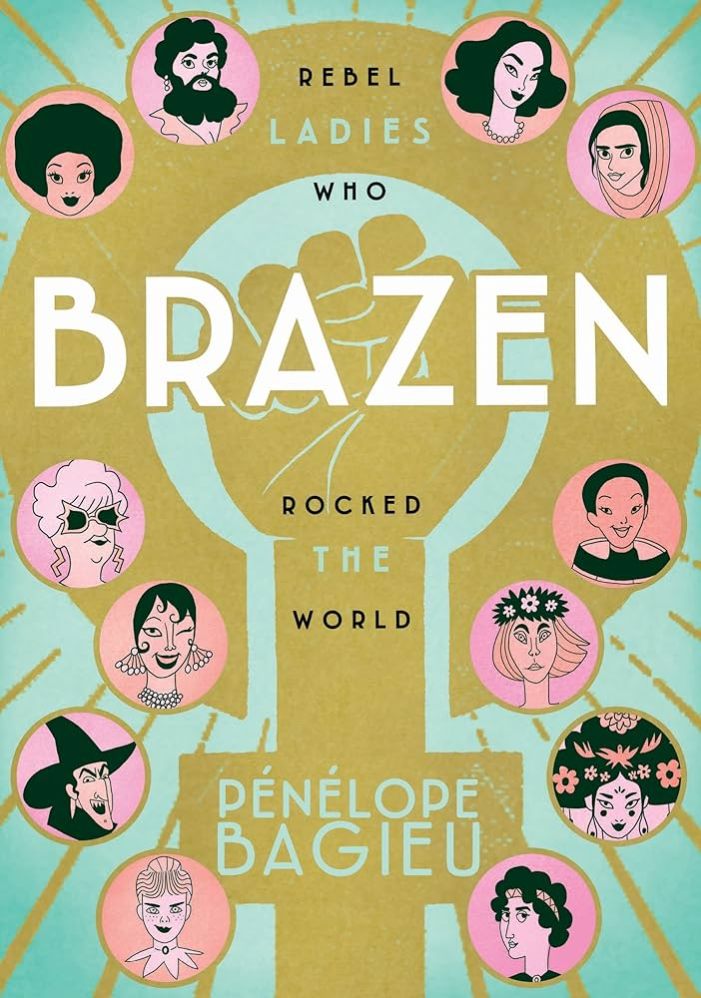
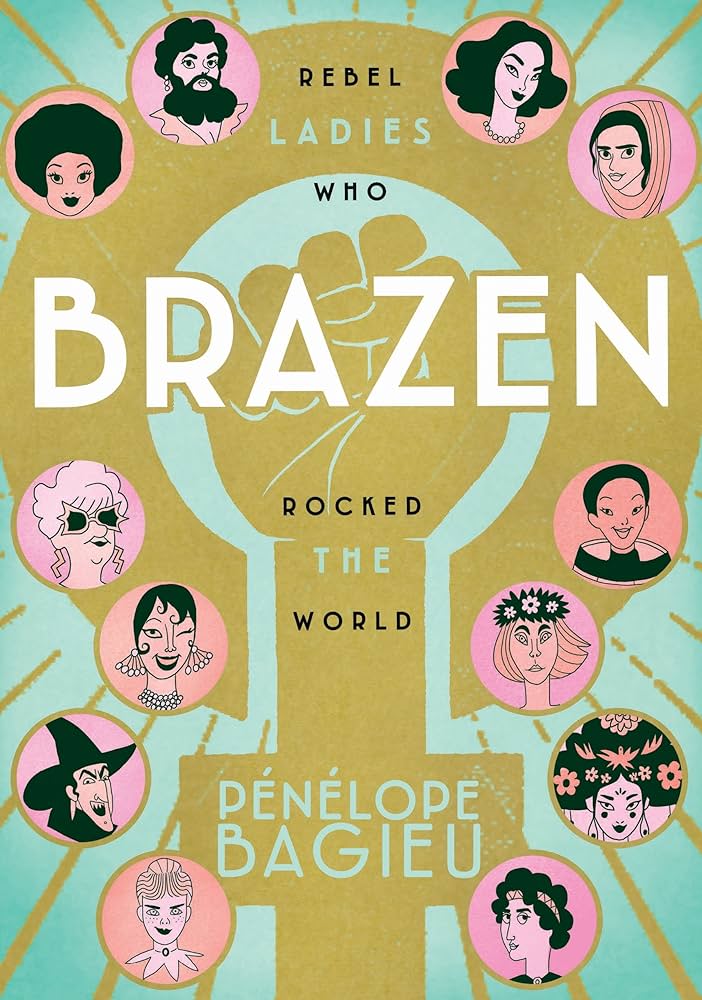
A pale green background with a golden symbol for female, with the center post an upraised fist, surrounded by illustrated heads of famous women.

by Emily B.

Women’s History was not always a month-long celebration. It started in 1980 as a week-long celebration. President Jimmy Carter offered these words as he issued his proclamation for the first Women’s History Week celebration:
“Too often the women were unsung and sometimes their contributions went unnoticed. But the achievements, leadership, courage, strength and love of the women who built America was as vital as that of the men whose names we know so well.”

Each year a new theme is chosen by the National Women’s History Alliance, a non-profit organization who lobbied and advocated for Women’s History Month to be recognized across the United States. The 2024 theme for Women’s History Month is “Women Who Advocate for Equity, Diversity, and Inclusion.” Check out these books celebrating women who did just that!

For adults
Valiant Women: The Extraordinary American Servicewomen Who Helped Win World War II by Lena S. Andrews (also available as large print, e-book, audio on CD, and e-audiobook.)
350,000 American women served during WWII, working as codebreakers, chemists, pigeon trainers, translators, and more. Learn about these unsung heroes and their previously untold stories.

The Women of NOW: How Feminists Built an Organization that Transformed America by Katherine Turk (also available as e-book and e-audiobook)
Learn about the women behind the creation of the National Organization for Women, a group that has advocated for gender equality, reproductive rights, racial justice, and LGBTQIA+ rights since its formation in 1966.

For teens
Turning 15 on the Road to Freedom by Lynda Blackmon Lowery
Read the memoir of the incredible teen who marched for civil rights alongside Martin Luther King Jr.

Brazen: Rebel Ladies Who Rocked the World by Pénélope Bagieu (also available as e-book)
This graphic novel focuses on some of history’s most impressive boundary-breaking women, like Mae Jemison, Nelly Bly, and Christine Jorgensen.

For children
Planting Stories: The Life of Librarian and Storyteller Pura Belpré by Anika Denise (also available on DVD)
Learn about Pura, the first Puerto Rican librarian in New York City. She advocated for the Spanish-speaking community by offering bilingual story times and purchasing Spanish language books. (Also available in Spanish.)

Fall Down Seven Times, Stand Up Eight: Patsy Takemoto Mink and the Fight for Title IX written by Jen Bryant; illustrated by Toshiki Nakamura
Patsy Takemoto Mink was the first woman of color in Congress and was a huge proponent in passing Title IX, which prohibits discrimination based on sex in education programs.

Emily is an Instructor & Research Specialist at the Central Branch. She enjoys puzzling, reading, listening to music, and re-watching old seasons of Survivor. 

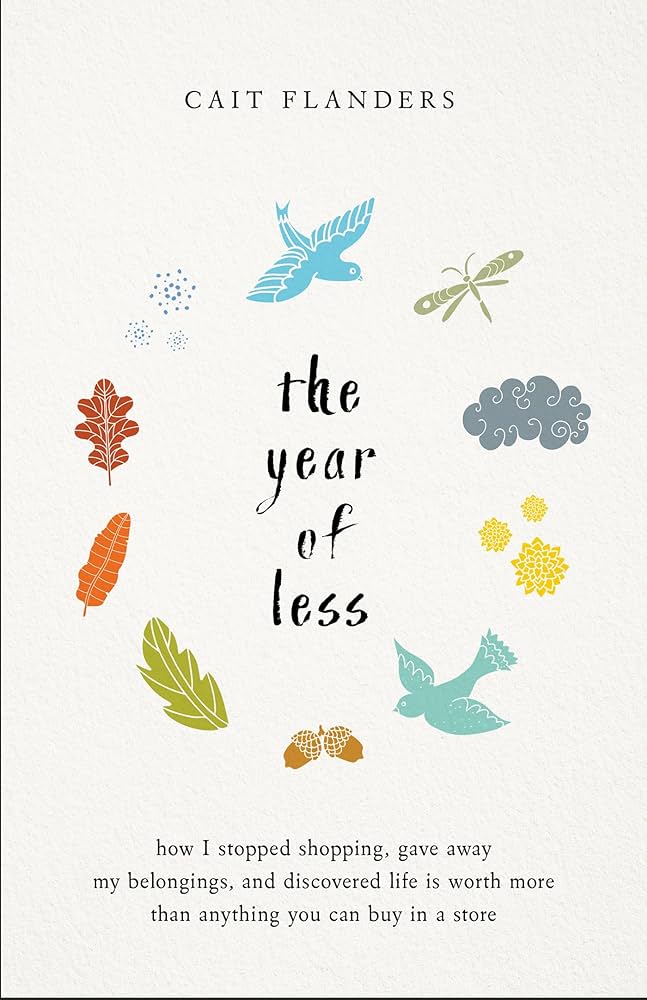
The Year of Less by Cait Flanders

Small colorful illustrations of a birds, flowers, and leaves sit around the title in a minimalist composition.

by JP Landolt

Do not mistake this title for another ode to Marie Kondo’s practice of sparking joy and tidying up, but more as a diary of an experiment created to help a young woman find herself. Themes of addiction, depression, and “doing hard things” fill these pages. Flanders is an established freelance writer, current co-host of the podcast Budget & Cents, and author. Forbes featured her 2015 experiment, described as a year-long shopping ban. That post resulted in book offers and the subsequent publishing of The Year of Less in 2018.

Cait gives us a brief synopsis of all the previous experiments she has completed: a year dedicated to weight loss, another year getting sober, then another getting debt-free as outlined on her former blog (blondeonabudget.ca). She outlines a set of rules designed to de-clutter her life, save money, and live with less.

Admittedly, I almost stopped listening to this book with the introduction. Was this going to be another variation of minimalism from a self-important, self-righteous, affluent-organizational-trend-setter-wannabe? No. She explicitly says she does not judge anyone’s choices. These choices were necessary for her, and she could only share her experience. Once I heard that and put aside my bias, I found Cait to be a sincere young woman who struggled with the same things that most of us do, including weight and self-esteem, debt and savings, and family issues. She sets intentions with these multifaceted experiments which eventually help her accomplish her goals.

She lost 30 pounds, paid down $30K in consumer debt, and finally got sober!

All these accomplishments are monumental achievements alone, and more so in succession! Each of these things are addictions that she combats daily. Flanders made huge, life-changing decisions while battling depression and coming to terms with her sobriety. Most experts would tell you not to do this. Somehow, it worked for her, and that is my only frustration with this book. I am reluctant to say it was her sheer will that pulled her through because that is false. She has admitted that she is naturally organized and does not suffer from any kind of executive dysfunction.

As an aside: If you struggle, and I mean STRUGGLE, with messiness or too much eating, too much buying – just TOO MUCH, I think Keeping House While Drowning may be a much better fit for practical systems and compassionate approaches while being neurodiverse. It’s a memoir with some tips, tricks, and advice in the epilogue.

Cait’s story is inspiring because she takes on the challenges, and she makes it through to the end with measurable data points. This book wraps up neatly; it is easy to find yourself rooting for her and simultaneously jealous of her integrity in satisfying her intentions. My greatest takeaway was this question that Cait started asking herself when facing a purchase (paraphrased): “Am I buying this (item) for who I am or am I buying this for the person I want to be?” 

While this is no “how to,” it is certainly inspirational and logical. If you want a simpler life filled with more quality than quantity, you must let go of things. And the less you have, the less you eventually need. I mean, I could use an extra $17K this year.  

The Year of Less by Cait Flanders is available in print, e-book, and e-audiobook.

JP has worked for HCLS since 2006. She enjoys gallivanting, Jollibee, and all the halo-halo she can eat.

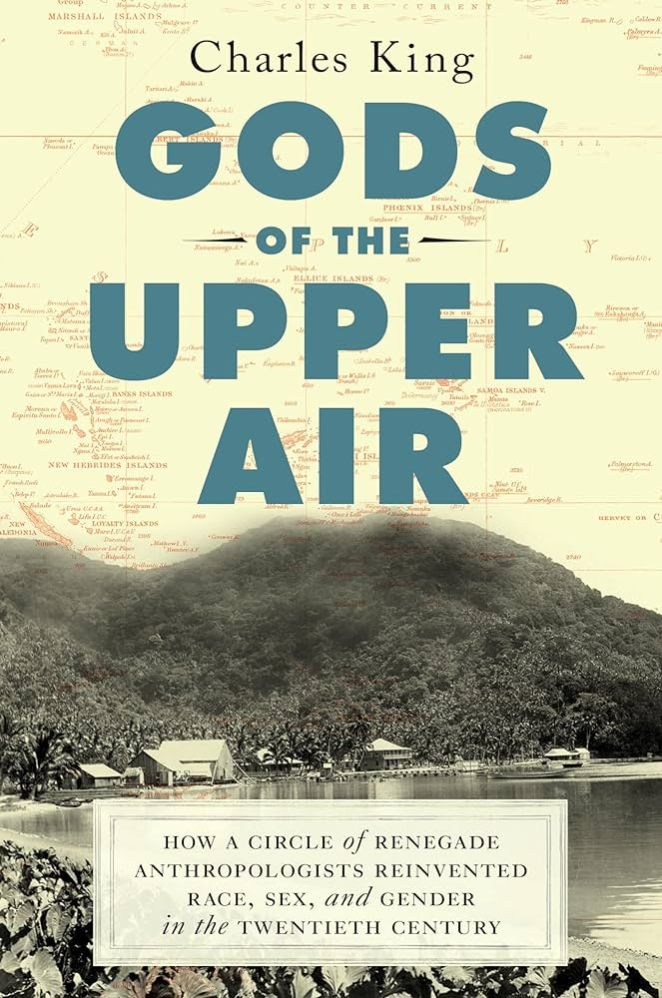
Gods of the Upper Air by Charles King

A monotone photo of an island cove sits below a map, with the title in slate bue.

by Sahana C.

I’ll admit to some bias here: I was an anthropology major as an undergraduate. That’s part of why this book called to me – I recognized so many of the names, and it felt familiar. This might not be everyone’s cup of tea, but stick with me.

It’s the 1920s, and so much culture is up in the air, so much of the world is more accessible than ever, and there is so much burgeoning diversity in America that it seems to require classification. Of course, those doing the classifying are the people in power. They’ll do whatever they can to keep that power in place, even if it means creating dangerous, harmful institutions with staying power. 

Enter Franz Boas, affectionately termed as Papa Franz, and the father of American anthropology. That man singlehandedly taught almost every single major American anthropologist and mentored the founding polycule behind cultural relativism. He basically invented the field as he went along, and his students are credited with many of the ground-breaking, society-forming theories and practices that are foundational to modern academia. The fact that a whole discipline grew up around one dude and his ducklings is remarkable.  

And King takes us through it. The heroes of the story are the aforementioned Boas, Ruth Benedict (one of the most published of the Boasian circle, Papa Franz’ right hand and one of Mead’s lovers), Margaret Mead (a popularizer of anthropology as a social science – though the term popularizer was used as an insult in her time, I think it’s quite complimentary), and Zora Neale Hurston (yes, *that* one).  

Each of them, purely by happenstance, lived between worlds, slightly outside of social norms. They were all square pegs in a world of round holes, and that, alongside a pervasive curiosity and belief in people, led them to anthropology as a discipline. Boas was a German Jew and an immigrant with limited English. Benedict was 1) a woman, 2) almost certainly a lesbian by modern definitions, and 3) partially deaf. Mead was 1) a woman, 2) bisexual, and 3) polyamorous before it was cool (and as such, was involved with so many of the leading figures in anthropology). And Hurston was a Black woman who realized that her private schooling put her in a different world than the people back home, that her language had changed entirely by virtue of her access to “elite” spaces, as she moved between her school life, her fieldwork, and the Harlem Renaissance.   

Armed with a passion for data and a desire to understand rather than merely classify people into archetypes, Boas and his disciples pushed back against so many of the long-held cultural assumptions about race as strict category, about eugenics, and about unjust and immoral legislation like Jim Crow and Japanese internment. They coined the term and practice of “cultural relativism,” understanding of culture through its own lens rather than the lens of a foreigner.

There is a bit of hero worship and a bit of fluffy, “these were the coolest, wokest, most progressive people to live!” vibe in the book that King does little to combat. But truthfully, much of the impressive and progressive thinking did actually belong to the people listed above. They had massive roles in shaping modern understandings of culture, race, and society. So, it is easy for me to forgive the embellishment on King’s part – these people were undeniably impressive for both their time and ours.  

Gods of the Upper Air is available in print and e-audiobook. If you are at all interested in learning about how society began the move away from eugenics and towards a more relative understanding of the inherent value our differences hold, how understanding our differences helps to puzzle out how we are the same, and what makes us human, this book will help you start.  

Sahana is an Instructor and Research Specialist at the Savage Branch. They enjoy adding books to their “want to read” list despite having a mountain of books waiting for them already.

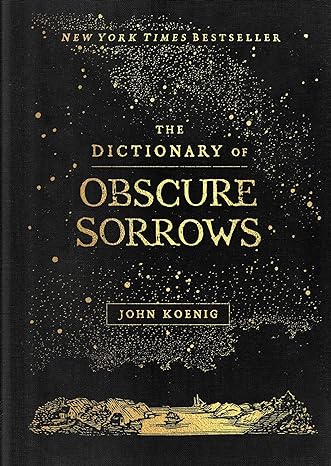
The Dictionary of Obscure Sorrows by John Koenig

The book cover depicts boats on a body of water running between two hilly stretches of land, with a brilliant dark sky full of stars above.

by Angie E.

In The Dictionary of Obscure Sorrows, John Koenig goes deep into feelings that often have no definition. The words aren’t just definitions; they’re like secret passageways to whole new worlds of feelings. It’s like they are saying: “Hey, check out these emotions you never knew you had names for!” 

Each entry is like a mirror showing emotions we didn’t know we had. “Sonder,” for instance, is the sweet yet sad realization that every random person out there has a life as wild and complicated as yours. There’s also “opia,” that vulnerable moment when eye contact makes you realize that there’s a whole universe of unspoken stuff between souls. 

But the one that hits me the hardest is “moledro: a feeling of resonant connection with an author or artist you’ll never meet, who may have lived centuries ago and thousands of miles away, but still can get inside your head and leave behind morsels of their experience.” 

Koenig’s ambiance is all about busting out of the silent jail that locks up our feelings, pushing us to chat about the gaps between us. In a world where tech connects and disconnects us, The Dictionary of Obscure Sorrows is like a rock, keeping us grounded in the crazy, beautiful ride of being human. 

With every page turn, Koenig holds our hand, guiding us on this epic trip—a journey of connection, finding ourselves, and realizing that we’re all on the same ride in the wide world of feelings. At the end of the day The Dictionary of Obscure Sorrows isn’t just a book; it’s like this crazy venture into what makes us human. It’s like having a quiet chat with your soul, an invite to get cozy with all the feelings that make us who we are. 

As the author writes in his introduction: “It’s a calming thing, to learn there’s a word for something you’ve felt all your life but didn’t know was shared by anyone else. It’s even oddly empowering—to be reminded that you’re not alone, you’re not crazy, you’re just an ordinary human being trying to make your way through a bizarre set of circumstances. That’s how the idea for this book was born, in that jolt of recognition you feel when learning certain words for emotions, especially in languages other than English: hygge, saudade, duende, ubuntu, schadenfreude.” 

The Dictionary of Obscure Sorrows is available in print, e-book, and e-audiobook.

Angie is an Instructor & Research Specialist at Central Branch and is a co-facilitator for Reads of Acceptance, HCLS’ first LGBTQ-focused book club. Her ideal day is reading in her cozy armchair, with her cat Henry next to her.

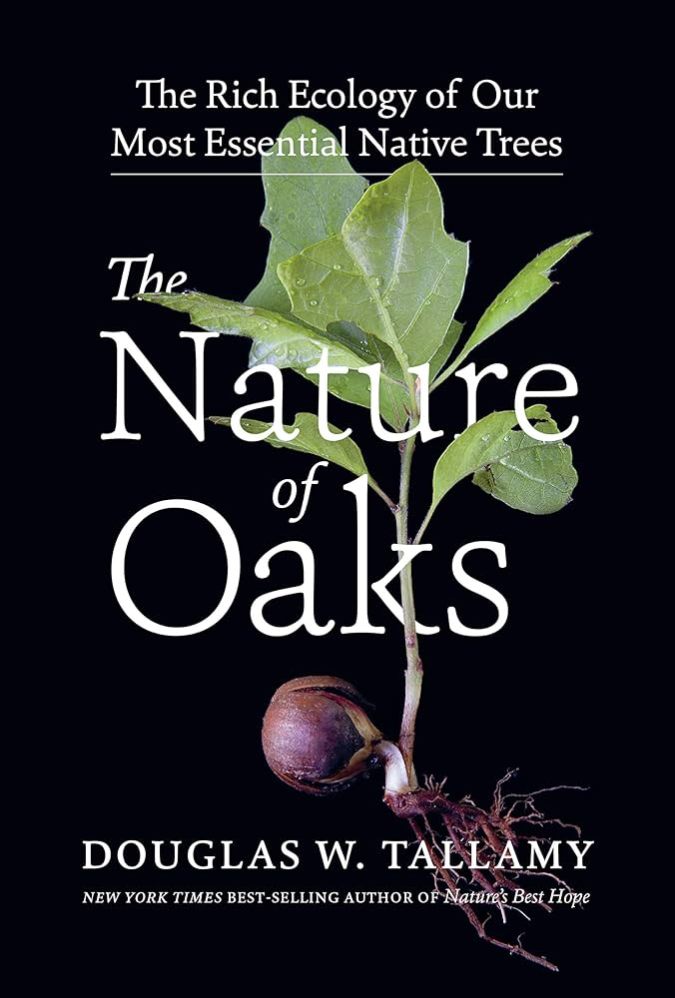
Life-Giving Giants

A black cover features a clear photograph of a sprouting acorn with a set of oak leaves.

By Erica C.

Doug Tallamy has established himself as one of the conservation movement’s most esteemed advocates, and he shows us how we can make a difference in the future of the planet. I recently attended one of his talks, “Nature’s Best Hope” named after his New York Times best-selling book. Through captivating storytelling, Tallamy transforms a topic that often sends me into a spiral of despair into one of optimism by offering effortless solutions to environmental restoration, like leaving your leaves or thinking twice about calling Mosquito Joe.

I was moved by his talk so I immediately reserved his books from the library. I started with The Nature of Oaks: The Rich Ecology of Our Most Essential Native Trees. An oak tree alone supports 511 species of moths and butterflies, 100 more than its closest competitors, the native cherries, and 487 more than the beloved redbud. Only three species have been found on crepe myrtles and one on Callery pear (both non-native to North America). (Tallamy, 2021). That is not to say we shouldn’t plant a variety of native trees species, it simply demonstrates an oak’s life-supporting potential. The mighty oak not only sustains a complex food web, its enormous root system provides ecosystem services like carbon sequestration, watershed management, and soil stabilization. The Nature of Oaks is filled with fascinating stories, highlighting some of nature’s wonders and giving readers a new appreciation for the natural world. If you are called to learn how you can play a role in environmental conservation, look no further than Tallamy’s delightful reads.

This movement will not be successful in silos, rather, it has to be a collective effort. Consider visiting the upcoming Howard County Seed Share to pick up native seeds and chat with local gardeners on the afternoon of January 20 at HCLS Miller Branch.

On February 20, you can hear Tallamy speak at the Sustainability Symposium hosted by Landscape Contractors Association. Register for the event here.

Finally, mark your calendar for April 13 when Howard County hosts Green Fest, the county’s largest celebration of Earth Day, connecting residents with resources that can help anyone be a good environmental steward. Join HCLS for gardening and environmental classes throughout the year. To see our upcoming event schedule, search for Gardening & Environment in the Library’s calendar. 

Tallamy, D. (2021). The Nature of Oaks. Portland, Oregon: Timber Press.

Erica C. is in her dream role as the Enchanted Garden Instructor at the Miller Library. When she’s not tending to the garden, you can find her cycling along the C & O Canal, experimenting with new recipes from around the world, or curled up with her coffee and a good read.

HiJinx Podcast: Best Books of 2023

The photograph shows four book covers selected from the podcast list against a blue background.

By Jessica L.

“Tsundoku” is a whimsical Japanese term for collecting books in piles… to be read… eventually. You may have been practicing this without knowing there was a term for it! So, how did you do with your “To Be Read” pile this past year? Are you ready for more recommendations? Here you go!

Listen to our recent Hijinx podcast, Best Books of 2023, featuring voices from HCLS staff and community members. Past episodes can be found here.  

Favorite Books Read in 2023 from HCLS Staff & Customers 

The book cover depicts a figure standing at the top of a set of stairs in an alcove, hands behind back, looking at a large painting on a wall.

All the Beauty in the World: The Metropolitan Museum of Art and Me by Patrick Bringley

Beartown Trilogy (Beartown, Us Against You, The Winners) by Fredrik Backman 

Belle of the Ball by Mari Costa 

The book cover depicts a bird with something round like a berry in its mouth, sitting on a branch, in shades of orange and gold against a hazy green background.

Dinosaurs by Lydia Millet 

Hell Followed with Us by Andrew Joseph White 

The book cover depicts trees, branches, and undergrowth in the foreground and a lake and hills in the background, all in blue and white like a woodcut style that has been colorized.

Landmarks by Robert MacFarlane 

Leg by Greg Marshall 

Lone Women by Victor Lavalle 

The cover is in grey lettering against a black background, with a black snake winding in and out of the letters in the title.

Ninth House by Leigh Bardugo 

Remarkably Bright Creatures by Shelby Van Pelt 

Romantic Comedy by Curtis Sittenfeld 

The book cover depicts a woman with long hair and a bouquet of flowers in an off-shoulder white dress, sitting on a broomstick in front of a full moon in a dark sky.

Slewfoot: A Tale of Bewitchery by Brom

The book cover depicts snow falling on the roofs and chimneys of houses in a village or town. The snow is white and the buildings and background are emerald green.

Small Things Like These by Clarie Keegan 

The Sweetness of Water by Nathan Harris 

The Ten Thousand Doors of January by Alix E. Harrow 

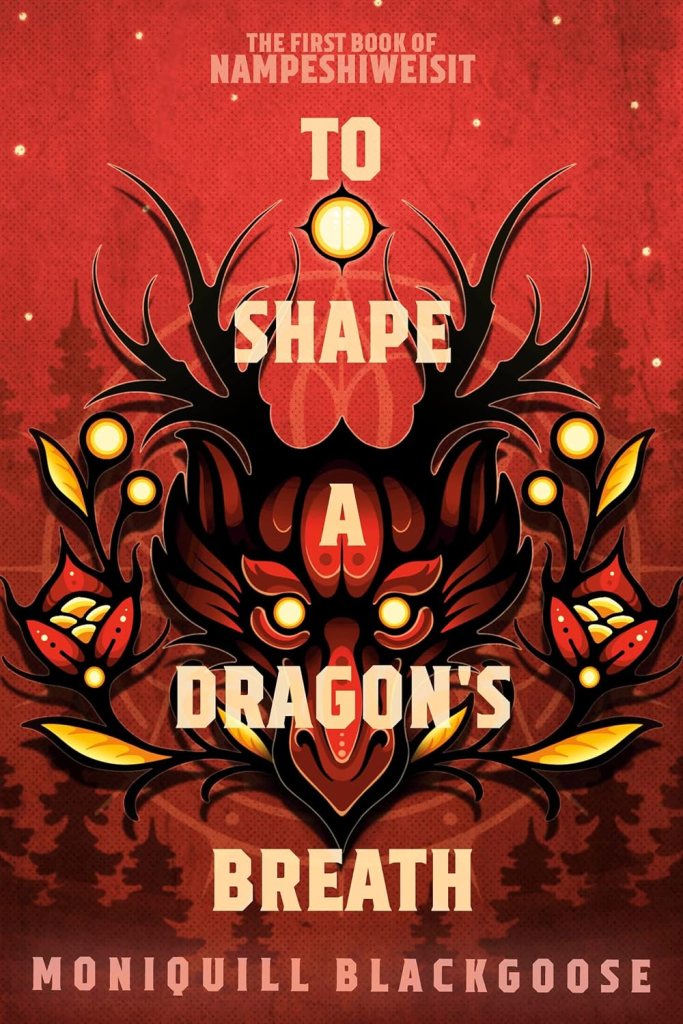
A illustration of a dragon like mask with horns. Pine trees are in the background.

To Shape a Dragon’s Breath by Moniquill Blackgoose 

Verity by Colleen Hoover (#1 Book requested and borrowed in 2023) 

The book cover depicts a cat, a pile of books, a coffee cup with a polar bear design, a white pillow with pink trim, and a leafy green plant in a terracotta pot, all framed by a black window frame against a blue sky and outdoor scene of other buildings and a tree with pink foliage.

What You Are Looking for Is in the Library by Michiko Aoyama 

JP has worked at HCLS since 2006. She is disappointed that the original Muppet Babies cartoon series is unavailable for streaming anywhere.  

Our 2023 Top 3 Lists

Readers responded enthusiastically all year long to the wonderful reviews our writers have shared. Since we know you enjoy reading about their book, movie, television, music, and video game recommendations, here are the top three favorites from our exceptionally knowledgeable and talented blog writers from the HCLS staff. Or, in some cases, perhaps a top four… it’s so hard to choose for these year-end retrospectives!

Cherise T., Central Branch

  • Barbie – Pitch-perfect, entertaining take on life as a woman, how it is, and how we wish it would be.
  • The Covenant of Water by Abraham Verghese – Multigenerational novel set in Karala, India, spanning over 70 years of a family cursed with deaths by water.
  • Tom Lake by Ann Patchett – Sharing endless hours together due to pandemic restrictions, two daughters learn more of their mother’s origin story in which Our Town plays a major role.
  • Wellness by Nathan Hill – What is the arc of a marriage when viewed through the lens of a photographer and a specialist in placebo psychology?

Piyali C., Miller Branch

Ash B., Central Branch

  • So Much (for) Stardust by Fall Out Boy – The boys are back with a triumphant return to guitar-based music, masterfully incorporating a range of influences while sounding utterly, uniquely Fall Out Boy
    Standout tracks include the hard-hitting opener “Love From The Other Side,” the sweepingly cinematic title track, and the disco-inspired “What a Time To Be Alive.”
  • Unreal Unearth by Hozier – The newest album from the beloved Irish singer-songwriter delivers much of what fans expect – poetic lyrics delivered in soulful baritone – wrapped up in crisp, new production. 
    Standout tracks include the irresistibly funky “De Selby (Part 2)” and the lead single “Eat Your Young” with its scathing social commentary and catchy hook.
  • Rush! by Måneskin – In their first record featuring mainly English-language songs, these Italian rockers showcase a keen pop sensibility along with plenty of guitar shredding and raw vocals. 
    Standout tracks include the mournful power ballad “THE LONELIEST” and the cheeky, energetic “MAMMAMIA.”

Sahana C., Savage Branch

  • Joan by Katherine J. Chen – Chen paints a really compelling picture of what Joan of Arc may have been: a strong girl, working within the confines of her environment to become the face of something so much greater than herself.
  • Haven by Emma Donoghue – A great contemplative read of ancient Irish history; a perspective that was new to me, and yet so familiar, with ties to the present.  
  • The Ballad of Songbirds and Snakes by Suzanne Collins – This was a re-read for me, and I liked it better this time around, as I accompanied it with a re-read and rewatch of the whole Hunger Games books/movies, thanks to the recent release of the Ballad movie!

Christie L., Administrative Branch

Kimberly J., Glenwood Branch

Peter N., Miller Branch

  • Wolfsong by TJ Klune – There was so much emotion, lycanthropy lore, and action at times that you’d almost think TJ Klune was a werewolf himself and had written this as an autobiography. I went on to the next book right after I finished Wolfsong!
  • Spider-Man: Across the Spider-Verse – The Spider-Verse movies have been so much fun! They’re funny, campy, and also dramatic in their own way. I cannot wait for part 2!
  • Star Trek Picard Season 3 – This was the send-off that the crew of the USS Enterprise deserved all along, an utter chef’s kiss and a true love letter to the fans. Action packed, emotional, and fun, this season is a fan favorite and worth every single re-watch.

Ian L., East Columbia Branch

  • One Piece (Anime, manga, and live action adaptation) – Pirates, Adventure, Freedom; if the endless dream guides your restless spirit, do yourself a favor and fall in love with One Piece.
  • Asteroid City – A star-studded cast, eccentrically written characters, and beautiful sets; a Wes Anderson medley on isolation in times of uncertainty.
  • Book of Hours (video game) – Restore a crumbling occult library as a Librarian whose work can literally define history.

Sarah C., Savage Branch

Brittany M., Miller Branch

  • Anne of Green Gables – I can’t keep count of how many times I’ve read about the escapades of literature’s favorite redhead. But every time I do, I’m delighted to reconnect with a “kindred spirit”.
  • The Empress (Netflix) – Based on the life of Empress Elisabeth of Austria, this binge-worthy historical drama is full of juicy plots and costume eye candy that will leave you anxiously awaiting the arrival of season two.
  • Barbie – Seeing my favorite childhood toy on the big screen tugged at my heartstrings and made me proud to discover that there is something deeper underneath her pretty perfection.

Julia M., Glenwood Branch

  • Yellowface by R. F. Kuang – Yellowface is the book I couldn’t stop thinking about this year, no matter how many months pass by after I finished reading it.
  • Tress of the Emerald Sea by Brandon Sanderson – Tress is a fantasy that hearkens after The Princess Bride and left me wanting to become a better, kinder person.
  • To Shape a Dragon’s Breath by Moniquill Blackgoose – Out of all the great dragon books that came out this year, this is the one whose sequel I’m most looking forward to!

Eric L., Elkridge Branch

  • Blue Rev by Alvvays – It came out in late 2022 and HCLS will have copies soon. This is the band’s third record, and they seem to have “broke” this year. You can borrow their previous two albums from HCLS. This record is more mature, lyrically and musically better.
  • Orwell’s Roses by Rebecca Solnit – The book deftly captures how his experiences and writings worked up to his magnum opus which he finished right before his death at 46 years of age. Solnit addresses his optimism and his love of nature, as well as his foibles.
  • The Grapes of Wrath by John Steinbeck (see my entire post here) is a great book, about America, greed, the impact of technology on humans, and the need for a social safety net. It is long, sad, and beautifully written; not a political book that aims to point fingers, but really a moral one.
  • Corruptible: Who Gets Power and How it Changes Us by Brian Klaas is probably related to both aforementioned books. Written in an entertaining journalistic style, it’s packed with interesting anecdotes and interviews, with examples of power wielded for the good of all as well as power that is abused. Klaas also suggests what we can do to improve the use of power in society.

Angie E., Central Branch

  • Holly by Stephen King – His best book in ages, but I will never see liver the same way again.
  • The Lunar Housewife by Caroline Woods – This pleased both my sci-fi and feminist sides.
  • The Survivalists by Kashana Cauley – This brilliant and funny novel stayed with me for a long time after I finished it.

Julie F., Miller Branch

  • Strange Flowers by Donal Ryan – Beautiful, haunting, brilliant. A look at two generations of a mixed-race Irish family and the loves and losses that bind them together and keep them moving forward.
  • A Thousand Ships by Natalie Haynes – Haynes gives voice to the voiceless women of the classic Greek plays and epics. She demonstrates how war never changes across the centuries, but it profoundly changes those it impacts, and never for the better.
  • Sweet Little Lies by Caz Frear – Great start to a crime fiction trilogy; for fans of Tana French and Susie Steiner. You’ll love Detective Constable Cat Kinsella, with her messy, complicated family life, sense of verve, and sarcastic, wisecracking humor.

Kristen B., Administrative Branch

  • The Very Secret Society of Irregular Witches by Sangu Mandanna (e-book and e-audiobook) – Feel-good found family and a ton of fun!
  • Braiding Sweetgrass by Robin Wall Kimmerer (as an audiobook on CD or an e-audiobook) – Changes your perspective on the world and our place in it. The author reads it, which makes it even better.
  • Witch King by Martha Wells – High fantasy, told upside down and backwards so you’re never quite sure what’s going on but wonderfully entertaining. She is the author of the highly popular Murderbot books, but this one is completely its own thing.

We hope you’ve enjoyed reading these writers as much as we’ve loved editing and sharing their terrific blog posts throughout 2023. Check out their favorites and let us know which you enjoy; visit any branch to get more suggestions and recommendations from our stellar team. Happy holidays and here’s to a 2024 full of great books and multimedia from the HCLS collection!

– Kristen B. and Julie F., Chapter Chats editors

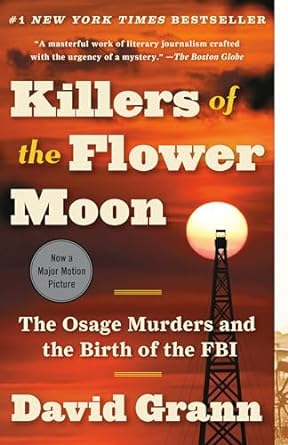
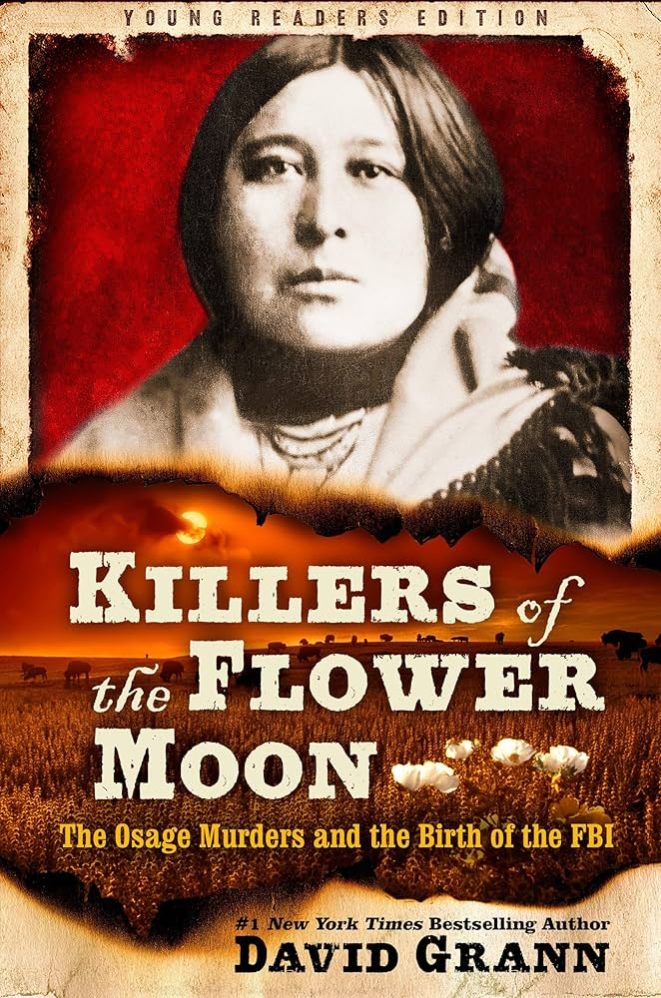
Killers of the Flower Moon by David Grann

Black and white photo of a Native woman in her traditional blanket sits above a landscape of prarie grasses with white flowers, all with red

by Eric L.

Although a graduate of a mostly white private high school, I was lucky to attend a good public college that furthered my historical education. Like many pieces of history, the “Osage Reign of Terror,” which took place roughly from the 1910s to the 1930s, was not addressed in my education. Someone suggested that the term is a misnomer because it sounds as though Osage caused the reign of terror; however, the opposite is true.

Killers of the Flower Moon is an entertaining and provocative read. Published in 2017, the book is on bestseller lists again because of the critically-acclaimed Martin Scorsese film, starring Lily Gladstone, Leonardo DiCaprio, and Robert DeNiro. Author David Grann is a thorough researcher, and he recounts the history of the Osage people and how they ended up in Oklahoma. They, like so many other Native tribes, were continually pushed West out of desirable land until they arrived on the least desirable part. A chief at the time suggested that they take the hilly land in Oklahoma because the white man would not want it, and perhaps would leave them be. He was wrong. Another chief decided that they would have to parcel it out like real estate – but the Osage owners retained all the mineral rights. A shrewd stratagem, as they realized oil had been discovered.

The reserved mineral rights could not be sold to a non-Osage person, but only inherited in a practice that became known as “head rights.” This seemed a genius move, but unfortunately, the chief was battling with a far more powerful entity. As more oil was found on Osage land, the income generated from the rights to drill became very valuable. All the major oil companies wanted to drill on this land, and were spending large amounts of money to do so. For a short time, the Osage had the most wealth per capita in the United States.

This situation was untenable to some white Americans. The Osage were prohibited from accessing their bank accounts and assigned guardians (through the Bureau of Indian Affairs) who controlled their money; in the movie, you hear Mollie Burkhart refer to herself as “incompetent” when talking to her banker. The need for a guardian was determined by how much native blood a particular Osage person had and thus the extent of their head rights. All this sets the backdrop to the Reign of Terror, when more than an average number of wealthy Osage folks died untimely deaths and others (mostly white men) inherited their wealth.

After a number of botched, failed, and bogus investigations, the nascent FBI, under the direction of a young J. Edgar Hoover, decided to get involved. After all, the murders occurred on federally managed land, which was technically the FBI’s jurisdiction. Grann’s book follows a particularly tragic example, where a WWI veteran, Ernest Burkhart, came to live with his uncle “King” Hale, a cattle rancher in the Osage country. Ernest marries Mollie, whose family died around her from natural and unnatural causes. It is Mollie who ventures to Washington, DC to ask the Bureau of Investigation to provide answers.

I won’t spoil the mystery and subsequent court case, but Grann successfully interweaves a story of the early FBI with the tragedy of Mollie’s family and the plot to inherit their rights. It’s terribly sad, but with an interesting cast of characters and a well-written murder mystery. The story is told largely from the FBI agent’s perspective, but Grann is very thorough in his research and interviews, and he uncovers more than the FBI found (or at least documented). The movie shifts the narrative from the FBI to Ernest Burkhart and King Hale, and to a lesser extent, Mollie.

I’m certain the film will attract some backlash for bringing up the ghosts of our past. It always seems strange to me that we don’t want to better appreciate our collective history. I loved that one wise Osage person wondered whether any of it was worth it, since they lost so much. I can’t pretend to have an answer for that, but it’s a sad and instructive story about American greed and racism. What I’ll take from it, which is well-developed in the book, is that there were some dedicated FBI agents and citizens who spent time investigating and solving some of these crimes despite nearly insurmountable odds. Read the book and see this film; it’s a story worth repeating and knowing.

Killers of the Flower Moon: The Osage Murders and the Birth of the FBI by David Grann is available in many formats:
print, large print, e-book via Libby/Overdrive, e-book via CloudLibrary,
audiobook on CD, e-audiobook via Libby/Overdrive, e-audiobook via CloudLibrary

You can also get on the waiting list for the DVD of the movie, which is set to be released at the end of February, 2024.

Kristen B. contributed to this review.

Eric is a DIY Instructor and Research Specialist at Elkridge Branch. He enjoys reading, films, music, doing nearly anything outside, and people.