Popeye the Movie: Nostalgia for Spinach and Silliness

A can of spinach advertises the movie Popeye, starring Robin Williams.

by Alex P.

You may dimly remember that there was a Popeye live action movie in the eighties starring Robin Williams. You may have seen the box on our shelves and been amused by the cover or just remembering that it exists. The movie, like the character it adapted, seems banished to somewhere deep in our cultural unconscious, a quaint memory.  

Popeye feels like a movie destined not to work. When Paramount and Disney sought to adapt the 1930s cartoon sailor for a 1980s crowd, they chose Robert Altman to direct, who was primarily known for edgy, subversive Hollywood films like M*A*S*H* and The Last Goodbye. Not only that, but they asked for him to make a musical film, and not only that, but pop musician Harry Nilsson was hired to write the songs. This seems like a series of missteps out of which no normal film could emerge, but thankfully, Robert Altman was a director who thrived on unusual circumstances.  

Truly, though, the casting is kismet. Robin Williams stars in only his second-ever feature film, fresh with success playing Mork in Happy Days and Mork & Mindy. Here he dons huge prosthetic forearms and mugs constantly while performing a passable Popeye impression. Shelley Duvall was practically destined to play the gangly and shrill Olive Oyl and brings a physicality almost as good as Williams’.

The real star is the town the crew built in Malta (it still stands today!) on the side of a cliff in a small bay. The ramshackle town combined with constant slapstick gags give the town an energy that really embodies the cartoons. Altman’s style is notable for having almost constant comic dialogue in all of his films (it can only be described as “muttering”), and I found that it actually did end up resembling the cartoons. There are many direct references to visual gags from the cartoons that work surprisingly well in live-action – my favorite image is when Bluto shoves Shelley Duvall into a large deck-level pipe in a raft, and only her head is visible, the rest of her body impossibly disappears below the surface as she floats along.

The songs are by far the weakest part of the film. Each one is horribly underdeveloped, the lyrics comprise of phrases like “I’m Mean” or “He’s Large” or “Blow Me Down” and little else, except for muttering. The reason for this is that Altman chose, unlike most musical films, to record the singing on-set, so the vocals are always indistinct and seem to trail off amid the choreography and gags. 

Nobody seemed to know what to make of Popeye on its release. It was modestly successful at the box office but not the big success that executives were expecting, and it left critics flummoxed, which was enough to tank director Robert Altman’s career for the next decade. I was charmed by it. I am personally a huge fan of Altman’s films and found it to be a great vehicle for his unique energy. It also a particular joy to watch the cartoon violence that ensues with Bluto and Popeye, smashing through walls and destroying furniture and eating spinach. 

Popeye is available on to borrow on DVD and stream on Kanopy for free with your library card. 

Alex Pyryt is an IT Systems Support Specialist at the Administrative Branch of the Howard County Library System. 

One’s Company by Ashley Hutson

The background of the cover show a cloudy sky all in soft blues and green. In front, four offset black arches, outlined in pink, frame a small golden bird.

by Angie E.

After surviving a series of devastating traumas, including the loss of both parents and a harrowing act of violence, Bonnie Lincoln wins the lottery in Ashley Hutson’s novel One’s Company. Instead of buying a new house in the traditional sense, she moves to an isolated mountain compound and hires staff to construct an exact replica of the 1980s sit-com Three’s Company set, complete with everyone’s apartment units.

In what she now calls home, Bonnie attempts to live as each of the show’s characters, cycling through their wardrobes, their quirks, their scripted joy. It’s a surreal and (I have to say bizarre!) premise, but Hutson manages it with such clarity that it never feels absurd, even if does seem alarming yet somehow inevitable. There’s something hauntingly familiar about the way Bonnie seeks refuge in nostalgia. In a world that often feels too sharp, too loud, too cruel, Bonnie’s retreat into the sitcom world of Three’s Company feels less like madness and more like a desperate kind of hope.

As a child of the 70s and early 80s who watched and adored Three’s Company during its original prime time run and in reruns, I get it. I have lived there once, in front of the screen. But Bonnie’s journey is a reminder that even though nostalgia can be a balm, it can also be a blade. What makes One’s Company so affecting is its refusal to pathologize Bonnie. Her choices are extreme, even worrisome, but they are also deeply human. Who among us hasn’t longed to disappear into a simpler world, one where problems resolve in 22 minutes and laughter is guaranteed? Bonnie’s obsession is not just escapism, it’s a taking back of control, a rewriting of her own narrative in a world that has repeatedly written over her.

Angie is an Instructor & Research Specialist at Central Branch and is a co-facilitator for Reads of Acceptance, HCLS’ first LGBTQ-focused book club. Her ideal day is reading in her cozy armchair, with her cat Henry next to her.

Celebrating 85 Years of HCLS: A Tribute to Noontime Books and the Fictionista Legacy 

Members of the Noontime Bookclub stand on the steps at HCLS Central Branch, each holding a book and the group leader holding a clock set for noon.
The Noontime Book Club is the longest running book club in the HCLS system. They gather at HCLS Central Branch.

by Wendy C.

As Howard County Library System (HCLS) celebrates its 85th birthday this year, I’ve found myself flipping through a mental scrapbook—page after page of memories and moments since I first started in 2010. It’s been a rich and satisfying journey, filled with more book recommendations than I could count and some of the most passionate readers and coworkers one could hope to know. When I became an Instructor and Research Specialist at the Central Branch, I landed in a dream team of literary champions affectionately known as the Fictionistas. These were (and still are!) some of the most brilliant book minds around. They mentored me, encouraged me, and perhaps most importantly, welcomed me into their bookish fold. 

One of the most meaningful invitations came early on when I was asked to help facilitate Noontime Book Club, lovingly known as Noontime Books. This wasn’t just any club. It was founded in 1993 as Noontime With Books by Marge Trautman, a true trailblazer and the OG Fictionista. Community members were encouraged to come on their lunch breaks, eat, and talk about books. Marge had retired by the time I came on the scene, but her influence lingered in every discussion circle and on every dog-eared reading list. 

Marge recently passed away at the age of 81. While we are saddened by her loss, we are comforted knowing that her spirit is alive and well in the very club she started. Month after month, rain or shine, in-person or virtual, some members have been showing up for over a decade, testament to the powerful sense of community and curiosity Marge helped spark. There’s something incredibly special about gathering midday to unpack a story together, be it mystery, memoir, or modern classic. Noontime Books isn’t just about reading. It’s about connecting, questioning, and sharing a slice of life over lunch and literature. 

So as we celebrate HCLS’s incredible 85-year journey, I tip my hat to the Fictionistas, to Marge, and to every reader who ever leaned in a little closer during book club to say, “Wait, did anyone else notice that part? 

Click for a listing of all the HCLS book clubs that have meetings soon, and many more return in September.

Wendy Camassar is an Instructor and Research Specialist at the HCLS Central Branch and facilitates Noontime Books discussion group. In her spare time, she enjoys reading fiction, thrifting, and volunteering for Success In Style at Savage Mill. 

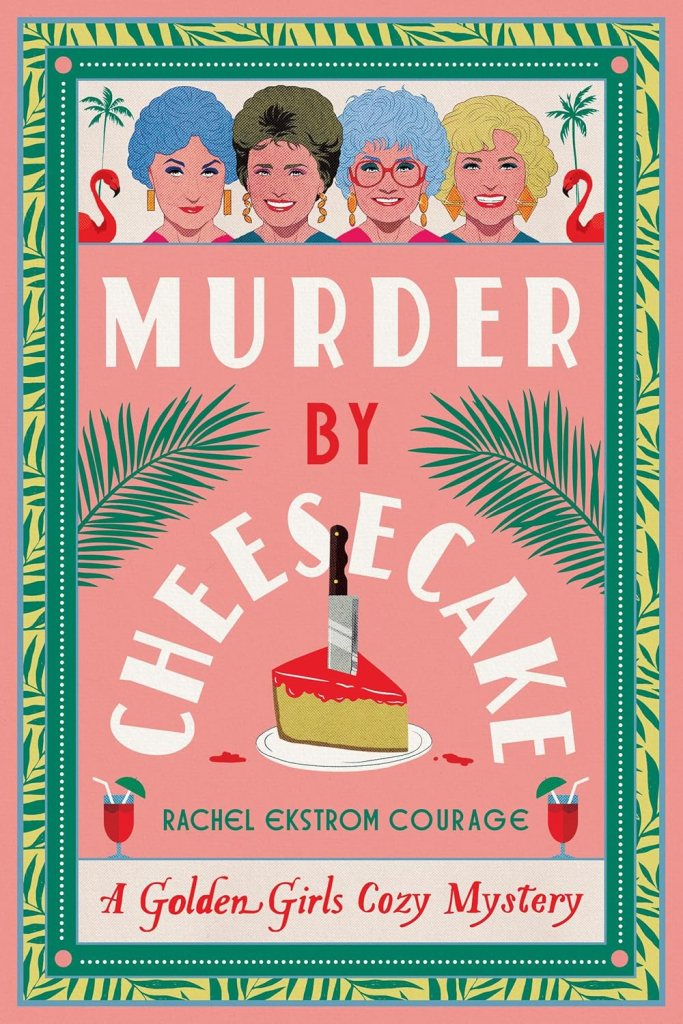
Murder by Cheesecake

The book cover depicts a knife stuck in a slice of cheesecake with a red glaze. The four "Golden Girls" from the famous television show are depicted at the top, with flamingos and palm trees in the surrounding border and two tropical drink glasses at the bottom. Palm fronds surround the title.

By Angie E.

Murder by Cheesecake: a Golden Girls Cozy Mystery by Rachel Ekstrom reads like a “recently unearthed” never-before-seen episode of the beloved sitcom and delivers everything you’d want from a sun-soaked Miami murder romp: sass, suspense, and cheesecake-fueled sleuthing. And It nails the tone, rhythm, and warmth of the original show. 

The book opens with the ladies doing what they do best—confiding in each other over sweets. But when a suspicious death rocks their retirement rhythm, the girls ditch bingo night for crime-solving. Picture Dorothy’s deadpan deduction skills, Rose’s delightfully backward logic, Blanche’s irresistible charm, and Sophia’s spicy zingers, which you can practically hear in Estelle Getty’s voice. 

Dorothy’s date-turned-dead-body is found face-first in dessert, threatening to derail Rose’s cousin’s nuptials and ruin a perfectly good buffet. With every guest a suspect (including Dorothy), the Golden Girls must juggle wedding chaos, Blanche’s romantic escapades, and Sophia’s sass to crack the case. It’s a cozy whodunit frosted with friendship, frolic, and just a hint of fish-themed hors d’oeuvres (St. Olaf, anyone?). 

Every clue, every misstep, and every sugary morsel of cheesecake drips with vintage Golden Girls flair and familiar humor. It’s not just a mystery, it’s a nostalgia-packed escape and a reminder of sitcom television at its best.

Angie is an Instructor & Research Specialist at Central Branch and is a co-facilitator for Reads of Acceptance, HCLS’ first LGBTQ-focused book club. Her ideal day is reading in her cozy armchair, with her cat Henry next to her.

Revisiting Old Favorites

A colorful boxed set of all seven Chronicles of Narnia books.

by Sahana C.

Sometimes mere escapism isn’t enough. Sometimes you need to really dig deep and find a distraction from endless online scrolling, so you can sit down and get back to a book. Sometimes you need to revisit an old – and I mean nostalgic old – favorite.

I’ve been rereading The Chronicles of Narnia by C. S. Lewis for much of February, after not touching them in any way for maybe 15 years. Let me tell you – some of it really does not hold up. I chose to listen to the books this time, chasing, perhaps, some long-lost childhood feeling of being read to and trying to visualize the world as each chapter progressed. It made all the blatant anti-Arab sentiment a lot worse, and it made obvious the problematic writing of an Oxford don existing safely within the walls of the British Empire at her zenith.  

Still, I found myself caught up in the magic, in the sheer scope of the ever-expanding world Lewis built. Even when the metaphors hit you over the head, even when the pacing is uneven, there’s something about these books — some mix of whimsy, sincerity, heart, and adventure — that draws readers back, generation after generation.  

I’ve read the books in publication order before. This time I went for in-world chronology, and it’s apparent that The Magician’s Nephew is not a strong start to the series, as fun as the story is. As a starting point for the world, The Lion, the Witch, and the Wardrobe is the quintessential Narnia book for a reason – the highs and lows are epic, the enemy looms, and the heroes are authentic and full of heart. The backdrop of the second World War is apparent throughout, and the in-world nostalgia lends a sparkle over the whole story. The wonder of Lucy’s first steps into Narnia and the cozy charm of Mr. Tumnus’ home are hard to beat.

Prince Caspian and The Voyage of the Dawn Treader are fun for being some of our first repeats with characters and through-lines within Narnia itself. Despite being one of the worst offenders in terms of blatant Orientalism, The Horse and His Boy will always have a special place in my heart as a pure adventure story, moving from Calormen to Archenland. It’s fun to experience Narnia during the reign of the Pevensies. Much like Dawn Treader, The Silver Chair expands the world around Narnia, giving us Marshwiggles and Bism. It has a heavy atmosphere that leads well into the final, most apocalyptic book, The Last Battle, where finally Narnia ends. Listening to each book (about five hours long each, and available on Libby) does make it obvious that C.S. Lewis had an agenda, but all fairy tales can give us morals if we’re looking.

Do these books still work? Yes and no. There’s plenty to critique, but the sense of wonder remains. If nothing else, rereading them made me realize how much childhood nostalgia smooths over the flaws of beloved books. But maybe that’s what revisiting old favorites is for — seeing them clearly, appreciating what they gave us, and questioning what they left out.  

Sahana is the Communications Strategist at HCLS. They enjoy adding books to their “want to read” list despite having a mountain of books waiting for them already.

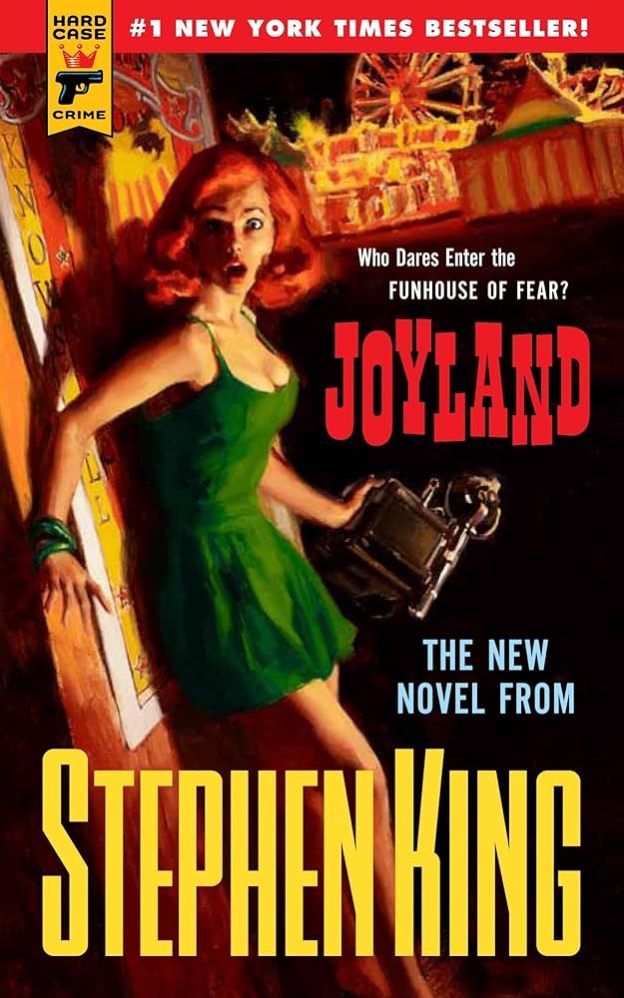
Joyland by Stephen King

In the vein of old pulp covers, a red-haired woman (maybe a doll?) in a short green dress holds an old-fashioned square camera. She looks startled, and there's a carnival above and behind her.

Stephen King is an author whose work, while distinctive in style and subjects, spans many genres. This is proven, in some ways, by the breadth of Stephen King movie adaptations. Many know his work through classic Hollywood horror films like The Shining and Misery, but fewer know that non-horror classics like The Green Mile and The Shawshank Redemption have their origins in his work. Even fewer know of his forays into fantasy (The Dark Tower, The Eyes of the Dragon) or science fiction (The Tommyknockers, Running Man).  

One particular stylistic foray of King’s was his trilogy for Hard Case Crime, a publishing label that focuses on a style of detective novels known as hard-boiled fiction. This extends to the cover art for their releases, which all pay homage to pulpy paperbacks of the 1940s and 50s. King has written three books for the imprint: The Colorado Kid (2005), Joyland (2013), and Later (2021).  

The middle of these, Joyland, less resembles the detective noir fiction of the 40s by Raymond Chandler and Mickey Spillane than it is more akin to King’s classic coming of age story The Body (later adapted into the Hollywood hit Stand by Me). The book’s adult narrator, Devin Jones, recalls his summer job at Joyland carnival in North Carolina from his high school years. He describes it as a popular, dingy, and dubious little fairground that’s ideal for students who want to make a little money on their summer break. Devin, though, seems to be a natural at carny work, rising to the top of the ranks and becoming buddy-buddy with the management. After becoming somewhat of a local hero with a particularly good performance in a blistering hot mascot suit, he elects to take a break from school to work full-time at the carnival, much to the dismay of his parents. 

Again, the tone is far less Maltese Falcon and more sentimental and sweet, a nostalgic ode to the growing pains and new experiences that are expected from a carnival summer job in a beach town. Much of the book provides a nuts-and-bolts look at how carnys work, down to their slang and the way they work the rides, games, booths, and stands. Eventually, an murder mystery emerges (and a connection to one of King’s other novels, as introduced by a fortune teller), but it’s overwhelmingly clear that King’s heart lies elsewhere; It’s one of his sweeter novels, aching with nostalgia and an overwhelming amount of heart. I found it best experienced through its audiobook, a great performance by actor Michael Kelly, best known for his work in the show House of Cards.  

Joyland by Stephen King is available in print and e-book, e-audiobook and book on CD.

Alex Pyryt works in the Customer Service department in the Savage Branch of the Howard County Library System. 

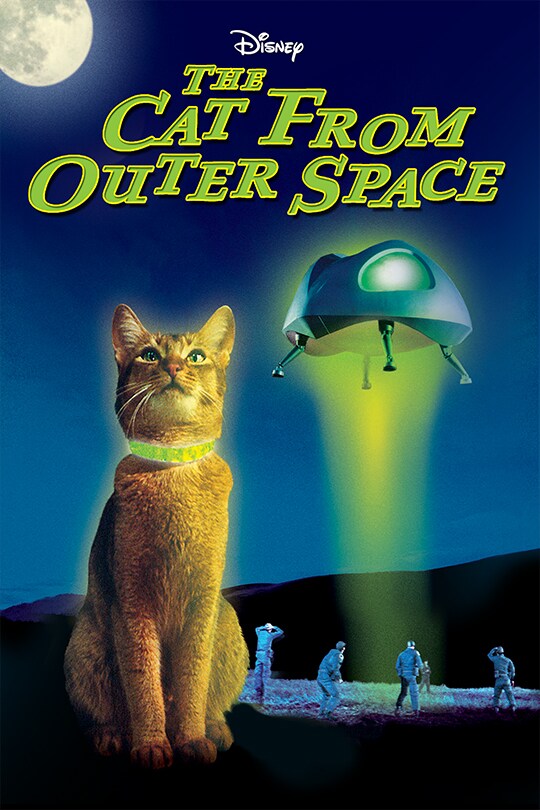
The Cat from Outer Space

An orange marmalade cat sits in the foreground, wearing a glowing green collar, while in the background a spaceship hovers above a group of seemingly confused people.

by Angie E.

I apologize in advance for the puns, but I can’t help but hold a very special place in my heart for a movie I first saw in 1978 with my mom and my sister at the Security Square Mall theater…back when Spencer Gifts and the smell of kettle corn were a big thing and the multiplex was not. Unless my memory is completely fooling me, this movie jump-started my deep love of and for cats. 

The Cat From Outer Space is a purrfectly out-of-this-world cinematic experience that will have you feline fine! This intergalactic tail, I mean, tale, stars a su-purr-naturally talented cat from another galaxy, and it’s a claw-some adventure from start to finish. 

From the moment our furry, four-legged friend crash-lands on Earth, you know you’re in for a wild ride. With a collar that’s basically a space-age Swiss Army knife and a penchant for piloting UFOs, our extraterrestrial feline is the cat’s meow of interstellar travelers. The human cast is equally entertaining, with their over-the-top reactions to the incredible abilities of our whiskered visitor. They’re all in on the secret, but they don’t seem to mind. Who can blame them? I mean, if a cat could fix your car and whip up a gourmet meal with the flick of its tail, you’d keep the secret too! 

The special effects might not be up to today’s standards, but that’s part of the charm. It’s like a time capsule from a bygone era of film-making. You’ll marvel at the “cutting-edge” technology and laugh at the adorable alien. You’ll witness one fur-midable showdown between our feline friend and a military general with a penchant for paw-sitively dramatic speeches. It’s an epic showdown that will have you on the edge of your seat, or should I say, scratching post? 

So, if you’re in the mood for a nostalgic, campy, and uproarious adventure that’s as delightful as a basket of kittens and so silly you’ll find yourself embracing it fully, look no further. The Cat From Outer Space is the cat-astrophic, uh, I mean, fantastic film you’ve been waiting for! Grab your popcorn and get ready to be whisker-ed away into a world of cosmic comedy and kitt-tastic capers! 

Angie is an Instructor & Research Specialist at Central Branch and is a co-facilitator for Reads of Acceptance, HCLS’ first LGBTQ-focused book club. Her ideal day is reading in her cozy armchair, with her cat Henry next to her.