

By Ian L.
October is the season of frights and jump-scares. If you are anything like my friends and I, it means setting aside time to indulge in the shivers, chills, and heart palpitations that come with quality horror.
Over the years, my relationship with horror has evolved in surprising ways. As a child, the game Animal Crossing scared me so badly with a cheeky Easter egg that I ripped the disc from my GameCube and banished it to the farthest corner of my basement closet. Yes, the quaint, whimsical game about quirky animal neighbors and paying off a mortgage once sent me into a panic. As an adult, however, I’ve grown to love horror.
To celebrate the season, I wanted to share a brief list of media that use horror in fascinating and effective ways (as opposed to cliché or tired tropes). This selection of my favorites showcases how horror can transcend traditional scares, confronting us not just with fear but with deeper questions about meaning, control, and survival. Whether it’s through surreal absurdity, cosmic dread, or psychological unraveling, each of these works leaves a mark that lingers long after the story ends. Happy Halloween!
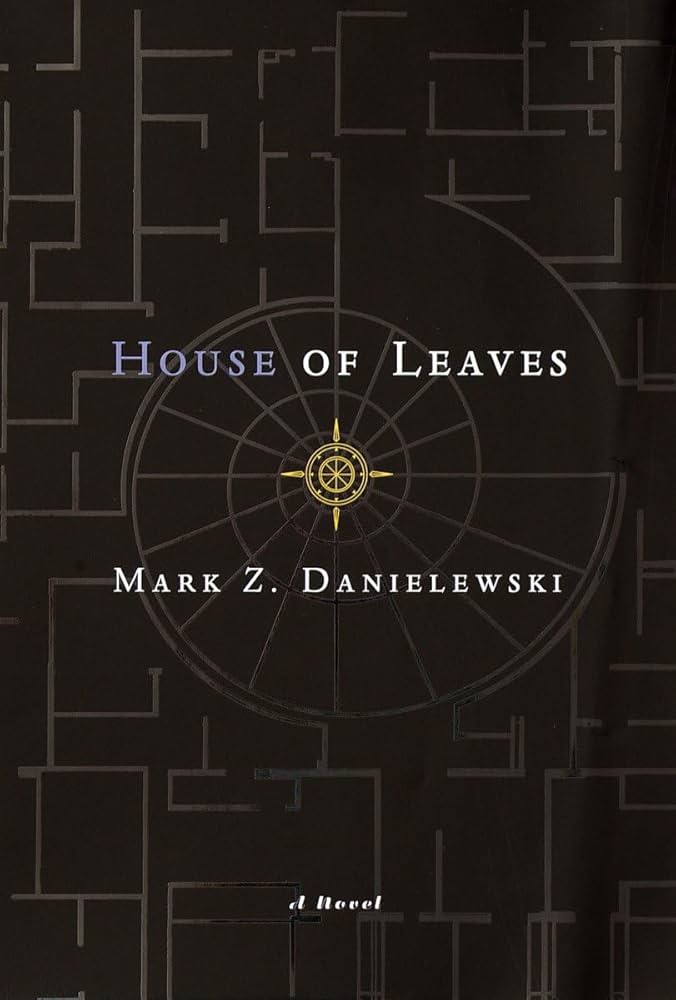
House of Leaves by Mark Z. Danielewski
House of Leaves is one of the best pieces of fiction I have ever read – a wild, shifting text as concerned with the construction of meaning through language and signs as it is with the emotional turbulence of love, security, and existential dread. At its most succinct, House of Leaves is a book about an essay about a movie about a house that does not exist – and that house is also the book itself.
The story begins with Johnny Truant, a troubled, erratic young man living recklessly, burning the candle at both ends. One day, Johnny is invited into the apartment of his recently deceased neighbor, Zampanò. In the disheveled, eerie apartment, he discovers Zampanò’s final work: an academic treatise on a film called The Navidson Record. The catch? Zampanò had been blind for years, and The Navidson Record – a documentary by renowned photographer Will Navidson chronicling his family’s search for peace in a new home – does not seem to exist.
The house on Ash Tree Lane, as depicted in documentary, reveals itself to be bigger on the inside than the outside. As Will and a growing team investigate, the house grows endless, until the gravity of this impossibility threatens to undo everything. As you read, Johnny Turant does too – editing Zampanò’s fragmented manuscript while unraveling under his own troubles, which may all stem from the manuscript itself. Is the house real? Is it a curse? These questions spiral outward, pulling the reader into a labyrinth where certainty slips away leaving behind nothing at all —and perhaps the absence of anything is the most terrifying thing of all.
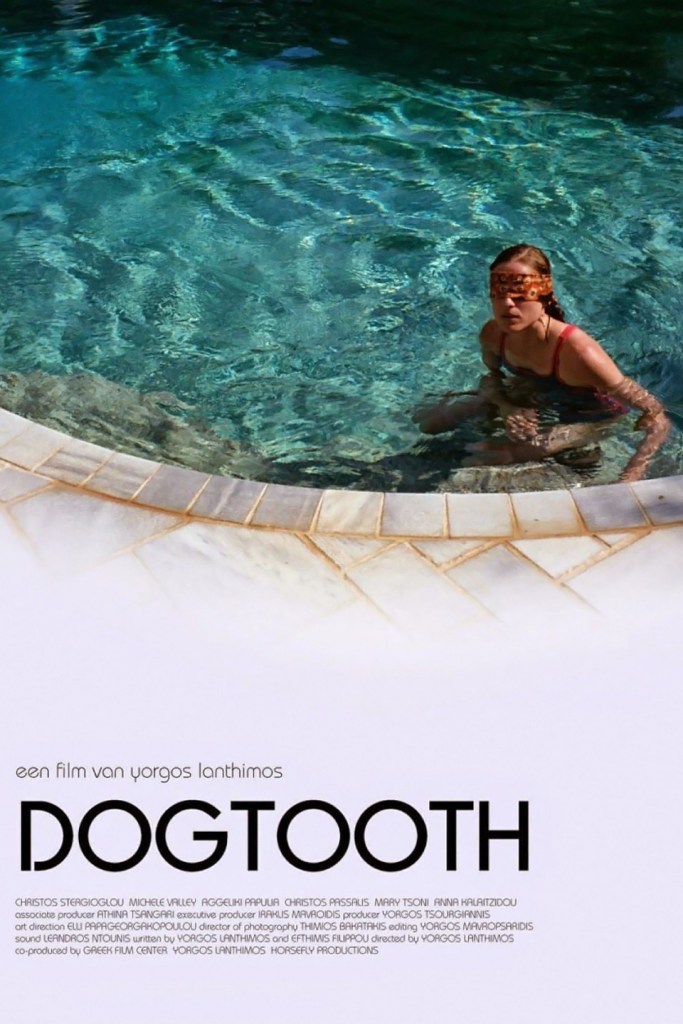
Greek filmmaker Yorgos Lanthimos has enjoyed international acclaim with films such as The Lobster, The Killing of a Sacred Deer, and Poor Things. Lanthimos excels at the strange and unsettling, crafting horror from the surreal and the absurd.
Case in point: Dogtooth centers on a family—a husband, wife, and their adult children—who live in complete isolation within a barricaded compound. The children have never left the confines of their home. They are raised on a manipulative regime of misinformation and control, where their parents deliberately distort language, knowledge, and their reality. Words are redefined to remove meaning. A ‘zombie’ is a small yellow flower. Cats are the most dangerous predator known to man. An adult is someone who has lost their dogtooth and is ready to leave the house. Fear of the outside is instilled with brutal efficiency to maintain compliance.
The result is a deeply unsettling exploration of control, isolation, and the fragility of identity. As the children struggle to conform to this artificial reality, cracks begin to form—revealing the horror that lies in the breakdown of personal autonomy. Dogtooth offers a stark, absurdist look at the consequences of power unchecked, leaving viewers disturbed not by monsters or supernatural forces, but by the cruelty of manipulation and the terrifying plasticity of human perception.

Uzumaki: Spiral Into Horror by Junji Ito
Junji Ito masterfully exposes the stark horror lurking within the mundane. Uzumaki follows the residents of a small Japanese town cursed by spirals—patterns that begin to consume not just the environment, but the minds and bodies of the people.
The father of the protagonist’s boyfriend becomes obsessed with spirals, collecting spiral-shaped objects, bathing in whirlpools, and only eating spiral-shaped noodles. He stares into spiral patterns for hours until even his eyes twist in opposite directions. Eventually, he dies attempting to twist his own body into a spiral. At his funeral, the crematory smoke spirals upward—only to shift and coalesce into a grotesque, grinning image of the man’s face, spiraling downward as if to envelop the town.
And from that moment, everything begins to unravel.
Junji Ito, a master mangaka, explores his work episodically in a sort of slice-of-fear narrative. Each chapter plays with the themes of the work, as it also delivers high quality and terrifying artwork. Uzumaki’s exploration delves into the erupting terror of grappling with forces beyond one’s control or comprehension. The horror of Uzumaki is mindless and indifferent, transforming even ordinary things—snails, ears, and babies—into sources of visceral dread. In Ito’s hands, the spiral becomes the embodiment of an absurd, indifferent universe where nothing is safe from corruption.
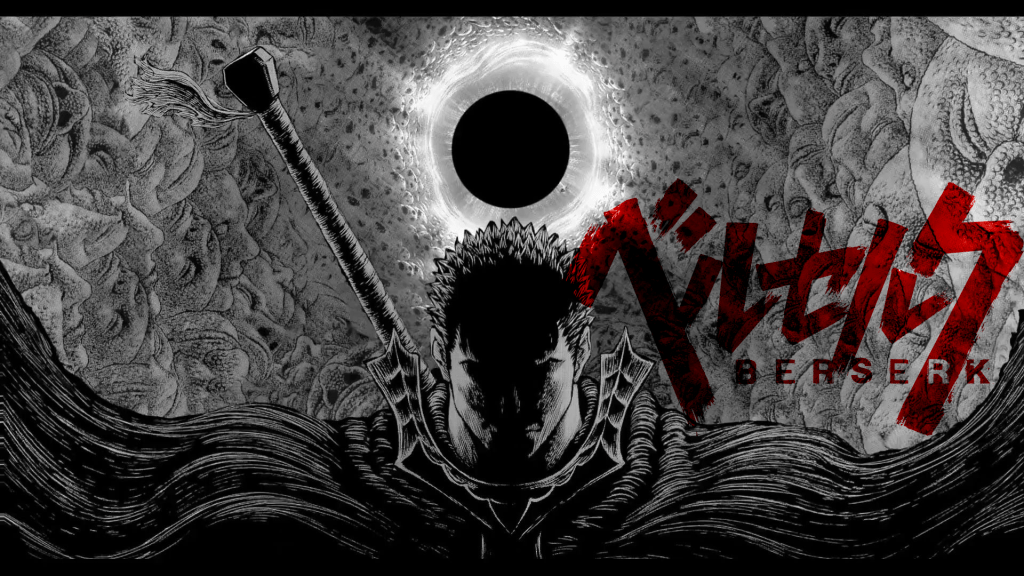
Berserk by Kentaro Miura
Berserk is a masterpiece: an amazing, serious, and beautiful piece of art.
Miura blends dark fantasy, psychological horror, and cosmic dread into one stunning and harrowing tale. Berserk follows Guts, the Black Swordsman and lone mercenary, as he battles through a relentless horde of monsters and demons. What begins as a journey of survival transforms into a profound meditation on trauma, betrayal, and the price of ambition.
The horror of Berserk lies partly in its grotesque monsters and their monstrous actions, but these monsters are rarely fully inhuman. This tension between humanity and power is central to the narrative, exemplified in “The Eclipse”—the most grueling, nightmarish scene in the story. This sequence rivals the most terrifying moments in any medium, where betrayal, loss, and monstrous transformation collide, leaving an unforgettable mark on both the characters and the audience. I do not say this lightly.
Berserk’s resonance and impact go beyond its grotesque (and frankly beautiful) artwork or the epic battles between Guts and the demon apostles. Its characters are written with profound psychological depth. Guts may present as a stoic, muscle-bound warrior, dismissing his problems with grim resolve, but that could not be further from the truth. His struggle is both external—hunted by the evil Godhand and their legion of apostles—and internal, as he wrestles daily with despair and rage. These emotions stem from what he and his comrades endured at the hands of someone they once trusted as their leader.
Berserk is not just horror for the sake of horror—it is tragic, beautiful, and unforgettable. It reminds us that even in the face of overwhelming darkness, the struggle to endure can be its own kind of victory.
Berserk contains highly intense themes and disturbing scenes that may be difficult for many readers. If you’re considering reading it, I strongly recommend looking into its content beforehand to ensure you’re comfortable with the material. Berserk offers incredible depth and artistry, but it is not a story to approach lightly—you should know what you’re getting into.
Ian Lyness Fernandez is an instructor and research specialist at East Columbia Branch. Although he first engaged with most of these works in high school, he wants to emphasize that these recommendations are intended for adults—adults who want to be horrified, to boot. Dead dove: do not eat, and so on.
 CHAPTER CHATS