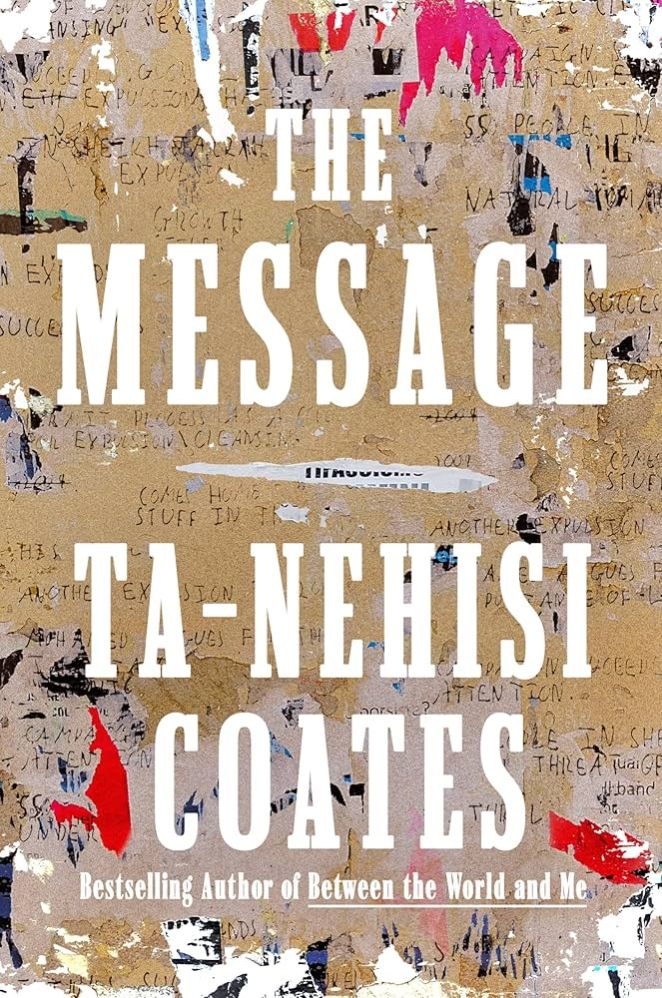
The Message by Ta-Nehisi Coates

In beige, with flashes of white and red, the background image looks like a collage or a wall where messages have been posted and torn down repeatedly.

by Ben H.

Though we do not wholly believe it yet, the interior life is a real life, and the intangible dreams of people have a tangible effect on the world.

James Baldwin 

Ta-Nehisi Coates opens The Message with the above quote, and it’s a great frame for his book. Coates, the esteemed public intellectual from Baltimore and author of many excellent works such as Between the World and Me and We Were Eight Years in Power, explores three places in The Message: Senegal, South Carolina, and Palestine. Returning to the Baldwin quote for context enriched and expanded my understanding of the book.

Coates first takes us to Senegal, “I had indeed come home, and ghosts had come back with me.” He processes his own history, constantly referencing his parents, and the history of slavery and the slave trade. Coates intermingles the unbearably heavy and the humorous in the same way those things blur together in real life. He visits the “Door of No Return” and eats a delicious meal by the ocean. He stays at a luxurious hotel and thinks about, “blood in the bricks and ghosts in the attic.” He regrets the fancy hotel. The juxtaposition of heavy and humorous stretches back to his childhood and the “inheritance of the mass rape that shadows all those DNA jokes” he and his friends would make. Though we come from different backgrounds, I find Coates constantly relatable. 

After Senegal, he moves us to South Carolina. He’s flying to South Carolina to support Mary Wood. Wood, a high school English teacher, assigned Between the World and Me to her class but was ordered to stop teaching the book. What is censorship and the uproar about Critical Race Theory other than an attempt to control the intangible inner life of people to keep it from having a tangible effect on the world? Coates writes, “the arts tell us what is possible and what is not, because, among other things, they tell us who is human and who is not.” As a librarian, this chapter dealing with representation in the arts, censorship, and education felt written for me. 

After South Carolina, he visits East Jerusalem and the West Bank. Coates opens in Yad Vashem with the Book of Names. The Book of Names is a project to collect the names of all the Jews murdered in the Holocaust and display them. It’s overwhelming. Coates considers genocides and how the efforts to remember them, memorialize them, or recognize the horror of them can result in a second tragedy where the murdered men, women, and children are “reduced to a gruel of misery.” Coates is devastated by the holocaust memorial and crushed by the suffering of Palestinians. 

Coates sees Palestinians living, at best, in a Jim Crow state. He can’t unsee this connection to his own country, life, and history. In the Jim Crow South, there was a privileged group with full rights and a disadvantaged group with partial rights. In East Jerusalem and the West Bank, he sees a privileged group with full rights and a disadvantaged group with partial rights. He drives on roads with his Israeli guides that he can’t drive on with his Palestinian guides. As he travels with Palestinians, he feels the “glare of racism,” and he sees soldiers with the “sun glinting off their shades like Georgia sheriffs.” His narrative is compelling; his argument is strong. I think his assessment of the situation is accurate.

What ties Coates’s journeys together? What connects Senegal and South Carolina and the West Bank? Let’s return to Baldwin’s quote and assume that Coates included it for a reason. All three situations reflect the tangible effect of the interior life of people. The interior lives of his mother and father had a tangible effect on him as a child and he expands on this in Senegal, constantly wondering what his father was thinking or how he thought about things. The high school in South Carolina wanted to ban his book for fear of the tangible effects that would result from the change in interior lives. The heartbreaking suffering and misery in Gaza is the horrendous tangible effect of generations of interior lives.

I appreciate Coates’ approach. He’s not a sophist. This isn’t an empty academic argument or intellectual exercise. He calls his books his children. He puts his whole self into his writing. His whole being is in his work. If you’ve seen his interviews or headlines about his book, but haven’t had time to read it, I think it’s worth the time.

Ben loves his job at HCLS Project Literacy. When he’s not at work, you might find him walking around Lake Kittamaqundi (on his break), playing pretend with his daughter Annika, reading, peeling garlic,  weeding his tiny lawn (Canada Thistle, leave me be!), eating chocolate, or listening to baseball games on the radio.
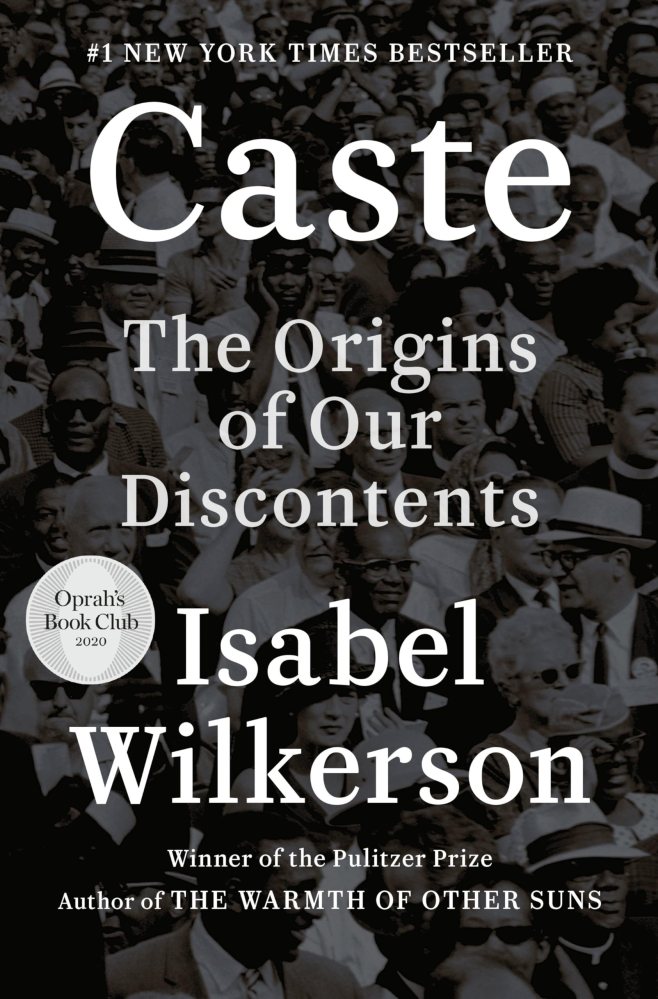
Caste and The Warmth of Other Suns by Isabel Wilkerson

Isabel Wilkerson’s indelible books The Warmth of Other Suns and Caste: The Origins of Our Discontent have, both of them, won awards and have been properly lauded; they don’t need to be touted by me but tout them I shall. They are meticulously researched, precisely written, and pack a devastating emotional punch.  

I have a long commute to work (shout out to my 795 and 695 buds), and I need to fill that time with something. I’m obdurately old school and prefer CDs and radio to podcasts. When NPR is too much (Esther Ciammachilli is never too much) and the Orioles aren’t playing, I check out nonfiction audiobooks from the library. I listened to The Warmth of Other Suns a few years ago and Caste this year; I learned so much from both. The sheer number of primary documents cited is overwhelming. The personal narratives are enlightening and heartbreaking.  

Side note: I’d listen to Robin Miles read a Comcast contract. She narrates both books and she’s a national treasure. I feel like she should win an Oscar or a Grammy – or something. 

The Warmth of Other Suns tells the story of the Great Migration, the movement of millions of African Americans from the South to more Northerly states, through the lives of three people who made the journey. It is intense. I’ve been known to cry in the car, and there were tears.  

Caste is an incredibly persuasive comparison of the caste systems in Nazi Germany, India, and the United States. Wilkerson’s central conceit is that the caste system in America is, in many ways, the most oppressive or violent system. She writes, “Jews in Nazi-controlled Europe, African-Americans in the antebellum and Jim Crow South, and Dalits in India were all at the mercy of people who had been fed a diet of contempt and hate for them” (151). The results of a diet of hate and contempt are unfortunately predictable. Wilkerson explores the grotesque, hateful, and banal violence of the caste system in depth. She writes, “African-Americans were mutilated and hanged from poplars and sycamores and burned at the courthouse square, a lynching ever three or four days in the first four decades of the twentieth century” (155). I won’t focus on the physical violence in this review, but it is all here, and it is terrible.  

Wilkerson includes illuminating episodes from her own life along with historical comparisons. While traveling for the book and for work (at the New York Times), Wilkerson is mistreated by academics, flight attendants, businessmen, and small-business owners, as well as being unjustly accosted by the DEA, all because of her position in America’s caste system. Based on her personal experience, she writes, “this was the thievery of caste, stealing the time and psychic resources of the marginalized, draining energy in an already uphill competition” (223). Outside of the obvious physical violence wrought by the caste system, Wilkerson highlights the daily mental and emotional violence, and that seems really important. 

I’ll end this review with a few more words from Wilkerson on the more subtle ways the caste system continues to do harm. She bluntly writes, “The friction of caste is killing people” and “Societal inequity is killing people” (304). This is not someone who writes for dramatic effect without evidence to support her claims. To back up her claims, she cites a study by a Harvard scientist, “’High levels of everyday discrimination contribute to narrowing the arteries over time,’ said the Harvard social scientist David R. Williams. ‘High levels of discrimination lead to higher levels of inflammation, a marker of heart disease” (306). This struck me. This internal manifestation of external discrimination is horrendous.

The American caste system is real and it is, overtly and insidiously, violent. The study goes on to find that, “People who face discrimination…often build up a layer of unhealthy fat, known as visceral fat, surrounding vital organs, as opposed to subcutaneous fat, just under the skin. It is this visceral fat that raises the risk of diabetes and cardiovascular disease and leads to premature death” (307). There are dozens of powerful and insightful passages I could have highlighted, but I wanted to highlight the above passages because they so powerfully illustrate how the American caste system continues to destroy black and brown bodies from without and within.

Caste: The Origins of Our Discontent by Isabel Wilkerson is available in print, large print, e-book, e-audiobook and audiobook on CD.

The Warmth of Other Suns: The Epic Story of America’s Great Migration by Isabel Wilkerson is available in print, e-book, audiobook on CD, and as a Playaway.

Ben works at Project Literacy, Howard County Library’s adult basic education initiative, based at HCLS Central Branch. He loves reading, writing, walking, and talking (all the basics).

Equity Resource Collection and New Brave Stories Exhibit

by Ash B. and Christie L.

Enrich your summer at the Equity Resource Center! Visit for the books, movies, music – and exhibits. The space upstairs at Central Branch purposefully has plenty of room for exhibits that focus on equity issues. If you missed our previous one, Undesign the Redline, you can still view a video tour on YouTube. Make time to see the new show and attend the related classes:

BRAVE STORIES EXHIBIT 

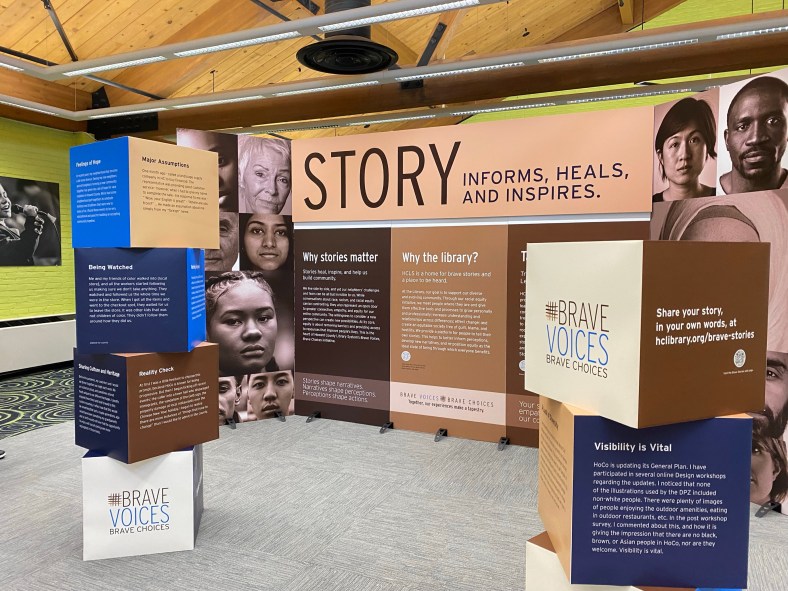
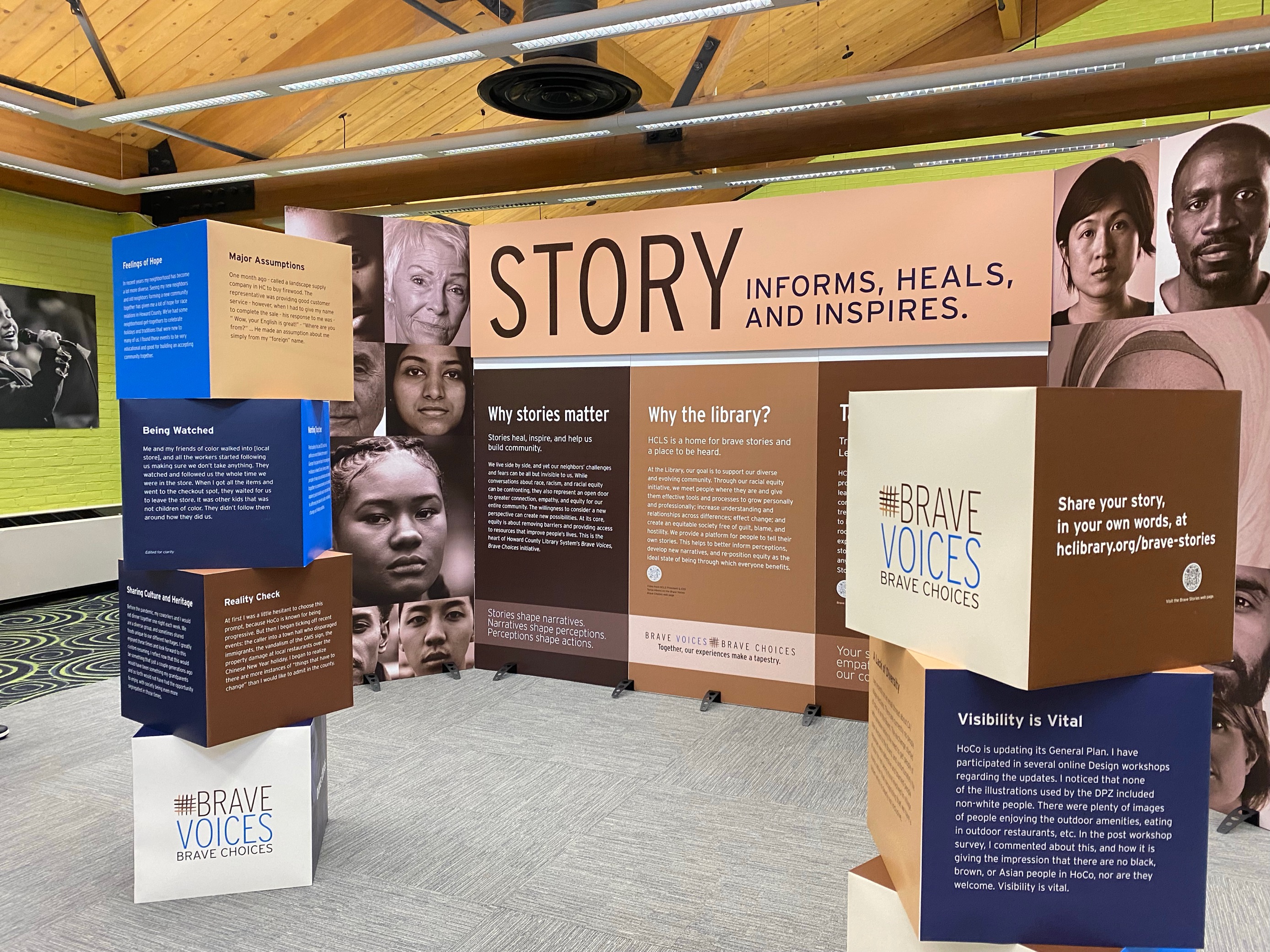
View of Brave Voices display at Central Branch, header read Story informs, heals, and ins

Stories shape narratives. Narratives shape perceptions. Perceptions shape actions. 

Whether they are told around a campfire, around a kitchen table, or online, stories have the power to move people to tears of sadness or tears of joy and to action. At Howard County Library System, we are a home for brave stories and a place to be heard. We provide a platform for people to tell their stories. This helps to better inform perceptions, develop new narratives, and re-position equity as the ideal state of being from which everyone benefits.  

HCLS is a safe space for racial equity work, but real progress begins with you. You have the power to lead, share, and connect. As we move forward as a community in Howard County, we have the chance to extend equitable treatment to those around us. How are you helping to improve life in Howard County?  

Start by making room for new stories. Visit the new Brave Stories exhibit in the Equity Resource Center at the Central Branch. Read about your neighbors’ experiences. Take the time to listen to their Brave Stories—and share your own. 

We invite you to respond to the exhibit in a series of art workshops, each using a different material, with facilitators from Notre Dame of Maryland University’s Art Therapy Department. Attend one or both workshops: Tuesday, Jul 26 and Thursday, Aug 4.

We also invite you to share your own stories in a facilitated circle. Bring your experiences and insights, listening ears, and an open mind and heart to one or more sessions: Wednesday, Aug 3; Saturday, Aug 13, and Saturday, Aug 20.

EQUITY RESOURCE COLLECTION

If you haven’t already read it, you might want to check out my previous post about the Equity Resource Collection.

Adult Fiction 

A collage of adult novels found in the Equity Resource Collection.

The second floor at Central Branch houses the adult fiction of the Equity Resource Collection, along with its adult nonfiction, DVDs, and CDs. More than 900+ adult fiction titles span all genres, including classics, bestsellers, contemporary fiction, historical fiction, romance, mystery, fantasy, and science fiction. 

Like other areas of the Equity Resource Collection, some of these titles specifically center equity issues such as racism, whereas others feature diverse characters and authors. Whatever genre or style of novel you enjoy, there is a great read for you here. One of my favorites is Open Water by Caleb Azumah Nelson, which I actually reviewed in-depth in a previous blog post. If you like poetic and tender novels, this is a must-read. 

Adult Nonfiction 

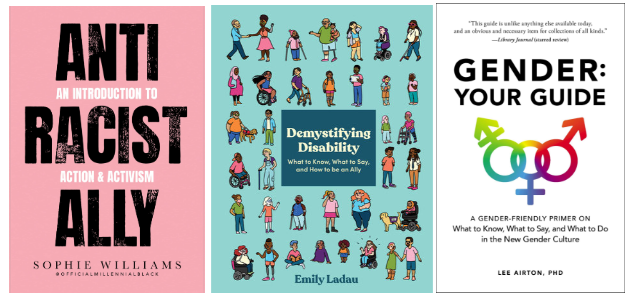
Three race and gender titles found in the Equity Resource Collection: Anti-Racist Ally, Demystifying Disability, and Gender: Your Guide

As excited as I am about fiction, I’m even more interested in the nonfiction section – partially because of how many of these titles are exclusive to the Equity Resource Collection. While these items can be requested for pickup at any HCLS branch, browsing in person offers the opportunity to find an amazing book more by chance. 

When you head into the Equity Resource Center, the nonfiction collection rests to the right. You can find introductory guides to equity issues, history books, academic texts, memoirs and biographies, art books, cookbooks, and more.  

For folks who are beginning to explore these topics, I recommend: 

For readers who are ready to delve deeper, some terrific title: 

Audio-Visual 

A collage of movies found in the Equity Resource Collection.

Are you more of a film lover than a reader? Well, no worries. The ERC has you covered, too.

From indie films to big-budget productions, you have a variety of choices from multicultural movies and movies that center Black history. While most titles are for adults and teens, there are kid-friendly favorites such as Moana and Coco as well. 

If you’re interested in TV series or nonfiction DVDs, look for the shelving close to adult nonfiction. With titles from distributors such as HBO and PBS, including Stonewall Uprising and The Central Park Five, this section is worth checking out if you appreciate a good documentary. 

For the music lover, the ERC includes CDs, shelved next to the nonfiction DVDs, from artists past and present, across genres. For the pop fan, check out Sawayama by Rina Sawayama, a contemporary singer-songwriter who is Japanese-British and bisexual.

If you like rock, blues, soul, or gospel, a must-listen is Shout Sister Shout by Sister Rosetta Tharpe, “The Godmother of Rock’N’Roll,” who pioneered music in the 30s, 40s and 50s by combining electric guitar with spiritual lyrics – providing the foundations for subsequent artists like Chuck Berry and Elvis Presley. 

Whether you’re a fan of Latin music or someone in your family still can’t get enough of the Encanto soundtrack, check out Cumbiana by Carlos Vives, the beloved Colombian singer-songwriter whose song “Colombia, Mi Encanto” plays at the end of the 2021 Disney hit movie. 

Think our collection is missing an important title? Go to hclibrary.org/contact-us/ and “Make a purchase suggestion” – after you submit the online form, it will be reviewed by one of our materials selectors as a potential addition.  

Ash is an Instructor & Research Specialist at Central Branch and is a co-facilitator for Reads of Acceptance, HCLS’ first LGBTQ-focused book club. Their favorite place to read is spread out on a blanket under the shade of the tree. 

Christie is the Director of Communication and Partnerships for Howard County Library System. She loves walking through the network of pathways in Columbia, sitting on the beach, and cheering for the Baltimore Orioles and Texas Aggies football team.

Another Country

The Penguin Classic cover features red cut-outs of figures layered over a neutral background.
Penguin Classic edition

by Ben H.

“Beneath them Rufus walked, one of the fallen – for the weight of this city was murderous” 

James Baldwin

Another Country is a novel that’s more like a play or a poem. Short descriptions set scenes like flashes of light, and dialogue propels us through the story. James Baldwin is brilliant and empathetic; his depiction of humanity is beautiful. Passages that make you weep are followed immediately by passages that make you laugh. Dark episodes in the cold rain follow erotic passages in warm apartments. Baldwin’s relentless prose attack zigs and zags at the reader, and he never lets up. He pulls the threads of the tangled ball of relationships at the center of the novel tighter and tighter. Another Country is addictive and almost unbearably tense. 

Baldwin explores race, gender, sexuality, religion, art, and life in America in the 1950s through the interactions of a group of memorable characters. First, we meet Rufus Scott, a black jazz drummer, stumbling out of a movie theater in New York, disheveled and desperate. His experience as a black man in America is really the central pillar of the story. His wretched love/hate relationship with Leona, a white woman from the south, ruins both of their lives and sets a grim tone for a serious book. Vivaldo, a white man, is arguably the main character. Vivaldo is a struggling writer and Rufus’ best friend. Vivaldo is everywhere. He felt to me like a stand-in for James Baldwin himself.

France offers the reader a brief respite from the grimness of New York. We first meet Eric and his boyfriend Yves on a French beach. The passages set abroad are lovely and warm, while the scenes in New York are often brutal and freezing or unforgiving and sizzling. Baldwin’s depiction of France juxtaposed with that of America neatly illustrates the way Baldwin, a gay black man, felt in France versus the way he felt in the United States.

The many protagonists provide a narrative richness I really loved. Besides Rufus and Vivaldo, Cass (maybe my favorite character), Ida (Rufus’s sister and an incredible character), and Eric (in his own way the heartbeat of the book) are the other main players in this story of relationships and race. The New York Times compared Another Country to T.S. Eliot’s The Waste Land, and I think it’s a great comparison. Baldwin also brings the furious pace of a sax solo to his poetic novel. If you want to know what it’s like to read Another Country, listen to “Countdown” off of John Coltrane’s Giant Steps.

Another Country really does have a momentous heft to it. Baldwin, like an alchemical wordsmith, achieved something magical with everyday material. On the surface, it’s just the story of a few overlapping relationships during the 50s. But by the time you turn the last page, it feels like you’re holding something vital in your hands. I really do believe that books like this can change the way people view and treat one another.

If you’ve already read Another Country, visit HCLS and see if we have a Baldwin that you haven’t yet read (or if we can recommend something similar). If you haven’t read Another Country, you have money in the bank. You can’t go wrong with Mr. Baldwin.

Ben Hamilton works at Project Literacy, Howard County Library’s adult basic education initiative, based at HCLS Central Branch. He loves reading, writing, walking, and talking (all the basics).

Good Talk: A Memoir in Conversations by Mira Jacob

The picture shows author Mira Jacob wearing a denim shirt against a purple background, next to a copy of the book, which shows the title and author in block letters of turquoise and orange with graphics of people contained in each letter.

Review by Claudia J.

I glanced over at my pile of “to be read” books and picked up Good Talk: A Memoir in Conversations by Mira Jacob. I checked the book out long before the coronavirus pandemic kept us in and images of systemic racism made their way out. In a time when I was feeling particularly hopeless, with all of the events toppling onto each other, Good Talk provided a much needed respite from the day-to-day.

Told from the perspective of Jacob herself in discussion with her young son, she answers the many questions he has about race, his culture, and his family. In doing so, she bares the nation’s truth: that we as Americans are imperfect and have a lot of work to do. 

Thank you, Mira. Thank you for your beautiful, vulnerable, and at times uncomfortable account of your life as an imperfect American, as an Indian woman, but also as a human existing in our incredibly fallible nation. How were you able to make me feel so many emotions at simultaneous levels? How did you speak so honestly about colorism and pages later talk about the complicated relationship between Black and Brown people? How did you encompass the pain of watching a sibling, whom of course you’re happy for, find true love, but also just a short section away, haunt me with your memories of a paper city?

The illustrative design, the words, the soft voice I heard as I read, said, “It’s okay, I know this struggle too.” Reading this felt like the meditation we all need right now. Good Talk is not only one of my favorite graphic novels of all time, but it is one of the books that should be required reading. Mira, thank you again.

Available in print at HCLS as well as in ebook and eaudio through OverDrive/Libby.

Claudia J. has worked for Howard County Library System for a little over four years. She enjoys writing on rainy days and drinking iced coffee on sunny days.