Community Plant Swap

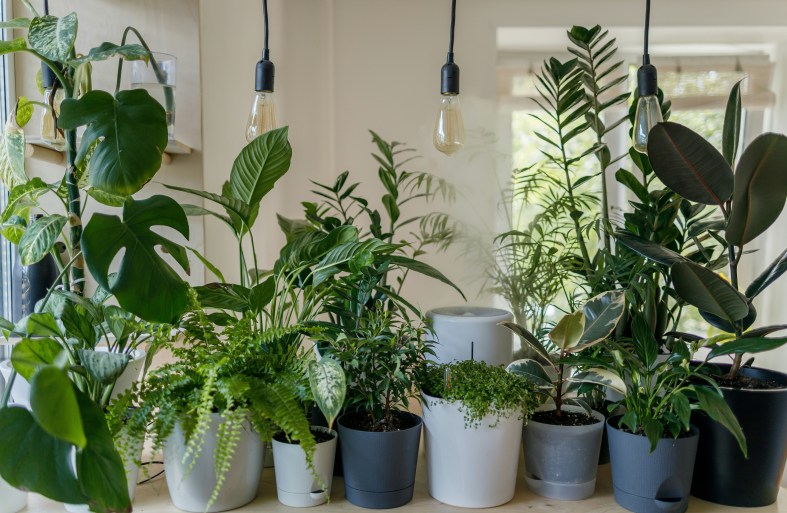
The photograph shows an array of green houseplants in white, gray, and black pots, underneath three suspended light fixtures with Edison bulbs. They are placed on a wooden table in a white room and there is a window with light coming through in the background.
Photo by vadim kaipov on Unsplash.

Calling all plant lovers and the plant-curious! Join us for our (free!) first plant swap at HCLS Miller Branch on Saturday, July 13 from 2-4 pm. In addition to spaces to give, take, and trade live plants, we’ll also have informational stations about how to propagate common houseplants, how to set your plants up for success, and more! The Community Plant Swap is a great opportunity to meet, chat with, and learn from other community members who propagate and grow plants in their households, and it’s also an eco-friendly way to minimize plant waste.

Have an abundance of healthy seedlings, cuttings, bare-root or potted plants? Bring them to the Take-a-Plant area so they can find a new home. Attendees also have the option to bring suboptimal-looking plants to the Plant Rehab station.

Want to expand your plant collection without breaking the bank? Bring a box or other container(s) to gather and take home new plant friends.

Interested in negotiating a direct trade with fellow plant enthusiasts? Head to the Trade-a-Plant area for 1-on-1 plant swaps, perfect for rare plant collectors.

Interested in gardening tools? Weather permitting, the Enchanted Garden will have a “Tool Shed” station where attendees can give and take tools and other supplies, with a volunteer available to explain different purposes and techniques for using tools.

Items we WILL accept: 

  • Potted plants 
  • Bare root plants 
  • Plant cuttings or “babies”  
  • Mid-season – late-season seedlings/starts for vegetable gardens 
  • Gardening tools 
  • Pots, vases, and containers 
  • Small, sealed bags of potting soil, coco coir, vermiculite, etc. (ex. 8 qt bag of all-purpose potting mix)
  • Plant food/fertilizer 
  • Bulbs 
  • Seeds to donate to our new Seed Library (coming soon)!

We will NOT accept: 

This event is drop-in and first-come, first-served. Register here if you’d like to receive event updates and reminders.
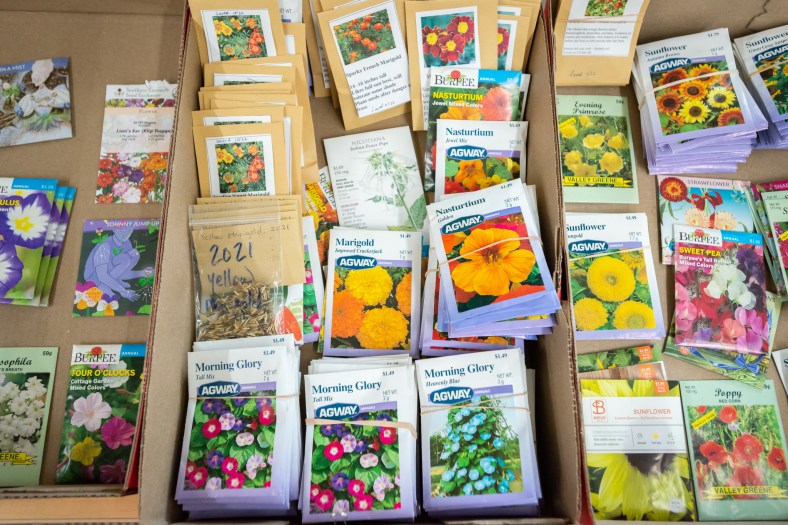
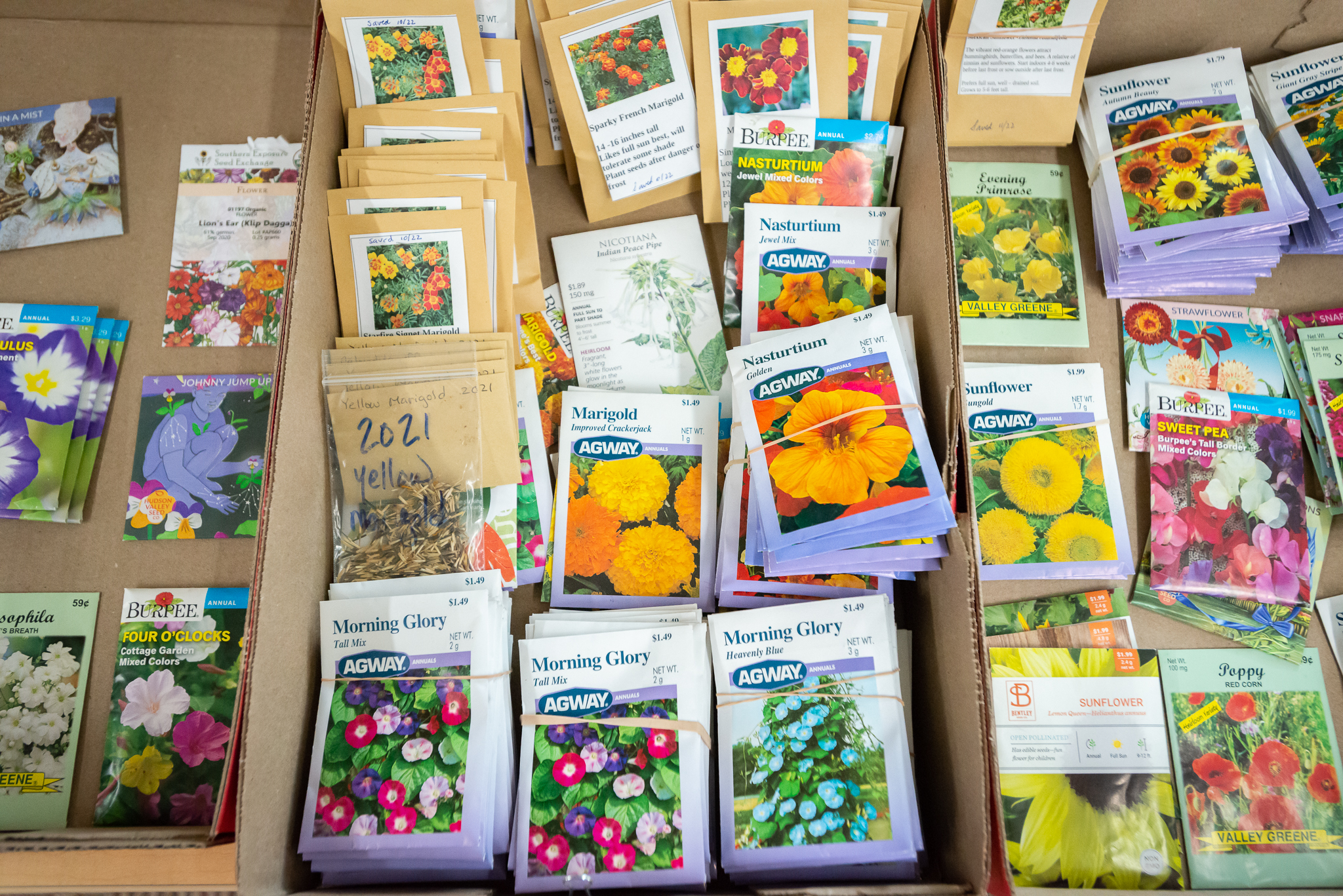
The 2nd Annual Howard County Seed Share event is in the books! 

Howard County Seed Share held at HCLS Miller Branch.

by Erica C.

The outdoor temperature of a chilling 25 degrees Fahrenheit did not stop us from gathering at the Miller Branch on Saturday afternoon to plan, learn, and discuss all things gardening. We distributed thousands of free seed packets collected from local gardeners around the county and seeds donated from companies like Baker Creek, Southern Exposure, and Seed Savers Exchange. The offerings included vegetables (from asparagus to zucchini), herbs, perennials (with a focus on native varieties), and annuals.  

Customers look at seed packets laid out on long tables during the seed swap.

There were demonstrations for participants to learn how to start flower and vegetable seeds in milk jugs or compost in their own backyards, and tables to learn more about local greening organizations. Over 300 attendees ranged from budding gardeners and novices to Master Gardeners who have been growing for over 20 years.

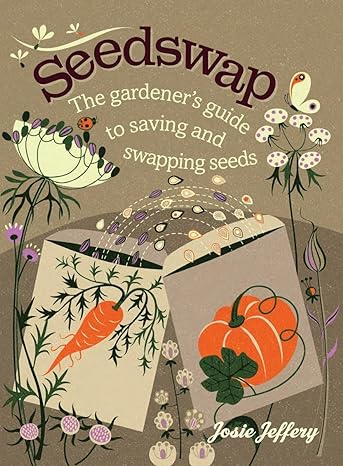
The book cover illustrates two cardboard containers of seeds, one decorated with a carrot and one decorated with a pumpkin, with seeds flying between them whimsically, as if the containers are "swapping" their seeds. Surrounding them are several flowers in shades of white, purple, and green, an orange ladybug resting on one of the flowers, and an orange and white butterfly on another flower.

Seed sharing and seed starting are excellent activities for gardeners to work on during the cold winter months in Maryland. When snow is still on the ground and temperatures are icy, germinating seeds under a grow light is a fun, rewarding activity for adults and children alike. If you are interested in these topics, HCLS has a wide array of resources in our collection for you to choose from:

Thank you to the many partners, volunteers, and participants who made this event a huge success. We can’t wait to see you next year.

Erica C. is in her dream role as the Enchanted Garden Instructor at the Miller Library. When she’s not tending to the garden, you can find her cycling along the C & O Canal, experimenting with new recipes from around the world, or curled up with her coffee and a good read.

Let’s Share Seeds

Picture of a brightly painted fence and marigolds in a lushly green garden, with a painted sign that reads "Edible Landscape" and a smaller one that reads, "A garden of vegetables, flowers, and herbs."

by Ann H.

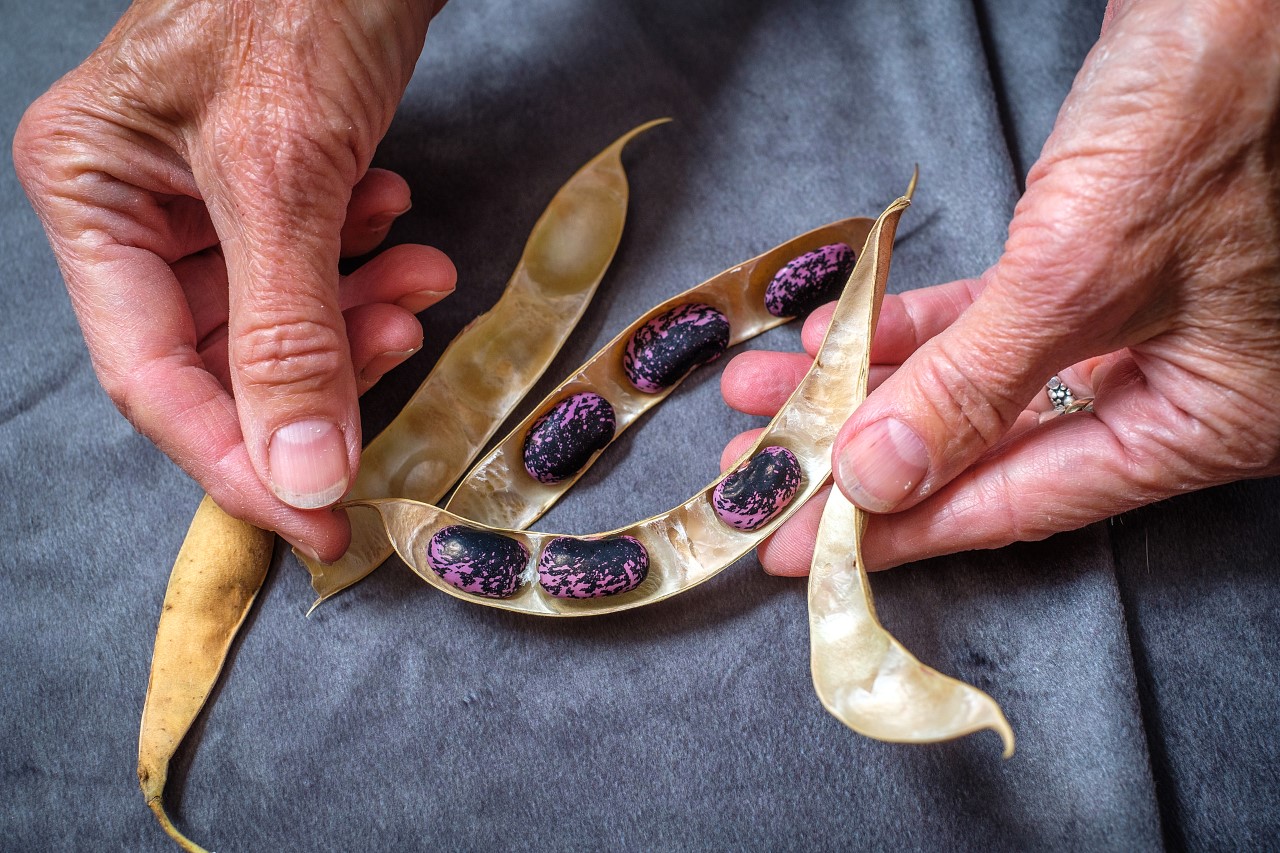
Seeds have been saved and shared since people began growing food. It’s a practice valued by farmers and gardeners worldwide. Every fall, as the weather turns crisp and my plants start to fade and dry, I check for seeds before too many birds have beat me to it. Sunflowers, zinnias, marigolds, and beans are some of my favorites to collect. Inside one dried flower head are enough seeds to create a whole garden. Scarlett runner beans that never made it to the plate were left to dry on the vine. Now that they’re crisp and brown, I crack them open and behold beans posing as purple gems eager for next year’s garden.  

Photo shows a woman's hands displaying an opened dried pod full of seeds.

You can reap the bounty of saved seeds at the Howard County Seed Share on January 21. At the Howard County Seed Share participants will be surrounded by vegetable, herb, annual and perennial seeds. If you have seeds, bring seeds. If you did not get to save any seeds or are new to gardening, join us to learn what other gardeners have been growing and take home some seeds. 

Seed exchanges are a terrific opportunity to acquire new varieties of seeds, save money, and reduce seed waste. Sharing seeds is a practical solution to today’s rising cost of living. When gardeners share seeds, they save money while acquiring new varieties of ornamentals, vegetables, fruits, and herbs. Your bounty becomes another gardener’s gift and vice-versa. Seed sharing is a wonderful way to be more self-sufficient and experimental in your garden.  

Sharing seeds is a goodwill gesture that builds community and spreads cultural traditions. When seeds are passed from gardener to gardener, we nurture each other and our diverse cultural practices. Favorite seeds and their stories get a chance to take root and flourish. A seed swap is an ideal setting to learn from one another. Come gather, learn, and share at the Howard County Seed Share. 

January 21 from 2-4 pm at HCLS Miller Branch. Registration begins December 21.

Click here to register and for event details, resources, and tips for saving seeds. 

In partnership with: University of Maryland Extension – Master Gardeners, Howard County Bureau of Environmental Services, Community Ecology Institute @ Freetown Farm, Watershed Stewards Academy of Howard County, Yards Alive! 

Ann is a Master Gardener and the Enchanted Garden Coordinator at the HCLS, where she has worked for HCLS for more than eight years. You can find her smiling in the garden and sharing her passion for plants, nature, and our community.

Winter Gardening Ideas

By Ann H.

The photograph depicts a walled winter garden with a path and a greenhouse, with morning sunlight glistening across the frost on the plants.
Photo by Annie Spratt on Unsplash.

To every thing there is a season. This is especially true for gardeners. Winter may bring a drop in temperatures and light, but surely not idleness for the devoted gardener. Winter is the season to prepare, ponder, and plan!

Prepare your tools for the next season by inspecting them for cleanliness and sharpness. Garden tools get dirty from use and pose risks to your plants by spreading disease. Rust accumulates from moist conditions and sharp edges dull with use. I start by removing any dirt with a stiff wire brush. Then, I use steel wool to rub off any rust. Next, I apply rubbing alcohol with a rag to disinfect. Lastly, I apply a light coat of oil to the metal parts to prevent rust and to keep moving parts working smoothly. I prefer to use a plant-based oil such as linseed oil. Tools used for pruning and cutting should be inspected for sharpness. A dull tool increases the possibility of injury to you and your plants. A few hardware stores in our local community offer tool sharpening services at reasonable prices.

Winter invites pondering the possibilities of spring. My mood soars when I look through seed catalogs and garden books. We can transform any location with a few seeds or humble seedlings. I’ve switched to online seed catalogs and tend to favor local companies such as Meyer Seed Company of Baltimore, Southern Exposure Seed Exchange (VA), and Burpee Seeds and Plants (PA). When searching for hard to find or heirloom seed varieties I turn to Seed Savers Exchange, Hudson Valley Seed Company, and Renee’s Garden Seeds. Or, cut down on shipping altogether and head to Clarks Ace Hardware or Southern States Home and Garden Service. They expect their seed selections to arrive by the beginning of February. If you’re starting seeds indoors this winter, be sure to check out the University of MD Extension – Home and Garden Information website for a short tutorial.

Garden-themed books keep my creative juices flowing. Lately, I’ve been pondering ways to grow more food in the Enchanted Garden and still provide plenty of habitat for pollinators. Edible landscaping has been around for decades, but is gaining attention as many people look for ways to grow their own food as well as flowers. Author and gardener Rosalind Creasy has written two trusted books to give you all the detail you need to get started growing a combination of flowers, vegetables, and herbs: Edible Landscaping and The Edible Herb Garden (also available as a ebook through CloudLibrary). Niki Jabbour explains how to garden in any setting and for any level gardener. Check out Groundbreaking Food Gardens: 73 Plans That Will Change the Way You Grow Your Garden. Each decision I make about gardening I examine through an “earth stewardship” lens. Reading Doug Tallamy’s latest book, Nature’s Best Hope (also available as an ebook through OverDrive/Libby), reminds me to create a garden that enriches the soil, provides for wildlife, and supports all life.

A photograph of Enchanted Garden Coordinator Ann's gardening plan. This includes a diagram of the garden, with splashes of color in reds, oranges, yellows, pinks, and greys to represent plants and flowers; listed are sunflower, cosmos, and zinnias. Underneath the garden diagram it reads "Front Bed 2020 - Planted May 20 Sunflower - seed savers: Evening Sun. Cosmos - Burpee: Sensation Mixed Colors - not many blooms. Zinnia - Renee's Garden: State Fair Gold Medal (SF). Zinnia - Renee's Garden: Cut & Come Again (CCA)."
A flower garden plan from Enchanted Garden Coordinator Ann.

Planning is part of the fun of gardening.  I enjoy sketching my garden plans to use as a guide and to save from year to year (with notes) as a reminder of what worked and what didn’t turn out as expected. Give me graph paper and color pencils on a cold winter afternoon and I am a happy gardener! If you prefer using online planning tools, try the GrowVeg online planner, which offers a free seven-day trial.  In addition to tailoring your plan to your space and location, the planner allows you to find companion plants and provides start and harvest dates. You can learn more with their helpful overview video.

How do you prepare for a new garden season during winter? What inspires and sustains you when our gardens rest in the cold?

Ann joined the Miller HCLS staff as the Enchanted Garden Coordinator and Instructor in 2012. When not gardening you’ll find her reading, cooking, and exploring trails in the Patapsco River Valley with her husband and dog.

Milkweed for Monarchs

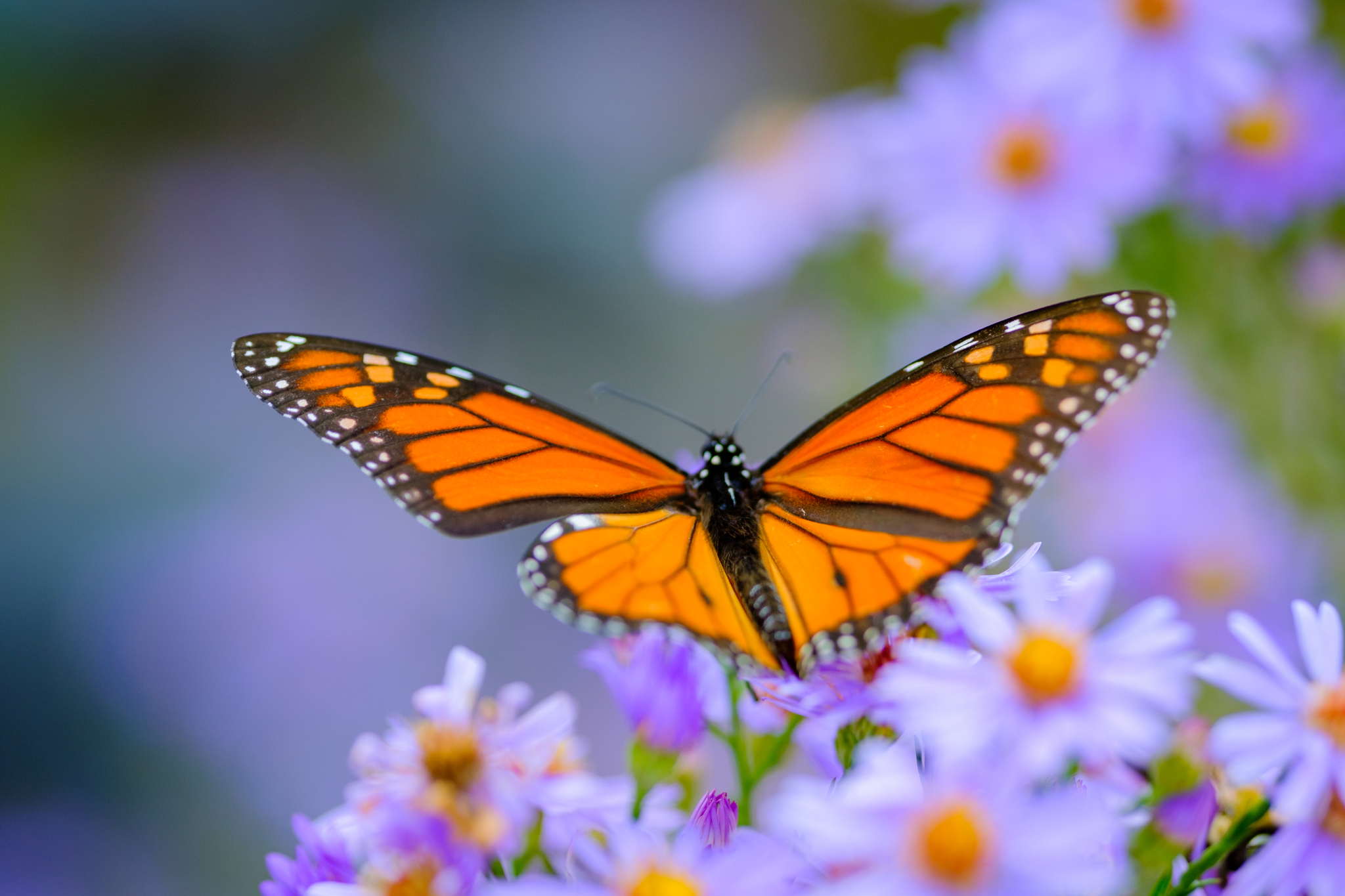
A bright orange and black monarch butterfly sits on purp
A monarch butterfly flexes its wings in the Enchanted Garden at HCLS Miller Branch.

by Ann H.

Now is a great time to harvest and plant milkweed to support the dwindling monarch population. Milkweed is the host plant of the monarch butterfly. It is where monarch butterflies lay their eggs, and when the eggs hatch the tiny monarch larvae (caterpillars) start chomping away on their one and only food – milkweed leaves. Monarchs cannot complete their life cycle without milkweed. Common milkweed, Swamp milkweed, and Butterfly Weed are all native to Maryland and suitable for the butterflies as they journey through our state. The Enchanted Garden showcases vivid orange Butterfly Weed and, especially this year, an abundance of Common Milkweed. The latter one spreads easily. During the garden closure it found its way to our compost bins, the pathways, and between the rocks lining our stream!

Milkweed seeds are easy and fun to harvest. In the fall, fat pods dry on the plants and burst open to reveal hundreds of seeds in a single pod. Each seed is attached to silky fluff also called coma. That silky fluff allows the seed to float through the air with the hope of landing in fertile soil. You can pull the seeds from the fluff or put an open seed pod in a bag with some pennies for weight, close the bag and shake. The seeds will come loose from the fluff.

Collect and plant seeds now so the seeds get the winter chill or cold stratification they need to germinate in the spring. If you want to wait, put them in a bag in the freezer for a month and they’ll be ready for planting come spring.

Would you like to plant some milkweed? I am happy to share the many common milkweed pods I harvested from the Enchanted Garden. I’ll place a container of pods in front of the Enchanted Garden Gate on days I’m in the garden (see times below) and for as long as the supply lasts. Bring a small bag and take a couple pods home. Every seed planted has the potential to support our monarchs!

WHEN:
Monday, Tuesday & Wednesday
October 19, 20, 21 & 26, 27, 28
9:30 am – 12:30 pm

You can find additional information about Monarchs in our HCLS collection.

For Adults

The Monarch: Saving Our Most-Loved Butterfly by Kylie Baumle

Monarchs and Milkweed: A Migrating Butterfly, a Poisonous Plant, and Their Remarkable Story of Co-evolution by Anurag Agrawal

For Children

Monarch Butterflies by Josh Gregory

Monarch Butterflies Matter by Cecilia Pinto McCarthy

Ann is a Master Gardener and the Enchanted Garden Coordinator at the HCLS Miller Branch, where she has worked for eight years. You can find her smiling in the garden and sharing her passion for plants, nature, and our community.