The House of Eve by Sadeqa Johnson 

A woman in a blue shirt dress, wearing pearls, has her purse crooked into one elbow and an old fashioned suitcase in the other hand. She is walking away from a large house. She is pictured only from the ne

by Piyali C.

Sadeqa Johnson’s late grandmother became pregnant with her mom at the age of fourteen. Her grandfather, however, did not marry her grandmother since he was very light skinned, and he was from the ‘right’ side of the tracks. She was dark skinned and poor. Johnson writes in the Author’s Note that the idea for this book, The House of Eve, came to her as a what-if. What if her grandmother had the money and opportunity to have the baby in a home for unwed mothers, gave the baby up for adoption, and went on to fulfill her dreams?  

The House of Eve by Sadeqa Johnson is a beautiful, searing novel about two young Black women in alternating narratives. It is 1948. Ruby Pearsall is on track to be the first in her family to go to college and accomplish her dream of becoming an optometrist. Ruby struggles to find even the few cents for bus fare to get to her ‘we rise‘ program in school so she can earn a scholarship to college. She is from the poorest area of North Philadelphia and comes from an extremely impoverished family. Although her mother, Inez, is indifferent to her needs, she has her aunt and grandmother who support her with love, shelter, and encouragement even though they cannot help her financially. They want their girl to go to college, become someone important, and make the family proud. But a love affair threatens to destroy her dreams to rise out of poverty. It also threatens to perpetuate the cycle of abuse and financial desperation. 

Eleanor comes from a blue-collar family. Her parents have given their all to send her to Howard University to get a good education and rise up in life. Eleanor appreciates and values the sacrifices of her parents and is determined to excel in school. However, she falls in love with a medical student, William, whose family is one of the most successful Black families in the Washington, D.C. area. William Pride’s mother, Rose Pride, does not let anyone enter their elite circle. Eleanor wonders if a pregnancy might give her an entry into their magical kingdom and perhaps she will feel like she belongs. Ruby and Eleanor’s lives will collide in unexpected ways and the decisions they make will change the course of their lives. 

With the magic of her words in this magnificent work of historical fiction, Johnson transports the readers to the rough neighborhoods of north Philadelphia, the campus of Howard University, elegant ballrooms in Washington, D.C., and the depressing interiors of homes for women who became pregnant out of matrimony. She also depicts the racial segregation that impacted lives of Black people as well as the consequences that women of any color suffered due to unplanned pregnancies at that time. The book paints a horrific picture of the homes run by nuns where unwed women and girls went to give birth; subsequently, the babies were given to wealthy families in exchange for hefty donations to those homes. Themes like colorism, wealth disparity, and social stratification among the Black community are intricately woven into the story, as are mentions of some real-life people and organizations. These make the book authentic and also give readers a glimpse into a slice of 1950s life that the Black community experienced in the United States.

The House of Eve by Sadeqa Johnson is available from Howard County Library System in print, e-book, and e-audiobook formats.

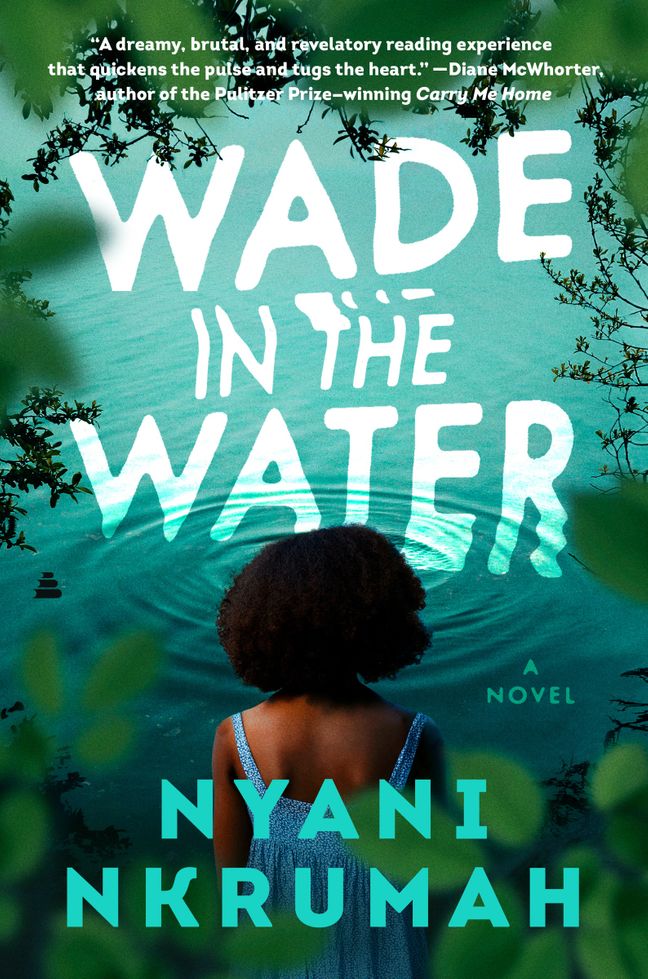
Meet Nyani Nkrumah, Author of Wade in the Water

The viewer peers through leaves at a young Black girl standing at the edge of water where ripples circle.

“Stunning…The author is supremely gifted at bringing both her characters and their close-knit rural town to life. Readers will eagerly await more from this writer.” — Publishers Weekly (starred review)

Mon, Mar 27; 7 – 8 pm
HCLS Miller Branch and online
Register at bit.ly/AuthorNyaniNkrumah

Resonant with the emotional urgency of Alice Walker’s classic Meridian and the poignant charm of Sue Monk Kidd’s The Secret Life of Bees, this gripping debut novel of female power and vulnerability, race, and class explores the unlikely friendship between a precocious black girl and a mysterious white woman in a small Mississippi town in the early 1980s.

More from Publisher’s Weekly:

Nkrumah’s stunning debut revolves around an unlikely friendship between an 11-year-old Black girl and a middle-aged white woman in 1982 Ricksville, Miss., and the segregated town’s fraught history. Intelligent, questioning Ella stands out in her light-skinned Black family because she is the result of her mother’s fling with a much darker-skinned man. Her ne’er-do-well stepfather Leroy is seldom home, but when he is, he takes out his rage and humiliation by sexually abusing Ella, while her mother treats her with contempt and frequent whippings. Meanwhile, a white Princeton University professor named Katherine St. James, who was raised in Mississippi, stirs things up when she moves into the Black half of town for a research project. Though it’s been almost 20 years since the killings of three voting-rights activists nearby, the case remains unsolved and racial tensions still run high. Against this backdrop, Katherine becomes a tutor and mother figure to the love-starved Ella, but as shocking revelations emerge about Katherine’s past in 1960s Mississippi, Nkrumah leads readers to reflect on the limits of the professor’s good intentions. The author is supremely gifted at bringing both her characters and their close-knit rural town to life. Readers will eagerly await more from this writer.

Nyani Nkrumah was born in Boston and grew up in Ghana, West Africa, and later Zimbabwe. Nyani graduated from Amherst College, has a Masters from the University of Michigan, Ann Arbor, and earned a Ph.D from Cornell University. A Fulbright Fellow, she lives in the Washington, DC area with her family and works in international development.

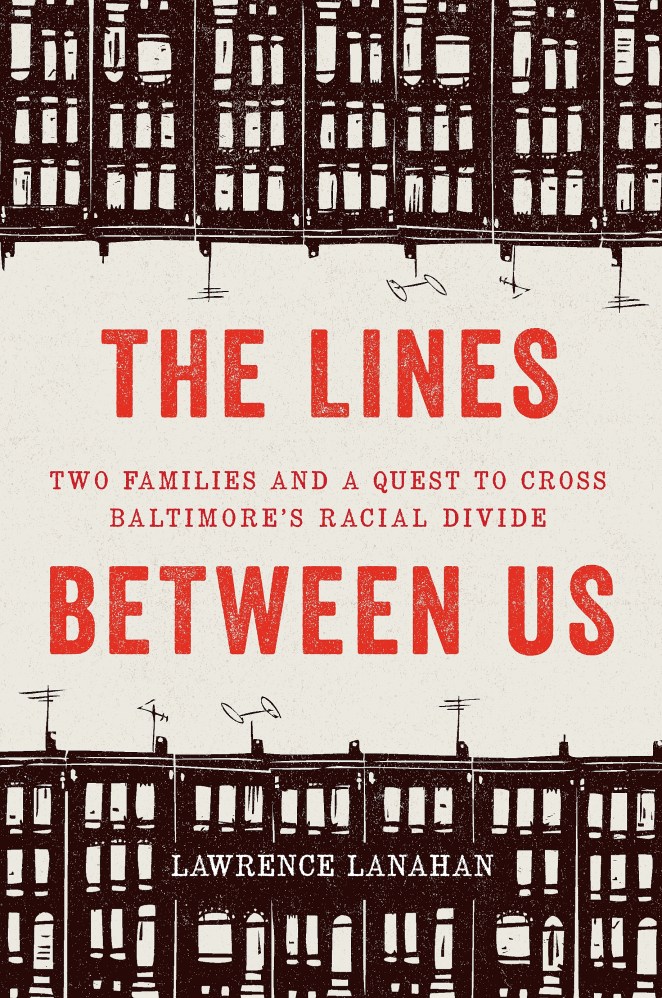
Lawrence Lanahan and The Lines Between Us

Stylized black and white drawing of typical Baltimore rowhouses frame the title.

By Holly L.

Journalist Lawrence Lanahan’s 2019 book The Lines Between Us: Two Families and a Quest to Cross Baltimore’s Racial Divide opens with two epigraphs:

It’s in the way their curtains open and close.

“Respectable Street,” XTC

I don’t even have to do nothing to you.

“Big Brother,” Stevie Wonder

The first line comes from English post-punk band XTC’s 1981 song about what songwriter and frontman Andy Partridge considered “the hypocrisy of living in a so-called respectable neighborhood. It’s all talk behind twitching curtains.” The second lyric is from a track from Stevie Wonder’s 1972 album Talking Book. In the song, Wonder takes the white establishment (Big Brother) to task for only coming to the ghetto “to visit me ‘round election time.” He continues his indictment – “I don’t even have to do nothin’ to you” because, from offenses ranging from criminal neglect of its black citizens to having “killed all our leaders…you’ll cause your own country to fall.”

It is fitting that Lanahan chose these words and these voices to begin this story, as his narrative weaves together multiple perspectives but most closely follows the criss-crossing threads of two individuals, one black and one white.

Nicole Smith is a young black woman living with her family in a West Baltimore rowhome owned by her mother, Melinda. When we meet Nicole, she is twenty-five and is contemplating the crossing of a line—leaving her neighborhood (and family and community) behind in search of security and opportunity for herself and her six-year-old son, Joe. Though she is enrolled in Baltimore City Community College and is on a waitlist for affordable housing in the city, Nicole seems to be on an existential treadmill, running but getting nowhere fast. She’s heard of a place called Columbia, a planned community in Howard County, with a reputation for good schools, plenty of jobs, and safe streets. Could she make it there?

Mark Lange is a white man raised in the Baltimore suburbs who, after a spiritual reckoning in his late teens, embarks on a path of service informed by the teachings of Mississippi civil rights activist and Christian minister John M. Perkins, who argued that those who wanted to help communities in need must live among them. As Mark’s story begins to be told, he feels a gravitational pull from his comfortable suburban life in Bel Air toward Sandtown, a West Baltimore neighborhood where his best friend Alan Tibbels, a like-minded white Christian with a mission of racial reconciliation, relocated with his family. If he moves, would Mark prove to be just another “white savior” looking to appease his own guilt? Or would be able to form meaningful relationships and help foster change in an impoverished community?

In this meticulously researched book, Lanahan alternates the fascinating tales of Nicole and Joe with the complicated history of Baltimore’s segregation and the resulting devastating impact on its black communities. Having its genesis as a year-long multi-media series on inequality in the Baltimore area broadcast from September 28, 2012 to October 4, 2013 on WYPR, Maryland Public Radio, the depth and breadth of Lanahan’s reporting is detailed to an almost dizzying degree. But just when a reader’s brain might start to get overwhelmed by the minutiae of historical detail (as mine sometimes did), my attention would come swiftly back into focus as the humanity of Nicole and Mark’s stories propelled me through the book. The Lines Between Us should be required reading for anyone who wishes to understand the institutional forces that shape inequality in our region and for those whose understanding of their neighbor might require them to cross a line. And isn’t that most of us?

Join us: Author Works with Lawrence Lanahan
Wednesday, January 12 from 7 – 8:30 pm
In person, HCLS Central Branch
Register at bit.ly/3pFTq3y

To learn more about the historical policies of redlining, visit the interactive exhibit currently at Central Branch. Undesign the Redline explores the history of structural racism and inequality, how these designs compounded each other from 1938 Redlining maps until today, and the national and local impacts. Join a guided tour on Wednesdays at 11 am and Saturdays at 2 pm.

Holly L. is an Instructor and Research Specialist at the Miller Branch. She enjoys knitting and appreciates an audiobook with a good narrator.