
AAPI Month & Visual Storytelling

by Ian L-F

As we celebrate the library as a space of learning and community, and honor AAPI Month as a time to uplift Asian voices and stories, it is worth asking: what makes something literature? The shape of the story, the seriousness of its tone, its prestige? Or is it about seeing something deeper, something about the world or the human condition? Across corners of every continent, stories take shape in countless forms: in prose, poetry, images, screens, and panels.

Perhaps, literature isn’t defined by medium or legacy. It’s shaped by how we engage with a work. When we treat literariness as something a reader brings to the page, not something a story inherently owns, we begin to find meaning in places we’ve often overlooked, like one of those Japanese comic books you might find in the teen section.

Manga is Japanese graphic storytelling that pairs image and text across serialized chapters. It continues a long East Asian tradition of visual storytelling. Its reach, however, is global. Manga is a major literary and commercial force in France, a cultural touchstone across Latin America, and a stylistic influence on everything from fashion to hip-hop. Its narratives, aesthetics, and emotional tones have shaped how stories are told, and who gets to see themselves in them.

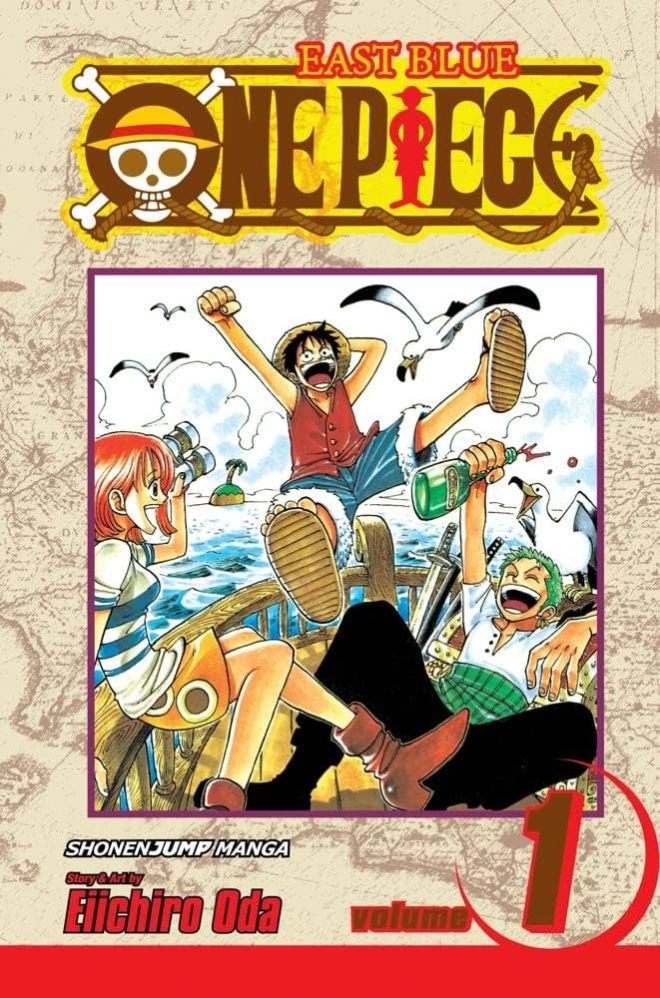
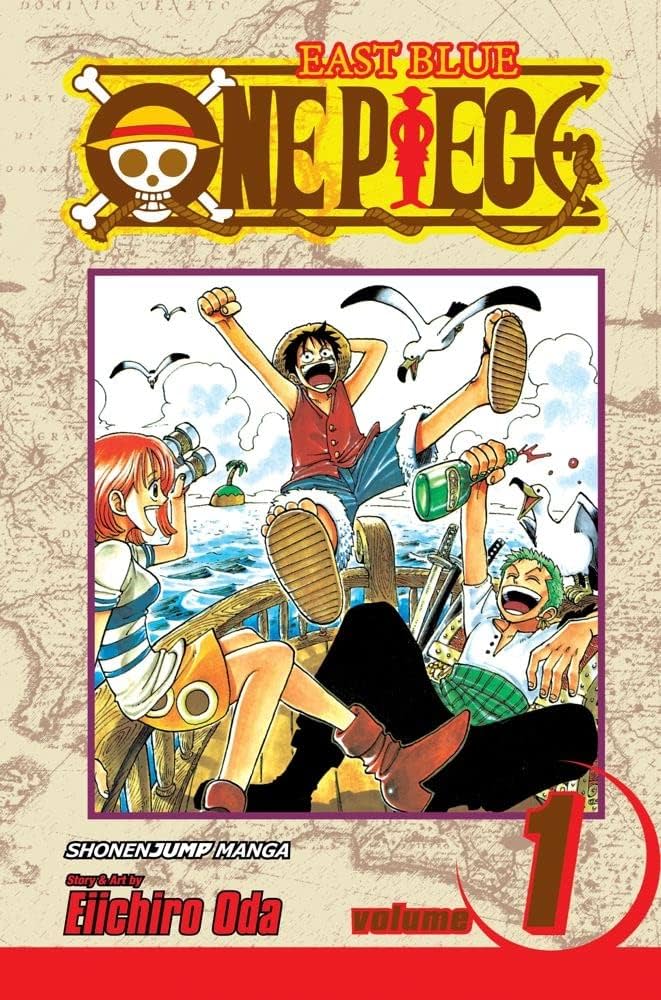
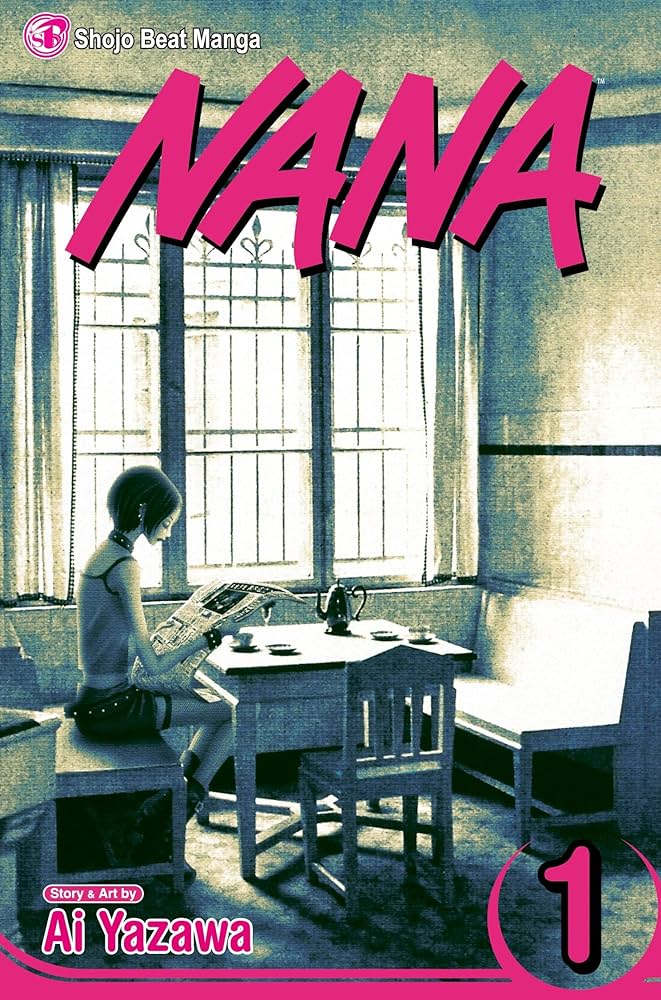
One vivid examples can be found in One Piece by Eiichiro Oda. What begins as a chaotic pirate adventure becomes a vast meditation on justice, memory, and history. The series offers a reminder that joy can be defiant, and freedom contagious. Manga’s depth doesn’t end with epics. Nana by Ai Yazawa offers a raw portrayal of friendship and identity, or Goodnight Punpun by Inio Asano, a surreal coming-of-age spiral, shows how the medium holds hope, loss, and emotional complexity with equal grace. These stories speak to something real and something human, but we need to be willing to listen.

You can find them all at the library — where stories of every kind wait side by side, ready to be read with curiosity, care, and imagination.

History of Comics in Asia
Tue, May 6 | 7:30 – 8:30 pm
HCLS Savage Branch
For adults.
Explore the world of comics new and old! East Asian comics have exploded in popularity and dominate today’s reading environment. Whether you’ve read them all or have never picked one up, learn about their history before getting a chance to draw your own.

Ian Lyness-Fernandez is not quite used to being Instructor at the East Columbia Branch. He hopes his passion for learning can somehow translate into a skill for teaching.

National Library Week: Graphic Novels for Adults

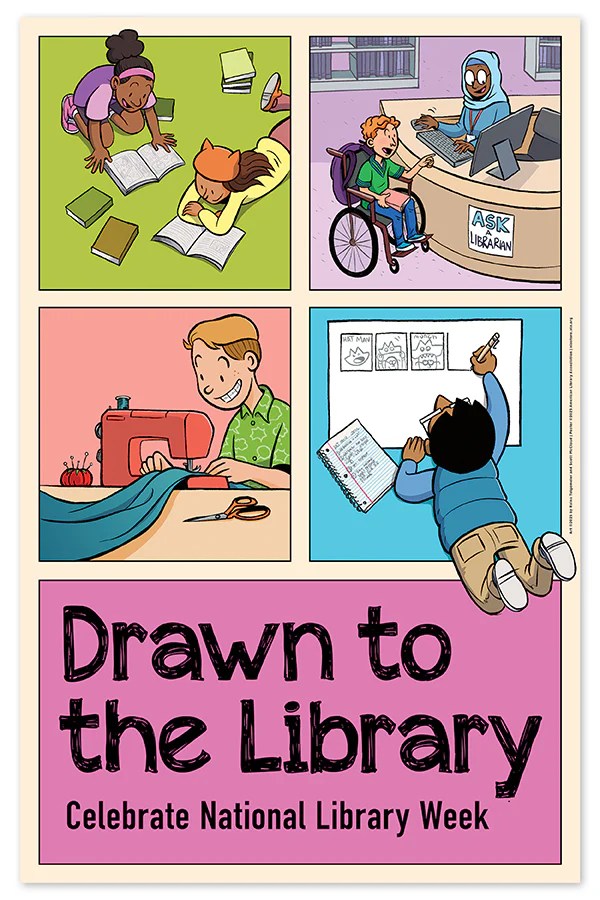
National Library Week Poster shows four different, common scenarios at the library: reading, talking at the desk, using a sewing machine from the library of things, and someone drawing.

by Emily B.

There seems to be a common misconception that graphic novels don’t count as “real reading.” This could not be much further from the truth! Reading takes on many forms beyond the printed word, each format with its own appeal. Everyone connects with stories and information in unique ways. No matter the format, reading counts, as long as you’re engaged with the material.

I find that nay-sayers tend to focus on how graphic novels differ from traditional books, rather than considering the unique elements that make graphic novels so engaging. The combination of text and illustrations might make reading more approachable to hesitant readers. Not only can the illustrations help bring the story to life, but they also can aid readers in interpreting and understanding the narrative. Literary devices like symbolism, flashbacks, and foreshadowing are enhanced with the added visual component.

Legendary comic artist Will Eisner introduced the term “sequential art” to describe comics in his 1985 book Comics and Sequential Art, giving a name to an art form that has existed for many thousands of years. Though graphic novels have experienced a recent surge in popularity, they are rooted in ancient tradition. Some early examples of sequential art include Egyptian hieroglyphs, the Trajan Column in Rome, and Maya script.

Graphic novels really offer something for everyone, from fictional stories to memoirs and depictions of real-life experiences. Interested in giving graphic novels a try? Here are just a few classics to start you on your journey:

The cover of Maus shows a black swastika with a cat behind two mice wearing trench coats.

Art Spiegelman’s The Complete Maus – This book is the first and, so far, only graphic novel to win the Pulitzer Prize. Spiegelman tells the story of his father, a Holocaust survivor, in his years leading up to World War II, his survival and liberation from a Nazi concentration camp, and his life in the years that follow. Maus is heralded as a unique blend of memoir, history, and biography in a sleek graphic novel package.

Marjane Satrapi’s Persepolis and Persepolis II – In two volumes, Satrapi recounts her childhood in Iran amidst the Islamic Revolution and her adult years in Austria. Her graphic novel memoirs were adapted into an Oscar-nominated animated film of the same title.

John Lewis’ March I-III – Late civil rights activist and politician John Lewis, at the suggestion of his aide Andrew Aydin, tells the story of the Civil Rights Movement from his perspective. The two compiled Lewis’ anecdotes, experiences, and stories, and artist Nate Powell helped bring the important story to life on page.

Emily is an Instructor & Research Specialist at HCLS Central Branch. When she’s not reading, she enjoys puzzling, listening to music, and re-watching old seasons of Survivor.