If you have ever wanted an in-depth, behind the scenes look at Dame Judi Dench’s formative years with the Royal Shakespeare Company, have I got a book for you! If you haven’t but have a fondness for the Bard, you still want to get your hands on this book. And if you simply love to listen in on two friends trading stories from their past and arguing over details, this one is for you, too – it’s that much fun!
Dame Judi Dench and her good friend Brendan O’Hea engage in a series of conversations in Shakespeare: The Man Who Pays the Rent, during which they discuss Shakespeare and acting, and – in all honesty – just dish about various productions. You can almost hear the teacups in the background. It’s fascinating to eavesdrop on them quarreling about interpretation or reminiscing about pranks and misdeeds. They cover some of the best-known plays, such as Twelfth Night, Macbeth, and Romeo and Juliet, but they also spend time with Coriolanus, The Merry Wives of Windsor, and The Winter’s Tale. I was simply amazed by how much of each play Judi Dench can apparently recite from memory – entire sequences, from multiple parts.
I assume the physical book is lovely, but the audiobook is pure gold. Barbara Flynn provides Dame Judi’s voice, and you would think that you’re listening to a younger version of the great actress (which you essentially are). She talks about her favorite parts, her views for the motivation of various characters, how Shakespeare manipulates the audience, and more details about stagecraft. She also tells stories about being mostly naked and painted green, sharing rooms, and having a ton of fun with other (now revered) fellow actors.
As she says, ““Everything you have felt or are yet to feel is all in there in his plays: oppression, ambition, loneliness, remorse, everything….Shakespeare has examined every single emotion….His writing has the capacity to make us feel less alone.” This book helped me remember exactly that! I laughed, I learned, and I was gloriously entertained.
Shakespeare: The Man Who Pays the Rent by Judi Dench and Brendan O’Hea is available in print, e-book, and e-audiobook.
Kristen B. is a devoted bookworm lucky enough to work as the graphic designer for HCLS. She likes to read, stitch, dance, and watch baseball (but not all at the same time).
A friend suggested a good rule for reading: only one World War II-adjacent book each year. Well, I’ve already spent this year’s allowance, and it was a good one!
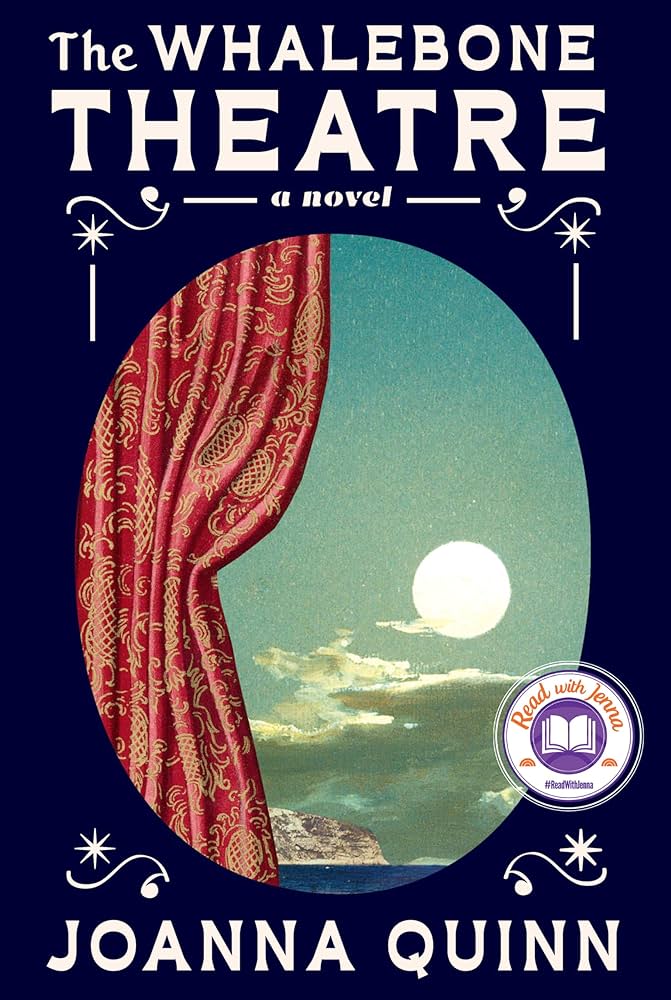
The Whalebone Theatre by Joanna Quinn begins during the interwar period, set at a grand country estate, Chilcombe, on the southern coast of England. Cristabel Seagrave is a lonely little girl with an immense imagination. Her mother died in childbirth, and the story gets underway with her father bringing home a new bride. England’s laws being what they are, the family needs a male heir to keep the estate. A set of minor tragedies and expected resolutions ensue, all of which lead up to the day that Cristabel discovers a dead whale on Chilcombe’s beach.
With this highly cinematic scene, set against a quiet sea and a rising sun, the book finally gets underway. Cristabel hauls herself up the side of the leviathan and plants her flag, literally, in its blubber as her two younger stepsiblings turn up to watch and cheer her on. It’s clear that the trio of Cristabel, Flossie, and Digby make a minor clan in and of themselves, running mostly feral as their adults are caught up in the bohemian lifestyle of the rich and entitled in the Roaring Twenties. Interestingly enough, her stake cannot stand because all sea-washed flotsam automatically belongs to the Crown. In the end, the Crown doesn’t want it and the poor whale spends the rest of the summer slowly rotting upon the shore, much to the entertainment of the children.
Also discovered upon the beach that day is Taras – an itinerant Russian painter living a risque, socially liberal life-style. His paramours are old friends with Flossie and Digby’s mother, and so ensues a longstanding relationship between both parents and children. Taras eventually has the grand idea of moving the whale’s ribs to build a theater within Chilcombe’s estate. Under Cristabel’s direction, the children, their adults, and other willing locals stage a variety of plays, including a retelling of the Iliad and Shakespeare’s The Tempest. One of the Bard’s final plays, The Tempest carries certain themes throughout the book – including shipwreck and exile, civilization and monstrosity, and power and integrity. The book glosses over the 1930s with a set of newspaper clippings detailing the annual summer performances at the theater.
When the story recommences, World War II is well underway. One of the adults who came and went from Chilcombe turns out to be a high-ranking member of the British intelligence ministry. He enlists first Digby, then Cristabel into becoming agents in occupied France. Meanwhile, Flossie maintains the home estate and becomes a Land Girl as the war rages on. The story careens through the final years of the conflict, with uncertainty and anxiety at every turn as our intrepid trio make their separate, but always inter-connected, ways in the world.
In the end, it all comes together back at Chilcombe. No one is quite the same in the aftermath of war – family, friends, servants, and locals. I greatly enjoyed the book with its gorgeous language, despite its quiet devastations that rang absolutely true to me. At the end of The Tempest, Prospero says, “Now my charms are all o’erthrown, And what strength I have’s mine own.” What strength remains belongs solely to the women of this story, home at last. I suspect this is a title I will linger over and think about at odd moments. Certainly, it resonated with other recent books adjacent to WWII where the smaller stories and sacrifices carry the story.
Kristen B. is a devoted bookworm lucky enough to work as the graphic designer for HCLS. She likes to read, stitch, dance, and watch baseball (but not all at the same time).
Notorious. Home to many historical figures, Baltimore lays claim to one of the most reviled, John Wilkes Booth. Legendary. The pinnacle of theatrical performance, Shakespearean acting claims Junius, John’s father, and Edwin, John’s brother, as two of its finest. Radical. One of the highest acts of rebellion, the Underground Railroad claims Richard Booth, John’s grandfather, as one of its aides.
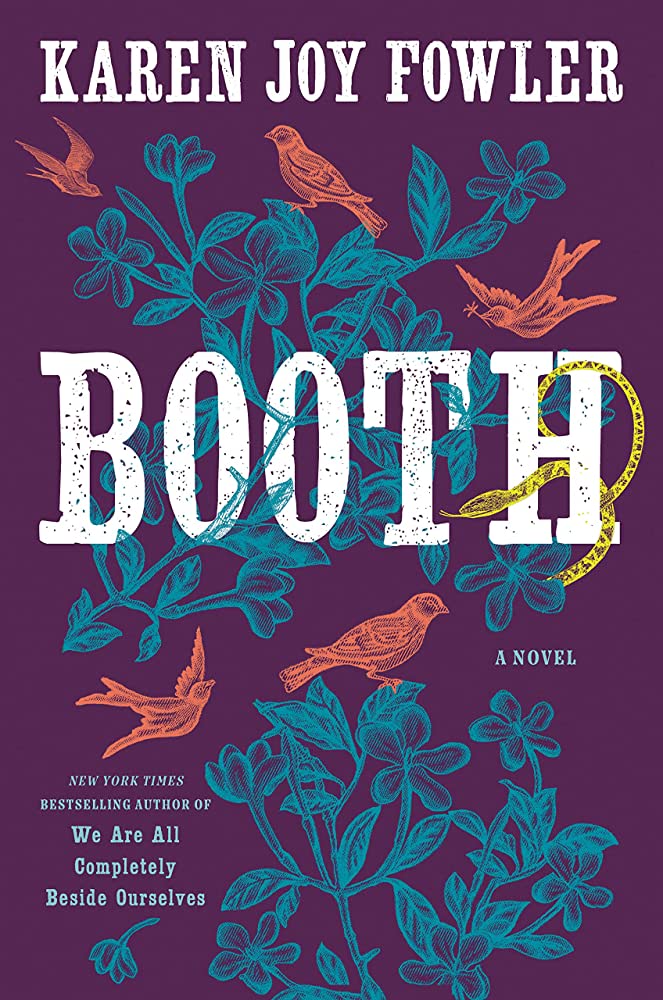
Booth, by Karen Joy Fowler, explores these, and many other, aspects of an infamous family. The bestselling author of We Are All Completely Beside Ourselves, Fowler has written another dysfunctional family novel. Booth will engage readers interested in local Maryland history, the Lincoln assassination, and disturbing tales of family legacy.
Enraged by the gun violence epidemic, yet not wanting to glorify an assassin, Fowler began researching the Booth family. With the goal of placing John Wilkes Booth in a broader sociological context, Fowler presents a detailed portrait of Booth’s first-degree relatives as well as his ancestry. I marveled at how the Booth family was at once isolated from and central to the politics surrounding the Civil War. We discover the abolitionist leanings of the majority of the Booth family and gain a limited glimpse into John’s radicalization. I learned a lot but was also left wanting to know more about John’s motivations and the repercussions for his family after the assassination.
Fowler documents the timeline of Abraham Lincoln’s life alongside the lives of the Booths. We see the violent partisanship that has always been woven into the fabric of US history. At times I wondered why this book had not been written as narrative nonfiction instead. Similar to a solid history text, Booth documents significant quotes, historical events, and primary sources. We learn that Junius Booth frequented the Green Dragon Tavern, a Boston bar where you can still grab a drink. Fowler describes the construction of Tudor Hall, the Bel Air home of the Booths that remains open for tours.
At the heart of the novel are the stage actors in the family, Junius, Edwin, John, and Junius, Jr. Both Junius and Edwin were internationally renowned for their stagecraft and self-destructive alcoholism. One of the joys of the novel is found in figuring out the sources of Shakespeare quotes the family members use as part of their daily communications. They are a theater family at their core. John was the ninth of ten children, four of whom died before reaching adulthood. Fowler traces these deaths to the lasting impact on the fates of family members. She depicts John as the light of his mother’s life, the golden child born to help ease the family’s pain.
The novel is well researched, beautifully written, and provides a unique perspective on the Civil War in the context of one family’s experience. The reader connects with the men and the women in the family, as well as their associates, friends, and love interests. Booth would be an excellent choice for a book group discussion.
Cherise Tasker is an Adult Instructor and Research Specialist at the Central Branch. When not immersed in literary fiction, Cherise can be found singing along to musical theater soundtracks.
I thoroughly enjoyed it and would recommend it to absolutely no one. – anonymous review of Moby Dick
by Ben H.
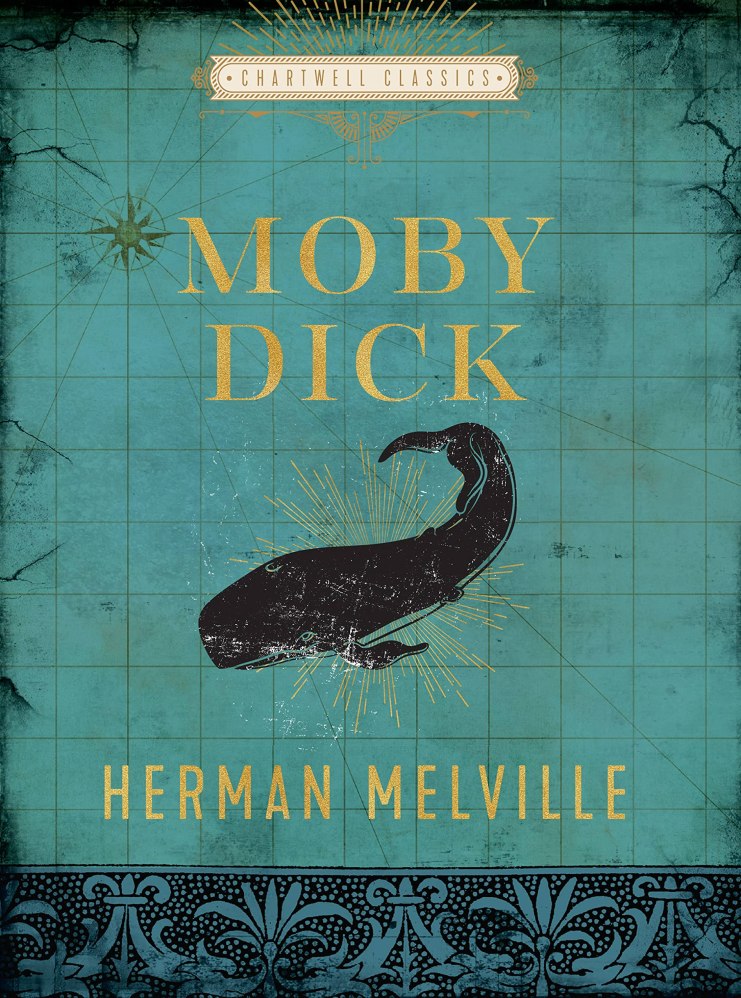
Moby Dick; or, The Whale, Herman Melville’s 1851 masterpiece, is a perfect summer read. It’s long – good for those endless summer days at the beach. It’s a great conversation starter – good for extra time spent with family. It’s the source of many pop culture references – great for the extra entertainment consumption that sometimes happens in the summer. Lastly, it’s a great book full of memorable lines.
Ishamel, of “call me Ishmael” fame, is the insightful and piquant narrator of this tragic seafaring saga of revenge. He joins Ahab’s ship, the Pequod, because he’s hit the doldrums. He tells us, “Whenever I find myself growing grim about the mouth; whenever it is a damp, drizzly November in my soul; whenever I find myself involuntarily pausing before coffin warehouses, and bringing up the rear of every funeral I meet…I quietly take to the ship.” As one does when one feels down, Ishmael makes for Massachusetts and becomes a whaler.
If he’s too interested in the semantics of whaling, I forgive him because he’s a fabulous companion, consistently thoughtful and funny. It’s through Ishmael that we meet the rest of the crew: Ahab, the peg-legged monomaniacal captain bent on revenge; Pip, the cabin-boy who loses himself in the vastness of the ocean; Starbuck, the weathered, faithful first mate; Stubb, the philosophizing, chain-smoking second mate; Flask; the steady, simple third mate; Fedallah, Ahab’s harpooner and “evil shadow;” Queequeg, Ishmael’s best friend, “wife,” and harpooner; Tashtego, Stubb’s harpooner and the one who falls into the squishy head of a dead whale; etc.
Moby Dick has a great narrator, a wonderful crew of characters, and plenty of Shakespearean drama. Starbuck has a soliloquy worthy of Hamlet; Stubb and Flask have Dogberry-level banter about whales and Fedallah. Stubb also takes a turn as Mercutio when he has a Queen Mab moment. After Stubb describes his dream in detail, Flask responds with an appropriate, “I don’t know; it seems a sort of foolish to me, tho.'” Anyone who bores a friend, family member, or coworker with the details of a dream deserves the Flask treatment.
Speaking of dreams, the giant squid sighting is a brief but memorable episode. Melville calls the squid the “Anak” of the cuttlefish tribe. His reference to a race of giants is one of many biblical references. With one word, Melville describes the squid and sets an ancient and mysterious tone.
Another perfectly haunting episode happens when Ahab works the crew into a fervor on the quarterdeck. He stabs a gold coin high into the mast, promises it to the one who first sights the white whale, and gives a demonic revenge speech. His speech, and the healthy amount of grog he sloshes around, sets off pandemonium and “infernal orgies.” Starbuck, too stoic to partake in such revelry, remarks, “heathen crew…the white whale is their demogorgon…” Try googling demogorgon without getting lost in an avalanche of Stranger Things fan sites. Starbuck, ever the ray of sunshine, adds, “Oh, life! ‘tis now that I do feel the latent horror in thee.”
I’ve highlighted a few episodes to provide you, gentle reader, with trenchant examples of the mood of the novel; it is equal parts mystical, dark and humorous, and quotidian.
The narrative falls into a pattern: look for a whale, find a whale, kill a whale (unsurprisingly, Moby Dick is not safe for animal lovers). The Pequod also encounters a surprising number of other whaling ships: Jereboam, Rachel, Jungfrau, Delight, Rose Bud, etc. The suspense builds as Ahab begins to hear of Moby Dicksightings from the other captains. Melville continues to up the tension by scattering prophecies and Julius Caesar-level augurs of doom throughout the text.
As I mentioned in the introduction to this interminably long book review, Moby Dick casts a long shadow. For example, in the The X Files (the best show of all time), Scully’s dad’s nickname for her is Starbuck. Once you’ve read Moby Dick, you’ll make a fun connection between Mulder and Ahab. Is Scully the Starbuck to Mulder’s Ahab? Will Mulder’s quest doom them both?
Another fun example: Jaws, Steven Spielberg’s landmark 1975 film about a giant bloodthirsty shark. At one point, the brave but foolish men hunting a giant shark in a tiny boat sing a little song – first sung by the crew of the Pequod:
Farewell and adieu to you, Spanish ladies! / Farewell and adieu to you, ladies of Spain!
One last reference is a little out there, but for those of you who play videogames, I feel that the entire catalog of Dark Souls games is rife with thematic references to Moby Dick. If the pop culture references aren’t enough to draw you in, there are tons of one-liners perfect for inspiring the armchair philosopher in all of us:
“But clear truth is a thing for salamander giants only to encounter”
“Never dream with thy hand on the helm!”
“Away, and bring us napkins!”
“Oh! My friends, but this is man-killing! Yet this is life…”
“Where lies the final harbor, whence we unmoor no more?”
My wife told me not to spoil the ending, so I won’t. If you want to know, set sail for your local branch and pick up a copy! If you’ve made it through this Chapter Chats review, you can make it through Moby Dick!
Ben Hamilton works at Project Literacy, Howard County Library’s adult basic education initiative, based at HCLS Central Branch. He loves reading, writing, walking, and talking (all the basics).





 CHAPTER CHATS