
Pathogenesis by Jonathan Kennedy 

A primitive-style illustration shows people stewn about a barren lansdscape with

by Sahana C.

Four years after the start of the COVID-19 pandemic, it still felt a bit too soon for me to sink my teeth into this title, but I’m so glad I persevered. I’m on a mission to read more nonfiction this year, to make myself a more well-rounded reader (who knew that there were just as many genres of nonfiction as there are of fiction?! Mr. Dewey Decimal, I suppose). This was a satisfying, fascinating read to satiate my sci-fi loving heart. It’s a testament, I think, to the ways that fiction can only go so far – the real world always has something more unimaginable, more bizarre to throw at us. 

Jonathan Kennedy made it easy in this absolutely fascinating read. I am no science buff, so some of the more nuanced language about the ways that viruses exist was lost on me. But it was so worthwhile to struggle through some of the more technical descriptions of the bacterial and viral elements to understand the social implications of the plagues, as promised by Kennedy.

The premise this book asserts is that viruses have had a lasting impact on humanity, and beyond, shaping history through the ages. I won’t say that I feel like the world can attribute much of its development and evolution to plagues as Kennedy seems to assert, but I also can never again claim that plagues did not have a major role to play in the evolution of our understandings of race, class, and capital. Beyond the obvious examples of the ways in which architecture and city planning changed after events like the Black Plague and advancements in healthcare, Kennedy also lays out clear paths to explain the ways things like mercantilism and the slave trade emerged and the impact viruses had on them.  

Seeing the world through this public health lens has made me step back and consider all of the other intersections and influences that I might not have clocked as important – but for this fascinating study of the history of the ways we became what we are now through the perspective of viral history. It made the fall-out from our most recent (and ongoing) plague feel less “unprecedented” and more like something that can and will shape us moving forward. It’s not about “returning to normal” and all about looking to the future to see how we evolve, as we move, slowly, forward.  

Pathogenesis is available in print, e-book, and e-audiobook.  

Sahana is an Instructor and Research Specialist at HCLS Savage Branch. They enjoy adding books to their “want to read” list despite having a mountain of books waiting for them already.
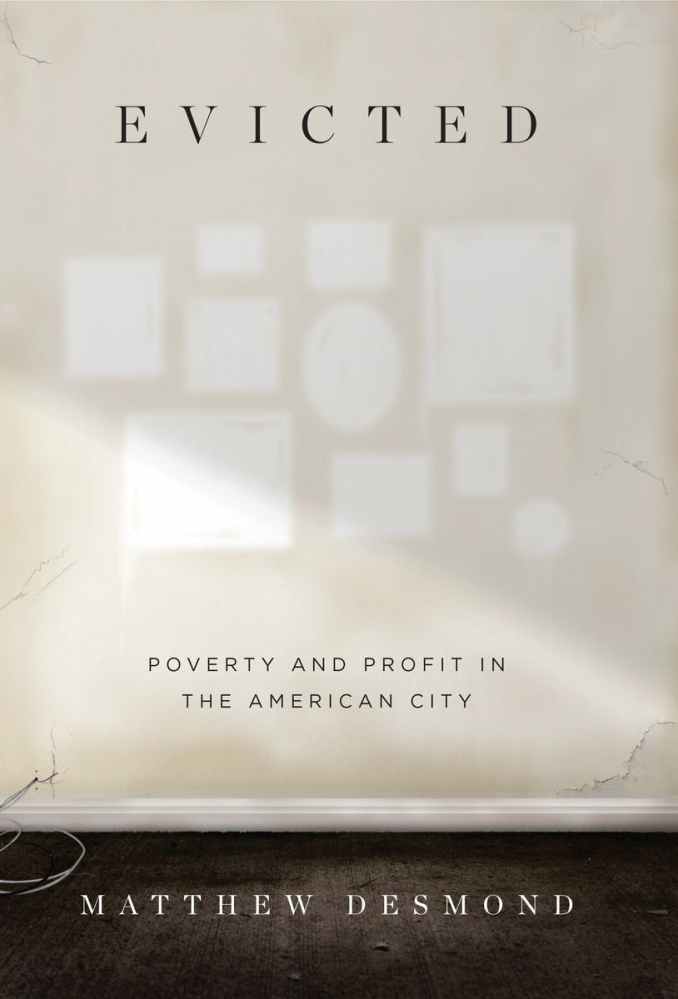
Evicted: Poverty and Profit in the American City by Matthew Desmond

A dirty white peeling wall with faded areas where there had been framed photos. An electrical cord is plugged into an outlet in what appears to be an otherwise empty room.

By Cherise T.

Awarded the Pulitzer Prize for general nonfiction in 2017, Evicted: Poverty and Profit in the American City tells the story of our national rental housing crisis through the lens of the Milwaukee area. Matthew Desmond focuses on two landlords renting the lowest quality properties to eight impoverished residents and families struggling against homelessness. Researching the 2007-2008 economic crisis, Desmond documents how even during the Depression finding affordable housing was nowhere near as difficult as it is today. Currently, paying for housing can cause a descent into poverty because, “the rent eats first.” Due to the limited options available to renters with low incomes, lack of enforced regulations of landlords, and limited local and federal resources to support struggling families, serial eviction has become commonplace.

When I studied the resources to present Undesign the Redline tours at HCLS, I learned about how where one lives and where one is allowed to live impacts a person’s access to good education, rewarding work, and leisure options with family and friends. Structural and systemic racism in the United States controls residential opportunities. Evicted delves into the connection between redlining and housing poverty. Landlords are legally allowed to offer substandard housing. Renters are subjected to a system that favors landlords and offers limited housing subsidies.

This narrative nonfiction title will appeal to readers interested in history and statistical sociological studies as well as those who prefer to follow personal stories. A sociologist, Desmond lived in low income housing as he met the characters who fill his book. Sherrena is a black landlord who gets to know her tenants, assisting them with groceries, for example, but she and her husband also need to make a profit. Doreen is a black single mom caring for three generations under the roofs of smaller and smaller properties even as her family grows. Scott is a white, drug-addicted, former LPN who cannot even afford a rental in a deteriorating trailer park. Arleen is a black single mom who has to apply almost 100 times before a landlord agrees to house someone with multiple children and a history of serial evictions.

“If incarceration had come to define the lives of men from impoverished black neighborhoods, eviction was shaping the lives of women. Poor black men were locked up. Poor black women were locked out.” Eviction tells its stories with sympathy and an abundance of well-researched urban housing realities. It offers insight, data and potential solutions to the problems it describes. There is also an excellent study guide provided by the publisher for use by students and book groups.

Cherise T. is an Adult Instructor and Research Specialist at the Central Branch. When not immersed in literary fiction, Cherise can be found singing along to musical theater soundtracks.