
The Other Olympians: Fascism, Queerness, and the Making of Modern Sports by Michael Waters

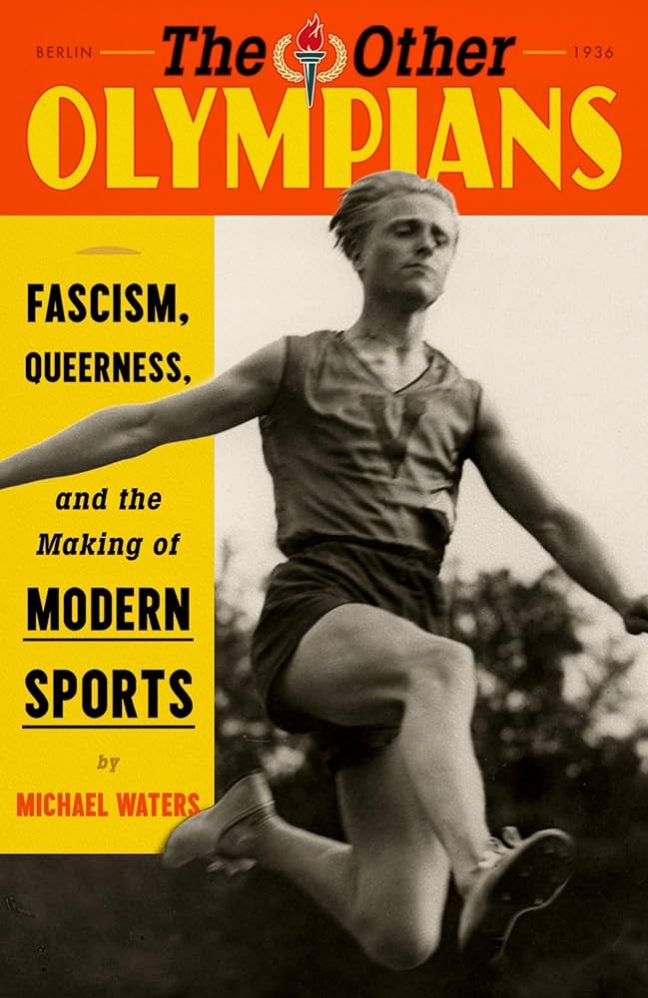
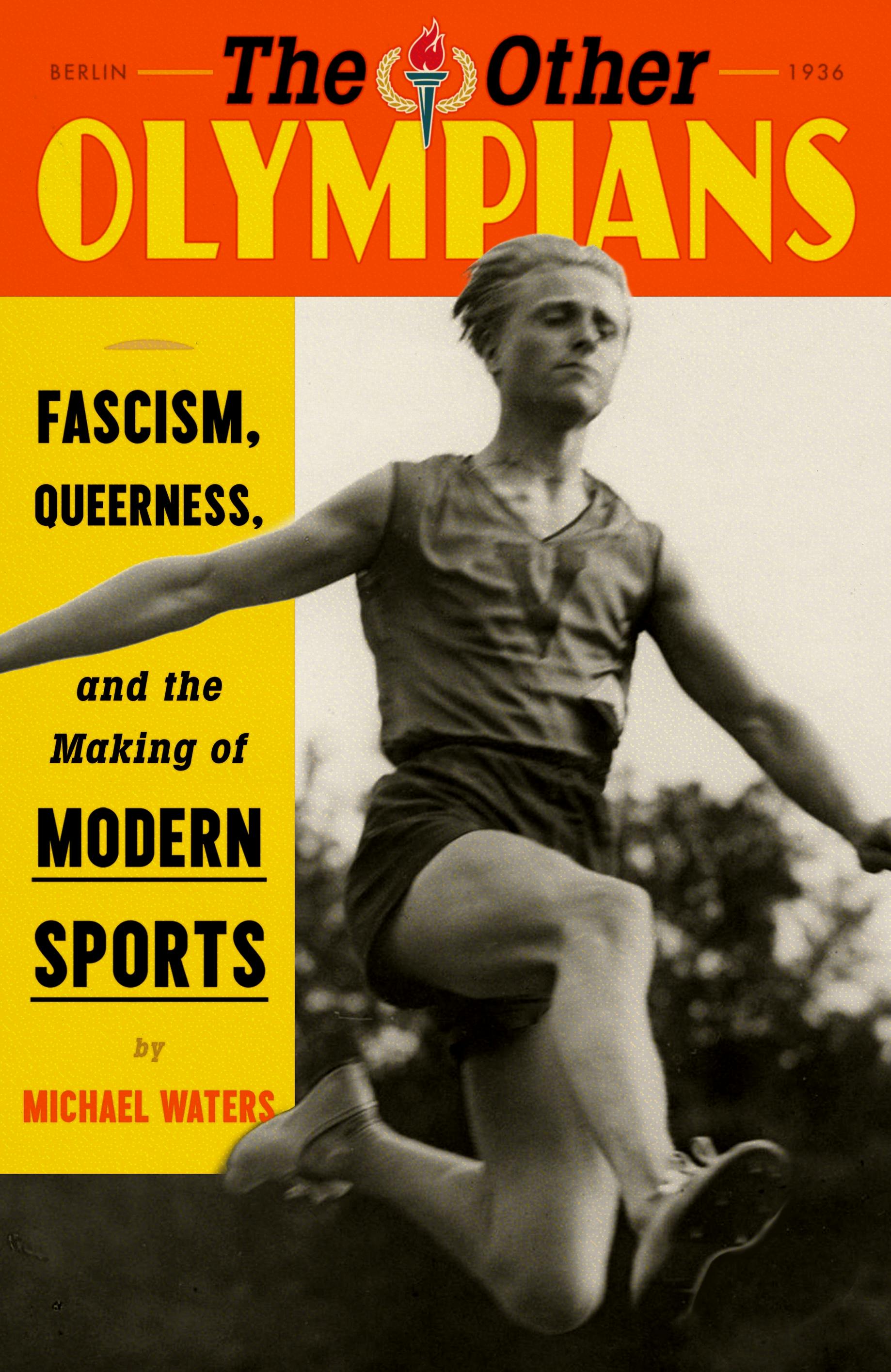
The book cover depicts Olympian Zdeněk Koubek participating in a jumping event, leaping into the air with arms spread wide and hair blown back.

By Ash B.

To say that “men” in women’s sports is a hot-button issue would be an understatement. 

Many individuals have a knee-jerk emotional reaction to this topic; far fewer know the facts about transgender or intersex athletes. I’d bet even fewer know that gender anxieties in relation to sports are nothing new – in fact, they date back over a century. For example: mandatory medical exams, to ‘prove the womanhood’ of female athletes, were first popularized by a Nazi sports physician for the 1936 Olympics. Sex testing would become more prominent in the following decades, particularly in the context of the Cold War. Such is one bit of history unveiled in The Other Olympians: Fascism, Queerness, and the Making of Modern Sports by Michael Waters.

As indicated by its title, this nonfiction book addresses political, social, cultural, and scientific developments in the early twentieth century. Waters digs deep into the history of professional, international athletics, exploring the forces that impacted where, and by whom, sports could be played – particularly at the 1936 Berlin Olympic Games in Nazi Germany. The idea of women playing sports, whether leisurely or professionally, was enough to cause public (primarily male) concern and outrage in this time period. The founder of the modern Olympics, Pierre de Coubertin, declared that female athletes did not, “constitute a sight to be recommended before the crowds I gather for an Olympiad.” 

On a surface level, it’s not difficult to imagine why there’s a patriarchal bias regarding athletics – consider how current broadcasts of women’s sports get less viewership and the teams get fewer resources than their male counterparts. Dig a bit deeper, and you quickly run into norms about what a female body is ‘supposed’ to look like. Notice how women are ridiculed and called “manly” when they are seen as too muscular? Think about how many people now accuse female athletes with ‘masculine’ characteristics – a square jawline, a broad nose, wide shoulders, a small chest – of being male. 

This is the cruel irony of the anti-trans “defending women’s sports” issue; it doesn’t just target trans people. It significantly harms cisgender women by policing their bodies and appearances, too, especially women of color and intersex women. This fixation on gender conformity in sports – specifically women being ‘feminine’ enough – can be traced back decades, to when women were discouraged from playing sports at all. Fear-mongering abounded regarding the ‘masculinizing’ effects that playing sports, especially sports that were accessible to working-class women. As Waters paraphrases the British paper The Daily Herald, “women who participated in ‘masculine’ sports like soccer or track and field risked creating a third category of sex.”

These cultural fears were elevated by news of Zdeněk Koubek and Mark Weston – each assigned female at birth and raised as girls – publicly transitioning to living as men, in 1935 and 1936 respectively. Because both Koubek and Weston had formerly won titles in the Women’s World Games, an international competition similar to the Olympics, their gender revelations had significant influence on discourse regarding women’s sports, including paranoia that male athletes could ‘pose’ as women to win professional competitions.

With an engrossing narrative approach, Waters traces the histories of Koubek and Weston along with the stories of key bureaucrats in the sports world, such as Alice Milliat, founder of the Women’s World Games, and Avery Brundage, an American sports administrator who climbed his way to Olympic leadership. Whether you’re interested in athletics, politics, or gender, you’re sure to glean knowledge from Waters’ depth of research. This is a great read for all history lovers who relish in learning little-known facts, woven together in personal and national narratives, as well as anyone who is concerned (or simply confused) about the culture wars around gender and women’s sports.

The Other Olympians is available in print and as an e-audiobook from Libby.

Interested in a brighter side of queer history? Learn about drag history and makeup on June 17, 7 – 8:30 pm at HCLS Central Branch for You Betta Werk! The Art & History of Drag. Free makeup will be given to attendees, while supplies last, on a first-come, first-served basis.

Ash is an Instructor and Research Specialist at HCLS Central Branch with a passion for information literacy and community engagement. They love music, gardening, hiking, and cuddling with their golden retriever.

World Series: Baseball Classics

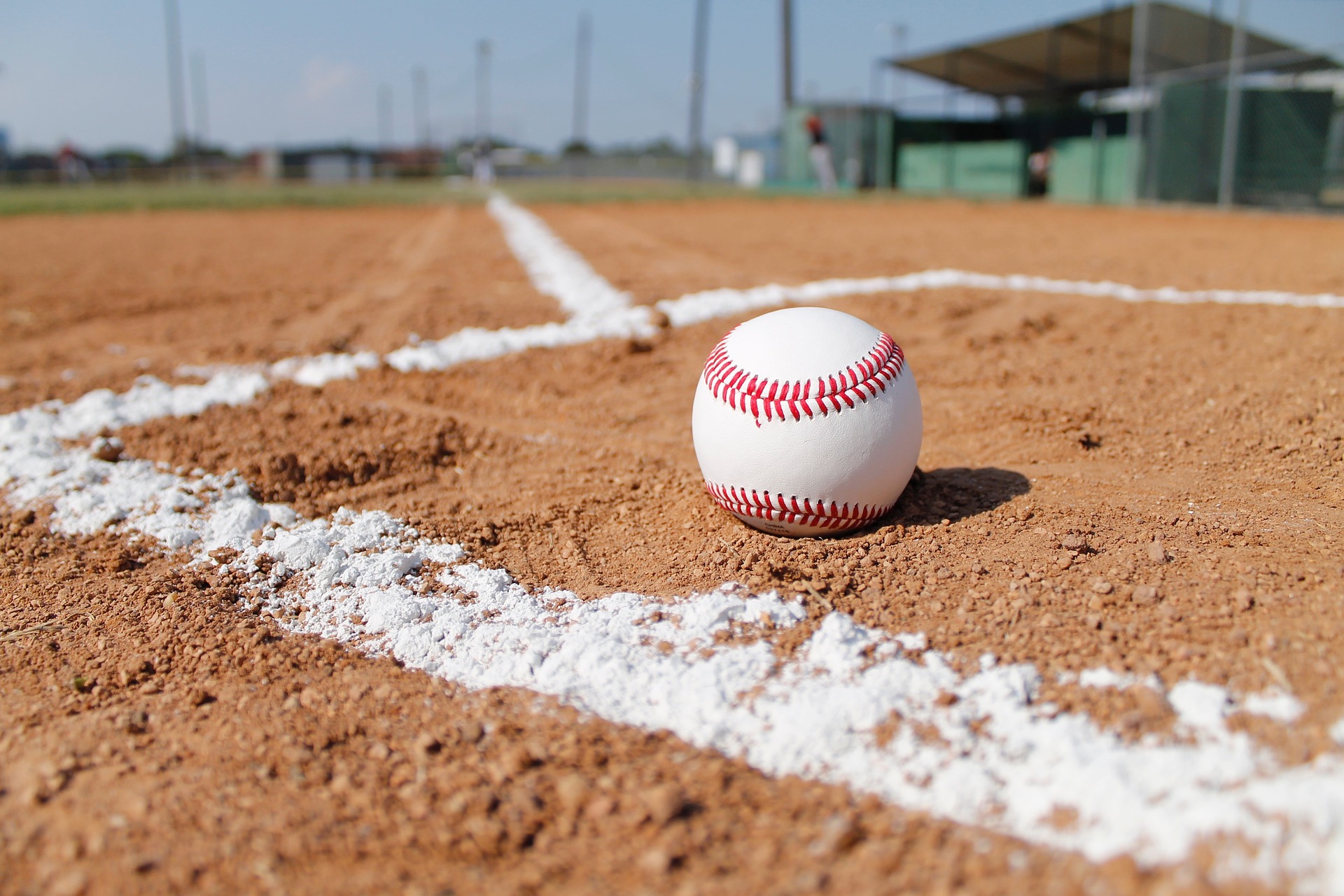
A baseball sits inside the chalk lines of a batter's box, with red seam showing prominently.

It’s almost time for baseball to finish for the year, crowning a new World Series winner. (Next year, Orioles!) But if you feel the need to keep America’s Pastime in your life a little while longer, you can always borrow one of these classic movies (in no particular order):

The Natural
Starring Robert Redford, based on an equally excellent, although rather different, book by Bernard Malamud, The Natural tells the electrifying story of Roy Hobbs as he returns to baseball after a mysterious disappearance. This is a story of true loves, the consequences of choices, and living your dreams, whether it’s about baseball or finding your family. Rated PG

42: The Jackie Robinson Story
The number 42 belonged to Jackie Robinson and has remained the only number to be retired across all of Major League Baseball. This biopic, starring Chadwick Boseman and Harrison Ford, follows Jackie Robinson as he breaks the color barrier to become the first Black man to play in the major leagues. It pulls few punches about the difficulty of the situation. Rated PG-13

Field of Dreams
If you build it, they will come. If you’ve never seen this Kevin Costner classic, featuring James Earl Jones and Ray Liotta, among others, what have you been doing with your life? Mysterious voices tell Costner’s character to plow under some of his corn and build a baseball field, and then entire squads of dead (and disgraced) ball players appear each night. It’s Iowa, not heaven. Rated PG

Bull Durham
Kevin Costner stars in this one, too, along with Susan Sarandon and Tim Robbins. Set in the minor leagues, baseball and romantic entanglements combine for a fun, quotable movie that’s mostly about baseball rivalries. Rated R

A League of Their Own
There’s no crying in baseball! This beloved movie about the women who played baseball during WWII features Tom Hanks and Geena Davis, among a star-studded cast. If it was easy, everyone would do it. Rated PG

The Rookie
Dennis Quaid carries this family-friendly Disney movie about being the oldest rookie in baseball. After making a deal with his minor league team that if they win their season, he will pursue a major league career, Jim Morris has to make good on his end of the bargain. Rated G

Trouble with the Curve
This romantic comedy, starring Clint Eastwood, Amy Adams, and Justin Timberlake, uses scouting the minor leagues before the draft as the background story. Amy Adams’ character has to leave her high-powered law career to make sure her grumpy dad (Eastwood) is healthy enough to continue scouting. She falls for the game and the guy, having to make some tough decisions along the way. Rated PG-13

Million Dollar Arm
Based on a true story, an American baseball talent agent travels to India to see if he can discover the next big pitching arm in their cricket leagues. Jon Hamm plays the desperate sports agent who goes out on a limb to save his business and, maybe, himself. Rated PG

Library’s Got Game

A single orange basketball sits on a wooden court.

by Brandon B.

March Madness historically has been known as one of the most exciting sporting events of the calendar year. Before you fill out your bracket for the men’s and women’s NCAA basketball tournaments, consider brushing up on your basketball bona fides with the Library. Sixty-eight teams earn spots in the men’s tournament and 32 teams for the women every year. All teams compete in the three-week basketball tournament in their respective regions, vying to make it through to the Sweet Sixteen and Final Four on their way to the Championship game.

Read some terrific accounts celebrating the joy of the game from HCLS’ collection. Former NBA player and ESPN analyst Jalen Rose wrote Got to Give the People What They Want to explain his experiences as a student-athlete at the University of Michigan. Rose was a part of the first college basketball team to start five freshmen in a season.

Kwame Alexander’s Newbery Award-winning The Crossover is a great book for teens who have a passion for sports and poetry. The Crossover is available in a number of accessible formats for teens. The original novel is available as a print book, an audiobook on CD, an e-book and an e-audiobook from Libby/OverDrive, and as an e-book from CloudLibrary. The 2019 graphic novel version, which was a nominee for the Black-Eyed Susan Award, is available in print and as an e-book from Libby/OverDrive.

Cover of Sum It Up by Pat Summitt, with a close up of her face looking to the right.

University of Tennessee coach Pat Summitt’s book Sum it Up: 1,098 Victories, a Couple of Irrelevant Losses, and a Life in Perspective (also available as an e-audiobook from Libby/OverDrive) chronicles her life journey and legendary career, which resulted in eight national championships. In her memoir, Pat Summitt also shares her battles with Alzheimer’s disease and cancer.

You can also watch some of the great basketball films to get in the spirit. The classic film Hoosiers, starring Gene Hackman, showcases a team that battles adversity and triumphs just like all the colleges in the NCAA tournament. Love and Basketball stars Sanaa Lathan and Omar Epps and tells the story of two childhood friends who share their love for each other through their basketball journey.

Just like a great novel or film, the end or destination is not the best part but the journey. When the champion is crowned at the NCAA tournament this year, hard work, determination and adversity, are important characteristics that will help them succeed. It’s time for the tip-off; enjoy the games!

Brandon is a Customer Service Specialist at HCLS Central Branch who loves reading, football, and taking nice long walks around his neighborhood.

Manga Chat: Basketball & Cannibals

The cover depicts a redheaded basketball player, brown furrowed and mouth angry and open as if yelling, wearing his jersey and a jacket.

By Khaleel G.

As winter rears its cold head, I’ve found myself returning to manga – Japanese comics –  more often. Partly for the comfort it brings this aging nerd, and partly for the way you can read one volume, then pick up another, like eating bunches of caramel popcorn. 

But mostly, I return to manga because the stories are always so different. I’d like to recommend two series we have at HCLS that I’ve been reading side by side, one about basketball and one about supernatural cannibals…different, indeed.

Slam Dunk by Takehiko Inoue is a sports manga published between 1990 and 1996, focusing on a high school boys’ basketball team. Hanamichi Sakuragi is a punk, a loser, and desperate for a girlfriend. After fifty rejections of his declarations of love, he finds himself drawn to Haruko Akagi, the one girl who doesn’t think he’s a total dweeb. And she introduces him to basketball, a sport he previously hated (mostly because his most recent crush turned him down to date a basketball player). 

So, he joins the team, acts like a total fool, but along the way Sakuragi discovers his talent for the sport, for aggressive play that impresses his teammates. Like other sports manga, he discovers more about himself and his team, the sport, and what it means to grow up. This all occurs in early 90s Japan, at the height of basketball’s popularity across the globe, so there’s a certain nostalgic glow to the story and art.

Speaking of the art, it’s clean, expressive, and veers between comedic scenes and heart-pounding sports action. Inoue’s skill as an artist shows through, but his ability as a storyteller, bringing us along Sakuragi’s journey of becoming a proper adult and baller, is what keeps me reading. Slam Dunk is 31 volumes, so it can be a bit of a time investment, but I’ve been enjoying it thoroughly, both as a sports story and as a nostalgia piece for the 1990s. 

The cover depicts a young man seated, with a book in hand, leaning on his hand. One eye is brown but the other is bright red.


On a completely separate note, Tokyo Ghoul by Sui Ishida takes place in a modern Tokyo, which seems fairly ordinary. Ah, except for the ghouls – supernatural creatures who look exactly like humans but for their need to consume human flesh. Ken Kaneki is a college student who loves literature and coffee, until a first date turns into a fight for survival when his crush reveals herself as a ghoul. The night ends in an accident, and in the hospital her ghoul’s organs are transplanted into Kaneki. He becomes a hybrid ghoul, torn between the human and ghoul worlds, trying to fit into both.

The art is grim, dark, and bloody (this is absolutely a read for mature audiences), and as Kaneki falls deeper into the ghoul world, monstrous cruelties emerge from the shadow beneath Tokyo. However, unlike other horror titles in the genre, Tokyo Ghoul has something more – a heart. Sure, ghouls can be horrifying monsters capable of unthinkable violence, but at the same time, Kaneki discovers that they’re not born that way. Indeed, a ghoul is just another kind of person (who eats human flesh), and the story is full of moments where the reader questions, “Who’s the real monster?” 

Of course, there are super-cool fights between the ghouls and the anti-ghoul investigators, drawn expertly. But again, Ishida’s writing doesn’t let this series slip into a fight-of-the-week style, like many other action manga series. Kaneki’s transformation is fraught with moments of questioning: what it means to live, what it means to love, and how does anyone survive in a world like this. 

I was surprised at the depth of this series, and while it is violent and action-packed, there’s way more to it than that. The original series is 14 volumes, followed by Tokyo Ghoul: RE, a sequel series – I’ve only read the first half, but can’t wait to dive into the second, which should keep me occupied for a bit more of this long, long winter.

Slam Dunk and Tokyo Ghoul are available in print from HCLS branches.

Khaleel has worked at the Miller Branch since 2015, though he’s been back and forth between HCLS and high school, college, and graduate school since 2003.